Edwin Naidu
When the democratic government took power in South Africa in 1994, it faced an incredible challenge to undo the systematic underdevelopment of most children who studied in South African schools under apartheid.
Education policies such as the Outcomes-Based Education (OBE), Curriculum 2005, and subsequent initiatives have significantly shaped the lives of ordinary South Africans over the past three decades of democracy in the country.
These policies addressed historical inequalities by improving black South Africans’ teaching and learning conditions and achievements while promoting inclusive education.
A milestone achievement was the introduction of free primary education, which facilitated greater access to education for marginalised and vulnerable communities by reducing financial barriers and increasing enrolment rates among disadvantaged learners.
In 1982, the apartheid government reportedly spent an average of R1,211 on education for each white child and only R146 for each Black child. National Party MP Piet Marais was the last apartheid Minister of Education between 1992 and 1994. His replacement under the country’s first democratically elected President, Nelson Mandela, was Professor Sibusiso Bengu from 1994 to 1999. Underpinned by the provisions of the South African Schools Act, Bengu drove the amalgamation of 17 apartheid education departments.
In an interview with the writer during his tenure, Bengu stated that his task was akin to piloting a plane that had to turn without crashing. He was proud of his achievements.
Under Bengu, parents were exempt from paying school fees from 1998. Still, he will be remembered as the Minister responsible for introducing the new Curriculum 2005 (C2005), a proposal for transforming the approach of school education in South Africa, and OBE.
Teachers and opposition parties roundly criticised it, which led to its review under his successor, Kader Asmal, who called it flawed. In essence, OBE lost its way into the heart of education in the classrooms. Most teachers needed to learn what to teach (content, reading, writing) or how to teach.
Prof Bengu’s proposals transformed the tertiary system, dismantling the fragmented, inefficient, and inequitable higher education system of the apartheid era. Today, South Africa has a single, national, and coordinated Post-School Education and Training sector (PSET) open to all.
Enrolments have increased significantly, and through the establishment and expansion of the National Student Financial Aid Scheme (NSFAS), poor students now have much-expanded opportunities to access and participate in the post-school education and training sector. University research outputs have increased significantly, and several universities are internationally recognised as citadels of excellence.
Professor Asmal, appointed by President Thabo Mbeki to serve between 1999 and 2004, introduced far-reaching reforms, including university mergers and the amalgamation of Technical Vocational Education and Training colleges. Prof Asmal also made surprise visits to schools to ensure learning and teaching were taking place as required. He also set his sights on varsities, warning that he would impose quotas if tertiary institutions did not implement affirmative action for staff and students. Asmal died on 22 June 2011.
Between 2004 and 2009, Dr Naledi Pandor presided over a complete overhaul of the education system, initiating reforms to the country’s failed implementation of the OBE system. Mbeki resigned in 2008 and left Kgalema Motlanthe in charge. Motlanthe retained Pandor in her position in his interim cabinet.

After the 2009 general election, Jacob Zuma became the new President of South Africa. He unbundled the Education Ministry into two new portfolios, appointing Pandor to the newly established Minister of Science and Technology post in May 2009. Under her tenure, with Pandor as an inspiring champion, South Africa won the bid to host the Square Kilometre Array (SKA) in the Karoo region.
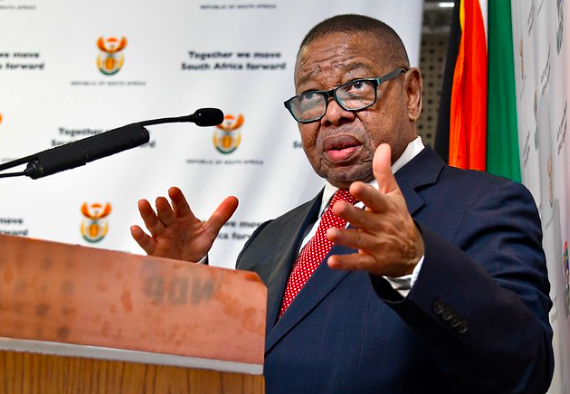
Following the splitting of the education portfolio, long-serving Angie Motshekga first took a bow in 2009 as Minister of Basic Education, while Dr Blade Nzimande began his stint as Minister of Higher Education and Training in the same year.

Motshekga believes she has brought stability to the curriculum. The matric results have also provided a barometer of success, with Early Childhood Development a critical pillar laying the foundation for a solid future.
But the jury remains out on Nzimande. In 2017, he was axed from the education portfolio amid student unhappiness over his leadership. He famously said, “Students must fall,” colluding with varsity management to stop protests.
Since returning under President Cyril Ramaphosa in 2019 with science and technology added to his responsibilities, Nzimande has had to fend off one controversy after another. However, establishing a single system of universities and TVET colleges is one of his legacies. Funding irregularities under the National Student Financial Aid Scheme have seen Nzimande embroiled in controversy, claims he has denied but failed to follow his threat to sue, suggesting that it was all bluster. However, several claims of corruption involving his appointments at several learning institutions under his watch have not helped his case.
One of the key architects behind the post-apartheid tertiary system, Professor Jairam Reddy, says it is time to review the state of higher education and make recommendations for any contemplated changes.
Unlike the National Commission on Higher Education (NCHE), which he chaired, this should be a shorter exercise – perhaps six months in duration and involving about five experts on higher education, including one international expert. The remit could be as follows: What are the strengths and weaknesses of the current state of higher education? Secondly, he asked whether the mergers had worked. A third aspect would focus on the quality of our higher education system, while race and its implications in the higher education system must be explored. Funding of the higher education system – is it adequate and equitable? and examine the efficacy of NSFAS. Finally, the professor proposes an assessment of corruption and mismanagement in higher education.
One of the country’s top academics, Professor Tshilidzi Marwala, the former vice-chancellor of the University of Johannesburg and now Rector of the United Nations University in Japan, says one of the often ignored facts about post-apartheid research in higher education is that South African universities do more research today than ever before. Furthermore, the proportion of people with doctoral degrees in South African universities is also historically high.
“What is missing is taking this research into innovation and products,” Marwala told Inside Education.
However, post-democracy, great emphasis was placed on the schooling sector. The launch of Curriculum 2005 (C2005) in March 1997 signaled a move from content-based to outcomes-based education and from the fundamental pedagogics under apartheid to progressive pedagogy, with the student having a central role in learning.
University of Cape Town’s Prof Joanne Hardman says that while OBE owed some of its substance to international education developments, it is incorrect to assume it was imported wholesale from any country.
She believes OBE owes some of its elements to the National Training Board (NTB) and Congress of South African Trade Unions (COSATU, at the time South Africa’s largest labour union). Together, they produced the National Training Strategy Initiative policy document, which provided the foundation for the national training strategy that was later developed.
“If one appreciates OBE’s genesis in the labour movement, one can begin to understand one of the key critiques facing OBE today: that teaching in South African schools using OBE serves a skills acquisition, rather than a development, function. The need to move away from a curriculum that separated mental and manual work or academic and vocational training was recognised in the curriculum’s focus on integrating education and training,” she says.
Thus, the ideological thrust behind C2005 was outlined in the White Paper on Education and Training (1995) and the South African Schools Act (1996), emphasising the social justice imperative to provide quality education for all through developing democratic citizens capable of participating in the knowledge economy of the 21st century.
Prof Hardman says OBE sought to address past inequities and level the playing field for students across South Africa. However, the problem facing those who were tasked with implementing OBE was that South Africa’s hugely unequal schooling base could not ensure the material or human resources required for a curriculum that focused on using a variety of resources to teach outcomes.
“Moreover, teachers’ training was unbelievably unequal, with those taught in former ‘black’ teacher training colleges not having been prepared to meet the rather opaque ‘critical’ outcomes required from the curriculum. Lack of training in how to implement an outcomes-based model of pedagogy, coupled with teachers’ underdeveloped conceptual skills due to unequal training, meant that OBE was doomed from the start,” she says.
Respected educationist Professor Jonathan Jansen warned in 1999 of C2005’s potential failure because he understood and had worked in South Africa’s unequal schooling terrain.
“Unfortunately,” adds Prof Hardman, “Jansen was right; C2005, although admirable in its quest for social justice, resulted in a radical form of learner-centredness that soon appeared to disadvantage the very students it was meant to promote, namely, poor second-language students in under-resourced schools with poorly prepared teachers.”
“In a country with the highest Gini coefficient in the world, the one-size-fits-all, underspecified curriculum presented as C2005 had little chance of succeeding without serious teacher training.
She says that for many, OBE had failed to achieve its emancipatory goal of educating all South African schoolchildren.
Two years after implementation, the C2005 was reviewed, given the challenges. The Review Committee into Curriculum 2005 Report found that C2005 was over-designed and under-stipulated.
In its attempt to pursue a policy of integrating subjects and real-world material, C2005 rendered the sequence, pacing and progression requirements, especially of the gateway subjects of language, mathematics, and science, invisible to teachers and students alike. The result could have been much better learner progression. One main lesson of the Review was thus that the explicitness of the learning and evaluation requirements could not, under present South African conditions of learning, be sacrificed in the name of learner-centredness without impairing learning. This lesson was embedded in the National Curriculum Statement (NCS) for grades 1 to 9, which was rolled out in phases from 2002 to 2009.
By 2009, this curriculum was again under scrutiny for its focus on OBE and painfully low attainment in students’ outcomes. The NCS Review Report focused on what is to be learnt rather than vague outcomes, suggesting that “clear content, concept and skill standards and clear and concise assessment requirements” should replace the notion of outcomes.
Prof Hardman adds that revisions to the NCS did not specify a constructivist pedagogy, although the understanding that children are active in constructing knowledge was accepted. Following the NCS review report, a new Curriculum Assessment Policy Statement (CAPS) was introduced in 2014, focusing more on specifying knowledge and assessment standards.
However, CAPS is very administration, content, and assessment-heavy, leaving little time for teachers to develop deep knowledge and understanding.
Moreover, teachers have once again received very little training in how to deliver CAPS and how to effectively teach in a constructivist manner that aims to develop children cognitively.
The impact of CAPS on children was found to have led to an increase in anxiety amongst ever younger children due to the content-heavy curriculum, over-assessment, rigidity of the curriculum and the excessively fast pacing needed to cover such a content-dense curriculum.
“With CAPS, it seems, we have thrown the baby out with the bathwater. Viewing curriculum change in South Africa through a dialectical lens, we must appreciate that CAPS has produced a contradiction in the object of the activity of schooling: curriculum coverage versus understanding. We have children who are over-assessed, and, in some instances at least, this has led to teachers teaching to the test rather than developing students’ understanding of concepts,” says Prof Hardman.
“Moreover, the actual content that students learn has changed very little over time, and there is little difference in the content of what is taught in the 21st century to what was taught in the 20th century. This is surely problematic as the world our children face today is not the world of the previous century,” she adds.
Professor Kobus Maree of the Department of Educational Psychology at the University of Pretoria says that implementing policies like Outcome-Based Education, which emphasises holistic development and learner-centred approaches, has been widely criticised and has faced significant challenges.
This includes resistance from educators, inadequate training, and assessment-related issues that have hindered its effectiveness.
“Many scholars argued from the outset that OBE was not designed with impoverished contexts in mind and has adversely impacted the education of many black learners from disadvantaged environments. Initiatives like the language and 40% policies were also introduced to enhance educational equity and quality. The language policy aimed to promote multilingualism, preserve indigenous languages, and foster cultural identity and inclusivity within the education system,” Prof Maree says..
“The controversial 40% policy intended under Angie Motshekga to provide a safety net for vulnerable learners, allowing them to pass a grade with a minimum of 40% in certain subjects. This policy aimed to prevent mass dropout rates and stimulate progression through the education system. However, it’s important to note that many scholars have fiercely criticised it.
“Despite these efforts, major challenges persist in the education system even after 30 years of democracy. Infrastructure remains critical, especially in inner-city, township, rural, and other underprivileged areas. Many of these schools lack basic facilities such as connectivity, electricity, sanitation, and adequate classrooms, perpetuating existing inequalities and negatively affecting the quality of teaching and learning,” says Prof Maree.
While there have been notable successes in enhancing access to education and promoting inclusivity, he says significant challenges related to infrastructure deficits and the implementation of theoretical policies persist. “It is crucial to involve all major stakeholders in apolitical discussions about the future of education in South Africa and to draw on existing pockets of excellence to assist disadvantaged schools, rather than implementing policies unilaterally that may negatively impact well-functioning schools.”
Jacques Farmer, the managing director of Prisma Training Solutions, says that with elections imminent, South Africa is gripped by an air of expectation as unemployment stands at 33.9%, and there is a need for a skills revolution.
Gone are the days of generic qualifications; the modern, digital-first economy demands precision skills. However, more than education is needed; experience is necessary.
However, the government alone cannot orchestrate this revolution, and the private sector, particularly industries like mining, must be a potent catalyst for change. Companies should consider expanding employment opportunities through targeted training and development initiatives.
The union of education and employment must be seen not merely as a transactional exchange but as a powerful force for progress.
“Imagine a young woman from a rural village, equipped with the skills to operate a drone, mapping mineral deposits precisely. Imagine a young man, once struggling to make ends meet, transformed into a sought-after artisan due to his welding capabilities. These are not stories; they are the building blocks of a brighter future when the right skills meet the right opportunities,” Farmer adds.
Arguably, there has been change, but the jury is still out on the work done in education during 30 years of democracy.
INSIDE EDUCATION