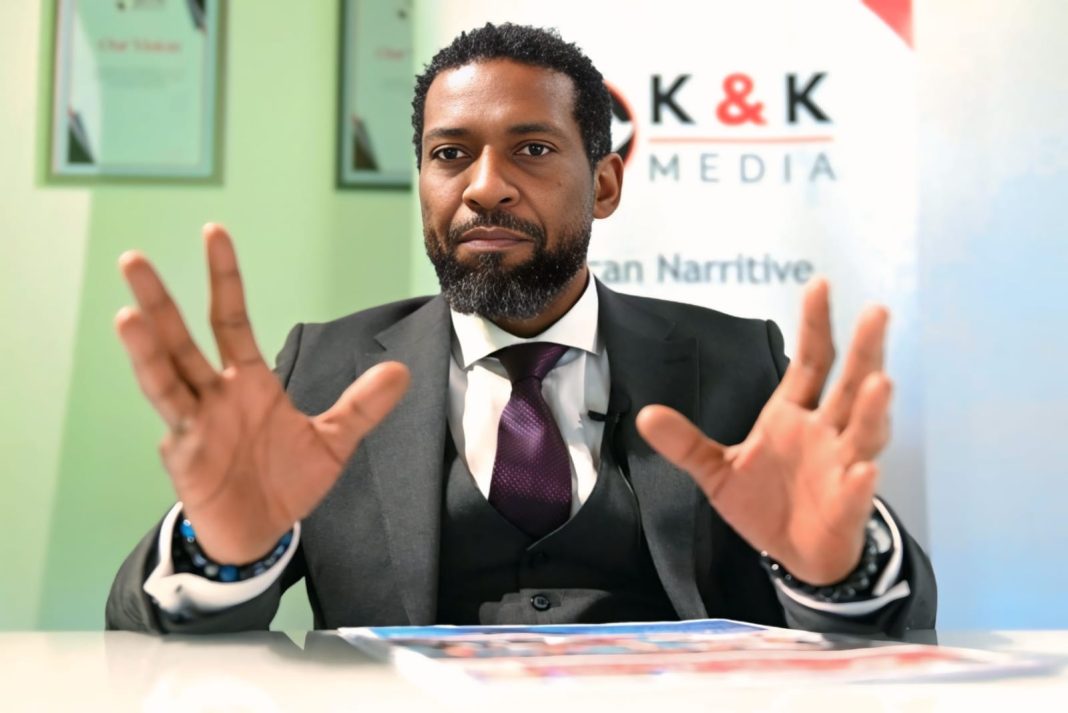

By Johnathan Paoli
Department of Higher Education and Training (DHET) Minister Buti Manamela has defended his decision to place three major Sector Education and Training Authorities (SETAs) under administration, describing it as “unprecedented but unavoidable” and essential to restoring public trust in South Africa’s skills development system.
Addressing Parliament’s Portfolio Committee on Higher Education this week, Manamela said of the interventions: “This is not routine housekeeping. It is about rescuing the credibility of our skills development system, protecting billions in public funds, and safeguarding the futures of thousands of young people who depend on SETAs for work, dignity, and livelihoods.”
The briefing, which also covered the National Student Financial Aid Scheme’s (NSFAS) readiness for the conclusion of the 2025 academic year, drew a packed committee room and set the stage for far-reaching reform across the post-school education and training (PSET) sector.
Manamela, who took office in July this year, said he inherited a sector in turmoil.
Governance failures had accumulated for years, and three SETAs – Services, Construction, and Local Government- had reached breaking point.
The Services SETA, one of the largest, was engulfed by procurement irregularities flagged in a 2022 forensic report. Boards recycled service providers, ignored recommendations, and failed to implement consequence management. By mid-2025, the acting CEO resigned, resulting in paralysis.
The Construction SETA, previously under administration between 2020 and 2022, relapsed by 2024. Whistleblowers alleged intimidation while R80 million in wasteful expenditure was recorded.
Auditor-General (AG) reports repeated the same findings year after year.
The Local Government SETA faced the most serious collapse, with National Treasury flagging an irregular CEO appointment, unlawful dissolution of oversight committees, and possible criminal procurement practices.
Municipal projects stalled, learners went unpaid, and reserves were frozen.
Across all three, Manamela said, boards were either unwilling or unable to act, CEOs were conflicted, and learners were left stranded.
In August, after consultations with the National Skills Authority (NSA), Manamela formally sought advice and gazetted the decision to place the three SETAs under administration.
Anticipating criticism, Manamela stressed that his actions were grounded in Section 15 of the Skills Development Act, which allows intervention where there is mismanagement or non-performance.
In both Services and Local Government SETAs, he said, the dual role of CEOs acting as accounting authorities created untenable conflicts of interest.
To stabilise governance, the minister appointed three administrators whom he claims were vetted, qualified, and chosen for competence rather than political loyalty.
Their mandates include restoring compliance, enforcing consequence management, ensuring learner support, and submitting 90-day turnaround plans by November.
Manamela confirmed that legal challenges had been filed in Labour and High Courts, but insisted that the substance of mismanagement was uncontested.
“Our actions were lawful, necessary, and proportionate to the risks. Administration is not the end of the matter; it is only the beginning of broader reform,” he told MPs.
DHET Director-General Nkosinathi Sishi provided technical evidence, pointing to CFO resignations, whistleblower complaints, audit reports, and Treasury investigations that revealed conflicts of interest, questionable payments, and repeated governance breaches.
The NSA, he said, endorsed urgent intervention.
Both Manamela and Sishi acknowledged that the problems extended beyond the three SETAs and reflected weaknesses in the SETA model itself.
Planned reforms include closer cooperation with the Auditor-General, possible rationalisation of SETAs into a more coherent PSET system, and stronger alignment with national economic priorities.
The Organisation Undoing Tax Abuse (OUTA) – which has for years independently investigated the entities — said in August that administration was not a solution on its own. “Unless credible boards and ethical CEOs are appointed within two months, the move will fail like so many before it.”
OUTA CEO Wayne Duvenage, at the time, questioned why the Insurance SETA, with its serious governance failures, was left untouched. Duvenage also said there were concerns about the administrators appointed. At least two had been fingered in allegations of maladministration and corruption. “This looks like cadre deployment, not a clean-up,” Duvenage said at the time.
Although dominated by the SETA crisis, the meeting also reviewed NSFAS progress.
CEO Waseem Carrim assured MPs that stabilisation measures had eased the 2025 funding impasse. A R13 billion reprioritisation secured with Treasury had covered students whose applications or registrations were blocked earlier this year.
Applications for the 2026 cycle opened on 16 September and close on 15 November, with Carrim pledging faster, more transparent processes.
Around 70% of applicants come via SASSA, and NSFAS aims to finalise all eligibility decisions by 15 December, informing students simultaneously to prevent confusion.
The agency has strengthened its backend systems with cloud technology, expanded application platforms, including WhatsApp, Telegram, and USSD; and introduced innovations such as digital signatures, biometrics, and optical character recognition to streamline funding decisions.
Outreach campaigns are under way in partnership with schools, libraries, and Thusong centres to ensure rural students are not left behind.
On accommodation, Carrim reported that R3.8 billion had been disbursed to over 4,000 private providers supporting 121,000 students.
Payment delays, especially in the Northern Cape, are being resolved, and a new accommodation protocol has been published for consultation ahead of the 2026 academic year.
Parliamentary committee members welcomed the interventions but warned that close oversight would remain vital.
INSIDE EDUCATION