
Staff Reporter
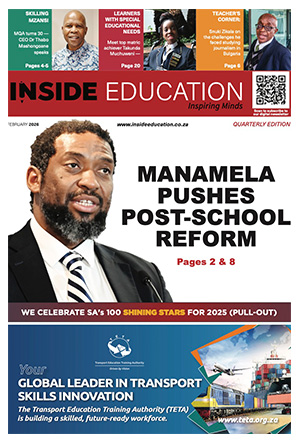
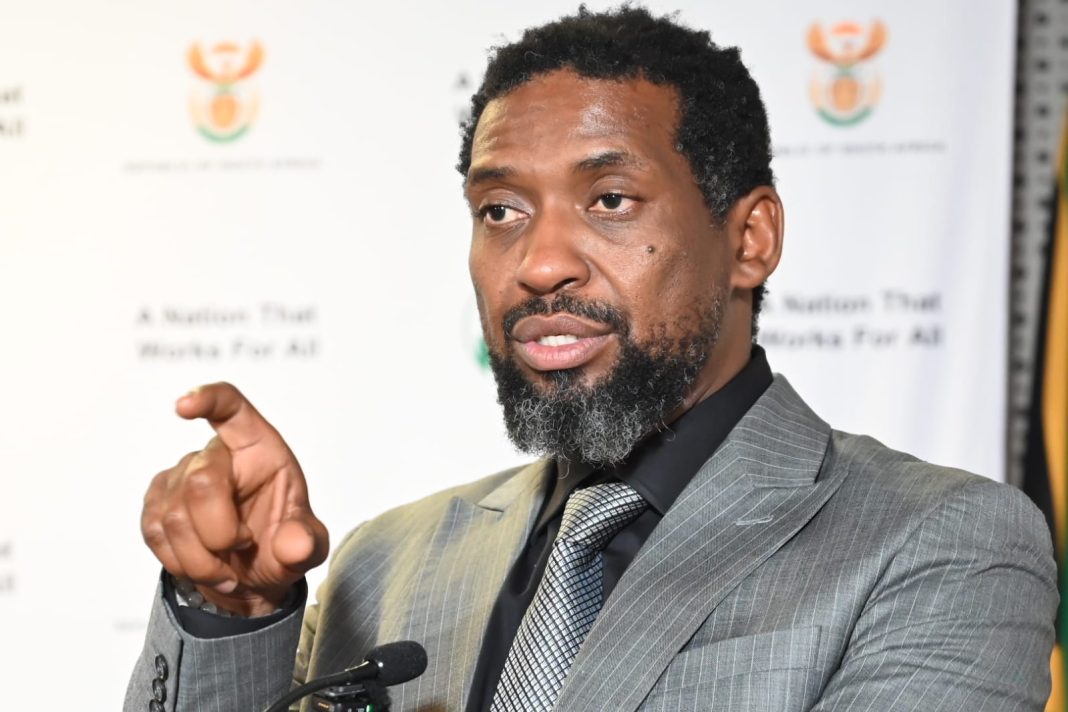
Higher Education Minister Buti Manamela said on Friday South Africa still lacked a coherent national system to identify the skills its economy needs, warning that fragmented planning was weakening efforts to tackle unemployment and youth exclusion.
Speaking at the inauguration of the PSETA–University of Johannesburg Public Sector Skills Planning Research Observatory, Manamela said South Africa’s skills planning system had long suffered from weak coordination, duplication and poor integration between institutions.
“Does the South African state actually know what its economy needs? Does it know what its citizens require? Does it know what skills it must build, and where, and by when, and for whom?” Manamela said.
“The honest answer is: not well enough.”
Manamela said the new observatory should form part of a national effort to build a single skills intelligence system capable of helping government, universities, SETAs and research bodies plan for future labour market needs.
“A state that cannot see its own labour market cannot plan its own future. Skills intelligence is therefore not back-office work. It is sovereign work,” he said.
He said South Africa was facing a period of rapid change driven by digitalisation, artificial intelligence, the just energy transition, demographic shifts and global instability. At home, he said, unemployment, inequality, poverty, weak state capacity and youth exclusion remained persistent challenges.
“More than three million young people remain outside employment, education and training. That is not a statistic. It is a condition that produces, every single day, the kind of question that young woman asked me,” Manamela said, referring to a young woman at a Community Education and Training centre who had asked who decided which courses were offered and whether they would lead to jobs.
He said skills planning could no longer be treated as a compliance exercise and had to become a strategic tool for national development.
“For too long, our skills planning systems have suffered from fragmentation, duplication and weak coordination,” Manamela said.
“We have multiple data sources that do not speak to one another. We have Workplace Skills Plans and Sector Skills Plans that have, in too many cases, become exercises in reporting rather than instruments of decision-making.”
Manamela said the country had critical skills shortages alongside graduates unable to find pathways into employment, while industrial policy, economic planning, public sector reform and the skills system often produced separate assessments of what the country needed.
“Improving the data alone will not solve this. What is required is institutional integration and a shared national skills intelligence capability,” he said.
He said the Human Resource Development Council would be repositioned at the centre of a single national skills intelligence architecture, with sectoral observatories such as the PSETA–UJ initiative serving as specialised nodes within that system.
“South Africa cannot afford many competing claims to national skills intelligence,” he said.
“They are nodes: specialised, expert, sectorally focused, feeding into a coherent national capability. They are not, and must not become, parallel claims to the function.”
Manamela said the DHET would retain responsibility for coordinating the post-school education and training system, but would work with SETAs, universities, TVET and CET colleges, SAQA, the Quality Council for Trades and Occupations, the Council on Higher Education, the National School of Government, organised labour and business.
He said the observatory could help South Africa move from reactive to anticipatory planning by forecasting occupational demand, tracking labour market changes and identifying emerging competencies before shortages became crises.
It could also support the professionalisation of the public service by mapping skills gaps, career pathways and workforce planning needs, he said.
“A capable, ethical and developmental state requires more than slogans. It requires competency frameworks, structured career pathways, and evidence-based workforce planning,” Manamela said.
He said the future public service would be more digital, data-driven, and analytically demanding, but warned that technology alone would not improve service delivery without the right human capability.
“This is not primarily a technology story. It is a capability story. It is about whether South Africa builds a state that can use digital tools to deliver services better, or one that procures digital systems and continues to deliver services badly,” he said.
Manamela said the skills intelligence system South Africa needed did not yet exist, but was being built through the Human Resource Development Council, SETAs, universities, research councils and observatories such as the one launched at UJ.
“The honest answer to [the student], the answer I want to be able to give in five years’ time is that those decisions are no longer made in fragments,” he said.
“That they are made on the basis of a national skills intelligence system that actually sees the economy, that actually sees its citizens, and that actually plans for both.”
INSIDE EDUCATION