
Staff Reporter
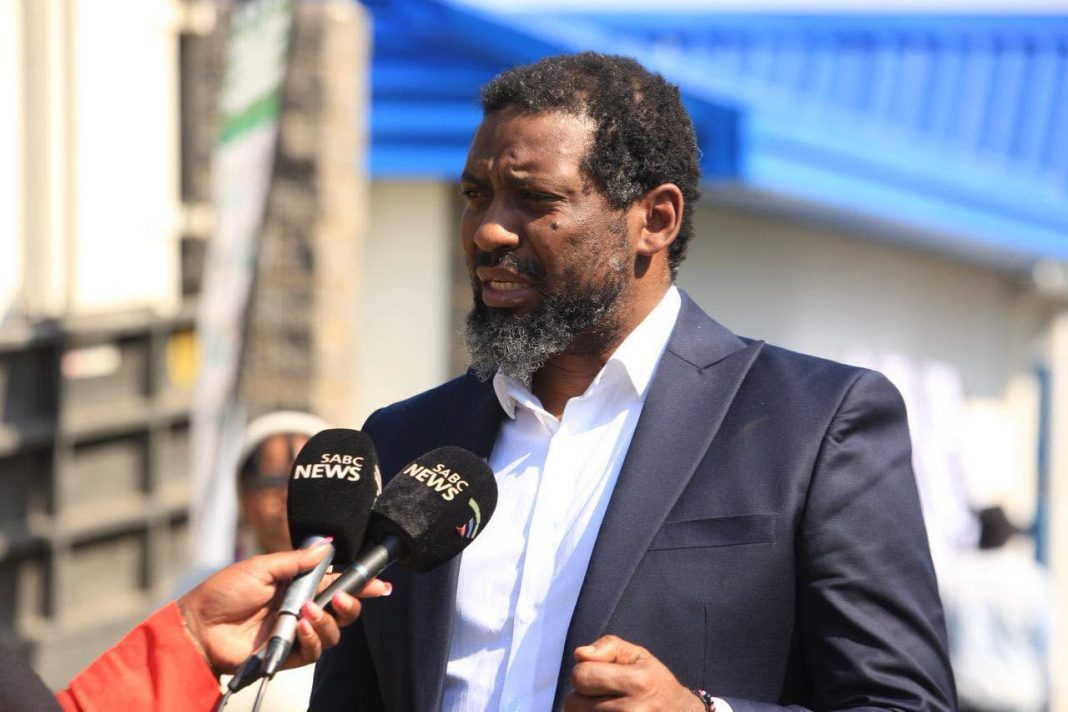
Higher Education and Training Minister Buti Manamela has told the reinstated National Student Financial Aid Scheme (NSFAS) board that the court ruling that ended the scheme’s administration has not resolved the financial, governance and operational problems that prompted his intervention.
Manamela met board members in Gauteng on Thursday, less than two weeks after the Gauteng High Court in Pretoria suspended the appointment of NSFAS administrator Professor Hlengani Mathebula and ordered the remaining seven board members to resume control of the scheme.
The meeting comes as NSFAS grapples with billions of rand owed to universities, unresolved student funding matters, serious audit deficiencies and preparations for the 2027 academic year.
“There are significant questions concerning the financial position of NSFAS and amounts owing to institutions. There are also matters concerning student funding decisions, operational systems, audit remediation and the preparations that must already be underway for the 2027 academic year,” Manamela told the board.
Parliament’s Portfolio Committee on Higher Education and Training was told last week that NSFAS had paid 61.5% of university allocations and 59.2% of TVET college allocations, with about R10.49 billion in 2026 tuition still owed to universities.
The financial pressure forms part of a wider crisis at the student funding body, which Manamela placed under administration on 4 May after dissolving its board and appointing Mathebula as administrator.
The department said at the time that the intervention followed governance instability, operational failures, financial weaknesses, unresolved appeals, ICT deficiencies, accommodation problems and accountability concerns.
But seven remaining board members challenged the decision in court.
On 14 August, Judge Etienne Labuschagne suspended Mathebula’s appointment pending the final determination of the board’s review application and directed the board members to resume managing and governing NSFAS.
The court raised concerns about the process followed in making the appointment and Mathebula’s suitability, including criticism of his conduct while previously employed at the South African Revenue Service. The main review application — Part B — is expected to be dealt with on an expedited basis.
Manamela made clear on Thursday that he did not intend to use the meeting to re-litigate that dispute.
“Let me state clearly that the intention is not to revisit the litigation today. The pending proceedings will follow their appropriate legal course. Today’s discussion is about the functioning of NSFAS in the period immediately ahead.”
He said the court’s intervention had altered who governed NSFAS in the interim, but had not resolved the problems facing the institution.
“The concerns identified through these processes cannot simply be wished away. The interim court order has changed the interim governance arrangements, but it does not make the underlying institutional challenges disappear. Our task therefore is not to pretend that nothing happened but rather to ensure that the systems, controls and governance arrangements of NSFAS are strengthened.”
In March, the Auditor-General issued NSFAS with a disclaimer of opinion for its 2024/25 financial statements — the most serious audit outcome — after finding deficiencies in its accounting records and supporting evidence. Nine material irregularities had been identified, including four that were newly reported.
Scrutiny continued this month when Public Protector Kholeka Gcaleka reported systemic deficiencies in NSFAS’s governance, administration, funding coordination and oversight.
The Public Protector’s investigation described persistent governance instability, administrative weaknesses and inadequate systems. It also referred to findings from a Special Investigating Unit investigation showing that more than 40,000 students at 76 higher education institutions had been improperly funded to an estimated value of R5.1 billion.
The investigation also highlighted delays in NSFAS’s Close-Out Project, which was established to reconcile payments and financial records between the scheme and higher education institutions. Those unresolved reconciliations have affected students whose qualifications have in some cases been withheld because accounts remain outstanding.
The reinstated NSFAS board has said the Public Protector’s investigation was initiated in 2021 and largely dealt with a period predating its appointment. It has nevertheless undertaken to implement the recommendations and said it accepted responsibility for addressing the systemic weaknesses identified.
Before the court ruling, Mathebula had submitted a stabilisation plan to Manamela setting out proposed interventions intended to strengthen NSFAS’s governance, financial management and operations.
Manamela told board members that the circumstances which led him to intervene had developed over a prolonged period.
“The challenges that led to my intervention to place NSFAS under administration did not arise overnight. They resulted from serious institutional, governance, financial and operational challenges that developed over time.”
He said NSFAS now needed to maintain institutional continuity while dealing with payments to institutions, student funding administration, audit remediation, operational systems and planning for next year.
“We do not need to resolve every issue in this room today. What we do need to achieve is a clear understanding of the current position and a credible way forward.”