
Simon Nare
Deputy President Paul Mashatile on Thursday said South Africa must look beyond skills alignment as automation and artificial intelligence were widening the gap between training systems and the workplace.
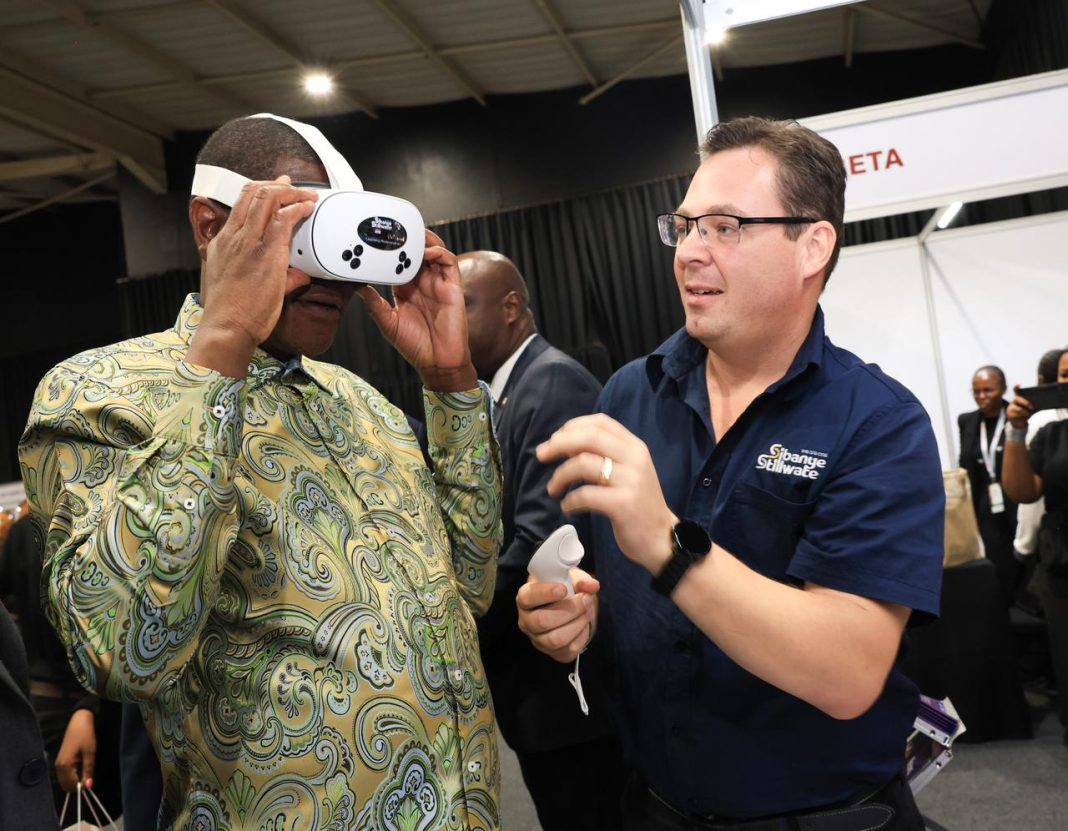
Addressing the 5th Human Resource Development Council Summit at the Gallagher Convention Centre, Mashatile said technical competence alone was no longer enough in a rapidly changing world.
ALSO READ: Malema sentenced to five years for East London firearm discharge
“Ethical leadership, critical thinking, and social capabilities are now equally essential. Our challenge, therefore, is not simply one of skills alignment but of capability expansion as well,” he said.
The deputy president said success in a dynamic and uncertain world increasingly depended on human and social capabilities such as analytical thinking, communication, creativity, collaboration, resilience and adaptability.
“Automation and AI are transforming industries at a speed that often exceeds the ability of education and training systems to respond, leading to a growing skills gap that threatens workforce readiness and economic stability,” he said.
Mashatile said South Africa’s youthful population was reshaping workplace culture and expectations, while climate change was redefining how and where people live, learn and earn.
This, he added, required a shift in educational approaches because the ways people learn, work and engage in society were undergoing significant transformation.
At the same time, technological innovation, demographic shifts, environmental challenges and economic uncertainty were reshaping the definition of work itself, he said.
“In such a context, these realities compel us to rethink not only skills for jobs but also human development for life,” said the deputy president.
The two-day summit, held under the theme “Living and Working in a Changing World”, also marked the launch of the reconceptualised Human Resource Development Strategy and the Master Skills Plan, the framework of which was approved in 2024.
Mashatile said the reconceptualised HRD Strategy must move beyond a narrow, supply-side understanding of human resource development.
ALSO READ: Mkhwanazi concedes Rosebank precious stones raid was not a joint operation with JMPD
It should embrace a holistic value chain from early childhood development to lifelong learning, from employability to productive citizenship, and from economic participation to social cohesion.
“As we advance the Medium-Term Development Plan, we are acutely aware of the urgency of confronting South Africa’s triple challenges of poverty, inequality, and unemployment. This summit must therefore, do more than diagnose problems; it must help us determine how we act together decisively, coherently, and at scale,” he said.
Mashatile called on the summit to produce a simple but powerful declaration committing all role players to human development, saying a draft declaration reflecting that commitment had already been circulated.
He recognised that government alone could not deliver human development and that “skills, employability and state capability required deep social compacts grounded in trust, accountability and shared ownership”.