
By Lebone Rodah Mosima
The Nelson Mandela Children’s Foundation said South Africa is paying a steep economic price for child poverty, warning at its 30th anniversary gala dinner that the country loses as much as R1.3 trillion a year in unfulfilled child potential.
Speaking in Bryanston, the foundation’s chief executive, Linda Ncube-Nkomo, said a 2024 report found that South Africa spends between R660 billion and R700 billion a year — about 9.8% of gross domestic product — on tackling child poverty, but without achieving meaningful change.
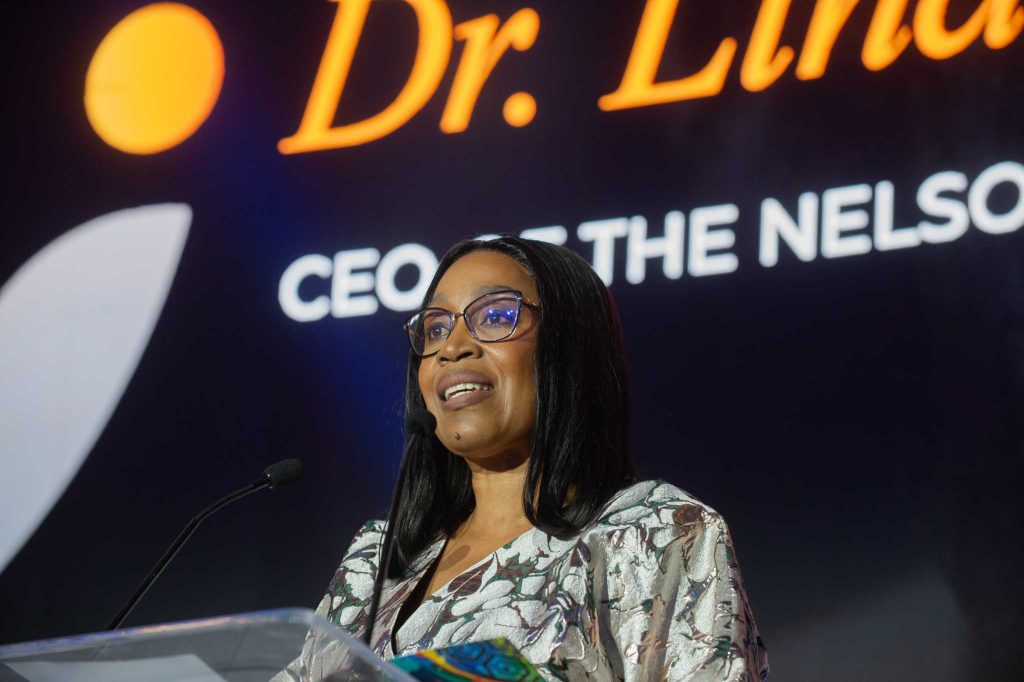
“If we were to invest the same amount of money differently, ensuring that it reaches the vulnerable children that it should and they were to become economically active in one way or another, they could contribute R1.3 trillion to the economy annually,” Ncube-Nkomo said.
ALSO READ: Limpopo suspends schooling in flood-affected districts
“The hidden cost of unfulfilled child potential is R1.3 trillion, approximately 18% of GDP, each year. This is no longer just a social crisis; it has become an economic one.”
She said the organisation is focusing on reducing poverty in the communities where it works, improving children’s health outcomes, tackling violence against children and strengthening children’s participation in decisions affecting their lives.
“We’ve been able to move children into the upper poverty line because when they are in that space, we know that they are at least getting three nutritious meals a day,” she said.
“We want to be able to ensure that there is economic activity in the household. What are the assets we have as a community that can actually be able to benefit us all, as well as we want to be looking at elevating the voices of children?”
She said South Africa was confronting a bleak reality in the treatment and protection of children, citing high levels of violence and widespread vulnerability.
“I think it’s very clear that the mirror that we’re looking at is showing us a very dark and dreary picture of how children are, and the state of children’s well-being,” she said.
“We approximately have 13 million children that don’t have the hope of being able to live up to their potential unless there’s a change of trajectory.”
Ncube-Nkomo also said the foundation was operating in a tougher funding environment, with more than 276,000 registered non-profit organisations competing for shrinking resources, and donor confidence declining.
“We have seen that in the past decade, the Fund did not exceed R20 million in unrestricted fundraising in a single year. This is not a confession of failure, but rather a diagnosis,” she said.
Even so, she said the foundation had developed a new roadmap for the next 30 years through its Legacy 2.0: Khuluma Mntwana, Sikuzwe strategy and its 2026-2031 plan, which aims to move beyond protection and voice to ensuring children grow up safe, healthy, educated and economically included.
“Our priorities are clear: Alleviation of child poverty and ensuring that, in the communities where we work, at least 5% of the children below the food and intermediate poverty line move into the upper bound poverty line,” she said.
“We also want to ensure that in those same communities, there is an increase in the number of children below the age of six who meet their cognitive and physical developmental milestones so that they can have a fighting chance of being in the R1.3 trillion contributors.”
Former president Thabo Mbeki, delivering a keynote address, said the scale of child poverty called into question the country’s commitment to ubuntu and social justice. Citing Statistics South Africa data, he said 62.1% of children were identified as multidimensionally poor.
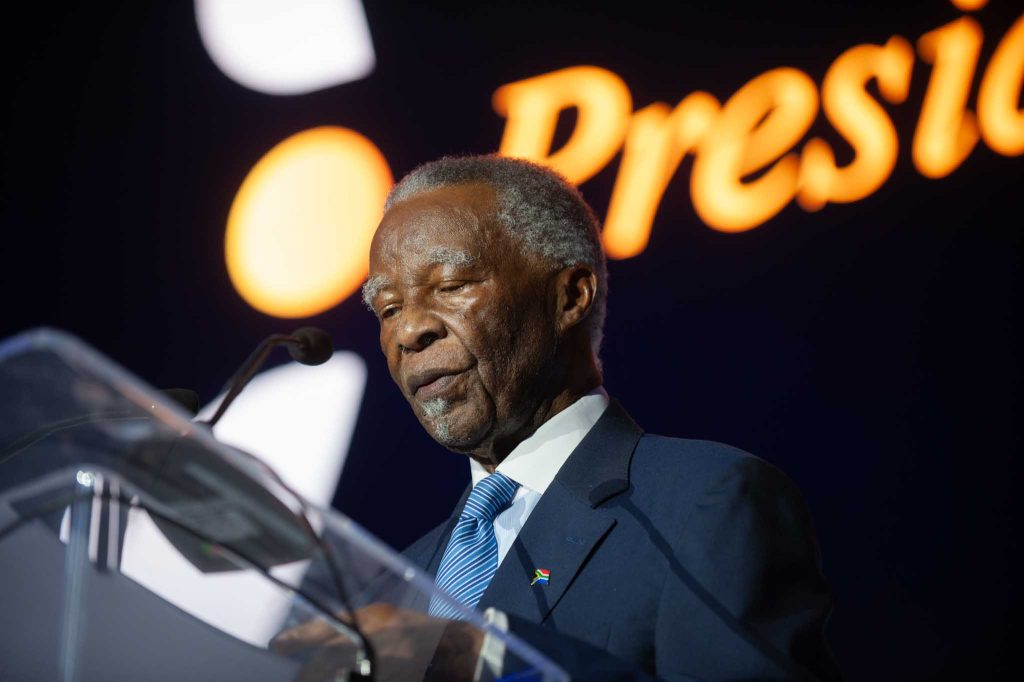
“Obviously, it would be difficult to claim that the soul of the nation is informed by the philosophy of ubuntu when it still has so many millions of children living in poverty,” Mbeki said.
“Of course, it is obvious that we cannot seriously consider the situation of the children in South Africa outside the context of society as a whole.”
He said South Africa needed to return to the original goals of the democratic struggle, including liberation from poverty and underdevelopment.
“In this regard, it is important that, as has been said, we must go back to basics,” he said.
“To do this means that we must fully internalise the understanding that millions of our people engaged in a protracted struggle to achieve political emancipation as well as realise liberation from poverty and underdevelopment.”
Mbeki added that children’s rights, as protected in Section 28 of the Constitution, should remain central to state policy and public life.
“Our constitution fundamentally aspires to be a caregiving document,” he said.
“It does not just prohibit cruelty to children; it also imposes a positive obligation – on the state, on institutions, and on all of us – to ensure that every child is held, nourished, and protected.”
President Cyril Ramaphosa said South Africa had made significant progress since apartheid through investment in early childhood development, education, nutrition and child healthcare, but acknowledged that too many children still faced poverty and hunger.
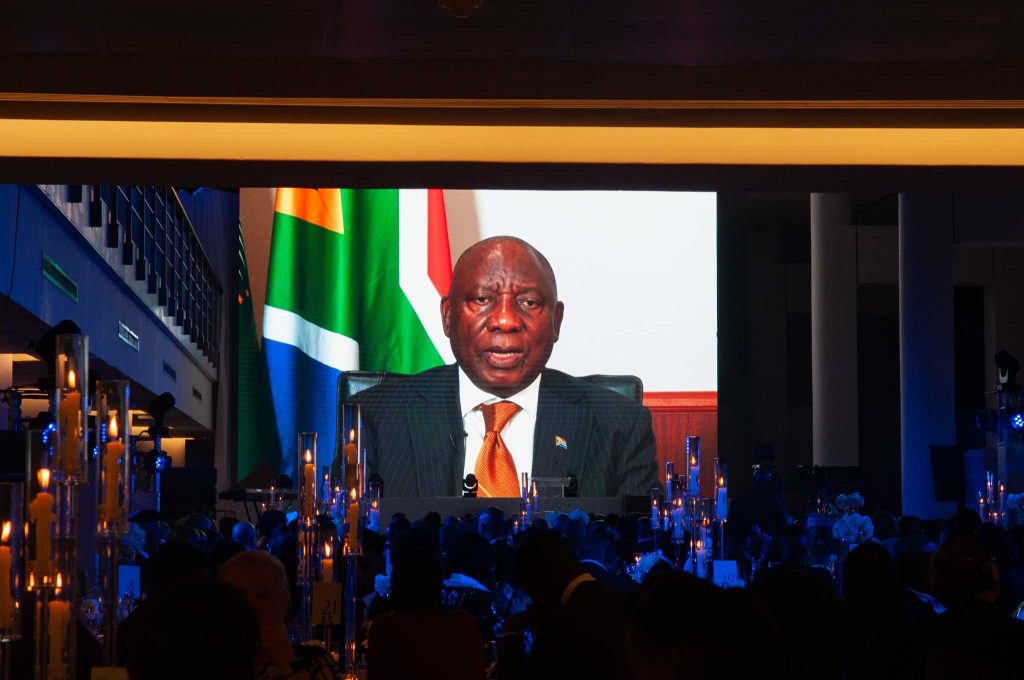
“As a democratic nation, we have invested substantially in Early Childhood Development in Basic Education in child nutrition and in health care for children, and all of these processes are continually upscaling on an ongoing basis,” Ramaphosa said.
“We have an extensive social welfare net that today reaches more than 13 million children from impoverished families.”
He said the foundation had helped amplify children’s voices and translate compassion into action, but urged broader cooperation to deepen the impact of those efforts.
“As a government, we cannot walk this journey alone. The success of the Nelson and Mandela Children’s Fund reminds us that lasting change is worth the part to the donors, to the educators, to activists, to community leaders and to young advocates gathered this evening,” he said.
Ramaphosa said the country needed to keep building a society in which every child, whether born in a rural village, informal settlement or city, had a fair chance to succeed.
“We need to continue to build a South Africa and an Africa where every child is empowered to realise their true potential, because when we care for our children, we are not only shaping their future, but safeguarding the future of a nation.”