
By Charmaine Ndlela
Deputy Minister of Basic Education Dr Reginah Mhaule has called on parents, educators and community leaders to give girls more opportunities to lead, saying that confidence cannot flourish in communities that tolerate violence against women and children.
She was speaking at the 2026 International Day of the Girl Child commemoration at Die Wilge Special School in Potchefstroom, North West, on Monday.
“Notice the girl who has gone quiet. Give her the opportunity to lead and give it to her more than once,” Mhaule said.
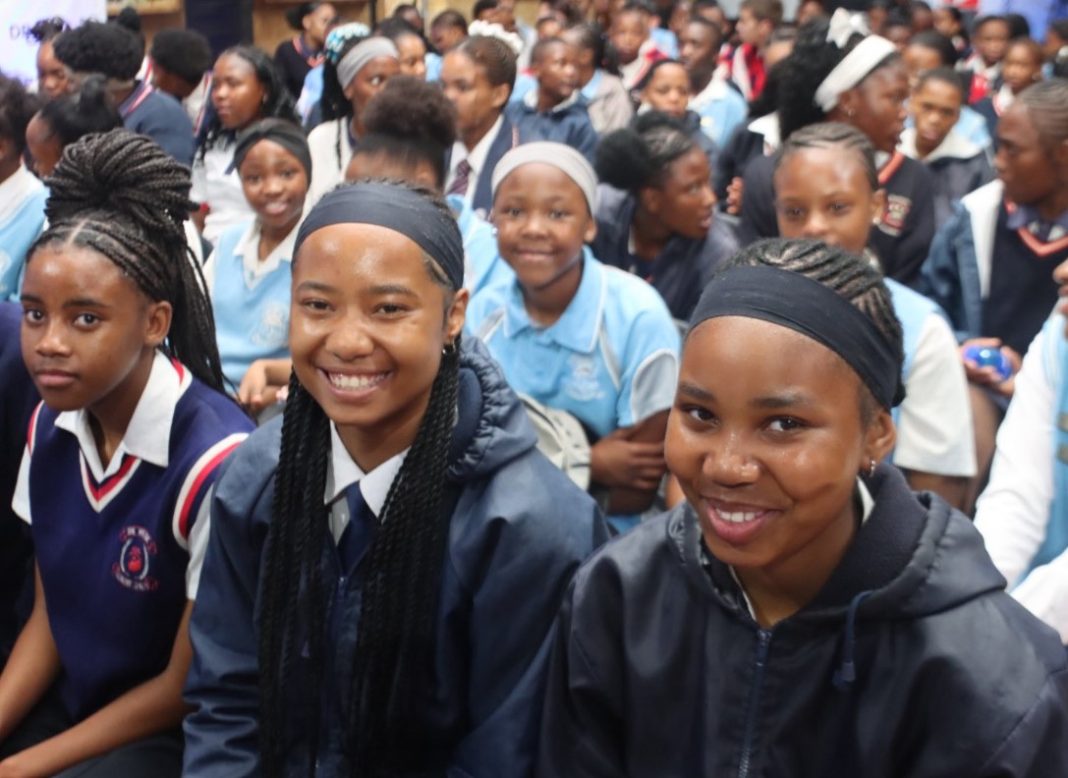
The event was held under the theme “Building Confident Leadership for Girls” and brought together 240 learners, educators and community stakeholders through a collaboration between the Department of Basic Education (DBE), Dove, Unilever and the Development Bank of Southern Africa (DBSA).
Mhaule urged parents and caregivers to give their daughters the same educational opportunities as their sons.
“To parents and caregivers, invest in your daughter’s education with the same conviction as you invest in your sons. Listen to them, protect them, and let them see that you believe in them,” she said.
She also called on traditional and religious leaders, local government representatives and communities to help create safer environments for girls.
“Girls cannot be confident in communities that tolerate violence against women and children. We need our communities and the leaders of communities more than before,” she said.
Mhaule stressed the importance of sustaining partnerships between government, communities and organisations working to advance girls’ development.
“The gains we have made are real, but they are fragile and they will only last if we sustain them together,” she said.
She thanked artists who had volunteered their time to support the initiative and urged stakeholders to remain committed to empowering young people.
“Because when a girl believes in herself, she does not only change her own future, she helps shape the future of the nation,” Mhaule said.
Miss South Africa 2025 Qhawekazi Mazaleni also encouraged girls to embrace courage and remain authentic, saying leadership often required people to act despite their fears.
During a panel discussion, Mazaleni reflected on her experience entering the Miss South Africa competition and her decision to cut her hair while awaiting confirmation of whether she had progressed.
She said she had initially hesitated because she believed she looked “more beautiful” with long braids. However, she eventually questioned that belief and cut her hair, only to learn shortly afterwards that she had made it into the competition.
The experience prompted her to reconsider whether she should change her appearance to meet perceived beauty standards.
“Courage doesn’t mean that you’re not afraid of what you’re going to do. It means going ahead and doing it anyways,” Mazaleni said.
She explained that her decision to enter Miss South Africa had been driven by a desire to make a difference rather than by beauty.
“I think beauty is the least interesting thing about a person. I entered Miss South Africa because I saw I wanted to make a change,” she said.
Mazaleni said she wanted to improve education in South Africa, particularly inclusive education and support for people with autism.
Understanding her purpose, she said, helped her resist pressure to conform to beauty expectations.
“So was I afraid? Yes. But I think that courage and knowing why I was there in the first place really carried me through,” she said.
The commemoration also highlighted school-based programmes aimed at developing young people’s self-esteem and resilience.
Through the Dove Self-Esteem Project, facilitator-led workshops are delivered in South African schools in collaboration with educators and the DBE.
The workshops help learners develop a positive relationship with their appearance, challenge societal pressures and recognise their potential.
According to the department, the programme also provides opportunities for age-appropriate discussions about School-Related Gender-Based Violence (SRGBV), supporting efforts to create safer and more inclusive learning environments.
The partnership combines Dove’s expertise in body confidence and self-esteem, the department’s reach through schools and the DBSA’s development expertise.
The North West was selected as the focus province for the 2026 programme, with partners aiming to extend its impact through sustained school-based initiatives rather than a once-off event.
Observed annually on 11 October, the International Day of the Girl Child celebrates girls’ achievements while drawing attention to barriers that continue to limit their opportunities.
INSIDE EDUCATION