
Staff Reporter
Instead of simply filling a student’s mind with information, education should ignite a passion for learning, foster critical thinking, and enable students to grasp the concepts being taught fully.
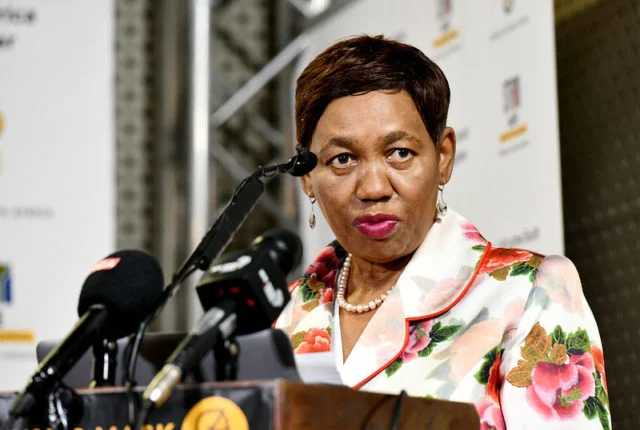
“Mother tongue instruction serves as the foundation for this kindling of the educational flame, as it allows learners to connect with the subject matter on a deeper level, empowering them to explore and understand the world around them with greater clarity and enthusiasm,” said Minister of Basic Education, Angie Motshekga, at last week’s two-day the Language Policy Conference in Johannesburg.
She said educators bear the responsibility of helping the student to lead a richer and fuller life and developing his mental and spiritual qualities to the utmost. “Our gathering here today is not driven by an irrational attachment to multilingualism; rather, it is a response to a solemn call embedded within our founding Constitution and Bill of Rights.”
“These constitutional principles enshrine the importance of language diversity, recognising the significance of every language in our nation’s tapestry,” she added.
The Minister said the dedication should extend to ensuring the equitable recognition and preservation of all official languages, including Sign Language, which recently was added as the 12th official language of South Africa.
“Embracing multilingualism in our classrooms is not just a matter of policy; it is an opportunity to empower our learners, enrich their minds, and cultivate a sense of belonging,” she said. Throughout the years, she said the department has implemented several language programmes within the basic educational system.
English and Afrikaans have long served as mediums of instruction, but the importance of incorporating African languages as Languages of Learning and Teaching has been recognised as paramount to learning and teaching.
She said one of the remarkable initiatives in the journey towards embracing multilingual education is the Eastern Cape Mother Tongue Bilingual Education Pilot Project. Spearheaded by the Eastern Cape Department of Education (ECDoE), this project is a shining example of how language can be harnessed to empower our learners and enhance their educational experience.
Since 2012, the Eastern Cape Department of Education (ECDoE) has been progressively implementing the Mother Tongue-based Bilingual Education (MTBBE) strategy for Mathematics and Natural Science and Technology, starting from Grade 4.
At the core of this programme is the principle of epistemological access to the curriculum, aiming to broaden students’ understanding of subject matter by teaching it in their mother tongues.In 2017, the MTBBE programme was piloted in 72 schools in Cofimvaba and later extended to all districts in the province, with a new cohort phased in each year. Currently, an impressive 2,015 schools across all 12 districts are actively implementing this programme.
This initiative allows learners in these schools to learn all content subjects through their home languages up to Grade 8, with Grade 9 planned for phased implementation in 2023 to complete the Senior Phase.
“The results of the MTBBE project have been nothing short of remarkable. A Grade 5 analysis reported that MTBBE learners outperformed their non-MTBBE counterparts in Mathematics (53% vs. 40%) and Natural Science and Technology (70% vs. 50%),” she said.
She said these findings reinforce the value of providing education in learners’ mother tongues, enabling them to grasp complex concepts more effectively and excel academically.
The success of the Eastern Cape Mother Tongue Bilingual Education Pilot Project has been achieved through collaborative efforts.
“We thank Rhodes University, University of Fort Hare, Oxford University Press, Pearson, and Pan South African Language Board (PanSALB) for their valuable support and partnership.
“Research worldwide affirms that learners learn best when taught in their mother tongue. It enhances their cognitive abilities, fosters better teacher-learner relationships, and boosts their overall academic performance.”
“As we emphasise the promotion of African languages in our basic educational system, we must acknowledge the significant role played by the English language in today’s interconnected world.Our goal is not to replace English but rather to empower our learners with proficiency and pride in their mother tongues while maintaining competence in English,” Motshekga said.
In South Africa, English is the second most commonly spoken language outside the household, following isiZulu, with isiXhosa being the third-most common. Within the schooling system, English holds a leading position as a Language of Learning and Teaching (LOLT).
Out of approximately 23,719 public schools in South Africa, only 2,484 schools use Afrikaans as the
language of instruction in single, dual, or parallel mediums.
“As we navigate the complexities of our multilingual landscape, we must recognise the dual significance of promoting African languages while maintaining and enhancing English language proficiency.”
INSIDE EDUCATION