
By Lebone Rodah Mosima
The National Youth Development Agency (NYDA) and National Empowerment Fund (NEF) have committed an initial R100 million to a National Youth Fund aimed at expanding finance for youth-owned businesses as unemployment among young South Africans remains at crisis levels.

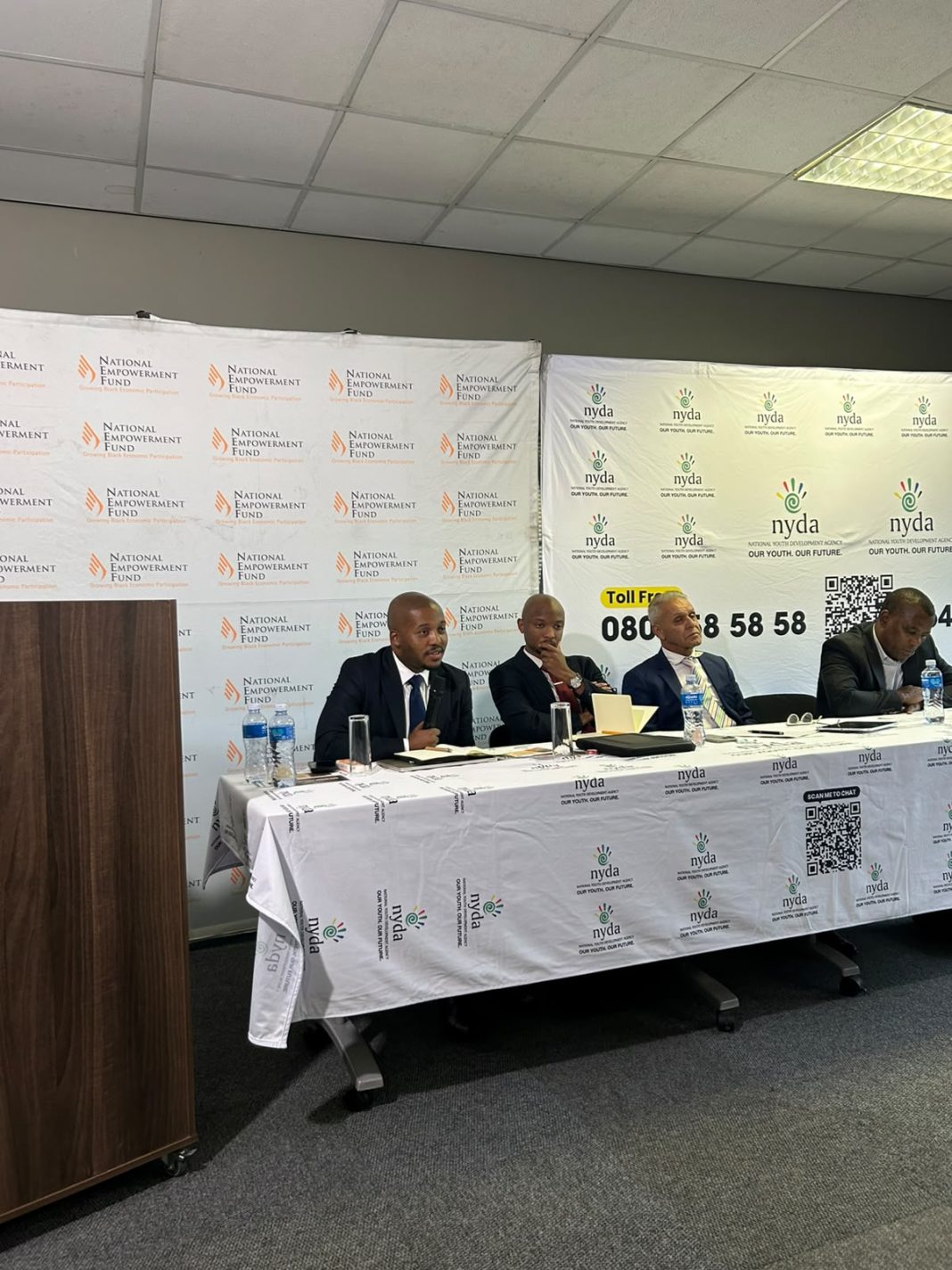
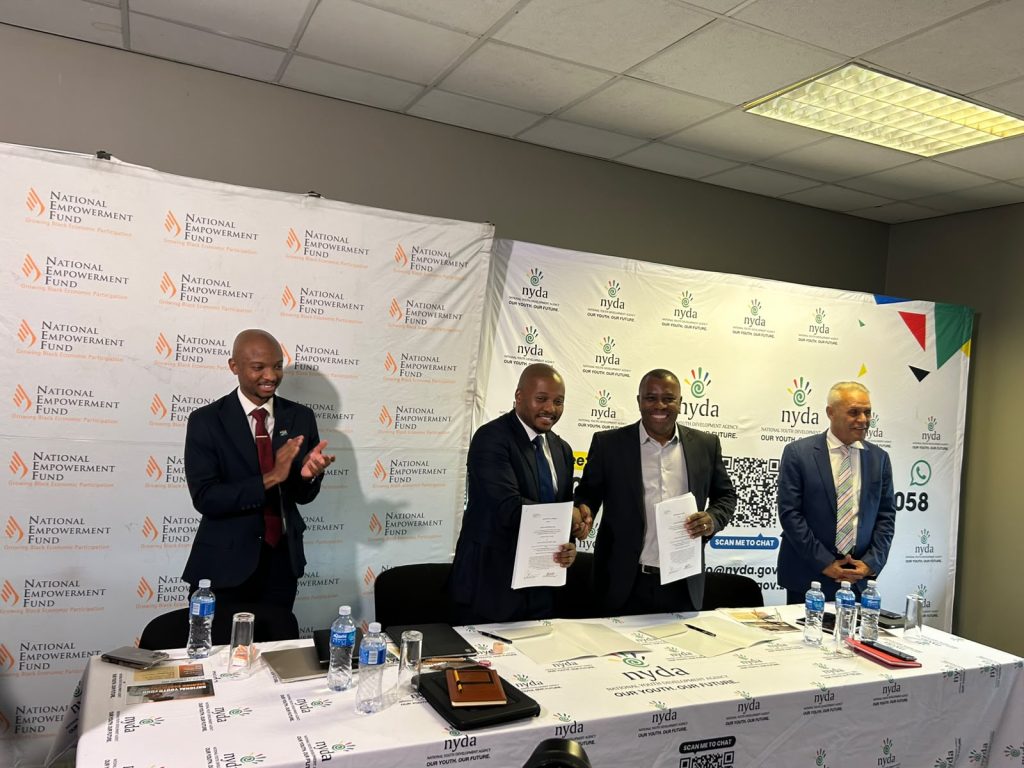
The two agencies signed a partnership agreement at the NYDA’s offices in Sunninghill, Johannesburg, on Monday, with NYDA Executive Deputy Chairperson Bonga Makhanya saying the NYDA would contribute R10 million and the NEF R90 million.
The agreement is intended to help operationalise the National Youth Fund, an initiative already provided for in the NYDA’s strategy, by combining NYDA grant support with NEF loan finance and business development assistance.
The partnership comes as South Africa’s official unemployment rate rose to 33.6% in the second quarter of 2026, according to Statistics South Africa.
About 3.8 million South Africans aged 15 to 24 were not in employment, education or training in the second quarter of 2026. This is a separate measure from unemployment among the broader 15-to-34 age group, where about five million young people were officially unemployed.
The NYDA said the fund would target economic opportunities across sectors including manufacturing, infrastructure, renewable energy, the green economy, digital industries, agriculture and small and medium-sized enterprises.
It is intended to support youth-owned businesses at different stages of development and help them grow, create jobs and enter established value chains.
Makhanya said the agreement demonstrated to young South Africans that the government was serious about expanding their participation in the economy.
He said the fund also raised the question of how government could move beyond fragmented interventions and develop a financing pathway capable of supporting young people to establish, grow and scale productive enterprises.
“The answer to that question was simply not another programme but a more comprehensive approach to funding in South Africa, which required us to project different stages of enterprise development from early stage support, business development to investment readiness and to large-scale growth capital,” Makhanya said.
“This was a very important conceptual choice because young entrepreneurs face different constraints at different stages, and we identified that our interventions alone address the very particular stage of their businesses which is a very valuable intervention.”
Makhanya said the NYDA was engaging other Development Finance Institutions (DFIs) to explore partnerships that could expand financing and business opportunities for young South Africans.
He said different institutions had distinct roles to play, with the NYDA able to develop a pipeline of young entrepreneurs while the NEF and other DFIs could provide specialised financial instruments and support businesses seeking to expand.
He said the NYDA’s Annual Performance Plan had set targets around accountability, governance and stakeholder engagement to improve coordination.
“We accept that our mandates are very broad. We are responsible for 25 million young people, and 25 million South Africans have a claim to this institution in any shape or form,” he said.
ALSO READ: Body of sixth woman found as serial killer fears grip Ekurhuleni
“It becomes very difficult to serve all of those, and if you go a little bit deeper, about 3.5 million who are not in employment, education and training would argue to have a greater claim to this institution.”
He said the R100 million remained small compared with the wider financing needs of small businesses in South Africa, where estimates have placed the national MSME financing gap at about R350 billion.
“Young people have no assets, they have limited collateral, they have shorter business track records and a lack of capital to finance their capital expenditure needs,” he said.
“This is why one of the most important conceptual designs was to move away from the one-size-fits-all approach to youth enterprise finance.”
He said the fund should not merely finance youth-owned businesses, but should direct investment towards sectors capable of expanding productive capacity and creating jobs.
He said these included manufacturing, industrialisation, renewable energy, the green and digital economies, infrastructure, construction and creative industries, as well as mining, agriculture and agro-processing.
ALSO READ: Xenophobia tensions follow Commonwealth conference to Cape Town
Makhanya said the fund would be subject to governance measures intended to ensure public money was properly managed and reached young people who needed access to financing.
“This is a fund that must benefit the most dejected and downtrodden youth of this country, who have no hope in getting finance – by providing access to create a platform where those young people can access opportunities that they previously could not have access,” he said.
He called on businesses, banks and other institutions to contribute to the fund.
“We are also saying to government institutions, including the PIC, the DBSA, and all other DFI’s that there’s a fund in South Africa that they can model, look at, or either pour into or create their own, but the NYDA is also there to ensure that we oversee and support the work of ensuring that there’s youth set aside across South Africa to grow youth funding in the country,” he said.
“We are also not stopping there, we are going to go to all provinces and municipalities and demand that they also set aside new funds in South Africa. Premiers, MECs who have monies for youth, the NYDA is there to work with youth and to show that we can create a pipeline and support many more young people.”
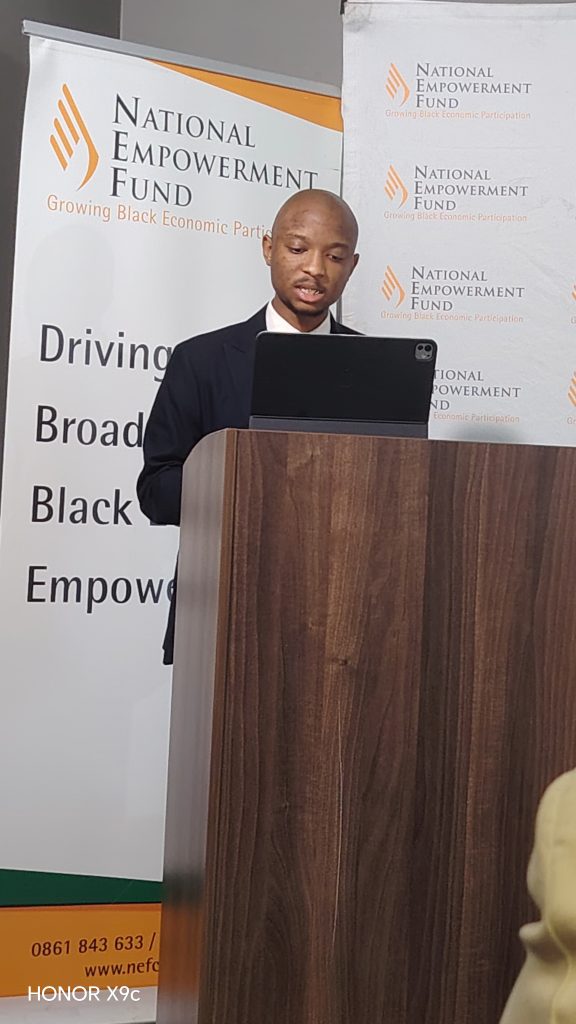
NEF board member Mohammed Bhabha said the agreement’s responsibilities included ensuring that public resources were properly managed and that the institutions reported on the results of their interventions.
He said improving skills alone would not solve unemployment.
“The economy must create opportunities for those skills to be used,” Bhabha said.
“Businesses must be able to grow, employers must create entry points into the workplace, and entrepreneurs must have a reasonable prospect of accessing customers.”
He said the partnership sought to combine the different capabilities of the two agencies, with the NYDA providing youth enterprise development, grant funding, training, mentorship and market-linkage support, and the NEF providing enterprise finance, investment assessment and ongoing business support.
“The partnership is intended to connect financing with this practical assistance,” he said.
ALSO READ: SIU ordered to probe R168m North West tenders linked to Suliman Carrim
Bhabha also cited existing youth development programmes, including the EastCape Academy initiative, which supported 50 beneficiaries in the Painting Artisan Trade over six months.
“It speaks to what we mean when we describe the NEF as a funder with a soul,” he said.
“The Altitude Group Contact Centre programme provided 50 young people with practical workplace experience in communication and customer service. The pilot achieved full employment absorption and generated an additional 38 jobs.”
He said the City of Johannesburg’s Waste-to-Work Programme supported 210 beneficiaries through skills development and enterprise support.
Across the NEF’s skills development initiatives, Bhabha said 405 new jobs were created during the 2025/26 financial year.
He said the NEF planned to expand partnerships involving artisan, technical and digital skills as well as entrepreneurship programmes.
Bhabha said entrepreneurship was only one part of the response to youth unemployment because not every young person wanted to start a business, while successful entrepreneurs could themselves become employers.
“The partnership provides for a steering committee with representatives from both institutions,” he said.
“This should help the teams monitor progress, resolve difficulties and keep their respective responsibilities clear.”
Bhabha said the approach was aligned with the broader objectives of the government’s Transformation Fund by seeking to connect capital, business capability and access to markets while maintaining governance and monitoring outcomes.