
By Thapelo Molefe
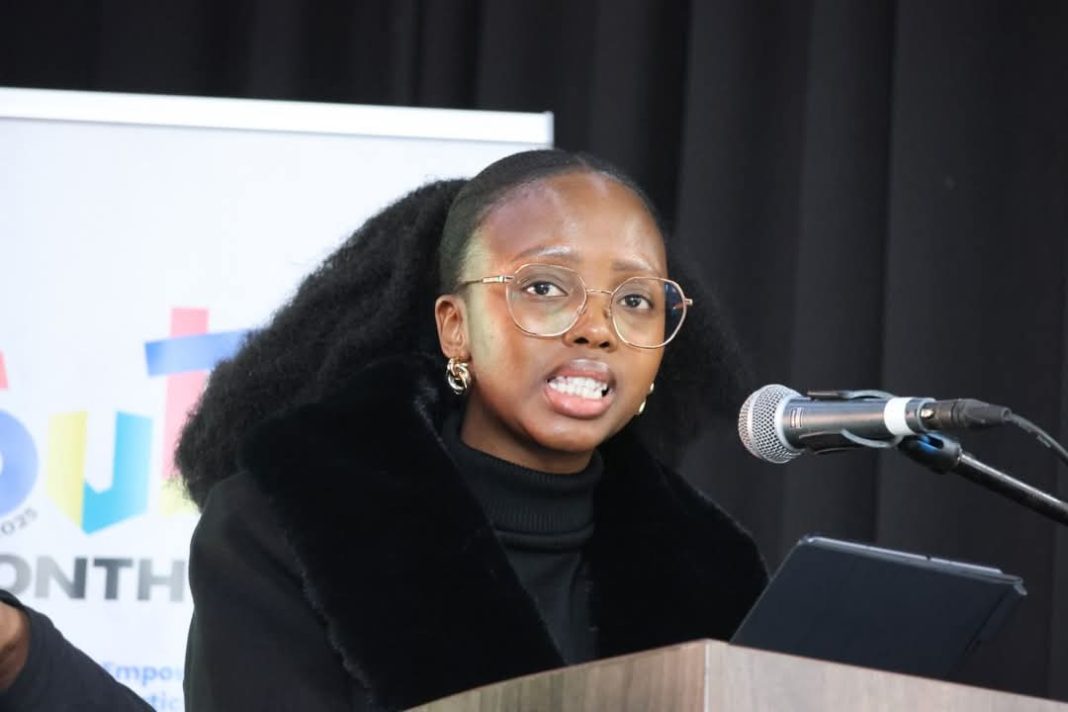
Young South Africans are increasingly becoming more educated, but that education is not translating into employment, warns National Youth Development Agency (NYDA) chairperson Asanda Luwaca.
“The skills gained through our basic education system are not aligned with the needs of industry or the demands of the future,” Luwaca said, highlighting the crisis that continues to undermine the country’s democratic gains.
She was speaking at the Youth Month launch at the Hector Pieterson Memorial in Soweto.
Despite South Africa’s growing number of graduates, she noted that 58% of the 4.8 million unemployed youth have never had formal work experience, an indicator of a system failing to convert education into opportunity.
Referencing Italian thinker Antonio Gramsci, Luwaca described the current moment as an interregnum, where “the old is dying and the new cannot be born”.
For the country’s youth, that meant being suspended between the promises of democracy and the harsh realities of economic exclusion, inequality and stagnation.
Luwaca pointed to gender gaps in the Science, Technology, Engineering and Mathematics (STEM) fields, persistent apartheid-era spatial divisions and underrepresentation of youth and women in decision-making roles.
“Youth make up 34% of the population, but less than a quarter of lawmakers are under 39,” she said. “A nation cannot rise if its future is not seated at the table.”
As part of efforts to close the gap between education and work readiness, Luwaca announced the launch of Phase 4 of the revitalised National Youth Service (NYS).
This phase would expand the programme to 40,000 participants, offering monthly stipends, skills training and post-service employment support.
In partnership with the Unemployment Insurance Fund’s Labour Activation Programme, an additional 4000 job opportunities have been created to help NYS graduates gain crucial entry-level experience, with 1000 positions allocated to Gauteng.
“This programme is a call to build, to uplift and to reimagine our future. It offers a path to earn, learn and serve while restoring dignity and purpose,” Luwaca said.
Echoing Luwaca’s sentiments, Minister in the Presidency for Women, Youth and Persons with Disabilities, Sindisiwe Chikunga, warned that South Africa risked producing a generation of “idle graduates” if learning was not linked directly to economic outcomes.
The minister stressed that the sacrifices of 1976 were made for more than just access to classrooms, but were made for full and equitable participation in society.
“We cannot allow a new form of exclusion where youth have skills on paper but remain locked out of the economy… They didn’t die for degrees that lead to nowhere,” she said.
Chikunga outlined a number of government interventions designed to connect education with economic participation. These included the training of 5000 young people as artificial intelligence, coding and robotics instructors, who would support schools in under-resourced communities.
Another project would train 5000 unemployed TVET graduates to become smallholder goat and sheep farmers, supported with land, livestock and market access.
A cybersecurity training programme has also been launched. It is designed to equip young people with skills in digital forensics, cloud security and AI-driven threat detection, which are areas where South Africa faces a significant talent shortage.
In addition, the government is introducing a drone piloting and technician programme that will focus on the industrial applications of unmanned aerial vehicles in sectors such as logistics, agriculture and emergency response.
To advance gender inclusion, a programme for young women in mining and energy will provide training in mineral beneficiation, renewable energy technology and advanced manufacturing processes aligned with the national Critical Minerals Strategy.
“These aren’t just training exercises. They are about building a new economy led by young people with sharp, relevant skills,” Chikunga said.
Both Luwaca and Chikunga emphasised that Youth Month must not be treated as symbolic, but as a moment to confront structural youth exclusion with urgency
Luwaca invoked Nelson Mandela’s words saying: “Education is the most powerful weapon which you can use to change the world.”
She reminded those attending the launch that education was still the most powerful tool for change, but only when sharpened with skills and matched with real opportunities.
“In 2025, skills are the sharpened edge of that weapon. Let us wield them with courage.”
INSIDE EDUCATION