Home Blog Page 120

Motivation for 2025 – Surround yourself with success

0

By Edwin Naidu

As the year winds down and the focus turns to 2025, amid the nervous wait for thousands of matric results, it is always refreshing to find education providers who employ creative tactics to woo new students.

Public universities, such as the University of Cape Town, University of the Witwatersrand, University of Johannesburg, University of Pretoria and others, raise the bar in targeting new students with innovative campaigns.

However, they have competition ahead. Private education provider Regent Business School has launched an inspiring new campaign for 2025 enrolments

“Surround Yourself with Success” is aimed at inspiring future business leaders.

It may sound like something one reads from the countless motivational pieces of advice one finds on social media. But it is built on the idea that success often stems from surrounding yourself with ambitious, like-minded individuals. The campaign invites students to join a vibrant community of professionals, industry experts and mentors.

It focuses on 2025 enrolments for programmes like an MBA, DBA, BCom, and Higher Certificate and highlights the value of engaging with a successful network.

The campaign particularly appeals to mature students ready to advance their careers or switch fields – a growing segment in Regent Business School’s MBA and DBA programmes.

According to Regent Business School marketing manager Prabashni Reddy, students gained academic knowledge and practical insights through an established network of accomplished professionals.

The school’s postgraduate programmes offer clear paths for those ready to progress. The MBA and DBA programmes provide thorough training and mentorship from expert faculty and industry leaders, helping students reach impactful careers.

South Africa’s supply chain sector is thriving, with career opportunities at all levels, from logistics and procurement to executive roles.

The school is one of the few institutions offering a complete pathway in supply chain management, from foundational courses to advanced degrees. Supply chain professionals are vital in maintaining efficiency, making this sector a cornerstone of the country’s economy.

Data intelligence has become essential in business, and the school recently introduced a postgraduate qualification in business intelligence to meet this need.

Its project management courses are also attracting interest. They prepare graduates to lead projects from start to finish, a valuable skill across industries.

As matriculants consider their next steps, Regent Business School encourages them to explore options like a BCom, which remains the top choice among young students. Nearly 43% of Regent Business School’s students are enrolled in the BCom programme, which provides a strong foundation for finance, marketing, management and other careers.

The business school says its diverse programmes prepare students for roles at every level, allowing them to grow as their careers evolve.

Given the challenges in the public sector, private education schooling and tertiary education is booming.

To make it big, one needs to surround oneself with people of high standards and ambition. Don’t settle for mediocrity. 

INSIDE EDUCATION
UP spin-out company increases access to hearing industry

0

By Johnathan Paoli

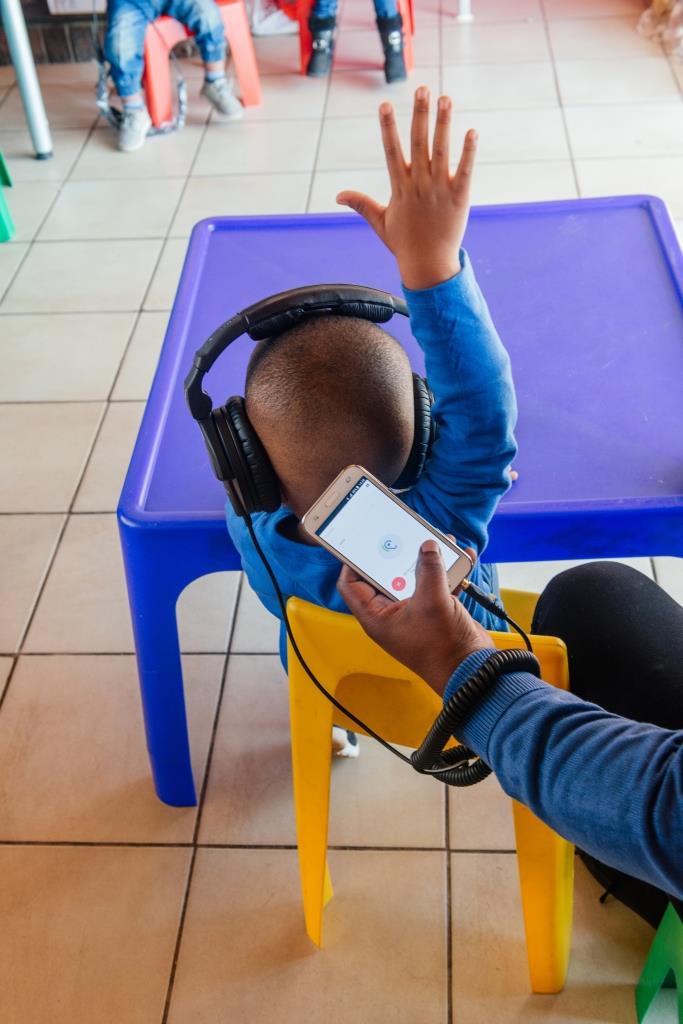
The University of Pretoria (UP) has welcomed the recent milestone of its spin-out company, hearScreen, in its journey from a groundbreaking invention to a global leader in hearing health technology.

In a ceremony marking this achievement, members of UP’s Innovation and Contracts Management Division joined hearX Group executives to sign an agreement transferring the invention’s intellectual property (IP) to hearScreen (Pty) Ltd, a subsidiary of the hearX Group.

UP’s Innovation and Contracts Management head Lawrence Baloyi described the transfer of the IP to the company as a significant milestone for both UP and hearScreen.

“They succeeded in turning an idea into something tangible and, more importantly, they are making a real impact in the world of hearing health. When industry and academia work hand in hand, magic happens,” Baloyi said.

He acknowledged that this would not have been possible without the hard work, vision and perseverance of the entire team.

UP hailed the development as representing the culmination of a university-licensed innovation’s commercialisation process.

Developed in 2016 as a mobile hearing screening application, hearScreen was designed to address the lack of access to hearing tests in underserved communities.

The invention was the result of a collaborative effort between UP researchers De Wet Swanepoel from the Speech-Language Pathology and Audiology Department and Herman Myburgh from the Electrical, Electronic, and Computer Engineering Department.

The innovation quickly gained attention beyond the healthcare sector, drawing interest from industries such as mining and clinical research.

Over the years, hearScreen expanded its offerings to include comprehensive diagnostic tools for occupational health and neonatal care, alongside platforms for fitting and supporting hearing aids.

With the United States deregulating the hearing aid market in 2022, hearX could market over-the-counter hearing aids for mild to moderate hearing loss, positioning the company as a global pioneer in digital hearing solutions, and enabling it to detect, diagnose and treat hearing loss on a large scale.

National Intellectual Property Management Office head Jetane Charsley emphasised the importance of translating research into real-world solutions.

“This success showcases the power of partnerships and the impact of innovation on improving lives,” Charsley said.

The university welcomed hearScreen as illustrating the transformative potential of South African innovation, with a ripple effect poised to advance global healthcare.

INSIDE EDUCATION

Bela Act must kick into gear to transform education

By Edwin Naidu

The political impasse over the contested Basic Education Laws Amendment (Bela) Act must be swiftly resolved to ensure South Africans can learn and teach in schools with level playing fields.

Three decades after apartheid, children are still treated unfairly within the schooling system, with apartheid benefits continuing to persist.

The Act makes grade R, grades 10 to 12, and homeschooling compulsory. However, the most debated and controversial parts of the legislation are the disputed clauses 4 and 5.

The law aims to improve early childhood education and ensure students finish school. It also standardises admissions, language policies, discipline and homeschooling rules to address school system inequalities.

AfriForum, the Democratic Alliance and Freedom Front Plus are opposed to levelling the playing fields for all South Africans. They want to protect their turf as under apartheid.

They are concerned that the new powers granted to provincial education officials could be used to force single-language schools, particularly Afrikaans-medium schools, to change their language policies. They fear schools may be pressured to adopt dual-medium education, which could dilute mother-tongue instruction and increase running costs. There is also concern that officials might override admission policies, potentially overcrowding schools already operating efficiently.

Following opposition in September, President Cyril Ramaphosa put a hold on implementing Sections 4 and 5 of the Act – relating to language policy and admissions processes at schools – for three months to allow for deliberation among GNU parties.

During the Bill’s public signing, Ramaphosa made it clear that if the parties could not reach an agreement before the deadline on Friday, 13 December, full implementation of the Act would proceed.

Following deliberations, the matter is in the hands of the president.

One hopes for a speedier outcome than the usual slow pace from the President.

Thirty years after democracy, South Africa’s learners are no closer to benefiting from a system that decently equips them for the 21st century. The Bela Act must come into being to transform the schooling system that is mired with problems.

For example, despite the National School Nutrition Programme to address hunger, malnutrition and micronutrient deficiencies, in the past year, the Department of Basic Education confirmed 23 deaths of children between six and nine at schools through food poisoning incidents.

Since the beginning of September 2024, 890 reported incidents of food-borne illnesses across all provinces have been reported. Gauteng and KwaZulu-Natal have been the most affected, with Limpopo, Free State and Mpumalanga recording dozens of incidents.

Early in her tenure, Basic Education Minister Siviwe Gwarube pledged to eradicate pit latrine toilets. In 2013, they were banned from schools and meant to be removed and replaced by 2016. Eight years later, all targets were missed, with an estimated 3900 pit latrine toilets remaining.

Empty promises are of no consolation to parents whose children have perished in pit latrines throughout the country. The Department says they will be eradicated by 2025. Promises! Promises!

But if the Minister does not put South Africa ahead of her party, the DA, there is little hope in achieving her lofty ambitions without the provisions of the BELA Act.

Edwin Naidu is the Editor of Inside Education.

INSIDE EDUCATION

Active minds, healthy futures: Revolutionising African education through movement

0

By Dr Oscar Mwaanga, Tracy Chifita and Obrain Mwaanga

Also called Physically Active Learning (PAL) or Physically Active Teaching and Learning (PATL), PAE is an active learning pedagogy that utilizes physical activity as a modality for learning. PAE redefines the role of movement in education by integrating it directly into academic lessons, unlike traditional Physical Education (PE).

This innovative approach creates dynamic and engaging learning environments that enhance cognitive function, social cohesion, and emotional well-being.

Introducing Physically Active Education (PAE)

Research consistently shows that physically active children perform better academically, with improved memory, attention, and problem-solving skills. By embedding movement into daily learning routines, PAE addresses the dual crises of declining physical health and disengagement in education. With proven benefits such as improved cognitive functions, reduced non-communicable disease risks, and better mental health outcomes, PAE is a vital tool for addressing health and education disparities and advancing sustainable development goals

Bridging Health and Education: Evidence from Research

A systematic review of 35 studies reveals PAE’s profound impact. In 85% of cases, PAE improved cognitive functions, while 72% of studies reported reduced risks of non-communicable diseases (NCDs), and 68% highlighted mental health benefits. These findings underscore PAE’s potential to address critical health and education disparities in African contexts. PAE’s benefits are not limited to academic performance. It also reduces economic burdens by mitigating healthcare costs associated with inactivity-related diseases. For sub-Saharan Africa, where the financial toll of inactivity could escalate from $8 billion in 2019 to $12.4 billion by 2030, adopting PAE is a cost-effective preventive strategy.

Decolonising Education Through PAE

PAE’s transformative potential extends beyond health and education—it challenges colonial legacies in African educational systems. Historically, these systems have marginalised indigenous knowledge and cultural practices, reinforcing a dualistic separation of mind and body. PAE bridges this gap, promoting a monistic understanding of education that values both physical and cognitive development. Incorporating traditional African games into curricula exemplifies this decolonial approach. For instance, the Zambian game ichanto has been used to teach mathematical concepts, blending cultural heritage with academic learning. Such practices not only enhance educational outcomes but also instil cultural pride and identity among learners.

Addressing Implementation Challenges and Leveraging Opportunities

Implementing PAE in African schools faces significant challenges, including limited resources, overcrowded classrooms, inadequate infrastructure and insufficient teacher training. However, Africa’s unique strengths, particularly its abundant outdoor spaces, present significant opportunities to overcome these challenges.

Outdoor spaces can serve as cost-effective venues for implementing PAE, reducing the dependency on formal infrastructure and fostering creative approaches to integrating physical activity into lessons. Community-based resource sharing and partnerships with SfD organisations provide avenues to mitigate resource constraints, offering financial, material, and technical support. Professional development programmes are critical for equipping teachers with the skills to embed PAE into their teaching practices effectively. Mobile learning units and outdoor activities can further extend PAE’s reach to under-resourced schools, ensuring inclusivity and equity.

One compelling opportunity is particularly in rural Africa’s rich cultural heritage of outdoor lifestyles and communal learning. By leveraging these cultural and environmental strengths, African education systems can adopt PAE as a practical and culturally aligned strategy. This approach not only addresses existing challenges but also enhances cognitive and physical well-being, fostering a generation of resilient, adaptive learners while advancing both health and education outcomes across the continent.

A Call to Action: Seizing the Policy Window

Kingdon’s Multiple Streams Framework provides a lens to understand PAE’s potential for policy adoption. The convergence of pressing health and education challenges (problem stream), evidence-based solutions like PAE (policy stream), and stakeholder advocacy (politics stream) creates a unique opportunity for transformative change. Policymakers, educators, and international stakeholders must prioritise PAE as a cornerstone of educational reform. By embedding physical activity into African education systems, they can create dynamic learning environments that prepare children to navigate the complexities of the 21st century.

Conclusion: A Vision for Holistic Development

Physically Active Education is more than a pedagogical strategy; it represents a movement toward holistic child development, cultural reclamation, and sustainable growth. As Africa seeks to overcome challenges in health and education, PAE provides a transformative pathway to nurture resilient, adaptive, and thriving generations equipped with the cognitive, emotional, and physical skills necessary for the future. To ensure widespread adoption, stakeholders must champion policies that prioritise PAE, invest in infrastructure, and support teacher training initiatives. By bridging the gap between knowledge and well-being, PAE fosters a healthier, more equitable continent, paving the way for Africa’s youth to lead in a dynamic, AI-driven era.

Mwaanga is theProgramme Director for the Post Graduate Certificate in International Sports Management at the University of London, and Chifita is a physical education and sports lecturer at Malcolm Moffat College of Education.

This article was originally published in the International Platform on Sport and Development (sportanddev)

Education help desk addresses thousands of queries since launch

0

By Akani Nkuna

Deputy Higher Education Minister Mimmy Gondwe has praised the efficiency of her department’s help desk in addressing queries, saying it demonstrates the government’s commitment in supporting students and stakeholders in the sector.

“I am happy to announce that since its establishment in August this year, as of the end of November, the desk has dealt with close to 7000 queries and managed to resolve 75% of those queries,” said Gondwe said in a newsletter published by her department.

The primary function of the help desk is to offer swift, personalised support to students and stakeholders, addressing queries and concerns, particularly those related to National Student Financial Aid Scheme and the delayed issuance of diplomas and certificates.

“It emerged early on in my tenure that students and other stakeholders did not feel they had an outlet where their grievances and issues were heard and promptly responded to. My response to this was to establish the help desk in my office,” Gondwe added.

In the newsletter, the deputy minister spoke about the Government of National Unity and its priorities, which included inclusive growth and job creation, making it easier for people to access opportunities and benefit from economic growth.

“Education must be seen as a means to an end which is ensuring that those who acquire it can use their skills to participate meaningfully in the economy either as employees or as entrepreneurs employing others,” she said.

The department co-hosted the inaugural Skills and Jobs Investment Summit with the Johannesburg Business School at the University of Johannesburg, bringing together key stakeholders. They were from the post-school education and training sector, TVETs, SETAs, government, industry and academia.

“The summit succeeded in bringing to light the pressing issues in South Africa’s skills development landscape by fostering meaningful dialogue among stakeholders from industry, academia, government, and community organizations,” Gondwe said.

It provided a platform for a thorough examination of the existing gaps between education and employment, identifying the key challenges that prevented educational institutions from producing graduates with skills that meet the demands of the labour market.

Gondwe welcomed the initiative to create innovation hubs and integrate entrepreneurial skills into education programmes, recognising its potential to prepare graduates for both employment and self-employment.

She also voiced concerns about the proliferation of unaccredited and fraudulent private colleges nationwide, which could undermine the quality of education and hinder the country’s progress.

“Bogus or illegal colleges that do not follow or flout the prescripts of the law cause, what is sometimes irreparable harm to students when they are forced to shut down,” she said.

The department partnered with the City of Joburg in November to launch an awareness campaign to expose and prevent illegal or bogus private higher education institutions.

It seeks to educate prospective students on how to identify and avoid these unaccredited colleges.

INSIDE EDUCATION

‘I was scared’: many student teachers had bad maths experiences at school. Here’s how they can do better

0

By Tracey Muir, Julia Hill and Sharyn Livy

What do you remember about maths at school? Did you whizz through the problems and enjoy getting the answers right? Or did you often feel lost and worried you weren’t keeping up? Perhaps you felt maths wasn’t for you and you stopped doing it altogether.

Maths can generate strong emotions in students. When these emotions are negative, it leads to poor mathematical wellbeing. This means students do not feel good when doing maths and do not function well. They may experience feelings of hopelessness and despair, and view themselves as incapable of learning maths.

Poor mathematical wellbeing, if not addressed, can develop into maths anxiety). This can impact working memory (which we use for calculating and problem-solving) and produce physical symptoms such as increased heart and breathing rates. It can also lead to students avoiding maths subjects, courses and careers.

Research shows students often start primary school enjoying and feeling optimistic about maths. However, these emotions can decline rapidly as students progress through school and can continue into adulthood.

Our new, as-yet-unpublished, research shows how this can be an issue for those studying to become teachers.

Our research

We frequently see students enter our university courses lacking confidence in their maths knowledge and ability to teach the subject. Some students describe it as “maths trauma”.

To better understand this issue, we surveyed 300 students who are studying to be primary teachers. All were enrolled in their first maths education unit.

We asked them to recount a negative and positive experience with maths at school. Many described feelings of shame and hopelessness. These feelings were often attributed to unsupportive teachers and teaching practices when learning maths at school.

‘I felt so much anxiety’

The responses describing unpleasant experiences were highly emotional. The most common emotion experienced was shame (35%), followed by anxiety (27%), anger (18%), hopelessness (12%) and boredom (8%). Students also described feeling stupid, afraid, left behind, panicked, rushed and unsupported.

Being put on the spot in front of their peers and being afraid of providing wrong answers was a significant cause of anxiety:

The teacher had the whole class sitting in a circle and was asking students at random different times tables questions like ‘what is 4 x 8?’ I remember I felt so much anxiety sitting in that circle as I was not confident, especially with my six and eight times tables.

Students recalled how competition between students being publicly “right” or “wrong” featured in their maths lessons. Another student recalled how their teacher held back the whole class until a classmate could perfectly recite a certain times table.

Students also told us about feeling left behind and not being able to catch up.

In around Year 9, I remember doing algebra, and feeling like I didn’t ‘get’ it. I remember the feeling of falling behind. Not nice! The feeling of gentle panic, like you’re trying to hang on and the rope is pulled through your hands.

Students also described the stress of results being made public in front of their classmates. Another respondent told us how the teacher called out NAPLAN maths results from lowest to highest in front of the whole class.

‘I was scared of maths teachers’

In other studies, primary and high school students have said a supportive teacher is one of the most important influences on their mathematical wellbeing.

In our research, many of the students’ descriptions directly mentioned “the teacher”. This further shows how important the teacher/student relationship is and its impact on students’ feelings about maths. As one student told us, they were:

[…] belittled by the teacher and the class [was] asked to tell me the answer to the question that I didn’t know. I felt lost and embarrassed and upset.

Another student told us how they were asked to stay behind after class after others had left because they didn’t understand “wordy maths problems”.

[there were] sighs and huffs from the teacher as it was taking so long to learn. I was scared of maths and maths teachers.

But teachers were also mentioned extensively when students reflected on pleasant experiences. Approximately one third of student responses mentioned teachers who were understanding, kind and supportive:

In Year 8 my teacher for maths made it fun and engaging and made sure to help every student […] The teacher made me feel smart and that if I put my mind to it I could do it.

What can we do differently?

Our research suggests there are four things teachers can do differently when teaching maths to support students’ learning and feelings about maths.

1. Work with negative emotions: we can support students to tune into negative emotions and use them to their advantage. For example, we can show students how to embrace being confused – this is an opportunity to learn and with the right level of support, overcome the issue. In turn, this teaches students resilience

2. Normalise negative emotions: we can invite students to share their emotions with others in the class. Chances are, they will not be the only one feeling worried. This can help students feel supported and show them they are not alone

3. Treat mathematical wellbeing as seriously as maths learning: teachers can be patient and supportive and make sure maths lessons are engaging and relevant to students’ lives. When teachers focus on enjoying learning and supporting students’ psychological safety, this encourages risk-taking and makes it harder to develop negative emotions

4. Ditch the ‘scary’ methods: avoid teaching approaches that students find unpleasant – such as pitting students against each other or calling on students for an answer in front of their peers. In doing so, teachers can avoid creating more “maths scars” in the next generation of students.

Muir is Professor in Education (STEM), Australian Catholic University, Hill is Lecturer in Mathematics and Numeracy Education, The University of Melbourne,  Livy is Senior Lecturer, Mathematics Education, Monash University

The Conversation

DBE files high court appeal against barring of publishing matric results

0

By Johnathan Paoli

The Basic Education Department has instituted legal proceedings to set aside an enforcement notice, barring the publication of matric results in newspapers.

Basic Education spokesperson Elijah Mhlanga said the department filed its papers against the Information Regulator (IR) at the North Gauteng High Court on Friday.

“The appeal means that the enforcement notice has been suspended and that the department will proceed and release results to media houses who will publish in terms of the established practice in which only exam numbers are used,” Mhlanga said.

In September, the regulator accused the department of non-compliance with the Protection of Personal Information Act, specifically Section 11, stating that the department had failed to attain consent from learners.

The spokesperson said the appeal focused on four areas.

Mhlanga said an enforcement notice under Section 95(1) of the Act could only be issued and served in respect of a past or present interference with the protection of the personal information of a data subject and was reactive in nature; making the proactive barring null and void.

Secondly, he said that the IR was already bound by a court order regarding the lawfulness of the release.

Thirdly, Mhlanga confirmed that information revealed in the newspapers did not relate to an identifiable person and was, therefore, not in contravention of Section 11 of the Act.

Lastly, Mhlanga maintained that the information published was in any event compliant with the processing limitations contained in either Ssection 11(1)(b)-(f) of the legislation.

He said despite the IR’s statement that the department had failed to demonstrate compliance with the law, it was for the regulator to positively demonstrate non-compliance.

“The decision to serve the department with the enforcement notice is not in accordance with the law and involves an exercise of discretion by the IR that ought to have been exercised differently,” Mhlanga said.

This comes on the heels of AfriForum, via its legal team, Hurter Spies Attorneys, issuing a letter of demand to Basic Education Minister Siviwe Gwarube seeking clarity on the matter, and whether the department intended to file an appeal against the notice and officially declare its position in relation to the IR.

“Our client’s position is that the regulator erred in issuing the enforcement notice and our instructions are to assist our clients with urgent review proceedings in order to have the enforcement notice reviewed and set aside,” the letter read.

The results will be announced on 13 January next year.

INSIDE EDUCATION

Celebrating 30 years of science, technology and innovation

0

By Edwin Naidu

The 2024 Science Forum concluded with a resounding celebration of South Africa’s science and technology innovation achievements.

“One of the best decisions made by newly democratic South Africa in 1994 was to create a department dedicated to science, technology, arts and culture.  As this democracy matured, an even more insightful decision was adopted – a fully-fledged Department of Science and Technology,” Dr Naledi Pandor, who has a keen interest in science, recently said.

She said it was interesting to examine South Africa’s beginnings as a democracy to understand its progress and failings.

In 1994, the first minister of this portfolio, Ben Ngubane, announced the establishment of a national archival system aligned with the democratic principles of our new Constitution.

In the second Parliament, Ngubane referred to the need to train oral historians, work to reflect our nation’s diversity in archival records, and use archives to reflect the history of all our people. He also referred to the role technology would play in broadening access to archives.

In the third Parliament from 2004 to 2009, the archive focus expanded significantly to include the Memory of the World programme, Freedom Park, the Lilliesleaf Project, and the creation of the Oral History Association of South Africa.  This period also marked the affirmation of seminal archives that would be a focus of the department.

“This recollection is a useful reminder that while the 1994 government began a focus on a range of scientific disciplines, they also dedicated attention to the importance of historical record and its role in advancing science from rock painting to written record, to transcript, to wireless and digital,” she said.

Pandor noted that the development of science, technology and innovation in South Africa has marked steady advances in palaeontology, astronomy, biotechnology, laser science and artificial intelligence.

South Africa’s science, technology, and innovation system has made commendable pro0gress in the 30 years of democracy alongside immensely troubling and stubborn challenges.  In the Kaplan report of 1996, it was indicated that while South Africa had considerable scientific and technological capabilities, the new democratic government inherited a system that harboured considerable resistance to change and would operate under significant economic constraints,” she added.

The report offered policy advice to the new democratic government, suggesting that it works to develop a science and technology system that would simultaneously support the emergence of an internationally competitive business sector and the enhanced provision of infrastructure such as housing, clean water, and domestic electricity.

During the 1995-96 financial year, she said the budget for the department was around R2,8 billion

“The budget has more than doubled in the 30 years but has not reached nor exceeded the target of at least 1% of GDP devoted to science and innovation.”

Despite the inadequate funding, Pandor said South Africa has marked important areas of progress. “

This is largely due to excellent research universities, science agencies, skilled scientists and a keen and bright youthful science population.”

She added that critical capacity has been achieved in astronomy capabilities. The Square Kilometre Array project was the best-known example, alongside the Meerkat, the SALT telescope initiative and the Satellite Centre.

Furthermore, considerable data computing skills, engineering feats and exciting imagery of dark matter are all outcomes of this area of science and innovation. 

The SKA was iconic for these reasons, as was the Africa collaboration and the global partnerships that created the best science.

“Our challenges remain a worrying decline in resources and a growing wariness among young researchers about the viability of pursuing a full-time research career.  Sadly, the sector is also not immune to the impact of the current toxic geopolitical environment. South Africa’s support for the struggle for sovereignty has resulted in some key research initiatives that rely on international funding, facing the threat of funds being withdrawn,” she said.

“This is reportedly happening to universities that have decided not to pursue links with institutions in Israel that have links to the military actions in Palestine.  The department needs to focus on the likely impact of such funds withdrawal on institutions and researchers and support them in identifying alternative resources.”

One of the most critical areas of success recently, Pandor said, was the work done by South African scientists in identifying a Covid-19 virus variant (Omicron), and thus alerting the globe early to this threat.

“That discovery placed South African researchers and their collaborators at the apex of science excellence. This is the kind of advance our government must continue supporting and investing in.”

Science, Technology and Innovation Minister Blade Nzimade has said that going forward, he believes that one of the areas that must get critical attention is the funding of research in Africa and the development of a sovereign African research agenda.

Innovation in the country led by the department was now aimed at supporting the country’s apex priorities of inclusive growth and job creation, reducing poverty and tackling the high cost of living, and building a capable, ethical and developmental state.

INSIDE EDUCATION

Final call for NSFAS applications

0

By Alicia Mmashakana

The deadline for funding applications for next year from the National Student Financial Aid Scheme (NSFAS) closes at midnight on Sunday.

Higher Education and Training Minister Nobuhle Nkabane has urged students to apply before the deadline.

She said in a statement that since the 2025 NSFAS funding applications opened on 20 September 2024, the scheme has received 738,117 applications from students needing financial aid.

Of these, 543,357 applicants have been provisionally approved for funding,150,655 applications are pending evaluation and 23,112 students have withdrawn their applications.

A total of 20,993 applications have been deemed unsuccessful.

Applicants must be South African citizens who plan to study in 2025, or who are already enrolled in a public university or TVET college and meet the following requirements:

• SA Social Security Agency grant recipients.

• Applicants whose combined gross household income is not more than R350,000 per year.

• Persons with disabilities whose combined gross household income is not more than R600,000 per year.

• Must have an email account and cell phone number.

“Applicants should remember that timely submission is key to securing financial assistance from NSFAS. Therefore, applicants are urged to mark their calendars and ensure that they complete all required steps before the closing date,” the department said.

INSIDE EDUCATION

SA waits for Ramaphosa to decide on education law

0

By Johnathan Paoli

While Friday is the deadline on a decision on contentious clauses in the Basic Education Laws Amendment (Bela) Act, President Cyril Ramaphosa will most likely make an announcement in the coming days.

Deputy President Paul Mashatile told the SA Communist Party’s national congress on Friday that he handed over his report on matter to the president on Thursday night.

Mashatile’s office is the secretariat of the Government of National Unity clearing house mechanism, which was set up in September to resolve policy disagreements within the 10-member GNU.

He told SACP delegates that Ramaphosa assured him that he would be making an announcement concerning the legislation very soon.

At the centre of the dispute are clauses 4 and 5, which deal with language and placement policies at schools. Ramaphosa gave parties and other stakeholders three months to reach a compromise.

Both the Young Communist League and the Congress of SA Trade Unions on Friday called for the Act to be implemented as is.

YCL president Mluleki Dlelanga criticised the resistance to the law, which he associated with lingering racial disparities in education.

“These people want us to watch rugby with them, but they don’t want our children to study with their children,” he told the congress.

Cosatu’s 1st deputy president Mike Shingange said the future political discourse of the country was dependent upon who was in control of the direction on transforming the education landscape.

He said Cosatu did not give much credence to the three months stipulated by the president.

“The deadline is not today, it was the day that President Ramaphosa signed the Bela Bill into law,” Shingange said.

He also warned that when the SA Democratic Teachers’ Union launched its protest action against compromises on transformation in education, Cosatu would support them.

“When Sadtu goes to the street, they will not go alone. We will fight the Democratic Alliance to ensure that the class struggle is continuing,” he said.

Meanwhile, the Solidarity Movement said it was waiting to hear what the president would decide.

“Should the president continue to promulgate the controversial sections before appropriate norms, standards and regulations have been developed, Solidarity and AfriForum will continue to take legal action because it will be unlawful,” it said in a statement on Friday.

INSIDE EDUCATION