Home Blog Page 121

SA waits for Ramaphosa to decide on education law

0

By Johnathan Paoli

While Friday is the deadline on a decision on contentious clauses in the Basic Education Laws Amendment (Bela) Act, President Cyril Ramaphosa will most likely make an announcement in the coming days.

Deputy President Paul Mashatile told the SA Communist Party’s national congress on Friday that he handed over his report on matter to the president on Thursday night.

Mashatile’s office is the secretariat of the Government of National Unity clearing house mechanism, which was set up in September to resolve policy disagreements within the 10-member GNU.

He told SACP delegates that Ramaphosa assured him that he would be making an announcement concerning the legislation very soon.

At the centre of the dispute are clauses 4 and 5, which deal with language and placement policies at schools. Ramaphosa gave parties and other stakeholders three months to reach a compromise.

Both the Young Communist League and the Congress of SA Trade Unions on Friday called for the Act to be implemented as is.

YCL president Mluleki Dlelanga criticised the resistance to the law, which he associated with lingering racial disparities in education.

“These people want us to watch rugby with them, but they don’t want our children to study with their children,” he told the congress.

Cosatu’s 1st deputy president Mike Shingange said the future political discourse of the country was dependent upon who was in control of the direction on transforming the education landscape.

He said Cosatu did not give much credence to the three months stipulated by the president.

“The deadline is not today, it was the day that President Ramaphosa signed the Bela Bill into law,” Shingange said.

He also warned that when the SA Democratic Teachers’ Union launched its protest action against compromises on transformation in education, Cosatu would support them.

“When Sadtu goes to the street, they will not go alone. We will fight the Democratic Alliance to ensure that the class struggle is continuing,” he said.

Meanwhile, the Solidarity Movement said it was waiting to hear what the president would decide.

“Should the president continue to promulgate the controversial sections before appropriate norms, standards and regulations have been developed, Solidarity and AfriForum will continue to take legal action because it will be unlawful,” it said in a statement on Friday.

INSIDE EDUCATION

UCT adopts new policies on research and academic misconduct

0

By Johnathan Paoli

The University of Cape Town will introduce a number of initiatives next year aimed at enhancing its research output and addressing any research misconduct.

They include the Research Misconduct Policy, the Research Finance Gate (RFG), and preparations for the 2026 Reputation Surveys.

“Maintaining the highest ethical standards in research is essential to UCT’s mission of advancing knowledge and innovation,” said Acting Deputy Vice-Chancellor for Research and Internationalisation, Jeff Murugan.

He said the initiatives underscored the university’s dedication to maintaining its reputation for research excellence and ethical practices.

Scheduled to come into effect at the beginning of March next year, Murugan said the policy established a clear and transparent framework to address allegations of research misconduct with fairness and due diligence, while introducing a two-stage investigation process.

It included an initial evaluation to determine whether a formal investigation was warranted, and a deeper probe into allegations if matters escalated.

Murugan said that investigations were both thorough and impartial while protecting the confidentiality and rights of all parties involved, highlighting measures to avoid conflicts of interest and emphasising the role of the Faculty Research Integrity Advisors in providing localised support.

Alongside the new misconduct policy, the university has initiated the roll out of the RFG, which is a system designed to streamline financial processes for research projects.

He said the RFG aimed to enhance accountability and efficiency in managing research funds, supporting the university’s commitment to financial integrity in its research operations.

Details on the RFG, including training and implementation schedules, would be communicated in the coming months.

Murugan has invited researchers and staff to engage with available resources to ensure a seamless transition to new frameworks.

INSIDE EDUCATION

Africa’s AI experts push for continent to lead G20 economic solutions

By Akani Nkuna

Experts at the Council for Scientific and Industrial Research want African Artificial Intelligence to take centre stage in G20 discussions, stressing its crucial role in shaping the continent’s future.

South Africa assumed the G20 Presidency at the start of the month.

AI experts from the CSIR have stepped forward to lend their expertise, aiming to inform the G20’s efforts to tackle pressing global economic issues. They recently attended the Science Forum South Africa 2024, which was hosted by the Science, Technology and Innovation Department.

CSIR technologist Laing Lourens said on Thursday that Africa had a young population compared to Europe and other parts of the world. This meant that in 10 years, those young Africans would be global leaders.

According to Lourens, the Deep Learning Indaba, which was a grassroots AI and machine learning movement that now has a presence in 47 African countries in the form of sub-communities called Deep Learning IndabaX (DLIX), fell squarely in line with the G20’s objectives.

“The movement is led by young people pushing for African AI to address global challenges like agriculture, health, climate change, economic inequality and youth development,” he said.

Lourens noted that the CSIR has a strong connection to the Deep Learning Indaba, with alumni instrumental in its founding, and continues to back local DLIX initiatives.

The Deep Learning Indaba has spawned thriving African AI community groups, including Masakhane, SisonkeBiotik, and Ro’ya-CV4Africa, which are pioneering vital technologies and innovations across the continent.

“All of these organisations are regularly publishing new research in peer-reviewed journals and growing businesses – which is amazing for grassroots non-profits.

“It is now also time for this uniquely African innovation to include grassroots communities on other continents,” said Lourens, speaking on behalf of the AI experts who participated in the SFSA 2024 discussion.

Lourens emphasised that as key players in a field crucial to sustainable development, African AI communities and experts connected to the CSIR stood poised to make meaningful contributions to the G20 agenda.

At the forum, the CSIR engaged in various discussions and exhibitions, showcasing AI’s potential to address pressing challenges such as zoonotic disease management, pandemic preparedness, hydrogen energy, water cooperation, sustainable food systems, advanced manufacturing, literacy-enhancing technologies and tailored cancer treatments for African patients.

INSIDE EDUCATION

Lesufi draws a line in the sand on Bela

0

By Johnathan Paoli

Gauteng premier Panyaza Lesufi has welcomed the efforts of progressive forces within the Tripartite Alliance, despite them being undermined by some who are opposed to the transformation agenda.

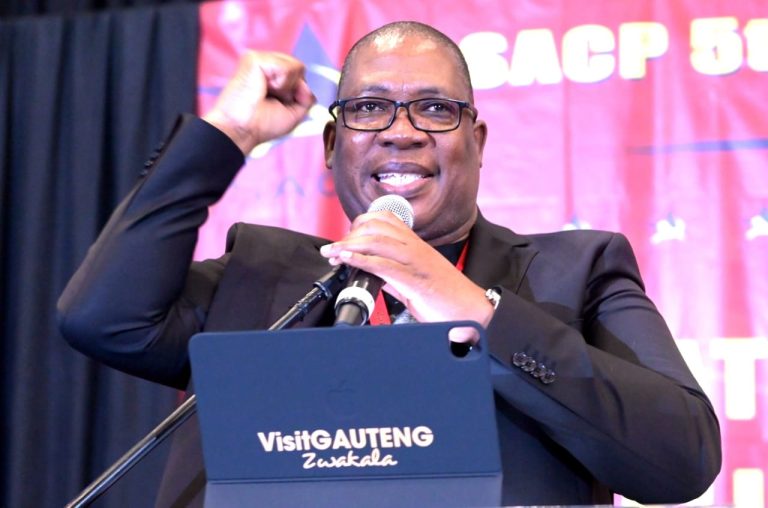
Speaking at the SA Communist Party’s national congress on Thursday, Lesufi once again called on President Cyril Ramaphosa to allow the immediate implementation of the Basic Education Laws Amendment (Bela) Act.

“The doors of learning and culture should be open for all. Not only must we be on the side of our children, but we must bring an end to the discrimination and attack on our children,” he said.

Lesufi stressed the importance of Friday in bringing a close on the matter after  months of tension and speculation surrounding clauses 4 and 5 of the Act, which deal with language and placement policies.

Ramaphosa has given parties until Friday to reach a compromise, warning if they do not, he will implement the clauses as are.

Lesufi intimated that failure to maintain a strong stance regarding Bela would have consequences for other progressive legislation, including the National Health Insurance, which similarly has been at the centre of contentious positions.

“Betrayal is not an option and cowards must step aside,” Lesufi said.

This comes within the context of the SACP’s general position concerning Bela, with spokesperson Alex Mashilo emphasising the need to combat practices which effectively deprive African learners of access to schools through exclusionary admission and language policies, which act as barriers rather than enabling access.

“These clauses are critical to end the practices of school governing bodies that uphold the apartheid legacy of discrimination and exclusion,” Mashilo said.

Both Lesufi and Mashilo called into question the disingenuousness of the recent National Economic Development and Labour Council agreements surrounding the legislation.

“The SACP denounces machinations to manipulate Nedlac processes through selective consultation. No legitimate Nedlac process can legitimise racist agendas,” Mashilo said.

INSIDE EDUCATION

LenkaBula to serve as Unisa Vice-Chancellor for a second term

0

By Lungile Ntimba

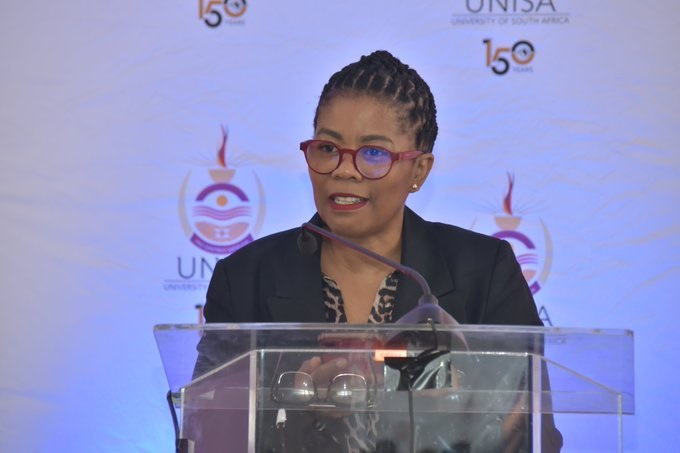
Unisa’s council has reappointed Prof. Puleng LenkaBula as Principal and Vice-Chancellor for another five years, effective 1 January 2026.

This decision follows a thorough review process of her initial term, which was deemed robust, rigorous and fair.

She was appointed as the first woman vice-chancellor in the University’s almost 150 year-history in 2021.

Her first term has been marked by significant achievements, including improved scientific output, teaching and learning, as well as increased internationalisation and partnerships.

Unisa council chairperson DD Mosia said the council remained confident in LenkaBula’s leadership.

“…she has been instrumental in fostering sustainable growth and stability at the institution and she is ideally positioned to lead Unisa into its next chapter of growth and innovation,” Moisa said in statement.

LenkaBula expressed her gratitude for the reappointment, committing to advancing Unisa’s mission of “Shaping Africa’s Intellectual Futures”.

“I am deeply honoured and appreciative of the confidence expressed by the university’s council in me. I am committed together with the university’s management to advancing the university’s mission of Shaping Africa’s Intellectual Futures and to continue to create opportunities for students and staff alike to succeed,” LenkaBula said.

“I look forward to working closely with the various university communities, alumni and diverse stakeholders to bring this vision to life.”

Meanwhile, the African National Congress commended the council for recognising LenkaBula’s commitment to promoting diversity and gender equality in higher education.

“Her reappointment is a testament to her efforts in aligning the university’s academic programmes with the nation’s economic needs, fostering a strong skills base and addressing historical inequalities in education,” said the ANC national spokesperson Mahlengi Bhengu-Motsiri.

She praised LenkaBula’s historic leadership, saying she has broadly enhanced Unisa’s institutional stability, teaching and learning, while advancing its transformation agenda.

The ANC reaffirmed its support for higher education as a pillar for building a knowledge-driven economy and an equitable society.

INSIDE EDUCATION

Clock ticking for GNU to reach a compromise on Bela Act

0

By Johnathan Paoli

South Africans are on tenterhooks ahead of the Basic Education Laws Amendment (Bela) Act deadline this week.

Political parties in the Government of National Unity were given three months to find a compromise on contentious sections of the Act.

Friday is D-Day.

Spokesperson for the Presidency, Vincent Magwenya, said that President Cyril Ramaphosa was expected to make a decision following the conclusion of ongoing negotiations.

“The president is waiting for the outcome of those talks,” Magwenya said.

The Act, signed into law in September, has sparked controversy, particularly over Sections 4 and five, which shift the responsibility for school admissions and language policies from School Governing Bodies to provincial education departments.

While the deadline is Friday, it does not mean that the president will decide what to do at the end of the week.

The SA Democratic Teachers’ Union has issued an urgent letter to Ramaphosa, demanding the immediate implementation of Sections 4 and 5 of the legislation.

Sadtu, which is the country’s largest teacher union, has warned that failure to implement the law in its entirety would result in legal and industrial action.

In the letter, Sadtu reminded Ramaphosa that the Act was passed to address historical imbalances and promote access to quality public education.

It said the Act has not been challenged in court for its constitutionality, nor has any court declared it invalid. Therefore, there was no lawful reason to delay its implementation.

Sadtu believes that the postponement of the implementation of these sections is politically motivated, primarily driven by objections from Basic Education Minister Siviwe Gwarube and the Democratic Alliance.

The union pointed out that the Act had undergone more than a decade of consultation, with the DA participating in the process.

Furthermore, it rejected a bilateral agreement signed between the minister and Solidarity at the National Economic Development and Labour Council, describing it as an attempt to promote racial discrimination in schools.

But DA basic education spokesperson Delmaine Christians told Inside Education that the Presidency was yet to provide further guidelines on the way forward.

“I expect that there will be a multi-party discussion in the new year to clear up any further issues.”

While Sadtu supports the legislation, Solidarity and AfriForum are vehemently opposed to the disputed clauses.

Solidarity spokesperson Werner Human warned that the clauses could violate the Constitution and stressed the need for more time to create the necessary norms and regulations.

The DA has also criticised any attempts to force the dismissal of Gwarube.

Party leader John Steenhuisen has defended Gwarube, accusing factions within the ANC of using the dispute to target her politically.

INSIDE EDUCATION

A carrot-and-stick approach is needed for gender inclusivity in tertiary education

0

By Edwin Naidu

In one of her first media engagements since her appointment as Minister of Higher Education and Training, Nobuhle Nkabane told Inside Education that she would push for more women to occupy senior roles in the country’s heavily male-dominated ivory towers of learning. 

“I envision more women PhD holders with extensive experience in the sector taking up the space as VCs [vice-chancellors] at the institutions of higher learning, and challenging the status quo,” Nkabane said.  

Since her appointment, three of South Africa’s top institutions – the University of Cape Town, the University of the Western Cape and Stellenbosch University– have not heeded the minister’s call. They have appointed men to senior posts despite women being on the shortlist at each institution. 

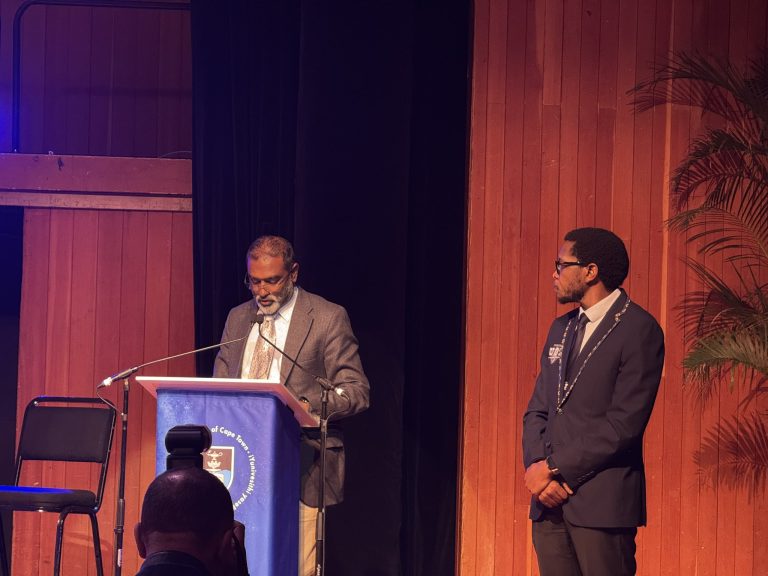
Last month, UCT installed Professor Mosa Moshabela as its 11th vice-chancellor. UWC named Professor Robert Balfour as its candidate to formally take over on 1 January. Professor Deresh Ramjugernath, Stellenbosch University’s current Deputy Vice-Chancellor of Learning and Teaching, has been appointed as the its next rector and vice-chancellor.  

All three are seasoned higher education leaders with proven track records. However, there still seems to be a bias against women in the top roles at the best tertiary institutions in the country. 

Former director of Higher Education Resources-South Africa (HERS-SA) Brightness Mangolothi once lamented that some institutions have not had a woman in charge since democracy, although gender equality is a United Nations Sustainable Development Goal.

It’s documented that South Africa has had 20 women vice-chancellors since democracy, the first being Prof. Brenda Gourley at the University of Natal (now the University of KwaZulu-Natal), followed by the University of Cape Town, where Dr Mamphela Ramphele made history as the first Black female vice-chancellor in 1996.

Those institutions that have had women vice-chancellors have not replaced them with other women, with the exception of the University of Zululand. It had appointed two women vice-chancellors – Prof. Rachel Gumbi (2003) and Prof. Fikile Mazibuko (2010) – before the incumbent, Prof. Xoliswa Mtose, who is currently serving her second term. 

In 2023, for the first time, South African universities had seven women vice-chancellors.

A similar pattern is evident in other countries on the continent. Despite the best efforts of the Association of African Universities (AAU), the most current statistic shows that of 1400 African universities, just 41 are led by women. 

A research paper titled ‘Gender Perspectives on Academic Leadership in African Universities’, published in a journal by academics Roseanne Diab, Phyllis Kalele, Muthise Bulani, Fred K Boateng and Madeleine Mukeshimana, found that women are under-represented in higher education leadership worldwide, with the gender gap even more pronounced in African nations.

The findings of a study funded by the International Development Research Centre (IDRC) in Canada confirmed the under-representation of women leaders in a selection of African countries. 

That research shows that only 24% of the top 200 universities in the Times Higher Education (THE) World University Rankings are led by women. Given that the world average for women faculty representation in tertiary education institutions increased from 33.6% in 1990 to 43.2% in 2020, the writers found the gender gap in leadership striking.

While her predecessor’s track record on gender parity in tertiary education is poor, Minister Nkabane, as a woman, must do more to change this narrative than Dr Blade Nzimande, who has never engaged a woman as Director-General under his watch. It is imperative to ensure equal opportunities for all in the corridors of learning. 

Perhaps Nkabane needs to make use of a carrot-and-stick approach. Reward those institutions that take cognisance of gender equality by allocating them more resources for research, while penalising those that maintain the old boys’ club approach.

The Commission on Gender Equality has conducted studies at universities. However, it has few tools to use against those who continue to ignore gender parity as integral to transforming the education sector. 

More broadly, on the continent, organisations such as the AAU must heed this mandate since it is an important part of the Science Granting Councils Initiative, of which gender and inclusivity are recurring themes. 

What about some pressure from the African Union, so keen on Agenda 2063, when some of us may not be alive to witness what it is championing? 

Change is needed sooner rather than later. Given her commitment, Nkabane should have more success than her predecessors and lead the way to gender equality at the highest levels of South Africa’s higher education institutions. 

Edwin Naidu is the editor of Inside Education. 

INSIDE EDUCATION

Reconciling technology with humanism: the future of education in the age of generative AI

0

By Guillaume Massol

In the age of generative AI, we face a major challenge: the growing gap between technological advancements and a humanistic understanding of education. This divide threatens our ability to use AI tools wisely and our capacity to foresee their societal impact.

Generative AI is profoundly shaping our everyday educational experiences in classrooms and in decision-making institutions. It is transforming, with remarkable speed, how we learn and create.

In traditional education, most students, regardless of background, ability or temperament, followed a general curriculum designed for the collective rather than the individual. In an era where individuality and personalisation have become pillars of modernity, the limitations of this approach are clear. Yet, many educational stakeholders – students, teachers and policymakers – struggle to grasp how generative AI can enhance individual learning while addressing ethical and societal challenges.

This lack of understanding creates tensions, hindering the harmonious integration of generative AI in education.

Personalised learning

It is not that the concept of personalised learning is new. In his 1762 work Emile, or On Education, Jean-Jacques Rousseau advocated for education tailored to each student’s needs and interests. More recently, educator Célestin Freinet promoted an approach that respected each child’s rhythm and curiosity.

In France, these methods have remained on the margins of the education system, limited by the demands of mass education. The 1833 Guizot law, which mandated primary education, and the 1975 Haby reform, which established a unified secondary school system, sought to promote equality through uniformity. While these reforms widened access to education, they have often been criticised for neglecting the diversity of students’ talents and aptitudes.

Today, generative AI presents an opportunity to address the challenges of personalised learning that traditional education struggles to overcome.

With its data analysis capabilities, generative AI promises real-time, tailored adaptation to individual needs without overburdening teachers. Using sophisticated algorithms, generative AI can analyse students’ performances, learning styles and even preferences, designing custom learning paths that adjust levels of difficulty and types of exercises as students progress.

Harvard’s tailored generative AI tutor illustrates generative AI’s ability to personalise education. Integrated into a physics course, it significantly boosted student engagement by providing real-time support and tailored feedback. However, Harvard professors demonstrated that generative AI should augment, not replace, human instruction, emphasising the distinct yet complementary strengths of both.

While AI excels in delivering personalised feedback and fostering engagement through data-driven insights, it lacks the nuanced contextual understanding and adaptability that human educators bring to the classroom, especially in nurturing critical thinking and ethical reasoning.

Indeed, overreliance on AI could undermine the teacher’s role as a guide for deeper intellectual exploration. The professors advocated for comprehensive teacher training programmes that integrate ethical and pedagogical frameworks, ensuring AI serves as a tool to enhance, rather than detract from, the humanistic mission of education.

Another area of concern is generative AI’s effect on creativity. If an algorithm guides every aspect of a student’s learning, are they still free to explore, make mistakes and pursue unpredictable paths that are often the most intellectually fruitful?

Research conducted at the University of South Carolina found that while tools like ChatGPT helped students brainstorm effectively, they also made students overly reliant on generative AI, reducing their confidence in their own creative capabilities. Many students reported that generative AI’s ideas influenced their thinking, limiting independent exploration.

Teacher training

Digital-native students intuitively use these technologies, yet they often lack an understanding of the ethical and philosophical implications. Today’s teachers are caught between the call to innovate and a lack of sufficient training. To bridge these gaps, a deep rethinking of education is needed.

It is crucial to integrate generative AI epistemology into teacher training to help teachers understand how generative AI systems acquire, process and generate knowledge. For example, in France, the AI4T (Artificial Intelligence for and by teachers) project equips educators with tools such as MOOCs (massive open online courses) and open textbooks to integrate AI into classrooms.

The initiative emphasises ethical considerations like transparency and equity while fostering critical understanding of AI’s capabilities. By providing practical and epistemological training, AI4T helps teachers navigate the challenges of personalised, inclusive learning environments.

Similarly, in the United States, the EducateAI initiative, launched by the National Science Foundation, provides resources for teachers across educational levels to ensure accessible and inclusive AI education. Additionally, the AI for Education organisation offers “Train-the-Trainer” programmes, enabling school staff to develop expertise in generative AI and deliver high-quality professional development within their institutions.

This training should not turn teachers into engineers but should give them insights into the ethical, social and philosophical aspects surrounding generative AI. Teachers with this background would be able to make these complex technologies more accessible to students and foster critical thinking about generative AI’s uses. This expanded role for teachers is key to democratising understanding of generative AI and encouraging an informed debate about its role in education.

Generative AI integration must not come at the expense of fostering critical thinking, creativity, empathy and the development of ethical reasoning – on the contrary, it should reinforce them. These principles, central to a humanistic understanding of education, ensure that learning remains focused on the holistic growth of individuals rather than solely on technological efficiency.

Generative AI in education should be guided by goals and values collectively defined by all educational stakeholders. It is essential to prevent these technologies from evolving autonomously, disconnected from the real needs of learners and teachers. Only in this way can we shape a future where generative AI enhances our humanity, realising a vision of technology that serves emancipatory education.

Guillaume develops art and design projects using code, with a special focus on machine learning techniques.

The Conversation

Universities must teach students what freedom is – a South African course is trying to do just that

By Pedro Tabensky

A typical student wants a university degree as a ticket to a salary. For this young person, education is a journey towards “having”. And the way to complete the journey is mainly to remember, repeat or reproduce what the teacher says and does.

This having-orientation is understandable given the often precarious realities of life, particularly in the global south, including South Africa, where I am based as a university lecturer. It is understandable, yet it fosters apathy in the classroom, for the monetary aims of students are not typically aligned with the aims of learning.

In response to this situation, for a decade Rhodes University’s Allan Gray Centre for Leadership Ethics has been developing a course called IiNtetho zoBomi, which translates from isiXhosa, one of South Africa’s languages, as “conversations about life”.

IiNtetho zoBomi is a year-long course offered to all students at the university. Over 2,000 have completed it since its inception. It aims to bridge the gap between character education and vocational education. The course shows students how interrelated reading, writing, thinking and being are.

It’s an opportunity for students to think about what matters to them and how to live accordingly. We hope they learn to have a say in how their lives will go. We want them to understand how education will equip them for life – not just work – and promote self-mastery. Ideally, students will realise along the way that self-mastery comes from learning with others in communities of inquiry.

With my colleagues at the centre, I wrote about the course in a recent paper, explaining the thinking behind it and how it works. From initial reticence and outright suspicion, the course is starting to receive broad institutional support from academics and management. The idea has been mooted that it should become a common course for all first-year students.

The course has also received an endorsement from educational sociologist Kathy Luckett and feminist philosopher Ann Cahill. In their review of the course they commented that it had developed “a unique and powerful form of pedagogy that is clearly speaking to students’ interests and existential needs, and effectively providing students with capacities that allow them to author their own thoughts and lives”.

Inquisitiveness versus apathy

If a salary is the overriding motive for pursuing higher education, it helps to explain why so many students seem to lack inquisitiveness to seek knowledge, and hence are not in the correct frame of mind required for deep learning and the human growth that comes with the learning mindset.

This lack of inquisitiveness is also encouraged by the fact that the global university has primarily become a market service provider. The market wants and needs professionals, and universities provide them. This may not be a problem, unless the professional aspect of human life is separated, as it often is, from the central goal of education: to form well-adjusted, autonomous human beings.

This severance between learning for work and learning for life leaves human growth to chance. It fosters the passive absorption of whatever happens to be in the air of the times, instead of the formation of a capacity for critical thinking necessary for autonomy.

Contemporary universities presume that if one looks after people’s career concerns, life will look after itself, which is a grave mistake.

Conversations about life

The course includes student-led lectures, peer dialogues and weekly service learning at local no-fee paying public primary schools. The students also keep journals in which they reflect on their lives in relation to the course’s material.

We introduce students to ideas such as the existential psychologist Erich Fromm’s distinction between “being” and “having” orientations to education. In other words, a good education helps you to be a certain way, not just to have certain things.

Students also learn that “to take freedom for granted is to extinguish the possibility of attaining it”, as expressed in the documentary Creating Freedom: The Lottery of Birth. This is the idea that people are shaped by circumstances, and understanding how these circumstances shape them is a first step in attaining real freedom. We show this documentary to our students in addition to other movies and documentaries about the weekly topics discussed in class.

We encourage students to develop an inner dialogue and understand that they passively absorb much of what their thinking draws on. We challenge students to consider what they see, or fail to see, and how they see it. We invite students to reflect on how external forces like peer pressure and ideology act on them, as do internal forces like the confirmation bias (which motivates us to favour information that confirms what we already believe and to ignore information that doesn’t).

The following idea frames the content of the course: barriers to acting ethically, indeed to autonomy, are produced by psychological, social and political forces.

Then there is the service-learning aspect of Iintetho zoBomi.

This is about the students getting involved in communities and learning through one-on-one interactions with children at no-fee primary schools, helping them with English literacy and life orientation-related schoolwork. Our students learn by teaching learners material that’s related to IiNtetho zoBomi. Service learning helps bring ideas and experiences together.

Responses

We are seeing encouraging results in the form of hundreds of unsolicited comments relating to how the course has transformed the lives of our students.

Most of these comments come from student reflective journals. Lecturers read the journals as the main form of assessment of IiNtetho zoBomi. Some students even wrote articles in local media about what they had learned. In one of the articles, student Tanatswa Chivhere concludes that:

Most of us who have done the course can testify to how it made us more aware of how our thoughts and actions impact the world as a whole. IiNtetho zoBomi has changed the way in which I view my place in the world and how to use that place to better not only my life, but those of others around me.

Tabensky is the Director of the Allan Gray Centre for Leadership Ethics at Rhodes University.

The Conversation

Basic Education launches app to help ensure safe learning environment

0

By Akani Nkuna

Poor sanitation is a reality for many schools in South Africa. In an effort to deal with this situation, including pit latrines, Basic Education Minister Siviwe Gwarube has launched the Safe Schools App.

It is a digital platform that aims to improve the safety and hygiene of schools, ensuring a healthier environment for pupils to learn and thrive.

“What we are doing here today is testament to the power of technology, collaboration and a shared commitment to address the challenges facing our education system,” Gwarube said on Monday.

“The Safe Schools App is more than an application. It is a bold statement to resolve to eliminate unsafe sanitation facilities in schools, and we do so with transparency, with efficiency and accountability.”

The minister told reporters that the app, which was developed by Vodacom, would achieve three key objectives, including providing real time tracking and monitoring of progress to eliminate pit toilets.

“The app includes a dynamic heat map that will allow [the department] to track the progress of pit toilet eradication across the country. This feature ensures that government has access to real time information about our efforts [to deal with the] backlog,” Gwarube said.

In the past, stakeholders such as the SA Human Rights Commission, have raised concerns that the data on pit toilets may be incomplete or unreliable.

“So, this Safe Schools App empowers communities to report any remaining pit toilets in the areas, helping us to close those gaps and ensure that every school is accounted for,” said Gwarube.

The minister said the app could eventually be used as a tool to monitor and track other critical initiatives, such as the National School Nutrition Programme, infrastructure development and the distribution of learning and teaching materials.

“We will be integrating these functions. The app enhances our ability to manage resources effectively and respond swiftly to emerging challenges…,” she said.

“We have a vision that someday we will be able to track the delivery of nutritious meals in our schools, the delivery of textbooks to our schools, and that teachers and principals may be able to report when things have not happened directly on the app… We want to use technology to improve the education sector,” she said.

Hundreds of schools still have pit toilets. The department’s deadline to eradicate pit latrines is 31 March 2025.

INSIDE EDUCATION