Home Blog Page 125

University of Fort Hare under fire for fraud and governance challenges

0

By Thapelo Molefe 

The University of Fort Hare continues to grapple with allegations of corruption and academic fraud, with Vice-Chancellor Sakhela Buhlungu and other officials providing updates on investigations and institutional reforms during a meeting with Parliament’s committee on higher education this week.

Committee chairperson Tebogo Letsie sought clarity on the status of recommendations from a departmental team meant to support the university’s turnaround strategy. 

A representative from the Department of Higher Education confirmed that while the team has diminished due to resignations, it remained active, consisting of senior directors and infrastructure experts. 

The team was monitoring the university’s projects and engaging in governance oversight.

The representative noted that legal concerns surrounding a probe by the Special Investigating Unit probe had strained relations at times.

The SIU is investigating nine charges against the university mostly concerning maladministration and malpractices.

The representative said that frequent engagement with the university had ensured continuous progress, including improvements in infrastructure and council restructuring under a new statute adopted post-administration in 2019.

The vice-chancellor elaborated on the reforms, noting a reduction of council members from 27 to 22 and the implementation of a consolidated turnaround plan. 

The university is now preparing for its second council term post-administration, with new ministerial appointments underway.

Buhlungu reiterated the complexities of the SIU’s investigation, which now spans qualifications issued as far back as 2004. While the SIU operates independently and reports directly to President Cyril Ramaphosa, its findings will have have far-reaching implications. 

“Meetings between the SIU and university stakeholders have shed light on fraudulent qualifications across honour’s, master’s, and doctoral programmes, as well as irregularities in law and health sciences faculties,” he said.

Buhlungu likened the investigation to “heart surgery,” emphasising that the process, though painful, was vital for restoring credibility to the university.

Recent media reports about a R1 million fraud scheme linked to the former CEO of two Setas, Raymond Patel, were also addressed. 

“Patel, now accused number 17 in a broader corruption case, allegedly collaborated with the university’s former HR director to orchestrate bogus psychometric tests for staff,” Buhlungu said.

“The scheme involved kickbacks funnelled through Patel’s company, as revealed by the national task team investigating fraud at Fort Hare.”

Buhlungu expressed surprise at Patel’s involvement.

The investigators, however, have built a strong case through detailed financial audits and traced transactions linked to the fraud.

During the meeting this week, Buhlungu acknowledged institutional weaknesses that had allowed questionable recruitment practices to thrive in the university system. 

He emphasised that such flaws predated his tenure and had been highlighted in the independent assessor’s report.

“In some places, there were no policies. Yes, we’ve investigated that that person, that professor, didn’t do it by himself. It was a system. 

“It was a system that was weak, and that’s why the SIU is now going back to 2005 to trace the roots of these institutional weaknesses,” Buhlungu said.

The inquiry also discussed the controversial hiring of Isaac Plaatjies as director of investigations, allegedly without a formal process. 

Buhlungu clarified that Plaatjies had been engaged through short-term contracts in HR before being appointed as the director. However, he admitted the process bypassed standard competitive hiring procedures.

“Yes, there was no interview at that time, but we assumed that because he was an insider… he was something to be trusted. And of course, we were wrong,” he said.

Further complicating the matter, Plaatjies is now a suspect in the assassination of Buhlungu’s bodyguard and alleged attempts on the VC’s life.

The committee chairperson expressed concerns over governance issues.

“If indeed this happens or is allowed in our institutions, then we have a problem. It means tomorrow, if I’m the vice-chancellor, I can employ my girlfriend’s family and say, you know, introduce them and say it’s short term,” Letsie stated.

Concerns about nepotism were also raised regarding the hiring of the wife of the CFO in the HR department without a competitive process. 

While Buhlungu acknowledged her employment, he deferred responsibility, claiming the appointment was at a lower level and did not require his direct oversight.

The university’s recently appointed Deputy VC for Institutional Support, Lufuno Hashatse, admitted to uncovering irregularities tied to past HR management, including those linked to a former HR director who is now under arrest. 

He added that efforts were underway to overhaul HR practices, with permanent roles now being advertised and filled following standard procedures.

The committee requested a full report on the appointment process for HR, including minutes, technical specifications and evidence of due diligence due this week.

The inquiry also delved into concerns raised by the Student Representative Council, including their underrepresentation in university governance structures like Senate. 

They highlighted infrastructure shortcomings and dissatisfaction with digital voting systems for SRC elections.

In response, Buhlungu emphasised ongoing efforts to address governance challenges and implement recommendations from the independent assessor’s report.

INSIDE EDUCATION 

Montego Champs 4 Change soccer tournament kicks off in Graaff-Reinet

0

By Johnathan Paoli

The highly anticipated 3rd Annual Montego Champs 4 Change Tournament kicked off in Graaff-Reinet on Friday to bring awareness to the plight of women and children in the face of violence.

This year’s event, at the Botanics Sports Grounds in Graaff-Reinet, aligns with the country’s National 16 Days of Activism for No Violence Against Women and Children campaign, blending youth sportsmanship with a vital social cause.

The soccer tournament showcases the talents of under-9 teams while raising awareness about combating violence against women and children.

With 12 teams competing across three groups, the tournament brings together 120 young athletes, emphasising unity, empowerment and community transformation through sport.

It started with a round-robin group stage, where the 12 teams are divided into three groups of four.

Each team plays three matches within their group, with games lasting 22 minutes and 10-minute halves and a 2-minute halftime.

The top two teams from each group, along with the two best third-placed teams, will advance to the quarterfinals.

From there, the tournament follows a standard knockout format, culminating in the semi-finals and final.

Group A includes the defending champions Jose Mourinho U9, Dangerous Darkies, Union Preparatory 1, and Isibane 2.

Group B consists of the XI Attackers, Birds United, Union Preparatory 2, and Lingcom Primary, while Group C will include the Summers Strikers, Graaff-Reinet United, Isibane 1, and Mountain View FC.

Since its inception in 2022, the tournament has grown into a beacon of hope, promoting conversations about societal challenges while celebrating youth talent.

By combining soccer with activism, the event harnesses the unifying power of sport to inspire young athletes and engage the community.

This year, all proceeds from the tournament will support Siya Phambili, a place of safety for abused women and children in Graaff-Reinet.

Additionally, the tournament incorporates an eco-conscious initiative, accepting 10 empty plastic bottles as an alternative entrance fee to promote recycling.

The tournament’s organisers have ensured that every participant, including players and coaches, receives a meal and a drink, fostering a sense of inclusion and gratitude.

The organisers said that by empowering young athletes and their families, they aimed to contribute to the fight against violence and encourage conversations about creating a safer, more equitable society.

As the tournament’s legacy continues to grow, plans are already in motion for next year’s 4th tournament.

INSIDE EDUCATION

DA secures legislative support for special needs learners in Mpumalanga

0

By Johnathan Paoli

The Democratic Alliance in Mpumalanga has successfully secured the provincial legislature’s approval for its motion calling for urgent action to support learners with special educational needs.

DA education spokesperson and MPL Annerie Weber said the motion presses the provincial education department to establish a task team dedicated to addressing the challenges faced by these learners and their families.

“Without immediate action, the failure to accommodate these learners in 2025 will have devastating consequences, exposing vulnerable children to societal risks while their parents are at work,” she warned.

Weber said that while the department’s 2024/2025 Annual Performance Plan outlined plans to form a task team to assess the financial and regulatory requirements for providing suitable infrastructure, staff, catering and hostel facilities for the learners, the DA was urging the department, under MEC Cathy Dlamini’s leadership, to expedite this process and implement solutions before the 2025 school year began.

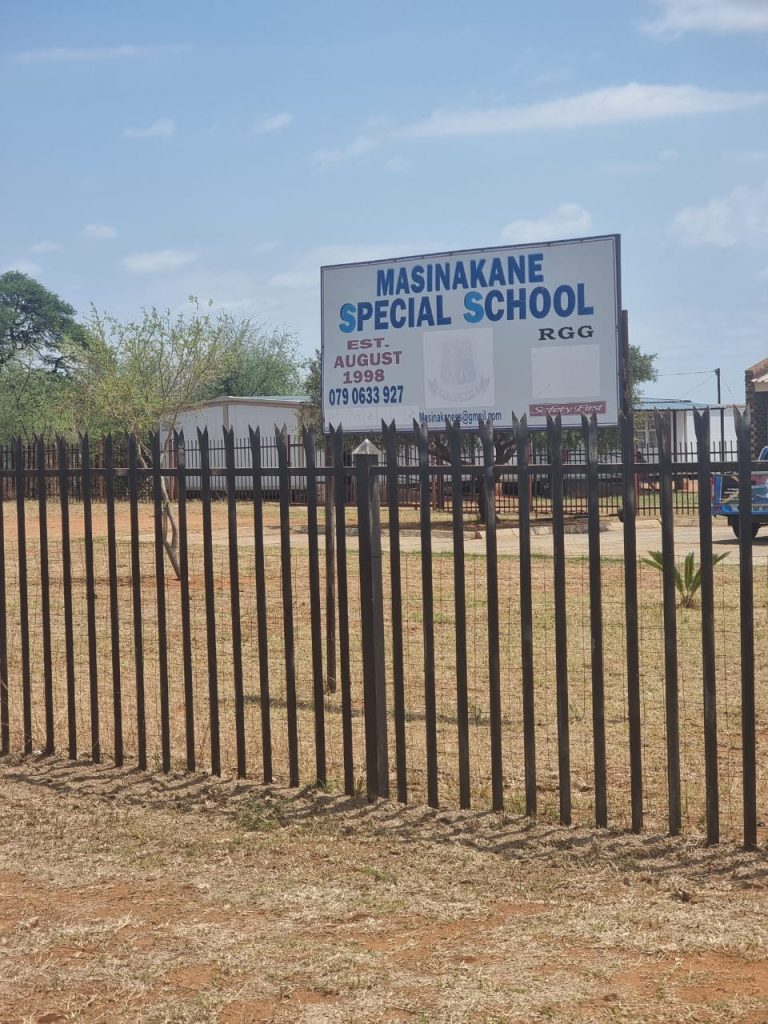
Many learners with special educational needs across Mpumalanga are at risk of being stranded at home due to deteriorating hostel facilities, with the plight of Masinakane Special School in the Dr JS Moroka Local Municipality being emblematic of the broader crisis.

She said the school has struggled for years to secure proper boarding facilities, and after their previous building was condemned in 2022, a makeshift facility was erected with assistance from the DA and the SA Human Rights Commission.

However, this temporary solution accommodated only 45 of the 126 learners, leaving the remainder to sleep in classrooms.

Weber said the situation has worsened as the facility had become unsafe, and the Labour Department recently imposed a R700,000 fine on the school, putting its boarding services at risk of closure.

Similar challenges have affected Platorand School in Belfast, where privatising hostel facilities left many parents unable to afford the costs.

“Special needs learners rely on dedicated teaching, medical and hostel staff for their development and care,” Weber said.

Beyond infrastructure, the DA stresses the need for systemic reform to ensure that the constitutional right to education for special needs learners is upheld.

The party has urged the task team to engage with National Treasury once the costing and regulations are finalised to secure adequate funding for long-term improvements.

INSIDE EDUCATION

Maile determined to combat irregularities in the face of rising foodborne illnesses

By Johnathan Paoli

The Gauteng government says it is set on getting to the bottom of the food contamination crisis following another child dying on Wednesday.

Gauteng economic development and finance MEC Lebogang Maile visited the Diepkloof community on Thursday, following a five-year-old boy dying after exhibiting symptoms consistent with food poisoning.

He issued a stern warning to non-compliant spaza shop owners, who have been blamed for multiple deaths and hospitalisations across the country.

“We will not tolerate the sale of unsafe products that endanger the lives of our children,” Maile said.

Authorities are investigating the death, which has sparked renewed outrage in the community.

The child, a Grade R learner from Dumezweni Primary School, began vomiting and experiencing diarrhea after consuming snacks. It is believed that he purchased snacks from a local spaza shop.

He was rushed to a nearby clinic, where he was declared dead.

Police spokesperson Colonel Dimakatso Nevhuhulwi confirmed that an inquest docket has been opened.

“The cause of death is unknown at this stage, pending autopsy results,” she said.

Three other children from the same school who reportedly consumed the same snacks were also treated at a clinic, and were later transferred to another facility for further care. They are now in stable condition.

The MEC confirmed that the spaza shop in question has been shut down, pending further investigations. Health inspectors from the City of Johannesburg have taken samples for testing.

“As per the directive of the President, we have called for the immediate closure of the spaza shops to protect the community,” Maile said.

His comments come days after President Cyril Ramaphosa announced measures to address the crisis, including ordering the immediate closure of implicated spaza shops and giving unregistered retailers 21 days to comply with municipal regulations.

This latest death highlights a larger public health issue that has been unfolding across the province, with more than 890 cases of foodborne illness being reported since September, resulting in the deaths of 23 children.

The incidents are linked to chemical contamination in food sold at informal retailers, raising serious concerns about food safety in the province.

Community members in Diepkloof expressed outrage, demanding stricter regulations and enforcement to prevent further tragedies.

Meanwhile, the Gauteng education department has deployed its education support team to Dumezweni, in order to provide psychosocial services to affected learners and staff.

“We extend our deepest condolences to the family of the deceased learner and wish the hospitalised learners a speedy recovery,” said education MEC Matome Chiloane.

Education spokesperson Steve Mabona said the department has also called for increased vigilance in schools and communities to prevent further incidents.

He said the government’s multidisciplinary task team on food safety has been coordinating efforts to identify the sources of contamination, improve food safety standards and ensure accountability among informal retailers.

INSIDE EDUCATION

Limpopo University vice-chancellor and system failures come under the microscope

By Thapelo Molefe

The University of Limpopo is under fire, with Parliament’s portfolio committee on higher education raising concerns over governance, financial accountability and systemic failures in student administration. 

At the heart of the controversy is the extension of Vice-Chancellor Mahlo Mokgalong’s tenure, which committee members questioned amid mounting governance challenges.  

During a day-long meeting on Wednesday, committee chairperson Tebogo Letsie demanded clarity on the extension. 

“You wrote a letter to council recommending an extension of 12 months,” Letsie pointed out, emphasising the need for transparency and justification.

University chairperson Pandelani Nefolovhodwe was in the hotseat over the extension, with the committee scrutinising how the decision had come about considering that statutory requirements limited a VC’s term to a maximum of 10 years.

Letsie repeatedly pressed Nefolovhodwe on his understanding of the university statute governing the tenure of the VC. 

Nefolovhodwe initially claimed that the statute was “silent” on term limits, prompting the university’s Registrar, Kwena Masha, to clarify the rules. 

According to the statute, a VC’s term may not exceed two consecutive five-year periods, subject to council approval and consultation with the Senate and Institutional Forum.

The committee also highlighted delays in appointing a successor. Despite an initial advertisement for the VC position in 2018 and a subsequent attempt in 2023, the process has stalled for over a year. 

Letsie expressed disbelief at the prolonged review of candidates’ credentials, labelling it a misuse of public resources.

“This institution appears to be operating without urgency or accountability,” Letsie said. 

“The extended timeline undermines public trust and raises doubts about whether there was ever an intention to appoint a new VC.”

In addition to leadership issues, the committee highlighted alarming failures in student admissions and graduations. 

The committee outlined a troubling scenario.

“A student registers in January, completes all modules, writes tests, passes exams and is even allowed into the graduation hall. 

“Then suddenly, they are told they are deregistered. This is a simple but critical failure of internal processes,” said a committee member Sihle Ngubane.

Masha acknowledged such cases, attributing them to discrepancies discovered during final reviews. 

“We ensure students meet all requirements;  admissions, tests and exams. But there are instances where something is found missing during final checks,” he explained.  

However, Letsie expressed frustration with this explanation, holding the leadership accountable. 

“The issue is systemic. If the Registrar and their team accept students who don’t meet qualifications, they aren’t doing their job. Internal controls are not being exercised. Bribes are taken and systems are manipulated. This ultimately falls on you, vice-chancellor, as the CEO of the institution,” he asserted

Mokgalong defended the institution’s actions, arguing that qualifications could be withdrawn if compliance issues were discovered, even after graduation. 

“If it is discovered at any stage, even after graduation, that someone didn’t comply with requirements, the law allows us to withdraw their qualification. We don’t want to subject people to fraudulent credentials,” he said.  

Letsie, however, emphasised the need for accountability beyond the students. 

“Yes, you can withdraw qualifications, but who internally has been held accountable? Have you identified and disciplined those responsible for these failures? This is about consequence management, and it starts with leadership,” he insisted.  

Another contentious issue raised was the university’s growing legal expenses. 

The university’s acting CFO Mamokgadi Masete disclosed that R14.7 million was spent on legal fees in 2023.

This revelation prompted the committee to demand a breakdown of the expenditures and an explanation of their necessity.

The committee resolved to investigate further, including reviewing council minutes and decisions related to the VC’s tenure and recruitment processes.

INSIDE EDUCATION

Wits gets new AI hub to advance research  

0

By Lungile Ntimba

Research into artificial intelligence is set to be revolutionised with the launch of the Machine Intelligence and Neural Discovery (MIND) Institute at the University of the Witwatersrand.

The institute is an African-based interdisciplinary AI research hub aimed at advancing the fundamental science of AI, defined by its focus to study machine, human and animal intelligence.

Prof. Benjamin Rosman, who is the institute’s director and professor in AI and robotics at Wits, said it was unique because it was committed to studying intelligence holistically, bringing together insights from machine, human and animal intelligence.

“When most institutions, particularly locally, talk about AI, they often focus on applications. At the Wits MIND Institute, we care deeply about how we understand, and can advance, the fundamental science of AI itself to build the next generation of AI right here in South Africa,” he said in a statement.

It would also run workshops, seminars, talks and regular gatherings where experts from various fields interacted, found synergies and drove scientific discovery and innovation. 

“By creating a space for these cross-disciplinary interactions, the Wits MIND Institute aims to supercharge AI research in entirely new directions,” Rosman added.

To support these efforts, he said new AI research chairs would be appointed across the university’s five faculties. This would help channel fundamental research into practical applications across multiple fields, ensuring that the institute’s discoveries benefited various sectors of society.

The institute will be partnering with IBM to develop cutting-edge technologies tailored to address Africa’s unique challenges.

Research and Innovation Deputy Vice-Chancellor Prof. Lynn Morris said partnerships between universities and industries were pivotal in developing industry-specific innovation, assessing risks posed by AI, and training talent required by industry to develop, deploy and scale AI solutions.

“We are in discussion with several big tech companies and industries whose leaders are very excited about the possibilities that a partnership with Wits will bring, so, watch this space,” she said.

The institute also plans engaging policymakers across the continent to contribute towards developing frameworks that ensure the ethical and responsible deployment of AI technologies.

INSIDE EDUCATION

Gauteng allows food sales in schools, but only under strict regulations

0

By Johnathan Paoli

The Gauteng education department has announced that tuck shops, vendors and traders may only proceed to operate on school premises if they comply with requirements or upon completing the necessary verification.

Spokesperson Steve Mabona said that following President Cyril Ramaphosa’s address last week on how the country was going to deal with food contamination that has mostly affected learners, compliance requirements must be adhered to, to ensure that food was free from harmful substances and was properly handled and stored.

“The Department of Basic Education has issued a Circular on Incidents of Food Poisoning, which serves as a guiding framework for schools, vendors and school communities regarding food sales,” Mabona said.

All tuck shops, traders and vendors must comply with legal requirements, by-laws, and food management regulations in order to operate.

Mabona confirmed that vendors needed to register within 21 days from last week Friday.

He said that operating vendors were required to obtain a valid certificate of acceptability (COA) as per the Food Stuffs, Cosmetics and Disinfectants Act.

Additionally, districts and schools must ensure that all food vendors within schools are in possession of a verified COA that has been confirmed by an environmental health practitioner of the respective municipal office.

Mabona reminded school governing bodies and school management teams of their responsibility to ensure compliance, including the verification of food items being sourced from reputable suppliers and that they did not contain harmful substances.

The department called for the submission of daily reports on food-related incidents using a standardised template, sharing food safety tips and awareness materials, and following the National School Nutrition Programme guidelines.

In order to ensure a swift and effective response from the authorities, Mabona encouraged schools to adhere to standard operating procedures for managing suspected food poisoning cases.

Education MEC Matome Chiloane called for cooperation to ensure a safe space for education.

“The department remains committed to safeguarding the health and wellbeing of learners. Schools, parents and communities are encouraged to work together to ensure compliance with these measures and maintain a safe learning environment for all,” Chiloane said.

A total of 23 children have died in the 441 cases of alleged food poisoning incidents that have been reported in the province, involving the majority of children aged between six and 10.

INSIDE EDUCATION

UCT prepares for the installation of Moshabela, who wants ‘everyone to feel at home’

By Edwin Naidu

Limpopo-born medical doctor Professor Mosa Moshabela will officially be installed as the 11th Vice-Chancellor at the University of Cape Town (UCT) on Monday, a few days after ticking off 100 days in the hotseat.

While Moshabela has settled into the role in a relatively short period of time, he says he does not expect an easy ride as the vice-chancellor of the 195-year-old UCT.

“A part of me is excited, and another part is preparing for a rocky start, which I hope will stabilise swiftly. I’ve also been told there’s a lot of excitement on the ground, but expectations are high,” says Moshabela.

Aware of the need for mending and building relationships at UCT, he says what bothers him the most is that staff and people at UCT feel fractured, polarised and divided.

“They don’t feel united as a community. I don’t necessarily think that if you don’t have a good team that gels well, you can stay at the top of your game and maintain the level of excellence we expect of UCT. We’ve got to create an enabling environment for people to thrive and succeed,” he insists.


The married 44-year-old father of three began work at UCT two months earlier than expected on 1 August. He replaced Emeritus Professor Daya Reddy, who had been the interim vice-chancellor since the departure of Prof. Mamokgethi Phakeng, who went on early retirement in March.

The fractured relationships brought out into the open following the acrimonious departure of Phakeng go back to the reign of Dr Max Price between 2008 and 2018, when the #feesmustfall student protests escalated.

However, the suicide of Dean of the Faculty of Health Sciences, Prof. Bongani Mayosi in July 2018, lifted the lid on student unrest, racism, discrimination and the slow pace of transformation at UCT.

Following Mayosi’s death, the university’s response to its various issues was criticised in a 157-page report. Phakeng and her leadership struggled to implement its recommendations.

Moshabela admits that he is concerned about the financial future of universities, particularly UCT, which ran on a deficit of R349.29m in 2023 with a budgeted shortfall of R220m in 2024.

At the beginning of the 2023 academic year, the university experienced disruptive student protests related to financial exclusion.

The university’s inability to provide minimum acceptable levels of financial aid to potential students, along with the troubles of the National Student Financial Aid Scheme (NSFAS), worsened the problem in 2023, with a repeat in 2024. This year saw the NSFAS direct payment system failing, which left students stranded without allowances and accommodation.

According to the 2023 annual financial report, the outlook for student debt at UCT is bleak.

The outstanding student fees for the current year are R594 million, and credit losses on student debt have increased by 46%, from R166 million to R241 million.

However, UCT’s balance sheet is healthy, with R3.27 billion in liabilities against R16.79 billion in assets.  

“A large part of the challenge in the sector has to do with the dwindling funds from the government because we are a public university, and nearly all tertiary institutions are publicly funded. And unlike what we’ve seen in other sectors, say in the basic education sector, we’ve seen privatisation [and] this helps with sustainability,” says Moshabela.

He adds that on a global level, UCT is competing against institutions that are private education providers regulated as tertiary providers in South Africa.

“They are not constrained similarly, yet we compete with them. We must compete with Harvard and Oxford for talent, for everything, yet we are a public, publicly funded institution.”

While conceding that UCT has the privilege of being better endowed than other institutions with a solid supportive alumni network and a strong donor network, the bulk of its funding comes from the government.

He urges for funding sources to be consolidated in the short to medium term.

Moshabela says while UCT is better situated to withstand any financial hurdles, he sees the major threat coming from the movement for free higher education, where the source of income from student fees can be limited or eliminated quickly.

“The political movement around it is strong, and if this (fees being scrapped) happens, UCT might survive much longer than others. But other institutions will probably be crippled immediately.

“But that’s where the threat is going to come from. I don’t see going forward any other direction than for universities to start negotiating and looking for more self-funding, self-partial regulation institutions, like UCT will end up modelling themselves very much on the likes of Oxford and Harvard and others if they must succeed,” he says.

According to Moshabela, one way towards a sustainable future is attracting endowments as a third-stream of income.

Turning to his priorities for UCT, Moshabela wants unity on campus, aims to attract the best talent and ensure the university is financially sustainable.

He says he will leave no stone unturned in understanding what he must do to succeed in his job. He has applied for an MBA to study executive management.

He also plans to talk to former vice-chancellors about their experiences, tapping into institutional memory to learn from them.

Above all, he wants UCT to impact society on a broader level.

“I want everyone at UCT to feel at home, to feel that they are in a place where they can be the best versions of themselves,” he says.

INSIDE EDUCATION

Publishing of matric results heads to court

By Johnathan Paoli

While the Information Regulator (IR) has directed the Basic Education Department not to publish matric results on media platforms for the 2024 academic year, AfriForum has accused the IR of being unreasonable and is going to court, and the department is still weighing up its options.

The regulator has accused the department of non-compliance with the Protection of Personal Information Act. In its enforcement notice, issued last week, it determined that the department violated Section 11 of the Act by publishing matriculants’ personal information without consent.

IR spokesperson Nomzamo Zondi told Inside Education that there were other alternatives that would ensure compliance and privacy, such as providing results directly at schools or through secure SMS platforms.

The department has also been mandated to get prior consent from the 2025 matric cohort if results are to be published.

This directive follows a complex legal history.

In 2022, the DBE initially halted public matric result publications to align with the Act. However, AfriForum, Maroela Media and 2021 matriculant Anlé Spies, successfully challenged the decision in the North Gauteng High Court.

The court ruled that results could be published without names, using examination numbers instead.

While this addressed accessibility concerns, the IR maintains that the ruling did not address whether publishing results violates the Acts privacy standards.

On Monday, AfriForum reiterated its stance that publishing results with anonymised identifiers did not infringe on privacy.

Speaking to Inside Education, AfriForum’s head of cultural affairs, Alana Bailey, confirmed the organisation’s intent to contest the ban.

“It’s in the public’s interest to publish the information, especially for learners in rural areas who may face difficulties accessing their results otherwise,” Bailey said.

She highlighted the 2022 ruling as a precedent and emphasised AfriForum’s commitment to safeguarding student accessibility without breaching privacy laws.

While the department met its legal team over the weekend, there was no word on the way forward.

Department spokesperson Elijah Mhlanga did note that they were deliberating the next step, considering the legal and operational complexities.

He also pointed out the IR’s absence during the 2022 case, which left critical issues unresolved.

Mhlanga emphasised that any decision would aim to balance compliance with the Act and the public’s right to information.

The IR, led by Chairperson Pansy Tlakula, remains firm on its position.

The body, established under Popia, is tasked with ensuring the lawful processing of personal data in South Africa.

Zondi warned of severe penalties for non-compliance, including fines of up to R10 million or imprisonment of up to 10 years.

AfriForum’s legal challenge is expected to reignite debates about balancing privacy rights with public accessibility.

In 2022, the publication issue highlighted the challenges rural learners faced in retrieving results without public platforms.

The group also plans to engage Maroela Media as a potential co-litigant, leveraging their shared advocacy for transparency and access.

As the legal battle looms, stakeholders await clarity on how the department will navigate the conflicting demands.

The outcome could set a significant precedent for managing personal information in South Africa’s education sector.

While the 2024 matriculants anticipate their upcoming results, the decision underscores the evolving tensions between data privacy laws and practical considerations in a digital age.

INSIDE EDUCATION

Tackling racism starts with education around the values in the Constitution

0

By Edwin Naidu

Racism is potentially one of the most pressing problems in South Africa, along with unemployment and poverty alleviation. It came as no surprise when the principal of Pretoria High School for Girls was deemed guilty of misconduct.

The investigation by the Gauteng education department found that Philipa Erasmus had failed in her obligations as a principal after she mishandled racism complaints from black pupils and wasn’t transparent in her process of dealing with such misdemeanors. 

The report released earlier this month follows leaked WhatsApp messages in July, which sparked outrage countrywide. Unfortunately, discrimination continues to remain a challenge in South Africa’s classrooms three decades after democracy.

The episode of Ms Erasmus is just one recent example of racism that continues to rear its ugly head. But apart from putting her in the dock and making an example of the racism that exists in society, there is nothing done to lance the racism boil. How many other principals like Ms Erasmus continue to escape without having their racism addressed?

While it is evident people have not moved past their pre-1994 mindsets, education should do better to instill the values of the Constitution in teachers and learners. Three decades after the end of apartheid, racism should not be allowed to continue without addressing the problem. Expecting people to change their racist ways without education is a fault that lies with the architects of the Constitution. Where is education on the meaning of democracy?

South Africa boasts the best Constitution in the world. But it does not help when citizens are not living its values. Whether on the school grounds, public swimming pools or the heart and minds of citizens, racism remains a ticking time bomb.

For racism to be eradicated from our society, it must be stamped out in the classroom because it is evident that parents of South African children fail to help create a society that looks beyond colour. Are the teachers equipped to do this?

Many examples of work highlight the challenges of racism in South African schools.

One of the country’s foremost experts on local and global inequality and social justice issues in education is Professor Salim Vally, the Director for the Centre for Education Rights and Transformation at the University of Johannesburg.

In a well-researched journal article, Between the Vision of Yesterday and the Reality of Today: Forging a Pedagogy of Possibility, Vally discusses the vision of education for liberation during the anti-apartheid struggle.

After 1994, education activists expected the new political order to create a more equitable education system that met ordinary people’s needs. Sadly, it did not materialise.

Vally was part of the team researching racism, racial integration and desegregation commissioned by the SA Human Rights Commission at more than 100 schools.

The SAHRC report found many egregious instances of racism, but also that the shadow of apartheid ideology continued to cast its gloom, no longer through racially explicit policies, but by proxy and exclusions such as language restrictions, spatial segregation and high fees all related to social class.

What happens outside the school gates will inevitably affect the gains in schools.

Although the report recommended 10 critical, concrete and achievable interventions, they still need to be implemented.

Children in South Africa seem to get along far better than adults. Therefore, they should be taught the antidotes to racism, such as cross-group friendships/relationships, cultural appreciation and collective consciousness. These are more important than trigonometry for survival (in all senses of the word) to ensure that racists are held accountable for their despicable actions and racism stamped out in society.

Dealing with Ms Erasmus is important but tackling racism through education and teaching of the values in the Constitution would be a step in the right direction.

Edwin Naidu is Editor of Inside Education.

INSIDE EDUCATION