Home Blog Page 126

Govt on track to eradicate pit toilets, turns it focus on KZN

0

By Johnathan Paoli

On the eve of World Toilet Day, government departments have come together to highlight the urgent need to eradicate unsafe pit toilets in South African schools, saying they are on course to reach their March 2025 deadline.

Around 200 pit toilets need to be eliminated.

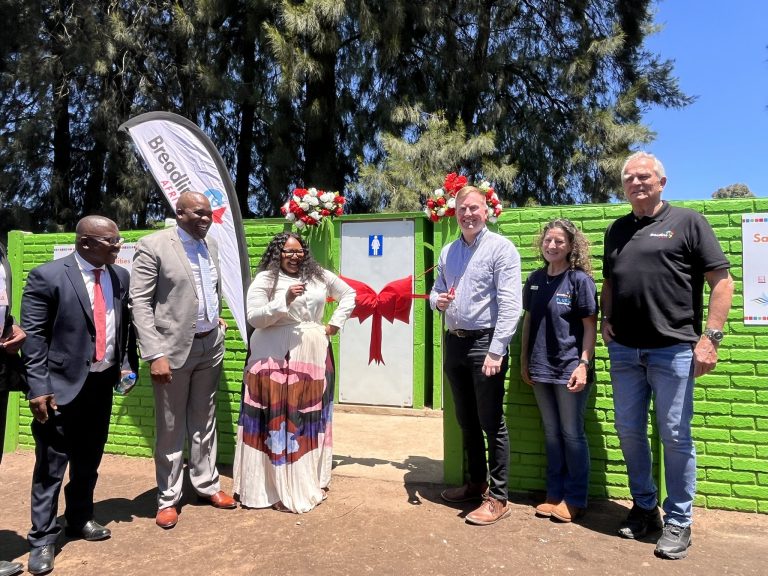
Basic Education Minister Siviwe Gwarube and Public Works Minister Dean Macpherson were in Ozwathini in KwaZulu-Natal on Monday to unveil upgraded ablution facilities at Deda Primary School, which has around 600 learners.

“Today, as we handover the upgraded toilets for learners and teachers, we are moving closer towards eradicating the identified pit toilets backlog,” she said.

The project was made possible through a public-private partnership, with the minster thanking Breadline Africa, Glencore, the Development Bank of Southern Africa and Easy Equities for assisting in the restoration of the toilets.

She underscored the human rights dimension of sanitation, calling it a moral imperative to ensure every learner’s safety and dignity.

Acknowledging the tragic consequences of unsafe sanitation, Gwarube reaffirmed her department’s commitment to closing the chapter on pit toilets.

She emphasised that this effort went beyond compliance; it symbolised the nation’s care for learners’ health, safety and dignity.

Gwarube said the government was committed to the United Nation’s Sustainable Development Goal 6, which sought universal access to clean water and sanitation by 2030 and stressed the urgency of addressing this issue now, recognising that children deserved safe facilities today.

She also pledged to oversee the work of infrastructure implementing agents through site visits and project reviews, and addressing delays or challenges swiftly.

“Appropriate sanitation isn’t just a safety issue, it’s about restoring dignity for both learners and staff at the school,” she said.

Gwarube reiterated the need for public-private partnerships to build an education system that safeguarded learners’ wellbeing and dignity.

Meanwhile, Macpherson said he appreciated the cooperation of the two departments, saying it was indicative of the benefits of a coalition government.

“As the Government of National Unity, we are committed to eradicating pit toilets in schools nationwide, and by working with the private sector, we are confident we can achieve this goal.

“And as the department, we will be sharing our expertise to assist minister Gwarube in eliminating pit toilets in schools. By working together, we are building a better South Africa,” Macpherson said.

School principal Emmanuel Dlamini raised the importance of hygiene and safety in the learning environment.

“As a school we need to ensure that our learners are safe and not getting infections or any diseases from the toilets and also protected from dangerous physical structures,” Dlamini said

Breadline Africa CEO Marion Wagner said the upgrade to the sanitation facilities involved replacing unsafe pit toilets with modern, eco-friendly solutions.

The project included retrofitting existing structures with low-flush toilets and waterless urinals, constructing 10 new concrete toilet blocks and installing 22 toilets and 8 urinals.

Safety enhancements included 1.8m precast screen walls, secured plumbing, handwashing stations with 2,700l and 500l tanks and a modular septic system, supported by a five-year maintenance plan.

The project cost R943,174.

Improving the safety and quality of schooling environments is among Gwarube’s five priorities.

INSIDE EDUCATION

Should Taylor Swift be taught alongside Shakespeare? A professor of literature says yes

0

By Liam E Semler

Does Taylor Swift’s music belong in the English classroom? No, obviously. We should teach the classics, like Shakespeare’s Sonnets. After all, they have stood the test of time. It’s 2024 and he was born in 1564, and she’s only 34.

What’s more, she is a pop singer, not a poet. Sliding her into the classroom would be yet another example of a dumbed-down curriculum. It’s ridiculous. It makes everyone look bad.

I’ve heard all that. And plenty more like it. But none of it is right. Well, the dates might be, but not the assumptions – about Shakespeare, about English, about teaching, and about Swift.

Swift is, by the way, a poet. She sees herself this way and her songs bear her out. In Sweet Nothing, on the Midnights album, she sings:

On the way home

I wrote a poem

You say “What a mind”

This happens all the time.

I’m sure it does. Swift is relentlessly productive as a songwriter. With Midnights, she picked up her fourth Grammy for Album of the Year. And here we are, on the brink of another studio album, The Tortured Poets Department, somehow written and produced amid the gargantuan success of Midnights and the Eras World Tour.

An ally of literature

Regardless of what The Tortured Poets Department ends up being about, Swift is already a firm ally of literature and reading. She is a donor of thousands of books to public libraries in the United States, an advocate to schoolchildren of the importance of reading and songwriting, and a lover of the process of crafting lyrics.

In a 2016 Vogue interview, Swift declared with glee that, if she were a teacher, she would teach English. The literary references in her songs are endlessly noted. “I love Shakespeare as much as the next girl,” she wrote in a 2019 article for Elle. Her interview Read Every Day gives a good sense of this. Swift speaks about her writing process in ways that make it accessible. She explains how songs come to her anywhere and everywhere, like an idea randomly appearing “on a cloud” that becomes the first piece in a “puzzle” that will be assembled into a song. She furtively whisper-sings song ideas into her phone when out with friends.

In her acceptance speech for the Nashville Songwriter-Artist of the Decade Award in 2022, Swift explained how she writes in three broad styles, imagining she is holding either a “quill”, a “fountain pen”, or a “glitter gel pen”. Songcraft is a joyous challenge for her.

If, as teachers of literature, we are too proud to credit Swift’s plainly expressed love of English (regardless of whether we like her songs or not), we are likely missing something. To bluntly rule her out of the English classroom feels more absurd than allowing her in.

Clio Doyle, a lecturer in early modern literature, has summarised Swift’s suitability for English in a recent article which concludes:

The important thing isn’t whether or not Swift might be the new Shakespeare. It’s that the discipline of English literature is flexible, capacious and open-minded. A class on reading Swift’s work as literature is just another English class, because every English class requires grappling with the idea of reading anything as literature. Even Shakespeare.

Doyle reminds us Swift’s work has been taught at universities for a while now and, inevitably, the singer’s name keeps cropping up in relation to Shakespeare. This isn’t just a case of fandom gone wild or Shakespeare professors, like Jonathan Bate, gone rogue.

The global interest in the world-first academic Swiftposium is a good measure of how things are trending. Moreover, it is wrong to think Swift’s songs are included in units of study purely to be adored. Her wide appeal is part of her appeal to educators, but that doesn’t mean her art is uncritically included.

The reverse is true. Claire Hansen taught Swift in one of her literature units at the Australian National University last year precisely because this influential singer-songwriter prompts students to explore the boundaries of the canon.

I will be teaching Midnights and Shakespeare’s Sonnets together in a literature unit at the University of Sydney this semester. Why? Not because I think Swift is as good as Shakespeare, or because I think she is not as good as Shakespeare. These statements are fine as personal opinions, but unhelpful as blanket declarations without context. The nature of English as a discipline is far more complex, interesting and valuable than a labelling and ranking exercise.

Teaching Midnights and Shakespeare’s Sonnets

I teach Shakespeare’s sonnets as exquisite poems, reflective of their time and culture. I also teach three modern artworks that shed contemporary light on the sonnets.

The first is Jen Bervin’s 2004 book Nets. Bervin prints a selection of the sonnets, one per page, in grey text. In each of these grey sonnets, some of Shakespeare’s words and phrases are printed in black and thus stand out boldly.

The result is a palimpsest. The Shakespearean sonnet appears lying, like fertile soil, beneath the briefer poem that emerges from it. Bervin describes this technique as a stripping down of the sonnets to “nets” in order “to make the space of the poems open, porous, possible – a divergent elsewhere”. The creative relationship between the Shakespearean base and Bervin’s proverb-like poems proves that, as Bervin says, “when we write poems, the history of poetry is with us”.

The second text is Luke Kennard’s prizewinning 2021 collection Notes on the Sonnets. Kennard recasts the sonnets as a series of entertaining prose poems. Each poem responds to a specific Shakespearean sonnet, recasting it as the freewheeling thought bubble of a fictional attendee at an unappealing house party. In an interview with C.D. Rose, Kennard explains how his house party design puts the reader

in between a public and private space, you’re at home and you’re out, you’re free, you’re enclosed. And that’s similar in the sonnets.

The third text is Swift’s Midnights. Unlike Bervin’s and Kennard’s collections, in which individual pieces relate to specific sonnets, there is no explicit adaptation. Instead, Midnights raises broader themes.

Deep connection

In her Elle article, Swift describes songwriting as akin to photography. She strives to capture moments of lived experience:

The fun challenge of writing a pop song is squeezing those evocative details into the catchiest melody you can possibly think of. I thrive on the challenge of sprinkling personal mementos and shreds of reality into a genre of music that is universally known for being, well, universal.

Her point is that the pop songs that “cut through the most are actually the most detailed” in their snippets of reality and biography. She says “people are reaching out for connection and comfort” and “music lovers want some biographical glimpse into the world of our narrator, a hole in the emotional walls people put up around themselves to survive”.

Midnights exemplifies this. It is a concept album built on the idea that midnight is a time for pursuit of and confrontation with the self – or better, the selves. Swift says the songs form “the full picture of the intensities of that mystifying, mad hour”.

The album, she says, is “a journey through terrors and sweet dreams” for those “who have tossed and turned and decided to keep the lanterns lit and go searching – hoping that just maybe, when the clock strikes twelve […] we’ll meet ourselves”.

Swift claims that Midnights lets listeners in through her protective walls to enable deep connection:

I really don’t think I’ve delved this far into my insecurities in this detail before. I struggle with the idea that my life has become unmanageably sized and […] I just struggle with the idea of not feeling like a person.

Midnights is not a sonnet collection, but it has fascinating parallels. There is no firm narrative through-line. Nor is there a through-line in early modern sonnet collections such as Shakespeare’s. Instead, both gather songs and poems that let us see aspects of the singing or speaking persona’s thoughts, emotions and experiences. Shakespeare’s speaker is also troubled through the night in sonnets 27, 43 and 61.

The sonnets come in thematic clusters, pairs and mini-sequences. It can be interesting to ask students if they can see something similar in the order of songs on the Midnights album – or the “3am” edition with its seven extra tracks, or the “Til Dawn” edition with another three songs. Paul Edmondson and Stanley Wells, in their edition of All the Sonnets of Shakespeare, say Shakespeare’s collection is “the most idiosyncratic gathering of sonnets in the period” because he “uses the sonnet form to work out his intimate thoughts and feelings”.

This connects very well with the agenda of Midnights. Both collections are piecemeal psychic landscapes. The singing or speaking voice sometimes feels autobiographical – compare, for example, sonnets 23, 129, 135-6 and 145 to Swift’s songs Anti-hero, You’re On Your Own, Kid, Sweet Nothing, and Would’ve, Could’ve, Should’ve. At other times the voices feel less autobiographical. Often there is no way to distinguish one from the other.

Swift’s songs and Shakespeare’s Sonnets are meditations on deeply personal aspects of their narrators’ experiences. They present us with encounters, memories, relationships, values and claims. Swift’s persona is that of a self-reflective singer, just as Shakespeare’s is that of a self-reflective sonneteer. Both focus on love in all its shades. Both present themselves as vulnerable to industry rivals and pressures. Both dwell on issues of power.

Close reading

Shakespeare’s sonnets are rewarding texts for close reading because of their poetic intricacy. Students can look at end rhymes and internal rhymes, the way the argument progresses through quatrains, the positioning of the “turn”, which is often in line 9 or 13, and the way the final couplet wraps things up (or doesn’t). The songs on Midnights are also rewarding because Swift has a great vocabulary, a love of metaphor, terrific turns of phrase, and a strong sense of symmetry and balance in wording. More complex songs like Maroon and Question…? are great for detailed analysis.

Karma and Mastermind are simpler, yet contain plenty of metaphoric language to be unpacked for meaning and aesthetic effectiveness. Shakespeare’s controlled use of metaphor in Sonnet 73 makes for a telling contrast.

The Great War, Glitch and Snow on the Beach are good for exploring how well a single extended metaphor can function to carry the meaning of a song. Sonnets 8, 18, 143 and 147 can be explored in similar terms.

Just as students can analyse the “turn” or concluding couplet in a Shakespearean sonnet to see how it reshapes the poem, they can do the same with songs on Midnights. Swift is known for writing effective bridges that contribute fresh, important content towards the end of a song: Sweet Nothing, Mastermind and Dear Reader are excellent examples.

Such unexpected pairings are valuable because they require close attention and careful articulation of what is similar and what is not. Shakespeare’s Sonnet 129, for example (the famous one on lust), and Swift’s Bigger than the Whole Sky (a powerful expression of loss) make for a gripping comparison of how intense feeling can be expressed poetically.

Or consider Sonnet 29 (“When in disgrace with fortune and men’s eyes”) and Sweet Nothing: both celebrate intimacy as a defence against the pressures of the public world. How about High Infidelity and Sonnet 138 (where love and self-deception coexist), considered in terms of truth in relationships?

There is nothing to lose and plenty to gain in teaching Swift’s Midnights and Shakespeare’s Sonnets together. There’s no dumbing-down involved. And there’s no need for reductive assertions about who is “better”.

Semler is a Professor of Early Modern Literature, University of Sydney

The Conversation

Eastern Cape almost ready for new school year

By Lungile Ntimba

All schools in the Eastern Cape will have received their learning materials by the start of the 2025 academic year, according to provincial education MEC Fundile Gade.

He said the department was nearing the completion of delivering learning and teaching support materials to the 4596 schools that placed orders.

According to the MEC’s 100 days in office report, R310.7 million had been spent on procuring stationery and R261.6 on textbooks.

A total of 1252 units of teacher furniture had been procured for 1014 schools to the tune of R40 million. The furniture delivery would be completed by the end of the month.

And a total of 9592 units of furniture totalling R10 million for learners had been delivered to 38 schools.

The report also said that in the next five years, the department would implement mother tongue-based bilingual education programme (MTBBE) for African languages “extending its use as language of learning and instruction beyond Grade 3” in 1800 schools.

And the implementation of the incremental introduction of African languages (IIAL) would take place in 100 schools.

The schooling system was being prepared for the roll-out of IIAL in Grade 4 and MTBEE in Grade 8.

The department has been ahead of the pack in implementing MTBBE in South Africa.

It aims to revolutionise the way maths, natural sciences and technology are taught from Grade 4 onwards.

With the support of the national Department of Basic Education, the province is currently piloting a project for MTBEE in Cofimvaba, which has shown promising results.

The MEC said other mother-tongue teaching activities included the procurement of workbooks and textbooks for maths and science, teaching trainers to roll-out educator support, and developing resources for marginalised indigenous languages.

Gade said the department had also made strides in providing meals to learners through the National School Nutrition Programme.

He highlighted that food safety training had been conducted for 24 school nutrition programme monitors across the province, ensuring that proper food handling practices were adhered to.

“Despite notable progress, it is important to acknowledge the department’s insistent challenges, such as Infrastructure backlogs, teacher shortages as well as learner performance gaps,” he said in a statement.

The MEC’s 100 days in office has also seen six educators securing top spots in the National Teaching Awards.

They included the deputy principal for the Mandela School of Science and Technology in Mvezo, Ntombozuko Mkizwana, who the best teacher award.

INSIDE EDUCATION

AfriForum to legally challenge ban on publishing 2024 matric results

0

By Johnathan Paoli

Civil rights organisation AfriForum plans on taking the Information Regulator (IR) to court following its decision to halt the Basic Education Department from publishing the 2024 matric examination results.

Speaking to Inside Education on Monday, AfriForum’s Alana Bailey confirmed that following discussions with the group’s CEO Kallie Kriel, it had given instructions to its  legal team to proceed with the case.

Bailey said the decision to go to court was borne from the fact that it was in the public’s interest to publish the information.

“It would not culminate in the infringement of anyone’s privacy due to the fact that exam numbers will be published, instead of names and surnames,” she said.

Bailey said the previous litigation on this matter established this fact, and even awarded a cost order against the department in AfriForum’s favour.

In 2022, AfriForum, accompanied by matriculant Anle Spies and Maroela Media, challenged the department’s decision to stop publishing matric results in the media to align with the Protection of Personal Information Act requirements.

This was to protect student privacy and curb potential misuse of personal information.

The North Gauteng High Court ruled in favour of the publication and instructed the department to publish the results omitting first names and surnames.

IR spokesperson Nomzamo Zondi said last week that the department had failed to obtain permission from matriculants who sat for the previous year’s exams, or their guardians, and expected such permission being sought for next year’s exams.

Zondi maintained that while ordering the department to publish the results, the court failed to make a ruling on the merits of whether processing of personal information through publishing was in violation of the Act.

INSIDE EDUCATION

Gauteng schools gear up for national water polo showdown

0

By Johnathan Paoli

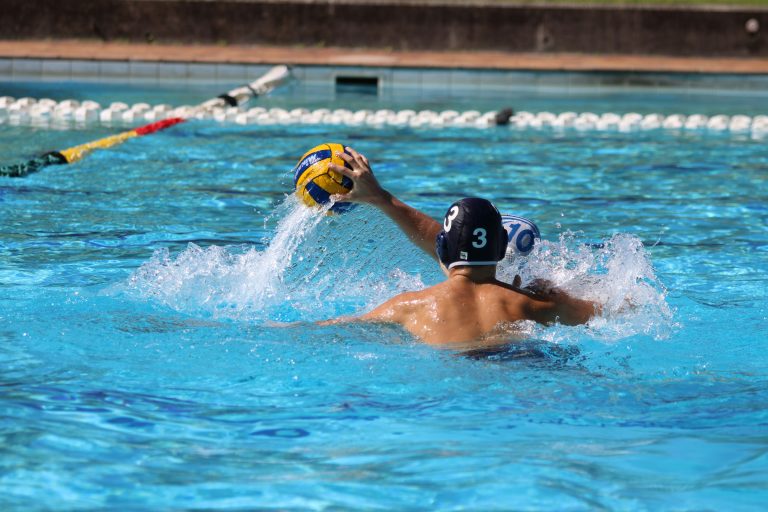
Schools across Gauteng are in full preparation mode for the upcoming Schools Water Polo South Africa Inter-Provincial Tournament, set to take place early next month.

This highly anticipated event, one of the largest of its kind in the country, will host 123 teams from the U13 to U19 categories for both boys and girls. It is being held at Buffalo City’s Joan Harrison Aquatic Complex in the Eastern Cape, with additional matches hosted in other schools within the province as well as KwaZulu-Natal.

Adding an international flair, the Aussie Crocs from Queensland, Australia, are set to compete in the U19 boys’ category, promising a thrilling contest.

Central Gauteng’s U19 boys’ team, a standout performer in 2023, narrowly missed victory in last year’s finals after an intense penalty shootout against Western Province.

Led by coach Jon-Mar de Carvalho, the team is eager to reclaim their place at the top.

This year’s lineup includes seasoned players such as St John’s College trio Greg Pryce, Ross Rovelli, and Nicholas Searle, alongside Marc Smith of St Stithians and Karabo Mamaregane from King Edward VII (KES).

Notably, Mamaregane, who scored a hat-trick in the Currie Cup final earlier this year, is joined by KES teammates Juda Dos Santos and the Wilkins brothers, Harry and Jack.

Water polo in South Africa has deep roots, tracing back to informal school matches in the mid-20th century.

It was not until 1970, however, that a formal inter-provincial tournament concept took shape, following the proposal initially by Zimbabwe at a South African Amateur Swimming Union meeting, the idea gained traction in the following years.

Over the years, the tournament grew in scale, particularly in the late 1990s and early 2000s, when age categories expanded to include U13 through U19 for boys and girls.

Gauteng’s schools are approaching the tournament with a focus on fostering not only competitive excellence but also camaraderie and sportsmanship, with this year’s tournament being particularly significant, highlighting the growing prominence of South African water polo on the global stage.

With the Aussie Crocs joining the fray, local teams like Central Gauteng will have an opportunity not only to vie for the title, but to gain invaluable experience against international opponents, with the tournament offering a glimpse into the bright future of water polo in the country.

INSIDE EDUCATION

Nkabane embarks on SA TVET visit to China

By Johnathan Paoli

Higher Education and Training Minister Nobuhle Nkabane is leading a South African delegation on a working visit to China to foster international collaboration in the field of technical and vocational education and training (TVET).

Department spokesperson Camagwini Mavovana said the trip would last until later this month.

It follows President Cyril Ramaphosa saying that SA-China relations would be elevated.

Nkabane’s itinerary includes participation in the three-day 2024 World Vocational and Technical Education Development conference in Tianjin, set to start on 20 November.

The event is expected to bring together over 1000 global leaders, educators and industry professionals to discuss topics including industry-education integration, sustainable development, skills development, teacher training and quality assurance in vocational education.

Mavovana said the event aimed to shape the future of vocational education worldwide and highlighted the transformative role of innovation and skills development in building resilient societies and economies.

She said the visit would involve a study mission designed to deepen collaboration between South African and Chinese institutions. Focus areas included technical education, expanding opportunities for South African students in China, and enhancing the country’s expertise in mineral processing and exploration.

Nkabane would promote institutional partnerships between South African TVET colleges and their Chinese counterparts, focusing on creating sustainable pathways for skills development and knowledge exchange.

The trip would also include expanding scholarship opportunities for students to pursue studies in China, and supporting South Africa’s skills development initiatives, particularly in fields critical to economic growth such as mineral sciences.

Nkabane is expected to be joined by the director-general of the department, Nkosinathi Sishi, as well as representatives from several South African tertiary educational institutions.

Additionally, representatives from the Council for Geoscience and the Council of Mineral Technology will accompany the delegation in order to strengthen collaboration on mineral sciences.

INSIDE EDUCATION

COP29 must remedy the injustice of climate finance in Africa

0

By Carlos Lopes

COP29 kicked off on Monday in Baku, Azerbaijan, with Africa continuing to find itself in a dilemma that goes beyond just climate financing. This dilemma, a reflection of global climate inequalities, highlights the lack of financial choices available to African countries.

The constraints weighing on the continent’s policy options have never been more visible. Traditional funding models are becoming obsolete, caught in the intersection of climate and development imperatives.

It is becoming clear that the distinction between climate financing and development financing no longer makes sense. This artificial separation, deeply rooted in the practices of international financial institutions and development agencies, obscures the true nature of the challenges African countries face.

The reality is simple: it is now impossible to plan development without integrating climate considerations, just as it is unthinkable to consider climate strategies without addressing fundamental development needs, such as infrastructure, poverty reduction and job creation. Yet the legacy of separate funding perpetuates a fragmented approach that fails to allocate resources according to real needs.

This disconnect has serious consequences for Africa, where limited access to liquidity and capital markets has always constrained countries’ ability to invest independently in climate resilience and sustainable development.

The missing link in sustainable development

The real obstacle for Africa is not a lack of ambition, commitment or even planning capacity, but rather insufficient access to liquidity. Unlike more prosperous regions, African countries have never benefitted from robust capital markets capable of supporting large-scale, long-term investments. Instead, they have relied on external borrowing at prohibitive rates, concessional financing and development aid.

In the context of climate financing, this dependency has only deepened inequalities. Africa, which accounts for less than 4% of global greenhouse gas emissions, bears a disproportionate burden of climate impacts while struggling to access the liquidity needed to meet both its development goals and climate ambitions.

International financial institutions such as the International Monetary Fund and World Bank have proposed reforms, but these are far too timid and do not address the root of the problem.

The discourse surrounding the “leverage” of private financing and hybrid financing – where public funds are used to attract private investments – is presented as a miracle solution for developing countries, but this model is fundamentally flawed. It creates the illusion that adequate funds are available while merely redistributing existing resources. In doing so, it forces African governments to absorb investment risks without actually generating new liquidity.

These financing methods compel African countries to choose projects that appeal to private investors, at the expense of those truly necessary for structural transformation.

The illusion of the carbon market

The carbon market is touted as a solution for African countries. In theory, it is meant to allow African nations to sell carbon credits generated by forest preservation or emission reductions to developed countries or companies looking to offset their emissions. But the reality is far more complex.

These markets remain fragmented, lack transparency and are dominated by interests that do not serve Africa’s development. The rules, certification processes and standards of these markets are dictated by developed countries, leaving African nations little control over the value of their credits.

The burden of emission reduction is placed on the countries that have historically suffered the most from climate change while contributing the least to it. This structure only exacerbates inequalities and limits the potential of carbon markets as a true sustainable development tool for Africa.

Africa is also encouraged to raise its ambitions within the framework of its nationally determined contributions (NDCs) under the Paris Agreement, with the implicit promise that these efforts can be monetised through carbon credit sales. Yet, this remains an illusion. The fragmented nature of carbon markets and the control exercised by opaque intermediaries mean that African countries risk multiplying their commitments without reaping real financial benefits. These markets could therefore become yet another means of exploiting African resources without delivering substantial gains to populations.

Reinforcing dependency

New fiscal mechanisms and regulatory requirements introduced by developed countries, such as the European Union’s Carbon Border Adjustment Mechanism and stricter forest protection conditions, pose additional obstacles to the continent’s development. These measures impose higher standards on producers, forcing them to bear the compliance costs while consumers in developed countries are exempt from the obligation to subsidise these transformations. This is a classic case of misplaced responsibility: African producers, already facing low prices for their products, must now shoulder the cost of adapting to regulations they did not create.

The result is a scenario where African countries find themselves trapped. Forced to adopt standards and practices that serve the interests of developed countries without the necessary financial support or market access, they become locked into even greater economic asymmetries. This situation, far from being a means to combat climate change, reinforces dependency and undermines development objectives.

Another glaring example of the limited choices imposed on Africa is the discourse around energy. While energy security is presented as a pragmatic choice for wealthy nations, access to energy is relegated to a long-term challenge for African countries, which are expected to accommodate this patiently.

The reality is that Africa’s vast natural gas reserves could play a crucial role in funding its transition to clean energy. But African countries are discouraged from exploiting these resources on the grounds that it would increase their carbon footprint, even as developed countries continue to exploit their own without restraint. This double standard clearly illustrates the injustices that characterise the global architecture of climate financing.

Towards an inclusive financial architecture

The solution lies in creating a financial architecture that recognises the interdependence of development and climate, giving African countries access to the liquidity needed to drive their own transformation. It is about moving beyond false divides to embrace a holistic approach that tackles the root causes of limited political choices in Africa.

COP29 presents an opportunity to challenge the status quo and advocate for a more equitable system that allows African nations to define their own development paths. It is time to recognise that Africa’s struggle is not about a lack of ambition – it is about a lack of options. Ending this double injustice is the only way to pave the way to a truly sustainable and inclusive future for the continent and the world.

Understand Africa’s tomorrow… today

We believe that Africa is poorly represented, and badly under-estimated. Beyond the vast opportunity manifest in African markets, we highlight people who make a difference; leaders turning the tide, youth driving change and an indefatigable business community. That is what we believe will change the continent, and that is what we report on. With hard-hitting investigations, innovative analysis and deep dives into countries and sectors, The Africa Report delivers the insight you need.

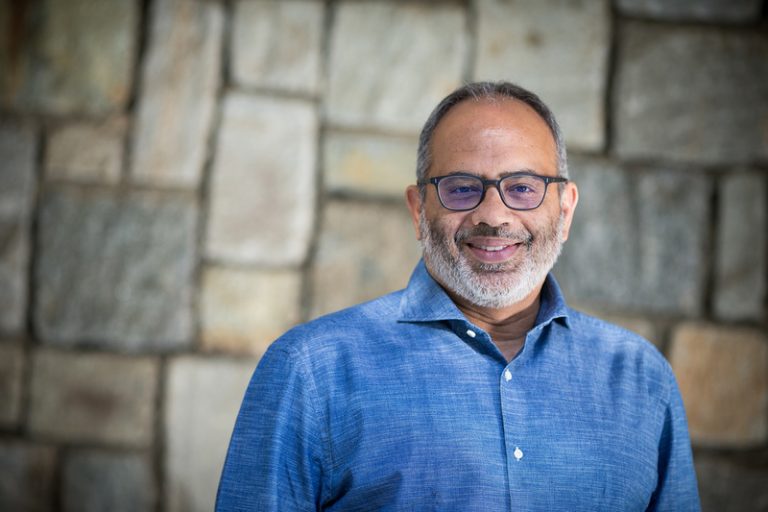
Lopez is a Professor at the Mandela School of Public Governance at the University of Cape Town.

INSIDE EDUCATION

Everyone is responsible to guard children against food contamination: Ramaphosa

By Amy Musgrave

President Cyril Ramaphosa has announced three interventions to deal with the food contamination crisis, with one of them specifically focusing on protecting children from exposure to harmful substances.

The Basic Education Department has been instructed to immediately issue a circular to provincial education departments and all schools on best practice protocols for preventing and managing foodborne illnesses within schools.

Over the last few weeks alone, foodborne illnesses have claimed the lives of at least 22 children. In Naledi in Soweto, six learners who were friends, died after consuming food from a spaza shop. The youngest was just six-years-old.

“By the start of the new school year, the Department of Basic Education and school governing bodies, together with the Department of Health, will review and update the guidelines for schools on the management of suppliers of foodstuffs to public schools. This will include tuck shops operated at these schools,” the president said on Friday night.

It would be complemented by a public education campaign aimed at communities, spaza shops, tuck shops, informal traders and other retailers on health, safety and hygiene regulations, the identification of hazardous products, and regulations that applied to hazardous products and legal consequences.

While multidisciplinary teams were still trying to get to the bottom of the food contamination crisis, Ramaphosa confirmed that tests from the National Institute for Communicable Diseases showed the deaths in Naledi were directly attributed to Terbufos, a highly hazardous chemical used as a pesticide.

“After stringent testing, a chip packet found on one of the children who had died, had traces of Terbufos on both the inside and the outside of the packet,” he said.

Terbufos is registered in South Africa for agricultural use and may not be sold for general household use. However, it is being informally sold as a “street pesticide” for domestic use in townships and informal settlements to control rats.

During investigations into the Naledi deaths, inspectors found that at some shops, food was being stored next to pesticides and detergents.

“Even as our investigations are ongoing, it is critical to understand that this is not a problem confined to spaza shops and other informal traders. The unregulated use of restricted pesticides in communities has become a growing problem, with devastating consequences.”

Another chemical, Aldicarb, and an organophosphate known as Galephirimi, were being sold by street vendors and hawkers to control rat infestations.

Aldicarb has been banned for use in South Africa since 2016.

The president said that the ministers of Basic Education and Health and other government departments would classify certain pesticides and insecticides not suitable for home use as “dangerous objects”, and they may not be brought or used on school premises.

This would be undertaken in terms of the Regulations on Safety Measures for Public Schools.

On the way forward, a ministerial health advisory committee was being established to develop medium- and long-term prevention measures. This committee would comprise experts such as toxicologists, paediatricians, chemical pathologists, epidemiologists and forensic pathologists.

All deaths of patients who were aged 12 and below would now be reported on the Notifiable Medical Condition Surveillance System.

“An electronic medical certification of death system will be established to allow the national Department of Health to access cause of death information immediately after a death is certified,” Ramaphosa said.

He said few words could adequately convey “our sadness and our pain as a nation”.

“Our thoughts and prayers are with their families as they go through the pain and the anguish of losing their children.

“Losing a child is something no parent should ever have to endure. The young children who died weren’t just children of their families, they were our children,” Ramaphosa said.

As the country adopted the new interventions and measures, the president once again appealed to parents to protect their children.

“As consumers and parents, if we buy food or send our children to buy food, it must only be from places that are licensed to sell foodstuffs and that observe food safety regulations.

“We must check that food is prepared in a clean and hygienic area. We must make sure that foodstuffs being sold have clear branding and labels, and that they are not past their sell-by date.

“We must educate our children about food safety and teach them to check for this labelling themselves,” he said.

He pleaded with anyone who saw fake foodstuffs and expired foodstuffs being sold, to contact the National Consumer Commission.

INSIDE EDUCATION

Basic Education Dept may challenge ban on publishing matric results

By Johnathan Paoli

The Basic Education Department has confirmed that it is currently in discussions with its legal team on whether to fight the enforcement notice by the Information Regulator (IR) in prohibiting the publishing of matric results on media platforms.

Basic Education spokesperson Elijah Mhlanga said the department was due to meet its legal team for advice over the weekend.

He told Inside Education that the department has discussed the issue internally. It was now requesting legal counsel.

Mhlanga said by the end of the weekend, the department would have an idea of how to proceed.

IR spokesperson Nomzamo Zondi said on Friday that following a compliance assessment by the regulator, the department was found to be violating Section 11 of  the Protection of Personal Information Act.

Zondi said the department had failed to secure permission from matriculants who sat for the 2023 National Senior Certificate exams or their guardians, before publishing their personal information, thereby breaching privacy rights.

“The IR found that no legal justification existed for the DBE to continue with the publication of the results in the newspapers,” she said.

Civil rights group AfriForum is also consulting its lawyers on the matter.

INSIDE EDUCATION

DBE instructed by Info Regulator not to publish 2024 matric results 

By Johnathan Paoli 

The Information Regulator (IR) has ordered the Basic Education Department to refrain from publishing matric results for 2024 on media platforms, and it must obtain explicit consent to publish the 2025 results.

This directive follows an enforcement notice issued by the regulator, citing non-compliance with the Protection of Personal Information Act (POPIA). 

IR spokesperson Nomzamo Zondi spoke to Inside Education on Thursday, saying that following a POPIA compliance assessment, they found that the department’s practice of publishing matric results violated Section 11 of the Act. 

Zondi said the department had failed to secure permission from matriculants who sat for the 2023 National Senior Certificate exams or their guardians, before publishing their personal information, thereby breaching privacy rights.

“The IR found that no legal justification existed for the DBE to continue with the publication of the results in the newspapers,” she said. 

The regulator advised the department to employ alternative, privacy-compliant methods for distributing matric results, including having students retrieve their results directly from their schools or using a secure SMS platform. 

This would enable students to access their scores confidentially.

In addition, the IR ordered that for the 2025 cohort, the department must create a system to collect prior consent from learners or their guardians if it intended to publish results publicly. 

Zondi said that should the department fail to implement these changes, it risked being barred from publishing matric results in any form for 2025. 

In 2022, the department initially decided to stop publishing matric results in the media to align with Popia requirements, aiming to protect student privacy and curb potential misuse of their personal information. 

However, this decision was challenged by civil rights group AfriForum, Maroela Media and Anlé Spies, a 2021 matriculant. They argued that limited access to school facilities and the internet could hinder students, particularly those in rural areas, from easily accessing their results. 

The North Gauteng High Court ruled in favour of the publication and instructed the department to publish matric results while omitting first names and surnames, instead using only examination numbers. 

Zondi, however, maintained that while ordering the department to publish the results, Judge Miller did not make a ruling on the merits of whether the processing of personal information by publishing matric results was a violation of Popia.

Inside Education spoke to AfriForum’s Alana Bailey, who said its legal division would study the directive.

Department spokesperson Elijah Mhlanga said they would officially communicate the way forward in due time.

Headed by Pansy Tlakula, the IR is an independent body established in terms of Popia. It is accountable to the National Assembly and responsible for overseeing the protection of personal information in the country. 

INSIDE EDUCATION