Home Blog Page 137

School violence is a prime concern for KZN Education MEC

By Lungile Ntimba

Addressing school violence and improving infrastructure was a priority of KwaZulu- Natal education MEC Sipho Hlomuka during his first 100 days in office.

Hlomuka prioritised safety in schools, demonstrating his commitment to providing a secure learning environment.

He also facilitated maintenance and upgrades of school facilities, creating conducive spaces for education. 

Earlier this month, the MEC officially opened the Battlefields Primary School and unveiled the school’s plaque in uMzinyathi district.

Education department head Nkosinathi Ngcobo said the school’s opening was a testament to the MEC’s commitment to providing quality education. 

Hlomuka also used his first 100 days in office to address the issue of unemployed teachers, working towards optimal staffing through post provisioning norms and held discussions with unions.

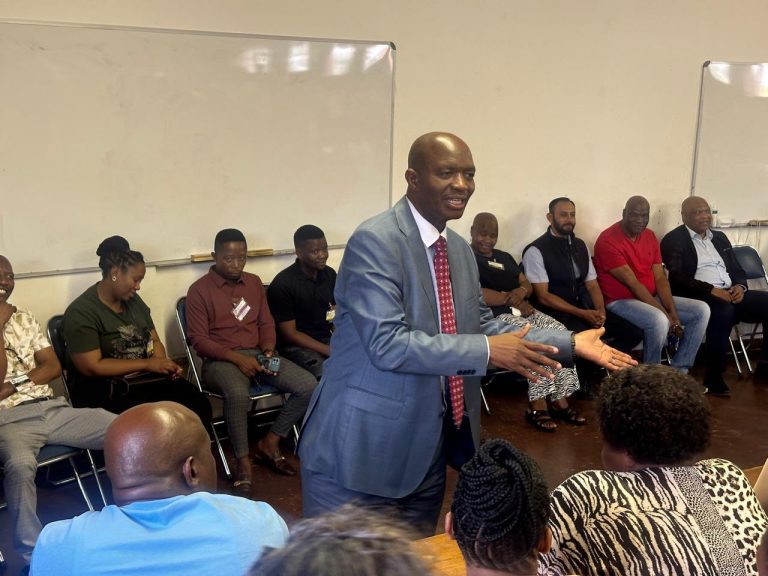
He visited crime-affected schools such as Mukelani Primary and Phikiswayo Primary, and engaged with Verulam High School learners to address bullying in schools.

Ngcobo praised the MEC for addressing challenges at schools and driving long-term strategic improvements in the administration of the province’s education system.

INSIDE EDUCATION

Teachers will not be retrenched: Basic Education Minister

By Johnathan Paoli

The budget crisis in the education sector will not culminate in teachers losing their jobs, but rather on a reduction of posts going ahead, according to Basic Education Minister Siviwe Gwarube.

Gwarube was providing an update on the provincial analysis of the impact of the budget cuts in the education sector to the media in Tshwane.

The minister highlighted the growing financial pressures faced by provincial education departments across the country, emphasising that recent budget cuts were jeopardising the quality of education for millions of learners.

She revealed that over the past five years, the number of learners in the education system has increased by approximately 292,820, while there were fewer teachers.

“We are on a path where most provincial education departments will not be able to maintain their respective basket of posts,” she warned.

However, she stressed the importance of distinguishing between a reduction of the basket of posts and cutting jobs, and wished to prevent mass panic based on inaccurate information.

The minister said a budget shortfall of between R70 billion and R118 billion was expected over the next three years, which was not limited to just teacher provisioning, but across the board.

Gwarube pointed out that these financial strains were the culmination of years of aggressive budget reductions, economic stagnation and fiscal mismanagement.

“These budget pressures are not just numbers on a spreadsheet. They translate into fewer teachers, reduced textbooks and diminished administrative support staff. The very fabric of our children’s future is under threat,” she said.

The minister attributed the crisis to a combination of stagnant economic growth and misaligned government spending priorities, including substantial bailouts to state-owned enterprises that have drained public resources.

She highlighted that nearly 35% of government spending now went to public sector salaries, leaving little room for investment in critical sectors like education.

In response to the mounting crisis, Gwarube convened meetings with the Council of Education Ministers to analyse budget challenges and engage with the Treasury.

In addition, the minister confirmed that she had requested an urgent “10×10” meeting with Finance Minister Enoch Godongwana, the nine finance MECs and the nine education MECs to discuss strategies for alleviating the financial burdens faced by the education sector.

“We must work together with all 10 treasuries to unlock additional funds to alleviate the pressures facing the education sector, even if it is for the short term, and to prevent further cuts to teaching posts and critical support services like school
nutrition and transport,” she said.

The minister called for a renewed commitment to prioritise education, emphasising that it was not merely an expense, but an investment in the country’s future.

She specifically called for a cross-departmental reprioritisation of budgets from departments that have under-performing programmes, ensuring that funding across government was directed to appropriate national priorities.

“A well-educated population is essential for a prosperous, competitive economy,” the minister said.

Her long-term vision includes increased investment in education, teacher development, the integration of technology in classrooms and appropriate investment in infrastructure.

Gwarube expressed her gratitude to the education MECs and other stakeholders for their tireless efforts in navigating these challenges.

“While we face significant obstacles, these are not insurmountable,” she said.

The deadline of declaring posts is looming.

Only the Western Cape, the Free State and Mpumalanga, have declared available posts, with the other provinces expected to finalise by the end of the month.

INSIDE EDUCATION

Sadtu prepares for national congress this week

By Johnathan Paoli

The South African Democratic Teachers’ Union (SADTU) says its upcoming congress will deliberate how to engage the educational landscape of the country under the rule of the Government of National Unity.

Sadtu’s 10th congress in Johannesburg this week will be attended by nearly 2,000 delegates from across the nation, including representatives from all nine provinces, as well as international guests and stakeholders in the education and labour sectors.

Under the theme, “Mobilising the consciousness and uniting revolutionary professionals in strengthening foundational learning and functional skills to advance inclusive and sustainable economic growth in pursuance of a socialist society”, the congress aims to inspire and unite educators in their critical role in shaping an equitable and inclusive society.

Deputy President Paul Mashatile will deliver the keynote address on the opening day, setting the stage for a series of discussions and debates that will cover pressing labour, political, socioeconomic and educational issues.

Supportive messages from representatives of the Tripartite Alliance, as well as the departments of Basic Education and Higher Education & Training, will also be featured.

As the supreme governing body of the union, the congress convenes at least once every five years to adopt policies, elect national office bearers and consider constitutional amendments.

The discussions will culminate in resolutions that will shape the union’s agenda for the next five years.

One of the meeting’s highlights will be the launch of the international education campaign, “Go Public, Fund Education”, which advocates for increased government investment in public education.

This initiative responds to recent austerity measures that have led to significant budget cuts in the education sector, jeopardising the employment of teachers and the availability of essential educational resources.

Sadtu has been in discussions with the higher education minister on the budget cuts.

It is expected that the impact of the Basic Education Laws Amendment Bill will also be discussed.

The congress will conclude on Saturday with the inauguration of the new national leadership and the presentation of its declaration, marking a new chapter for Sadtu as it strives to advance quality education in South Africa.

INSIDE EDUCATION

Online classrooms where students run the show: we tested how this unconventional model can work

0

By Matthew Wingfield, Bettina von Lieres and Laurence Piper

The Zoom meeting window opens, immediately revealing scores of smiling or anxious faces. Some people have quirky backgrounds; some are in the same room as friends and family, who appear occasionally on camera. The South African and Swedish students are running out of ambient light, since it’s just gone 5pm in their time zones. Their counterparts in Canada, meanwhile, are illuminated by the bright sun. Excited messages flood the chat box.

This is a Global Classroom for Democracy Innovation meeting. The initiative was launched in 2020 as the COVID pandemic brought face-to-face learning to a grinding halt all over the world. We were teaching both undergraduate and postgraduate courses on democratic participation and global development at Stellenbosch University (South Africa), the University of Toronto, Scarborough (Canada) and University West (Sweden). Our students told us that they felt isolated. They missed daily interactions with their peers and the other formative interactions that make for a rich, fulfilling university life.

We tried to nimbly adapt to recorded or real time lectures, while trying to facilitate and encourage student participation. But we and the students felt that something more was needed. So we created the Global Classroom for Democracy Innovation. The idea was to bring students together to learn and interact around a shared set of issues.

In a recent academic paper we reflected on the experience.

This model wasn’t just useful during a global pandemic. Given that many institutions have retained an online component, and that students from three countries who cannot easily meet in person are involved, we are still using the Global Classroom for Democracy Innovation.

Historically, universities have focused on what information is transmitted to students within the traditional lecture hall. Our work with the Global Classroom highlights the importance of positioning students as collaborators and co-creators of knowledge rather than just receiving what they are told.

Design thinking and wicked problems

The Global Classroom is a collaboration between our three institutions and the Vancouver Design Nerds, an organisation that creates spaces for designers and social entrepreneurs to work together.

We use a design thinking framework. Design thinking is a process moving from forming an idea to delivering a project. Along the way, what’s been learnt is fed back to inform the next step. Rather than an academic instructor controlling the learning process, students are co-designers and facilitators.

At the start of the design process, students draw on their experiences and ways of thinking, existing and acting. They are not silenced. That’s a far cry from what usually happens in higher education across the world.

And, by bringing staff and students from three distinct institutions into conversation and collaboration, we’ve highlighted how different contexts and cultures contribute to learning. That’s useful in a world facing borderless “wicked problems” – from threats to democracy to climate change and global poverty.

Students as facilitators and co-creators

Before the first five-week project started we asked participants for their input. They emphasised that the learning space should be non-hierarchical.

So, rather than having academics lead the programme, fellow students with experience in design facilitation did so. Our role as academics and practitioners was largely supervisory. We assisted largely with troubleshooting and helped student facilitators when needed.

Students were first placed into groups of between eight and ten to map their own contexts and experiences, which created a collective foundation for co-designing a project. For example one project, titled “Going Blue”, was developed to highlight water use on university campuses. When presenting on this project, students pointed out the similarities and differences between water use and water access across the different institutions. They made the case for rainwater storage tanks as a solution for all the contexts.

Student feedback

It was clear from students’ feedback that this kind of learning space boosts engagement, enthusiasm and learning.

One student in Canada said the Global Classroom was the first space in which she was able to “align academic experience and knowledge with practical skills relating to pressing social issues”, while also allowing her to “have conversations around feasibility in relation to structural issues”.

A South African student drew a clear distinction between what she had learned in the classroom and the ability she’d gained to “help people around you and help them develop capacity to address these [social issues] in a practical and unique way”.

The Global Classroom for Democracy Innovation continues to take on new cohorts and adjusting its own design based on feedback. Several other institutions have come on board. We’ve also introduced a number of new themes, such as global justice.

Wingfield is a research fellow at Stellenbosch University, Von Lieres is an Associate Professor at the University of Toronto and Piper is a Professor of Political Studies at the University of the Western Cape

This article was originally published in The Conversation 

The matric dance is a after party debt hangover

0

By Edwin Naidu

In a country with high unemployment, poverty and deepening inequality, is there an argument for the matric dance to be stopped at schools in South Africa since they are places of learning and not to show off? 

It is an unnecessary waste of money that creates divisions rather than promotes the reconciliation that the Constitution calls for. 

It’s not as if most learners in our country leave the system destined for great tidings. At least 300,000 matriculants, for example, fail annually. 

Yet South Africa celebrates mediocrity and its passage to nothingness because the government fails to create jobs and skills required for school leavers to secure employment. 

Celebrating them may encourage the have-nots to do better despite lacking resources. 

The only time we ought to dance in celebration is when the Basic Education Ministry is churning out a nation of learners with skills enabling them to read, write and count at least by Grade 4. This is not the case at present. South Africa ranks dismally in global surveys of reading, writing and numeracy. 

A matric dance should celebrate success as a society or a nation. There is nothing to dance about when the system continues to produce dunces. This is no slight on the children who fail but, on the system, and the teachers who fail them. 

Matric dances and other diversions should be done outside the school premises if allowed. The only competition at schools should be learners competing to outdo each other on excellence, not who has the best dress, suit or hired car for the night. 

When the schooling system meets all children’s needs equally, South Africa should celebrate or dance in the knowledge that it adequately prepares them for the world after school. 

The matric farewell dresses can break an arm and a leg if not budgeted for properly, placing many cash-strapped households in a precarious position that could even lead to depression.

For example, an elegant lace-up back ensures a flawless, figure-hugging Ruffle Tulle designer gown by Gert-Johan Coetzee costs a staggering R35,000. It’s best left for thechildren of super-rich kids. 

For the less well-heeled, a Rhinestone Mock Slit number from Temu is a more affordable R538.

The prices of men’s clothing are not cheap either. A Fabiani men’s black wool suit costs at least R5999 at Woolies, but a suit from Markhams is around R1700.These prices exclude shoes and accessories and money for makeup and hair stylists.

The dress is not the only expensive feature of the matric dance. 

Hair, nails, jewellery and the mode of transport to the event are also costly. Some families have had to pay to rent a limousine just for one night, which is not cheap.

The purpose of the matric dance is to give pupils a chance to socialise with their classmates they may never see again after graduation, foster camaraderie and encouragelasting friendships and bonds.

However, one tends to agree that this could turn out to be a costly feat that may leave a massive dent in the pockets of struggling black middle-class families. Parents must remember to save some money for the registration fees in January. The festive season and its expenses are around the corner.

There is also the issue of where the pupils will go when they pass matric because our universities and colleges cannot accommodate the thousands that leave school every year.

The matric dance puts too much pressure on parents who may feel they don’t want to disappoint their children who have worked hard to remain in school and studied diligently to pass matric.

It is a temporary celebration. But judging from South Africa’s history, the majority have nothing to celebrate because those who won’t find space at tertiary institutionswill still languish in the townships because of a lack of job or training opportunities in South Africa.

I know this isn’t easy, but middle-class families need to instill a culture of savings in their children and teach them that consumption is best left to the rich. 

Thirty years of democracy does not mean that South Africa is free of the legacies of apartheid, and the country continues to mirror the disparities of unequal education. We need to remember that the apartheid government used to spend R1211 per white child compared to R146 on a black child. 

The ratio then was one teacher to 18 pupils in white schools, compared to one teacher to 39 learners in black schools. Half the black matriculants who wrote the examinations in 1983 failed. It sounds like little has changed. Democracy has meant that spending patterns are changing. However, inequalities remain. 

The matric ball is one night on the calendar for most to escape the realities of the majority’s challenges in the country. 

But the after-party is a debt hangover, which the Basic Education Department should clamp down on to spare the headaches of parents who cannot tell their children no; this is a waste of money. After all, what’s there to celebrate?

Edwin Naidu is the Editor of Inside Education.

W.Cape encourages matriculants to seek support during exam preparations

By Lungile Ntimba 

Matric learners who are feeling overwhelmed as they prepare for their final exams have been urged to reach out to their teachers and schools for support.

Western Cape Education MEC David Maynier said help was available and the department would do everything it could to support Grade 12 learners.

“We appeal to the public to support our matrics: the countdown to the exams is a stressful period for matric learners, and they need to be given the best possible opportunity to achieve their goals without any added anxiety,” he said in a statement.

“This will also be an anxious time for our matric teachers, who have supported our learners throughout the year. We thank them for the many hours they have put into preparing matric learners for the final stretch.”

The department has arranged various eLearning resources for matriculants preparing for their final exams.

“We collated a variety of eLearning resources specifically for our matrics on our ePortal, including video lessons, past papers, study tips and revision notes.” he said.

Maynier emphasised that over the school holidays, matriculants across the province would be attending Spring School to revise their work and prepare for the exams.

“Matric learners will have the opportunity to attend walk-in classes at their school, or at a hub with learners from several schools attending. The Eden and Central Karoo and West Coast Education Districts will also host residential camps for some of their learners,” he said.

Last year the Western Cape achieved an 81.5% pass rate, which was an increase of 0.1% from the previous year.

NSFAS administrator upbeat about changes at the scheme

By Johnathan Paoli

The administrator of the National Student Financial Aid Scheme (NSFAS), Freeman Nomvalo, is confident in the scheme’s transformation and improved operations to assist students in achieving tertiary education.

In an interview with Inside Education, following the launch of the NSFAS Online Application platform for 2025 last week, Nomvalo addressed concerns over the functioning of the scheme.

Nomvalo said that pending any decision’s by Higher Education Minister Nobuhle Nkabane, his job was to ensure that the transition was facilitated smoothly.

He said, through technology, the post-school education and training sector could facilitate the effective access to education.

“It’s absolutely critical, and now it’s creating access to students who come from disadvantaged backgrounds to access funding for their education as well as the information that is necessary for them to do so,” he said.

Nomvalo said that the scheme intended to publish information concerning statistics and other concerns to the public on a monthly basis going forward.

On the cancellation of the NSFAS headquarters in Cape Town, where it was paying almost R2 million a month, Nomvalo said things would change.

In light of the need to make the scheme more accessible to students across the country, there was a shift in terms of prioritising the central location of the scheme.

“With the change of operations at NSFAS, we are trying to create accessibility to the students where they are. You do need capacity and access here, so that is the context surrounding that matter,” he said.

This follows Nkabane announcing at the launch that the appointment of the new NSFAS board was nearing completion.

Nkabane said 13 of the 18-member board would be appointed by her, while the remaining five would be selected by board members and the CEO.

She said the application period for board positions has officially closed, with focus now shifting to choosing appropriately qualified candidates.

The minister highlighted the urgent need to acquire skilled individuals to the board and said only candidates with a master’s degree and experience in law, financing, engineering or governance would be considered.

“We want people who are going to bring skills and value to those institutions, and we have upped the bar,” Nkabane said.

The new board is expected to face significant challenges in addressing the scheme’s capacity deficiencies and ensuring effective support for prospective students.

The minister expressed optimism that the appointment of a capable board would assist NSFAS in delivering on its mandate of providing accessible and equitable education.

The NSFAS anticipates over 1,4 million applications for the next academic year.

Video by: Eddie Mtsweni Edited by: Katlego Tshekoesele

INSIDE EDUCATION

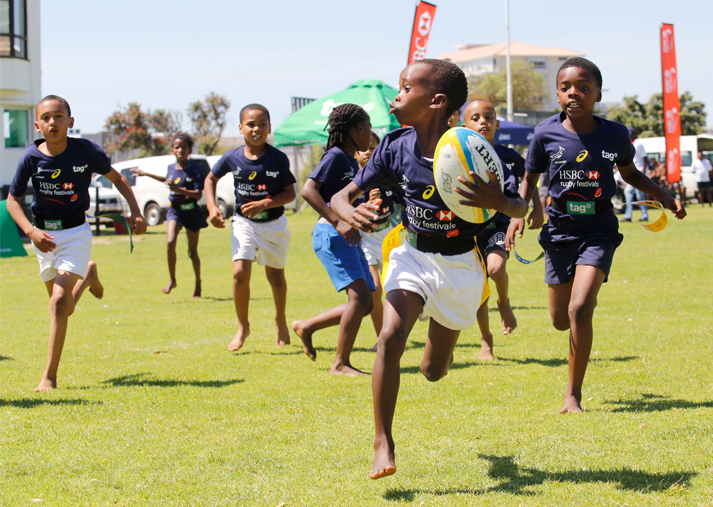
Playing sport at school level is important: Gauteng Education MEC

By Johnathan Paoli

Sports at schools ensure the opening of doors to would-be professional players at the dawn of their careers, according to Gauteng Education, Sport, Arts, Culture and Recreation MEC Matome Chiloane

“It ensures young players perform at a high level, which is crucial for reaching their potential early on in their development,” the MEC said in a statement this week.

The 2024 Gauteng Schools Wednesday Champions League wrapped up in thrilling fashion at the Muckleneuk Sports Grounds in Mamelodi, with Clapham High School and Jabulile Secondary School successfully defending their crowns in boys’ and girls’ football, respectively.

Chiloane praised the defending champions, as well as the programme in general, emphasising the potential it holds for developing young athletes.

“This is an ambitious programme by the province focused on enhancing the development of school sports in Gauteng,” he said.

Chiloane said the impressive turnout reflected the growing interest and engagement in school sports across Gauteng.

Clapham High School showcased their prowess on the field, retaining their title amidst stiff competition, while Jabulile Secondary School continued their dominance in girls’ football, proving once again why they are a force to be reckoned with in the league.

This year’s tournament introduced netball and volleyball leagues, adding new excitement to the event.

The standout winners in these categories included Moletsane High School from Soweto, which triumphed in netball, and Mpilisweni High School from Katlehong, which took the title in boys’ volleyball.

Lukhanyo High School in Mohlakeng claimed victory in the girls’ volleyball, marking a successful year for these schools.

Each winning team will receive R50,000 worth of attire and sporting equipment as an acknowledgement for their hard work and commitment throughout the tournament.

A total of 44 school teams participated in the champions league, competing in a four-round league format that began in August.

The success of the tournament underscores the vital role of sports in fostering teamwork, discipline and physical fitness among students, paving the way for a bright future in school athletics in the province.

INSIDE EDUCATION

SA’s agro-food sector unprepared for impact of climate change: Study

By Johnathan Paoli

A recent study from the University of Cape Town highlights the significant risks posed by climate change to South Africa’s agro-food sector, an industry crucial to the nation yet often overlooked in climate discussions.

Conducted by PhD candidate Koaile Monaheng, the dissertation titled “Climate Risk Disclosure: An Assessment of the South African Agro-Food Sector” reveals a concerning lack of preparedness among companies to address long-term climate impacts.

Monaheng’s research investigates how agro-food companies in the country have integrated climate change risks into their operational strategies.

By focusing on less carbon-intensive sectors that are nonetheless vulnerable to physical climate risks, it offers a new perspective on climate risk assessment.

It introduces a blended climate risk disclosure framework inspired by global standards, including the Carbon Disclosure Project and the Task Force on Climate-Related Financial Disclosures (TFCD).

The findings indicate that while South African agro-food companies demonstrate awareness of climate risks, their reporting on actionable measures remains weak.

Most companies have not met the robust disclosure standards seen in international best practices. Although South African firms recognise their climate risks, the transition from awareness to action is lacking.

“The performance of South African agri-businesses is comparable to international counterparts in climate change disclosure,” Monaheng said.    

“However, the gap between risk recognition and proactive measures is evident. More detail on actions and implementations is essential.”

In terms of TCFD recommendations that outline climate change governance, South African food retailers performed better than agri-businesses. The same pattern followed for both transition risks and physical risks.

Monaheng said South African companies understood – and took seriously – the importance of transitioning towards a low carbon economy in line with local legislation in their disclosures where they referenced the Greenhouse Gas Protocol, the South African Carbon Tax and the Draft Climate Change Bill since the signing of the Paris Agreement.

But, while many companies acknowledge the need for a transition to a low-carbon economy, few have aligned their strategies with global goals such as the 1.5°C warming limit outlined in the Paris Agreement.

Most disclosures focus on Scope 1 (direct emissions from sources owned or controlled by a company) and Scope 2 emissions (indirect emissions from purchased electricity, steam, heat, and cooling). However, they often neglect comprehensive Scope 3 targets on all other emissions associated with a company’s activities.

Despite recognising the urgency of dealing with climate change, South African companies have struggled to meet greenhouse gas emission reduction targets.

Monaheng emphasised the need for the private sector to adopt more ambitious strategies to align with both local legislation and global climate commitments.

“The research underscores the critical need to bridge the gap between climate change and food security, especially as southern Africa faces increasing water scarcity and extreme weather events like droughts and floods,” Monaheng added.

He said recent studies on El Niño’s impact further emphasised the need for agro-food companies to develop climate-resilient systems.

As the agro-food sector grapples with the long-term implications of climate change, Monaheng has urged industry leaders and policymakers to prioritise this vital area.

He warns that without effective adaptation strategies, many companies risk survival as climate conditions continue to deteriorate.

In conclusion, while some South African companies show promise in acknowledging climate-related risks, the inconsistency in climate risk reporting leaves many unprepared for the future.

“If companies cannot adapt effectively to climate change, they will not survive,” Monaheng warned.

He highlighted the pressing need for integrated climate governance and resilience-building measures.

INSIDE EDUCATION

College of Africa graduates urged to make a difference

By Thapelo Molefe

The latest crop of students who graduated from the College of Africa in Polokwane has been urged by Deputy Minister in the Presidency, Kenny Morolong, to contribute to building a better South Africa.

Delivering the keynote address at the graduation ceremony, Morolong emphasised the significance of community contribution, resilience and lifelong learning as the graduates embarked on their professional journeys.

“As you pursue your careers, keep in mind that the world is continuously evolving. The skills in demand today may be obsolete tomorrow,” Morolong cautioned on Friday.

“Stay curious, be hungry for new knowledge and explore the world to gain new experiences.”

Morolong drew inspiration from tennis legend Andre Agassi, who emphasised during his induction into the International Tennis Hall of Fame in 2011, the importance of humility and recognising the unsung heroes who “do the right thing” and “win their own private Grand Slams”.

Morolong encouraged the graduates to remain humble and focus on giving back to their communities.

He also highlighted Brand South Africa’s Play Your Part initiative, which motivated citizens to contribute positively to the nation’s development.

“Your contributions matter, whether through innovation, community service or simply being a responsible citizen,” Morolong stressed.

The deputy minister also emphasised the importance of passion, creativity and determination in overcoming obstacles and achieving success.

He warned that failure was inevitable, but what was important was how the graduates responded to drawbacks.

“When asked how he (Agassi) developed resilience to stage some of the most epic comebacks on the tennis court; he had this to say: ‘It’s about recognising that regardless of what the score is, the most important point is that next point’,” Morolong said.

“At this point where you are today, you have just scored a point by graduating. However, the most important point is the next one, which is the unpredictable world of work that lies ahead.”

He also encouraged the graduates to start businesses and choose entrepreneurship as a career.

“As you step into the professional world, do not shy away from challenges. Instead, view them as opportunities for growth.”

According to the government, the ceremony celebrated students who have benefited from Brand South Africa’s Covid-19 tertiary bursary scheme, which forms part of its Play Your Part programme.

Launched in 2021, the initiative has assisted 10,000 students from economically disadvantaged backgrounds across South Africa.

It was introduced in response to the financial hardships brought on by the pandemic, which severely impacted household incomes and led to many students dropping out due to a lack of funding.

It said this bursary scheme stood out because beneficiaries were not required to repay the funds or work for the bursar after completing their studies, unlike other forms of educational financial aid.

INSIDE EDUCATION