Home Blog Page 148

Skilling Mzansi: Trolley libraries make reading accessible and popular across SA

Staff Reporter

THE AVBOB Road To Literacy campaign, in partnership with Oxford University Press Southern Africa (OUPSA), aims to transform the lives of primary school children across South Africa by making reading and numeracy books accessible, especially to underserved schools. This public-nomination initiative provides children with books in their mother tongue.

At an event held on 13 June 2024 at the AVBOB Head Office in Irene Link, Centurion, Carl van der Riet, CEO of AVBOB, and Karen Simpson, Managing Director of OUPSA, announced the beneficiaries of the 500 trolley libraries (a substantial increase from the 260 trolley libraries donated in 2023 and the 180 trolleys donated in 2022).

Each trolley library holds 500 books tailored to the CAPS curriculum and is estimated to be worth R65,000. The total
investment value for the 2024 campaign came to R32,5 million. The trolley libraries were donated to deserving primary schools and educational Non-Profit Organisations (NPOs) through public nominations.

According to Van der Riet, more than 7,000 nominations were received this year, posong a challenge for the AVBOB
adjudicators as choosing the “best” motivations was not an easy task.

The 2024 national AVBOB Road To Literacy campaign had a mother-tongue focus, as children who learn to read in their
mother tongue are more likely to stay and succeed in school (Kosonen, 2005).

This collaborative effort between AVBOB and OUPSA underscores their support of the Department of Education by providing CAPS-aligned resources to assist learners in improving reading proficiency and understanding. Since South Africa was ranked last out of the 57 countries in the Progress in International Reading Literacy Study in 2021, it is such partnerships that make a difference in society. The study tested the reading ability of 400,000 students globally and showed that 81% of South African children could not read for comprehension in any of the country’s 11 official written languages. The aim of the AVBOB and OUPSA initiative is to positively impact children by making reading accessible and popular.

In his address, Van der Riet said, “The skills of literacy and numeracy are not only fundamental human rights but also serve as the means for the pursuit and attainment of other human rights. They are the foundation for achieving education and the broader goal of improving livelihoods and reducing poverty.”

He explained that AVBOB was established to help people through challenging times and has never veered from that original purpose. “We still exist for the people, and our mutual status is a cornerstone of who we are,” he added. Van der Riet further stated that AVBOB is owned by its members as it is a mutual society, and it exists solely to serve its members’ interests and that of the wider community.

“Our Environmental, Social, and Governance strategy underscores this commitment, guiding us to make decisions that are not only profitable but also sustainable and socially responsible,” he said.

Guest speaker Gugulethu Ndebele, Executive Director of the Oprah Winfrey Academy for Girls, provided valuable insight into the importance of mother-tongue reading. She praised AVBOB’s long-standing and unwavering commitment to education. She emphasised that trolley libraries are only effective if integrated into other teaching activities and strategies to achieve a holistic education outcome.

Simpson from OUPSA said, “Our mission at Oxford University Press is to transform lives through learning. We believe that partnerships with like-minded organisations, such as AVBOB, are essential in realising our vision to positively impact the lives of millions of learners anytime, anywhere. Our collaboration with AVBOB has strengthened over the last three years, and we are exceptionally proud of our involvement in the 2024 Road To Literacy campaign, which supports so many deserving schools where access to the right literacy resources can make the biggest difference to learning outcomes.”

INSIDE EDUCATION

Rowing South Africa at the Paris 2024 Olympic Games

Staff Reporter

Rowing South Africa’s Olympic-qualified athletes have been training intensively in Tzaneen, preparing for the Games in Paris.

On Sunday, it was the second day of racing at the Paris 2024 Olympic Games which was an exhilarating experience for the team. Kicking off the day, the Men’s Pair, featuring Christopher Baxter and John Smith, put on an impressive performance, finishing second in their heat. Their strong finish means they advance directly to the A/B Semi Final on Wednesday.

The goal for Wednesday is clear: secure a top 3 finish to earn a coveted spot in the A-Final.

The atmosphere at the rowing stadium was electric, with an incredible buzz from the crowd. The excitement reached fever pitch whenever a French crew took to the water. It’s also heartening to see so many South Africans in the stands, passionately cheering for team.

The team had training day on Monday to fine-tune strategies and maintain focus. On Tuesday morning, Paige Badenhorst will compete in her Quarter Final at 10:00am.

The team, focusing on the men’s pair and women’s single scull, left South Africa on 18 July, with the Olympic rowing events having started on 27 July.

The South African Sports Confederation and Olympic Committee has announced the men’s pair of Chris Baxter and John Smith, along with their coach Tiago Loureiro.

Paige Badenhorst clinched her place in the women’s single sculls for the Games.

The serene setting of Tzaneen, nestled in Limpopo, has provided an ideal environment for the athletes to refine their techniques, build stamina, and develop mental resilience.

Both the men’s pair and the women’s single scull have been working tirelessly, honing their skills and strength through long on-the-water sessions, strength conditioning, and race simulations. These athletes are seasoned competitors with a history of international success, demonstrating exceptional determination, precision, and drive.

In the men’s pair, the dynamic duo of Baxter and Smith has developed a strong synergy, working as a cohesive unit both in and out of the boat.

Meanwhile, Badenhorst, the women’s single sculler, has spent countless hours perfecting her technique under the guidance of her coaching team. Her training is designed to optimise her speed and endurance, key elements for excelling in the demanding single-scull event.

This unity among the athletes and their coaches fosters a sense of camaraderie and mutual support.

As the team prepares to leave for Paris, there is a palpable sense of anticipation and excitement. The hard work and dedication shown in Tzaneen have laid a solid foundation for a successful Olympic campaign, and the team is eagerly looking forward to the challenges and triumphs that await them in the French capital.

The team carries the hopes and support of a nation ready to make waves on the international stage.

INSIDE EDUCATION

PhDs are important for South Africa’s growth: more support for doctoral candidates who work full-time is key

Zama Mthombeni

South Africa’s government and higher education sector have invested a lot of time and money over the past two decades to enhance the country’s research output and cultivate the next generation of researchers.

Though there has been some progress, South Africa still isn’t close to its National Development Plan target of reaching 100 PhDs per one million people by 2030. By 2021 the rate stood at 59 PhDs per million people.

A doctoral degree is the highest academic qualification awarded by universities. Obtaining a PhD means a researcher has advanced knowledge in their field and credibility in academia. These qualities can pave the way for opportunities to make groundbreaking scientific contributions. So, efforts continue to grow South Africa’s PhD cohort. These largely take the form of funding initiatives driven by, among others, the National Research Foundation (NRF).

But these initiatives often overlook doctoral students who work full-time while pursuing their PhDs – of whom there are a significant number. For instance in a 2020 study, Stellenbosch University’s Centre for Research on Evaluation, Science and Technology tracked the demographics, work experience and career paths of more than 32,000 doctorate holders who graduated from South African universities between 2000 and 2018. The researchers found that

just over 60% of South African doctoral graduates over the past 19 years were employed full time during their doctoral studies. This means that the majority of doctoral students in this country study part time.

PhD programmes are intense and demanding. This cohort of students must manage this reality while also juggling an extra load, balancing full-time employment with family and other personal responsibilities.

The problem is that the kinds of initiatives I’ve described simply aren’t catering to this large and important group. Nor are most universities’ doctoral programmes. Research indicates that there is simply not enough money in the system to allow PhD students already working at universities to be paid a salary to study full time. This approach is common in some Scandinavian countries and allows candidates to finish their PhDs far more quickly than their South African counterparts.

I am a scholar who focuses on how public policy and developmental frameworks influence equity, access and effectiveness in higher education. In a recent study I set out to better understand the experiences of non-traditional doctoral students. I identified several key factors that influenced how their PhD journeys unfolded, what held them back in certain areas and what helped them to succeed.

My study found that none of the non-traditional doctoral students completed their PhDs in the standard three-year period. Most took five or six years instead. Various factors contributed to this delay, including personal responsibilities such as marriage and childcare. Some students also cited institutional factors from their universities, such as a lack of support, poor and slow administration, and insufficient financial support during their studies.

Understanding and addressing the unique needs of this cohort is essential for several reasons. By supporting these students, South Africa can increase its research output and meet its national research and development goals more effectively. It can also lead to higher retention and completion rates, benefiting both students and institutions.

An overlooked cohort
I interviewed 15 people who worked in the same research institution (not a university) while pursuing their doctoral degrees. Some had already graduated and others were still studying. They represented a range of fields, like politics, sociology, economics and agriculture.

My findings fell under three key themes.

The first was that the participants struggled to balance academic demands with their professional and personal responsibilities. Most were mid-career professionals or parents when they undertook their PhDs. This added a layer of complexity to their doctoral journey. One of the participants told me that they would have been able to finish their doctorate a year earlier had they not been working full time.

The second theme related to support systems. Participants told me that their employers and work mentors provided more support than their doctoral supervisors. Some said this was because their PhD projects were highly specialised and had originated from experiences and learnings in their workplaces. Others said it was simply easier to access their work mentors, since they were in the same place; still others found that their doctoral supervisors weren’t always available or responsive.

My supervisor at the university tries their level best but I feel my research organisation does a better job in terms of giving me the expertise I need. Especially with publications. I am doing my PhD through publication, and I get more insight from my mentor (at work).

The third theme was institutional flexibility. For instance, there was little room within doctoral programmes for flexible scheduling. This inflexibility extended to financial considerations. Several participants told me they registered as full-time students because part-time students didn’t qualify for fee remission or other financial assistance. One reflected:

Funding is very important because when people pursue their doctoral degrees they’re mostly in their adulthood and funding is not about your studies only, but (is) used as a means for your livelihood given our unemployment rate in South Africa. I was helping at home financially and I believe that your economic situation plays a crucial role in your success.

Recommendations
These concerns can be addressed in several ways.

Universities should establish comprehensive support systems tailored to the needs of this cohort. That includes flexible scheduling, part-time study options, and dedicated mentorship programmes that address both academic and professional challenges.

Policy reform is important, too. At a national level, policymakers should design funding programmes and scholarships that specifically target this cohort. Some bursaries only fund students registered as full time. Institutions should ensure that students who are both working and studying towards PhDs full-time can access financial benefits even if they are registered part-time. This can include fee remission and scholarships.

Finally, given that most of my participants – and those profiled in the Stellenbosch study – already work in higher education institutions (universities, research councils), there should be partnerships between the universities these students attend and their workplaces. Such collaborations can provide additional support, align academic and professional goals, and create synergies that benefit both the students and their employers.

Zama Mthombeni is a Researcher at the Human Sciences Research Council.

The story was first published in The Conversation.

A bold vision for higher education

Edwin Naidu

Dr Nobuhle Pamela Nkabane, the new Minister of Higher Education in the Government of National Unity, is not under any illusion of the enormous task facing her.

“My vision for the higher education and training sector empowers graduates to contribute to the body of knowledge, enabling the government to make informed decisions to tackle our country’s socioeconomic challenges,” she told Inside Education.

Nkabane takes over from Dr Blade Nzimande, who was appointed Minister of Science, Technology and Innovation, with a list of priorities to fix the funding problem and tackle gender inequality, among other issues.

The lifelong learner from Mfundweni Village, a small rural town in Umzimkhulu in the Harry Gwala Region of KwaZulu-Natal, said she wants to see more women with PhDs and with extensive experience in the sector challenge the heavily male-dominated status quo by becoming vice-chancellors at institutions of higher learning.

Nkabane brings to her role a wealth of academic qualifications from various institutions of higher learning, including a PhD in Administration from the University of KwaZulu-Natal.

Her vision for the higher education sector is one of inclusivity.

She aims to make it accessible to all qualifying students, produce quality education, and effectively manage student funding and disbursements through the National Student Financial Aid Scheme (NSFAS).

As we embark on the 7th Administration, Nkabane’s immediate priorities for the Ministry of Higher Education are clear. They will be guided by ANC Manifesto priority 4, “improving education and skills”, and the Constitution’s affirmation that “Everyone has the right to further education”.

Elaborating, she added that the state, through reasonable measures, must make education “progressively available and accessible” through:

  • Remodelling student funding and the management of disbursement of funds (NSFAS);
  • Infrastructure development;
  • Ensuring quality education;
  • Transformation of the sector;
  • Positioning Technical Vocational Education and Training (TVET) colleges as the centre for technical skills acquisition; and
  • Ensuring that SETAs are practical and efficient.

“As the government, we are noting a mismatch between skills and labour market demands in the country, which requires an aggressive approach for urgent and strategic action. With effective and efficient TVET Colleges and CET Colleges that respond to the country’s skills needs and high levels of unemployment, I see the sector reshaping shortly to ensure alignment between curricula and industry needs.

“The current curriculum limits graduates’ employability and entrepreneurial potential, which then translates to a high unemployment rate and hinders the sector’s contribution to economic development in South Africa.

“Upskilling and reskilling should be another area of focus through SETA’s,” the Minister said.

Nkabane firmly believes that the tertiary sector has the research capacity to address the current challenges. She is committed to supporting and enhancing this capacity, instilling a sense of confidence and security.

The Minister said that the sector is in the first phase of implementing a comprehensive student funding model to address some of the challenges in the current funding system and that this will help reshape South Africa regarding skills output and job creation.

If all systems were adequate and efficient in the higher education and training sector, government investment in education could increase productivity and creativity and stimulate entrepreneurship.

She believes this would address the country’s triple challenges of inequality, poverty, and unemployment, resulting in economic growth and development.

“We reaffirm our commitment to access to quality education as per the Freedom Charter, which states that ‘the doors of learning and culture shall be open to all.’ We are saying the doors of learning are indeed open,” she added.

Nkabane’s commitment to learning is an inspiration.

“I attended Ibisi Primary School in a small village in Umzimkhulu; attended Ibisi High but completed in Task Force High School. My post-matric qualifications were at different institutions: Durban University of Technology, UNISA, University of Kwazulu Natal, University of Stellenbosch, and short programmes at the University of Cape Town and the University of Western Cape. I am studying towards an MSc and Masters with SOAS University of London and Wits Business School.”

The Minister cut her political teeth at a young age by joining the ANC and serving in various leadership positions within the organisation and leagues at branch, regional, and provincial levels.

Nkabane was among the leaders of the ANCYL in the then Sisonke Region, which motivated the renaming of Sisonke District Municipality to Harry Gwala District Municipality in honour of struggle stalwart Harry Gwala.

She served on the Provincial Executive Committee of the ANC, ANCWL, and ANCYL in Kwa Zulu-Natal. She also served as a Shop Steward of the South African Municipal Workers Union and was elected to the National Executive Committee at its 55th National Conference.

Asked what went through her mind when the president called to inform her about her appointment, Nkabane said: “To be honest … I had mixed feelings: both excitement and anxiety due to the magnitude of the responsibility that I have been entrusted with to execute ‘improving education and skills’.”

She says the inspirational words of President Nelson Mandela, who said, “Education is the only weapon we can use to change the world”, along with her positive thinking attitude, helped her.

“My realistic optimism helped me think and feel differently …I believe I am equal to the task.

The movement has sharpened my skills and competencies to execute the responsibility with distinction.

Obviously, by working together with both internal and external stakeholders, I believe I will lead this country to a brighter future,” she said.

INSIDE EDUCATION

‘Tell students they can do it’: how Aboriginal people can inspire each other to become teachers

0

Tracy Woodroffe and Khushi Chauhan

Australia has a nationwide teacher shortage. But there is a particular shortage of Aboriginal teachers. This is very worrying because we know Aboriginal teachers are desperately needed to boost learning and school outcomes for Aboriginal students.

Not only do they bring vital cultural knowledge to schools, it also means Aboriginal students are represented by those who educate them. Aboriginal teachers can use Indigenous knowledge in the classroom and build effective student-teacher relationships which are vital for learning.

To boost the overall teaching workforce in late 2023, the federal government launched a campaign to “Be That Teacher”. But we need more specific measures, designed to resonate with Aboriginal students and communities.

In a new, ongoing project, we are talking to Aboriginal high school students and teachers to understand how we can encourage more Aboriginal people to become teachers in the Northern Territory.

What are the current figures?
As of 2023, 39.3% of school students in the NT were Aboriginal and Torres Strait Islander, this is the highest proportion of any state or territory. Nationally, Aboriginal students account for 6.5% of all school students.

As of 2020, there were 260 registered Aboriginal and Torres Strait Islander teachers in the NT. This includes the public, private and Catholic system and represents only 4.6% of the teaching workforce.

As of June 2024, there were just 163 Aboriginal teachers, senior teachers and principals in the public system, according to the NT Department of Education.

While there are existing initiatives to encourage Aboriginal people to become teachers, such as the Remote Aboriginal Teacher Education program, clearly more can be done to increase teacher numbers.

Our project
In an ongoing project, in collaboration with the NT Department of Education, we are talking to students and teachers to ask:

how can Aboriginal people encourage and inspire each other to become teachers?

So far, we have surveyed 23 Aboriginal students and ten Aboriginal teachers across government, independent and Catholic schools. Students are in the final years of schooling and at least 16-years-old.

Do you want to be a teacher?
When asked if students would like to be a teacher when they left school, most students we surveyed responded negatively.

As one student said, “school environments are mentally damaging”. They added the best way to encourage young people to teach would be to “put them in a school that actually accepts them”.

Some of the main reasons students gave for not being interested in teaching were having other career plans, not being interested in school and their teachers’ attitudes to the profession.

Some said their teachers “don’t look enthusiastic about their job” and “always complain about it”. While it was not specified if their teachers are Aboriginal or non-Aboriginal, we know statistically, the vast majority of teachers in the NT are non-Aboriginal.

More information
Students are also telling us they want more information about what it is like to be teacher and the practicalities of the profession. As one student said, they want to be shown “how to be a teacher”.

Another respondent told us:

Sit and talk to them and ask if they are interested in becoming a teacher by explaining the benefits of helping young people.

Role models can help
A strong theme to emerge so far is the importance of role models. Students said their teachers could help them consider becoming a teacher by the way they do their jobs. This was particularly so if they portrayed the profession as one focussed on student success and passion.

One student told us students could be attracted to the profession if they were told about how teachers helped “the next generation [to] follow in elders’ footsteps”.

Students also said they needed encouragement. As one respondent told us, they are worried about being treated badly by students.

Teachers’ own experiences matter
Aboriginal teachers also emphasised the importance of role models and personal experience. They told us their experience at school, whether as a student or later working in supporting roles, was a key reason behind deciding to teach. As one teacher said:

I loved school. I was really lucky enough that I had a school and teachers that were engaging and really lovely people.

But another was also inspired by negative experiences growing up:

I wanted to be a better teacher than the ones I’d had.

They stressed how passion was integral to their work and helping students to learn. They also talked of the importance of culture – something that could be emphasised with potential new recruits. As one teacher told us:

[I am] putting my own perspective on things. Embedding Indigenous content and a different pedagogical [teaching] approach.

Another teacher told us their work also had a simple purpose: “to combat racism”.

What now?
Our research is showing the need for more accessible information for Aboriginal students on how they get into a teaching career. According to students and teachers alike there is also a need for role models to encourage Aboriginal students to take up teaching.

We will keep surveying students and teachers this year and translate our findings into materials and information for universities and schools by the end of 2024.

Tracy Woodroffe
2024 ACSES First Nations Fellow, Senior Lecturer in Indigenous Knowledges, Charles Darwin University

Khushi Chauhan
Research Associate, PhD Candidate, Charles Darwin University

This article talks primarily about Aboriginal people. Some of the data sources we accessed describe “Aboriginal and Torres Strait Islander” statistics, which is why different terms have been used.

The story was first published in The Conversation.

DBE poised to equip South African learners with 21st Century skills, says Deputy Minister Mhaule

Phuti Mosomane

Basic Education Deputy Minister Dr Reginah Mhaule said the department remains set on equipping South African learners with the skills and competencies required for the modern ever-changing workplace.

Mhaule was speaking during the Basic Education Budget Vote Debate in Parliament.

“To this end, the DBE has enhanced its curriculum with introducing Coding and Robotics; 11 new technical subjects; and intends to introduce Aviation and Aerospace, Mining Studies and Aquaponics into the curriculum,” she said.

Mhaule said the Entrepreneurship Framework is also being implemented in many schools to prepare the youth for employability to curb unemployment.

“One of the main achievements of the 6th Administration was the transfer of ECD to the DBE, as early childhood development and foundational learning is central to building basic human capabilities to ensure opportunities for all children,” Mhaule said.

The percentage of 5-year-olds attending educational institutions has increased from 40% in 2002 to almost 90%, and she added that the DBE is intending to increase participation through its mass registration drive.

According to the department, not only have more learners completed Grade 12 to obtain the National Senior Certificate (NSC), but the pass rate has also steadily increased over this period.

In addition, the number of Bachelor level passes have tripled since 2008, whilst the share from no fee schools has increased to two thirds of all Bachelor passes.

The number of NSC candidates scoring more than 60% in Mathematics and Science was achieved in 2023. The gender gap in high level Mathematics and Science achievement has been closed, with more female learners achieving, she said.

The Deputy Minister invited members to join the DBE at the Rhema Bible Church in Randburg, Gauteng Province, for the 2024 ABC Motsepe South Africa School Choir Eisteddfod (ABC Motsepe SASCE) National Championships taking place from 7 to 10 August 2024.

“The ABC Motsepe SASCE is one of the most prestigious events in the annual school calendar. It is part of our broader strategy for building social cohesion and promoting unity in diversity as envisaged in the Constitution of democratic South Africa.

“The Eisteddfod is a lever for delivering key messages to young people on current challenges and threats facing the country, Africa and the world, like the scourge of drug and alcohol abuse, teen pregnancy, bullying and other social ills,” she said.

The ABC Motsepe SASCE offers a new addition to the Folklore Category in 2024; all primary schools are required to perform Sepedi as a prescribed compulsory culture for 3 minutes and any African folklore from the diverse cultures of the province (maximum 3 minutes).

Secondary schools are required to perform isiNdebele as a prescribed compulsory culture for 3 minutes and any African folklore from the diverse cultures of the province (maximum 3 minutes).

For the first time in the history of SASCE, the Secondary School Western piece will, this year, be accompanied by an orchestra.

INSIDE EDUCATION

Gondwe welcomes recovery of R112M from NSFAS irregular payments

Johnathan Paoli

Higher Education and Training deputy minister Mimmy Gondwe has praised the latest recovery of irregular payments to the value of R112 million from the National Student Financial Aid Scheme (NSFAS) by the Special Investigation Unit (SIU). 

Gondwe said on Friday that the recovery of the money followed a commitment made by the Department of Higher Education and Training (DHET) last week that it would take a firm stance in addressing the systemic governance issues plaguing the scheme. 

“We commend the SIU for taking active steps to claw back irregular payments and send a clear message that abuse of the student funding system will not be tolerated,” she said. 

A total of 421 students from across five universities and four Technical Vocational Education and Training (TVET) colleges, who did not qualify for funding, have signed acknowledgment of debt agreements to pay back the irregularly awarded money. 

SIU spokesperson Kaizer Kganyago said the total value of the debt acknowledged amounted to R112 174 825. 

“In addition to the AoDs, the SIU has made progress in recovering unallocated funds with the University of Fort Hare being the latest university to pay back unallocated funds of R277 666 450,” Kganyago said. 

Kganyago said the SIU was grateful for the cooperative attitude of parents and unqualified NSFAS beneficiaries who agreed to repay the money over time, and urged other unqualified NSFAS beneficiaries who have not been in contact with the unit to come forward and arrange repayment. 

An investigation by the unit revealed that the student funding scheme had failed to design and implement controls to ensure that there is an annual reconciliation between the funds disbursed to institutions of higher learning and the allocation of those funds to the students. 

NSFAS has appointed a service provider to assist in performing the reconciliation via a “close-out reporting” process which is currently ongoing. 

“The SIU is empowered to institute a civil action in the High Court or a Special Tribunal in its name, to correct any wrongdoing uncovered during both investigations caused by acts of corruption, fraud or maladministration,” Kganyago said. 

Minister Gondwe said the R112 million paid out, potentially robbed 1 700 deserving students who could have been funded for at least one academic year. 

“In a sense, there are many victims who may have dropped out or deferred their studies because they could not afford to pay the requisite academic fees. Every rand that is spent on an undeserving beneficiary robs a deserving one,” she said. 

Gondwe said the department will accelerate its efforts to fix NSFAS and take the institutions out of administration and ensure that only deserving students are provided with the financial support that they require.

INSIDE EDUCATION

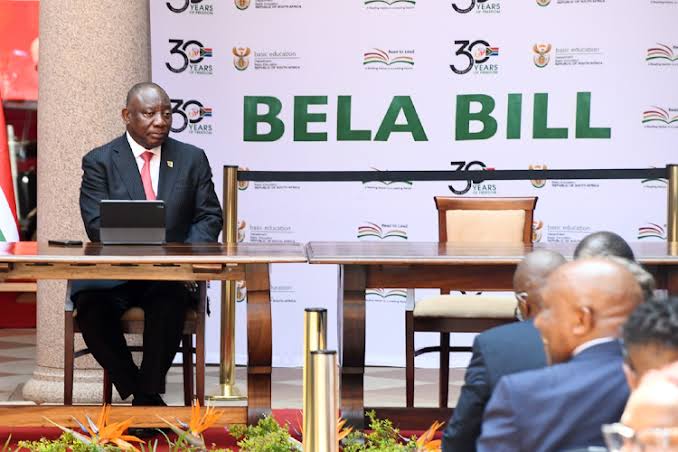
Lesufi urges Ramaphosa to sign Bela Bill, while Gwarube has reservations

Johnathan Paoli

Gauteng Premier Panyaza Lesufi has called upon President Cyril Ramaphosa to sign into law, the contentious Basic Education Laws Amendment bill.

Lesufi spoke during the parliamentary debate on President Ramaphosa’s Opening of Parliament Address (OPA) at the Cape Town City Hall on Friday and reminded the President of the urgent need to finalise the passing of the legislation.

However, Lesufi’s view of the bill is in stark contrast to newly-elected Basic Education Minister Siviwe Gwarube who said on Tuesday that she intends requesting Ramaphosa to halt the signing of the bill and send it part to Parliament for re-evaluation.

Gwarube said some of the beneficial aspects of the bill should be retained, while simultaneously addressing concerns about local authority empowerment.

“I do not think it is wise to throw the entire bill out with the bath water. I think there are commendable aspects within the bill which we can keep but there are certain aspects which do disempower local authorities on certain aspects,” Gwarube said.

The bill proposes changes to the South African Schools Act and seeks to vest authority in the Education Department instead of school governing bodies (SGBs) when it comes to determining a school’s language policy and curriculum, compulsory schooling from Grade R, and the prohibition of corporal punishment, initiation practices and the expulsion of pregnant learners.

The bill was passed in the National Assembly in May this year, before the end of the 6th administration.

Lesufi called upon both the president as well as the 7th administration to adhere to the drive towards transformation, and not exacerbate the challenging situation schools across the province have been experiencing since the dawn of the democratic dispensation.

“All our children must be in the same classroom and taught by the same teacher. What is wrong with that particular proposal? And that the language of teaching must incorporate all twelve languages, there must be no language that is excluded. What’s wrong with that particular proposal?” he said.

However, Gwarube is not alone in her reservations about the passing of the bill. ActionSA also welcomed her intention to stop the finalisation of the bill saying it was necessary to reconsider it as it was fundamentally flawed on certain considerations.

ActionSA Chief Whip Lerato Ngobeni said her party would fight to ensure that the bill, if referred back to parliament, reflected the substantive contribution and necessary amendments to address the real deficiencies that led to the decline of the country’s educational system.

“The Minister’s communicated intention comes as a relief following the stubborn posture taken by the ANC in the 6th administration, who were hell-bent on pushing through the legislation which undoubtedly would only serve to compound the challenges by introducing a series of proposals that lack coherence and fail to align with the actual needs and realities of our educational landscape,” Ngobeni said.

Some of her concerns could be found in the “ill-thought-out” introduction of compulsory Grade R, and the outdated use of the Socio-Economic Impact Assessment which did not adequately estimate fiscal and economic impact of the bill, she said.

INSIDE EDUCATION

Higher education faces many challenges in South Africa: 3 priorities for the new minister

By Thandi Lewin

When South African president Cyril Ramaphosa named Nobuhle Nkabane as the minister of higher education on 3 July 2024, many people I know in the sector had to Google her name. Dr Nkabane had been deputy minister of mineral resources and energy since August 2021.

Nkabane enters an arena that’s ready for new political leadership and has senior figures who are ready, willing and able to work with her. Universities South Africa, which represents the country’s 26 public universities and has a clear-eyed view of the sector’s priorities, has welcomed Nkabane’s appointment.

She will need this kind of support: in her new position, Nkabane inherits a portfolio rife with challenges. Despite positive changes over the past 30 years, higher education and labour market outcomes are still skewed by race. Demographic changes have been slow in academic careers. The history of institutional inequity persists.

The minister and her team oversee a sector that, according to government statistics, includes about 1.3 million students in public and private higher education institutions (more than 80% in public universities); close to 600,000 students in public Technical Vocational Education and Training (TVET) colleges and 86,000 in private colleges; and about 143,000 students in community colleges.

I saw some of the issues within the sector first-hand during several years as a government education official, with roles related to governance and management support in university education. I left the department of higher education and training in 2023 to join academia as a higher education policy scholar.

I suggest there are three big priority areas the minister must urgently address. One, she must rebuild trust in and across the higher education system. Second, she needs to push for sustainable and stable funding of the higher education and training system. And, third, she must oversee the development of meaningful capacity across the post-school education and training system.

She and her team won’t have to reinvent the wheel. The policies that can shape the kind of higher education and training system South Africa needs already exist; they were developed by experts both within and outside the government.

What’s required now is some tough decision-making. Rather than establishing new planning task teams, the minister should give existing policy goals time and meaningful support to mature.

Creating new wish lists without providing the funding and capacity necessary to make them work will further weaken the sector.

Rebuilding trust
Globally, trust in universities has fallen. The same is true in South Africa and is perhaps inevitable in a society with high levels of unemployment and inequality – especially when the higher education system itself remains inequitable.

A 2022 scholarly review of 25 years of policy changes described the period since 2016 as being about “calling the system to account”. They argued that equity was a key dimension of quality in higher education, and one in which the country was under-performing.

Other events that have harmed trust in the system include the student-led #feesmustfall and related protests; the COVID pandemic, which laid bare the continued inequities in higher education; and the rocky introduction of a new student funding policy in 2018.The serious administrative failures of the National Student Financial Aid Scheme (NSFAS) have also been a key breach of trust in the system.

The minister must ensure that the scheme is meeting its principal commitments and collaborating with institutions. It must work together with and within the higher education and training ecosystem where shared accountability is possible. An effective, efficient and trusted financial aid scheme would be a powerful glue for systemic trust in higher education.

Sustainable, stable funding
Post-school institutions, like so much else in South Africa, are under severe financial pressure. Even though the Department of Higher Education and Training’s budget grew at a rate faster than most government departments’ between 2019 and 2023, the core funding to institutions grew at a rate well below inflation because the bulk of the budget went to supporting NSFAS’s budget.

Only about 50% of the scheme’s funding comes back to universities in the form of tuition fees. It does not resolve the overall problems of student debt. Instead, universities are forced to write off the majority of student debt, which is attributed primarily to students who are not able to pay fees and do not qualify for financial aid or other bursaries.

South Africa lacks a comprehensive student financial aid model which could improve access to different levels of higher education and include support for different levels of financial need. In January 2024, former minister Blade Nzimande announced a new loan scheme to support the so-called “missing middle” students who don’t qualify for aid but can’t afford to pay. But allocations have not yet been made and the sustainability of the new scheme is uncertain.

Student financial aid is not the only issue straining the system. There’s also been a massive reduction in infrastructure and earmarked funding which supports systemic transformation goals (such as student success initiatives, staff transformation and new infrastructure development). Difficult political choices must be made about where funding should be directed.

More than just universities
One of the minister’s most important mandates is to oversee what the National Plan for Post-School Education and Training describes as “an integrated, coordinated and articulated post-school system”.

This is a reminder that not all further education happens at universities. There must be a range of good quality opportunities for those who complete school (and those who leave school before completion).

Following the plan means funding capacity development in the country’s 50 TVET and nine community colleges.

There have been near-constant changes in the TVET space over the last few decades. No real time and funding is provided to allow these developments to mature, which is damaging for the colleges.

The minister will face tough decisions during her term. But if she can build collaboration and improve policy implementation based on mutual trust between herself, the Department of Higher Education and Training and post-school institutions, there is hope.

Lewin is Associate Professor: Ali Mazrui Centre for Higher Education Studies, University of Johannesburg.

The story was first published in The Conversation.

K and K Media celebrates Mandela Day

Johnathan Paoli

In celebration of the late President Nelson Mandela’s birthday, organisations and South Africans took 67 minutes to give back to communities and the vulnerable of society by supporting those in need.

For this year’s Mandela Day celebrations, K and K Media and its staff members visited the Ubuhle Bezwe Child Care Centre in Thembisa where they donated clothing, spent the day cooking and dishing up food for the children and people living in the area around the centre.

The Ubuhle Bezwe Children’s Home was established in 2002 by Barbara Mthimkhulu, a professional nurse providing voluntary services to help disadvantaged children and day-care services to senior citizens.

“When we started we discovered that most children were coming from child-headed households, some orphaned and others were taking care of their grandparents and could not attend school regularly,” Mthimkhulu said.

The centre also takes in victims of crime, including abandonment, gender-based violence, abuse and sexual crimes, she said.

The home currently houses 53 people whose ages range from 16-months to 21 years.

Social workers visit the home monthly to check on the residents, and the police come weekly in an effort to monitor security concerns.

Some of the key elements of the organisation’s mission include: to provide basic life skills, develop self-confidence and boost self-esteem; to provide shelter and support to vulnerable children; to promote youth awareness programs in and around the Thembisa community; emphasise the importance of education and develop learning skills.

While grateful for the support, Mthimkhulu outlined some of the challenges involved in her project.

Lack of funding to improve the facilities remains one of the biggest challenges because she had to prioritise securing food and other groceries for the children over and above upgrades to the building and infrastructure, she said.

On the bright side, however, Mthimkhulu proudly said that none of her children have failed in school, and that the home encouraged a rigorous education regime, ensuring the children remained focused on their school work and motivated to make something of their lives.

Success stories from the centre include that of Ayanda Maghagha – a qualified doctor; Simphiwe Maghagha – an engineer; Portia Tsotetsi – a teacher; and Mbali Dubuzana – a social worker.

In addition, Mthimkhulu proudly confirmed that Miss Thembisa 2010 was another resident of the home.

“Children are the future and when they contribute to society in a positive way we feel proud that we have achieved our mission,” she said.

INSIDE EDUCATION