THE Tuks men’s hockey team proved their mettle by winning the USSA Tournament that long and hard hours of training do pay off.
Tuks clinched the title in Durban by beating Maties 4-1 in the final. In five games, the champions scored 22 goals and only conceded six.
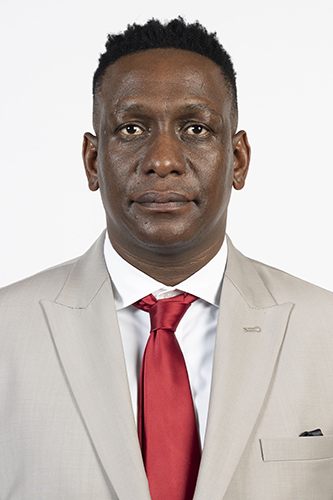
Coach Sigz Ntuli can be forgiven for thinking, “I love it when a plan comes together”.
“Winning USSAs is a just reward. The players have genuinely worked hard and made sacrifices. We are often accused of overdoing things. But our performance now justifies what we have been doing.
“I am obviously proud of the ‘boys’. But to be honest, I am not surprised by the outcome.”
Photo credit: Reg Caldecott
Last year, after Tuks won the Varsity Tournament, Ntuli expressed concern about the fact that his team was not playing enough crunch games.
“Our players hardly ever get challenged in any local league game. They are cruising. Winning one game after another. It is different in the Johannesburg and Western Cape leagues. That is why the Maties, Wits, and UJ players are used to handling pressure situations on the field.”
For this reason, Ntuli decided to withdraw Tuks from playing in the Northern League this season.
“We did so to ensure the ‘boys’ get to play against more formidable opposition. Over the last six months, we travelled quite a bit.
We have been to Durban twice and regularly play against Johannesburg’s best teams. We played 20 games in the buildup to USSA’s. So we were well prepared.
One of the critical aspects of the Tuks game is getting their opposition to concede penalty corners. There is a good reason for doing so. Guy Morgan is possibly one of the best drag flickers in South African hockey. On a good day, he hardly misses. During the USSA, he scored seven goals in five games.
“What excited me is that we did not only score from penalty corners. There were some brilliant field goals. Most impressive for me was how each player contributed to our victory. Our team has several debutants who have only played for Tuks for six months. But you would not have said them if you had seen them play during USSA’s. They stepped up, especially at crucial moments.”
The one disappointment for Ntuli is that it has been decided to cancel the Varsity Hockey tournament.
“It basically means Tuks’s season is done and dusted for the year. We can only hope that there will be a Varsity Tournament next year. As it is a definite highlight in student hockey.”
Source: #TuksHockey: Sihle Ntuli ascribed Tuks winning the 2023 Men’s USSA Hockey title to hard work | University of Pretoria (up.ac.za)
Gauteng Member of the Executive (MEC) for Education, Sport, Arts, Culture and Recreation Matome Chiloane has praised the response to the 2025 online application system for the 2025 academic year calling it a vote of confidence in the education administration.
MEC Chiloane said this week, that in just 6 days since the system’s launch on 11 July, the department has received over half a million applications for Grade 1 and Grade 8 positions.
“The phenomenal number of applications we’ve received demonstrates the trust parents place in our education system. The department remains committed to providing quality education for all and ensuring a fair and transparent admissions process,” Chiloane said.
The system recorded a total of 512 237 applications, translating to 214 843 grade 1 applications, and 297 394 grade 8 applications.
The MEC said the application window for admissions would remain open until 12 August, and strongly encouraged all parents to complete the full 5 step application process.
Chiloane said incomplete applications would not be processed for placement and that currently over 12 000 parents who have not completed the full process have been identified.
He said to ensure a smooth application process, parents should either upload certified copies of required documents online or submit them to all selected schools within 7 days of the application.
The MEC urged all parents to ensure their contact details are accurate, as ongoing communication regarding their application will be sent via sms notifications.
Applicants who have submitted complete applications can expect to receive offers of placement from 16 September.
He said the department remained committed to assisting parents who may not have the means to apply online, and that all schools in the province, as well as the 80 decentralised walk-in centres, are available to provide support throughout the application process.
Chiloane said the department looked forward to accommodating everyone in their schools.
“We extend our heartfelt thanks to all parents for their cooperation and understanding during this important period,” he said.
Chiloane led the official launch of the 2025 Online Admissions system at the Diepsloot Youth Centre, assisting parents and guardians with the application process for their children entering Grade 1 and Grade 8 in Gauteng public schools for the 2025 academic year.
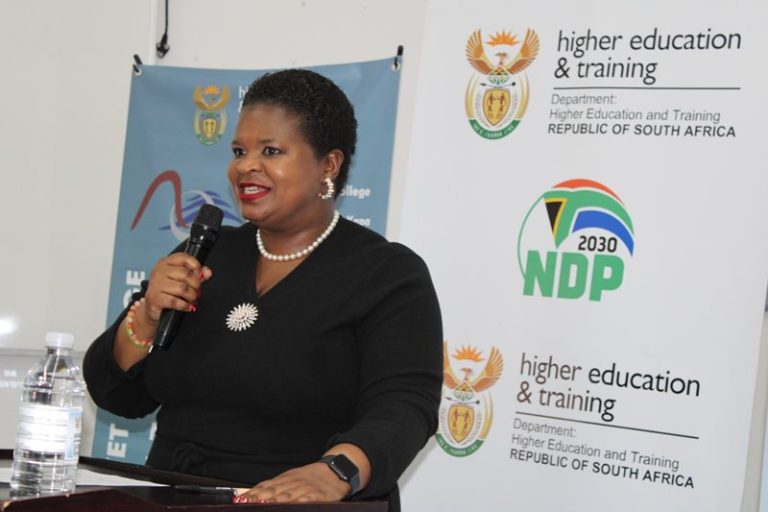
THE New Minister of Higher Education and Training, Dr Nobuhle Pamela Nkabane, in her maiden R137.5 billion budget for the 2024/25 financial year in the National Assembly, pledged to develop a skilled and capable workforce while broadening the country’s skills base to support an inclusive growth path.
In this regard, Nkabane said it was important to share the Ministry’s vision of the future and set priorities to guide the direction of the national higher education and training portfolio, guided by evidence-based research.
Flanked by the Chairperson of the Portfolio Committee, Tebogo Letsie, Deputy Ministers Buti Manamela, and Dr. Mimmy Gondwe, the Minister said the 2024/25 financial year budget of R137.5 billion increased on average by 4.8% from R130.5 billion in 2023/24 and will rise to R150.2 billion in 2026/27.
For this financial year, the budget breakdown is as follows:
Administration – R565 million
Planning, Policy and strategy – R4.2 billion
University Education – R91.7 billion
Technical and Vocational Education and Training – R13.2 billion
Skills Development – R333 million
Community Education and Training – R2.9 billion
Skills Levy – R24.5 billion.
Nkabane said her mandate is to ensure that the Department’s vision of leading post-school education and training is more integrated, coordinated, and articulated for improved economic participation and social development of youth and adults.
She added that it was their mission to provide national strategic leadership in support of the post-school education and training system for improved quality of life of South Africans.
“As part of implementing this mandate, we oversee universities, TVET colleges, CET colleges, SETAs, quality councils and private education providers. Our goal remains to expand access to higher education and training opportunities and improve the quality of the provisioning, responsiveness and efficiency of the post-school education and training system. Improved skills development will maintain our national competitiveness in addressing societal challenges,” she said.
Delivering the budget vote, she dedicated it with a “heavy heart” to the memory of fallen heroes, particularly Mamotena Selena Mula, a lecturer at Modile Tlale Satellite Learning Centre in Parys under the Free State CET College, who was allegedly a victim of Gender-Based Violence (GBV).
She said GBV is a pandemic that the government has committed to fight relentlessly.
“We have managed to reprioritise within our budget at least R10.8 million to support the implementation of Gender-Based Violence Programmes, health and wellness services in the Community Education and Training Colleges,” she said.
The primary objective for the 7th Administration is to develop a skilled and capable workforce while broadening the country’s skills base to support an inclusive growth path.
This growth path will not be possible until the National Student Financial Aid Scheme is implemented.
“We have listened attentively to the voices agitating for transformation – regarding challenges of inefficiencies emanating from the National Student Financial Aid Scheme. We have also listened to the silent prayers of parents for the Department of Higher Education and Training to resolve current student funding and payment challenges. We have also listened to the voices of landlords providing accommodation to students and those providing transportation to students,” she said.
The Minister said her team was inspired by these voices to acknowledge the common ground regarding students’ and learners’ hopes and aspirations.
“We are taking proactive steps to alleviate these problems. Our moral responsibility is to resolve these and other matters in the shortest period possible. All these problems will be fixed in the shortest period possible, or those harmed by the continued fractures will turn on the very system itself,” she warned.
“Institutional inefficiencies directly impact our solemn commitment inscribed in the Freedom Charter – that “The Doors of Learning and Culture Shall be Opened,” she added.
Nkabane reminded her colleagues in Parliament that the National Student Financial Aid Scheme (NSFAS) has grown from disbursing R21.4 million in 1991 to almost R54 billion in the current financial year, supporting 800,000 students.
The fund is for children of the working class and the poorest of the poor seeking to further their studies in public universities and TVET colleges.
She reminded colleagues that NSFAS represents the government’s deliberate intervention to broaden access to post-school education and training for those in communities without access to it.
She said NSFAS discharging its statutory responsibilities remains the department’s constant concern.
“We acknowledge our strengths and weaknesses in equal measure. NSFAS shouldn’t be undergoing a second administrative intervention five years after the conclusion of the previous intervention. However, despite all these systemic challenges, we are turning the tide. Our commitment is to root out corruption and maladministration in the NSFAS grant payment system.
“We have committed funds to improve NSFAS Information Communication Technologies, including loan system management. We acknowledge that some challenges have delayed finalising and tabling NSFAS annual reports in parliament,” Nkabane added.
Earlier this year, she said the Ministry developed the Comprehensive Student Funding Model, committing R3.8 billion in initial capitalisation funds to support “missing middle” students effective this financial year.
This is the category of students from families with total incomes of more than R350 000 but not more than R600 000 per annum. The fund covers prospective students for both Technical Vocational Education and Training (TVET) and public university students.
This initial commitment comprises R1.5 billion from the National Skills Fund (NSF) and R2.3 billion from Sector Education Training Authorities.
At least 31 884 prospective learners stand to benefit from this investment.
The National Skills Fund has also contributed R1 billion to establish a Presidential seed fund to support R&D and innovation in high-end skills involving doctoral and post-doctoral research.
Since its inception, she said NSFAS has supported more than five million beneficiaries, producing hundreds of thousands of skilled professionals and the middle class, especially from within the poor and working-class sections of society.
“Certainly, this is one of the most important achievements of this government over the past 30 years of our democracy,” she added.
In April this year, her predecessor, Dr Blade Nzimande, appointed Sithembiso Freeman Nomvalo as NSFAS Administrator and simultaneously dissolved the Board.
Nomvalo has taken over the governance, management, and administration of NSFAS for 12 months ending March 2025; his task also involves resolving the misalignment of data between NSFAS and institutions, which results in the unreliability of data provided to finalise funding decisions and overseeing the opening of the 2025 online applications process.
“We are working overtime to ensure that NSFAS systems are ready for the commencement of the 2025 application season, which will start in September this year. This is critically important because NSFAS received approximately two million applications for bursaries in this financial year,” the Minister said.
Of this volume, 419 447 were returning students, while 297 809 were First-Time Entry students. Given these volumes, everything possible is being done to ensure NSFAS systems are ready.
She said the country was advancing in the skills revolution, and Artisans’ development remains a priority towards the 2030 target of producing 30,000 artisans per annum.
In 2021/22, the system produced 15,107 artisans, and in 2022/23 – 19, 461 artisans. Of these, 13,796 (or 70%) were young people under 35. The target for 2024/25 is to produce 26,500 artisans.
For the workplace-based learning programs, in 2020/21, the system placed 78 137 learners – a decrease from 158 651 in 2020 due to the COVID-19 pandemic, and by 2022/23 – 99 778 learners were placed. The target for 2024/25 is to produce 190,000 work-based learning programmes.
A further R300 million has been earmarked to support 4 200 beneficiaries in the Presidential Youth Employment Initiative.
Nkabane said she was committed to providing strategic solutions to create an equitable, effective, and sustainable Post-School Education and Training System.
Basic Education Minister Siviwe Gwarube said she will not implement policies or programmes without evidence of their value in an effort to improve the quality outcomes of the education system.
Minister Gwarube delivered the Basic Education Budget Vote Speech for the 2024/25 Financial Year on Monday in the National Assembly.
She outlined the overall Midterm Economic Framework (MTEF) budget allocation for the Department of Basic Education (DBE) at R32.3 billion, an increase of 7.4% from the previous 2023/24 overall allocation.
Setting a tone for the 7th administration, she emphasized how learners deserve nothing less, and anyone who looks with a critical eye at the work of the Department would not find much fault with its policies and plans.
However, she insisted that the department should go far beyond its previous mandate in order to objectively assess the outcomes of improving the lives of learners.
“If this Department does well, it creates a path to success for many who have been excluded from the economic advantages of having a good education. Therefore, we must be bolder, ambitious and set high evidence-based targets for ourselves,” she said, adding that she has begun the work of critically assessing targets and milestones as a department,” she said.
The minister said the Department projects that the desired outcome, includes improving the performance of School Governing Bodies (SGB)’s effectiveness for financial year, to achieve a 50% coverage of schools, in light of 3 decades after the South African Schools’ Act was enacted.
“Given the critical role of school governing bodies in relation to much of what our public schools do, this is simply not good enough. We must do better. In my short time in this office, I have already been approached by parents of learners reaching the end of Grade 4 who cannot read for meaning or manipulate simple numbers,” she said.
Gwarube said parents want to know how the department reconciles that reality with setting targets to increase the National Senior Certificate pass rate or improve the percentage of Bachelor Passes.
“I therefore applaud those components of our national system who take seriously how important it is to increase the reading and calculating ability of our youngest learners, making sure that every learner has a fair chance of staying the course to Grade 12,” she added.
The minister said that the challenges, as articulated by the learners’ parents, are reflected in current achievement levels which aim to meet international benchmarks and that there have been improvements, in terms of previously low literacy and numeracy rates.
She told Parliament that the department would concentrate on getting learners at all levels in the system to be able to read for meaning.
Furthermore, the minister called for the improvement of Grade 9 Mathematics performance in the Trends in International Mathematics and Science Study (TIMSS) which was set to rise from 372 in 2015 to 420 in 2023.
She prescribed the establishment of an advisory council representing the basic education system as soon as possible, in order to include all key stakeholders across the sector, as well as experts in key disciplines.
“This council, once up and running, will be an invaluable resource in ensuring that our efforts to strengthen our education system are targeted, evidence-based and informed by best practice,” Gwarube said.
She said DBE is committed to building a solid foundation for a quality and efficient basic education system, from ECD,
through the Foundation, Intermediate and Senior Phases, to the Further Education and Training (FET) Band.
In line with this commitment, the Minister identified five key priorities for the 7th Administration that will inform their decision-making in this portfolio:
1. Firstly, to intensify efforts to improve access to and quality of early childhood development, recognising that the formative years are critical to laying a strong foundation for our children’s education journey.
2. Secondly, the department is steadfast on improving literacy and numeracy skills across all phases of schooling.
3. Thirdly, to increase efforts to improve access to and the quality of inclusive education for learners in the most vulnerable communities and learners with special education needs. To ensure that the education system is accommodating and supportive of all learners.
4. Fourthly, to intensify efforts to improve access to and the quality of training and professional development opportunities available to school management teams and teachers. She said teachers are the backbone of the schooling system. Given the many and varied challenges
that teachers and principals are required to respond to in their daily work, the department needs to ensure that they are supported to achieve the quality learning outcomes we so desperately need.
5. And finally, but certainly not least, working tirelessly to improve the safety and quality of schooling environments for our learners and teachers.
Part of her urgent task includes reducing overcrowding in classrooms, improving access to electricity, water, and adequate sanitation facilities, and removing inappropriate structures, such as pit latrine toilets.
Minister Siviwe Gwarube with Deputy Minister Dr. Reginah Mhaule.
The breakdown of the budget by the Education Programme, is as follows:
The allocation for Administration increased by 3.0% from last year’s allocation to R607.5 million.
The allocation for Curriculum Policy Support and Monitoring increased by 16.0% from 2023/24 to R4.089 billion.
The allocation for Teacher Education, Human Resource and Institutional Development is R1.439 billion.
Planning Information and Assessment is allocated R15.995 billion, an increase of 8.0% from the 2023/24 allocation.
The allocation for Educational Enrichment Services increased by 5.8% from last year’s allocation to R10.129 billion.
The overall allocation for Conditional Grants is R26.041 billion – an increase of 10.4% from that of 2023/24. The specific allocations for Conditional Grants are as follows:
The Mathematics, Science and Technology (MST) Grant, is allocated R443.8 million, a 15.8% increase from last year’s allocation.
Infrastructure delivery – which continues to be funded through the Education Infrastructure Grant (EIG) – is allocated R13.7 billion, an increase of 11.4% from 2023/24 financial year.
Accelerated School Infrastructure Development Initiative – also known as the School Infrastructure Backlog Grant – is allocated R1.641 billion, which is also inclusive of the allocation for Sanitation Appropriate for Education (SAFE) Initiative.
HIV and AIDS, whose purpose is to support South Africa’s HIV and TB prevention strategy, has been allocated R249.7 million, an increase of 16.8% from last year’s allocation.
The National School Nutrition Programme (NSNP) has been allocated R9.798 billion, an increase of 5.6% from the 2023/24 allocation.
The Learners with Severe to Profound Intellectual Disabilities Grant receives R278.9 million, an increase of 7.1% from the 2023/24 allocation.
The overall allocation for Earmarked allocations and transfer payments is R3.178 billion.
The specific allocations for these funds include the following:
The allocation for the Funza Lushaka Bursary Programme is R1.266 billion.
The 2024/25 subsidy to Umalusi has increased by 2.4% from 2023/24 to R166.9 million.
The National Senior Certificate Learner Retention Programme, also known as the Second Chance Programme, is allocated R38.6 million.
Workbooks, including Braille workbooks for visually impaired learners, have been allocated R1.214 billion.
The South African Council of Educators (SACE) is allocated a subsidy of R16.4 million, an increase of 5.4% from last year’s allocation.
Early Childhood Development has been allocated R150 million for the Resource package for 2024/25 financial year.
Early Childhood Development Nutrition pilot has been allocated R197 million for Resource packages for the 2024/25 financial year.
“Chair, we wish to remind this House that our Action Plan to 2024: Towards the Realisation of Schooling 2030, which gives expression to the Constitution, the National Development Plan, as well as the continental and international conventions, continues to provide the moral imperative and a mandate to the Government to make the social justice principles of access, redress, equity, efficiency, inclusivity and quality education opportunities widely available to all citizens,” Gwarube said.
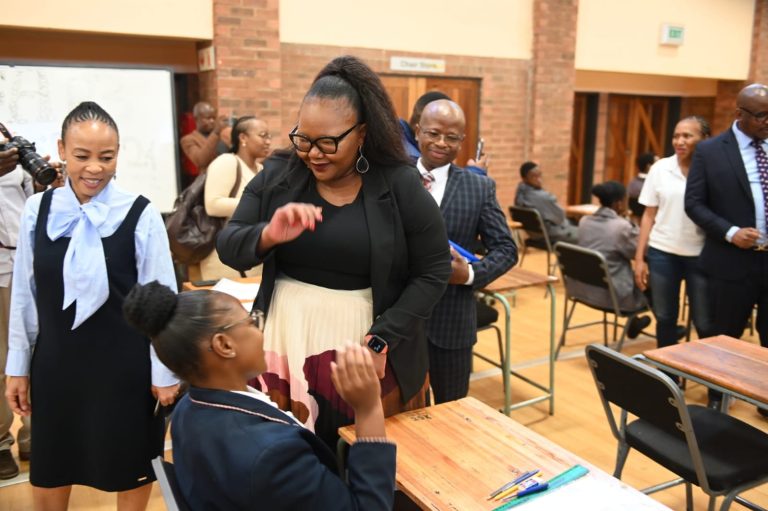
Basic Education Minister Siviwe Gwarube visited Rocklands Primary School and Laerskool Blyvooruitsig in Carletonville, Gauteng Province, yesterday accompanied by Gauteng MEC for Education, Sport, Arts, Culture and Recreation, Matome Chiloane.
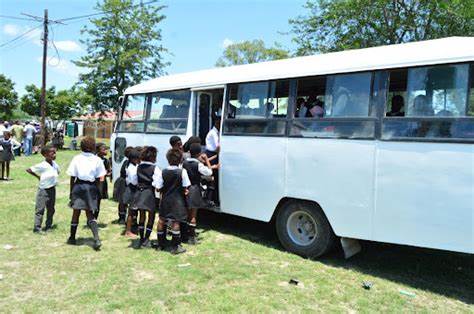
The two schools have been in the news lately after a private scholar transport minibus was involved in a tragic accident in the Kokosi-Wedela area in Merafong on 10 July 2024, claiming the lives of the 12 learners and the driver of the vehicle from the schools. Seven other learners were also rushed to a medical facility for urgent medical attention.
“The loss of loved ones is never easy; the loss is markedly acute when it is our children that we have to bury. We offer our heartfelt sympathies to the parents of the children; we will keep you in our thoughts and prayers, hoping that healing and grace locate you. We also wish the learners who were hurt in the accident a full and speedy recovery,” said Minister Gwarube.
The accident occurred when their scholar transport was reportedly rear-ended by a bakkie, causing it to overturn and catch fire. Police are currently investigating the details surrounding the accident.
Today, Chiloane will attend a memorial service for the learners at Grace Bible Church, 128 Kaolin Street, Carletonville.
Last week in Parliament, Khomotjo Maimela, the Chairperson of the Portfolio Committee on Education, led colleagues in observing a moment of silence for the learners who passed away due to a scholar transport accident in Carletonville.
THE Minister of Science and Innovation, Prof. Blade Nzimande, commended all the winners at the 26th annual National Science and Technology Forum (NSTF)-South32 Awards, last week in Johannesburg and Cape Town.
Along with scientists and researchers, the awards celebrated 20 students who are participating in the NSTF Brilliants Programme. The programme, supported by the Department of Science and Innovation (DSI), recognises students who performed with distinction in science and mathematics during the previous year’s matric examination, and who are enrolled in science, engineering and technology (SET)-related courses at universities across the country.
A record number of 17 awards in 15 categories were made at this year’s event.
“I wish to congratulate the winners and nominees who have been role models and, through their work, have made a significant contribution towards using science, technology and innovation to drive transformative change in our country,” said the Minister.
The Minister highlighted the important role of young scientists in South Africa, saying, “An investment in our young people who are doing science is an investment in our country’s future.”
Minister Nzimande said the country is facing a number of development complexities, and it is important to sustain the production of new cohorts of young scientists and researchers (in particular, black and women scientists and researchers) who will help generate innovative ideas on how best to solve some of those complexities.
Outstanding achievement awards were made in 15 categories, including scientific research, innovation and development, management and related activities, capacity development in engineering research, environmental sustainability and biodiversity conservation, science diplomacy, medical research, water research and innovation, data for research, and science communication.
The theme for this year’s awards was “The Fourth Industrial Revolution (4IR) in South Africa.” The Minister said the theme was very relevant to the general trajectory of technological innovation today and in the past 10 years.
“There is no doubt that digital solutions have become a major part of everyday life and present us with enormous opportunities for our country to chart a new digital-driven development path,” said Minister Nzimande.
He added that the NTSF’s focus on 4IR also aligns with one of the key focus areas of the Decadal Plan for Science, Technology and Innovation.
“Our Decadal Plan emphasises the alignment of science, technology and innovation to key sectors of the economy such as agriculture, manufacturing, mining, health, energy and the digital and circular economies.”
With some of the country’s key role players and stakeholders in the national system of innovation present at the awards, the Minister concluded his address by encouraging them to support the implementation of the Decadal Plan.
The Department’s former Director-General, Dr Phil Mjwara, was also honoured for his contribution to developing the science, technology and innovation landscape.
Renowned broadcaster and SABC newsreader Masego Ezekiel Matjila will be awarded an honorary doctorate by the North-West University (NWU) on Thursday at the Mahikeng Campus.
Masego has demonstrated significant dedication in promoting the Setswana language at the SABC.
He started his career more than 30 years ago as an on-air radio personality for Radio Setswana, which later became Motsweding FM after merging with Radio Mmabatho. During this time, he also managed the archives for Radio Setswana, the Afrikaans Service, Radio Ndebele (Ikwekwezi FM), and Radio Swazi (Ligwalagwala FM).
His exceptional broadcasting skills and language proficiency, led to his appointment as a Setswana sports commentator for SABC Topsport (SABC Sports). He was later seconded to the News department, where he worked as a Sesotho, Sepedi and Setswana prime-time news presenter from 1993 until his retirement in 2021. He also served as a bulletin editor and executive producer.
Masego advocated for more multilingual youth programmes on SABC2, noting that Setswana, Sepedi, and Sesotho-speaking youth were underrepresented. His efforts at the SABC earned him numerous awards, including Best News Writer (SABC, 2008) and Commentator of the Year: AFCON 1996.
His contributions to South African society, particularly in promoting the Sesotho, Sepedi, and Setswana languages in broadcasting, are noteworthy. The honorary doctorate from the NWU recognises these significant contributions.
Artificial intelligence (AI) has swept the board in terms of technology usage to acquire, accumulate and use knowledge in practical and theoretical ways – which is why it’s vital that African languages be integrated into the development of AI technology in a bid to preserve cultural and linguistic heritage.
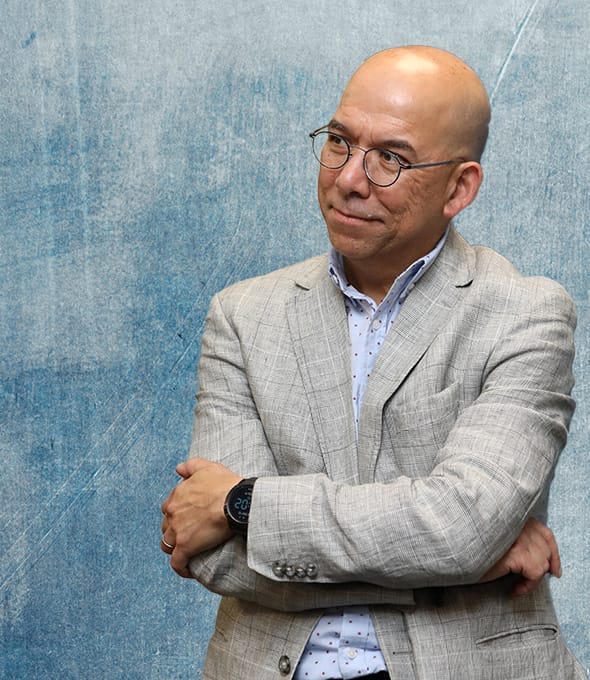
This is according to Professor Kwesi Kwaa Prah, a sociology professor and the founder and Director of the Centre for Advanced Studies of African Society, who delivered a presentation at a recent meeting at the Pretoria Design Justice AI Institute hosted by the University of Pretoria (UP).
The Design Justice AI Institute is a global humanities institute sponsored by a consortium of humanities centres and institutes and the Mellon Foundation. The institute explores “community-centred, humanistic and interdisciplinary engagement of generative AI” and is an alliance of four university-based centres, one of which is UP’s Centre for the Advancement of Scholarship.
“The creation of knowledge can be traced back as far as the beginnings of humanity,” Prof Prah said. “Computers are now in use, but in order to make progress, we must create [AI technology] that makes use of our languages, or else some of our cultures will disappear from history. A language that continues to be unwritten and unused in a written form is likely to die in a 100 years.”
Our languages are what make us, he added.
“It is not our colour that determines who we are – it is our cultures. And when you think about culture, the main feature is language. That is the distinguishing feature between us and other animals – human beings create culture.”
Prof Prah encouraged Africans to embrace the world of AI and approach it with their eyes open, and to do so in their languages to preserve their cultures. This is entirely possible because African languages share dialects, meaning they can be translated in a way that can be understood by multiple communities.
Prof Vukosi Marivate, Chair of Data Science at UP and lead for the Data Science for Social Impact Group, was on the Design Justice AI Institute’s organising committee.
“The institute brings together a diverse group of scholars, practitioners and advocates from around the globe, and focuses on exploring transformative approaches in design that promote social justice and inclusivity,” he said.
Prof Marivate added that UP’s role in hosting the institute demonstrates its collective commitment to fostering an inclusive community that actively engages with the challenges and opportunities in design justice and AI.
Prof Themba Mosia, UP Interim Vice-Chancellor and Principal, said that while data-driven AI technology holds great promise for advancing global goals like the United Nations’ Sustainable Development Goals and accelerating economic growth for millions, realising these benefits requires substantial effort.
On Sunday, on World Youth Skills Day, the Chinese technology giant Huawei recognised the contribution of two top South African students, Thembelihle Khumalo and Thagisa Percy, who achieved remarkable success through the company’s LEAP skills development programme.
Their journey, which included an exciting trip to China, highlights the positive impact of ICT skills development on young people’s lives. They plan on using their acquired skills to ensure that South Africa’s Fourth Industrial Revolution (4IR) is as inclusive and equitable as possible.
Standing for Leadership, Employability, Advancement and Possibilities, LEAP aims to advance young people’s ICT skills and employability in the region. At the recent LEAP Summit 2024: ICT Talent and Sustainable Development for Sub-Saharan Africa, held in Shanghai, China, a new target of training 150,000 students was announced, marking a significant step forward in the programme’s commitment to empowering the next generation of ICT leaders.
Thagisa Percy.
Khumalo and Percy were invited to the recent LEAP Camp Study Tour and closing event due to their outstanding participation in various ICT training initiatives. Their journey began with Huawei’s Seeds for the Future programme, which provides South African students and their peers worldwide the opportunity to experience cutting-edge technology and immerse themselves in Chinese culture.
Since its launch in April 2022, the programme has benefited 120,000 students across sub-Saharan Africa. LEAP aims to foster strong digital leadership and a skilled ICT workforce, build a digital talent pool, and promote digital literacy among citizens through various activities, from ICT training and certification courses to government digital capacity building and ICT skills competitions.
“South Africa has witnessed significant strides in talent development over the past few years, and this achievement would not have been possible without the collaborative efforts of government agencies, academia, and industry stakeholders,” remarks Charles Cheng, deputy CEO of Huawei South Africa. “LEAP has delivered remarkable growth and impact. After more than two years of development, we are thrilled that numerous individuals, including students like Thembelihle and Thagiso, have benefited from this initiative.”
LEAP has helped increase youth employability and bridge the gender gap in the ICT industry. Another notable programme is Huawei Seeds for the Future. Since 2016, over 100 South African students have participated in this elite programme. As we mark World Youth Skills Day, the successes of programmes like these highlight the private sector’s role in preparing young people for the future of work.
Khumalo, 24, from Isandlwana in KwaZulu Natal, developed a fascination for STEM subjects at school. This interest led her to study information technology, specialising in communication networks at the Tshwane University of Technology (TUT).
At TUT, Khumalo’s passion for ICT and its societal impact grew, fuelled by engaging classes, inspiring mentors, and hands-on experiences.
In 2023, her participation in the Seeds for the Future programme invited her to the Huawei LEAP Camp Study Tour in China. There, she gained valuable skills in digital technologies, cultural immersion, Mandarin Chinese, business, entrepreneurship, networking, personal growth, history, science, leadership, and teamwork.
“The most rewarding parts of my journey on the Huawei LEAP Camp Study Tour and in the technology, space have been gaining hands-on experience with Huawei’s innovative technologies, building meaningful connections with industry experts, enhancing my digital skills, and exploring cultural and historical aspects of China,” Khumalo says. “This incredible opportunity has motivated me to pursue my goals confidently and enthusiastically.”
Thembelihle Khumalo.
Khumalo aims to become a successful IT professional, a leader in her field, and an entrepreneur. Through hard work, determination, and a belief in her potential, she hopes to improve her family’s life and create a brighter future.
Percy, 20, hails from Thohoyandou in Limpopo and is currently studying for a BSc Honours in Computer Science at the University of Venda. His fascination with technology began when he received his first computer, leading him to enjoy programming and creating small projects. Inspired by tech leaders, Percy aims to specialise in artificial intelligence and cybersecurity, focusing on developing advanced facial recognition systems for secure identification.
His experiences on the Huawei LEAP Camp Study Tour have been instrumental in this journey. “Gaining hands-on experience with Huawei’s cutting-edge technologies like AI and machine learning, and seeing their real-world impact, has been incredibly rewarding,” he says. The camp also improved his skills in working with diverse teams, understanding different cultures, and building a strong professional network.
“Embrace the opportunity with an open mind and a willingness to learn,” advises Percy. “Network with peers and mentors, apply your knowledge to real-world projects and remain persistent through challenges. Above all, enjoy the process and stay passionate about technology.”
Percy believes that young South Africans can actively participate in and benefit from the Fourth Industrial Revolution by embracing these opportunities.
“In South Africa, 4IR has the potential to revolutionise sectors, enhancing efficiency and innovation,” says Percy. “I aim to leverage my ICT skills to develop technologies that address local challenges, improve services, and promote sustainable development.”
“I believe 4IR will bring significant opportunities for South Africa to become more competitive and connected,” says Khumalo. “I see my role in digital transformation as driving adoption, innovation, and inclusive growth. I aim to contribute to digital literacy, entrepreneurship, and job creation, bridging the digital divide and ensuring technology benefits all South Africans.”
World Youth Skills Day, celebrated on 15 July, highlights the strategic importance of equipping young people with skills for employment, decent work, and entrepreneurship. It also focuses on addressing global challenges and advancing sustainable development, principles at the core of Huawei’s LEAP Program philosophy.
As the countdown to the 2024 Varsity Football tournaments begins, all eyes are set on the University of the Western Cape (UWC) teams.
With the kick-off just two weeks away, anticipation has been building for what promises to be a showcase of top-tier university football in the country.
Both the UWC men’s and women’s football teams have been a force to be reckoned with, having won three titles between them and finishing as runners-up at least five times.
The UWC women’s football team will be under the spotlight as the reigning champions of Varsity Women Football and a strong contender for the HollywoodBets Super League – the top women’s football league in the country.
They are currently second on the log standings of the Super League.
Coach Thinasonke Mbuli said that close to two thirds of her squad are new players, and it would be unfair to put pressure on them.
“We are going to the tournament with 60% of new players, so it will be unjust from our side to expect them to win,” she said.
“Yes, we want to win the title back-to-back, but at the same time, we mustn’t put unnecessary pressure on the new, young players. We have played in the finals many times and would love to win it again. It will be tough because we have a new team, but that’s the dream.”
The Varsity Football Women’s tournament, which UWC also won in 2021 and finished as runners-up in three times, will be hosted at the Tshwane University of Technology — the same venue where UWC triumphed last year — from 26 to 29 July. The final will take place on 9 August at a venue to be confirmed.
The UWC men’s football team will kick off their varsity football campaign on 25 July, aiming to improve on their semi-final loss last year.
Unlike the women’s category, where round-robin matches occur in one venue, the men will play home and away fixtures, with UWC hosting five of the seven clashes in the mini-league.
Coach Dr Lwando Mdleleni said the mood is settled in the camp, and his boys are focused as they complete the finishing touches to their preparations.
He said the aim is to improve their results by using the experience of losing in the penalty shootouts of their semi-finals.
“I think last year we were very naïve in some instances, both in terms of coaching and players’ perspectives. We have gathered the much-needed experience and depth in knowledge to propel us. Moreover, this year we have five home games – giving us a competitive edge,” he said.
Dr Mdleleni revealed that UWC has some exciting players they had brought in to bolster the squad, such as top talents Siyanda Mabhadi and Vuyani Ncontsa, to mention just a few.
“One thing we are looking forward to is to make our fans proud. We owe them a moment to rejoice. A lot is happening in our institution, and we have a role in bringing enthusiasm and excitement to the UWC faithful,” he said.