Home Blog Page 159

A Springbok Star and a Music Star shine at UWC

Staff Reporter

What do a Springbok Rugby player and a local music star have in common? Both graduated recently from the University of the Western Cape.

Former Springbok and current Cape Town Deputy Mayor Eddie Andrews graduated with his Bachelor of Administration Honours and Voice SA Season 2 winner and acclaimed singer-songwriter Craig Lucas graduated with his Masters in Development Studies.

For Lucas, this was just another milestone in the academic journey that he wished to pursue. Lucas’s thesis is The Capability to Aspire: A Case Study of Youth Aspirations in Bonteheuwel.

While celebrating his Masters, Lucas said he is keen to start his PhD as soon as possible.

Andrews’s graduation was the culmination of an academic journey that started on the Cape Flats. He now wants to inspire others from historically disadvantaged backgrounds to study further.

Andrews is also considering returning to UWC to continue his studies. The former rugby player wants to pursue a Master’s Degree.

INSIDE EDUCATION

Sadtu’s Dr Mugwena Maluleke Sadtu General praised for getting his PhD

Inside Education Reporter

The Minister of Higher Education, Science and Innovation, Dr Blade Nzimande has congratulated the General Secretary of SADTU, Dr Mugwena Maluleke on attaining his PhD from Nelson Mandela University.

“As an educationalist, Dr Maluleke’s commitment to education sets a positive example for both the young people and workers of our country. His commitment to self-development underscores the importance of improving your knowledge levels as a leader in society. By attaining his PhD, Dr Maluleke is contributing to the drive to make educational achievement a norm in our communities,” the Minister said.

Most importantly, Nzimande said South Africa must increase the number of PhDs in society so that “we truly become the kind of knowledge society that will transform our society for the primary benefit of the workers and the poor, with innovation at the centre of our developmental trajectory”.

“It is my hope that Dr Maluleke’s personal milestone will inspire more of our young people and workers to follow in his footsteps,” he said.

INSIDE EDUCATION

Schools from Hazyview, Mpumalanga get ICT donations from Cell-C

Inside Education Reporter

THE Deputy Minister of Basic Education, Dr Reginah Mhaule handed over a donation of ICT Equipment from Cell C with Member of Parliament, Hon. DL Moela and Cell C Executive, Joshua Moela.

The handover took place on 2 May 2024 at Shabalala Secondary School in Hazyview, Mpumalanga.

The schooling community from 12 schools under the WhiteHazy 1 and 2 circuits gathered at Shabalala Secondary School to receive the donation. 

Addressing the gathering, Deputy Minister Dr Mhaule, lauded Cell C for the donation, saying: “It’s imperative for government to work with partners to make sure schools are resourced with ICTs to assist teachers and learners be part of the digital transformation era.”

MP Desmond Lawrence Moela was on hand to assist Lehlomo Joshua Moela and Deputy Minister to hand over the laptops to representatives of the various schools receiving the donation. Learners were also gifted with sports kits, storybooks, dignity packs and school bags. 

DM Mhaule also took the opportunity to recognise long-serving teachers, awarding them with certificates for their outstanding contribution to the nation.

INSIDE EDUCATION

Policy perspectives discussed at dynamic science collaboration forum

Staff Reporter

Acknowledging the important contribution of science, technology and innovation (STI) in addressing societal concerns, the South African government continues to make significant investments in STI.

The Acting Director-General of Science and Innovation, Mr Daan du Toit, emphasised the government’s stance at a roundtable on STI policy perspectives during a recent workshop.

The workshop was held at the South African Embassy in Brussels alongside the 4th AERAP Africa-Europe Science Collaboration Forum. AERAP, the Africa-Europe Radio Astronomy Platform, has a strong relationship with the South African Department of Science and Innovation.

The Africa-Europe Science Collaboration Forum, highlighted the critical role of science and digital innovation in defining European Union (EU) policies towards Africa, and of placing African scientific leadership at the centre of these policies.

The forum encouraged deeper interaction with policymakers and the strengthening of linkages between African stakeholders and their European counterparts through strategic science and innovation partnerships.

At the roundtable, Du Toit reiterated some of the key aspects of the STI Decadal Plan, which serves as an implementation plan for the 2019 STI White Paper, stating that the plan represents a significant step towards unlocking South Africa’s innovation potential.

“Over the years, we have found common ground in our policy dialogue with the European Commission,” said Du Toit.

For instance, both Europe and South Africa are confronted with what South Africa calls the innovation chasm and Europe calls the innovation paradox – the gap between success in the basic sciences and the translation of that success into products and services with socio-economic benefits.

“So, we are introducing a wide variety of policy interventions to unlock and address the regulatory and other restrictions that limit South Africa’s potential to innovate … we have a lot of interest in how Europe is using public procurement as a tool for advancing innovation,” Du Toit added.

Du Toit considers that, for South Africa to fully harness the immense potential of STI, an inclusive, whole-of-society approach is needed, rather than the scientific community, the government and business pursuing separate goals.

Looking at the larger pan-African picture, Du Toit stated that intra-African mobility was required before success could be achieved. There is very little intra-African mobility, and it is concerning that so few South African students pursue postgraduate studies in other African countries.

“We know that the success of the European research area has been built on, among other things, European mobility, which is facilitated by the Erasmus+ Mobility Programme and other such programmes,” stated Du Toit. “Africa needs similar programmes.”

Greater intra-African trade and economic partnerships are also needed if the continent is to develop its African trade and investment agenda.

The continent’s investment in research and innovation is low, so African governments need to increase their investment in national, regional (particularly in regional economic communities) and continental programmes.

South Africa believes that the fundamental socio-economic issues it faces, such as climate change, food insecurity, disease, and inequality, demand a global response.

Du Toit believes that Africa and the EU, with their long record of successful collaboration, can overcome these challenges together.

INSIDE EDUCATION

East London schools shut down, as transport operators embark on illegal strike

Johnathan Paoli

THE Eastern Cape Transport Department has warned scholar transport operators that the planned shutdown in the province on Thursday, for non-payment of services for the past four months – would not be a protected strike and the strikers will face criminal charges.

Schools in East London have temporarily closed down in anticipation of the strike, with classes expected to resume on Friday.

The spokesperson for the Department Unathi Binqose said on Wednesday that the shutdown would not only disadvantage learners, but also infringe upon others’ right of movement.

“It will also negatively impact scores of taxi operators, the overwhelming majority of whom depend on the taxi rank, have private contracts with parents to ferry learners or have contracts with companies to ferry their workers,” Binqose said.

Binqose refuted claims that there was an unavailability of funds, and blamed the delay in payments on technical challenges that the department was currently facing.

Furthermore, Binqose said part of the delay was due to the boycotting of the signing of contracts by some operators at the beginning of this year, and challenges relating to tax among some operators.

Binqose said the Department’s Deputy Director-General, Lomex Sisilana, had met the taxi bosses on Wednesday to try and resolve the matter, and was working to clear the backlog of unprocessed invoices by May 15.

“To date, a sizable percentage of legitimate invoices have already been settled, while outstanding and legitimate invoices will be paid during the course of the month,” he said.

On Tuesday a group of irate taxi operators protested outside the provincial transport department’s supply chain offices in West Bank, East London, demanding their payments be paid with interest. Afterwards, the group convened at the Cambridge Community Hall where the decision to go on a strike was taken.

However, the South African National Taxi Council (SANTACO) in the province has distanced itself from the scholar transport operators’ planned shutdown.

SANTACO Chair Bishop Yolelo said while the council remained concerned over the delay in payment, it would continue providing services to commuters with the assistance of law enforcement agencies.

“Whilst we acknowledge the existing challenges surrounding overall government regulation and support of our industry, we believe there should be more cordial avenues, pursued to ensure that harm isn’t caused as concerns are being registered,” Yolelo said.

INSIDE EDUCATION

Minister Motshekga convenes final CEM for the 6th Administration

Inside Education Reporter

Basic Education Minister, Angie Motshekga, convened the final Council of Education Ministers (CEM) meeting for the 6th Administration on 25 April 2024.

The Minister expressed her sincere gratitude towards MECs for their dedication and continued commitment towards education excellence during her term, and during COVID-19 in particular.

“The pandemic was one of the most challenging situations that the education system had to face, but we, with your support, managed to pull through. In fact, we turned the challenges presented, into opportunities to improve and to streamline education towards an upward trajectory”.

The Minister requested MECs to prepare provincial input for presentation during a possible joint or individual accountability session, and for inclusion in a national handover report to be compiled during May 2024, to amplify provincial-specific achievements and challenges for the 7th Administration to take forward.

Dr Thabo Mabogoane from the Department of Planning, Monitoring and Evaluation (DPME) expressed his gratitude to the Ministry and to the Director-General for all the achievements recorded within the basic education sector.

He expressed his satisfaction, on behalf of the Presidency, for the opportunity to always be involved in respect of education sector developments. He spoke about the 30 Years of Freedom and Democracy Review to be released by the DPME around 8 May 2024, to amplify the work that the Government has done during this administration. Basic Education achievements and milestones will also be reflected within this report.

In conclusion, MECs were presented with an opportunity to express a word of thanks towards the Minister.

“We thank you for your excellent leadership during the past few years. The strength of your leadership was demonstrated during the COVID-19 pandemic when we required strong direction and focus. In addition, we were continuously prompted to improve our academic performance within provinces, districts and schools.

“Under your leadership, the Ministry, as well as the leadership of the Director-General, Mr Mathanzima Mweli, and DBE officials we were continually reminded to focus on excellence,” said Mpumalanga Education MEC, Bonakele Majuba.

Western Cape MEC, David Maynier, thanked the Minister for the work done during her term: “The intergovernmental space has been collegial and very productive under your leadership and I thoroughly enjoyed working with yourself, the Deputy Minister, Dr Reginah Mhaule and our colleagues within the provinces. I consider it a unique privilege and honour to have been part of improving the lives of South African children”.

INSIDE EDUCATION

VC Candidates at UP announced

Staff Reporter

Although behind on its plan to install a new vice-chancellor before the start of the 2024 academic year, the University of Pretoria has announced a shortlist of four candidates for the role.

Among the shortlisted candidates for the role of Vice-Chancellor at Tuks are Prof HC Klopper, the Deputy Vice-Chancellor of Strategy, Global and Corporate Affairs at Stellenbosch University, known for his strategic leadership; Doctor of Philosophy Prof KK Matengu, a renowned researcher and Vice-Chancellor at the University of Namibia; engineer Prof Francis Petersen, the Vice-Chancellor and Principal at the University of the Free State, also serving as the Chairperson of Universities South Africa, a testament to his leadership skills; and Gender specialist Prof V Reddy, the Deputy Vice-Chancellor: Research and Internationalisation at the University of the Free State, recognized for her contributions to gender studies.

Former Vice-Chancellor Professor Tawana Kupe, appointed in 2019, left UP at the end of July 2023. Prof Themba Mosia was appointed Interim Vice-Chancellor and Principal on 1 August 2023. He will serve in this role until the recruitment and appointment process for a new Vice-Chancellor can be concluded.

Prof Mosia has served the academic enterprise in numerous capacities over more than four decades, including teaching/lecturing and international relations, as head of the department, Registrar at various universities, Dean and Vice-Principal/Deputy Vice-Chancellor. His academic work is in quality assurance and governance in higher education.

Prof Mosia’s academic journey has taken him across continents. He holds a PhD in Policy Studies, particularly Governance, and has received specialist training in quality assurance in higher education. His academic qualifications were earned in both South Africa and the United States of America, reflecting his global perspective and diverse educational background.

Prof Mosia has been Vice-Principal of Student Life at the University of Pretoria since 2013. He served as the Chairperson of the Council on Higher Education from 2013 to 2022 and was a Board member of the National Student Financial Aid Scheme (NSFAS) and its interim Chairperson in 2015.

Following the call for applications in August 2023, UP expects to have a new incumbent in place by January 2024. However, the process has taken longer than expected.

INSIDE EDUCATION

Higher Education, Science and Innovation Minister addresses SETA Skills Summit

Edwin Naidu

Higher Education Minister Dr Blade Nzimande gave a keynote address at the SETA Skills Summit at the Birchwood Hotel at OR Tambo Conference Centre where Deputy Minister, Buti Manamela; Members of the Portfolio Committee; Director-General, Dr Nkosinathi Sishi; SETA Chairpersons and Chief Executive Officers; SETA Accounting Authorities; Post School Entities and Institutions; Senior government officials; Organised Labour and Business; Community based organisations were in attendance.

Dr Nzimande said for the first time in its history the 21 heads of Sector Education Training Authority (Setas) came together to discuss success, challenges and map out a way forward to advance the skills revolution in South Africa.

The Minister said the summit in Kempton Park last week was a product of the vision of the Chairpersons of the SETA Accounting Authorities Forum and the Association of SETA Chief Executive Officers, working with his department.

“Our SETAs play a crucial role in implementing and facilitating skills development within their respective sectors. Our SETAs contribute significantly to addressing skills gaps and skills mismatches, promoting employment and enhancing productivity within their respective industries through their sector-specific focus and expertise,” the Minister said.

Nzimande said SETAs play a crucial role in aligning training and development efforts with the needs of employers and the labour market, thus ensuring the development of a skilled and capable workforce that can become a catalyst for economic growth and development.

The policy context for the work that is done by our various SETAs derives from such critical policy instruments as our country’s Master Skills Plan, the White Paper for Post School Education and Training, the National Skills Development Plan, and the National Development Plan 2030.

“These policy instruments are not only critical for enabling our country to articulate and implement a coherent human resource development plan, but also to ensure that we embrace a skills development approach that is collaborative and sustainable- as opposed to a piecemeal and competition driven approach,” he said.

Nzimande said the collaborative approach is critical if we consider the unacceptably high number of unemployed young people in our country and the urgent challenge of NEETs or people who are not in any formal education, employment, and training.

“It is estimated that more 3.3 million young people in our country between the ages of 15-24 are not in employment, education, and training and unemployed. This is something that must concern all of us.”

Although many SETAs have collaborated on successful projects in the past, Nzimande said it was felt that this was not enough and that more could be done.

There is general acknowledgement that, to effectively address some of the urgent skills development challenges I have alluded to, all critical players will have to be more deliberate about working together.

“We saw how the importance of such cross-sectoral collaboration helped us respond more effectively to the challenges presented by the advent of the global COVID-19 health pandemic. Had it not been for our culture of collaboration, the impact of this pandemic would have been more catastrophic on our people, especially the poor.”

“Put differently, our skills development system must ensure that our country has adequate, appropriate, and high-quality skills that can drive sustainable economic growth, employment creation, and social development,” the Minister said.

Celebrating 30 years of democracy with a focus on skills development

In celebrating thirty years of democracy, the critical contribution of the Sector Education and Training Authority (SETA) system created under the Skills Development Act cannot be ignored.

Their successes—and challenges—were celebrated at last week’s historic SETA Skills Summit in Kempton Park.

Nzimande’s call to action underpinned SETAs’s role, considering the alarming statistic that more than 3.3 million young people in our country between the ages of 15 and 24 are not in employment, education, or training,

The Deputy Minister of Higher Education, Science, and Innovation, Mr Buti Manamela, made an insightful and clarion call that the mission of all SETAs should be to ensure that every citizen has a skill.

“Our primary mission as SETAs is to facilitate the skilling and training of people in South Africa. This is not negotiable,” said Pillay.

The focus areas of SETA projects include infrastructure, workplace-based learning, internships, entrepreneurial and cooperative development, and skills programmes related to the Fourth Industrial Revolution (4IR).

While the SETAs were implemented nearly four years after the birth of democracy, their transformative impact on the skills landscape since democracy is truly remarkable. They have addressed the skills gap and instilled a sense of inspiration for the future of skills development in South Africa.

Addressing the apartheid education skills deficit began via Parliament in 1998 through the Skills Development Act, which sought to help people in their sector gain skills or improve their skills if they already have them.

Reflecting on the journey since its establishment under democracy in South Africa is important. However, all SETAs must remain steadfast in their commitment to driving positive change and transformation.

As South Africa continues to navigate the complexities of a rapidly evolving global economy, SETAs must stand as a beacon of hope and opportunity, empowering individuals, fostering innovation, and driving sustainable growth—one skill, one partnership, and one initiative at a time. This was the challenge given to us as SETAs in Kempton Park this week.

At the recent SETA Summit, Pillay identified three skills development and training trends. First, SETAs should respond to the digital skills trend. In this regard, it was resolved that every community should have a SMART Skills Centre to bridge the digital skills divide. SETAs should work collaboratively with communities to establish SMART Skills Centres. We need to develop digital-first learning and strategic programmes more relevant to the needs of society.

The second key thematic trend was the green skills trend. The green skills trend encompasses environment, social, and governance (ESG) priorities and ESG reporting, as well as an increasing focus on sustainability. SETAs need to focus on sustainability and drive green skills projects. The Skills Development Act does not limit SETAs to skills development but to a broader mandate of sustainable livelihoods and contributing to the quality of life.

The green hydrogen economy should be explored to create new opportunities in the overall green economy. To this end, the Chemicals SETA (CHIETA), MQA, and TETA will establish a new centre of specialization for green hydrogen skills. The centre will play a key role in training green artisans.

The third and final trend is the innovation skills trend. This includes digital innovation and non-digital innovation. SETAs should prioritise new ways of skilling and training and consider innovative skills programmes that address the day-to-day struggles of the poor and working class.

“Celebrating 30 years is necessary. However, the task remains to ensure an even stronger footing in innovating for impact towards a skilled, sustainable future. As a sector, we must collaborate with industry and other social partners to expedite the impact of skills development for the benefit of our country, especially the poor and working class,” he said.

INSIDE EDUCATION

Education NGOs in court to force Government to deal with the plight of ‘unplaced’ pupils

Johnathan Paoli

Education NGOs Equal Education (EE) and the Equal Education Law Centre (EELC) have returned to the Western Cape High Court in order to continue with their challenge to compel the Western Cape Education Department to enroll remaining unplaced children in available schools.

EE alongside five parents represented by the EELC were in court on Monday to have the matter put on the unopposed roll following the dismissal of its urgent application on Friday seeking the immediate placement of all unplaced learners in the Western Cape.

EE’s Nontsikele Dlulani said they were disappointed by the decision taken by the court and believe the Judge made an error.

Dlulani said that the court made an error of judgement in striking the matter off of the urgent court roll without having read their court papers or even giving their legal representatives an opportunity to address her on the urgency of the matter.

“While we have faced various hurdles, we trust that the High Court, as the upper guardian of every child in South Africa, will protect the rights of children who remain unplaced without access to basic education or remedial support while awaiting placement. We are hopeful that it will recognise that children remaining without a school, four months into the 2024 academic year, is an urgent matter,” Dlulani said.

EE said that its decision to litigate followed a series of attempts to engage the WC government on placing out-of-school learners, with efforts allegedly being met with indifferent responses, “legal gymnastics” and “Stalingrad litigation tactics”.

The NGO confirmed that today’s appearance in court for placement on the unopposed urgent roll was also to urge the provincial education department to put remedial catch-up plans in place and to provide a detailed report on the reasons for the continuous non-placement as well how an admissions crisis could be dealt with in the future.

The Western Cape Education Department said that it is ready to help find schools for unplaced pupils as the current school year nears its fifth month, with WC Provincial MEC for Education, David Maynier defending the department and saying it is disappointed by the group’s approach.

“We are currently resolving remaining cases where Equal Education initially provided us with insufficient information to identify and place the learners,” Maynier said.

The MEC said that wherever the department was made aware of learners needing a place, it acted immediately to find a place for them in a school and to resolve any issues that may arise in the process.

The court questioned why the matter was placed on the urgent roll when the legal teams for Equal Education had placed a note saying if the WCED’s counsel had not responded by April 25, they would place the matter on the unopposed roll.

The WCED’s legal team said as they had responded the matter should be moved off the urgent roll and the court agreed.

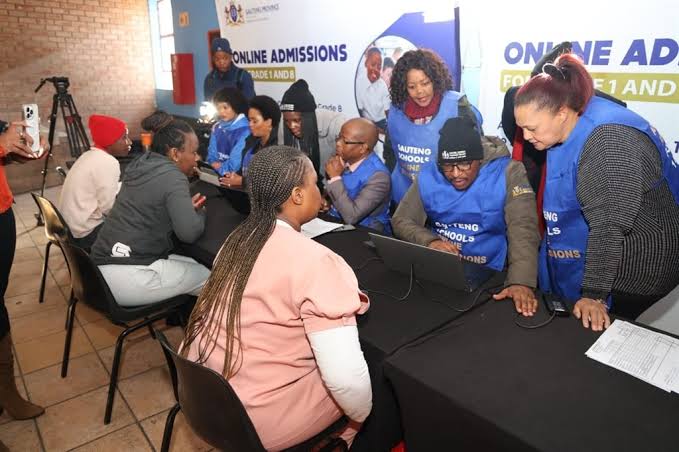
Meanwhile, the WCED has reopened online admissions for Grades 1 and 8 learners for the 2025 academic year because they have received over 8 000 late applications.

INSIDE EDUCATION

Records tumble as Tuks win Varsity Shield trophy

Staff Reporter

Tuks’s rugby team reset the “record books” last night by beating Varsity College 95-21 in the Varsity Shield final. 

The 15 tries Tuks scored on their home turf is the most in a Varsity Shield final. So is 95 points. Tuks is also the first to boast of winning the Shield and Cup Tournaments.

Tuks’s head coach, Dewey Swartbooi, had reason to smile.

When he took over as coach, the team was down and out, having been relegated to the Shield Tournament. But from day one, he clarified that the goal was to restore pride in TuksRugby. That is precisely what he did. He will, however, never take sole credit.

“It is a team effort. Every player, coach, and support staff member bought into what we set out to achieve. I can’t thank them enough. Even the players who never got to play were instrumental in our success, as they helped ensure that everyone stepped up during every training session.”

According to Swartbooi, he took a page out of the Playbook of Springbok coach Rassie Erasmus.

“Watching Chasing the Sun, I noticed that the Springboks were a happy team. They had complete trust in their coaches. So, one of my first challenges was to ensure that Tuks is also a happy team.

“What was also important was finding a balance in how we play. I did not want Tuks to play ‘festival rugby’ running with every ball, but I also wanted to play more than just a kicking game. The forwards and the backs must gel to play an all-round game. The one thing that undoubtedly made a big difference in our campaign is that every player bought into the concept of playing each game as if it is a final.”

“The team suffered an early setback when Allister Williams, our captain, broke his finger and had to withdraw. But as it said in Afrikaans ‘die een se dood is die ander se brood’.

Edwin Till genuinely stepped up as a hooker, as did Ruan van Blommestein.”

Swartbooi is reluctant to single out any specific player’s heroics, but when pushed to do so, he says that the credit should go to Tuks’s captain, Ethan Burger.

“Through his leadership qualities, Ethan played a crucial part in ensuring that the team gelled on and off the field and never lost focus during a game. As a captain, he has got a cool head. Ethan was undoubtedly the best loose forward in the tournament. He is a genuine all-round player. In the scrums, he is solid and a good ball carrier. He is even good at tactical kicking.

“Tharquin Manuel proved he is the ultimate team player. He was brilliant in our first four games as a fullback. I asked him to switch positions when we lost our centre pairing due to injuries. He never questioned my decision. Tharquin impacted in each game he played as a centre.

“I genuinely don’t like to single out players as winning the Shield Trophy was a team effort. But I have to mention JW Mare and Kamohelo Tlome, who always did the ‘donkey work’ on the field. Kyle Cyster improved with each game he played. And so I can go on saying something special about every player.”

Manuel got the Shield Player Rock Award and the Back That Rock award. Ethan Burger was the Forward that Rock and JP Wentzel was the Rookie that Rock.

INSIDE EDUCATION