Home Blog Page 166

Mbilwi Secondary is in the running again for the Samsung and SITA Solve for Tomorrow contest

Edwin Naidu

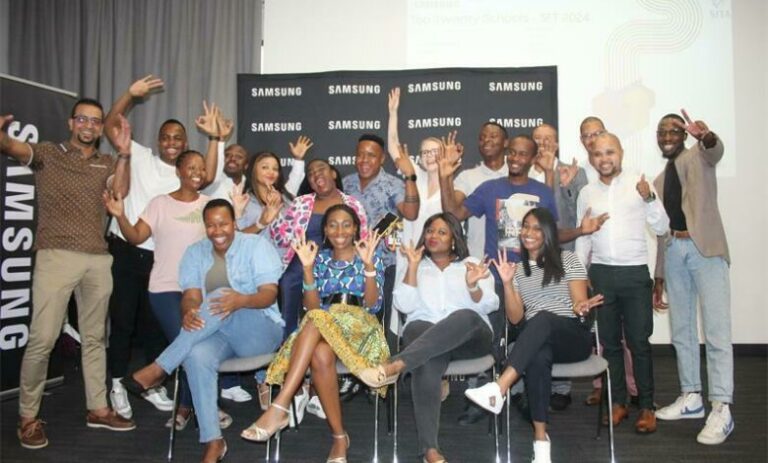
Reigning champions Mbilwi Secondary School in Limpopo, which produced some of the country’s most eminent academics, is among the 20 finalists for the Samsung and the State Information Technology Agency (SITA) 2024 Solve For Tomorrow Competition.

Aiming to bring out the best in public schools and learners, the competition has attracted many entries from schools across the country. The top 20 schools are now confirmed.

No surprises that Mbilwi, renowned for producing learners excelling in maths, has made the cut once more. The school’s past students include Professor Tshilidzi Marwala, the former University of Johannesburg vice-chancellor now working with the United Nations University in Japan. 

Engineer and inventor Professor Mulalo Doyoyo, the former head boy, was another person who put the school on the map. He passed away suddenly on 14 March 2024.

Mbili is recognised as one of the country’s top-performing public schools.

According to Hlubi Shivanda, Samsung’s Director for Business Operations, Innovation, and Corporate Affairs, this critical stage of the contest is a good indicator of the country’s future. The finalists are learning how to solve problems in their communities.

This is an opportunity for these schools to showcase their innovation and creativity in solving real-world problems.

Samsung, which inspires the world and shapes the future with transformative technologies, such as the latest S24 models boasting Artificial Intelligence, decided to heed a presidential call to launch this contest for schools and learners.

In this year’s State of the Nation Address, President Cyril Ramaphosa noted that the power of collaboration in overcoming challenges can lead to significant achievements.

South Africa has made progress in the last three decades thanks to the spirit of partnership. The Solve For Tomorrow competition is a testament to the impact of public-private partnerships, and when these sectors come together, remarkable results can be attained. 

Launched in Africa in 2023, this unique competition provides an opportunity for Grade 10 and 11 learners from public schools in underserved communities to apply Science, Technology, Engineering, and Maths (STEM) education to address the challenges faced by their respective communities while fostering creative thinking, problem-solving skills, and teamwork among learners. Its goal is to nurture socially innovative ideas, specifically focusing on environmental challenges.

Lenhle Khoza, B-BBEE and Transformation Manager at Samsung, said: “As a global electronics giant that has, in the past 30 years, consistently supported the country’s transformation agenda, we are aware of the great importance of education through technology. This global Solve For Tomorrow initiative, which uses STEM as the critical component of empowerment, is helping us, together with our valued partners, to continue our quest of equipping young people from local public schools with critical skills and knowledge that they will need to build not only a better local economy but also the world at large.”

Since its inception last year, the competition has helped learners grow and develop invaluable skills for success in the present and future. In conjunction with the State Information Technology Agency, 51 pre-selected schools were piloted nationally. This competition is an excellent way for learners to understand STEM better and display their scientific talents.

According to Tlali Tlali, the Head of Corporate Affairs at SITA: “We understand the importance of collaborations and are very excited about the prospects of our continued partnership with Samsung. As SITA, we remain committed to leveraging IT to support the delivery of e-Government services to all citizens, and we are always keen to be part of impactful programmes such as the Solve For Tomorrow competition that allow us to effect positive change in both our youth and communities at large.”

The programme is designed to proceed through a phased approach. In the entry phase, schools nationwide are encouraged to participate in the competition. In phase one, the preliminary stage of the competition, the Top 20 schools with the best entries for 2024 are announced, and they will proceed to the next phase. These schools will have the opportunity to address an environmental challenge and develop concrete innovations to assist in the betterment of society. They will be supported by assigned Samsung employee mentors throughout the process.

In the programme’s second phase, Samsung will provide resources to the learners while mentors guide them. During this phase, the learners must research, develop, and submit their paper prototypes for the challenges identified in the preliminary phase.

To support the teams from the Top 20 schools for 2024, they will attend Design Thinking workshops in their respective regions. Additionally, the selected schools’ teams will be sponsored with a Samsung tablet and data to assist them in research and communication with their mentors. This is a critical stage of the programme, and with Samsung’s support, the learners will have the resources they need to succeed.

The Design Thinking workshops aim to teach learners valuable skills for approaching their work, thinking critically, and acting like designers. They will provide a cognitive and structured process for human-centred, creative problem-solving and encourage learners to build strong teams. Additionally, learners will learn how to research and develop workable solutions to address environmental issues in their communities.

The Top 20 Finalists will be required to submit paper prototypes of their solutions, which judges will evaluate to determine the Top 10 schools that will proceed to the next phase. The Top 10 teams will receive funding to develop physical prototypes of their solutions and present them to a panel of judges in the final stage of the competition.

The Top Three schools with the winning prototypes will win prizes of up to R100,000 each, which will go towards STEM equipment based on the unique needs of each school. Additionally, Samsung has decided to reward each learner in the Top three teams from schools with a Samsung device.

The ultimate goal is to emulate Mbilwi Secondary School, the 2023 winner – but whoever wins, communities and South Africa stand to benefit from innovative solutions.

INSIDE EDUCATION
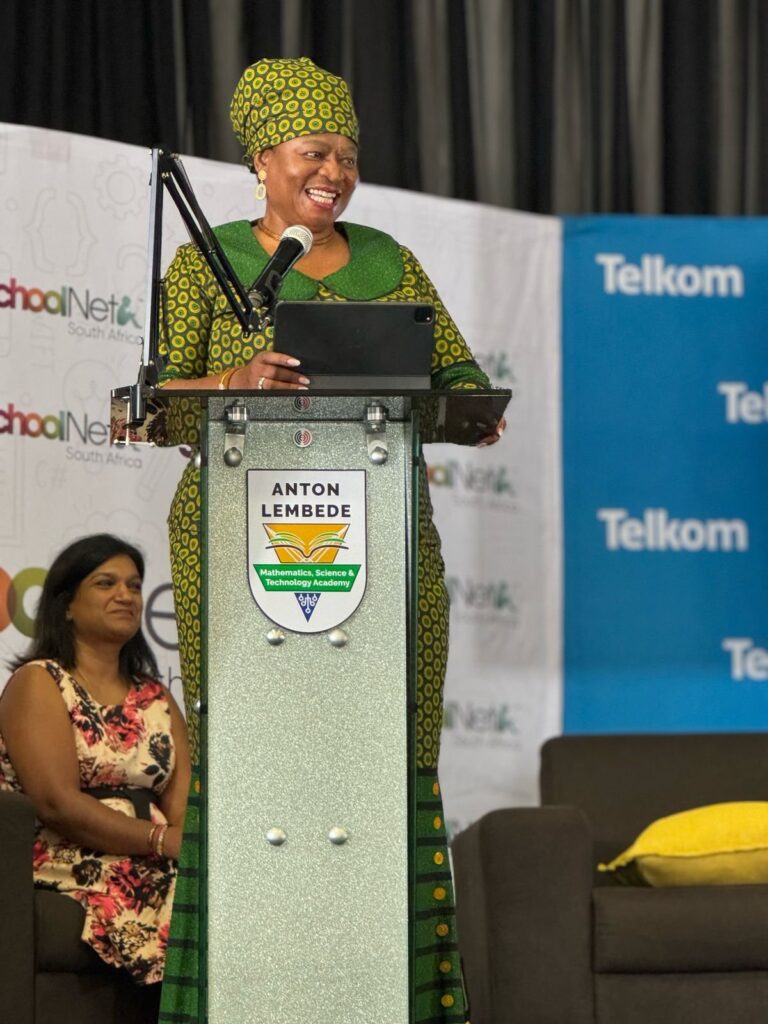
Deputy Minister Mhaule addresses Digital Learning Conference at Anton Lembede MST Academy

Staff Reporter

Basic Education Deputy Minister, Dr Reginah Mhaule, addressed delegates during the opening of the SchoolNet South Africa Digital Learning Conference at the Anton Lembede Mathematics, Science and Technology (MST) Academy in eThekwini in the KwaZulu-Natal Province recently.

The Conference, which took place under the theme: “Digital Education for the Future”, reflected the need for education to embrace the 21st Century opportunities and challenges posed by digital technologies such as Coding and Robotics and Artificial Intelligence to foster the skills and competencies essential for creativity, innovation, collaboration and sustainability.

Approximately 400 educators, education officials and sector organisations attended the Conference from 25 – 27 March 2024, focusing on professional development aligned with the following conference topics: Coding, Robotics, and Artificial Intelligence in the Classroom; Learning through play; Assessment Strategies for Digital Learning; Designing Creative and innovative Learning; and a Future-focused culture of sustainable learning. The Conference therefore aimed at equipping teachers with practical experience in integrating digital tools in the classroom to improve learning outcomes through best practice and sustaining professional development networks after the Conference.

Deputy Minister Mhaule said that, “we must lay strong foundations through basic education, preparing learners from Grade R up to Grade 12 and to respond to 21st Century needs and skill sets required for a changing world. This Conference takes place during the 30 Years of Freedom and Democracy celebrations and Human Rights Month celebrations; technology must be inclusive and assistive devices should be accessible to learners with special needs.

“KZN has proved, beyond a doubt, that digital education is possible in remote rural areas. The commitment of the province towards enhanced performance is reflected in the recent National Senior Certificate (NSC) examination results. The Basic Education Sector is continuing its upward trajectory to ensure a resilient and responsive education system for an inclusive lifelong and relevant learning for the future.

“SchoolNet has been working in training, development and the support of teachers through ICTs for 27 years to prepare them to use these solutions to increase access and to better classroom practice and planning, fully aligned to the curriculum, goals and objectives of the DBE.”

Mhaule was accompanied by KZN Education MEC, Mbali Frazer. During the Conference, Frazer made reference to the value of ICT in education, as well as the importance of collaboration in making education accessible to all educators and to capacitate them with the necessary skills for the Fourth and Fifth Industrial Revolution: “Our teachers need to be empowered to impart the necessary knowledge and skills to learners.” She thanked SchoolNet and Telkom for their sustained commitment and partnership.

INSIDE EDUCATION

Government Launches the National Freedom Month in Celebrating 30 Years Of Democracy

Staff Reporter

THE Government through the National Department of Sport, Arts and Culture (DSAC) will today, Tuesday, 09 April 2024 officially launch the National Freedom Month in celebrating 30 Years of Democracy at the Freedom Park & Museum Amphitheatre.

The year’s celebrations are themed “30 Years of Democracy, Partnership and Growth.”

Proceedings will begin with a 3.8km carnival and colourful parade showcasing the country’s unique and cultural diversity through dance, large 3D costumes, acrobats, and an eclectic mix of melodies from the Church Square to the Freedom Park this morning.

Hosted in collaboration with Government Communications and Information System (GCIS) and the Gauteng Department of Sport, Arts, Culture and Recreation (GPSACR), the government will, as part of the national launch, unveil the 30 Years of Democracy official logo and outline the overall programmes for the month of April and throughout the year.

Led by the Department of Sport, Arts and Culture, the government will also host a national dialogue on 30 years of Democracy at the Auditorium later in the afternoon. During the dialogue, academia, and representatives from business, labour, civil society, and media will deliberate on both successes and challenges of the past 3 decades of the country’s democracy and freedom.

INSIDE EDUCATION

UWC Appoints Professor Robert Balfour as new Vice-Chancellor

Johnathan Paoli

THE University of the Western Cape (UWC) has announced the appointment of its new vice-chancellor (VC) Robert Balfour who will officially assume the role in January 2025.

UWC’s spokesperson, Gasant Abarder said on Thursday that Balfour is currently the Deputy VC for Teaching and Learning at the North West University, and is expected to be the university’s 8th VC, replacing the outgoing Professor Tyrone Pretorius, whose term is ending in December 2024.

“With nearly 20 years of academic leadership, Professor Balfour is a driving force in the South African higher education landscape,” Abarder said.

Abarder said the council has no doubt that Balfour will further enhance the university’s trajectory as a leading higher education institution.

Balfour made his name as a language and education expert, who is frequently invited as a keynote speaker at higher education institutions across the country.

UWC Council Chairperson Xoliswa Daku said Balfour completed his schooling at Christian Brothers College in Pretoria and attended Rhodes University, where he completed his BA, BA Honours in English (1993), and a Higher Diploma in Education, a Master’s degree in English and Education at UKZN, which he completed with distinction.

Daku said Balfour was the recipient of a Commonwealth Trust Scholarship in 1997 and completed his doctoral in English at Corpus Christi College in Cambridge in 2000.

“His extensive expertise encompasses various domains, including applied linguistics, post-colonial literary criticism, and education. Professor Balfour’s contributions extend beyond academia, as he is also an accomplished painter and published author of poetry and short fiction in literary journals internationally,” Daku said.

The incoming Rector and VC is expected to take up his role in January next year.

INSIDE POLITICS

Qualifications of Students from deregistered Educor Colleges still valid – Nzimande

Lerato Mbhiza

THE Department of Higher Education says that qualifications from the four Educor-owned colleges that were deregistered are still valid.

Last month, the Department announced that the deregistration of City Varsity (Pty) Ltd, Damelin (Pty) Ltd, Icesa City Campus (Pty) Ltd and Lyceum College (Pty) Ltd after Educor failed to provide the required audited financial results for 2021 and 2022.

The Department granted the four colleges a phase-out period for students already in the pipeline. 

The Department also has assured the students, alternative academic institutions and employers that qualifications issued or obtained during the period of registration and during the phase-out period, remain valid and recognised.

Thus, the four colleges still have an obligation to award the students their qualifications during the period of registration and during the phase-out period, the Department said.

The Department also stressed that qualifications issued previously or during the phase-out period remained valid. 

It said the four colleges were obligated to their students to award them their qualifications and conclude the rest of the academic year.

The Department emphasised its decision to cancel the registration statuses of these colleges which remained intact. 

Over 13,000 students were affected by the deregistration, the Department said.

The Educor Colleges had failed to fulfil the requirements for registration contemplated in Section 57(2)(b) of the (Higher Education) Act. 

They also failed to submit their annual financial statements and  tax clearance certificates for the 2021/2022 years. This is proof of their financial viability.

Nzimande said the four Educor brands are deemed as dysfunctional. They had been measured by the daily complaints and grievances received from students. Most of these remain unresolved.

“Educor (Pty) Ltd claims to have 50,000 [students] in the system. This information is incorrect since the 2022 annual reports indicate the breakdown of student enrolment as: City Varsity (540) students, Damelin (4,012), Icesa City Campus (145) and Lyceum College (8,399). This  totals to 13,096,” Nzimande said.

Nzimande further revealed that Educor lied about the number of students they have.

INSIDE POLITICS

GDE questions Curro’s value system, amid racism allegations

Johnathan Paoli

THE Gauteng Department of Education (GDE) has acknowledged the statement released by Curro Holdings regarding its recent social media post which conveyed a racially unbalanced narrative regarding the potential future careers of students currently enrolled at its schools.

The GDE spokesperson Steve Mabona released a statement on Wednesday morning and said while the department noted the statement, it was important to regard this incident within a background of the controversial history of Curro schools, which have become notorious for their racism and anti-Black violence.

“The GDE does not take such racial incidents lightly as they may be cultivating attitudes which reflect a society that has not fully dealt with racism, and this poses a threat not only to the education system and the model citizens it envisages to create, but also to a nation that still tirelessly works towards overcoming such attitudes,” Mabona said.

This follows the release of pictures of primary school pupils’ career day event which showed a black child posed as a cashier while white children posed as veterinarians, among other professions.

Curro apologised on Sunday, acknowledging the picture was initially posted by the company on social media but was deleted after a backlash and promised to investigate, as questions arose about whether the child chose to pose as a cashier or Curro officials made the decision.

The spokesperson said that there was an urgent need to investigate the constitutionality of Curro’s value system, and whether there is enough consicentisation of racial equality and human rights across all its institutions and personnel.

In addition, Mabona said that it was fundamental to verify whether there are indeed appropriate means of accountability for those who may refuse to embrace equality and non racialism at its institutions.

INSIDE EDUCATION

New app will tell SA potato farmers exactly when, where and how much to water

Staff Reporter

With unpredictable electricity, rainfall and municipal water supply, South African farmers may need faith like potatoes to manage crop irrigation. 

But, scientific suggestions from their smartphones to prevent under or over-watering would also help.

University of Pretoria researchers say that data from satellite imagery and local weather stations have been “calibrated” for the first time in South Africa to inform irrigation strategies on potato farms in the western Free State. The data will be available as an app showing simple indicators of how much irrigation is needed on a particular day.

Once the technology is fully available to potato growers, it will be fairly easy to adapt it to other crops like maize and onions and for other farming regions. 

“Farmers will be benefiting directly, and also the researchers and agronomists supporting the growers,” says Alex Mukiibi, a PhD candidate at UP’s Department of Plant and Soil Sciences.

While using remote sensing (satellite images) and weather data for more precise irrigation is not new, says Mukiibi, the technology had not been properly adapted for local soil conditions, local potato varieties and local weather patterns until now. 

He explains that remote sensing data must be validated for any unique set of conditions, meaning that it must be checked against true measurements taken on the ground, so that farmers can trust it.\

For the scientifically-minded, Mukiibi describes the technical details of this work in the journal Remote Sensingalongside his supervisor at UP, Prof Martin Steyn, and Prof Angelinus Franke of the University of the Free State.

But for the rest of the country’s potato lovers, this advance means farmers will save on power and water costs, improving sustainability and ensuring that we can enjoy our chips and mash reasonably.

“If we go out for dinner, the team has to eat chips; they cannot choose any other starch,” jokes Steyn. 

“I’ve been working in crop irrigation management and on potatoes for my whole life,” says Steyn. Potatoes are a drought-sensitive crop, and they are expensive to grow, so the risk is very high. We see the negative effects of water, pumping, and load shedding costs on farmers.”

Steyn says that in the 1970s and 1980s, only about 50% of potato growers irrigated their crops, whereas now it is closer to 85%.

However, most farmers are still not using the many tools and technologies already available to enable “smart farming” because they are expensive, difficult for non-experts to use, or unavailable in a single app.

Recognising this gap, researchers like Steyn, Mukiibi, and others are working with the industry to deliver remote sensing-based crop water-use data to farmers’ smart devices simply and quickly.

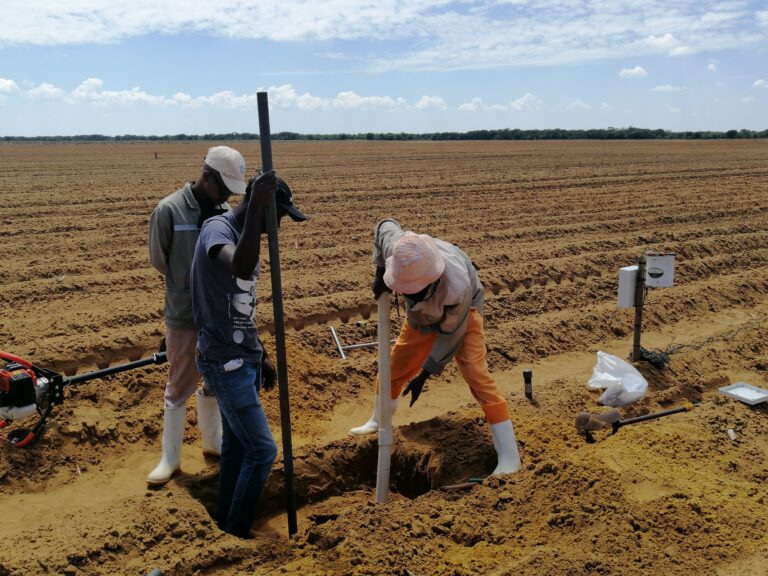
Potatoes SA funded this first “ground truthing” calibration step. Mukiibi and his technical assistants, Nozi Radebe and Stéfan Steenekamp, collected soil and crop data directly on the ground at specific farms in the western Free State. 

INSIDE EDUCATION

It takes a village to raise and educate a child during the Year of Education in Africa

Inside Education Reporter

During the recent three-day Lekgotla deliberations, Minister Angie Motshekga called the gathering the “village where robust discussions brainstorm the education sector factors impacting the holistic development, teaching and learning of the African child”.

The opening session, a Plenary, featured four presentations that set the scene for the proceedings.

Sophia Ndemutila Ashipala, Head of Education Division: African Union (AU), spoke about Building Resilient Education Systems for Increased Access to Inclusive, Lifelong, Quality, and Relevant Learning in Africa for the 21st Century, unpacking the African Union theme launched during the AU Summit. 

The African Union has designated 2024 as The Year of Education in Africa under the theme Educate an African Fit for the 21st Century: Building Resilient Education Systems for increased access to inclusive, lifelong, quality, and relevant learning in Africa.

This theme was unpacked with the Lekgotla theme for a holistic continental and global approach to the Education Sector and South Africa’s unique challenges.

Prof Heila-Lotz Sisitka, Director: Environmental Learning Research Centre, Rhodes University, South Africa presented on the Mainstreaming Education for Sustainable Development into Education (towards ESD 2030). 

She summarised the mainstreaming of ESD in ten points. These are: Empathy and Care; Visionary leadership, good policy and strategy; a Systems approach to mainstreaming all parts of the whole; Intersectoral and inter-agency collaboration and shared ownership; Working collaboratively; Maximising existing programmes, partnerships and resources; Training and co-learning support at all levels; Inclusivity; Sharing of knowledge; and Monitoring, Evaluation and Reporting to Learn together (MERL).

Sizwe Nxasana, Chairperson: NECT Council, spoke about Education for Economic Reconstruction and Recovery: Approach, Process and Content. He highlighted Language, Mathematics and the role of technology in his presentation and reflected on education achievements during the past few years including the NSNP, the shift of ECD, the Three Stream Curriculum Model and Coding and Robotics, “but the journey is far from complete whilst inequality persists,” he said, adding that, Language plays a crucial role in developing crucial content and skills.

Prof Martin Gustafsson, Researcher at the DBE, spoke about Recent South African Trends and what they mean for the future. “Skills for the 21st Century are not only about Mathematics and Science, but this is inevitably an important part.

“The Continental Education Strategy for Africa (CESA) states that the relevance of secondary education remains a concern as it relates to employability, technical and vocational training and articulation with tertiary education.

“Mathematics and Science at this level are critical to developing a well-equipped human capital capable of competing in an increasingly Science and Technology-driven world, as well as the foundation for knowledge-based economies”.

Prof Gustafsson presented SA trends on participation in mathematics, science, practical subjects, urban versus rural data, and gender participation and performance. “We need this reliable data for planning purposes and redirect knowledge and skills for a changing world,” he said.

Day two started with a short presentation on Values in Education compiled by Professor John Volmink, Former Chair of the Umalusi Council. This was followed by four presentations on Digital Transformation in Education. 

The second session for the day started with a discussion on Artificial Intelligence followed by two input presentations on Artificial Intelligence and Digital Learning. 

The third session for the morning featured two presentations on Skilling the Education Workforce and improving teacher quality. Session 3 also included three presentations on the sub-theme: Utilizing Digital learning to contribute to Teacher Development. A panel discussion on Entrepreneurship Education followed this.

The DBE also launched the Spotlight Report on Basic Education Completion and Foundational Learning, providing evidence-based insights and analysis of foundational learning in South Africa, during the Lekgotla.

The report calls for urgent action to increase access for all children and boost primary pupils’ reading, writing and mathematics skills.

This is one of four country reports produced in partnership with UNESCO’s Global Education Monitoring (GEM) Report, the Association for the Development of Education in Africa (ADEA) and the African Union as part of the Spotlight report series on African foundational learning.

The Report offers a diagnosis of the current state of South Africa’s foundational education, focusing on the curriculum and presenting concrete actions to improve basic skills, teacher support mechanisms and learning assessments.

INSIDE EDUCATION

Distance learners from Educor to receive support from ADvTECH’s Oxbridge Academy

Inside Education Reporter

Distance learning students affected by the deregistration of Educor Colleges will receive support from Oxbridge Academy, the distance learning division of JSE-listed ADvTECH.

This follows the pledge of support by The Independent Institute of Education, ADvTECH’s higher education division.

Siyavuya Makubalo, Marketing Manager of Oxbridge Academy, says ADvTECH’s support for distance learners will be a welcome relief to affected students and will ensure that no student is left behind.

“We are committed to helping students continue their distance studies successfully and without interruption,” she says.

As a distance learning college, students can continue with their studies without delay, and would only need to submit their statements of results.

Makubalo says Oxbridge Academy has initiated a centralised process to ensure students are quickly and correctly advised. 

“We enrol students throughout the year, so affected students can continue their studies without delay, and without having to wait for the second semester.”

Affected students who would like to enquire about their options of transferring to Oxbridge Academy can email info@oxbridgeacademy.edu.za or WhatsApp 066 376 376 for assistance.

Oxbridge Academy will assist students with queries regarding similar qualifications and the process for applying for academic credits.

Support for students will be assessed at an individual level, given the variables at play. In general, the process ahead will be as follows:

Oxbridge Academy offers various courses from matric to National Qualifications and National N Diplomas. Through its dedicated and experienced student advisors, Oxbridge Academy will guide students through the necessary steps to ensure they are fully informed. 

Students need to send through their statement of results, which will allow Oxbridge Academy to conduct an academic credit mapping exercise for each student. This will entail assessing the overlap between modules the student has passed on the scholarly record.

Fee credits will be granted for module credits, i.e. the total programme fee will be reduced by the cost of the module/s. Students will only pay for their modules or qualifications with Oxbridge Academy.

“Our focus as Oxbridge Academy is to support former Educor students in successfully obtaining their qualifications without interrupting their study period,” says Makubalo.

INSIDE EDUCATION

Recognition of Prior Learning: A new pathway to career advancement

Staff Reporter

In a rapidly evolving and highly competitive job market, where skills and qualifications play a pivotal role in career progression, the issue of Recognition of Prior Learning (RPL) is rightfully coming to the fore.

Many individuals across South Africa have worked diligently in various roles and industries, accumulating valuable knowledge and skills over many years. However, when they seek to climb the career ladder or transition to a new job, their hard-earned expertise often goes unrecognised due to their lack of relevant qualifications and without consideration of their real-life track record and achievements.

“Our country faces significant socio-economic challenges. Aspiring professionals, including those who have worked in entry-level and minimum-wage positions, find themselves at a crossroads. They possess practical skills, problem-solving abilities, customer service experience and industry-specific knowledge – all highly sought-after skills – but their lack of formal qualifications hinders their upward mobility. 

“In this way, the gap between practical experience and formal recognition creates almost insurmountable barriers for career advancement,” explains Siyavuya Makubalo, Marketing Manager at Oxbridge Academy, a brand of ADvTECH, South Africa’s leading private education provider.

Upon receipt of a certificate of completion, students can articulate a qualification in their preferred field, with the RPL certificate serving as confirmation of their skills and knowledge. Its purpose is to bridge the gap between practical expertise and formal qualifications, allowing people to advance their qualifications and careers. 

“This serves as a beacon of hope for those seeking career progression, who want to improve their prospects but were not able to do so before,” says Makubalo.

She says the RPL process provides a structured framework for assessing and validating an individual’s prior learning. 

“It is an acknowledgement of the skills and knowledge you’ve collected through work and life experience, transferring them to a current training course’s requirements to gain entry to the specific training course you want to study.”

Upon receipt of a certificate of completion, students can articulate into a qualification in their preferred field, with the RPL certificate serving as confirmation of their skills and knowledge.

“Recognition of Prior Learning is a much-needed transformative process that acknowledges an individual’s existing expertise, regardless of whether it was gained through formal education, work experience, or self-directed learning. It provides a pathway for individuals to have their skills and knowledge assessed, validated and formally recognised.

“In addition to the formal recognition, students also gain confidence in their abilities. They recognise that their practical know-how matters and can be a stepping stone to greater opportunities. Armed with validated skills, individuals can apply for promotions, switch industries, study further or explore lateral moves.”

New app will tell SA potato farmers exactly when, where and how much to water

Staff Reporter

With unpredictable electricity, rainfall and municipal water supply, South African farmers may need faith like potatoes to manage crop irrigation. 

But, scientific suggestions from their smartphones to prevent under or over-watering would also help.

University of Pretoria researchers say that data from satellite imagery and local weather stations have been “calibrated” for the first time in South Africa to inform irrigation strategies on potato farms in the western Free State. The data will be available as an app showing simple indicators of how much irrigation is needed on a particular day.

Once the technology is fully available to potato growers, it will be fairly easy to adapt it to other crops like maize and onions and for other farming regions. 

“Farmers will be benefiting directly, and also the researchers and agronomists supporting the growers,” says Alex Mukiibi, a PhD candidate at UP’s Department of Plant and Soil Sciences.

While using remote sensing (satellite images) and weather data for more precise irrigation is not new, says Mukiibi, the technology had not been properly adapted for local soil conditions, local potato varieties and local weather patterns until now. 

He explains that remote sensing data must be validated for any unique set of conditions, meaning that it must be checked against true measurements taken on the ground, so that farmers can trust it.\

For the scientifically-minded, Mukiibi describes the technical details of this work in the journal Remote Sensing, alongside his supervisor at UP, Prof Martin Steyn, and Prof Angelinus Franke of the University of the Free State.

But for the rest of the country’s potato lovers, this advance means farmers will save on power and water costs, improving sustainability and ensuring that we can enjoy our chips and mash reasonably.

“If we go out for dinner, the team has to eat chips; they cannot choose any other starch,” jokes Steyn. 

“I’ve been working in crop irrigation management and on potatoes for my whole life,” says Steyn. Potatoes are a drought-sensitive crop, and they are expensive to grow, so the risk is very high. We see the negative effects of water, pumping, and load shedding costs on farmers.”

Steyn says that in the 1970s and 1980s, only about 50% of potato growers irrigated their crops, whereas now it is closer to 85%.

However, most farmers are still not using the many tools and technologies already available to enable “smart farming” because they are expensive, difficult for non-experts to use, or unavailable in a single app.

Recognising this gap, researchers like Steyn, Mukiibi, and others are working with the industry to deliver remote sensing-based crop water-use data to farmers’ smart devices simply and quickly.

Potatoes SA funded this first “ground truthing” calibration step. Mukiibi and his technical assistants, Nozi Radebe and Stéfan Steenekamp, collected soil and crop data directly on the ground at specific farms in the western Free State. 

Enter the 2023 SADC Secondary Schools Essay Competition

All secondary/high school-going students from all 16 Southern African Development Community (SADC) Member States were invited to take part in a competition for South African Development Community (SADC) learners.

The topic for the 2024 SADC Secondary School Essay competition is; “How can Human and Financial Capital drive Industrial Development in the SADC Region?”

The topic is derived from the theme of the 43rd Ordinary SADC Summit of Heads of State and Government held in Luanda, Republic of Angola, on 17th August 2023, which is; “Human and Financial Capital: The Key Drivers for Sustainable Industrialisation in the SADC Region”. 

The theme seeks to address two of the most critical enablers in supporting regional industrialisation: adequate human resources in terms of numbers and technical capacity within the context of climate change and the fourth Industrial Revolution and adequate financial resources to ensure more sustainable funding mechanisms.

The essay must contain a maximum of 1000 words and a minimum of 900 words in English, and a maximum of 1200 words and a minimum of 1100 words in French and Portuguese. Essays that do not comply with the permissible number of words will not be considered.

A complete word count must be provided at the end of the essay. Learners must provide references for their work where necessary; however, references do not contribute to the entry’s word count. The preferred format of citation is APA. To facilitate simple sequencing, each answer must be accompanied by the question at the top. Learners are cautioned against using the bullet point format for their work.

The deadline for submission of entries to the Department of Basic Education is 19 April 2024.  

ALL entries must be typed and submitted electronically in Microsoft Word and hard copies. Entrants should sign and initial each page of the hard copy document to ensure that it has not been altered.

All essays entering the competition should be in one of the SADC working languages, i.e., English, Portuguese, or French. All submissions must contain full names, contact details, the name of the school, and the province.

Marking Guidelines:

The questions below are meant to guide entrants when responding to the question above. In answering the question above, secondary school learners should ensure that they address the questions listed below in their essays;

What is human and financial capital, and why is it important for industrial development? (20 points)

SADC continues undertaking its activities and initiatives, especially those encouraging industrialisation. How does access to financial resources impact the growth of industries in the SADC region? (20 points)

Pillar III on Social and Human Capital Development in the Regional Indicative Strategic Development Plan (RISDP) 2020-2030 is essential to industrialisation and regional integration and ensures human-centred, inclusive, and sustainable socio-economic development. Give examples of how the SADC region can invest in human resources to foster industrial growth. (20 points) 

Social and human capital development is crucial for SADC to fulfil its goals of regional integration, economic growth, and citizen well-being. Discuss the role of human capital in promoting industrial development. (20 points)

Discuss any ideas or approaches to enhance the region’s industrial development without overreliance on International Cooperation Partners (ICPs) and donors’ contributions. (20 points).

 INSIDE EDUCATION