Professor Sunil Maharaj, Vice-Principal of Research, Innovation and Postgraduate Education at the University of Pretoria (UP), along with various UP representatives, recently met with Prof David Honys, member of the Council of the Czech Academy of Sciences (CAS), and delegates from the Embassy of the Czech Republic to discuss opportunities for collaboration between the two institutions.
Prof Maharaj facilitated the discussion and emphasised UP’s continuous efforts to cultivate global collaborations and partnerships, including within the European Union, with a focus on identifying areas of mutual academic interest and exploring the potential for establishing a formal partnership.
“The Forestry and Agricultural Biotechnology Institute, which we have been running for 25 years, is one of the biggest plant science institutes in South Africa,” Prof Maharaj said. “They are leaders in terms of research, with a number of the researchers in the Institute ranked in the top 1% of the most highly-cited researchers in the world by the Institute for Scientific Information (ISI). We also have a platform called Innovation Africa @UP, where we do cutting-edge research, particularly on forestry, agricultural and natural sciences.”
Prof Wolf-Dieter Schubert, Chair of Postgraduate Studies in UP’s Department of Biochemistry, Genetics and Microbiology in the Faculty of Natural and Agricultural Sciences, was part of the UP delegation. He and Prof Honys are optimistic about the research the CAS is doing on water management, land protection, land conservation, agricultural energy production and energy storage.
UP and the CAS recognise the importance of global collaboration to advance scientific research and innovation. The partnership will allow for a transfer of skills and knowledge as doctorate students will get the opportunity to conduct research in world-class laboratories under excellent tutelage.
While no formal agreement was finalised, both parties expressed a desire to continue discussions about potential student/faculty workshops, collaborative research projects and other partnership opportunities, and establish a comprehensive roadmap for cooperation between the two institutions.
THE dire socio-economic challenges many teachers and their learners face are why the University of the Western Cape’s (UWC) Education Faculty has embarked on an effective teacher-training student excursion to expose first-year students to the obstacles that might lie ahead.
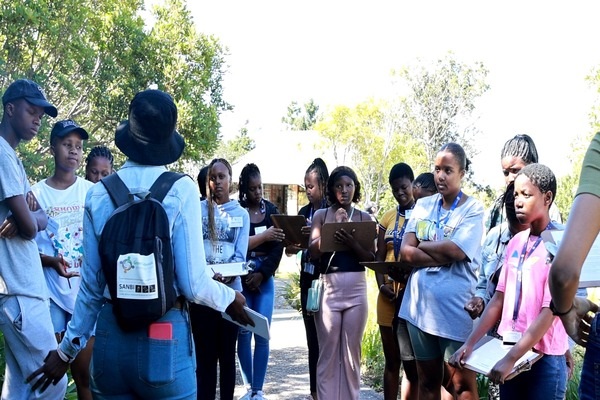
The faculty arranged an orientation weekend excursion to Betty’s Bay to introduce the new cohort of foundation phase teaching students to a South African future education workforce experience.
Professor Josef de Beer, Director of the Science Learning Centre for Africa (SLCA) at UWC, said the excursion was a perfect base for them to build on and to provide foundation phase student teachers exposure to the social background of their future learners, especially those from underprivileged backgrounds, while sensitising them to the complexity of the teaching profession.
As an example, some learners are forced to warm water on a fire to wash themselves before school, and thanks to these excursions, teaching students can better relate to some of their future learners’ lived experiences.
“We use a teaching method of play that would disrupt their current thinking by asking critical questions such as whether they are truly inclusive and what barriers they will be facing as a teacher in the making. It is a way of addressing their fears and confronting their biases,” said Prof De Beer.
An activity was developed where students built sun stoves or solar cookers from scratch using recyclable materials such as boxes, aluminium foil and cling wrap. They then had to boil water in cold drink cans to as high a temperature as possible.
“The idea with this exercise is to prepare students for any situation, whether they teach at a rural school or a school in an affluent area, the aim is to bring them to the real-life situation to address another goal: to make students aware of the socioeconomic divide they will face in a classroom.”
The sunstove activity also required out-of-the-box thinking, where student teachers had to design stoves taking the laws of physics into consideration, and also outsmarting the baboons in the area, who were very curious about these contraptions.
One specific activity, the Famine and Abundance Game, made students aware of some learners’ limited access to resources.
“This is just one of the important characteristics of the education environment that students may encounter, and it is important that they experience it themselves through the activity we applied. Students could engage with questions about what they have to do to be a truly inclusive teacher and think about how they should include it in their teaching methods.”
Prof De Beer said that according to research; student teachers often hold very naive perceptions of what it means to become a teacher.
“It is called the apprenticeship of observation. This means the 12 years we spend in schools, as with our first years, we are exposed to observing teachers who are very often bad role models, resulting in new students having the perception that they are ready to teach, but this is definitely not the case.”
A visit to the Harold Porter Botanical Garden showcased activities highlighting the environmental crisis the country is experiencing.
Teachers have a significant role to play in advocating for environmental education because they work closely with a new generation of learners who may have yet to be exposed to nature, and need to realise the importance of conserving this natural asset.
Dr Carli Schoeman, a first-year education lecturer at UWC, said: “It is very important that students should be exposed to the complexities of education as a profession. The activities we’ve been doing with students exposed them to some elements of the multi-dimensional classroom they will encounter in future, opened their eyes to the social backgrounds of other students, and helped them experience totally new perspectives.
“We received positive feedback from our students. It was important for them to form a unit in the classroom setup. It also helps us as lecturers to link our lessons to what we experienced here during this excursion.”
First-year student Somalia Mhlauli said this educational excursion changed her perspective. “It taught me what it will be like stepping into the classroom and explained my role in changing someone’s life.”
Click here to watch the first year education students and lecturers speak about their experience during their excursion in Betty’s Bay.
Local technology entrepreneurs have an opportunity to showcase their innovations to a global audience with the official launch of the 2024 instalment of the Irish Tech Challenge South Africa.
The challenge is a partnership between the Embassy of Ireland in South Africa, the Department of Science and Innovation (DSI), the Technology Innovation Agency, along with implementing partners, Wits University’s Tshimologong Digital Precinct and Dogpatch Labs, a start-up incubator in Ireland.
Launched on 15 March 2024 by Ireland’s Minister for Housing, Local Government and Heritage, Mr Darragh O’Brien, TD, this year’s competition will have seven winners, an increase from five winners in past editions.
Speaking at the launch at the Tshimologong Digital Innovation Precinct in Braamfontein, Minister O’Brien said the continued collaboration between South Africa and Ireland is important for his government.
“Ireland is committed to deepening trade and investment relations with South Africa. This includes the promotion of entrepreneurship among women and young people from backgrounds of historical disadvantage. Our partnership with the South African government on the Irish Tech Challenge reminds us of the crucial role of technology and innovation in achieving the Sustainable Development Goals and inclusive economic growth.”
The winning start-ups will receive €10,000 each in grant funding and travel to Ireland on a 10-day trip where they can engage with global customers and partners, access Ireland’s top tech expertise and business acceleration, and benefit from increased visibility through support from both governments.
Chief Director for Overseas Bilateral Cooperation at the DSI, Ms Anneline Morgan, expressed South Africa’s commitment to bilateral relations with Ireland on science and innovation.
“This initiative underscores the two countries’ commitment to fostering innovation and driving technological advancement. Programmes like the Irish Tech Challenge provide a platform for aspiring technologists and entrepreneurs to showcase their talent, collaborate on groundbreaking projects, and contribute to the growth of tech ecosystems in both countries,” said Ms Morgan.
“The DSI encourages all participants to seize this opportunity, embrace the spirit of collaboration, and unleash their potential to shape a brighter future for the two countries and beyond,” she said.
Prof. Zeblon Vilakazi, Vice Chancellor of Wits University, reaffirmed the university’s dedication to fostering innovation and entrepreneurship. He emphasised the pivotal role of the Tshimologong Precinct in nurturing start-ups, positioning it as a key contributor to their growth and development.
“Wits University is committed to supporting the vibrant entrepreneurial ecosystem, exemplified by its active participation and coordination in initiatives like the Tech Challenge, which greatly benefits the start-up community,” said Prof. Vilakazi.
Innovative companies working in clean and green technology, healthcare, education, and water sanitation and hygiene are particularly encouraged to apply, as part of the Tech Challenge’s aim is to address pressing global challenges while promoting economic development and job creation in South Africa.
In line with its commitment to diversity and inclusivity, the Irish Tech Challenge South Africa encourages applications from women, young entrepreneurs, and historically disadvantaged communities. By providing a platform for underrepresented groups to showcase their innovations, the challenge aims to create a more inclusive and equitable tech ecosystem.
Building on previous successes, the Irish Tech Challenge 2024 marks a new phase of innovation advancement and promotion in South Africa. With a focus on sustainability, social impact, and economic development, the challenge promises to catalyse positive change and work towards a brighter future.
Applications close on 26 April 2024. For more information, including how to apply, visit www.irishtechchallenge.com or www.dst.gov.za.
For media inquiries, please contact Veronica Mohapeloa at 082 882 3818 or veronica.mohapeloa@dst.gov.za.
The Graeme College Rugby Festival packed plenty of punch with rousing performances and plenty to cheer for spectators.
In some of the most exciting matches at the weekend, Grey High romped to Victory with Jon Hobson unstoppable, powering through the Hudson Park defence for a hat-trick of tries.
The Grey champion kept Hudson Park on their toes with a dominant performance, leaving them trailing 20-0 at halftime. Hudson Park showed some spark in the second half, but Grey piled on another five tries for a convincing 44-5 win.
In a game of dramatic swings, Dale College found itself in a rut against Nico Malan. The first half saw Malan score four tries, leaving Dale floundering at 32-8. But Dale dug deep in the final quarter, scoring a flurry of tries and threatening a comeback. Unfortunately, their final try came after the hooter, sealing their fate with a slim 32-29 defeat.
Mary Waters won an absorbing encounter against Port Rex with a last-gasp drop goal. The match was hard-fought. Mary Waters sneaked ahead through a Peterson penalty midway through the second half. Port Rex returned with a try to take a 12-10 lead with just 12 minutes remaining. But Mary Waters wouldn’t give up.
Capitalising on territorial dominance, they earned a tap penalty just five meters out. With the Port Rex defence holding strong, Shaneen Peterson displayed some magic with a cleverly executed drop goal that sailed through the posts, giving Mary Waters a dramatic 13-12 victory.
Kingswood Cruises Before Marlow Mounts a Late Charge: Kingswood capitalised on Marlow’s mistakes, racing to a commanding 14-0 lead at halftime thanks to tries from Vizi Labase and Tapiwe Zhanda. The second half seemed like a formality as Kingswood added two more tries to stretch the lead to 24-0. However, Marlow refused to give up. They clawed their way back with tries from Jan Els and Hermanus Steyn. Despite a glimmer of hope, Kingswood shut the door with another try to secure a hard-fought 29-14 win.
Daniel Pienaar Puts on a Masterclass: Daniel Pienaar dominated Union High with a clinical display of power and precision. Mariano Pillay’s double strike in the second half highlighted their dominance, while Armand van Rensburg orchestrated the attack with pinpoint kicks and a well-deserved try. The final score reflected Daniel Pienaar’s complete mastery: 43-6.
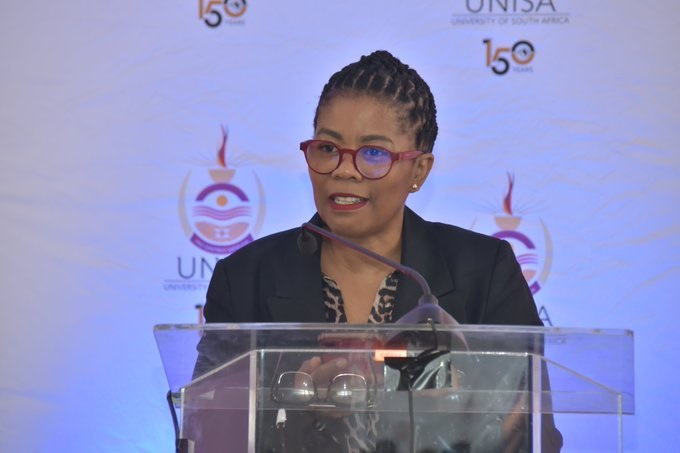
Principal and Vice-Chancellor Puleng LenkaBula gave a welcome address and set the scene for the Unisa 2nd Principal and Vice-Chancellors Lekgotla gathering in Pretoria on Monday, and affirmed the university’s commitment to continuously enhance teaching and learning practice.
In her welcome address at the event, VC LenkaBula said that Unisa was a knowledge institution which needed to rethink the future of science, technology, and innovation.
“We must ensure collaboration across Unisa colleges and produce outputs that we can be proud of,” she said.
The VC said the Lekgotla is therefore reflexive to clearly understand the progress made thus far, identifying challenges faced, and exploring potential solutions to expedite efforts to reach goals.
In addition, she said the conference was a vehicle for presenting solutions, and outlining action plans, which includes identifying the requisite support needed to ensure the success of the core business of Unisa as an academic project.
“The purpose of the 2024 Vice-Chancellor’s Lekgotla is to assess the advancements in the implementation of portfolio plans based on the preceding five pillars of the revised institutional strategy, within the planning cycle(2021-2025), highlighting its achievements and challenges,” LenkaBula said.
The VC said the various university rankings assist the university to increase its visibility and attract international students and researchers,
She said there was a need to engage together to ensure collective inputs created a synergy, symbiotic mosaic of ideas that strengthen the university as an institution.
“Our university operates in global and regional contexts, it requires constant engagement and reflections on issues that matter to humanity, the academy and the entire knowledge arena,” LenkaBula said.
Dr. Pali Lehohla, former Statistician-General, spoke under the theme “Global context, science, and higher education systems”; and said that to place education on a virtuous run, there must be a stable environment to attract investment and drive growth and employment, among others.
“In 2015, approximately 13,8 million South Africans were living below the food poverty line, down from a peak of 16,7 million in 2009,” Lehohla said.
Lehohla highlighted the reality that without proper investment in education, the country would not effectively be able to combat poverty, and said that in a complete knowledge society that is well and better informed, knowledge of the world will be simultaneously and freely accessible to everyone.
Director of Executive Support in the Office of the Principal and VC, David Maimela outlined the impact, viability and sustainability of the university.
“How do we use numbers and statistics to position planning and how do we get the university to perform better and make an impact in transforming education for the development and benefit of society as a whole,” Maimela said.
This comes on the back of reports arising over the weekend which indicated that Unisa’s online platform has identified more than 15 000 instances of potential plagiarism during tests, which has prompted the institution to take action in order to address the issue.
However, students have retaliated and said the system was outdated and riddled with glitches, with problems from last year still not having been resolved.
Unisa SRC President, Nkosinathi Mabilane said that the high number of flags resulted from the examination period of last year and that while some were first time offenders, thus entitled to a new opportunity for a rewrite, others are repeat offenders who the university had to deal with through a disciplinary process.
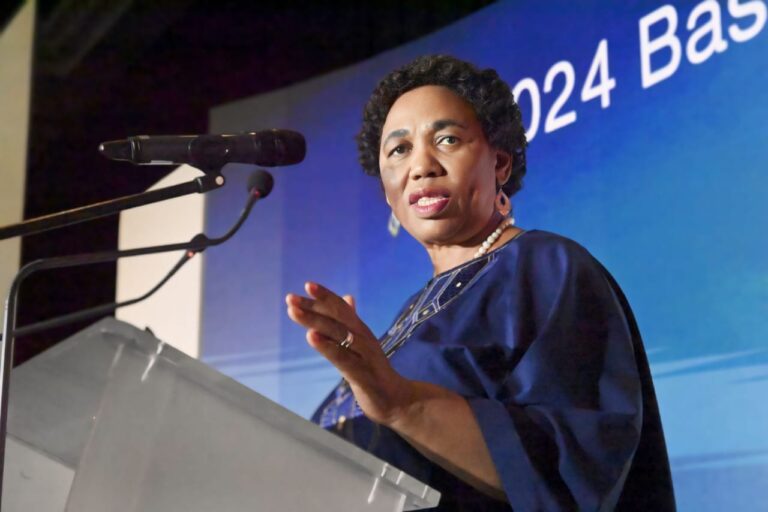
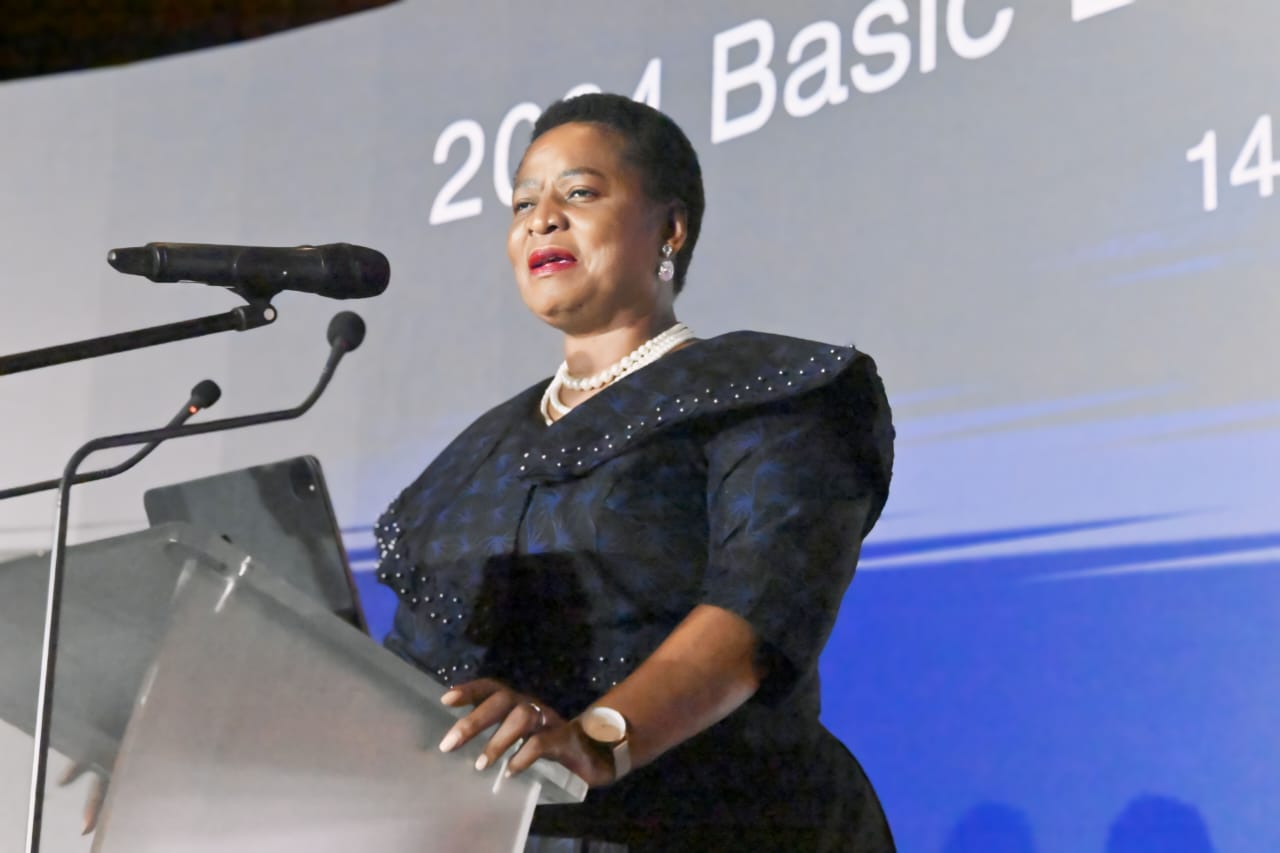
Minister of Basic Education, Angie Motshekga has expressed her optimism over the progress as well as future plans concerning development within basic education and said that transformation within languages of instruction as well as the increased development of infrastructure and digital accessibility remained the foundation of bringing change to Africa.
Motshekga was addressing the Basic Education Sector Lekgotla for the last time in the 6th Administration on Thursday in Boksburg, Ekurhuleni and thanked the ‘village’ of stakeholders for their cooperation and support in the projects and programmes established to improve basic education.
“Our Lekgotla is a testament to our efforts to construct a world in which every learner can thrive in a changing world,” Motshekga said.
In setting the scene for the conference, the Deputy Minister of Basic Education, Reginah Mhaule, said this year’s theme is not just a statement of intent but a clarion call for action, reflection, and innovation across the entire spectrum of the sector.
“Having been in this sector for a while, one has a feeling that we’re really at the cusp of stabilising our fragile system. There are major issues that we need to advise the next administration on; critical programmes that need to continue if we are indeed to move forward,” Mhaule said
Motshekga said as the attendees embarked on this Lekgotla, she urged everyone to engage in the discussions with an open heart and a visionary mind, in order to sculpt a future for South African education rooted in equity, efficiency, quality, inclusivity and sustainability.
The Minister said that the conference was a fundamental gathering for the sector, with participants deliberating on mother tongue learning, early childhood development, the three streams model; and digitization and technology.
The head of African Union’s Education Division Sophia Ndemutila Ashipala discussed the building of resilient education systems for increased access to inclusive, lifelong, quality and relevant learning in the continent.
Ashipala discussed the outcomes of the AU’s theme, which included infrastructure development for STEM, a continental campaign on ending learning poverty, encouraging teaching profession reform, strengthening and accelerating capacity to teach African history at all levels, accelerating the implementation of TVET and higher education strategies, implement Digital solutions in Education, creating a healthy and conducive learning environment, and enhancing and protecting the rights of marginalised groups (especially girls education).
Director of the Environment Learning research centre Heila Lotz Sisitka discussed mainstreaming education for sustainable development (ESD) into the sector in relation towards the continent’s plan for 2030.
Sisitka said that the youth wanted system change, not climate change, and it remains important to mainstream ESD into the curriculum in order to facilitate change.
“Transformative learning for people and the planet is a necessity for our survival and that of generations to come,” she said.
The chairperson of the National Education Collaboration Trust council Sizwe Nxasana discussed education for economic reconstruction and recovery and outlined the approach, process and content needed.
DBE researcher Martin Gustafsson spoke about the positioning of reality based on data, and said South Africans should not fall for the rhetoric that the country’s education is the worst.
“Our trends in IRT show improvements over time. We are yielding results and expect to reach a country like Malaysia by 2035,” Gustafsson said.
A panel discussion on the 2030 Early Childhood Development Strategy, chaired by the Gauteng Education MEC, focusing on the social compact behind delivering the strategy and included the LEGO Foundation’s Kerry Kassen, Zanele Twala from the Standard Bank Tutuwa Foundation, Spencer Janari from the National Treasury and the chief director of the Foundations for Learning, Kulula Monana.
The three day event is expected to end on Saturday and will discuss diverse topics such as the digital transformation in education, artificial intelligence (AI) and digital learning, and how to utilize digital learning to contribute to teacher professional development thereby improving their own skills and that of their learners.
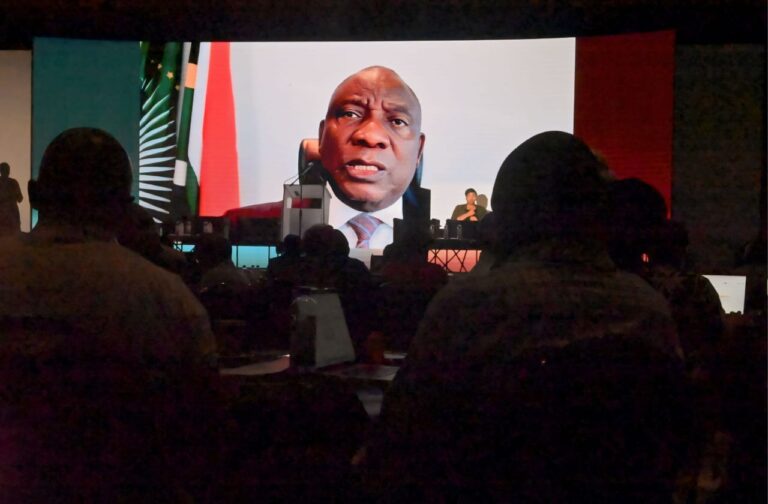
President Cyril Ramaphosa has praised the progress of transformation in Basic Education, but said more needs to be done to meet sustainable development goals in line with the broader agenda across the continent.
Ramaphosa made an address virtually from Cape Town during the 9th annual Basic Education Sector Lekgotla which kicked off at the Birchwood Hotel and OR Tambo Conference Centre, eKurhuleni on Thursday.
The President started his address with a welcome note and said it was a distinct honour and privilege to address the 6th Basic Education Sector Lekgotla and that it was immensely gratifying to see the diverse support from the private sector, non-governmental organisations, academics and researchers, civil society, organised labour and parent associations.
“We have always maintained education was a collective activity, and we have always been grateful of the input, contributions and advice from key stakeholders in the sector,” Ramaphosa said
The President said education is a social issue, which links people to communities and society as a whole during a person’s life and that consequently, education must be seen as a societal undertaking.
The president thanked the gathering and said the colonial and apartheid legacies of education remained a long term problem that SA continues to live in the shadow of.
Ramaphosa highlighted the dedication of leaders during the struggle with regard to expanding education and facilitating the “doors of learning” being opened for all within the country.
He said the journey of renewal and reform is essentially ongoing and in its endeavor to transform past injustices, the government is working on a new curriculum that’s inclusive for all.
“As Government, we have continued to pursue pro-poor policies to systematically tackle the multifaceted factors impeding progress in basic education. These policies encompass the establishment of non-fee-paying schools—indeed, 80% of schools in our country do not require fees,” Ramaphosa said.
Ramaphosa confirmed that the Department of Communications and Digital Technologies has been instructed to prioritise connectivity for education and health and that the licensing of communication companies is now linked to their collaboration with the Department to enhance connectivity in schools and health facilities, a crucial step towards integrating technology into our educational and healthcare systems.
He said the government remained committed to eradicating the digital divide ensuring equitable opportunities for all learners, regardless of their location, social standing or financial situation.
“Our Government’s pledge to ensure that all learners have access to quality education is vividly illustrated through our achievement of equipping 435 public Special Schools with assistive devices, ICT tools and connectivity,” Ramaphosa said.
He said the initiative is a testament to the department’s commitment to inclusivity, ensuring every learner, irrespective of their abilities, is poised for success in an increasingly digital world.
Ramaphosa said the AU’s #Agenda2063 frameworks and international organisations such as UNESCO endorse the implementation of mother tongue instruction as a pivotal strategy for addressing literacy challenges, whose widespread support recognises the fundamental role of education in one’s first language in enhancing learning outcomes and improving literacy rates.
He added that he was profoundly aware of the pivotal role that mother tongue instruction plays in the fabric of democracy, and that it is a cornerstone of the essential reforms we undertake in basic education and speaks to the broader imperative of decolonising education.
The President said the department’s commitment to decolonisation and transformation remained urgent, ensuring that language is a bridge to knowledge and empowerment rather than a barrier.
“Our nation’s history reminds us of the profound impact of language as a tool of subjugation and oppression,” Ramaphosa said.
Early Childhood Development is a key priority for the Government, crucial to shaping the nation’s future and consequently, the development of the 2030 Strategy for Early Childhood Development Programmes, which outlines a comprehensive plan to achieve universal access to quality ECD programmes by 2030, he said.
“To ensure that we reach universal access to ECD programmes for children aged 3-5, we will need to provide quality access to an additional 830,000 children. This is over and above the 2.2 million children in this age group who are already accessing ECD programmes,” the president said.
In addition, the President outlined the reality that more than 9.6 million children have benefited from the national school nutrition programme, free textbooks, scholar transport, and child support grants provided by the Department of Social Development.
The concerted efforts signified the government’s commitment to enhancing the educational landscape of South Africa, ensuring that every child has the opportunity to succeed, irrespective of their background; reaffirming a dedication to fulfilling Mandela’s vision of education as the most powerful weapon one can use to change the world.
He also highlighted that despite universal access to basic education being at 98%, dropout and repetition rates are unacceptably high due to factors which include poverty, youth criminality, teenage pregnancy, and general violence in some of the country’s communities.
Ramaphosa said that pursuing of pro-poor policies to systematically tackle the multifaceted factors impeding progress in basic education, is an important priority which encompassed the establishment of non-fee-paying schools, of which 80% of schools in the country do not require fees.
In conclusion, Ramaphosa said that a doubling of efforts was required to ensure the nation’s children stand on equal footing, which meant all shall have access to public schools, the assurance of being taught by a qualified teacher, and the provision of ample workbooks, textbooks and stationery.
“It also means having the necessary learning tools, dignified sanitation facilities, clean running water, basic electricity, and a clean, welcoming environment that guarantees safety for both learners and teachers,” he said.
Basic Education Director-General, Mathanzima Mweli, has continued with the monitoring and support programme of the Sanitation Appropriate for Education (SAFE) construction sites as part of the Batch 4 Projects in the Eastern Cape Province.
Mweli monitored 102 schools in three Education Districts to ensure that deadlines are met and Implementing Agents complete projects timeously. The focus last week has been on projects allocated to the National Education Collaboration Trust (NECT) Implementing Agent.
The DG led a team of various experts in Education planning development and implementation; Finance and Accounting; Engineers; Quantity Surveyors; Architects and Project Managers to accomplish this huge task to ensure that the DBE fulfills its role of monitoring and support.
Weather conditions were fair, and the team navigated bad terrains on days one and two to monitor 26 and 24 schools respectively. On day three, the team managed to monitor 23 projects and on Thursday and Friday, 24 and 5 were monitored respectively.
Most projects have reached practical completion but have errors, omissions and poor workmanship which need urgent attention, Mweli said.
However, innovation will be key to salvage some of the challenges that are affecting the quality of some of the projects. The report will be shared with NECT officials for a remedial plan to urgently address the aforementioned.
The Director-General of the Department of Science and Innovation, Dr Phil Mjwara, has been honoured for his visionary leadership in promoting science in South Africa and abroad.
Dr Mjwara received the Presidential Award during the annual South African Medical Research Council (SAMRC) Merit Awards in Cape Town, on Thursday 7 March. With 18 years of service as Director-General, Dr Mjwara was lauded for having significantly contributed to the South African national system of innovation (NSI).
Through these awards, the SAMRC acknowledges outstanding contributions to health research and recognises individuals who have demonstrated exceptional scientific acumen or made innovative strides in addressing public health challenges, potentially influencing policy to enhance the well-being of all South Africans.
Dr Mjwara holds a BSc, MSc and PhD from the University of the Witwatersrand. His academic career includes serving as Professor of Science and Technology Policy at the University of Pretoria, and physics lectureships at the universities of the Witwatersrand, South Africa, and Fort Hare.
Speaking at the awards ceremony, SAMRC President Prof. Glenda Gray said Dr Mjwara had built a strong legacy in the country.
In the late 1990s, Dr Mjwara led South Africa’s first national Science and Technology Foresight Exercise, which laid the foundation for the NSI. He is highly regarded in various global forums, not least as a senior member of the UNESCO International Basic Sciences Programme or the Square Kilometre Array Observatory Council.
Dr Mjwara also helped to formulate the STI Decadal Plan, which has elevated STI to the presidential level, with the first Presidential Plenary held last year.
This Decadal Plan focuses on using STI to address societal challenges and highlights the importance of health research in the STI environment in South Africa, said Prof. Gray.
“Dr Mjwara has set the vision for all policy development in the science and technology sector in South Africa. He saw the need to create sustainable programmes, infrastructure and human capacity to ensure that South Africa achieves excellence in critical areas of science and technology,” said Prof. Gray.
The SAMRC also honoured the DSI’s Director for Health Innovation, Glaudina Loots, with a special award for her support and leadership in health research in the country. Loots is responsible for the implementation of the health components of the Bio-economy Strategy for South Africa.
She has been instrumental in the creation of the Strategic Health Innovation Partnerships initiative at the SAMRC, which funds and manages innovation projects focused on the development of new drugs, treatments, vaccines, medical devices, and prevention strategies.
Prof. Gray said medical research remains fundamental for transformation, innovation, and collaboration in advancing scientific discovery.
“Celebrating medical research excellence not only honours the achievements of researchers but also inspires progress, fosters collaboration, and enhances the overall impact of scientific advancements on global health and well-being,” she said.
Minister Motshekga attended a Human Resource Development Council (HRDC) retreat at the Radisson Blu Hotel, OR Tambo International Airport in the Gauteng Province on 8 March 2024.
The Minister is a member of the Council chaired by the Deputy President, Paul Mashatile, and managed by the Minister of Higher Education, Science and Innovation, Dr Bonginkosi Blade Nzimande. The term of the current Council ends on 31 March 2024.
The purpose of the retreat was to reflect on the strengths and weaknesses of the HRDC to develop a roadmap for high impact and effectiveness of the Council and to agree on an approach to embed the human resource development priorities in policies, practices and processes within national departments, provinces and municipalities through the MSTF. Another aim of the retreat was to clarify the roles and responsibilities of different actors in the institutionalization of the reconceptualised HRD Strategy.
The meeting was attended by senior government leaders and officials, Ministers, Premiers, MECs, DGs and CEOs of state organs.