Home Blog Page 167

An after-school play and learn facility for pupils wins student R10 000

Higher Education Writer

A staggering 250 000 learners drop out of school in South Africa, with 81% of Grade 4 learners proven for not being able to read for understanding.

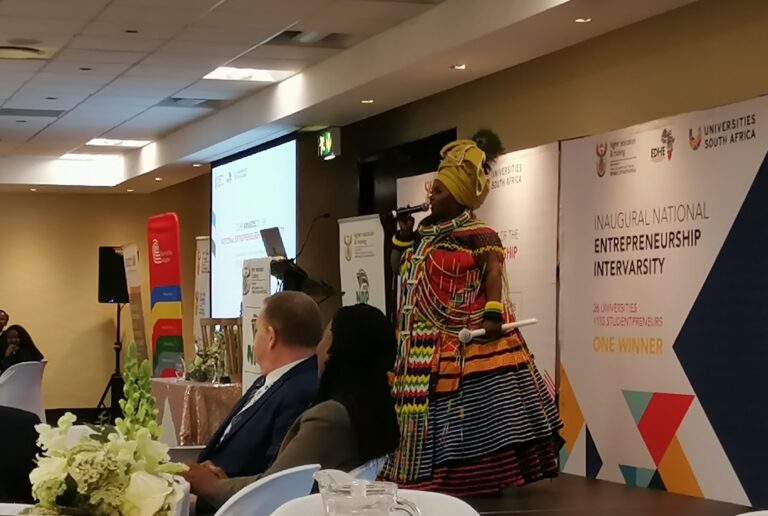
“An educational crisis calls for an efficient solution and Buddyz on the Move is that solution.” That is how Ms Qetello Baloyi, a final year BSc Environmental and Resource Studies student at the University of Limpopo, opened her business pitch at the 2023 Entrepreneurship Intervarsity finals last December.

Baloyi, who hails from Polokwane, said Buddyz on the Move offers a threefold after-school education solution. “We offer drama, dance, poetry and music; interactive activities such as spelling bee, debate, public speaking and reading and a tutoring service in a social learning space that allows learners to take their education into their own hands.”

Her company, Baloyi said, provides after-school empowerment of young people.  While offering traditional after-school support, Buddyz on the Move is unique in that it aims to save parents time, money and effort.

“Our services are available on social media and in contact. We operate from garages, churches, schools, and creches. Where you find a buddy team member, you find a centre allowing us to access a broader group of people in the community, who can afford the fees, and those who can’t.”

She added that learners in government schools did not have access to extramural activities. Buddyz on the Move takes learners to concerts and on trips. “We use a value creation framework to measure our learners’ programmes, which we share with parents.

“Over the past 10 months we have managed to raise over R1m in stipend payments for our team members from the Department of Social Development. Our revenues have increased from R14 000 to R24 000 a month, with R18 000 funding our expenses, leaving us with R6 000 profit.”

Baloyi said in the past year, they worked with 960 learners.

INSIDE EDUCATION

Bidding farewell to the Chinese Ambassador to South Africa

Staff Reporter

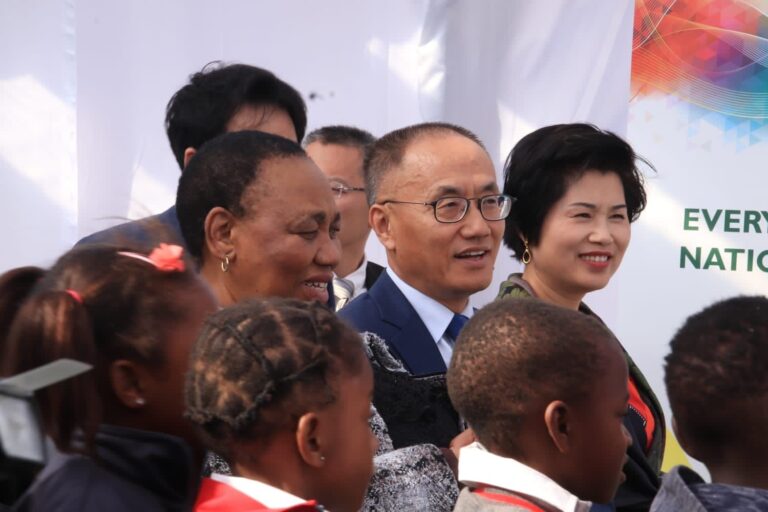
Basic Education Minister, Angie Motshekga, joined local and international government representatives at the Chinese Embassy in Pretoria on 5 March 2024, to bid farewell to Ambassador Chen Xiaodong and his wife, Madame Zhang Bin. 

The farewell reception was organised by the Chinese Government to honour the sterling work done by the ambassador in strengthening the bilateral relations between South Africa and the People’s Republic of China.

Sharing the highlights on the bilateral relations between South Africa and the People’s Republic of China, the Director for the International Relations at the Department of Basic Education (DBE), Ms Hleki Mabunda, said that South Africa and China have thriving bilateral relations, which were pillared by a 2010 Declaration, in which China was declared South Africa’s strategic partner through the Beijing Declaration on the Establishment of a Comprehensive Strategic Partnership. 

“One of the pillars of the strategy is the People-to-people Exchanges and Cooperation. In response to the strategic mandate, South Africa and China signed a Memorandum of Understanding (MoU) on Cooperation in the Field of Basic Education. The MoU was signed in March 2013, during a Brazil, Russia, India, China and South Africa (BRICS) Summit in South Africa held in Durban. The DBE and the Chinese Ministry of Education further signed an Implementation plan on the MoU on 24 February 2014, in Beijing, China.  

Both parties cemented the partnership in various programmes, including the Chinese Language Teaching in South Africa and the Exchanges and Visit Programmes. 

The Chinese Language Teaching in South Africa saw Mandarin being introduced as an elective foreign language in the South African school’s curriculum as early as 2016, with a view to build more understanding, alleviate cultural barriers, and strengthen people to people relations between the two countries.

Since 2018, the Department has been hosting Chinese language advisors at the DBE (periodically contracted by the Chinese government) to promote Chinese language and culture in public schools. The DBE also welcomed a new Chinese Language subject advisor during March 2023.

“Through   the Exchanges and Visit Programmes, several official visits, exchanges, and study 

Minister Motshekga said that, through the partnership, both parties gained insights and shared best practice in various fields including education, health, and culture. 

“Ambassador Chen Xiaodong said that his stay in South Africa has been fulfilling and thanked the South African Government for making it possible for China to invest in the transformation of people’s lives for the better: I therefore encourage the South African Government to provide the same support to my successor who will be resuming his duty as the Chinese Ambassador to South Africa”.

INSIDE EDUCATION

Women perpetually marginalised in South African law firms – study shows

Staff Reporter

A new study by the University of Cape Town (UCT) researcher Dr Tamlynne Meyer has revealed that women are perpetually marginalised in the law profession. The study also showed that there was a lack of women in the senior ranks of the profession despite a robust legal and policy framework promoting equality. 

The study, which set out to determine the impact motherhood has on women attorneys in South African law firms, showed that when becoming mothers, many women attorneys experienced a disjuncture between their mothering and professional role, which is attributed to the hyper-competitive culture of the profession. 

Meyer said this disjuncture leads to many women having less successful legal careers, which is manifested in different ways. The findings are published in the Gender, Work & Organization journal. 

“This study has provided an insight into the challenges experienced by women attorneys who are mothers in South African corporate law firms as they navigate their dual responsibilities as career woman and mother,” said Meyer, who is based in UCT’s Department of Sociology. 

The study employed Edgar Schein’s concept of organisational culture and Pierre Bourdieu’s concepts of field, habitus and culture to understand how women continue to experience unequal outcomes in their careers, despite removing formal barriers and enacting laws and policies. 

The concepts further illuminate how and why the male-dominant culture of the profession embeds itself and remains one of the hardest elements to change. The study was furthermore underpinned by a feminist standpoint epistemology, interviewing 27 attorneys across three corporate law firms in South Africa. 

One of the respondents said: “Because we know we’ve got two roles to fulfill, we need to bring in money, but we need to be mothers”. 

According to Meyer, this response provided a window into the experiences of working mothers and highlighted their strategic importance in a global capitalist system where they have a dual role as income earners and carers. Most working women, she said, are confronted with this double load and must find ways to balance the two. 

Meyer said that the legal profession was a historically male-dominant profession, where a hyper-competitive masculinised professional culture operates. 

“While there is much to celebrate in women’s advancement in the workplace, it is undeniable that many women in historically male-dominant professions such as the legal profession continue to experience myriad challenges as they pursue both a legal career and motherhood.” 

According to Meyer’s research, most law graduates are women, who also constitute the majority of new entrants admitted into the profession. However, at the most senior levels of the profession, notably the partnership level, women comprise only 28% of partners compared to their male counterparts. 

She said there were at least two male partners for every female partner. 

“This reaffirms extant literature that the legal profession continues to be a male-dominated profession with women having very little prospects of a successful legal career,” she added. 

Meyer lauded South Africa’s (and the profession’s) robust legal and policy framework addressing gender equality and transformation in the workplace at large. However, despite the removal of formal barriers and the enactment of various legal and policy frameworks to spearhead the transformation process, she said women continue to experience inequality and marginalisation in the profession. 

Citing similar research, Meyer noted that the odds of women accomplishing partnership status was less than one‐third of men. “Women also have a higher probability of exiting legal practice before reaching partnership status,” she said. 

The women who participated in Meyer’s study were unequivocal about the fact that pregnancy and motherhood delayed a woman’s progress in attaining partnership and presented them with career challenges. They all agreed that, in one way or another, their careers were stunted. 

Another participant in Meyer’s study commented that “a woman has a limit, and that limit is reached when she falls pregnant.” Similarly, another said that “women that have had children before they become directors will take longer than the others to become a partner”. 

The biggest milestone in an attorney’s career is being promoted to partnership. On average, it takes approximately seven years to reach a partnership. Still, motherhood significantly delays this by a few years, with some never achieving partnership, as they cannot keep abreast with the hyper‐competitive culture of the profession. “Those women, who consciously decided to remain childless or delay motherhood, did so because they were cognisant that it would result in their chances of attaining partnership being delayed,” said Meyer. 

Meyer said there was a dissonance and incompatibility in the practices, ideas, and discourses of motherhood and the hypercompetitive masculinised culture of the legal field, which makes no concessions for women with care responsibilities. “Each time a woman leaves the workplace on maternity leave, she must re‐enter the field at a disadvantage.” 

She concluded: “It is hoped that through this study and by documenting the voices of women attorneys which would otherwise remain silent, this will provide a platform for greater cognisance into their lived reality and provide the opportunity for more meaningful dialogue within the profession to understand why, what, and how inequality is maintained and reproduced despite the removal of formal barriers and the enactment of laws and policies. In this way, the profession may better understand how to support women as they navigate motherhood and a professional career.” 

INSIDE EDUCATION

Stakeholder cooperation enables NSFAS February allowances to be paid on time

Lerato Mbhiza

THE National Student Financial Aid Scheme (NSFAS) has commended the cooperation from all universities and Student Representative Councils (SRCs) who ensured that the February allowance payment was implemented seamlessly.

This follows a media briefing held on Monday where NSFAS reported that universities would be facilitating the payment of allowances for the months of February and March 2024.

In a statement issued over the weekend, NSFAS reported that 25 out of 26 universities have paid the February allowances, as per their commitment dates.

The allowances paid include the book, accommodation, transport, food, and personal care allowances.

“The University of South Africa (UNISA) is finalising the process of determining allowances based on the number of modules registered by students. All the universities will also be handling the payment of March allowance,” NSFAS said.

The scheme reminded institutions to allow direct payment service providers to conduct the process of onboarding students, while they continue with payments.

Universities are also reminded that direct payments of allowances for the 2024 academic year will commence in April 2024.

“The process of the payment of allowances to Technical Vocational Education and Training (TVET) colleges commenced on 6 March 2024 and NSFAS will provide further details on these processes within the forthcoming week,” NSFAS said.

NSFAS has called on institutions, both universities and TVET colleges, and students who have not been onboarded on the NSFAS portal to do so immediately, as this is a requirement to ensure that accommodation allowances are paid without any delays.

“Failure to onboard students will result in delays in the payment of accommodation allowances. Accommodation providers are therefore requested to ensure that leases that are generated through the portal are signed by all students in their residences,” NSFAS said.

The scheme also reiterated that it does not have any arrangements with unaccredited accommodation providers.

“NSFAS is against any form of corruption and bribery that is alleged to be taking place in some institutions, between accrediting agents, accommodation providers, officials responsible for accommodation in institutions, and student leaders.

“This will not be tolerated….the scheme will work with law enforcement agencies to investigate all these reported cases of corruption. NSFAS will conduct sting operations in institutions to ensure that students are not further exploited,” NSFAS warned.

The scheme encouraged students and members of the public to report any suspected fraud to NSFAS through the whistleblowing hotline Vuvuzela. The toll free number is 0860 247 653 or they can SMS Call-back to 30916.

NSFAS warned it will not take lightly any security compromise from the accommodation providers and will always hold property owners accountable for the safety of students in their properties.

On students’ transport, NSFAS reminded accommodation providers who are within a 5km radius and above of their responsibility to provide transport to students to their respective campuses and back.

INSIDE EDUCATION

Curro hosts Game-Changing Weekend with Esports Indaba 2024

Staff Reporter

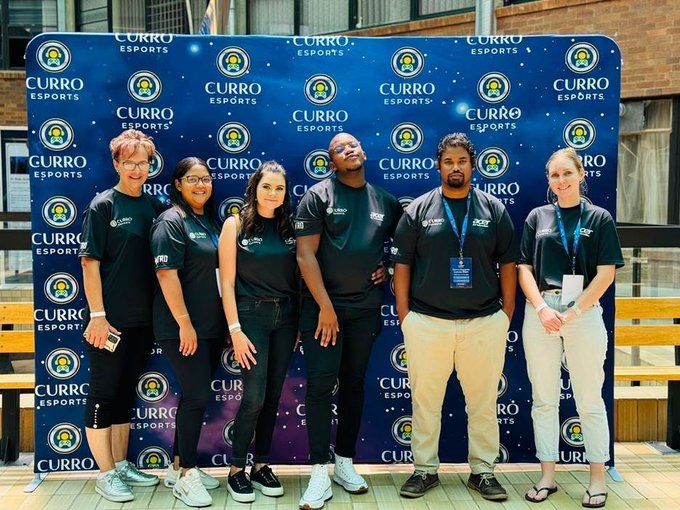
The gaming world was recently shaken to its core as JSE-listed independent school group Curro Holdings hosted its annual Curro Esports Indaba. 

Against the backdrop of NWU Potchefstroom’s campus, the whirlwind three-day event saw 120 participants, ranging from sharp-minded coaches and visionary school leaders to Esports fanatics, dove headfirst into an electrifying journey that left no pixel unturned.

Partnering up with Acer for Education and teaming up with industry titans like ACGL, Curro brought together a lineup bursting at the seams with immersive workshops and stellar keynote addresses. 

From the mind-bending realms of Minecraft Education, curated by the brilliant Stephen Reid, to the adrenaline-fueled hands-on workshops by the African Cyber Gaming League (ACGL), diving deep into the strategies of Rocket League and Valorant, the indaba was a rollercoaster ride through the heart of Esports innovation. 

Other presenters included Glenn du Toit, the country manager of Acer Africa who delved into the harmonious relationship between AI and education, painting a vibrant picture of a future where gaming and learning intertwine seamlessly.

 Influencer and luminary player Julia ‘Bish’ Robson regaled the audience with her spellbinding eSports journey, while Nick Holden, the co-owner of ACGL cast his gaze towards the horizon of South African eSports, unveiling a tapestry ripe with potential for talent and ambition. 

Curro is one of the first school groups in South Africa to establish eSports as part of their value offering after witnessing the popularity of virtual sports during the pandemic. Since then, they have quickly fostered a name for themselves in the Esports community, having launched their own secure Esports gaming platform and even triumphing at International Minecraft matches.

INSIDE EDUCATION

Inside Education Foundation hosts a virtual Literary Festival 

Johnathan Paoli

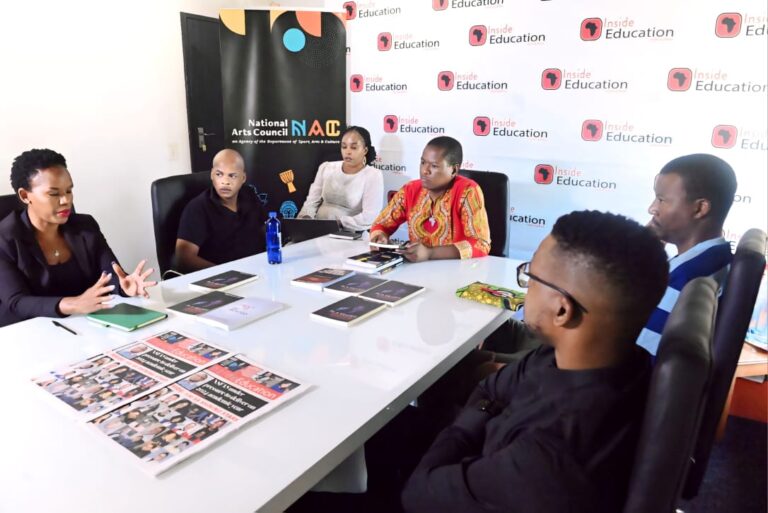
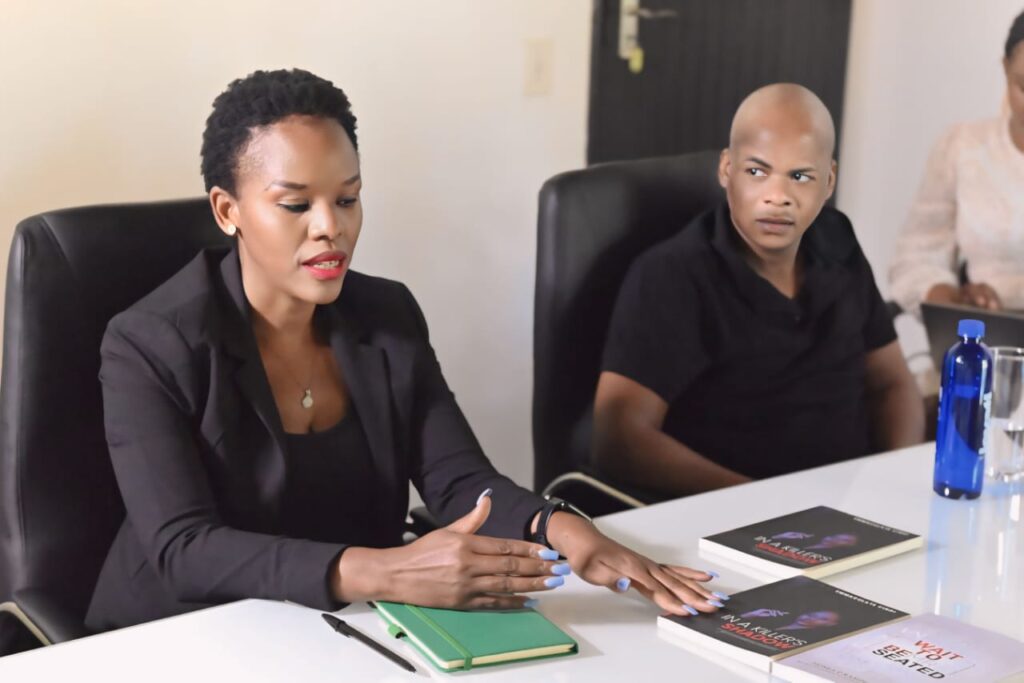
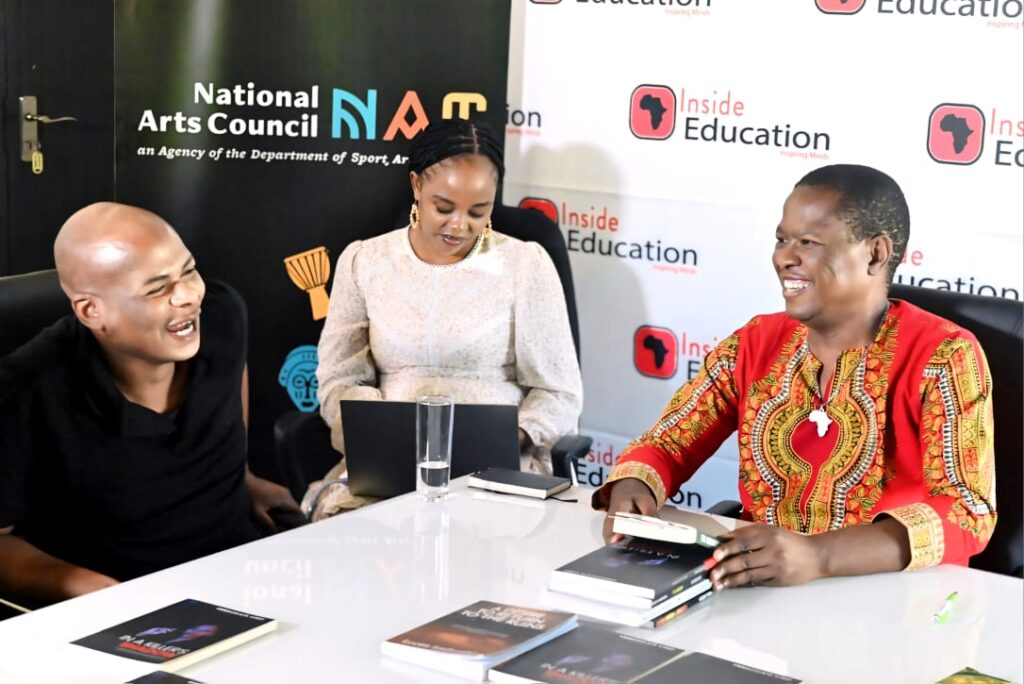
The Inside Education Foundation launched the Virtual Literary Festival on Friday morning at its offices in Midrand, under the theme “our stories, our heritage – exploring alternatives to publishing and storytelling”, the event being sponsored by the National Arts Council.

Three authors were invited, namely Emmaculate Cindi, on her newly published book called In a Killer’s Shadow; Sihle Qwabe on his recent novel Resurrection, and Hosea Ramphekwa on his three works; Gifted, Hunted and Haunted; Way to Visit and Yellow Bone with a Black Heart; moderated by famous novelist Lucas Ledwaba.

The panel discussed the growth of the publishing industry and landscape within the country, and called for the need to understand stories as told by African people for African people.

During the panel discussion, Cindi admitted to the struggles faced by writers in getting the appropriate publisher and support in facilitating a new work, whether fiction or nonfiction.

She thanked both Hosea and Ledwaba for their assistance in designing the cover-page and coming up with the title of the book (In a Killer’s Shadow).

Cindi said that she wrote her book based on her own experiences in life, namely a deep rejection from her paternal family, and the depression which it caused, ultimately culminating in three suicide attempts.

“I wanted to document my own struggle, in my own way in order to be the woman I am today,” Cindi said.

She said that she wanted to inspire young writers to document and express their circumstances, and despite the challenges of growing up without a father, as well as the challenges faced by single mothers, there remained no choice but to survive and make something of oneself.

Sihle Qwabe was born in a small village in KwaZulu-Natal and now lives in Johannesburg and said that despite attaining a Public Relations Diploma, he ended up battling financially and worked in retail, before publishing his first novel, Resurrection, last year.

Qwabe said  he was inspired by Alan Paton’s Cry the Beloved Country, in his quest to create a world in which readers could become consumed, offering relief from their day-to-day struggles.

“You need to believe in your own craft and don’t let people tell you what you can, what you can’t and how to do what you do,” he said.

Ramphekwa, who authored three books, called on the government to significantly increase the support to help authors create and sustain their careers, in light of the difficulties many face in the country.

He advised aspirant writers to read and write everyday in order to maintain a healthy relationship with words; and further said that young authors should research the publishing industry in order to find an appropriate publisher that could match their vision.

He acknowledged the fundamental importance of support, and said that a successful publication did not simply rely on skills of writing, but on a broader network of relationships and innovative awareness.

“I am inspired by the fact that I have little talent, and that my success was as a result of the grace of God and all the people who supported me,” Ramphekwa said.

Moderator Ledwaba called on young authors to fully take advantage of all opportunities, no matter how small they might be, and said that how writers represent themselves to society could prove a useful tool.

“When I’m writing, I’m an author, but after writing, I’m a marketer, a businessman,” he said

 Ledwaba said writing does not end with publishing, considering its a lifetime connection to the author, and marketing oneself to people never ends.

INSIDE EDUCATION

SAHRC calls for reforms in school uniforms and appearance policies

Johnathan Paoli

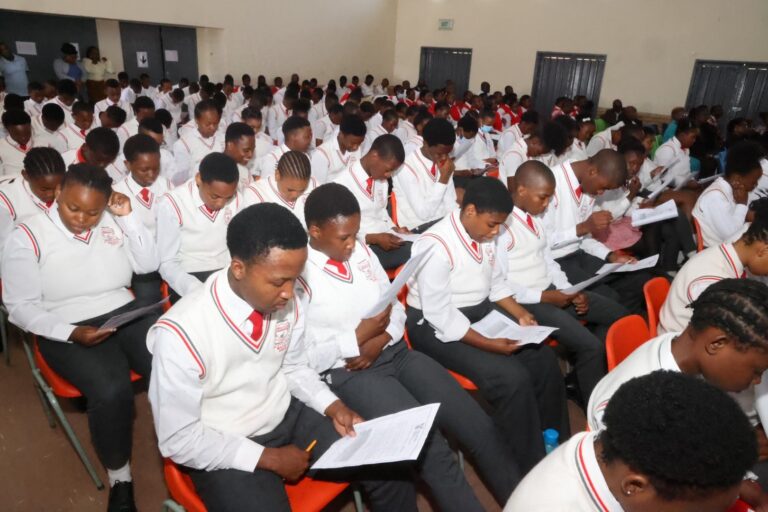
The South African Human Rights Commission (SAHRC) has called for the immediate reform of the country’s school uniform and appearance policies and recommended the abolishment of prescribed underwear for girls, as well as removing any hair policies that differentiate between male and female pupils.

The commission briefed the Basic Education portfolio committee on Tuesday following its inquiry into school uniforms and the over-regulating of appearances and told Parliament that it noted an increase in reports of alleged over-regulation of the school uniform and appearances of learners.

The commission launched an investigation and held an inquiry in Gqeberha in the Eastern Cape before presenting its findings to the committee, with the province’s head Dr Eileen Carter saying the complaints highlighted bias rooted in Eurocentric norms and that natural hairstyles should never be considered an offence.

“We are calling on the national department to immediately abolish any hair policies differentiating between male and female learners eliminating these discriminatory practices related to afros, braids or natural hairstyles chosen by specific learners,” Carter said.

Carter said that in terms of school uniforms they found that in certain circumstances school uniform and appearance policies infringed on a learner’s right to dignity through the enforcing of binary uniform policies.

The SAHRC raised concerns about the financial burden of school uniforms on families. While the DBE cannot directly cap uniform prices (as that falls under the Competition Commission’s domain), it is open to reviewing the necessity of different summer and winter uniforms, as well as special uniforms for grade 12 learners in some cases.

The SAHRC also highlighted issues related to the “over-regulation” of appearances at schools. This includes rules around hair, especially where certain racial, gender, and cultural groups are disproportionately affected.

The DBE acknowledged that learner appearance guidelines need to be updated and revised to respect students’ rights and said that it was working on guidelines for the socio-educational inclusion of diverse sexual orientation, gender identity, expression, and sex characteristics (SOGIESC) in schools, which will address uniform-related matters

In 2021, the Competition Tribunal ruled against exclusive deals and anti-competitive practices related to school uniforms. Schools can no longer compel parents to buy uniforms from a specific supplier, and uniforms should be as generic as possible, obtainable from multiple suppliers

INSIDE EDUCATION

Second Annual SoS Festival Showcases Gauteng’s Schools of the Future

Staff Reporter

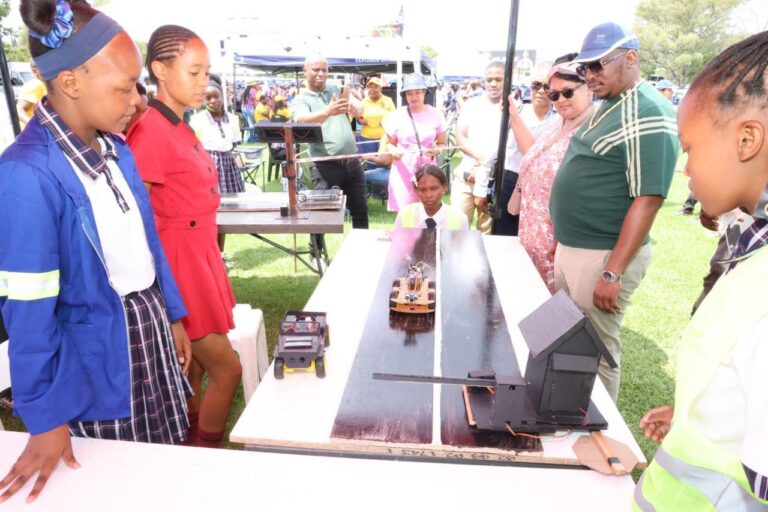
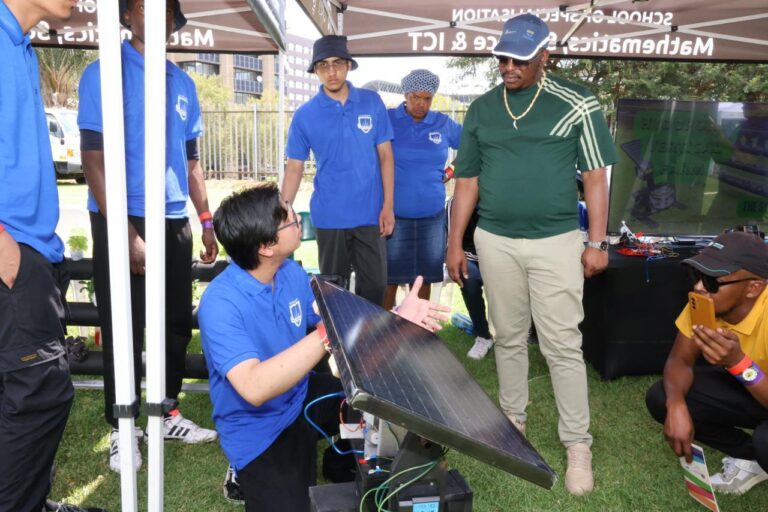
John Orr Engineering School of Specialisation on Saturday, 2 March 2024, was transformed into a hive of activity as thousands of learners from Gauteng’s Schools of Specialisation (SoS) gathered for the second Annual SoS Festival. 

The Gauteng Department of Education’s (GDE) 35 SoS turned the school’s rugby field into a giant exhibition centre where learners showcased innovation and creativity in various fields, including dancing, engineering, crafts, technology, sports and media, Speaking at the gathering, Gauteng Education and Youth Development MEC, Matome Chiloane, said he was impressed by the immense skills and talent on display. 

“The purpose of the GDE SoS Festival is to bring all the Schools of Specialisation together to celebrate the knowledge and skills of our learners. Learners have been displaying their unique talents and innovations in each discipline.”

“The aim is to attract industry partners who are willing to partner with Schools of Specialisation. Industry partners are encouraged to provide long-term support such as job shadowing, bursaries, industry experiences and post-career parting for our learners, ultimately these learners will feed back into the economy of South Africa,” he said. 

SoS go beyond the standard curriculum for public ordinary schools, enabling learners to specialise in Maths, Science & ICT; Engineering; Commerce & Entrepreneurship; Sport; and Performing & Creative Arts. 

In addition to bringing these brilliant learners together to showcase their knowledge and excellence through innovative projects within these respective disciplines, the SOS Festival also provides learners a platform to share in their ideas and concepts, essentially perpetuating the work done by the GDE and its partners in establishing these schools. 

“Through these schools, the intention is to produce learners who have accumulated a well of technical skills; and who have skills in leadership, good citizenship and entrepreneurship; and a range of soft skills such as interpersonal relations, among others. 

“The programme is concerned with post-matric career pathing for learners, and with the resources, facilities and 2 support required to prepare learners for work and for life beyond school,” the MEC added. 

This year’s exhibitions were exciting, showing the growing stature of the SOS Festival to schools. 

Letsibogo Girls Maths, Science and ICT School of Specialisation with a focus on media and communication showcased their radio station LG Radio, with the young learners broadcasting live from the event. 

Others, such as St Barnabas College and Moholi High, exhibited their exciting work they have been doing in terms of technology. The international award-winning Soshanguve Automotive School of Specialisation displayed their latest and greatest creation, an electric car powered by two Lithium-ion Phosphate batteries with 48 volts each that drive a range of 70-80 km at minimum speed 114km/h and a maximum speed of 342km/h. 

Edward Phatudi Maths, Science & ICT School of Specialisation showcased a generator that operates on water, unlike a conventional generator that operates on diesel. 

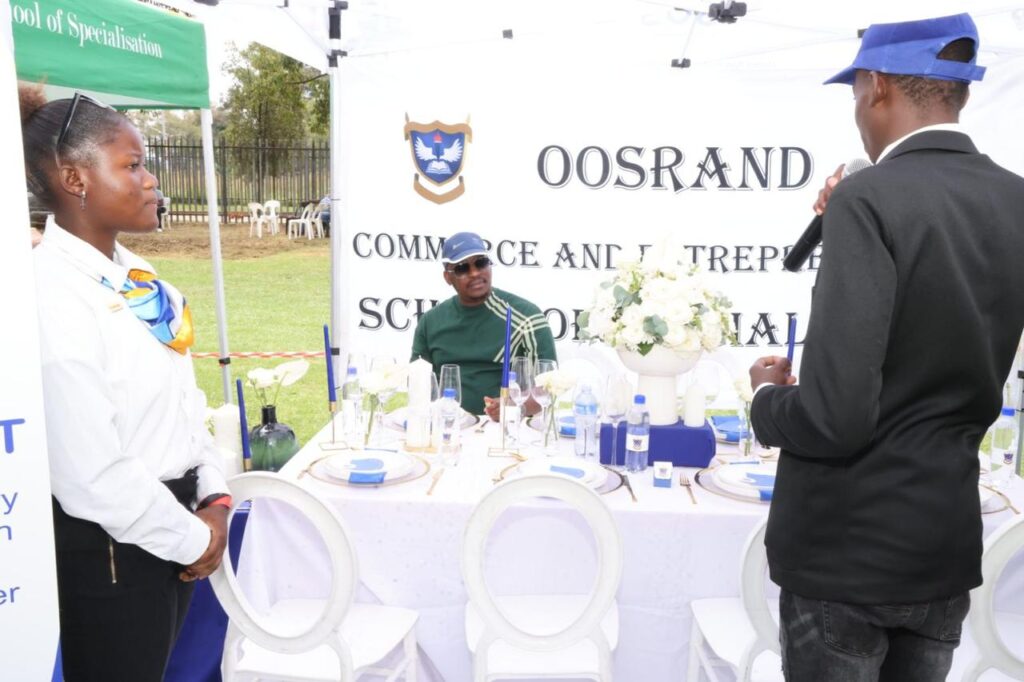
More excellence was shown in Commerce & Entrepreneurship where Oosrand School of Specialisation exhibited their own farmed brand of chilli peppers, while Kwa-Thema Skills School of Specialisation and Pace School of Specialisation had entire beauty salons where guests could get their hair done, enjoy a range of massages as well as receive manicures and pedicures. 

There were many more marvelous exhibitions and displays of sheer genius by our learners within their respective disciplines. 

All of these were a testament to the success of the SoS programme. 

“This is what we want to achieve with the SoS programme. The SoS programme marks a great achievement for advancing education, more so in Gauteng, the economic hub of our country. Ever since being conceptualised, it has made great strides and has seen great improvements,” added the MEC. 

INSIDE EDUCATION

Insights from the 14th Policy Dialogue Forum – strategies to tackle the Global Teacher Shortage

Edwin Naidu

THE global teacher shortage in critical subjects such as Mathematics and Science, as well as mother tongue teaching is undoubtedly affecting learning outcomes globally.

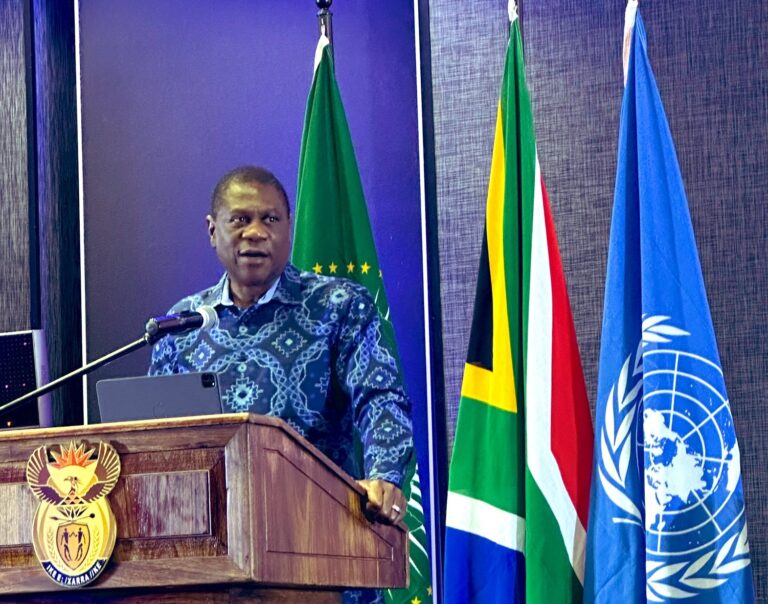
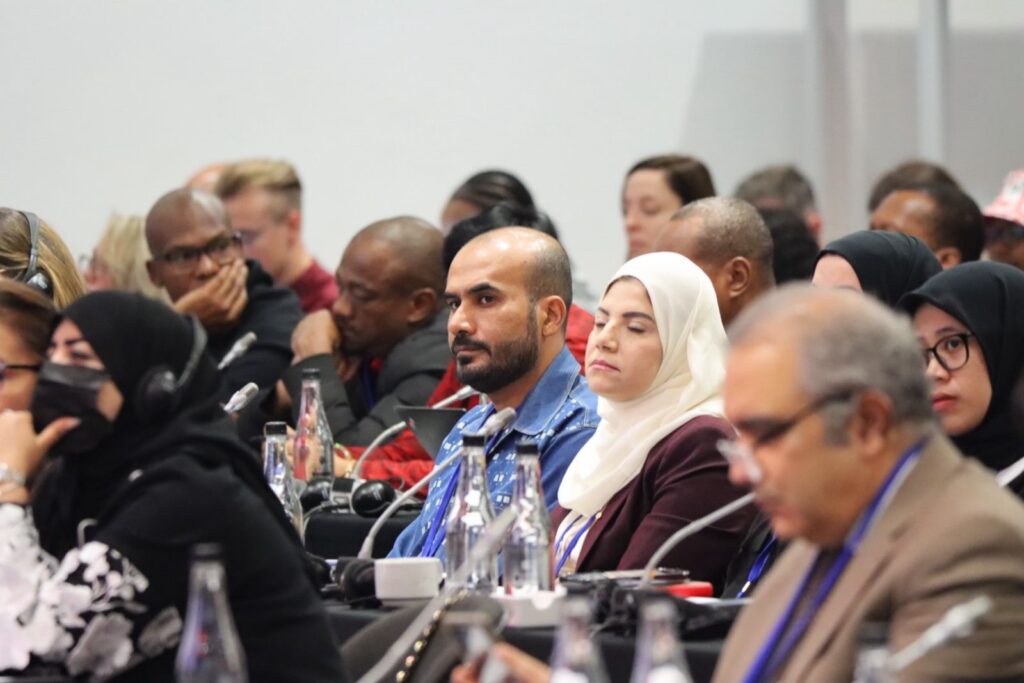
This challenge was under discussion in various commissions during the 14th Policy Dialogue Forum (PDF), which took place at the Capital on the Park Hotel in Johannesburg from 26-28 February 2024, under the theme “Addressing global teacher shortages: Dignifying, diversifying and valorising the profession”.

The PDF aims to raise awareness among members of the Teacher Task Force (TTF) and other education stakeholders on crucial issues for the implementation of the Sustainable Development Goal Target 4c on teachers as part of the wider Education 2030 agenda.

During the Forum, participants were divided into various breakout sessions, where they held discussions on factors contributing to teacher shortages, including the exploration of ways to address interconnected challenges to mitigate against factors compromising teacher quality and working conditions; how to ensure safe working conditions; development of policies aimed at addressing teacher shortages; leveraging technologies to support the transformation of teaching and learning as well as investigating and discussing creative approaches for systems to transform perception of the teaching profession into a more positive light.

During the PDF proceedings, Chief Director for the National Institute for Curriculum and Professional Development (NICPD), Enoch Rabotapi, clarified the mismatch around teacher development and recruitment:

“Our main focus as the Department is to ensure that trained teachers meet the recruitment requirements so that they may be absorbed into the schooling system. As things stand, primary education requires more teachers who are skilled in mother tongue teaching.

“The DBE is currently conducting research in terms of estimating how many teachers will be needed across all academic streams so that we can repurpose our bursary schemes to focus on those specific areas where shortages exist.”

He added that, “research shows that of the 24,000 graduates, less than 25% are qualified in the Foundation Phase. As a result, the Basic Education Sector is experiencing limited teacher recruitment in the Foundation Phase, whilst recruiting more teachers for secondary education. We are, however, repurposing in order to attract and recruit young vibrant teachers.”

The rapporteurs from various thematic groups agreed that to address teacher shortage, it will be critical to review teacher training and recruitment strategies. They also recommended that the education system should prioritise teacher wellness, as well as school leadership and management to improve curriculum coverage in the General Education and Training (GET) and the Further Education and Training (FET) Bands. The recommendation made during the PDF should be cascaded to Provincial Education Departments (PEDs) to complement efforts aimed at accelerating education reform throughout the education system.

INSIDE EDUCATION

Schools showcase their creations and inventions at the SoS Festival

Johnathan Paoli

THE atmosphere at the Schools of Specialisation festival in Milpark, Johannesburg was buzzing with talent and innovation as students showcased their remarkable work on Saturday, giving a glimpse into the future leaders of Gauteng.

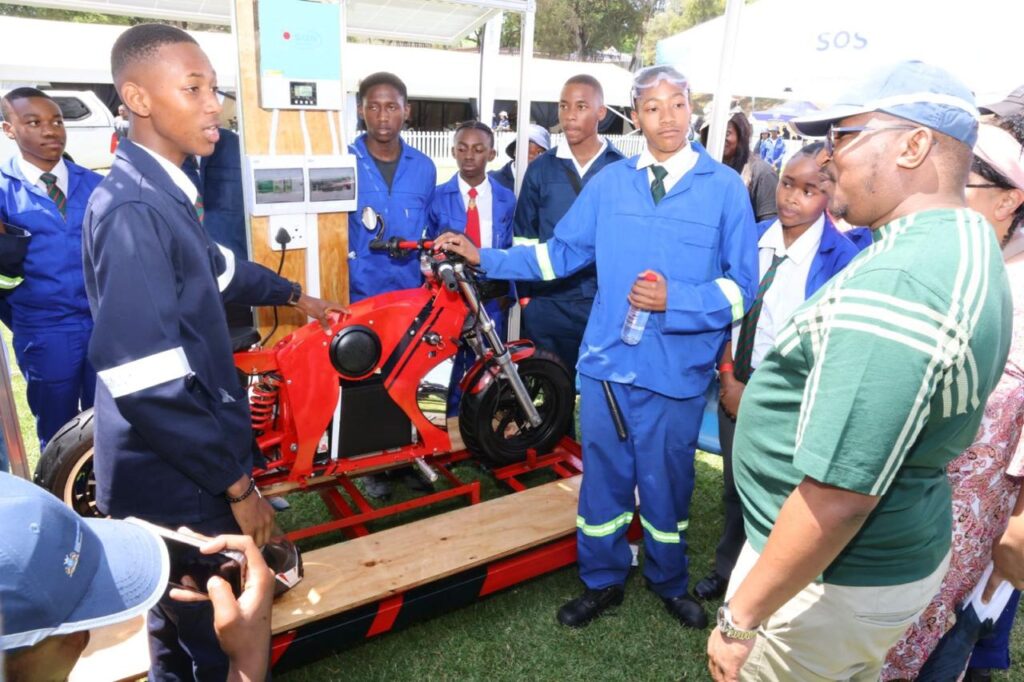
The hosting school, John Orr Engineering School of Specialisation exhibited their silent solar-powered electric motorcycle at the 2nd Annual Schools of Specialisation Festival

MEC for Education and Youth Development Matome Chiloane said this project showed how learners want to promote sustainable transportation and not only highlighted a commitment to eco-friendly solutions and innovation, but also provided a platform for educational outreach and collaboration within the community.

Learners from Edward Phatudi Maths, Science & ICT School of Specialisation created a generator that supplies electricity, but instead of using diesel like most generators, it uses water.

The department praised the manner in which the water generator offers a more environmentally friendly alternative for electricity generation, and Chiloane said this initiative not only demonstrates the learners’ ingenuity and problem-solving skills, but also contributes to reducing carbon emissions and promoting renewable energy solutions.

“I’m grateful for the opportunity to connect with students, educators, and innovators at events like these. Together, we can make a difference in education,” Chiloane said.

The Thuto-Ke-Maatla Engineering School of Specialisation displayed their G-Crane which lifts heavy machinery.

The department said that presenting the G-Crane at the event, the school not only highlights its commitment to preparing learners for real-world engineering challenges but also inspires the audience with a tangible example of engineering excellence.

The MEC encouraged learners from the schools to compete using their brilliance and knowledge and encouraged more partnerships to propel the SOS programme across more schools in the province.

“Every student is unique and has something special to offer. Let’s nurture their talents and help them shine bright,” the MEC said.

INSIDE EDUCATION