Language specialists and academia agree that language policy needs to be reviewed to enhance multi-lingual education and the importance of mother tongue teaching during the first six years of formal schooling.
During the engagement session, conference delegates and presenters acknowledged the complexity of translating policy into practice. They saw the Conference last week as an invaluable platform for role players and stakeholders to explore the potential and advantages of implementing multilingual practices in South African classrooms.
Presenting the Incremental Introduction of African Languages (IIAL) Strategy during the Conference, Chief Director for Curriculum Implementation and Monitoring, Dr Moses Simelane, indicated that “the IIAL strategy assisted the DBE in promoting the use of African languages within the schooling system by introducing learners incrementally to learning a previously marginalised African language, particularly the former model C Schools.
“This was aimed at ensuring that all non-African home language speakers were taught to speak an African Language for communicative purposes and to foster social cohesion in school communities. The strategy is, undoubtedly, a cornerstone in redressing the past linguistic imbalances focusing on all official South African languages”.
In his presentation on the rapid assessment of the Language in Education Policy (LiEP), Prof Leketi Makalela, Director for Hub Multilingual Education and Literacies at Wits University, indicated: “LiEP revealed an urgent need to support African Languages as Language of Learning and Teaching (LoLT) beyond Grade 3. Most Black African learners experience the transition to English as LoLT from Grade 4. However, research has shown that the transition to English is considered premature and disruptive to learning. Translanguaging which refers to using more than one language and teaching in the same lesson is the de facto classroom practice, but assessment regimes do not match it. For many Black African learners, English as a medium of instruction, when introduced too early, can become a barrier to learning. Yet, some myths overstate the importance of English as a language of learning and teaching”.
According to the Old Mutual Foundation, the partnership between the DBE and the private sector should be centred around Early Grade literacy and numeracy, Mother tongue teaching and learning;
Supporting the DBE’s Language Policy Unit and developing Xitsonga benchmarks.
“We pledge to collaborate with universities on an entry-level teachers’ course in early grade isiXhosa literacy; reading pedagogy course in isiXhosa, Sesotho and EFAL. We are currently implementing the LITNUM project that has already benefited 25,000 learners, 500 teachers, and 200 subject advisors with a reading for meaning focusing on strengthening Instructional Leadership in 3 provinces”.
In his presentation on the English Medium Education in Sub-Saharan Africa, rethinking the context, language, and quality of primary education, Dr Harry Kuchah highlighted: “There are 283 languages in Cameroon. Education is called bilingual, but this is English and French, which were perceived as neutral languages that could unite the country; instead, they proved to be divisive. Parents recognise the value of local languages but prefer an international language like English; however, it is easier for an isiXhosa child to learn through isiZulu than through English”.
The Conference culminated in five breakaway sessions where participants were expected to make valuable contributions to the review of the Language Policy implemented in the South African schooling system.
Professor Tshilidzi Marwala, Rector of UNU, has been appointed to the United Nations Secretary-General’s Scientific Advisory Board.
Announced by Secretary-General Antonio Guterres on 3 August, the Advisory Board will also include Chief Scientists of UN System entities (UNEP, FAO, WHO, WMO, and UNESCO), the Secretary-General’s Envoy on Technology, and esteemed external scientists.
Professor Thuli Madonsela, Professor of Law at Stellenbosch University, has also been appointed to serve on the board.
The Secretary-General’s Scientific Advisory Board will play a crucial role in providing scientific advice to the Secretary-General and his senior management team to inform policies and decisions amid the rapid development of science and technology.
The United Nations Secretary-General António Guterres has created a new Scientific Advisory Board to advise UN leaders on breakthroughs in science and technology and how to harness the benefits of these advances and mitigate potential risks.
“Scientific and technological progress can support efforts to achieve the Sustainable Development Goals — but they are also giving rise to ethical, legal and political concerns that require multilateral solutions,” Mr Guterres said.
“My Scientific Advisory Board will strengthen the role of the United Nations as a reliable source of data and evidence and provide advice to me and my senior management team.”
The Advisory Board will comprise seven eminent scholars alongside the Chief Scientists of United Nations System entities, the Secretary-General’s Envoy on Technology, and the Rector of the United Nations University. The Board will be associated with a network of diverse scientific institutions worldwide.
“The Secretary-General’s decision to establish a Scientific Advisory Board underscores the unwavering dedication of UN leaders to the principles of the scientific method. I look forward to supporting the UN Secretary-General in raising the voice for science-based policy and decision-making,” expressed Professor Yoshua Bengio, Scientific Director of Mila — Quebec AI Institute and Professor at the Université de Montréal.
The primary objective of the Board is to provide independent insights on trends at the intersection of science, technology, ethics, governance and sustainable development. Through their collaborative efforts, the Board and its Network will support United Nations leaders in anticipating, adapting to and leveraging the latest scientific advancements in their work for people, the planet and prosperity.
“By ensuring that UN policies and programmes are founded on the best available scientific evidence and expertise, the Board will play a crucial role in navigating the complex moral, social, and political dilemmas presented by rapid scientific and technological progress,” said Ismahane Elouafi, Chief Scientist at the Food and Agriculture Organization.
With the formation of the Scientific Advisory Board, the United Nations takes a momentous stride towards better-bridging science and policy. This initiative marks a vital step towards embracing the full potential of science and technology for the collective benefit of all Member States. Through collaborative efforts and inclusive representation, the Board will bolster the UN’s capacity to address the intricate challenges and opportunities at the forefront of science and technology, fostering a path towards a more equitable and prosperous future for all.
Centred around a hybrid model, the Board will comprise a group of seven eminent scientists with a track record in applying their expertise, including in the humanities, and another group of Chief Scientists of different UN entities, the UN University Rector, and the Tech Envoy. The Board itself will act as a hub for a network of scientific networks. The objective is to have a better interface between the scientific community and decision-making in the UN.
THE Department of Sport, Arts, and Culture (DSAC) is pleased to announce that the Silapha Wellness Intervention Programme –initiated in 2022 to support artists and athletes with critical access to well-being support – will now provide more comprehensive support to meet essential needs.
The programme is run by Workforce Healthcare – a trusted industry provider of healthcare, training, wellness, financial services, and lifestyle benefits. It will provide access to a 24/7/365 call centre through which those in the creative and sporting industries can access counselling and platforms to receive information and education on key well-being matters such as mental health, substance abuse, financial well-being, legal guidance, and nutrition.
The Minister of Sport, Arts and Culture, Zizi Kodwa, says: “There is a critical need for those who engage in the creative and sporting fields – many of whom do not have permanent employment or healthcare support – for counselling services, education and community support around wellbeing matters that heavily impact them. We have lost too many valuable people within the creative and sports communities – as they did not have access to the support they needed. One life lost is one too many.”
While Silapha Wellness Intervention Programme has supported numerous artists and athletes, the department saw a strong need for the programme to provide a more comprehensive service and access to expert counselling services and rigorously monitor the programme’s success and impact. The Department of Sport, Arts and Culture believes that the programme, which now offers expert counselling support and strong preventative support, will be a life-saving resource for our artists and athletes.
Workforce Healthcare spokesperson and Executive Director: of Wellness, Nevania Naidoo, says that the programme is live with counselling services and, over the next two months, will launch platforms and social media communities that will provide informative articles, videos, and live events as well as courses and self-assessment tools.
“There is a significant need for support around mental well-being, substance abuse, preventable illness, financial and legal advice, gender-based violence and discrimination, to name a few of the issues our artists and athletes need support with. The programme offers intervention and counselling but also education to ensure prevention.”
The service aims to develop a strong net of support and critical intervention to ensure that lives are not lost and that access to critical support is easily accessible and effective. “Our artists and athletes are valuable members of our communities and are so often heroic in their ability to uplift and inspire others. At the same time, they are extremely vulnerable to life challenges due to the nature of their work. I hope that our creative and sporting community will make full use of this service and that those who face challenges receive the support and guidance they need to thrive,” concluded Minister Kodwa.
For artists and athletes who require support or access to services or information on the programme:
Kindly contact the toll-free call centre number: 0800 007 088. SMS/Please call/WhatsApp: 071 681 1247.
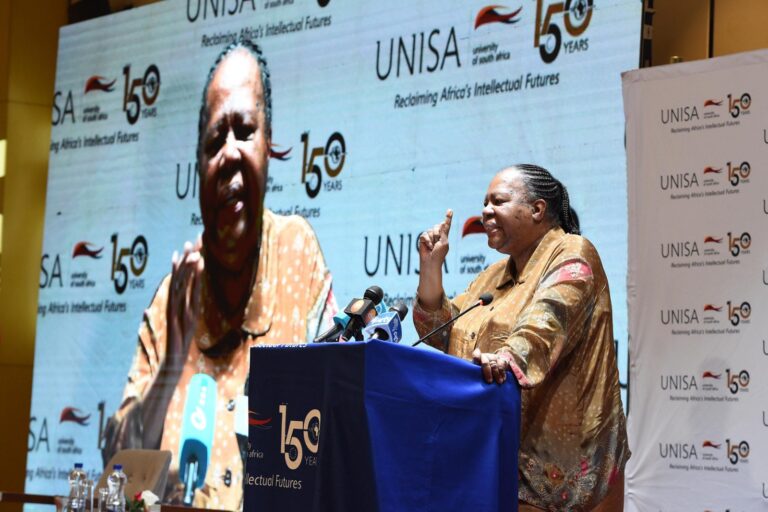
THE University of South Africa (Unisa) celebrated its 150th Anniversary in the Ethiopian Capital, Addis Ababa on Monday.
The event was organised jointly by Unisa and the South African Department of International Relations and Cooperation (DIRCO), through the Embassy of the Republic of South Africa in Ethiopia.
South African Minister of International Relations and Cooperation, Dr Naledi Pandor, delivered the keynote address, themed “Science diplomacy (and innovation) in the reclaiming of Africa’s intellectual futures into the next 150 years”; pointing out her personal link to the university and its rich history.
A hundred years ago, Pandor’s grandfather, prominent academic ZK Matthews, became the first black man to graduate from Unisa.
“Africa recognises Unisa as being a life-changing institution for many people, especially the working class, who don’t often enjoy the opportunities offered by elite and expensive contact universities,” Minister Pandor continued.
The Minister raised the significant achievements of the University, producing 800 Master’s graduates and numerous PhDs across Africa.
“These graduates, and other Unisa alumni across the continent, should be used to good effect as full time researchers in our various ministries, departments, and public institutions, because that is what is meant by reclaiming intellectual futures. Through their research and the skills they have acquired, they will inform the kinds of changes we wish to see,” she said.
She went on to point to the necessity of creating a set of African countries that can facilitate the ability to create a new and different world, stressing the eradication of poverty as well as utilising intellectual resources to develop concrete plans. More importantly the need to become the best quality Africans, and not to copy the West.
She cited the example of African issues that require urgent solutions as those ranging from how to turn shanty towns into smart cities, devising a cure for a disease killing thousands, African trypanosomiasis, also known as sleeping sickness, to the development of a vaccine for HIV and a new treatment for tuberculosis.
Minister Pandor said that the possibilities of science are limitless, proceeding with groundbreaking research and innovation, she reminded the gathering of the inevitability of the increasing importance of multilateralism, and how this will be strengthened as countries break through frontiers with far greater speed and effectiveness through cooperation.
“My hope,” she said, “is that in rebooting multilateralism and recasting it, science will also help to fortify the bonds of global solidarity on many of the pressing issues of our time. It is time that the issues of Africa become the preeminent issues of the globe. It is only if we, as Africans, make this our agenda that we will achieve this objective.”
Prof Puleng Lenkabula, Unisa Principal and Vice-Chancellor (VC), briefly recounted the institution’s illustrious history as the world’s first – and preeminent – distance education institution.
“Africans across the continent, and the diaspora, can be immensely proud of this unique innovation that Unisa has added to human civilization as an African contribution,” Vice-Chancellor Lenkabula said.
Describing the evening as a celebration of the South African and Ethiopian governments and people, she pointed to the Pan-African nature of Unisa that shapes futures in the service of humanity and went on to celebrate the establishment of the Ethiopia Regional Centre as a significant milestone in this endeavor.
“We have looked into ten catalytic niche areas central to the developmental questions that the continent faces, a solutions system that we as Africans through knowledge, research, innovation, research, engagement and partnership can establish,” she continued.
In closing she welcomed attendees to “this important celebration of the university of leaders, the university that is a partner to the continent, and the university that projects Africa’s civilizations, knowledge and technologies across the globe”.
The Ethiopian Minister of Education, Dr Bernahu Nega, congratulated the university on its 150th anniversary as a place of cooperating thought, knowledge production and truth.
“What is important in this continent, in my view, is not just to expand education. We must make sure that we expand quality education,” Dr Nega said.
A fascinating panel discussion of the main issues relating to reclaiming Africa’s intellectual futures followed the main speakers, with Ambassador Xolisa Makaya, Head of the South African Embassy in Ethiopia, delivering the vote of thanks.
Prof Lenkabula, Minister Dr Pandor; and Minister Dr Bernahu Nega, presided over the cake-cutting ceremony at the conclusion of the celebration.
Instead of simply filling a student’s mind with information, education should ignite a passion for learning, foster critical thinking, and enable students to grasp the concepts being taught fully.
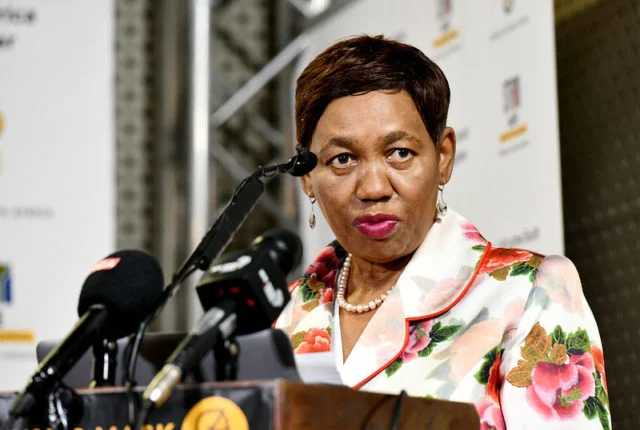
“Mother tongue instruction serves as the foundation for this kindling of the educational flame, as it allows learners to connect with the subject matter on a deeper level, empowering them to explore and understand the world around them with greater clarity and enthusiasm,” said Minister of Basic Education, Angie Motshekga, at last week’s two-day the Language Policy Conference in Johannesburg.
She said educators bear the responsibility of helping the student to lead a richer and fuller life and developing his mental and spiritual qualities to the utmost. “Our gathering here today is not driven by an irrational attachment to multilingualism; rather, it is a response to a solemn call embedded within our founding Constitution and Bill of Rights.”
“These constitutional principles enshrine the importance of language diversity, recognising the significance of every language in our nation’s tapestry,” she added.
The Minister said the dedication should extend to ensuring the equitable recognition and preservation of all official languages, including Sign Language, which recently was added as the 12th official language of South Africa.
“Embracing multilingualism in our classrooms is not just a matter of policy; it is an opportunity to empower our learners, enrich their minds, and cultivate a sense of belonging,” she said. Throughout the years, she said the department has implemented several language programmes within the basic educational system.
English and Afrikaans have long served as mediums of instruction, but the importance of incorporating African languages as Languages of Learning and Teaching has been recognised as paramount to learning and teaching.
She said one of the remarkable initiatives in the journey towards embracing multilingual education is the Eastern Cape Mother Tongue Bilingual Education Pilot Project. Spearheaded by the Eastern Cape Department of Education (ECDoE), this project is a shining example of how language can be harnessed to empower our learners and enhance their educational experience.
Since 2012, the Eastern Cape Department of Education (ECDoE) has been progressively implementing the Mother Tongue-based Bilingual Education (MTBBE) strategy for Mathematics and Natural Science and Technology, starting from Grade 4.
At the core of this programme is the principle of epistemological access to the curriculum, aiming to broaden students’ understanding of subject matter by teaching it in their mother tongues.In 2017, the MTBBE programme was piloted in 72 schools in Cofimvaba and later extended to all districts in the province, with a new cohort phased in each year. Currently, an impressive 2,015 schools across all 12 districts are actively implementing this programme.
This initiative allows learners in these schools to learn all content subjects through their home languages up to Grade 8, with Grade 9 planned for phased implementation in 2023 to complete the Senior Phase.
“The results of the MTBBE project have been nothing short of remarkable. A Grade 5 analysis reported that MTBBE learners outperformed their non-MTBBE counterparts in Mathematics (53% vs. 40%) and Natural Science and Technology (70% vs. 50%),” she said.
She said these findings reinforce the value of providing education in learners’ mother tongues, enabling them to grasp complex concepts more effectively and excel academically.
The success of the Eastern Cape Mother Tongue Bilingual Education Pilot Project has been achieved through collaborative efforts.
“We thank Rhodes University, University of Fort Hare, Oxford University Press, Pearson, and Pan South African Language Board (PanSALB) for their valuable support and partnership.
“Research worldwide affirms that learners learn best when taught in their mother tongue. It enhances their cognitive abilities, fosters better teacher-learner relationships, and boosts their overall academic performance.”
“As we emphasise the promotion of African languages in our basic educational system, we must acknowledge the significant role played by the English language in today’s interconnected world.Our goal is not to replace English but rather to empower our learners with proficiency and pride in their mother tongues while maintaining competence in English,” Motshekga said.
In South Africa, English is the second most commonly spoken language outside the household, following isiZulu, with isiXhosa being the third-most common. Within the schooling system, English holds a leading position as a Language of Learning and Teaching (LOLT).
Out of approximately 23,719 public schools in South Africa, only 2,484 schools use Afrikaans as the language of instruction in single, dual, or parallel mediums.
“As we navigate the complexities of our multilingual landscape, we must recognise the dual significance of promoting African languages while maintaining and enhancing English language proficiency.”
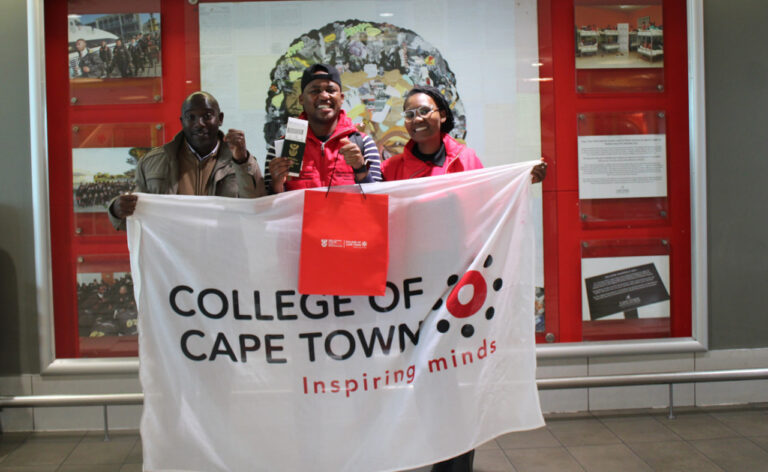
Minister of Higher Education, and Science Innovation, Dr Blade Nzimande, opened the College of Cape Town Business Process Outsourcing (BPO) Skills Centre in the Western Cape last Friday.
“What makes this event so exciting is that it touches on the fundamental reasons for the government’s decision to establish TVET colleges,” said Nzimande.
Technical and Vocational Education and Training refers to the vocational or occupational nature of programmes offered, meaning that it prepares learners for a specific job, several employment possibilities, or self-employment.
Nzimande said TVET colleges mainly train young people to develop the skills, knowledge and attitudes needed in the labour market.
Interestingly, the event took place exactly ten years after the declaration of the Year of the Artisan launched by Nzimande in 2013. It was also the 20th anniversary of the merger of 152 South African public TVET colleges into 50 colleges in 2003.
“Today, I remain gratified because the TVET College of Cape Town has demonstrated and led by example that our TVET sector can collaborate with other spheres of government and the private sector to empower citizens,” Nzimande said. This college has a total of eight delivery sites made up of six campuses offering Ministerial, Artisanal and occupational programmes as well as short skills programmes in collaboration with national and international universities.
Three sites are centres of specialisation for Robotics, Plumbing, Automotive and Mechanical programmes.The College boasts of having Trade Test Centres for Plumbing, Automotive, Chef and Hair and Beauty care. The other two sites are Skills Centres, in which one centre, the Wynberg Skills Centre, offers occupational programmes in Hair Care and Beauty up to NQF Level 5.
“In South Africa, we have about 3,6 million youth between the ages of 15-24 who are neither in education, employment nor training (NEETs). This, therefore, means there is much work for all of us to do to ensure that we create the necessary training and job opportunities,” the Minister said.
Athletes and staff at the University of the Western Cape are flying the institution’s flag high in China at the International University of Sports Federation World University Games (FISU).
Three students, two of whom are participating, with one working as a media officer and three staff members, recently jetted off to Chengdu. The contingent forms part of the University Sport South Africa’s Team South Africa.
The FISU World University Games takes place every two years, includes 15 compulsory sports, and encourages student-athletes worldwide to combine high-performing sports and intellectual pursuits. Some of the sporting codes include archery, athletics, basketball, table tennis, tennis, swimming and fencing.
This is the first overseas trip for 24-year-old UWC athlete Gianno Peddy. The games represent an opportunity to showcase years of hard work and dedication for the 100m and 200m sprinter.
“It’s a big experience for me. My goal is the Olympics, and I believe this is a stepping stone,’’ said Peddy (pictured left).
The pressure and excitement of performing at an international level are shared with 25-year-old UWC basketball player Nkosinathi Chibi: This will put my name on the international stage to represent my country and to wear the green and gold.’’
Due to the COVID-19 pandemic, the 2021 Chengdu World Student Games were placed on hold for two years. It kicked off again at the end of July and will run until 10 August 2023.
UWC Director of Sport Mandla Gagayi, who led the last student games in 2019 in Italy, said the preparation and build-up to the games are gruelling. South Africa boasted of winning 18 medals that year.
“During the two years, they only get to finalise teams. Six months before the competition, you have one year to select teams and six months to confirm who will be attending. There are several heartbreaks as many are told a few months before that they have not made the team,’’ said Gagayi.
After the send-off, Deputy Vice-Chancellor for Student Development and Support, Professor Matete Madiba, expressed excitement about students and staff participating and engaging with international counterparts. She called on the contingent to make the university proud.
“At UWC, great things are happening, and to say… we are here, and we are UWC. We want the world to know that we are performing at an international level,’’ said Prof Madiba.
Through his foundation, the first Black Springbok captain to hold the Rugby World Cup, Siya Kolisi, plays a vital role behind the scenes in tackling inequality in South Africa. The Kolisi Foundation was established in April 2020, a month after the COVID-19 pandemic left the country and the globe in lockdown.
With a vision by Springbok World Cup- winning captain Siya Kolisi and his wife, Kolisi Foundation CEO Rachel, to impact vulnerable and under-resourced communities in South Africa, the foundation has made a difference, particularly in several areas of need, namely, food security, gender-based violence and education and sports development.
“After the Springboks won the Rugby World Cup in 2019, we knew we wanted to do something great for South Africa and use that responsibility for something good,” said the Kolisis.
The Foundation unites organisations to mobilise resources and strengthen infrastructure and learning. To help communities thrive, they aim to bring about systemic change by creating safe spaces through sport and education, addressing gender-based violence, and contributing to food sustainability.
Their mission is underpinned around three integrated strategic focus areas based on Siya’s lived experience: Food Security, Gender-Based Violence, and Education and Sports Development.
In particular, the work has been strengthened around food security: Adopt a Community Kitchen, Gender-Based Violence: Kolisi Connect, and Power2You packs, with an empowerment component being developed. Critically, the impact has been significant in Education and Sports Development via the flagship Siyaphakama Zwide Schools Project.
As part of this initiative, six Zwide schools, identified as key to materialising the vision laid out by Rachel and Siya, have been supported on an ongoing basis as part of the Kolisi Foundation Education and Sports flagship project. The six schools are Emsengeni Primary School (Siya’s primary school), Isaac Booi Primary School, Daniels Lower Primary, Sithembile Junior School, Garret Primary School and Ubuntu Pathways Primary School.
Notably, the foundation has also tackled the food security issue head-on through its nutrition programme at the six schools, with the engagement of food preparers in training workshops around basic knowledge of nutrition, health, and hygiene. This includes completing baseline nutritional status assessments of learners at all six schools.
Community kitchens are becoming critical spaces where communities can connect and exchange. They are also places where norms are queried, transformation is spearheaded, dialogues around food are happening, and advocates’ voices for changing existing food systems are heard.
The Foundation is committed to a more holistic approach to fighting hunger.
Finally, regarding the pressing gender-based violence pandemic, the Foundation partnered with The Saartjie Baartman Centre for Women and Children to conceptualise and create a facility to serve therapeutic needs through counselling, therapy reflection, reading, and journaling. Most importantly, it is also a supportive and healing space for mothers and children to spend quality time together. This space is dedicated to Nikita Lewis; read more about The Nikita Lewis Serenity Hub here.
“It has been a year of impact and making a difference in communities that need it most. However, our work is by no means complete, and we encourage society and corporates to work with us to help create the better society we want,” said the Kolisis.
Siya talks to Inside Education about his favourite teacher at Emsengeni Primary School, a school he supports via the foundation.
Which school did you attend?
I attended Emsengeni Primary School briefly in 2003.
Who was your favourite teacher?
My favourite teacher (Mr Eric Songwiqi) stood by me during my schooling years. He was more than just a teacher; he was a mentor, a support system. He moved me from one township school to another and was always there for me whenever I needed him. He even played the role of a father figure in my life. He took me to every sports trial and always encouraged me.
What subject did he teach?
He didn’t really teach me a specific subject per se. He supported my rugby development. He was there as a guiding figure, mentoring me through my life and schooling years.
Did you look forward to your sessions with him?
Absolutely, I looked forward to every training session with him. He always had words of encouragement for us, it was about something other than a subject in a classroom. He gave lots of practical life advice.
What was he like?
He was always kind, loving, and supportive, and he went out of his way to make sure I had what I needed. But he also knew when to be firm and when discipline was needed. He was everything that I needed.
What was your favourite subject at school? My favourite subject at school was maths. I was actually one of the top students in the class for that subject until I moved to Grey High School.
Did your love for the game influence your career choice?
My passion for rugby influenced my choice of career. That being said, I struggled later with maths in school. I do wish I had focused a little bit more in school and persevered with my academics because I believe that would add more value to what I do after rugby as well.
What phrase from your teacher stuck with you? The phrase that stuck with me was, “Believe in your dreams, work as hard as you can, and protect them with everything you have.” This was told to me by Mr Songwiqi and has stayed with me throughout my life.
Have you remained in contact with your teacher? Yes, I have kept in touch with him. We even spoke recently about him, and I am working together to help more kids from the community I grew up in the same way he helped me.
Have you met since your school days? The first meeting with him, outside of a classroom setting, always gets me emotional. We’ve done a lot together, and seeing him still brings up many emotions. He’s a special person in my life.
Describe the influence of teachers on society. Teachers are incredibly important to society. They spend the most time with kids and have a significant influence on them. They can provide positive encouragement and energy that a child might not be getting at home. I know teachers often don’t get the credit they deserve, but they play a massive role in giving kids hope and support.
What advice would you give youngsters wanting to be a success?
My advice to anyone wanting to reach for and achieve their dreams would be not to let your environment dictate your dreams. It’s hard sometimes to see past your current situation, but you can find hope in people from the same environment as you. Work as hard as you can with what you have around you before looking for what you don’t have. Surround yourself with positive people, and don’t let the struggles of others bring you down. Keep working, no matter how big or small your goals may be.
As the world becomes increasingly interconnected, collaborations that drive positive change and shape the future of education have never been more important.
For over a decade, Oxford University Press (OUP) and the Mandela Rhodes Foundation (MRF) formed an innovative shareholding partnership, pledging to promote leadership and scholarship in Africa to benefit present and future generations, igniting a shared passion for knowledge, empowerment and the pursuit of excellence.
Since its inception in 2008, the alliance between Oxford University Press and Mandela Rhodes Foundation has flourished, creating a powerful synergy that transcends borders and impacts lives.
At the heart of Oxford University Press’s mission lies the commitment to the dissemination of knowledge and the advancement of education.
We believe education is a fundamental catalyst for progress, enabling individuals to transform their lives and contribute meaningfully to society.
The partnership with the Mandela Rhodes Foundation perfectly aligns with this vision, as Mandela Rhodes Foundation shares a similar dedication to nurturing young African leaders through education and empowerment.
“It is a privilege and honour for Oxford University Press to travel on this journey with the MRF as a like-minded partner who believes in the transformative power of education and who has such a profound impact on the shaping of leadership in Africa”, said Henri Pieterse, Managing Director of Oxford University Press Southern Africa.
On 14th July, The Mandela Rhodes Foundation (MRF) hosted its 20th-anniversary celebration, which took place at the Century City Conference Centre in Cape Town.
This milestone also coincided with the 10th anniversary of the death of former president Nelson Mandela, the founding patron of the foundation. The book titled “The Audacious Experiment: The Mandela Rhodes Story” was co-authored by Shaun Johnson, the late founding CEO of the MRF and Professor Elleke Boehmer.
She was supported by research assistants Iris Nxumalo-de Smidt and Makomborero Muzenda, who are Mandela Rhodes Scholars.
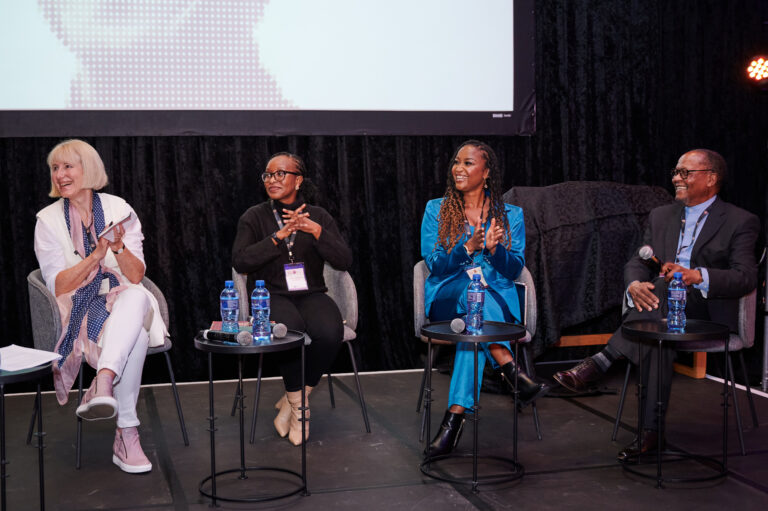
Mandela Rhodes Foundation CEO, Judy Sikuza, introduced the panellists. The discussions were around the theme: “The courage to be unpopular: lessons on leading in complex times” to bring Nelson Mandela’s leadership legacy to life in the present moment. Hanri congratulated the editorial team of Oxford University Press, who generously published the book.
Furthermore, Hanri said she was reminded by a quote by Katherine Paterson, “A dream without action is just a wish, but a dream backed by passion becomes a purpose”, a common theme evident in the book of the purpose of delivering Mandela’s promise.
Mandela Rhodes Scholars Iris Nxumalo-de Smidt and Makomborero Muzenda encouraged young readers to purchase the book as it highlights the power of community and collaboration and that the MRF story demonstrates how individual ideas have the power to transform the world and the ability to make an impact.
Furthermore, through the stories of scholarship recipients, the book provides a global perspective and promotes cross-cultural understanding. It encourages young readers to embrace diversity and appreciate different perspectives in an increasingly interconnected world.
The Mandela Rhodes Foundation’s was founded in 2003 in partnership with the Rhodes Trust.
To date, they have selected 622 Mandela Rhodes scholars from 33 African countries by offering young leaders from across the African continent a chance to become part of Nelson Mandela’s legacy of transformative impact.
Oxford University Press has had the privilege of contributing to the vital work of The Mandela Rhodes Foundation by reinvesting 25% of our profits in education, research and scholarship.
The partnership between Oxford University Press and the Mandela Rhodes Foundation holds immense significance for several reasons.
Firstly, it amplifies the reach and impact of both organisations, allowing us to extend our educational resources and support to a broader audience. By working together, we leverage our collective strengths to develop innovative solutions that address the challenges faced by African communities.
Secondly, this collaboration serves as a beacon of hope, inspiring generations of young Africans to pursue their educational aspirations and take up leadership roles in their respective fields.
By nurturing a diverse and inclusive community of scholars, we empower them to drive positive change and transform their societies from within.
As we celebrate over a decade of collaboration, the partnership between Oxford University Press and the Mandela Rhodes Foundation stands as a testament to the power of collective action, shared vision and the pursuit of excellence.
Together, we continue to pave the way for a brighter, more inclusive future, where education and ethical leadership thrive.
When the news broke in May that South Africa had come last in a global assessment of reading achievement, it caused a nationwide outcry. This special report examines the findings, speaks to experts to make sense of it all, and looks at the prospects of improvements.
Our “child literacy rates are a disgrace,” Business Day said in an editorial the day after the findings of the latest Progress in International Reading Literacy Study (Pirls) were released on 16 May 2023, showing that four out of every five Grade 4s tested in South Africa (SA) in 2021 could not “read for meaning”.
This level of reading is the highest “be- cause it requires that our children are empowered to analyse and interpret information and make deductions and inferences, which demonstrate their ability to organise and internalise facts logically, systematically and coherently,” Basic Education Minister Angie Motshekga explained to parliament in her department’s budget vote two days later.
That only 19% of Grade 4s had shown they could do these things was described as a “generational catastrophe” by Nic Spaull, associate professor in Economics and research fellow with the Research on Socioeconomic Policy (Resep) group at Stellenbosch University (SU). His sentiment would be echoed in numerous news reports and op-eds over the next few days and weeks.
Last year, Mathanzima Mweli, director-general of the Department of Basic Education (DBE), wrote that learners “who do not acquire the foundational skills necessary for proficient reading remain perpetually behind, as their ability to process, interpret and understand grade-level texts is largely impeded.”
Reading-for-meaning tests are conducted in Grade 4 because it is considered an important transition point in children’s development, when they are supposed to go from “learning to read” to “reading to learn”, according to the Pirls website.
What is Pirls?
Pirls is a “regular international comparative assessment of student achievement in reading,” an initiative of the International Association for the Evaluation of Educational Achievement, headquartered in Amsterdam.
Since 2001, Pirls has been conducted every five years by the International Study Centre of Boston College’s Lynch School of Education and Human Development. In SA, Pirls is undertaken by the Centre for Evaluation and Assessment of the University of Pretoria’s Faculty of Education.
SA has been participating in Pirls since 2006 and was one of 57 countries which took part in 2021. It was the only sub-Saharan African country in the study; the other participants from the continent were Egypt and Morocco. The relatively few other developing countries included Jordan and Brazil. A total of 12 426 of our Grade-4 learners in 321 schools were assessed, representing all our official languages (11 at that stage) and all nine provinces.
How did we do?
• SA’s score dropped from 78% of Grade 4s not being able to read for meaning in 2016 to 81% in 2021. This is scarcely better than our 82% in 2011, which means the country has lost an entire decade of progress.
• Learners writing in Afrikaans and English maintained their performance, while the performance of those writing in SA’s other official languages worsened.
• Results in all provinces deteriorated, but the Western Cape, Gauteng and KwaZulu-Natal performed better than the national average.
The impact of Covid-19
Motshekga blamed the weakening of SA’s results on the “devastating effects of the Covid-19 pandemic on teaching and learning.”
Nompumelelo Mohohlwane
In an op-ed in Daily Maverick, Nompumelelo Mohohlwane, the DBE’s deputy director for research, monitoring and evaluation, concurred: “The decline is extremely unfortunate, but it was not sur- prising because school closure was one of the early responses to the Covid-19 pandemic. In SA, this led to the loss of about 60% of the academic year in 2020 and 50% in 2021.”
Inequality
As to why the performance of Grade-4 learners who wrote the tests in African languages was worse than the results of those who wrote in Afrikaans and English, Motshekga blamed “our regrettable past”.
This was a reference to the stratification of education under apartheid in terms of class and race.
Prof Servaas van der Berg
In an interview with Inside Education, Prof Servaas van der Berg, who holds the SA National Research Chair in the Economics of Social Policy, based at SU, confirmed that there was a close correlation between the socio-economic status of schools and their feeder communities, on the one hand, and the academic performance of their learners, on the other.
“Better performing learners and schools tend to come from wealthier communities. There are exceptions, but unfortunately, we do not have enough examples of good performance, in general, coming from poorer communities and schools. It seems to be a question of resources, at least partly,” he said.
He ascribed that the Western Cape and Gauteng showed the most minor decline in Pirls to the fact that “they are, in the first instance, our wealthier provinces.”
The DBE looks at the levels of income, literacy and unemployment in a community to determine a school’s ranking. Quintile-1 to -3 schools are no-fee paying schools, and quintile-4 and five schools may charge fees.
According to Van der Berg, nearly two-thirds of Western Cape learners are in quintile-4 and -5 schools. They tend to have better facilities, and their learners also tend to have greater access to books, computers and the internet at home – resources that are in short supply in poorer schools and communities.
Language
The Pirls results also reflect South Africa’s complexities in terms of language.
“About 70% of learners in South Africa are in no-fee schools that use an African language as the language of instruction for the first three grades. During this time, most children learn English as a subject and then experience a switch in Grade 4 when English becomes the language of instruction. Their African languages become a subject,” Mohohlwane wrote.
“In contrast, about 9% of learners start school in Afrikaans and do not switch at any stage but continue with Afrikaans after Grade 4 until matric. Similarly, the 23% that start in English continue past Grade 4 without any language switching.”
However, she argued, it “would be a mistake to blame the African languages for the decline,” adding that “it remains the right decision to start school in the language you know best.”
Spaull agrees that “the legacy of colonialism and apartheid is very much still with us” but argues, “That doesn’t mean there is not more that we could do to redress that legacy – we have proven interventions about what works to improve reading in no-fee schools, but we are not doing them.”
What can be done?
In a synthesis report released in 2022, the DBE says foundation-level reading has been high on its agenda since at least 2012.
By 2019, this emphasis had found its way into President Cyril Ramaphosa’s State of the Nation Address, when he said that “substantially improving reading comprehension in the first years of school” had become a “critical priority”.
The master plan to give effect to this goal was supposed to be the National Reading Strategy, also launched that year. However, it suffered from some fundamental flaws, which – according to Spaull – included having “no credible milestones and no credible plan of achieving it.”
Then Covid-19 struck, and school closures and rotational timetables wrought their damage, as reflected by the 2021 Pirls findings.
Now, an improved plan is in the pipeline – the National Integrated Reading Literacy.
The strategy mentioned by Motshekga in the DBE’s budget vote. She said there had been “lessons learnt”, one of which seems to be prioritisation. The plan’s “10 pillars” of old will be reduced to “four key interdependent strands”.
Inside Education got more details from Mohohlwane on what the new plan due to be launched might contain:
• Policy: There will be an emphasis on home language literacy in the foundation phase.
• Teachers: In-depth training and support through such mechanisms as ex- pert reading coaches, workshops, and daily lesson plans.
• Materials: Such ideas as graded readers, flashcards, posters, big books, and alphabet friezes are integrated into lesson plans to ensure they are used appropriately within a coherent lesson.
• Parents and communities: Advocacy about the importance of fostering reading enjoyment among children.
Triple cocktail
In its synthesis report, the DBE said it had found that a “triple cocktail” of daily lesson plans, quality integrated reading materials and on-site coaching resulted in an extra 40% of learning at the end of one year.
These ideas were derived from a series of large-scale evaluations since 2015 in North West and Limpopo to build a scientific evidence base about what interventions have the most significant impact on reading outcomes and how the change process works.
Incubating ideas
Non-governmental organisations (NGOs), such as Funda Wande, are also helping to look for solutions.
Dr Nwabisa Makaluza
“We incubate ideas that we think would work. At the moment, we are trying different models in three provinces,” Dr Nwabisa Makaluza, head of research and development, told Inside Education.
“In the Eastern Cape, we are trialling coaching, both by outside experts and by equipping schools’ heads of departments to become coaches.
“In Limpopo, our teaching assistant model was very effective, and we also got good results from providing schools with learning and teaching support materials.
“And our latest project is in the Western Cape, where the provincial education department is doing the rollout themselves in about 50 schools. Elements include reading coaches, monitoring and evaluation.”
Collaboration
Makaluza says public-private partnerships are essential.
“We are under no illusion that we can do this alone. We do not even start at a school without building a relationship with the relevant education department because they are the schools’ custodians.
“And when we get the results of our trials, we always feed it back to the departments – so they can learn with us. Collaboration is essential.”
Benchmarking
Dr Zelda Barends
Dr Zelda Barends, a senior lecturer in curriculum studies at SU’s Faculty of Education, is part of the DBE’s benchmarking process for learning to read in the foundation phase. The benchmarks were developed through collaboration between education technocrats, reading experts, linguists and quantitative experts.
Grade-specific reading benchmarks pro- vide the tools to measure whether learners are on-track to reading for meaning by the end of the foundation phase. The benchmarks for each language differ, but they all include the following:
• By the end of Grade 1, all learners should be able to sound a certain number of letters per minute correctly.
• By the end of Grade 2, all learners should be able to read a certain number of words within a passage correctly.
• This tally would go up for Grade 3.
The benchmarks are set high enough to support system-wide improvements yet not so high as to be unattainable. Learners achieving the required fluency are increasingly able to comprehend what they are reading and would therefore be able to transition to the next stage, the intermediate phase.
The benchmarks are intended for use by teachers, school leaders and provinces, as well as the national department, to support reading in South Africa’s official languages.
Principals
Barends says the role of principals is something that is often overlooked.
“If we start investing in school leadership, we would be able to turn the problem of reading around slowly but surely, because when there’s a visionary leader, someone who believes in what they’re doing and knows how to work with other people and get the most out of them, things change for the better.”
Teachers
Some commentators say some teachers are part of the problem – those who are not motivated, for whatever reason, and don’t give their best.
However, Barends said, “Teachers need some grace in the system.”
“Most of them are working very hard, but they are getting flak from all sides. They are expected to achieve high outcomes with all the learners that come to them, but the learners are at different levels, and sometimes the teachers have not had the specialised training they need to teach learners to read.”
That is why teacher empowerment is considered vital by the DBE.
In its 2022 synthesis report, the Department said that teacher support interventions had positive impacts on reading outcomes, mainly on-site coaching.
Mohohlwane said that teachers some- times resisted interventions they experienced as critical of their abilities but that it was possible to overcome this problem.
“In our coaching interventions, we have coined the term ‘critical friend’ because they visit often, build up a relationship with the same teacher, and most importantly, only with them. They don’t report to the principal or anyone else in the system. It’s not linked to a teacher’s performance review or promotion or anything like that.
They are just an expert resource to help the teacher teach children to read. It may take teachers three or six months to relax with this per- son, but then they say they feel supported.”
Accountability
Some analysts have identified a lack of accountability by teachers and principals, and schools – especially at the foundation phase level – as a significant part of the problem.
“In a democracy, the role of civil society is to hold the government to account for what it says it is doing and what its constitutional obligations are,” Spaull told Inside Education.
He thinks the fact that the Pirls results have caused an outcry is putting pressure on the DBE, which might result in quicker results.
Pace of change
The Parliamentary Monitoring Group reported that when Motshekga briefed parliament about Pirls on 23 May, she said, “Education was like growing a tree, not like carrots”, – meaning that it takes time to get results.
Her statement might be accurate but is unlikely to satisfy South Africans who want urgent action to avoid losing another generation.
Before the Covid-19 shock, SA was making good progress in improving early-grade reading scores. Between the 2011 and 2016 Pirls cycles, SA showed the second-fastest improvement among all participating countries, after Morocco.
The question is now whether we can return to that pace and even speed things up.
Mohohlwane is optimistic: “The planning and testing and policy formulation and lobbying have been ten years in the making, and now things are coming together.
If it were not for Covid, we would have been further along. Now we must redouble our efforts to make progress. We will get there incrementally.”
Special time
Makaluza agrees: “I find the current push from the public, academia, the media, the rest of civil society and even from within government and the education departments, national and provincial, interesting. It’s a special time of consensus that we need a drastic change, which might give us the push we need.”