Home Blog Page 199

The honeymoon is over for the first woman vice-chancellor at the University of South Africa

Edwin Naidu

After much initial optimism as Unisa’s first woman vice-chancellor, the troubled tenure of Professor Puleng LenkaBula is about to be interrupted by the appointment of an administrator by the Minister of Higher Education, Science and Innovation, Dr Blade Nzimande. 

The Minister announced on 4 August 2023 his intention to appoint an administrator in terms of Section 49B of the Higher Education Act, 101 of 1997, which empowers him to appoint an administrator and dissolve the council at Unisa. 

The decision, which could spell the end for LenkaBula, whose term began in January 2021, follows damning reports by Independent Assessor Professor Themba Mosia and the Ministerial Task Team (MTT) on Unisa, Chaired by Dr Vincent Maphai.

In a statement, the Ministry said that Nzimande is satisfied that the Independent Assessor’s report reveals financial and other maladministration of a severe nature which affects the effective functioning of Unisa. 

The Ministerial Task Team (MTT) conducted an Independent Review of UNISA’s ‘mission drift’ – which had massive implications for the financial sustainability and future of UNISA. 

The MTT also made a rigorous assessment of how the Fourth Industrial Revolution and its associative disruptions and shifts will affect many aspects of the academic mission, academic programmes, markets and operating model of UNISA.

The 316-page report by Mosia recommended that Council and management at Unisa be axed, stating that appointing an administrator is in the best interest of Unisa and higher education in an open and democratic society.

The Minister has allowed the UNISA Council to make written representations to him within seven days of receiving his letter. 

Nzimande has written to Unisa Council Chairperson, Mr James Maboa, on the 4th of August 2023, of his intention to appoint an administrator. 

The latest on the goings-on at Unisa is a far cry from the optimism shown by LenkaBula in December 2020 before her taking up the hot seat. In her first interview, she told me that she wants Unisa institution to reclaim its space as an innovative leader in distance and open education and make sure the university contributes to South African and Africa-wide goals on sustainable development.

On top of that, she wants to ensure the university is receptive to gender transformation for all women of colour who were marginalised in the past.

She said that she was mindful of the enormity of the task facing her but ready for the challenge as the only woman in 148 years to head one of Africa’s most prominent universities and the institution that 1946 pioneered tertiary distance learning.

“When I was called by the chair and deputy chair of the council after they decided to check with me whether I would be able to, in principle, accept, I thought, okay, this is just a general progression into what I would have tried, or wanted to apply for—which is the VC role. It only dawned on me two or three hours later when they announced publicly that I had been appointed,” she said.

“I thought, oh no. This is more than what I thought I had raised my hand for, in the sense that now the expectations and the burden of being the first will haunt me or invite me to be purposeful around my duties and responsibilities. So yes, it is rather… overwhelming now,” she said. 

Almost three years later, it has gone wrong LenkaBula – ironically as South Africa begins to celebrate National Women’s she looks set to follow the University of Cape Town’s former vice-chancellor Professor Mamokgethi Phakeng as the second high-profile casualty. 

INSIDE EDUCATION 

COSATU urges intervention by the government on the latest NSFAS payments chaos

Lerato Mbhiza 

The Congress of South African Trade Unions (COSATU) has urged immediate interventions by the Department of Higher Education and Training, National Treasury, and the Financial Sector Conduct Authority on the latest National Student Financial Aid Scheme (NSFAS) chaos. Deeply distressing reports paint a picture of endless chaos at NSFAS.

Last month, NSFAS introduced a direct payment method which allows them to pay student allowances directly into bank accounts.

The new payment system also allows NSFAS to speed up the defunding of undeserving beneficiaries. 

Many students have expressed dissatisfaction with the new payment system, with the anger leading to protests on various university campuses nationwide.

Last week, students from the University of Pretoria and the Tshwane University of Technology and other universities marched to the Union Buildings to hand over a memorandum of demands.

The situation quickly turned violent, with frustrated students blocking roads and police firing rubber bullets to disperse them.    

“NSFAS has long been infamous for delays in payments reaching students and the universities and colleges who depend upon it. Many students have been wrongly defunded by NSFAS and then have had to wait from 6 months to years for their cases to be resolved, Matthew said.

“There is no excuse in a 21st-century economy for this level of chaos to be allowed to continue. The Department of Higher Education and National Treasury need to intervene and put in place a payment system that will ensure students, universities, and colleges receive their payments timeously and without scandalous deductions by private companies profiteering at the expense of the poor.

“If such a system can exist at the South African Revenue Service, then it should not require a genius to replicate it at NSFAS. The Financial Sector Conduct Authority needs to investigate the deductions fleeced from students’ allowances by these companies and ensure that they are refunded.”

North West university second year engineering student Tumelo Boikanyo told Inside Education that the new system is not working in the best interests of student. 

“Since we use Noraccoi, it is increasingly hard to access the NSFAS funds. Part of the problem is that the withdrawal fee is R150, at worst, using the mobile Application cost money- this is a direct contradiction to how banks Applications work. This new system is not wrong and the minister of education needs to do something about this,” Boikanyo said. 

A University of Limpopo third year education student Koena Motloung said the new direct payment system should be reviewed immediately. 

“The ezaga system is a problem because of the extra fees charged.  I don’t understand why NSFAS changed the system to ezaga.”

INSIDE EDUCATION

NSFAS Board Chairman Ernest Khosa on the 2023 Academic Year’s State Of Affairs

Staff Reporter

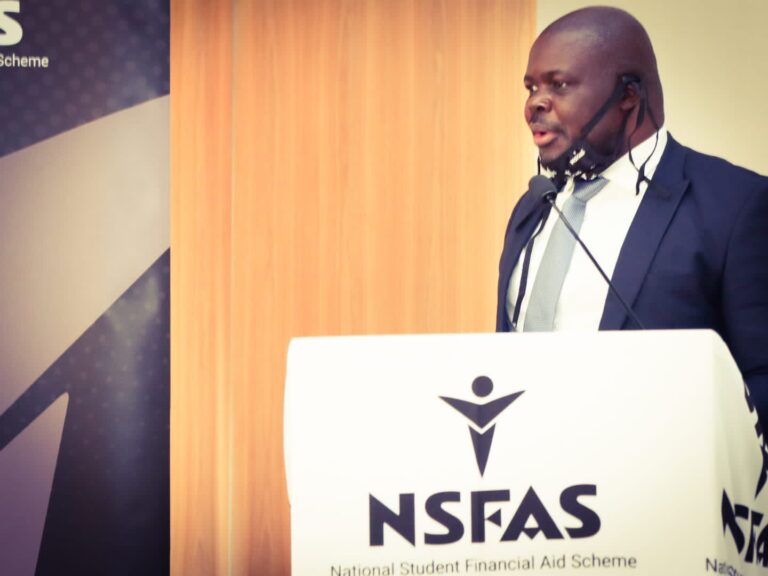
The National Student Financial Aid Scheme (NSFAS) is perturbed by the occurrences of the past few days, the disruptions in learning activities for beneficiaries in universities and Technical and Vocational Education and Training (TVET) colleges.

“These interruptions have been mainly to the changes in policies and guidelines that govern how the system disburses funds to students, more especially the new allowance payment system introduced by NSFAS,” said Board Chairman Ernest Khosa at a briefing in Pretoria on Monday. 

“Throughout the years, the scheme has undergone a series of changes and improvements in its processes as well as funding eligibility criteria; this was mainly to ensure that the funding solution being offered to students in higher education and learning is moving with the times and is fit purpose,” he said. 

Khosa said it was a tradition that before the finalisation and release of the guidelines, the scheme embarks on a consultation process with sector stakeholders such as the University South Africa(USAF), South Africa’s Public College Organisation (SAPCO), South African Technical and Vocational Education and Training Student Association(SATVETSA) and South African Union of Students (SAUS); to review the guidelines and ensure that they still speak to current challenges faced by students. 

Between September 2021 and September 2022, NSFAS Chief Executive Officer Andile Nongogo had several engagements with USAF to discuss funding guidelines and changes in disbursement methods and one of these engagements resulted in the formation of a task team consisting of representatives from NSFAS, USAF and the Department of Higher Education, Science and Innovation. 

The CEO discussed, amongst others, the introduction of the direct payment method and taking over student accommodation during a meeting held on the 15th of September 2022. 

These matters had been introduced to universities Vice-Chancellors at a previous session as well. 

Additionally, NSFAS held national and regional consultations between June 2022 and October 2022 to solicit inputs from stakeholders for consideration, and these inputs were taken into consideration in amending the policies. 

“Furthermore, we continued to engage as a scheme with university management and student leadership on the implementation of the direct payment solution until 21 July 2023.” 

“It is, therefore, worrisome that the disturbances in question are attributed to an insinuation that NSFAS is imposing system changes; we pride ourselves in being an organisation that promotes accessibility and consultation.”

After thorough investigation, improved relationships with third-party data sources such as SARS and engagements with Auditor General South Africa, NSFAS sought to re-evaluate some applications whose funding had been approved. 

After this exercise, investigation results indicated some applicants were not deserving of the funding and had submitted falsified or fraudulent documents; these had to be instantly defunded as a continuation of knowingly funding individuals who do not meet funding requirements would be going against the provisions of the funding policy, while depriving deserving students. 

A total of 45 927 were defunded as a result. For example, students would provide correct parental relationships in their first application attempt. 

When they get rejected due to the financial status of those parents, and when they reapply, they submit different parental relationships. 

“When we did reevaluation, our system picked up the original information previously submitted. And after re-evaluation, funding was reinstated for 14 703 and 31 224 remained unsuccessful, with most first-time entering students having a household income of more than 350k and returning students either not meeting the required academic progression.”

INSIDE EDUCATION

Critical reflections from education experts during the Language Policy Conference

Staff Reporter

Language specialists and academia agree that language policy needs to be reviewed to enhance multi-lingual education and the importance of mother tongue teaching during the first six years of formal schooling. 

During the engagement session, conference delegates and presenters acknowledged the complexity of translating policy into practice. They saw the Conference last week as an invaluable platform for role players and stakeholders to explore the potential and advantages of implementing multilingual practices in South African classrooms.

Presenting the Incremental Introduction of African Languages (IIAL) Strategy during the Conference, Chief Director for Curriculum Implementation and Monitoring, Dr Moses Simelane, indicated that “the IIAL strategy assisted the DBE in promoting the use of African languages within the schooling system by introducing learners incrementally to learning a previously marginalised African language, particularly the former model C Schools. 

“This was aimed at ensuring that all non-African home language speakers were taught to speak an African Language for communicative purposes and to foster social cohesion in school communities. The strategy is, undoubtedly, a cornerstone in redressing the past linguistic imbalances focusing on all official South African languages”.

In his presentation on the rapid assessment of the Language in Education Policy (LiEP), Prof Leketi Makalela, Director for Hub Multilingual Education and Literacies at Wits University, indicated: “LiEP revealed an urgent need to support African Languages as Language of Learning and Teaching (LoLT) beyond Grade 3. Most Black African learners experience the transition to English as LoLT from Grade 4. However, research has shown that the transition to English is considered premature and disruptive to learning. Translanguaging which refers to using more than one language and teaching in the same lesson is the de facto classroom practice, but assessment regimes do not match it. For many Black African learners, English as a medium of instruction, when introduced too early, can become a barrier to learning. Yet, some myths overstate the importance of English as a language of learning and teaching”.

According to the Old Mutual Foundation, the partnership between the DBE and the private sector should be centred around Early Grade literacy and numeracy, Mother tongue teaching and learning; 

Supporting the DBE’s Language Policy Unit and developing Xitsonga benchmarks. 

“We pledge to collaborate with universities on an entry-level teachers’ course in early grade isiXhosa literacy; reading pedagogy course in isiXhosa, Sesotho and EFAL. We are currently implementing the LITNUM project that has already benefited 25,000 learners, 500 teachers, and 200 subject advisors with a reading for meaning focusing on strengthening Instructional Leadership in 3 provinces”.

In his presentation on the English Medium Education in Sub-Saharan Africa, rethinking the context, language, and quality of primary education, Dr Harry Kuchah highlighted: “There are 283 languages in Cameroon. Education is called bilingual, but this is English and French, which were perceived as neutral languages that could unite the country; instead, they proved to be divisive. Parents recognise the value of local languages but prefer an international language like English; however, it is easier for an isiXhosa child to learn through isiZulu than through English”.

The Conference culminated in five breakaway sessions where participants were expected to make valuable contributions to the review of the Language Policy implemented in the South African schooling system.

INSIDE EDUCATION 

Marwala appointed to UN Secretary-General Scientific Advisory Board for Independent Advice on Breakthroughs in Science and Technology

Staff Reporter

Professor Tshilidzi Marwala, Rector of UNU, has been appointed to the United Nations Secretary-General’s Scientific Advisory Board.

Announced by Secretary-General Antonio Guterres on 3 August, the Advisory Board will also include Chief Scientists of UN System entities (UNEP, FAO, WHO, WMO, and UNESCO), the Secretary-General’s Envoy on Technology, and esteemed external scientists.

Professor Thuli Madonsela, Professor of Law at Stellenbosch University, has also been appointed to serve on the board.

The Secretary-General’s Scientific Advisory Board will play a crucial role in providing scientific advice to the Secretary-General and his senior management team to inform policies and decisions amid the rapid development of science and technology.

The United Nations Secretary-General António Guterres has created a new Scientific Advisory Board to advise UN leaders on breakthroughs in science and technology and how to harness the benefits of these advances and mitigate potential risks.

“Scientific and technological progress can support efforts to achieve the Sustainable Development Goals — but they are also giving rise to ethical, legal and political concerns that require multilateral solutions,” Mr Guterres said.

“My Scientific Advisory Board will strengthen the role of the United Nations as a reliable source of data and evidence and provide advice to me and my senior management team.”

The Advisory Board will comprise seven eminent scholars alongside the Chief Scientists of United Nations System entities, the Secretary-General’s Envoy on Technology, and the Rector of the United Nations University. The Board will be associated with a network of diverse scientific institutions worldwide.

“The Secretary-General’s decision to establish a Scientific Advisory Board underscores the unwavering dedication of UN leaders to the principles of the scientific method. I look forward to supporting the UN Secretary-General in raising the voice for science-based policy and decision-making,” expressed Professor Yoshua Bengio, Scientific Director of Mila — Quebec AI Institute and Professor at the Université de Montréal.

The primary objective of the Board is to provide independent insights on trends at the intersection of science, technology, ethics, governance and sustainable development. Through their collaborative efforts, the Board and its Network will support United Nations leaders in anticipating, adapting to and leveraging the latest scientific advancements in their work for people, the planet and prosperity.

“By ensuring that UN policies and programmes are founded on the best available scientific evidence and expertise, the Board will play a crucial role in navigating the complex moral, social, and political dilemmas presented by rapid scientific and technological progress,” said Ismahane Elouafi, Chief Scientist at the Food and Agriculture Organization.

With the formation of the Scientific Advisory Board, the United Nations takes a momentous stride towards better-bridging science and policy. This initiative marks a vital step towards embracing the full potential of science and technology for the collective benefit of all Member States. Through collaborative efforts and inclusive representation, the Board will bolster the UN’s capacity to address the intricate challenges and opportunities at the forefront of science and technology, fostering a path towards a more equitable and prosperous future for all.

Centred around a hybrid model, the Board will comprise a group of seven eminent scientists with a track record in applying their expertise, including in the humanities, and another group of Chief Scientists of different UN entities, the UN University Rector, and the Tech Envoy. The Board itself will act as a hub for a network of scientific networks. The objective is to have a better interface between the scientific community and decision-making in the UN.

INSIDE EDUCATION

Department of Sport launches Silapha Wellness Intervention Programme

Staff Reporter

THE Department of Sport, Arts, and Culture (DSAC) is pleased to announce that the Silapha Wellness Intervention Programme –initiated in 2022 to support artists and athletes with critical access to well-being support – will now provide more comprehensive support to meet essential needs.

The programme is run by Workforce Healthcare – a trusted industry provider of healthcare, training, wellness, financial services, and lifestyle benefits. It will provide access to a 24/7/365 call centre through which those in the creative and sporting industries can access counselling and platforms to receive information and education on key well-being matters such as mental health, substance abuse, financial well-being, legal guidance, and nutrition.

The Minister of Sport, Arts and Culture, Zizi Kodwa, says: “There is a critical need for those who engage in the creative and sporting fields – many of whom do not have permanent employment or healthcare support – for counselling services, education and community support around wellbeing matters that heavily impact them. We have lost too many valuable people within the creative and sports communities – as they did not have access to the support they needed. One life lost is one too many.”

While Silapha Wellness Intervention Programme has supported numerous artists and athletes, the department saw a strong need for the programme to provide a more comprehensive service and access to expert counselling services and rigorously monitor the programme’s success and impact. The Department of Sport, Arts and Culture believes that the programme, which now offers expert counselling support and strong preventative support, will be a life-saving resource for our artists and athletes.

Workforce Healthcare spokesperson and Executive Director: of Wellness, Nevania Naidoo, says that the programme is live with counselling services and, over the next two months, will launch platforms and social media communities that will provide informative articles, videos, and live events as well as courses and self-assessment tools.

“There is a significant need for support around mental well-being, substance abuse, preventable illness, financial and legal advice, gender-based violence and discrimination, to name a few of the issues our artists and athletes need support with. The programme offers intervention and counselling but also education to ensure prevention.”

The service aims to develop a strong net of support and critical intervention to ensure that lives are not lost and that access to critical support is easily accessible and effective. “Our artists and athletes are valuable members of our communities and are so often heroic in their ability to uplift and inspire others. At the same time, they are extremely vulnerable to life challenges due to the nature of their work. I hope that our creative and sporting community will make full use of this service and that those who face challenges receive the support and guidance they need to thrive,” concluded Minister Kodwa.

For artists and athletes who require support or access to services or information on the programme:

Kindly contact the toll-free call centre number: 0800 007 088. SMS/Please call/WhatsApp: 071 681 1247.

INSIDE EDUCATION

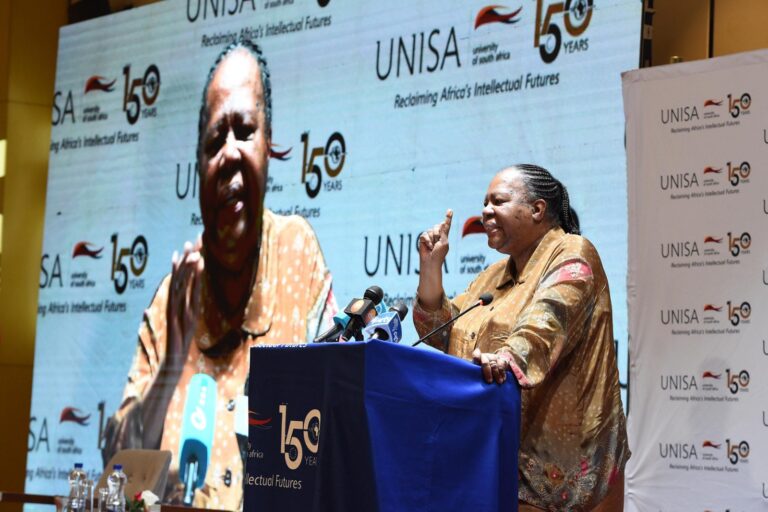
Unisa Celebrates 150 Years of Pan-African Knowledge Production and Cooperation in Addis Ababa, Ethiopia

Johnathan Paoli

THE University of South Africa (Unisa) celebrated its 150th Anniversary in the Ethiopian Capital, Addis Ababa on Monday.

The event was organised jointly by Unisa and the South African Department of International Relations and Cooperation (DIRCO), through the Embassy of the Republic of South Africa in Ethiopia. 

South African Minister of International Relations and Cooperation, Dr Naledi Pandor, delivered the keynote address, themed “Science diplomacy (and innovation) in the reclaiming of Africa’s intellectual futures into the next 150 years”; pointing out her personal link to the university and its rich history. 

A hundred years ago, Pandor’s grandfather, prominent academic ZK Matthews, became the first black man to graduate from Unisa.

“Africa recognises Unisa as being a life-changing institution for many people, especially the working class, who don’t often enjoy the opportunities offered by elite and expensive contact universities,” Minister Pandor continued.

The Minister raised the significant achievements of the University, producing 800 Master’s graduates and numerous PhDs across Africa.

“These graduates, and other Unisa alumni across the continent, should be used to good effect as full time researchers in our various ministries, departments, and public institutions, because that is what is meant by reclaiming intellectual futures. Through their research and the skills they have acquired, they will inform the kinds of changes we wish to see,” she said.

She went on to point to the necessity of creating a set of African countries that can facilitate the ability to create a new and different world, stressing the eradication of poverty as well as utilising intellectual resources to develop concrete plans. More importantly the need to become the best quality Africans, and not to copy the West.

She cited the example of African issues that require urgent solutions as those ranging from how to turn shanty towns into smart cities, devising a cure for a disease killing thousands,  African trypanosomiasis, also known as sleeping sickness, to the development of a vaccine for HIV and a new treatment for tuberculosis.

Minister Pandor said that the possibilities of science are limitless, proceeding with groundbreaking research and innovation, she reminded the gathering of the inevitability of the increasing importance of multilateralism, and how this will be strengthened as countries break through frontiers with far greater speed and effectiveness through cooperation.

“My hope,” she said, “is that in rebooting multilateralism and recasting it, science will also help to fortify the bonds of global solidarity on many of the pressing issues of our time. It is time that the issues of Africa become the preeminent issues of the globe. It is only if we, as Africans, make this our agenda that we will achieve this objective.”

Prof Puleng Lenkabula, Unisa Principal and Vice-Chancellor (VC), briefly recounted the institution’s illustrious history as the world’s first – and preeminent – distance education institution.

“Africans across the continent, and the diaspora, can be immensely proud of this unique innovation that Unisa has added to human civilization as an African contribution,” Vice-Chancellor Lenkabula said.

Describing the evening as a celebration of the South African and Ethiopian governments and people, she pointed to the Pan-African nature of Unisa that shapes futures in the service of humanity and went on to celebrate the establishment of the Ethiopia Regional Centre as a significant milestone in this endeavor. 

“We have looked into ten catalytic niche areas central to the developmental questions that the continent faces, a solutions system that we as Africans through knowledge, research, innovation, research, engagement and partnership can establish,” she continued.

In closing she welcomed attendees to “this important celebration of the university of leaders, the university that is a partner to the continent, and the university that projects Africa’s civilizations, knowledge and technologies across the globe”.

The Ethiopian Minister of Education, Dr Bernahu Nega, congratulated the university on its 150th anniversary as a place of cooperating thought, knowledge production and truth. 

“What is important in this continent, in my view, is not just to expand education. We must make sure that we expand quality education,” Dr Nega said.

A fascinating panel discussion of the main issues relating to reclaiming Africa’s intellectual futures followed the main speakers, with Ambassador Xolisa Makaya, Head of the South African Embassy in Ethiopia, delivering the vote of thanks.

Prof Lenkabula,  Minister Dr Pandor; and Minister Dr Bernahu Nega, presided over the cake-cutting ceremony at the conclusion of the celebration.

INSIDE EDUCATION

Minister Motshekga Addresses Language Policy Conference

Staff Reporter

Instead of simply filling a student’s mind with information, education should ignite a passion for learning, foster critical thinking, and enable students to grasp the concepts being taught fully.

“Mother tongue instruction serves as the foundation for this kindling of the educational flame, as it allows learners to connect with the subject matter on a deeper level, empowering them to explore and understand the world around them with greater clarity and enthusiasm,” said Minister of Basic Education, Angie Motshekga, at last week’s two-day the Language Policy Conference in Johannesburg.

She said educators bear the responsibility of helping the student to lead a richer and fuller life and developing his mental and spiritual qualities to the utmost. “Our gathering here today is not driven by an irrational attachment to multilingualism; rather, it is a response to a solemn call embedded within our founding Constitution and Bill of Rights.”

“These constitutional principles enshrine the importance of language diversity, recognising the significance of every language in our nation’s tapestry,” she added.

The Minister said the dedication should extend to ensuring the equitable recognition and preservation of all official languages, including Sign Language, which recently was added as the 12th official language of South Africa.

“Embracing multilingualism in our classrooms is not just a matter of policy; it is an opportunity to empower our learners, enrich their minds, and cultivate a sense of belonging,” she said. Throughout the years, she said the department has implemented several language programmes within the basic educational system.

English and Afrikaans have long served as mediums of instruction, but the importance of incorporating African languages as Languages of Learning and Teaching has been recognised as paramount to learning and teaching.

She said one of the remarkable initiatives in the journey towards embracing multilingual education is the Eastern Cape Mother Tongue Bilingual Education Pilot Project. Spearheaded by the Eastern Cape Department of Education (ECDoE), this project is a shining example of how language can be harnessed to empower our learners and enhance their educational experience.

Since 2012, the Eastern Cape Department of Education (ECDoE) has been progressively implementing the Mother Tongue-based Bilingual Education (MTBBE) strategy for Mathematics and Natural Science and Technology, starting from Grade 4.

At the core of this programme is the principle of epistemological access to the curriculum, aiming to broaden students’ understanding of subject matter by teaching it in their mother tongues.In 2017, the MTBBE programme was piloted in 72 schools in Cofimvaba and later extended to all districts in the province, with a new cohort phased in each year. Currently, an impressive 2,015 schools across all 12 districts are actively implementing this programme.

This initiative allows learners in these schools to learn all content subjects through their home languages up to Grade 8, with Grade 9 planned for phased implementation in 2023 to complete the Senior Phase.

“The results of the MTBBE project have been nothing short of remarkable. A Grade 5 analysis reported that MTBBE learners outperformed their non-MTBBE counterparts in Mathematics (53% vs. 40%) and Natural Science and Technology (70% vs. 50%),” she said.

She said these findings reinforce the value of providing education in learners’ mother tongues, enabling them to grasp complex concepts more effectively and excel academically.

The success of the Eastern Cape Mother Tongue Bilingual Education Pilot Project has been achieved through collaborative efforts.

“We thank Rhodes University, University of Fort Hare, Oxford University Press, Pearson, and Pan South African Language Board (PanSALB) for their valuable support and partnership.

“Research worldwide affirms that learners learn best when taught in their mother tongue. It enhances their cognitive abilities, fosters better teacher-learner relationships, and boosts their overall academic performance.”

“As we emphasise the promotion of African languages in our basic educational system, we must acknowledge the significant role played by the English language in today’s interconnected world.Our goal is not to replace English but rather to empower our learners with proficiency and pride in their mother tongues while maintaining competence in English,” Motshekga said.

In South Africa, English is the second most commonly spoken language outside the household, following isiZulu, with isiXhosa being the third-most common. Within the schooling system, English holds a leading position as a Language of Learning and Teaching (LOLT).

Out of approximately 23,719 public schools in South Africa, only 2,484 schools use Afrikaans as the
language of instruction in single, dual, or parallel mediums.

“As we navigate the complexities of our multilingual landscape, we must recognise the dual significance of promoting African languages while maintaining and enhancing English language proficiency.”

INSIDE EDUCATION

TVET College of Cape Town leads by example, says Minister

Staff Reporter

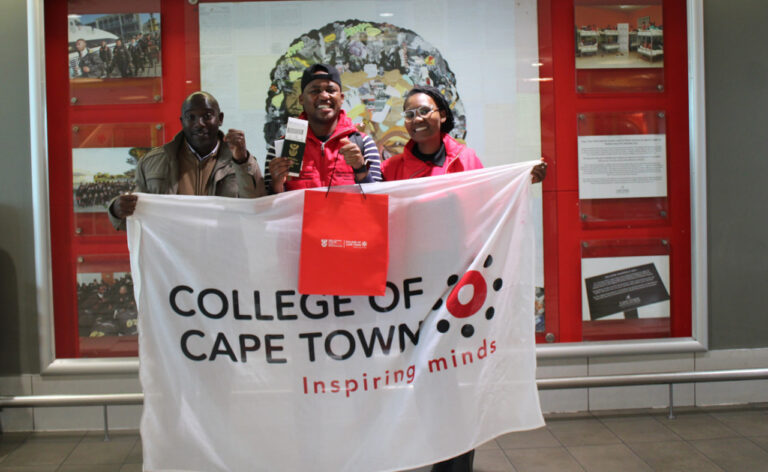
Minister of Higher Education, and Science Innovation, Dr Blade Nzimande, opened the College of Cape Town Business Process Outsourcing (BPO) Skills Centre in the Western Cape last Friday.

“What makes this event so exciting is that it touches on the fundamental reasons for the government’s decision to establish TVET colleges,” said Nzimande.

Technical and Vocational Education and Training refers to the vocational or occupational nature of programmes offered, meaning that it prepares learners for a specific job, several employment possibilities, or self-employment.

Nzimande said TVET colleges mainly train young people to develop the skills, knowledge and attitudes needed in the labour market.

Interestingly, the event took place exactly ten years after the declaration of the Year of the Artisan launched by Nzimande in 2013. It was also the 20th anniversary of the merger of 152 South African public TVET colleges into 50 colleges in 2003.

“Today, I remain gratified because the TVET College of Cape Town has demonstrated and led by example that our TVET sector can collaborate with other spheres of government and the private sector to empower citizens,” Nzimande said. This college has a total of eight delivery sites made up of six campuses offering Ministerial, Artisanal and occupational programmes as well as short skills programmes in collaboration with national and international universities.

Three sites are centres of specialisation for Robotics, Plumbing, Automotive and Mechanical programmes.The College boasts of having Trade Test Centres for Plumbing, Automotive, Chef and Hair and Beauty care. The other two sites are Skills Centres, in which one centre, the Wynberg Skills Centre, offers occupational programmes in Hair Care and Beauty up to NQF Level 5.

“In South Africa, we have about 3,6 million youth between the ages of 15-24 who are neither in education, employment nor training (NEETs). This, therefore, means there is much work for all of us to do to ensure that we create the necessary training and job opportunities,” the Minister said.

INSIDE EDUCATION

SPORTS CORNER: UWC Athletes Take on the World

Staff Reporter

Athletes and staff at the University of the Western Cape are flying the institution’s flag high in China at the International University of Sports Federation World University Games (FISU).


Three students, two of whom are participating, with one working as a media officer and three staff members, recently jetted off to Chengdu. The contingent forms part of the University Sport South Africa’s Team South Africa.

The FISU World University Games takes place every two years, includes 15 compulsory sports, and encourages student-athletes worldwide to combine high-performing sports and intellectual pursuits. Some of the sporting codes include archery, athletics, basketball, table tennis, tennis, swimming and fencing.

This is the first overseas trip for 24-year-old UWC athlete Gianno Peddy. The games represent an opportunity to showcase years of hard work and dedication for the 100m and 200m sprinter.

“It’s a big experience for me. My goal is the Olympics, and I believe this is a stepping stone,’’ said Peddy (pictured left).

The pressure and excitement of performing at an international level are shared with 25-year-old UWC basketball player Nkosinathi Chibi: This will put my name on the international stage to represent my country and to wear the green and gold.’’ 

Due to the COVID-19 pandemic, the 2021 Chengdu World Student Games were placed on hold for two years. It kicked off again at the end of July and will run until 10 August 2023.

UWC Director of Sport Mandla Gagayi, who led the last student games in 2019 in Italy, said the preparation and build-up to the games are gruelling. South Africa boasted of winning 18 medals that year.

“During the two years, they only get to finalise teams. Six months before the competition, you have one year to select teams and six months to confirm who will be attending. There are several heartbreaks as many are told a few months before that they have not made the team,’’ said Gagayi.

After the send-off, Deputy Vice-Chancellor for Student Development and Support, Professor Matete Madiba, expressed excitement about students and staff participating and engaging with international counterparts. She called on the contingent to make the university proud.

“At UWC, great things are happening, and to say… we are here, and we are UWC. We want the world to know that we are performing at an international level,’’ said Prof Madiba.

INSIDE EDUCATION