Home Blog Page 2

EFF calls for Princess Faku to resign over degree scandal

0

By Thapelo Molefe

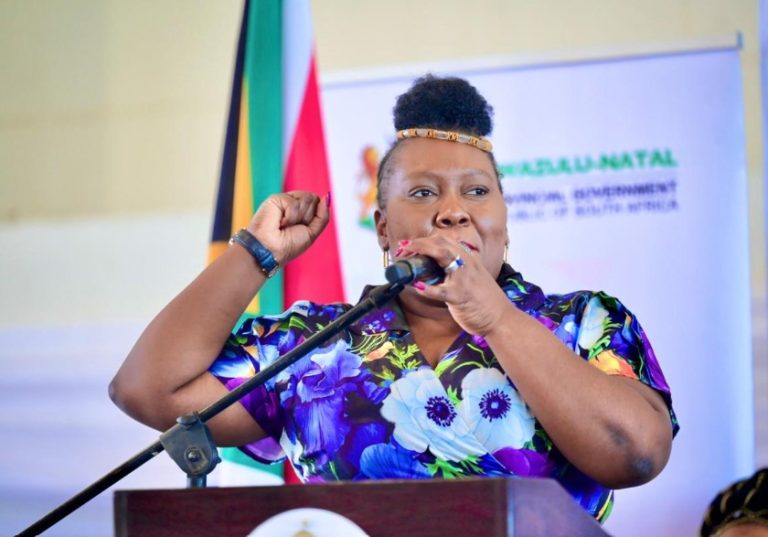
The Economic Freedom Fighters (EFF) in the Eastern Cape have called for the resignation of the Buffalo City Metropolitan Municipality mayor, Princess Faku, over allegations linked to the investigation into academic qualifications at the University of Fort Hare.

In a statement, the EFF said Faku should step down following claims that she fraudulently registered for an LLB degree. The allegations form part of an ongoing probe by the Special Investigative Unit (SIU).

ALSO READ: Free State appoints Moeketsi Mosola to lead MAP-SEZ in push for economic revival

“The Economic Freedom Fighters calls for the immediate resignation of the ANC-deployed Mayor, Princess Faku, following revelations that she fraudulently registered herself at the University of Fort Hare,” the party said.

The EFF alleged that Faku did not meet the requirements to enrol for the law degree and accused political leaders of abusing their positions to access higher education.

“In a context where millions of young people seek to pursue higher education after matriculating and are often denied entry due to limited access and space in universities, it is disgraceful that ANC politicians in the Eastern Cape use their political and financial influence to undermine the merit-based system,” the party said.

“There are worthy young people who were denied access at Fort Hare due to Princess Faku and all ANC politicians who manipulate their way into institutions of higher learning.”

ALSO READ: Tshwane metro police chief tells Madlanga Commission that Sergeant Nkosi had no right to interfere

The party said those implicated must be held accountable.

“Princess Faku and all those who are implicated in degree-fraud must immediately resign and be held responsible for undermining education, denying young people a fair chance, and stealing their university spots,” it said.

However, the ANC in the Eastern Cape has rejected the allegations.  

“The ANC has noted with great sense of disbelief and utter repugnance reckless, defamatory, and politically opportunistic utterances issued by the EFF against Buffalo City Metropolitan Municipality Executive Mayor, Princess Faku,” the party said.

The ANC said the university’s decision to defer Faku’s graduation had already been set aside by the courts and denied any wrongdoing by the mayor. Faku’s graduation was delayed in 2023. The Bhisho High Court later reviewed and set aside the university’s decision to defer or suspend her graduation, and she was conferred with her LLB degree in April 2024.

“Comrade Princess Faku did not fraudulently register at the University of Fort Hare, the record is clear, the law is clear, and the court has spoken,” the statement read.

The ANC said the EFF’s claims were politically motivated.

ALSO READ: Creecy says Lebombo border overhaul hinges on SARS systems

“The EFF’s statement is not a contribution to public accountability but rather a smear campaign built on falsehoods and deliberate distortion,” it said.

“The Executive Mayor has no reason to resign over a matter that has already been dealt with by lawful and judicial process.”

The ANC has demanded that the EFF withdraw its statement and issue an apology within 24 hours, warning that legal action could follow if it fails to do so.

The dispute comes as the broader SIU investigation into alleged irregular admissions and the awarding of qualifications at the University of Fort Hare continues.

In October 2024, President Cyril Ramaphosa signed an amended proclamation widening the scope of the probe to include the registration or admission of ineligible persons and the awarding of bachelor’s, honours, master’s and PhD degrees.

It also comes as Faku is expected to lead a planned march in East London on Friday alongside Deputy Minister of Police Polly Boshielo. The march is aimed at calling for the removal of a recently corronated Igbo king and the closure of drug dens in the California area.


INSIDE EDUCATION

SA’s first electric minibus taxi to start operating in Cape Town

0

By Charmaine Ndlela

South Africa’s first electric minibus taxi, known as the eKamva, is set to begin operating in October 2026 in Cape Town’s Century City.

The 15-seater vehicle can travel more than 200km on a single charge and takes approximately 75 minutes to fully recharge using a fast charger. It can also be charged overnight over a 10-hour period.

ALSO READ: Faro: ‘I acted immediately on ad-hoc service irregularities’

The eKamva was first unveiled at the Smarter Mobility Africa Summit in 2024 as part of efforts to reduce emissions and fuel consumption in the country’s taxi industry, which contributes significantly to carbon dioxide output.

Developed by a consortium led by GoMetro, a transport technology platform, the project forms part of an initiative to introduce electric mobility solutions tailored to South African conditions.

GoMetro CEO and founder Justin Coetzee described the project as a transformative shift for the public transport sector.

“This is a new approach to electrifying the smaller-vehicle public transport industry. We believe it will spark an entirely new economic sector and is socio-economically very important for the automotive sector,” he said.

ALSO READ: Trump warns a ‘whole civilization will die tonight’ if a deal with Iran isn’t reached

Coetzee added that while the upfront cost of electric vehicles may be high, operators stand to benefit from long-term savings.

Electric minibus taxis are expected to reduce running costs by between 40% and 70%, depending on fuel prices, route distances and the use of solar or home-based charging solutions.

In addition to cost savings, the vehicles offer significant environmental benefits, with each taxi expected to prevent roughly 13.7 tonnes of carbon dioxide emissions per year.

The eKamva forms part of a wider electric vehicle ecosystem, including charging infrastructure and a new EV business model known as flx EV, aimed at supporting taxi operators during the transition.

The pilot project will test the performance and feasibility of the vehicles before a wider rollout across the country.

INSIDE EDUCATION

ISANCO calls for return of school prayers, corporal punishment

0

By Sihle Mavuso 

The Independent South African National Civic Organisation (ISANCO) has called for the return of school prayers and corporal punishment, saying that crime, corruption, and moral decay demand a return to Christian values.

In an Easter message, party president Zukile Luyenge said the country had regressed since morning prayers and corporal punishment were removed from schools.

ALSO READ: Mbalula says ANC corruption, local failures have eroded public trust

“The government may deny it but the consequences of this error of judgement has led to the decay of morality. The abolishment of corporal punishment in our school worsened the situation.

“It was even worse when the children were given permission to access termination of pregnancy without the consent of their parents as early as 12 years of age,” he said.

ISANCO is a breakaway from the ANC-aligned SANCO. In March, Luyenge told voters to back civic organisations and traditional leaders rather than mainstream parties, accusing the ANC, the Electoral Commission and Home Affairs of an “unholy” alliance.

Days later, he joined protests over the coronation of an Igbo king in East London, saying that coronation was evidence that South Africa had become a “Banana Republic”.

Christianity is the country’s largest religious affiliation, with Census 2022 putting the figure at 85.3% of the population.

South African law, however, does not support Luyenge’s claim that prayer was simply abolished in public schools after 1994.

ALSO READ: Ladysmith Black Mambazo stalwart Albert Mazibuko dies at 77

The South African Schools Act says religious observances may be conducted at public schools under rules set by governing bodies, provided they are held on an equitable basis and attendance is free and voluntary. The national religion-in-education policy says public schools must embrace the country’s religious diversity.

Section 10 of the Schools Act states that no person may administer corporal punishment to a learner at school and says anyone who does so is guilty of an offence punishable as assault.

The Choice on Termination of Pregnancy Act says no consent other than that of the pregnant woman is required. In the case of a pregnant minor, a doctor or registered midwife must advise her to consult her parents, guardian, family members or friends, but the termination may not be denied if she chooses not to do so. National health guidelines further state there is no minimum age of consent for access to termination of pregnancy services.

Luyenge nevertheless said Easter should mark the start of a moral reset.

 “The Easter holidays are observed even by the people who spend the whole year without seeing the door of the church. May this be the beginning of the road to moral regeneration and compassion.”

INSIDE EDUCATION

Antalyaspor stun Sundowns to win 2026 Bayhill Premier U19 Cup

Johnathan Paoli

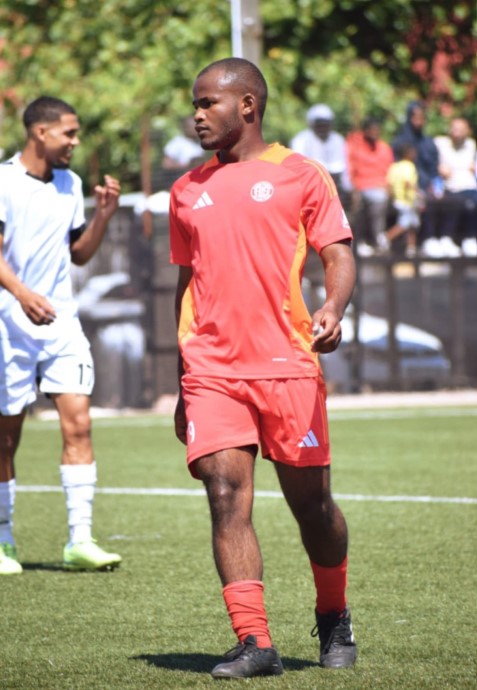
Tournament underdogs Antalyaspor JPM Cape Town defeated favourites Mamelodi Sundowns FC 1-0 to win the 2026 Bayhill Premier Cup and claim the coveted Roger Clayton Trophy at a packed Athlone Stadium in Cape Town.

In a tense and tactical final, the Cape side held their nerve against the highly rated Sundowns academy side.

Sundowns entered the clash as favourites, but were ultimately undone by a disciplined defensive performance and a decisive moment of attacking quality.

The match unfolded with Sundowns dominating possession for long periods but struggling to break down the Antalyaspor defence, who remained compact and resolute, frustrating wave after wave of attacks.

The breakthrough came after half time, via a goal by Antalyaspor player Lwandle Mdingi that sent the home crowd into raptures, giving the hosts a slender but crucial advantage.

Despite sustained late pressure, the Brazilians were unable to find an equaliser, as Antalyaspor’s defensive structure held firm through the closing stages.

At the final whistle, jubilant scenes erupted as Antalyaspor players and supporters celebrated a historic triumph for the Cape club.

“No one gave us a chance against a team of Sundowns’ calibre. But these boys played with Cape heart. They played for the badge and for every fan in those stands,” Antalyaspor coach Gareth Ncaca said after the match.

The victory caps a memorable campaign for the team, who upset one of the tournament favourites to lift the title.

For Sundowns, the defeat represents a bitter disappointment after an otherwise dominant campaign en route to the final.

Their inability to convert possession into goals proved costly against a side that executed its game plan to perfection.

Earlier in the day, Cape Town Spurs FC secured the Pat Connolly Mid-Section title with a 2-0 victory over Randburg AFC.

Spurs took control early in the first half and extended their lead shortly after the break, effectively putting the result beyond doubt.

Randburg were handed a late opportunity to claw their way back into the contest after being awarded a penalty in the dying minutes, but the spot kick was saved, sealing the result for the Cape side.

In the Bruyns Plate Section Final, Rygersdal FC delivered a commanding performance to defeat Hout Bay United FC 4-0, completing a dominant display.

The emphatic win carried added significance as Rygersdal celebrated their 50th anniversary, turning what began as an uncertain campaign into a memorable triumph.

Having entered the knockout stages as the best third-placed team, they seized their opportunity with both hands.

“Great achievement for the club as we celebrate our 50th anniversary. When we received the invitation, we were not sure how the squad would come together in such a short period, but we planned meticulously and it showed in the final,” club chairman Justin Asher said.

Asher credited the coaching staff for their ability to adapt following a difficult start to the tournament.

“We have to give it to the coaching team who worked together throughout the tournament to bounce back after the first game and win the Bruyns Plate Final,” he said.

INSIDE EDUCATION

Health warning issued after sect allegedly told to give up jobs, school, ARVs

Staff Reporter

A religious settlement in KwaMaphumulo has been accused of urging followers to abandon antiretroviral treatment and other modern medicine, leave school and jobs, and rely instead on faith healing.

The allegations have garnered backlash from the KwaZulu-Natal MEC for health, Nomagugu Simelane.

“If it is true that any person is encouraging followers to stop their ARVs, that behaviour is dangerous and cannot be tolerated. It is, in effect, a way of killing people slowly,” Simelane said.

Such actions amounted to “nothing less than genocide against people living with HIV,” she said.

The allegations were first reported on by the Sunday Tribune and SABC last week.

The Tribune reported that about 100 followers at iKhaya Labafundi in Dabangu had left careers, studies and, in some cases, medical treatment to pursue a faith-led life.

The SABC reported that more than 50 people had joined the group and that members said they did not use clinics or hospitals because it went against their beliefs.

Both media houses also carried accounts from members who said they had stopped taking HIV medication after joining the group.

The Tribune reported that one woman said she stopped ARV treatment in 2024, while SABC News quoted another member as saying she had stopped taking chronic HIV medication after “a spiritual conviction”.

The Tribune also reported concerns from nearby residents over school-age children seen at the settlement instead of in class. congregation.

The reports identified the founder as Vusumuzi Sibiya, who described the settlement as a place for people “separated unto God” and said it sustained itself through farming. He rejected descriptions of the movement as a cult and said people had joined voluntarily.

Responding during the department’s Easter Weekend Church Wellness Outreach Programme at the UCCSA in uMzinyathi, eThekwini, Simelane said the provincial government was not seeking to interfere in matters of faith, but could not ignore reports that people may be abandoning life-saving treatment.

“[W]e have a duty to act when faced with allegations that people are being misled in ways that could cost lives,” she said.

Simelane said the allegations remained unproven in a legal sense, but warned that the conduct described in the reports would be catastrophic if true.

She said the province could not afford to return to the worst years of the epidemic.

“We all remember what HIV did to our communities before the arrival of ARVs, the funerals, the orphans, the wasting away. We will not take our people back to that dark time,” Simelane said.

“Stopping ARV treatment has serious consequences. It leads to viral rebound, deterioration of health, potential death, and increased risk of transmission to others. Spreading misinformation on this matter cannot be taken lightly.”

Simelane also appealed to churches to work with the health department rather than undercut public health messaging on HIV and AIDS.

“Pastors play a big role in our communities. They preach weekly to people who believe in them. If their message on HIV and AIDS is dwindling, that is dangerous. We are willing to train and equip pastors so that they can become our ambassadors in combating HIV and AIDS. The Bible says my people perish because of a lack of knowledge,” she said.

She called for sanctions if the allegations are proved. “Anyone who misleads people by telling them to abandon ARVs must face the full might of the law. That is tantamount to causing harm,” Simelane said.

She told people living with HIV to remain on treatment. “Prayer, rest, and medical faithfulness save lives.”

INSIDE EDUCATION

Explainer| How South Africa’s basic fuel price is calculated

Des Erasmus

For students, a fuel hike is not just bad news for those who drive to campuses. It can mean pricier taxi fares, more pressure on family budgets, and less room for basics like food, medicine, and study costs.

From 1 April, petrol increased by R3.06 a litre, while diesel increased by between R7.37 and R7.51 a litre. The temporary R3-a-litre fuel levy cut by the government — introduced only for April — is meant to soften the blow.

Many students already operate within tight transport budgets and depend heavily on public transport. Taxis are the main mode of travel to post-school education and training institutions for 42.2% of students overall, with buses accounting for 12.1%, according to Statistics SA.

Treasury has already flagged concern about fuel’s knock-on effect on food and transport inflation, and Stats SA says transport remains the third-largest category in the consumer inflation basket.

In other words, a fuel shock is not confined to motorists. It can ripple through the everyday costs students face, from taxi fares to the price of basic goods.

So, how exactly is the country’s basic fuel price calculated?

The amount paid per litre is not simply the cost of the fuel in the tank. It is built up from a formula that starts overseas and ends with a long list of local transport costs, margins, levies and taxes.

According to the Department of Mineral and Petroleum Resources, South Africa uses an import parity model to calculate the Basic Fuel Price, or BFP. In simple terms, this means the country prices fuel as if a substantial share of its liquid fuel needs had to be imported from major overseas refining centres.

The department says this system is meant to reflect the realistic cost of importing fuel and to ensure that local refineries compete with international suppliers. Petrol prices are therefore linked directly to prices quoted in US dollars at export-oriented refining centres in the Mediterranean, the Arab Gulf and Singapore.

That means the BFP is shaped first by three major global factors: international crude oil prices, international supply and demand for petroleum products, and the rand-dollar exchange rate. If oil prices rise, or if the rand weakens against the dollar, the basic fuel price usually comes under pressure.

The international calculation also includes freight costs to bring the fuel to South African ports. Added to this are fines for shipping delays, insurance, ocean loss during transport, cargo dues for using harbour facilities, coastal storage, and stock financing.

Once all of those costs have been added, the BFP is converted from international units, such as barrels or tons, to cents per litre using the applicable exchange rate.

Domestic factors are then added on top of that. These include inland transport costs to move fuel from the coast to depots and inland markets, the wholesale margin paid to marketers, and the retail profit margin paid to service station operators.

Government charges are also a significant part of the final price. These include the General Fuel Levy, the Road Accident Fund levy, the Carbon Fuel Levy and the Customs and Excise Levy.

Then there is the Slate Levy, which works as a balancing mechanism. Because the daily BFP can be either higher or lower than the official fuel price structure at the time, over-recoveries and under-recoveries build up over a month. If the balance turns negative, a Slate Levy can be imposed to recover the shortfall.

INSIDE EDUCATION

North West classroom fire adds to province’s growing school vandalism crisis

By Johnathan Paoli

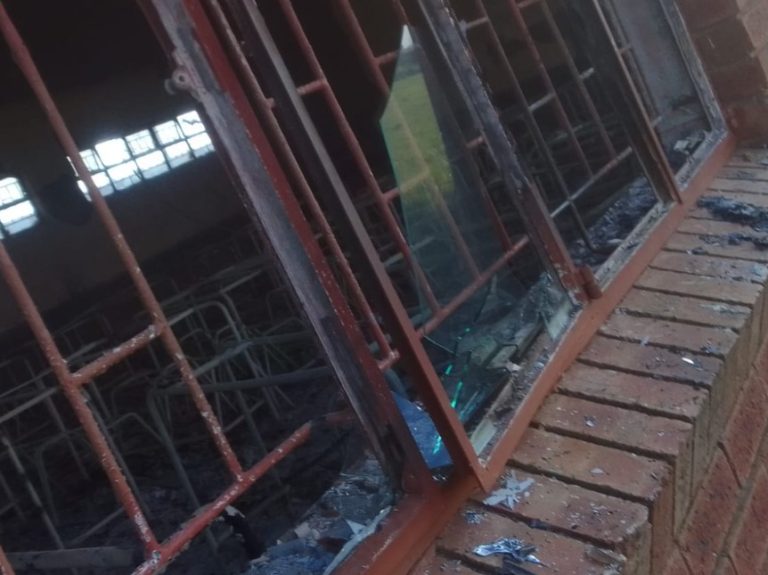
The North West Department of Education has condemned the destruction of a classroom by fire at FM Ramaboa Technical School in Itsoseng township, near Lichtenburg, describing the incident as a serious setback to ongoing efforts to improve school infrastructure in the province.

The cause of the fire has not yet been confirmed, but a case of malicious damage to property has been opened with the local police, and investigations are underway.

North West MEC for Education Viola Motsumi condemned the incident, calling it a “barbaric” act.

“On behalf of the Department, I wish to condemn in the strongest terms this barbaric incident, which seeks to destroy learners’ education. I call on the South African Police Service to get to the bottom of this incident and arrest whoever is responsible. Such culprits need to be given the harshest sentence in order to show others that destroying educational assets is not the way to go,” Motsumi said.

She added that the department remains deeply concerned about recurring incidents of vandalism and arson targeting schools, particularly during school recess periods.

“As a Department, we are concerned about these incidents of damage to school assets. Every time during the school recess, we receive these types of reports at our schools. I appeal to community members to remain alert to any suspicious activity at schools and to report it to their nearest police station,” she said.

The blaze, which broke out in the early hours of Saturday, gutted one classroom in the Grade 8 block, destroying furniture, learning materials and parts of the building.

Department spokesperson Vuyo Mantshule said the department was alerted to the incident shortly after it occurred, prompting an urgent response from local authorities.

Two teachers were contacted by the school principal, who was unable to reach the scene at the time, who informed them that the school was on fire and urged them to rush over in order to assess the extent of the damage.

When the teachers arrived, police officers and fire department officials were already on site.

However, emergency responders were initially unable to access the school grounds as the gates were locked, forcing them to break the chains to gain entry.

Firefighters eventually managed to extinguish the blaze, but not before extensive damage had been caused to the classroom.

Mantshule confirmed that 48 chairs, 32 desks, a chalkboard, as well as the ceiling, classroom tiles and textbooks were destroyed in the fire.

The incident is the latest in a series of school fires reported across the province, raising alarm about the vulnerability of educational facilities and the broader impact on already strained infrastructure.

In recent years, the province has faced persistent challenges related to school infrastructure, with several facilities reported to be in poor or deteriorating condition.

Oversight visits last year revealed widespread shortcomings and indicated that only a small fraction of the province’s more than 1,400 schools are classified as being in excellent condition.

In November 2024, six classrooms were destroyed at Rauwane Sepeng Secondary School in Rustenburg during matric exams, disrupting learning and highlighting ongoing safety concerns.

INSIDE EDUCATION

Disability inclusion must be built into universities, says Manamela

Staff Reporter

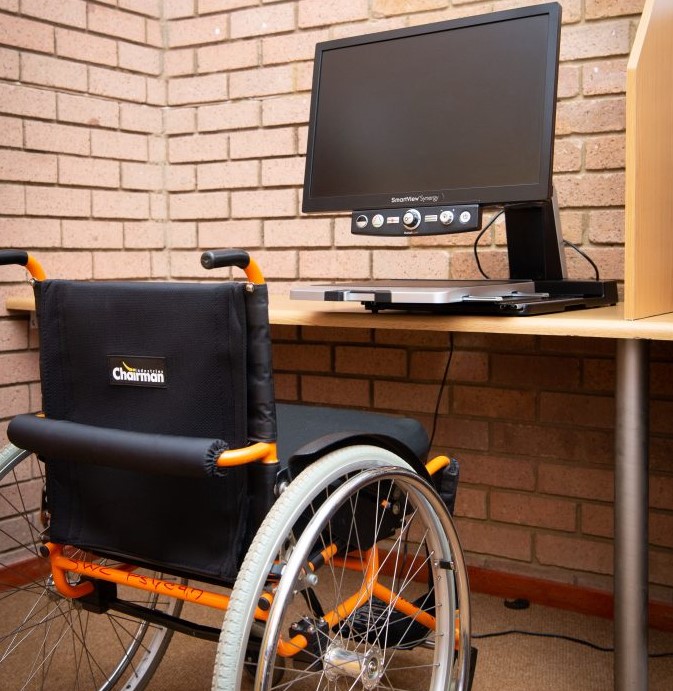
Students with disabilities made up just 1.3% of South Africa’s public university enrolments in 2023, Higher Education Minister Buti Manamela said, urging African universities to build accessibility into their systems rather than treat it as an afterthought.

Speaking at the third edition of the Times Higher Education Africa Universities Summit in Nairobi, Manamela said the numbers showed how far the sector still had to grow regarding inclusion. “These are not figures of inclusion at scale,” he said.

Instead, they were “signs of how much work remains to be done”.

He said the barriers went far beyond admissions, extending to “infrastructure, digital design, assistive technology, curriculum adaptation, staff training” and whether institutions were built around universal accessibility rather than assumptions about a “normal” student.

“Inclusion is not a speech. It is design,” he said.

He said South Africa’s female-majority enrolment pattern was not the continental norm.

Across sub-Saharan Africa, he said, tertiary education still enrolled roughly 80 women for every 100 men, while Kenya’s gross tertiary enrolment stood at about 13% for men and 10% for women.

He called on universities to move beyond symbolic commitments and publish disaggregated data on enrolment, retention, completion, employment outcomes, disability access and leadership representation.

“Without that, we do not have transformation. We have anecdotes,” he said.

Manamela also warned against presenting equity as a choice between competing groups, saying gains by women should not obscure deeper inequalities, while concerns about male disengagement should not be used to roll back gender justice.

“The task is not to choose between women and men. The task is to build institutions capable of producing equality for all,” he said.

He said higher education could not be separated from poverty, labour market inequality and social conditions.

“The higher education question is inseparable from the social question,” he said.

Manamela said South Africa’s experience showed that policy could widen access, particularly for women, but had not yet closed deeper gaps in leadership, employment outcomes, and disability inclusion.

He said the goal should be “not access without success” and “not inclusion without power,” but “real equality.”

INSIDE EDUCATION

Teachers warned over sharing learner photos online without consent

0

By Charmaine Ndlela

Before you post, pause.

Sharing images of children without consent is not only unethical, but it may also be unlawful and expose learners to serious harm.

In South Africa, legislation such as the Protection of Personal Information Act (POPIA), the Children’s Act, and the Films and Publications Act exists to safeguard children’s rights, privacy, and safety. Any identifiable image, including a child’s face, name, school uniform, or location, is classified as personal information and requires explicit consent before being shared.

The debate has intensified following a viral incident at Thembalethu Primary School, where a Grade 1 learner was filmed and shared online without proper consideration of the consequences. The case has reignited questions about whether teachers should be prohibited from posting learners on their personal social media accounts.

ALSO READ: Things to do on the KZN South Coast this Easter weekend

Legal experts warn that once an image is shared online, control is effectively lost.

According to Dr Bruyn Attorneys, once a photo or video is viewed by third parties, it is legally considered “published”, meaning it is no longer private and can be distributed beyond the control of parents or guardians.

South Africa’s Constitution, under Section 14, guarantees the right to privacy for all citizens, including children. This protection extends to safeguarding their personal information and shielding them from unnecessary exposure.

POPIA, enacted in 2021, further strengthens this protection by classifying children’s data as “special personal information”, requiring strict parental consent before it can be collected, processed, or shared.

South Africa is also a signatory to the United Nations Convention on the Rights of the Child (UNCRC), which reinforces the importance of protecting children from arbitrary interference in their privacy and personal lives.

ALSO READ: Draft BELA rules aim to keep pregnant learners in school

Obtaining parental consent is essential, as it protects children’s privacy and safety, ensures legal compliance, respects parental rights and builds trust between schools and families, a process that, a grade 7 assistant teacher Dintle Soetsane at Mokhesi Junior Secondary School situated at Sterkspruit, Eastern Cape, speaking to Inside Education explains, should clearly outline what is being filmed, where it will be shared, and give parents the right to refuse or withdraw permission at any time.

Dintle adds that consent forms are not just administrative documents, but serve as formal agreements that specify whether content may be shared on school platforms or teachers’ personal social media accounts, while also protecting both the school and families.

“Without consent, schools and teachers risk violating both policy and law,” she said.

In cases where consent is not granted, experts advise that children should not be identifiable in any shared content. This includes avoiding clear images of faces, school uniforms, or locations, or using methods such as blurring.

The issue has exposed a growing divide between educators and parents. 

Some teachers say they avoid posting learners altogether to protect themselves.

“I don’t post my learners… parents are complaining about everything, so I just want to be on the safe side,” said one teacher.

Parents, however, are firm in their stance.

ALSO READ: DHET, Google sign AI skills deal with 10,000 scholarships

“We don’t want people, including teachers, posting our children online. That is not why they are at school,” said one parent, adding that consent cannot be assumed simply because a teacher means well.

Others point out that consent forms are distributed at the beginning of each school year, giving parents the option to allow or deny the use of their child’s images.

“If you signed the consent form, then the school is not wrong,” another parent said.

However, concerns remain about teachers using personal social media platforms such as TikTok, Facebook, and WhatsApp for content creation, often beyond what parents originally agreed to.

“I am a teacher, and I don’t post my students unless it’s strictly academic. Some colleagues are overdoing it for content,” said another educator.

The South African Democratic Teachers’ Union (SADTU) maintains that teachers must obtain parental consent before filming or photographing learners.

Speaking to Inside Education, SADTU spokesperson Nomusa Cembi said posting learners on personal social media without consent is wrong and could lead to disciplinary action.

“If a teacher posts learners without permission, a complaint must be laid, and a disciplinary process should follow,” she said.

Cembi emphasised that once a child’s image is shared online, their identity is exposed to the world, increasing risks such as cyberbullying and exploitation.

Education stakeholders stress that consent must go beyond a simple signature, adding that, true informed consent goes beyond a signed form. It is a clear, voluntary agreement given by a parent or legal guardian who fully understands what is being recorded, how the content will be used, where it will be published, and who will have access to it. It also means parents are aware that they have the right to say no without any negative consequences for their child.

Many parents are now calling on the Department of Basic Education to introduce stricter policies governing social media use by teachers.

ALSO READ: Jansen says postgraduate education needs reset

“I feel like some teachers are now focused on content rather than teaching,” said one parent.

The Films and Publications Board has also warned against posting images of children in school uniforms online, citing risks to their privacy and safety.

Experts agree that protecting children online requires a collective effort.

Therefore, teachers are encouraged to respect consent agreements, follow school policies, and prioritise education over online engagement.

In an era where digital content spreads rapidly and permanently, one post can have lasting consequences.

Safeguarding children’s identities is not just a legal requirement; it is a shared responsibility.

In a country grappling with high levels of cybercrime and child exploitation, even a seemingly harmless post can have lasting consequences.

The safety of all learners is a collective effort in ensuring that their identity is always protected from the vultures of social media and creating a safe environment for them. It all starts with the POPIA Act.

INSIDE EDUCATION

Things to do on the KZN South Coast this Easter weekend

0

By Inside Politics reporter

The KZN South Coast is shaping up as a strong Easter option for families, beachgoers, and day trippers.

South Coast Tourism says Easter remains a key travel period for the district, and its 2026 listings point to everything from egg hunts and fun walks to inland adventure and beach time.

For a simple seaside break, the region’s beaches remain the obvious drawcard.

ALSO READ: Joburg beefs up Easter safety plans

The South Coast has eight full Blue Flag beaches, including Trafalgar, Marina, Ramsgate, St Michaels, Umzumbe, Southport, Hibberdene and Pennington.

The beaches are protected by anti-shark measures and lifeguards, making the coast an easy family base over the holiday.

Families chasing Easter-themed outings have several event options.

South Coast Tourism lists an Easter egg hunt at Dino Park SA in Melville on 4 and 5 April, a colour fun walk at Scottburgh Beach on 4 April, and an Easter egg hunt at Tanglewood Forest in Ramsgate on 4 April.

There is also an Easter Bunny day at Mac Banana, in Munster, near Port Edward, on 5 April.

For visitors wanting more than beach towels and chocolate eggs, the inland attractions are worth the drive. Wild 5 Adventures in Oribi Gorge offers ziplining, abseiling and hiking, while Lake Eland has zipline tours, a suspension bridge, game drives, horse riding and day visitor access from 7 am to 5 pm..

ALSO READ: Lesufi reshuffles cabinet as Maile moves to Education, EFF takes Finance

Scottburgh’s Crocworld is another easy all-ages stop, with crocodile feeds scheduled from Tuesday to Sunday at 11 am and 3 pm.

For a slower finish, Beaver Creek Coffee Estate near Port Edward runs its Crop to Cup coffee tour daily at noon, with tasting included.

INSIDE EDUCATION