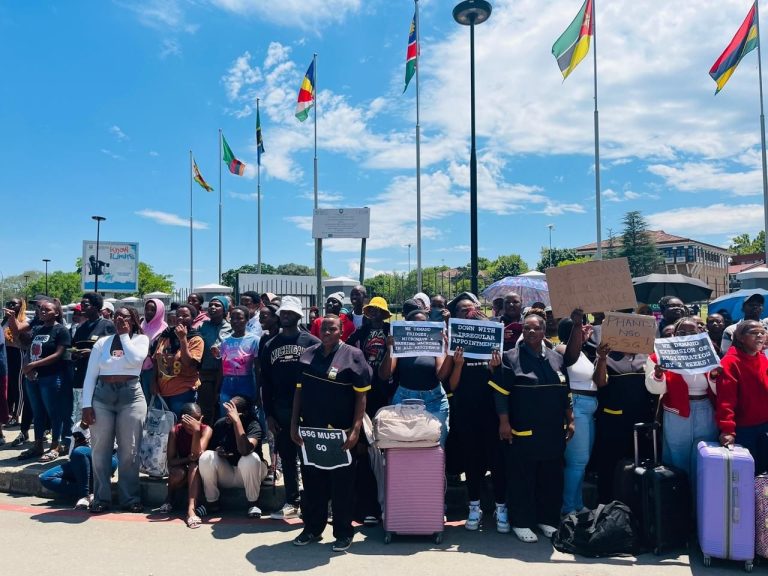
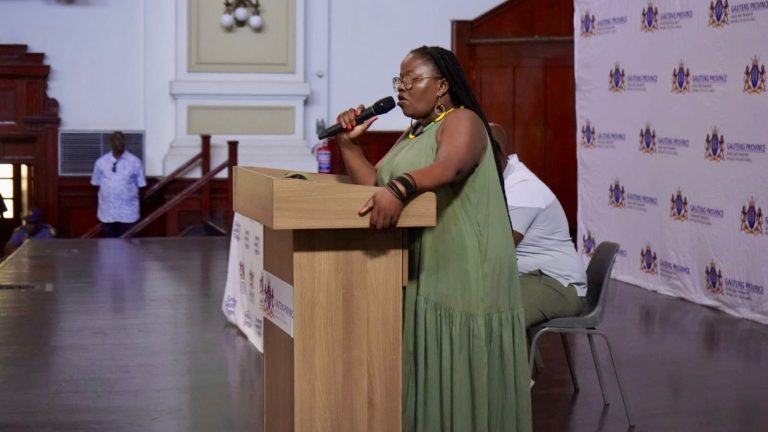
Scores of students from the Cape Peninsula University of Technology (CPUT) are staging a picket roughly 100 metres from the Cape Town City Hall while President Cyril Ramaphosa delivered the State of the Nation Address (SONA).
The protest, held roughly 100 metres from the venue, highlighted the growing student housing crisis.
Many demonstrators carried luggage, blankets, and placards, saying they had nowhere to sleep after being evicted from residences earlier in the day.
Students claim they have been left homeless due to ongoing evictions from university residences.
CPUT declared its residences full earlier this month, directing thousands of students to seek private accommodation.
Reports from SABC News and Daily Maverick revealed that many students, particularly from the Eastern Cape and KwaZulu-Natal, have been sleeping on pavements and in campus hallways while awaiting placements.
The protesters are demanding urgent intervention from government, citing unresolved funding issues and the lack of stable student housing. They are reportedly waiting for feedback from Minister of Higher Education Buti Manamela following Ramaphosa’s address.
“We are carrying our bags because we have nowhere to go tonight. We want answers, not promises,” one student told reporters at the scene.
A heavy police guard blocked the students’ path, keeping them approximately 100 metres away from the president’s address at City Hall.
This picket follows a week of escalating tensions at CPUT. Earlier in February, the university confirmed that its residences had reached capacity, leaving thousands without accommodation. The crisis has intensified as evictions continued, with students forced out of housing even on the day of the SONA.
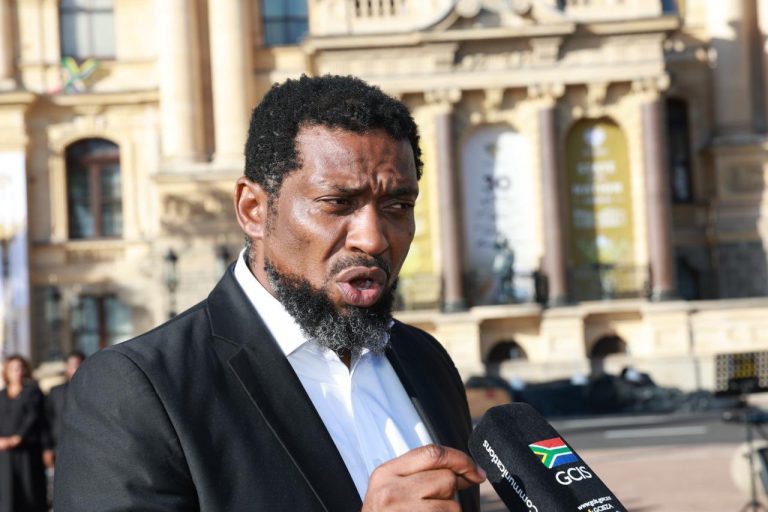
Minister of Higher Education and Training, Buti Manamela, has reiterated that the National Student Financial Aid Scheme (NSFAS) continues to serve as a critical pillar of student access in South Africa.
Speaking before President Cyril Ramaphosa’s State of the Nation Address (SONA), Manamela confirmed that more students have been approved for funding in the 2026 academic year, widening participation.
For the 2026 academic cycle, NSFAS has provisionally approved 626,935 first‑time applicants, while 427,144 continuing university students successfully met academic progression requirements.
To ensure a smooth start to the year, NSFAS disbursed R3.6 billion in allowances to universities and R679 million to TVET colleges in early February.
These upfront payments cover registration, tuition, and initial living expenses, preventing students from being excluded from registration due to financial barriers.
Manamela emphasized that this proactive disbursement reflects NSFAS’s effectiveness in stabilizing the academic calendar and safeguarding access for vulnerable students.
While Manamela acknowledged that NSFAS has performed well in dispensing bursaries, challenges remain in addressing the “missing middle” students from households earning between R350,000 and R600,000 annually.
“The money is there, but we’ve had only a few students applying. We have instructed our department to work together with NSFAS and the University of South Africa forum, alongside all stakeholders, to see how we can effectively use those resources to unlock potential,” Manamela said.
He further admitted that while bursary distribution has been effective, the loan scheme has faced hurdles.
“There have been some challenges, and we’re hoping that the team we’ve put in place to look at how we can effectively deal with the challenge of the missing middle will be able to deliver a turnaround. We should be able to communicate something in the next few days,” he added.
Manamela also touched on the broader issue of capacity in the post‑school education system. Responding to questions about the promise of building two new universities, he said: “we’ll have to hear from the President what he says today about infrastructure in the post‑school education and training system. There’s more demand for university seats, and even more demand for TVET college seats. The important thing now has become the establishment of those universities legally. We’re exploring means to do that, and as soon as we can mobilize sufficient resources, we should be able to broaden out.”
He stressed that expansion is not limited to new institutions.
“Certain universities have individually grown, which means more space. So it’s not just about building two more universities, but also about growing the existing stock of universities, which is much more cost‑effective.”
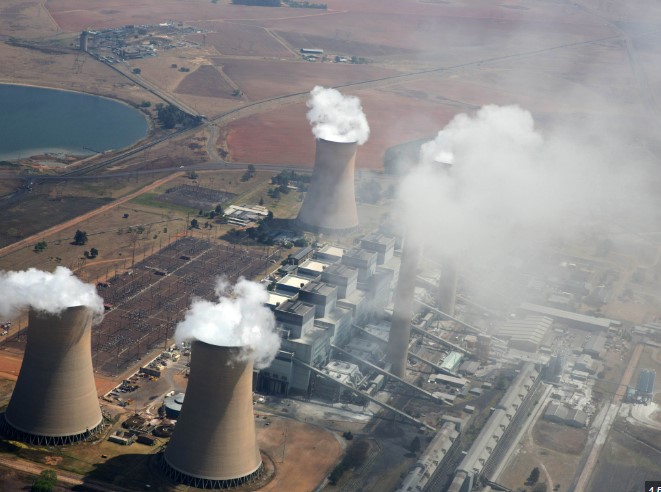
Young people in Johannesburg are moving into environmental policymaking after a city-backed workshop aimed at preparing them to help shape the metro’s response to air pollution, the City of Johannesburg said.
The Air Aware Pre-Conference Workshop on Air Pollution Policy and Implementation was held on Monday at the South African Institute of International Affairs (SAIIA) headquarters in Braamfontein, ahead of the Air Aware: Youth-Led Conference on Air Pollution Policy and Implementation on 26 February at the Wanderers Club.
The workshop included group engagements in which participants provided written inputs for a youth statement on air pollution and health impacts in Johannesburg, which the city’s Environment and Infrastructure Services Department (EISD), working with Breathe Cities and the SAIIA Youth Programme, said would be presented directly to policymakers.
Musa Mahlatji, deputy director for air quality management at the city, said the metro remained committed to inclusive environmental governance.
“By creating space for youth voices in air quality management and policy dialogue, we are building a generation that understands the impacts of pollution and is ready to champion cleaner, safer air for everyone,” he said.
In its statement, the city said discussions covered air quality and public health impacts, clean mobility solutions, waste-to-value and no-burn alternatives, youth accountability and governance, 2030 clean air futures, and the development of school-level air quality action platforms.
“It enabled them to gather credible air quality evidence and learn how to communicate it effectively in advocacy and policy spaces,” the city said.
One participant, Paseka Molejane, said the engagement was both educational and necessary.
“These conversations are vital. We have learned more about air pollution and the solutions the city is implementing. Improving air quality requires educating communities and sharing this information widely,” he said.
The city said air pollution remains one of Johannesburg’s most serious environmental and public health challenges, disproportionately affecting children and young people in marginalised communities.
Youth@SAIIA Project Coordinator and Youth Air Champion, Lehlohonolo Jack, said young people should be included in environmental governance.
“Young people bring lived experiences and future-focused solutions that strengthen policy platforms. Their inclusion ensures that decisions taken today reflect the realities and aspirations of the next generation,” Jack said.
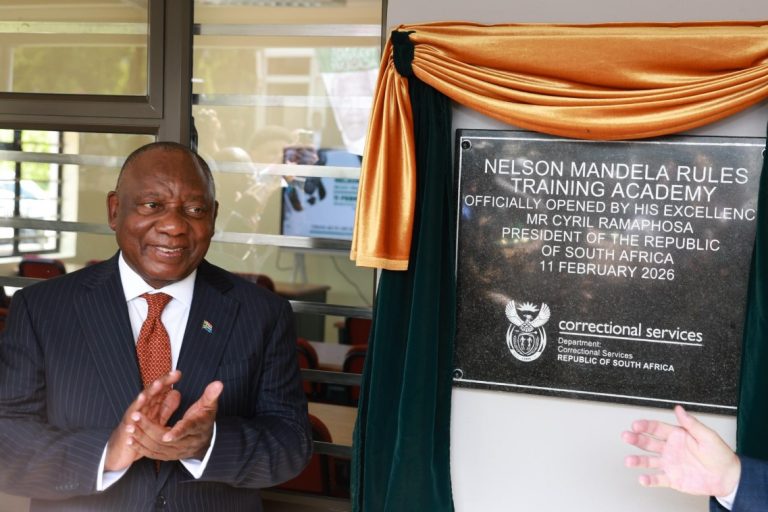
President Cyril Ramaphosa on Wednesday officially launched the Nelson Mandela Rules Training Academy at the Drakenstein Correctional Facility between Paarl and Franschhoek in the Western Cape, saying the facility marked a new chapter in the country’s history.
Formerly known as Victor Verster Prison, the site was the last place Nelson Mandela was imprisoned before his release in 1990.
The academy is the first of its kind in Africa and forms part of correctional services’ efforts to adopt and embody the principles of the United Nations Standard Minimum Rules for the Treatment of Prisoners — known as the Nelson Mandela Rules — adopted by the UN General Assembly in 2015.
The training academy will serve as a centre for learning and rehabilitation, helping to shape improved correctional practises.
“Having spent 27 years in prison, Mandela championed the fair and humane treatment of all people. Mandela believed offenders deserve dignity, respect and humane treatment, and that justice is measured not by how harshly punishment is administered, but by how faithfully human dignity is upheld, even in difficult circumstances,” said Ramaphosa in his keynote address.
The facility will serve South African officials as well as the wider global corrections community.
🇿🇦President @CyrilRamaphosa officially opens the Nelson Mandela Rules Training Academy at the Drakenstein Correctional Facility in the Western Cape, marking a significant milestone in advancing human rights, humane correctional practices, and the protection of the dignity of… pic.twitter.com/1xVfCz7yRf
Ramaphosa noted that visitors to the academy are welcomed by artwork created by offenders, saying, “This is not incidental. It is deeply symbolic. It reflects the very essence of rehabilitation. It is about unlocking human potential, creativity and self-worth.”
He added, “The furniture that fills this academy has also been produced by offenders within our correctional system. Every table, every chair, every crafted piece speaks to the power of skills development, meaningful work and the desire for change.”
Speaking about the facility’s transformation, Ramaphosa said, “Today we open a repurposed, renovated and expanded facility transformed into a modern training academy. One cannot help but marvel at the quality of workmanship. It fills me with pride to appreciate work of such high standard being produced by local hands, by men and women within our correctional system.
“The training academy will be a success through partnership with the United Nations Office on Drugs and Crime, the custodian of the Nelson Mandela Rules. The academy will ensure that training, practise and policy are guided by the values Mandela stood for,” Ramaphosa said.
“This facility symbolises the humanisation of corrections, the elevation of dignity, and the global pursuit of justice rooted in humanity.”
He also paid tribute to correctional services officials.
“Every day, correctional officials operate under difficult and sometimes dangerous conditions. Their responsibility extends beyond custody and security. They are tasked with transforming lives and instilling hope where there is often despair.”
Acknowledging challenges in the sector, Ramaphosa said, “We appreciate and acknowledge the challenges posed by overcrowding and resource constraints. However, I take great encouragement from the efforts within the department to advance self-sufficiency and sustainability, skills development and productive work, ensuring that correctional facilities become places of rehabilitation rather than mere containment.”
The centre was unveiled on the 36th anniversary of Mandela’s release from prison on 11 February 1990.
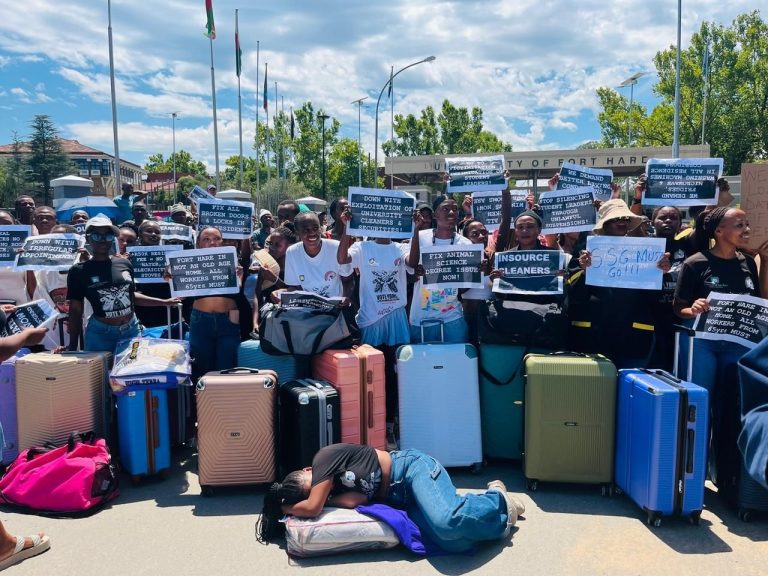
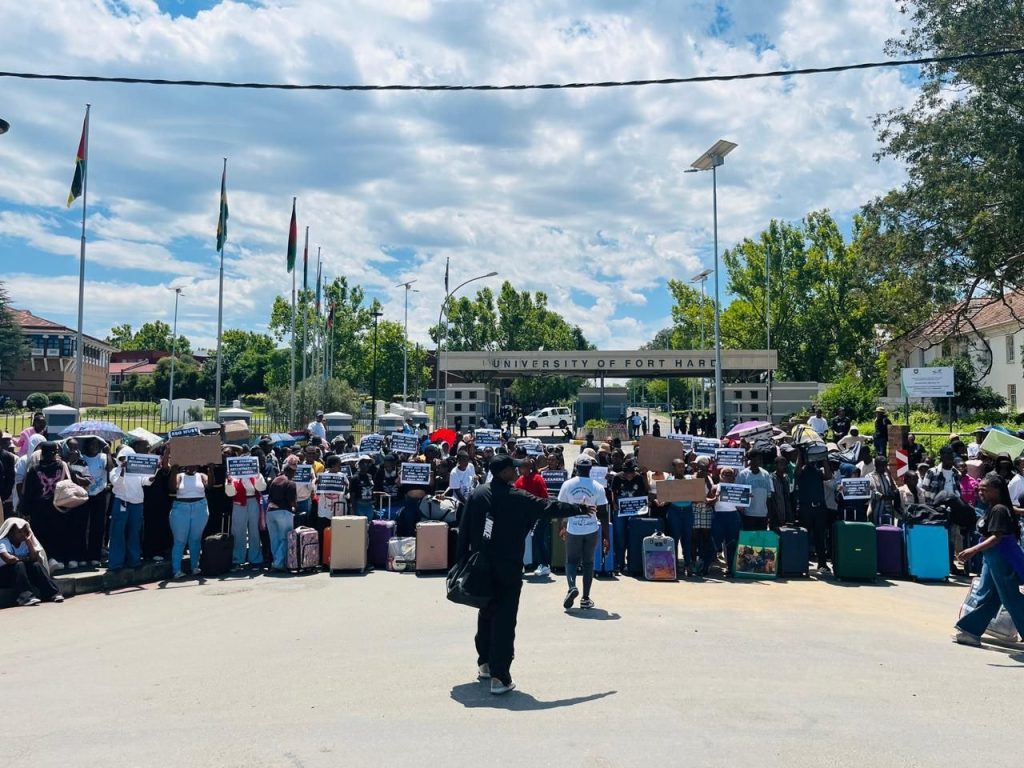
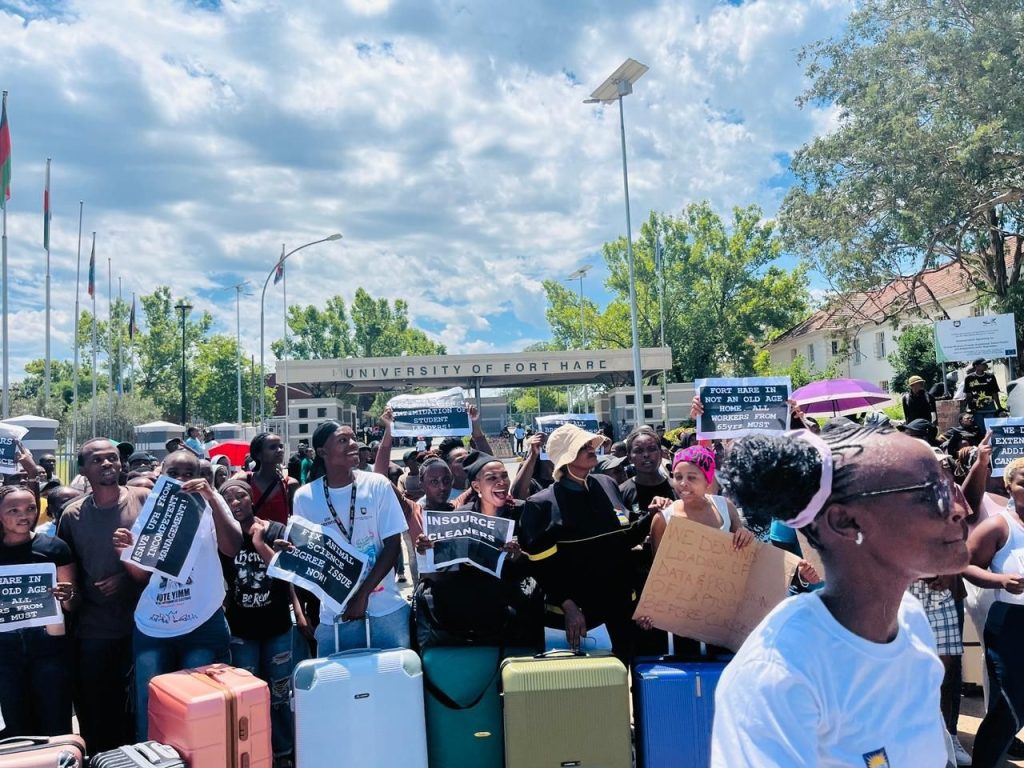
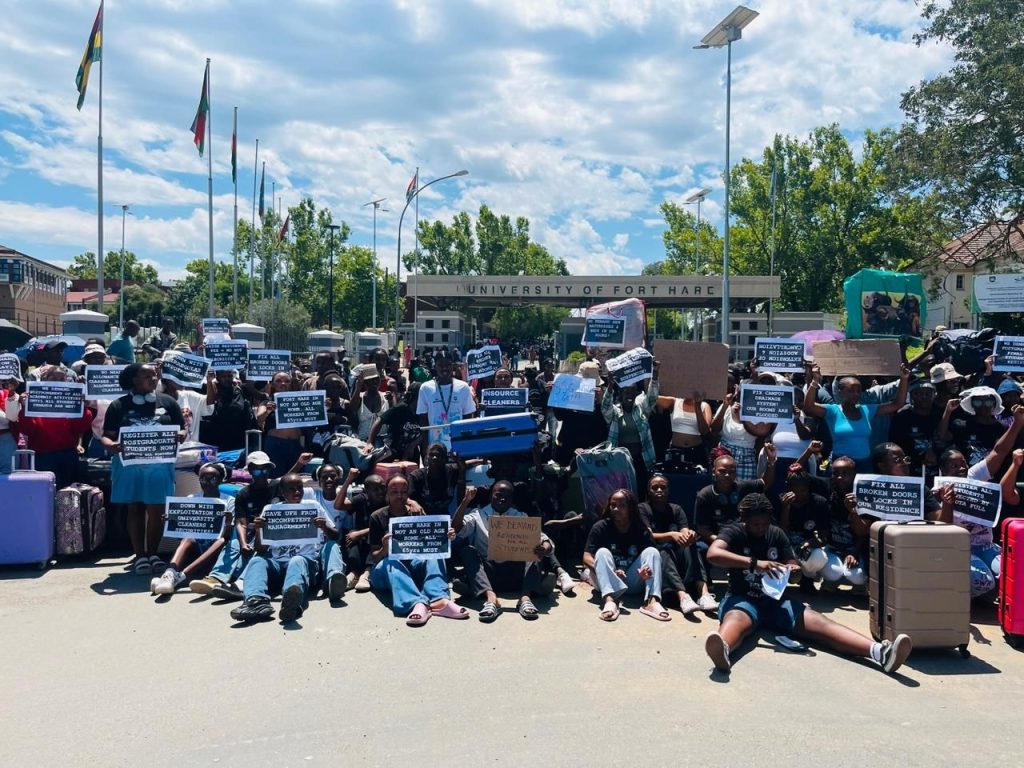
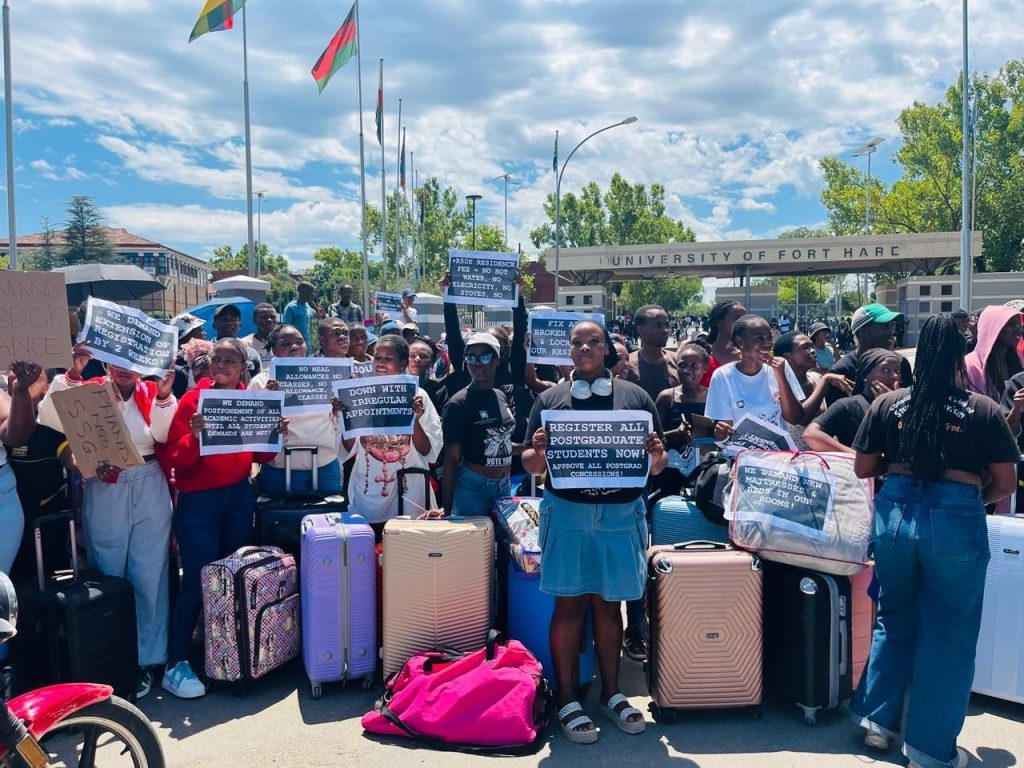
The University of Fort Hare’s Alice Campus is currently shut down due to ongoing student protests.
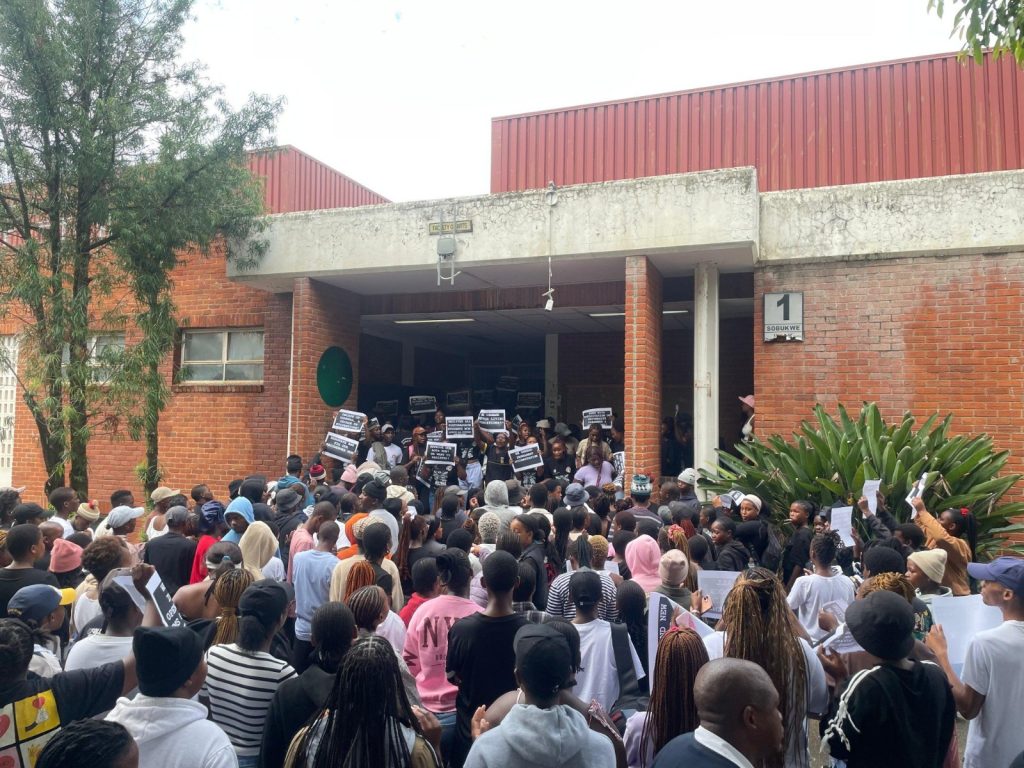
Students have been demonstrating against the university’s administration, demanding answers about accommodation, allowances, and registration problems.
The shutdown comes just days after the university publicly indicated it was ready for the 2026 academic year, reporting a generally smooth registration process and confirming that the academic programme had officially started on 2 February.
The protests, led by the Young Brightest Motivated Minds (YBMM) student organisation, have brought academic activity at the campus to a halt, with entrances closed and students mobilised at key points on campus, including the Poolside area near the Old Student Centre and the main gate.
Central to the unrest is a 22-point Memorandum of Demands. The memorandum cites long-standing issues, including unpaid meal and book allowances, unregistered students, lack of permanent accommodation, electricity outages in residences, and administrative delays affecting quota and postgraduate students.
“The failure to address these matters has severely compromised students’ academic participation, safety, dignity, and overall well-being,” the memorandum states.
It demands an immediate postponement of all academic activities until the issues are resolved, as well as the provision of data and laptops, permanent electricity in Mzana residences, and extensions of registration and academic deadlines.
Other demands include residence renovations, working lights and heaters, hot water, 24-hour security, new beds and curtains, disability-friendly infrastructure, and the resolution of the Animal Science degree issue.
Students also call for the insourcing of cleaners and security staff, an end to irregular appointments, and protection of student leaders from victimisation.
“Proceeding with the academic year under these conditions is unjust, unreasonable, and discriminatory against poor and working-class students,” the memorandum reads.
YBMM first announced a mass demonstration rejecting the university’s official academic opening on Monday, saying that it was “unconscionable” for management to proceed with ceremonial events while students were struggling to secure basic necessities.
“This collective action has become necessary because several critical and long standing student issues remain unresolved, despite repeated calls for urgent attention and dialogue,” the organisation said in a statement.
Students gathered in large numbers and marched to demand that Vice-Chancellor Professor Sakhela Buhlungu receive the memorandum. However, tensions escalated after the vice-chancellor did not appear to meet them in person.
YBMM expressed “deep disappointment” when the official academic opening was moved online, accusing the vice-chancellor of avoiding direct engagement during a crisis.
“Seven hours later of students repeatedly pleading and attempting to negotiate with the vice-chancellor, he still remains resistant to take heed of the urgent grievances raised by students,” YBMM said.
Students have been demonstrating against the university’s administration, demanding answers about accommodation, allowances, and registration problems
The situation intensified when students moved their demonstration to the main gate, vowing not to disperse until management agreed to meet them “halfway through constructive dialogue”. Police were deployed on campus to monitor and mediate, but the standoff persisted.
Among the key demands was the immediate payment of book allowances. On Tuesday, YBMM confirmed that book allowances had been loaded for qualifying students, describing it as a direct result of sustained pressure and collective action.
“This is proof that unity and struggle yield results,” the organisation said.
“However, the shutdown continues until the vice-chancellor comes down to formally receive the memorandum of demands and all outstanding demands are fully met.”
Despite this partial breakthrough, YBMM announced that the shutdown would not only continue but be intensified.
In its latest statement, the organisation said it would now seek to strengthen the shutdown “through the powers of the SRC” to consolidate student struggles under a unified structure representing the broader student body.
Students have been demonstrating against the university’s administration, demanding answers about accommodation, allowances, and registration problems.
“We still see the need for the shutdown to continue as the university continues to show no sense of urgency to deal with these issues,” YBMM said.
“This decision has been taken to strengthen the shutdown and ensure that it carries greater impact, unity and effectiveness across the university.”
The shutdown has had knock on effects. The Economic Freedom Fighters Youth Command Alice branch announced that the distribution of Intellimali cards could not proceed due to the disruption on campus.
YBMM has further alleged that the university’s ICT department had been mandated to limit WiFi access to social media platforms and that threatening emails referencing a court order were circulated, which students view as attempts to discourage protest. These claims have not yet been publicly addressed by university management.
Gauteng’s education department said 1,174 learners applying for Grade 1 and Grade 8 admission in 2026 remained unplaced.
The department said on Tuesday that capacity pressures in high-demand areas, particularly in Johannesburg and Ekurhuleni, contributed to lack of placements.
“The majority of learners who applied for placement in Gauteng for Grade 1 and Grade 8 have already been successfully placed in public schools across the province,” the department said.
The unplaced learners include 882 Grade 1 learners and 292 Grade 8 learners, the department said.
“While placement at preferred schools may not always be immediately possible, we are actively working with schools to identify available spaces and finalise outstanding placements as a matter of urgency,” it said.
“We wish to reassure parents that all qualifying learners will be accommodated, and ongoing engagements with schools aim to ensure fair and timely placement,” it added.
Gauteng’s education department said scholar transport services across the province were expected to fully resume from Monday, 16 February, after a meeting with transport operators resolved issues, including outstanding payments and learner verification processes.
Gauteng MEC for Education Matome Chiloane gave the update on Tuesday after “a constructive engagement” aimed at stabilising the programme and restoring uninterrupted access to education for learners.
The meeting involved associations representing about 250 contracted scholar transport service providers, operating an estimated 3,600 buses and transporting roughly 238,000 learners daily across Gauteng, the department said.
The meeting followed the suspension of services by some operators related to delayed payments.
“The discussions were extensive and frank, with all parties acknowledging that the continued disruption of learner transport was untenable and not in the best interest of learners, parents or communities,” the department said.
It said the talks resulted in “a shared commitment to normalise services while outstanding matters are addressed through the appropriate administrative and financial processes”.
The department said all matters within its mandate were resolved, including “resolution of payment matters, including confirmation that outstanding invoices for November 2025 will be processed and paid by the end of the current week”.
It also reached agreement on “processes related to learner verification and confirmation of transported learners, including clarity on the learner verification forms currently signed at schools and the department’s transition towards a digitised system”.
Following the resolutions, operators committed to consult with their members on a phased resumption of services, taking into account logistical challenges linked to the earlier suspension, including “the temporary removal of vehicles for safety and asset protection reasons,” the department said.
“In principle, full scholar transport operations across the province are expected to resume from Monday, 16 February 2026, marking the return to normal service delivery,” it said.
Chiloane said the department remained concerned about the impact of disruptions on learners, including academic setbacks and exposure to unsafe transport alternatives.
“We acknowledge the frustration and distress experienced by learners, parents and communities during this period. The disruption of scholar transport services is not a situation we take lightly, and we regret the inconvenience caused,” Chiloane said.
“We are encouraged by the progress made and remain confident that the resolutions reached will lead to the full normalisation of scholar transport services across Gauteng, ensuring that learner safety, dignity and access to education remain protected at all times,” he said.
The Limpopo Department of Education has handed over 27 newly constructed classrooms and eight renovated learning spaces at DZJ Mtebule Secondary School in the Mopani West Education District.
The state of the art facility has been given two fully equipped laboratories for Life Sciences and Physical Sciences, alongside the refurbished classrooms, bringing the total to 35 classrooms.
Speaking at the handover on Monday, Limpopo Education MEC Mavhungu Lerule-Ramakhanya said 2026 was “A year of transformation and development” and “a new beginning and a new chapter” to achieve new goals and serve as a unified purpose.
“We are here to open the doors to new opportunities for learning and to open the windows to a new era for our education system,” Lerule-Ramakhanya said.
“The handing over of the school is a happy moment for all of us. Our yard today is no longer a construction site but a sanctuary for learning.”
She said the upgraded facilities, serving approximately 1,408 enrolled learners, were intended to restore learning conditions and signal a renewed commitment to quality education.
She described school infrastructure as the starting point for the province’s 2026 programme, calling it a necessary base for other reforms.
“It is the essential foundation – it is the only foundation. The house we build upon must be grander, more daring and more dynamic than anything we have built before,” she said.
Lerule-Ramakhanya said the province was looking beyond traditional classrooms and moving toward technology-enabled learning, including visual and hybrid teaching models.
“Our year of transformation means we will work tirelessly to integrate technology and create visual and hybrid classrooms so that a learner in the remote villages can take a digital journey from the classroom to the future,” she said.
“Transformation means we improve how we serve you as a community and as government. We must shift from paper-based queues to smooth online registration.”
She said the handover marked two milestones: expanding access to new learning opportunities and signalling a shift toward a new approach for the provincial education system. The department’s online registration drive, she said, is aimed at reducing administrative burdens on parents and schools.
On development, Ramakhanya announced a year-long capacity-building programme spanning early childhood practitioners through to Further Education and Training (FET) teachers.
“We will develop pedagogies, digital skills and leadership. When we develop a teacher, we develop an entire generation. We ignite a chain reaction of excellence,” she said.
“We are developing these systems and these teachers to unleash their potential.”
She said the school had been designated a Mathematics, Science and Technology (MST) school, with computer, science and life science laboratories, and urged learners to use the upgraded facilities to improve outcomes.
“Your potential is Limpopo’s greatest natural resource,” she told learners.
She also called on school governing bodies, principals and communities to take responsibility for sustaining improvements and accountability, saying “it takes a village to raise a child.”
“Today we take up that mantle. We are not merely opening classrooms; we are opening the minds,” she said.
“We are not just launching a theme; we are igniting a movement.”
Roedean School has denied allegations of antisemitism after a dispute over a forfeited tennis fixture with King David Linksfield drew condemnation from the South African Jewish Board of Deputies (SAJBD), which accused the Johannesburg girls’ school of discriminatory conduct.
The dispute centres on an inter-school tennis fixture scheduled for 3 February 2026. Roedean said it formally notified King David Linksfield on 2 February that it would be unable to field a team because of prior academic commitments, including compulsory workshops, and requested either a postponement or cancellation.
Roedean said King David Linksfield acknowledged the communication and confirmed the fixture would be recorded as a forfeit in line with protocol, adding that, as a result, no formal fixture was scheduled to take place on the day in question.
The school’s response followed the circulation of a voice note, described by Roedean as “allegedly recorded by a senior teacher at King David Linksfield”, which accuses Roedean of antisemitic conduct linked to the forfeiture. Roedean said it conducted an internal review and found the claims to be incorrect.
“Roedean confirms that the contents of the voice note are factually incorrect and do not reflect the documented sequence of events,” the school said in a statement signed by chairman Dale Quaker.
“We reject unequivocally any allegation of anti-Semitism or discriminatory conduct.”
Roedean said it has a long-standing inter-school relationship with King David Linksfield and has participated in numerous events with the school over many years.
It also said it is engaging directly with King David Linksfield and the Independent Schools Association of Southern Africa (ISASA) to ensure the matter is properly understood and handled through the appropriate processes.
However, the SAJBD issued a sharply worded statement condemning Roedean’s decision, describing the forfeiture as a discriminatory refusal to play a Jewish school.
“This disturbing refusal to play Jewish learners is deeply upsetting for the Jewish tennis players, but also conveys the message that hate and discrimination have become acceptable values at Roedean,” said the chairperson of SAJBD Gauteng Council, Danny Mofsowitz.
The SAJBD accused Roedean of violating constitutional principles and undermining the unifying role of sport.
“Roedean cannot claim to be guided by a strong set of values and principles when they clearly violate the basic tenets of South Africa’s Constitution,” Mofsowitz said.
“Sport has the potential to unite and harness diversity but regrettably, Roedean flouted that opportunity by boycotting the Jewish school.”
King David School has informed its parent body about the incident and said it is continuing to engage with ISASA and Roedean to address the matter. Roedean, for its part, urged caution about debating the dispute publicly while those engagements are under way.
“We recognise that situations of this nature can cause concern and discomfort within school communities,” Quaker said.
“In light of these engagements, it would be inappropriate to debate or litigate the facts publicly at this stage.”
The SAJBD said it would work closely with the South African Board of Jewish Education to address the “serious” incident, while both parties indicated that ISASA processes would be used to bring clarity and resolve the dispute.
Gauteng Transport MEC Kedibone Diale-Tlabela has said that the provincial government stands ready to work with scholar transport operators “who genuinely want to regularise their operations”, but that compliance with safety and licensing laws is now non-negotiable.
Addressing hundreds of operators at a provincial stakeholder engagement meeting at Johannesburg City Hall on Sunday, she said the department’s priority remained the protection of children using the services.
“The operators want to be compliant. As the department, our responsibility is to assist them and ensure they operate within the law, but we must meet each other halfway,” she said.
The meeting comes amid intensified scrutiny of scholar transport safety following the Vanderbijlpark crash on 19 January that killed 14 pupils.
Authorities have since launched province-wide enforcement operations to remove non-compliant vehicles from the roads, a campaign that has triggered protests from some operators whose cars were impounded.
Diale-Tlabela said that the department had negotiated with private vehicle testing stations in Gauteng to reduce the cost of roadworthy certification.
“We have negotiated reduced prices at private vehicle testing station centres to support operators. There is no excuse for transporting children in unroadworthy vehicles,” she said.
According to the MEC, more than 1,500 scholar transport operators have applied for operating licences since last year, with over 500 licences issued and more than 1,000 applications now in the finalisation phase.
Despite earlier claims that no backlog existed, the department confirmed that 1,009 applications remain pending.
Diale-Tlabela said operators themselves had shown willingness to comply.
However, she warned that operators who cannot meet basic standards should not be transporting children.
“If you cannot meet the minimum legal requirements to safely transport learners, you have no business operating in this space,” she said.
Diale-Tlabela emphasised three “non-negotiable” prerequisites that frequently stall applications: valid contractual agreements with parents, endorsement letters from schools, and the use of roadworthy vehicles.
“Operators must enter into formal agreements with parents, including signed indemnity forms granting responsibility to transport learners. Operators must obtain endorsement letters from School Governing Bodies or school principals confirming that they transport learners from those institutions,” she said
These requirements, she said, were essential because they ensure transparency, traceability, and accountability between operators, parents, and schools.
Beyond these core documents, scholar transport applicants must also submit copies of the pupils’ IDs, business registration paperwork, maps of their transport routes, tax compliance certificates, and several other statutory documents in line with the National Land Traffic Act.
The Act requires that any individual transporting passengers for a fee must hold a valid operating licence.
The MEC acknowledged frustrations among operators regarding recent enforcement operations, but stressed that authorities were acting to prevent further tragedies.
Over the past three weeks, Gauteng inspectors have been staging roadblocks and depot inspections to identify unlicensed operators, vehicles lacking roadworthy certification, and unsafe modifications.
Diale-Tlabela said the department would continue to assist operators whose applications were delayed or incomplete.
The meeting forms part of an ongoing provincial engagement initiative that began in late January, when Diale-Tlabela personally distributed more than 1,000 scholar transport application forms as part of a zero-tolerance compliance drive.