Home Blog Page 207

Prof Karim awarded an honorary doctorate

STAFF REPORTER

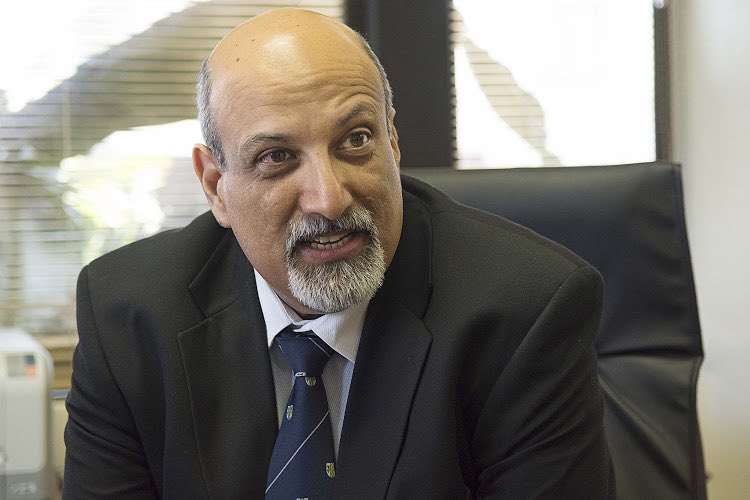
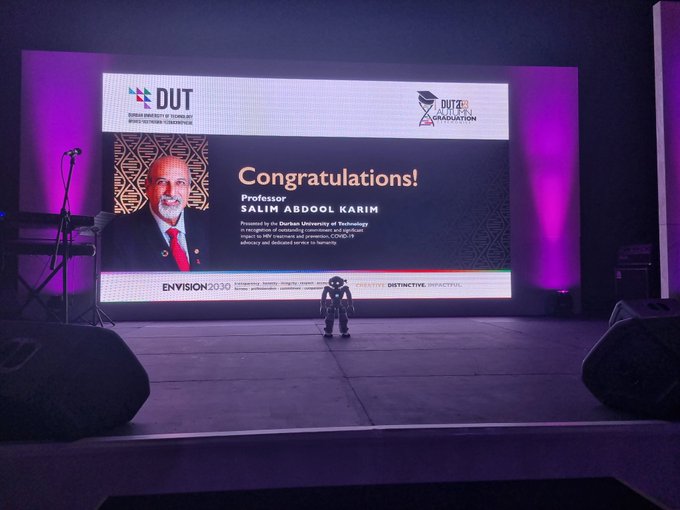
ON the 31st of May 2023, during its Autumn Graduation ceremonies, the Durban University of Technology (DUT) acknowledged Prof Salim Abdool Karim for his exceptional contributions to the global health environment and outstanding service to humanity.

At the ceremony, hosted at the Olive Convention Centre in North Beach, Durban, the Faculty of Health Sciences at DUT conferred an honorary Doctor of Philosophy Degree in Health Sciences to South Africa’s leading epidemiologist and infectious diseases specialist.

In honour of Prof Abdool Karim, the university also hosted a celebratory gala dinner to celebrate this award further.

On receiving this honorary doctorate, Prof Abdool Karim said: “I am deeply honoured by this accolade. It recognises the importance of science in dealing with infectious disease threats. More broadly, it highlights the value of science in making the world a better and safer place.”

On behalf of the South African Medical Research Council (SAMRC), we congratulate Prof Abdool Karim on this excellent achievement.

Born in Mobeni Heights, south of Durban, Prof Abdool Karim (63) is the director of the Centre for the AIDS Programme of Research in South Africa (CAPRISA) and CAPRISA professor for Global Health in the Department of Epidemiology at the Mailman School of Public Health at Columbia University.

Prof Abdool Karim also serves as an adjunct professor of Immunology and Infectious Diseases at Harvard University, Boston, adjunct professor of Medicine at Cornell University, New York, and pro-vice-chancellor of Research at the University of KwaZulu-Natal, Durban.

As a distinguished health expert, Prof Abdool Karim has played a leading role in the HIV/Aids and COVID-19 pandemics. His expertise has extensively contributed to HIV/Aids prevention and treatment, as well as the COVID-19 response, thereby saving many lives.

During the outbreak of the COVID-19 pandemic, Prof Abdool Karim led the 41-member Ministerial Advisory Committee on COVID-19. This committee guided the South African government’s response to the COVID-19 pandemic.

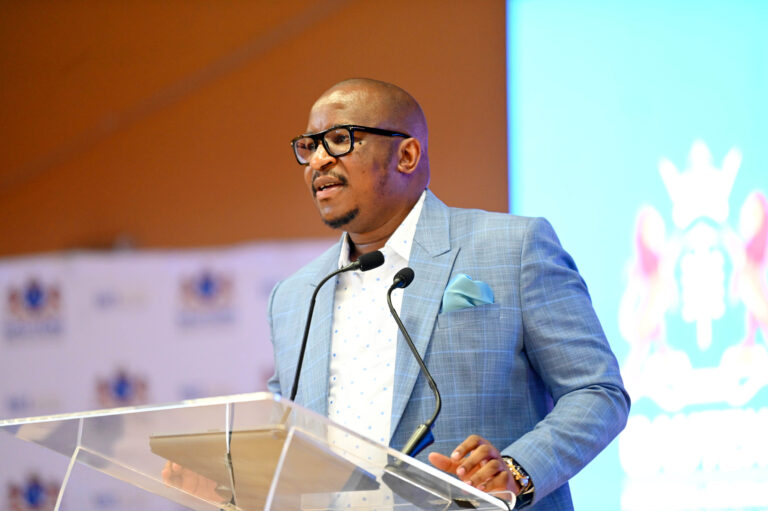
On the 31st of May 2023 the Durban University of Technology, acknowledged Prof Salim Abdool Karim for his exceptional contributions in the global health environment and his outstanding service to humanity. Picture: Supplied

Prof Abdool Karim played a critical role in providing the public and the government with scientific advice on the coronavirus, how it causes COVID-19 and the measures for preventing infection.

In 2022, he was appointed as a special advisor on pandemics to the Director General of the World Health Organisation (WHO). To date, the award-winning Prof Abdool Karim has published over 500 journal articles, 12 book chapters, co-editing three books, and holds six patents. He has been ranked amongst the world’s most highly cited scientists by the Web of Science.

Prof Abdool Karim also previously served as President of the SAMRC.

INSIDE EDUCATION

UJTV: A new era of storytelling

STAFF REPORTER

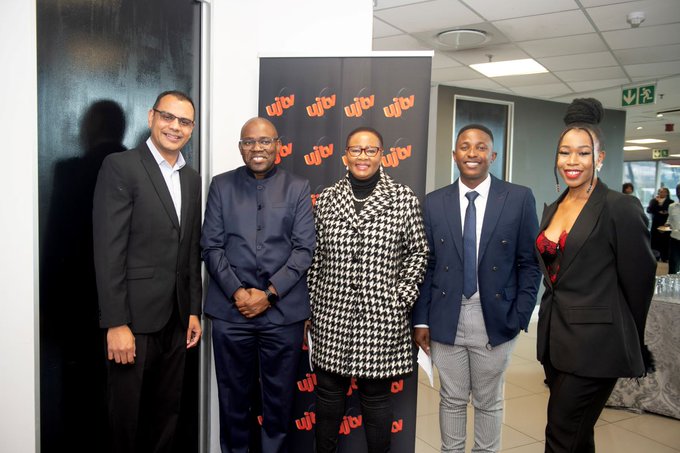
“NOBODY is going to tell stories on our behalf; we have to tell our own stories,” said the University of Johannesburg (UJ) Vice-Chancellor and Principal, Prof Letlhokwa Mpedi, at the launch of UJTV.

This ground-breaking platform, a collaboration between UJ’s University Relations Division, the Department of Communication and Media (COM), and the Information and Communications Technology (ICS), was unveiled on May 31, 2023.

Prof Mpedi added that UJTV came at a time when the University was entering a new era that prioritises societal impact in the context of the 4IR. “TV presents us with an opportunity to engage with our mandate in new and exciting ways.”

With a vision to become a frontrunner in university broadcast communications, UJTV aims to deliver educational and intellectually stimulating programming to the university community and the wider public. It seeks to transcend campus boundaries, carrying knowledge from UJ into the homes and lives of viewers in South Africa and around the globe.

Viewers can expect to see new and exciting content, including in-depth conversations with UJ executives about their roles and the inner workings of the university. It will also showcase student lifestyle events on campus, including wellness topics and balancing the pressures of studying and living a healthy lifestyle. Other shows will focus on the 4IR narrative and topical discussions affecting UJ students and the broader society.

The launch episode aired on Friday and is available on the official UJTV YouTube channel. New episodes will be broadcast on Mondays, Wednesdays, and Fridays.

INSIDE EDUCATION

Multimillion-rand investment to boost African health innovation

STAFF REPORTER

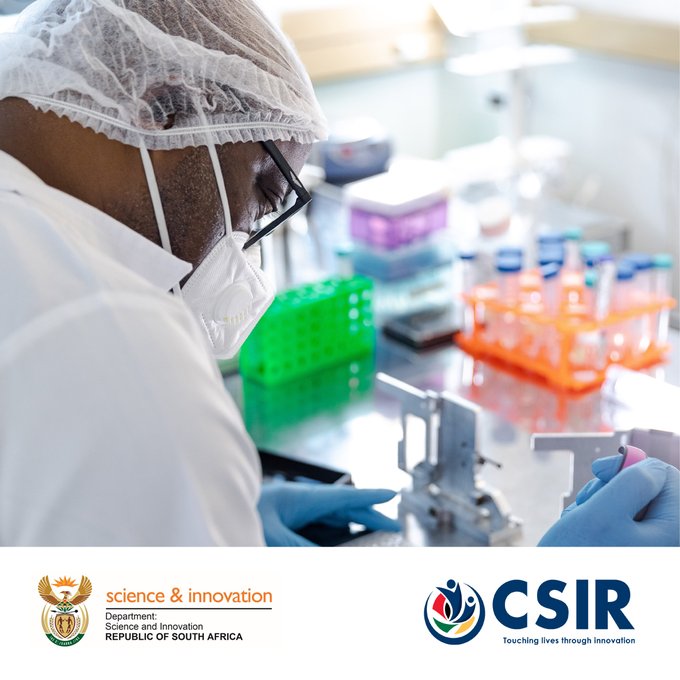
AFRICA’s plans to build capacity to respond to future pandemics received a significant boost as South Africa’s Council for Scientific and Industrial Research (CSIR) received an investment worth $4 458 033.00 (around R80 million) from the Bill & Melinda Gates Foundation to drive skills and health innovation.

The investment, which seeks to strengthen Africa’s biomanufacturing capability through a workforce training and skills development programme, is a significant milestone that will reduce the continent’s dependence on imported critical health products.

“Skills development and the establishment of the necessary infrastructure in the field of biomanufacturing require urgent action to strengthen our capability to manufacture health products that are accessible and cost-effective locally. This will reduce the continent’s reliance on imported therapeutics and promote the development of tailored health products for the African population.

Therefore, this workforce development programme will have a significant catalytic role in stimulating local biomanufacturing by providing hands-on training and competency building,” says Dr Santosh Ramchuran, CSIR Research Group Leader: Bioprocess Technologies.

This grant will support local training and workforce development for the manufacture of active pharmaceutical ingredients, biopharmaceuticals and vaccines on the African continent. The investment will also contribute to the modernisation of infrastructure and equipment that are key to building a robust local biomanufacturing capability.

“The grant from the Gates Foundation will allow for the expansion of the existing microbial production facility and the establishment of bench-scale production using mammalian cell-culture systems. This is a key focus area for us because, quite often, lead biopharmaceuticals discovered in Africa remain in the research and development phase and never reach commercial reality,” Ramchuran says.

“This work, which will support product development, is in keeping with the CSIR’s role in research translation and innovation – we provide knowledge, skills and infrastructure to drive industrial sustainability in the Biotech sector,” he added.

The initiative aims for black female candidates and applicants from other African countries to make up most of those who will benefit from the programme.

INSIDE EDUCATION

UCT launches plan for “University of the Future”

STAFF REPORTER

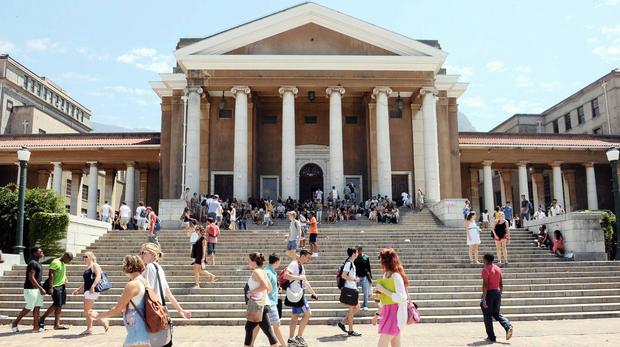
THE University of Cape Town (UCT) has launched ‘The University of the Future’ (UoF) project, an initiative that aims to create a vibrant and modern campus designed to attract talent, foster community engagement, and support UCT’s vision of a fair and just society. 

The event was simultaneously live-streamed to an online audience. It began with a video introducing the project. In the video, the project steering committee chairperson Professor Salome Maswime (also the head of the Global Surgery Division in the Faculty of Health Sciences), asked viewers to consider the question: what will UCT’s spaces, places, services and functions look like in 2034?

The Programme Director, Professor Graham Fieggen, Head of the Division of Neurosurgery and a member of the project steering committee, pointed out that it is difficult to make predictions about the future. Referring to a quote by Thomas Sankara (former President of Burkina Faso) referenced in the introductory video, Professor Fieggen said that we need “the courage and extreme clarity today to invent our future”.

UCT’s Chief Financial Officer, Vincent Motholo, said the UoF project brings about “hopefulness for the future”.

Vice-Chancellor (Interim) Emeritus Professor Daya Reddy delivered the keynote address.

“All of us who have been attracted to be at UCT should be able to be accommodated and to work in spaces in which we are able to thrive.”

Professor Reddy said that the UoF project had to do with physical infrastructure, which is “an absolutely central consideration in the planning of the university”. He said that in the longer run, how we plan and develop our critical infrastructure will determine whether we will meet our objectives. It is, therefore, important that we get this right.

“All of us who have been attracted to be here [at UCT] should be able to be accommodated and to work in spaces in which we can thrive.”

The VC (Interim) stated that the project draws inspiration from Vision 2030 strategy, which seeks to unleash human potential for a fair and just society. At the core of the UoF project is a compelling vision: to establish an enabling environment that unlocks human potential. UCT aims to create spaces, services and functions that empower students, staff and the broader community to thrive and contribute to society’s betterment.

The project’s strategic importance is recognised by the UCT Council, which supports its vision of a modern and striking campus capable of attracting top talent, local businesses, donors, and industry interest.

Reddy thanked the members of the project steering committee for their hard work, which has brought the university to this point. The committee boasts diverse representation from UCT, including academic and administrative staff, student representatives, unions, and the Cape Town community. This inclusive approach ensures that the project’s outcomes align with the university’s and its stakeholders’ aspirations.

INSIDE EDUCATION

Global Partnership for Education is concerned about impact of Uganda’s anti-homosexuality law on children’s human right to education

STAFF REPORTER

THE Global Partnership for Education (GPE) is deeply concerned by the passage into law of the Anti-Homosexuality Act in Uganda and the potential impact on children’s human right to access education free from fear, violence and persecution.

The Act calls for harsh sentences, including life imprisonment and the death penalty, for anyone convicted.

GPE reiterates the rights of all children and young people to quality education, irrespective of their sexual orientation, gender expression or identity, said Laura Frigenti, chief executive officer, in a statement.

GPE is a shared commitment to ending the world’s learning crisis, mobilising partners and funds to support nearly 90 lower-income countries to transform their education systems so that every girl and boy can get the quality education to unlock their full potential and contribute to building a better world. 

Frigenti said the GPE is considering the next steps in coordination with partners to assess the potential impacts of this law on the rights of all children to access quality education.

“Working closely with partners, GPE remains committed to supporting inclusive education in Uganda and elsewhere in the world.”

INISDE EDUCATION

Telkom to train 400 unemployed youth with digital schooling skills

PHUTI MOSOMANE

More than 400 unemployed youth will be equipped with ICT skills to help improve teaching and learning in schools, the head of the Telkom Foundation Sarah Mthintso told delegates at the Gauteng City Region Academy (GCRA) Workforce Development Partners event on Thursday.

Mthintso said the foundation will focus its investments on young people by increasing its intake from 120 young people in 2022 to 200 this year and another 200 in 2024.

Speaking to Inside Education on the sidelines of the breakfast event, Mthintso said Telkom was partnering with the GCRA in an effort to continue investing in the development of young people with ICT skills.

“Telkom will train 400 young people to be deployed to various schools in the coming two years, an intake of 200 each year to support schools in the integration and adoption of ICTs.”

“In our research, we found that if you simply give schools any technology without providing technical support, in most cases teachers struggle on their own,” she said.

Having identified the ineffective use of technological tools by educators, Telkom together with the Gauteng Department of Education identifies unemployed youth in communities close to schools to help facilitate the effective use of these ICT tools in a school environment.

“Last year, we trained 120 young people, this year we have increased the number to 200 and next year another 200. So we train young people for four months on technical support. They then get deployed into schools to provide the much needed technical support to the teachers, principals, SGBs and learners,” Mthintso said.

The candidates will spend eight months providing technical support on ICT tools already deployed by the Gauteng Department of Education in partnership with Telkom.

The GCRA will pay candidates a monthly stipend for 12 months, thereafter the school can choose to extend the contract.

The Telkom Foundation will secure facilitators, moderators and assessors to enable candidates to get accredited certificates at the end of the 12 months.

Last year’s programme resulted in the placement of 120 candidates at 60 schools. For the training programme, Mthintso said the Telkom Foundation would spend R30 000 per candidate.

“We do not spend less than R3 million, this is excluding the stipend funded by GCRA. It is just one of the many programmes that we are doing as Telkom Foundation,” she said, also adding that the telecommunications giant trained over 210 learners in systems development, and business analysis who then get placed in companies with a budget of R15 million solely funded by Telkom.

Telkom approaches various entities in both private and public to identify ICT skills gaps, and then recruit young people to equip them with skills.

“For example, a company would approach Telkom with specific skills required. An entity would approach us and say ‘we are digitising our libraries – can Telkom assist?’ We have done this in Soweto and Tembisa,” Mthintso added.

Head of Telkom Foundation Sarah Mthintso says Telkom cares about South Africa’s prosperity. Picture: Eddie Mtsweni

MEC of Education Matome Chiloane applauded Telkom and other partners for assisting in helping unemployed youth with workplace skills.

“Youth unemployment is a ticking time-bomb, this challenge requires everyone. Give youth opportunities and keep them,” he said.

INSIDE EDUCATION

Inside Education Foundation launches African Science & Technology Teachers Awards

INSIDE EDUCATION REPORTER

THE Inside Education Foundation has launched the African Science & Technology Teachers Awards (ASTTA) aimed at recognising teachers across the African continent, who are excelling in their fields. 

Teachers play a pivotal role in societal development and nation-building, yet their profession often goes underappreciated. 

The African Science & Technology Teachers Awards will significantly contribute to elevating teaching as a profession, empowering, and encouraging outstanding teachers from different schools across the continent, who achieve exceptional results against all odds. 

Matuma Letsoalo, Chairman of the Inside Education Foundation, stated that the initiative aims to honour educators in the fields of Science & Technology, who not only answer the call but go above and beyond to change lives, inspire dreams, and push the limits of human potential. 

He emphasized that the contribution of teachers is what has propelled the African continent to become one of the fastest-growing economies in the world. 

“It is because of the contribution made by teachers that the African continent is today one of the fastest-growing economies in the world. Without teachers, Agenda 2063, which is Africa’s blueprint and master plan for transforming the continent into the global powerhouse of the future, will remain a pipe dream,” said Letsoalo.

“Africa as a continent has embraced the Fourth Industrial Revolution and this initiative will go a long way in ensuring our countries are not left behind in a rapidly changing society.” 

An independent panel of judges will select the finalists for the African Science & Technology Teachers Awards from the nominations made by ordinary citizens, teachers, and learners across the continent. 

The Foundation invites all citizens, including learners, parents, teachers and academics, to nominate exceptional educators who are improving the quality of learning in the fields of science & technology across the continent. 

The African Science & Technology Teachers Awards features five categories;

  1. Best Young Science Teacher – An inspirational new science teacher who has shown great promise and an impact on your school and its pupils since joining the teaching team.

2. Best Science Teacher – a strong passion for the teaching of science; inspire and empower their students to develop confidence, interest and deep understanding in the learning of science.

3. Lifetime Achievement – A veteran science & technology teacher, who has a dedicated, and sustained commitment to education, and impacted those they have taught, worked with and inspired during their careers.

4. Best ICT Teacher- An inspiring and successful digital innovator in education and harnessing the power technology can offer in education to make a daily difference to students and staff alike.

5. Best Math Teacher – A strong passion for the teaching of mathematics; inspire and empower their students to develop confidence, interest, and deep understanding in the learning of mathematics.

The finalists for the African Science & Technology Teachers Awards will be announced in October 2023, coinciding with Teachers’ Month. 

Nominations for the African Science & Technology Teachers Awards will open on Wednesday, 31 May 2023 and will close on 31 August 2023. 

To nominate your favourite teacher, please click https://insideeducation.co.za/inside-education-african-science-technology-teachers-awards-nomination-form/ to access the nomination form.

All queries can be directed to info@insideeducationfoundation.co.za

INSIDE EDUCATION

5 school children die in horror crash in Mitchells Plain

PHUTI MOSOMANE

FIVE children tragically lost their lives in a fatal traffic accident on Tuesday while on their way to school on AZ Berman Drive in Mitchells Plain, Western Cape.

Reports indicate that the bakkie carrying the learners collided with a traffic light, causing the children to be thrown off the back of the vehicle.

Expressing his outrage, Ricardo Mackenzie, the Western Cape MEC of Mobility, denounced the accident as a result of transporting learners illegally.

He described the deaths as tragic and entirely preventable.

“How many more children must we lose on our roads before the transportation of these precious lives is taken seriously by those driving the vehicles? Anyone who is transporting passengers – especially children whose bodies are more vulnerable to injury – has the weighty responsibility to keep them safe,” he said. 

He said vehicles must be roadworthy, drivers must be qualified and an operating licence is required to transport passengers. 

“Cutting corners with any of these requirements and driving recklessly is a matter of life and death. My condolences and prayers go out to these parents who are now faced with the grief of losing a child, and those with children in the hospital,” he added. 

Mackenzie said anyone wishing to report illegal or unsafe transport operators in the metro must contact the City of Cape Town Traffic Department, for enforcement and possible impoundment if the vehicle is unsafe, overloaded or the driver is unqualified. 

He said he recently attended two community meetings in Mitchells Plain to address the issues around learner transport and ensure that operators are properly registered and licensed.

Western Cape MEC of Education David Maynier said, “Today is a sad day in this province. A tragic accident has taken the lives of five young learners. They are from Wespoort PS, Harvester PS, Ridgeville PS, Highlands PS, and Duneside PS. Two learners are receiving medical treatment, from Ridgeville PS and Lentegeur HS. Western Cape Education Department counselling support teams are supporting the affected schools.”

Maynier further said: “Our thoughts and prayers are with the family, friends and the school communities. This is an unimaginable tragedy. Our thoughts are also with the learners currently being treated in hospital.”

Both Mackenzie and Minister Maynier visited the scene of the accident to understand what happened and express their condolences to the parents of the children involved in the accident.

They were also briefed by the SAPS’ Mitchells Plain Station Commander.

Meanwhile, a 55-year-old man has been arrested in connection with the horror crash that claimed the lives of five pupils and seriously injured two others, along AZ Berman Drive in Mitchells Plain.

The Portfolio Committee on Basic Education said it has noted with great sadness the loss of five young lives early this morning in Mitchells Plain, Cape Town, on their way to school.

Committee Chairperson Bongiwe Mbinqo-Gigaba said the committee would like to extend its condolences to the families, friends and school community:“This is indeed tragic; the worst news any parent or loved one can receive. It is the last thing you expect when seeing you children off safely to school. We mourn the young lives of our learners whot will now not have an opportunity to prosper and contribute to the future of our country.”

Mbinqo-Gigaba called on the authorities to investigate the accident and to leave no stone unturned in getting to the bottom of what happened. 

“Guilty or negligent parties should face the full might of the law. We call on all those transporting our precious cargo to take great care when doing so, especially during the rainy winter season,” said Mbinqo-Gigaba.

Western Cape Premier Allan Winde said he felt “deep sorrow for the pain of thier parents.”

“My heart aches for the families of the young lives so tragically lost in a road accident in Mitchells Plain today. It’s hard to find the words to convey the magnitude of the loss of these precious children,” he said.

INSIDE EDUCATION 

High school student in Italy wounds teacher with hunting knife, waves toy gun in class

0

A student wounded his teacher with a hunting knife and brandished what turned out to be a toy gun at classmates in a high school in a Milan suburb on Monday, police said.

Classmates later recounted that the 16-year-old suddenly stood up shortly after classes began in the town of Abbiategrasso and attacked the teacher from behind on an arm and on her head, the Italian news agency ANSA said. When the attacker waved a gun at his classmates, the students fled the room, reports said.

Police told state TV that when they entered the room, the teen was sitting on the floor with no one else in the classroom and offered no resistance. The bloody knife and the gun were found resting on a notebook on a desk, according to photos released by police.

The teacher, 51, lost a lot of blood and was admitted to a hospital, also suffering from shock, news reports said. The student was taken to a hospital psychiatric department and had what apparently were self-inflicted injuries, the police said.

Principal Michele Raffaeli told reporters outside the school that the student had been having academic problems and his parents had been summoned to a meeting with school authorities, scheduled for Tuesday.

Education Minister Giuseppe Valditara visited the wounded teacher in hospital.

“The teacher had done her work in an exemplary way for the boy, who had already had several issues,″ the minister said in a video on Facebook.

Valditara added: “We must say ‘enough’ to aggression so that schools can be safe places and, at the same time, reflect on introducing (the figure of) a psychologist” in schools.

AP

Gauteng Education MEC’s maiden R63,4 billion budget seeks to consolidate strategic plan, focus on Premier’s priorities

ZINGISA MKHUMA

DELIVERING his first budget speech as Gauteng MEC for Education, Matome Chiloane said he wanted to highlight efforts made in closing the gap in education quality between the fee-paying and no-fee paying schools as well as the achievement of universal access to schooling.

Chiloane was presenting the Department’s 2023/24 Budget of R 63,4 billion on Friday 6 May which shows an increase of 6.2% from a main appropriation of R59.7 billion in 2022/23 to  the current R63,4 billion allocation – a Rand value increase of R3,6 billion.

He said over R46 billion or 72.6% of the 2023/24 budget is spent on the compensation of employees, over R7,89 billion accounts for transfers and subsidies, infrastructure development is allocated R2,46 billion, leaving more than R7 billion for programmes, nutrition, transport and other goods and services.

“I am proud to present a budget plan that aims to focus on the consolidation of our Five-Year Strategic Plan with special emphasis on the Premier’s Elevated Priorities to build on the successes achieved to date and to adjust our focus to achieve and make an even greater impact for the citizens in Gauteng.

“As such, our approach to education transformation in Gauteng is multi-faceted and is directed to address the quality of learning through quality improvement strategies that will improve the classroom performance of teachers and the active learning of children in classrooms across all schools in the province.

“Simultaneously we are introducing interventions that compensate for poor family literacy level and the impact of poverty affecting a large percentage of our communities in Gauteng. It is for this reason that we wholly support the focus on Townships, Informal Settlements and Hostels,” Chiloane said.

Chiloane spoke about the Elevated Priorities that are in line with Gauteng’s vision that the Premier
Panyaza Lesufi delivered at the State of the Province Address as priorities elevated for accelerated
implementation for the remainder of the Sixth Administration.

In education the elevated priorities are:

  • Improving Grade 12 results, measuring progress and educational outcomes must be a priority.
  • Expanding access of ECD sites across poor and marginalised communities including residential
    hostels
  • ICT schools’ role in the Townships must continue investing in skills of the future by Continuing to
    open Schools of Specialisation to reach 35 schools by the end of the term, introduce a system of
    multi-certification
  • Modernisation, investing in school infrastructure and online admissions by investing in school
    infrastructure in townships, ensuring accelerated delivery of smart public infrastructure to meet the
    demand identified through the online admissions remains a critical priority
  • Integration and incorporation of wellness programmes, and rehabilitation of children in conflict
    with the law into the education system by assessing those in care centres and rehabilitation centres
    ready for schooling and ensure they are reintegrated into the schooling system.
  • School Safety must be a priority to ensure learner and teachers safety.
  • Youth Development must be redefined to increase youth employability and employment.

Chiloane emphasised the Department’s priority in improving the Grade 12 performance in what he
called Reclaiming the ‘crown’ – continuing the improvement of quality learning in the FET Band.

He said the Matric Class for 2022 did a sterling job by achieving a pass rate of 84.4% which represents an improvement of 1.6% as compared to the 82.8% pass rate that was obtained in 2021.

In 2022 there were a total of 43 298 distinctions, which saw over 20 769 distinctions from township schools – a monumental achievement!’, adding that the GDE pass rate has consistently been higher than the National pass rate and this trend continues.

“A great achievement to note is the progress made by Gauteng in closing the gap between former model C and township schools’ pass rate from 12% to 9%. In the 2022 NCS examination, 24 learners from township schools received total marks in Mathematics, Business Economics and Economics.

“In 2023, the Department endeavour to improve the matric pass rate for Gauteng to 90% and the Bachelor Pass Rate to 50%, with specific emphasis in reducing the difference in NSC Pass rate between township and ex-Model C schools to 7%. Further emphasis will be placed on increasing learner participation in Mathematics and Science and ensuring that 21.5% of learners are achieving 60% and above in Physical Sciences and 17.5% of learners are achieving 60% and above in Mathematics”.

Furthermore, The Department will again offer additional support for Matric candidates that failed the exams and who have registered to write Supplementary Examinations. The enhanced SSIP Broadcast Project will continue as a means of support to all learners.

Additional intervention programmes will be given in respect of All other Grades, which includes District support for all schools, monitoring the Curriculum and Assessment standards, access to e- content and Early Grade Reading Assessments (Grades 1-3). 

The Introduction to African Languages and Maths, Science and Technology intervention programmes across all grades will be ongoing.

Responding to the challenges of scarce skills development, Chiloane said as outlined in GGT 2030, the province is implementing a strategy to reorganise and turnaround our schools, particularly schools in the township. 

“We are investing millions of rands to improve the quality of education in the townships and to turn around what were historically labour reservoirs for unskilled labour, into zones of hope, development, and transformation”.

INSIDE EDUCATION