Four Capricorn TVET College Seshego campus students were released from police custody on a warning, following a court appearance before the Seshego Magistrate’s Court this morning (March 2).
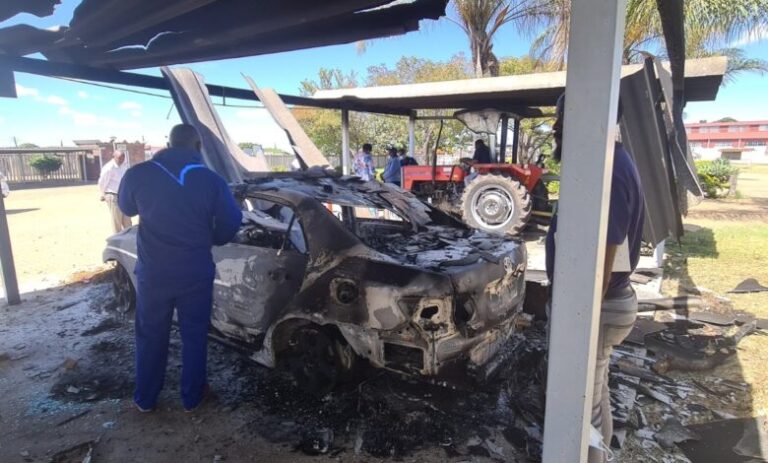
The students were found in possession of assets belonging to the college outside of its premises on Tuesday (February 28) after the burning of property during a student protest.
“The college did not open a case against them, but they were picked up by police who were monitoring the situation. They were found carrying chairs and tables from the premises,” college spokesperson Madire Mashabela confirmed.
One of the college’s vehicles was set alight and windows in the security guard’s offices broken after stones were thrown.
The entrance block to the campus was also damaged during a demonstration by students over what they say is the college’s refusal to listen to their grievances.
Besides their complaints of a shortage of textbooks and lecturers, unpaid 2022 NSFAS allowances also seem to be the issue.
Students say funding statuses from the scheme for those whose applications were pending were approved a day after the demonstration, leading them to believe that the delay in the disbursement was on the part of the college.
College management, however, refuted allegations of the shortages, saying they had been keeping the Student Representative Council updated on all issues, including the recent addition of lecturers and acquisition of textbooks.
“The acquisition of textbooks started three weeks ago. More lecturers started working since February 17. We have been uploading 2023 declaration forms on the NSFAS portal and continue to do so on our campus premises, however, it is not as quick as it was before due to the damaged to property and workers being delayed by the clean-up,” Mashabela added.
Meanwhile, there was an attempt to join the protest by the college’s campus in Polokwane yesterday but Mashabela confirmed that it did not last long and students were sent home.
Teaching and learning at the Seshego campus has been temporarily suspended.
North-West University (NWU) student Onalenna Mongale was announced the North West Sportsman of the Year during the North West Provincial Government’s 7th Provincial Sports Awards that took place on 18 February 2023.
Onalenna represented South Africa at the International University Sports Federation
(FISU) University Combat Sport – Karate Competition in Turkey last year. Onalenna competed in the Individual Kumite and ranked sixth out of about 22 athletes in his division.
He is also a gold medalist at national level in kumite and kata, and was announced the NWU’s International Athlete of the Year and Best Sportsman of the Year in 2022.
Onalenna says that just being nominated for such a prestigious award is uplifting, but actually receiving it feels surreal.
“It is amazing to know that people are noticing your efforts and dedication as an athlete, and to have those efforts validated by receiving such a special award.”
“Being honoured in this way is something that I will always remember and treasure,” adds Onalenna.
“I want to thank the NWU for believing in and assisting me, and I want to extend my gratitude to the NWU karate team, you guys are amazing.”
The NWU’s Soccer Institute also received an award at the North West Provincial Government 7th Provincial Sports Awards. The institute received the Community Sports Developer Award for the year for its role in producing football players and also assisting athletes with bursaries.
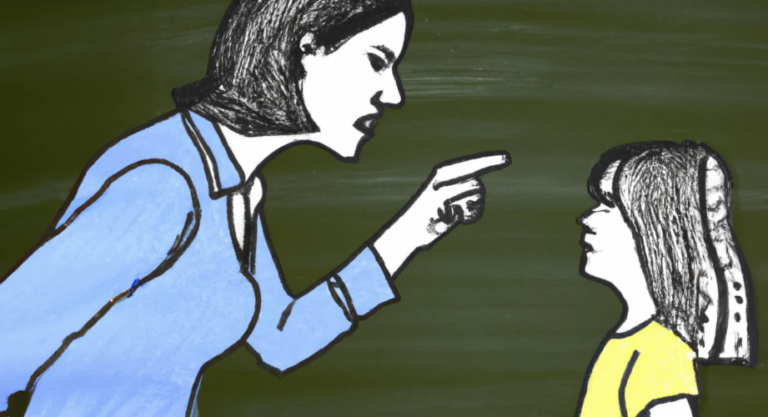
DESPITE academic studies noting the harms associated with corporal punishment, U.S. public schools use it to discipline tens of thousands of students each year, data from the U.S. Department of Education show.
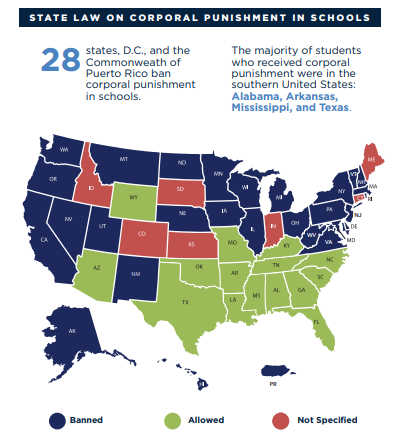
Public schools in 22 states reported using physical discipline to control student behavior during the 2017-18 academic year, the most recent year for which national data is available. Twenty-eight states have banned corporal punishment in public schools, but 15 have laws giving public schools explicit authority to use it and seven states have no laws allowing or prohibiting it, according to a September 2022 report from the education department’s Office for Civil Rights.
Meanwhile, corporal punishment is legal in all private schools, except for those in Iowa and New Jersey.
It’s not yet clear whether schools have relied on this type of discipline more or less often amid the COVID-19 pandemic. However, school district officials reported a marked increase in student misbehavior in 2021-22, compared with before the coronavirus arrived in the U.S. in 2019. News stories and research studies have documented the pandemic’s widespread effects on kids’ mental and physical health.
When the U.S. Department of Education surveyed public school districts in 2022, 84% agreed or strongly agreed the pandemic has negatively affected students’ behavioral development.
Almost 6 out of 10 public schools reported “increased incidents of classroom disruptions from student misconduct” and 48% reported increased “acts of disrespect towards teachers and staff.” About half reported more “rowdiness outside of the classroom.”
Even if the number of children physically punished at school has fallen in recent years, the issue warrants journalists’ attention considering the serious injuries students sometimes suffer and the fact that Black children and children with mental or physical disabilities have, for many years, received a disproportionate share of school corporal punishment.
Source: U.S. Department of Education, 2022.
The federal government requires public schools and public preschools to report the number of students who receive physical punishment. In 2017-18, public schools physically disciplined a total of 69,492 students at least once — down from 92,479 kids in 2015-16. The practice was most common in Texas, Mississippi, Alabama, Arkansas and Oklahoma.
That year, public preschool programs, which are often housed within public elementary schools, reported using corporal punishment on a combined 851 children aged 3 to 5 years.
It’s unclear how common corporal punishment is in private schools because the federal government does not require them to report their numbers. Elizabeth Gershoff, one of the country’s foremost experts on corporal punishment, says she knows of no government agency or organization that tracks that information.
She urges journalists to help their audiences understand the various ways schools use physical discipline and its potential impacts on student behavior, mental and physical health, and academic achievement.
“Spanking is a euphemism for hitting,” says Gershoff, a professor in the Department of Human Development and Family Sciences at the University of Texas at Austin. “Spanking and paddling — people use those words to minimize the aggression we are using against kids.”
The global use of school corporal punishment
The U.S. is the only member of the United Nations that has not yet ratified the Convention on the Rights of the Child, an international treaty adopted in 1989 that, among other things, protects children “from all forms of physical or mental violence, injury or abuse, neglect or negligent treatment, maltreatment or exploitation.” Somalia ratified the convention in 2015 — the 196th country to do so.
Globally, about half of all children aged 6 to 17 years live in countries where school corporal punishment is “not fully prohibited,” according to the World Health Organization.
But legal bans do not necessarily mean corporal punishment ceases to exist, a team of researchers from the University of Cape Town learned after examining 53 peer-reviewed studies conducted in various parts of the planet and published between 1980 and 2017.
In South Africa, for instance, half of students reported being corporally punished at school despite a ban instituted in 1996, the researchers note.
“There is also concern that school staff and administrators may underreport school corporal punishment even where it is legal,” they write, adding that a study in Tanzania found that students tended to report twice as much corporal punishment as teachers.
While there’s limited research on corporal punishment in U.S. schools, numerous studies of corporal punishment in U.S. homes have determined it is associated with a range of harms. When Gershoff and fellow researcher Andrew Grogan-Kaylor combined and analyzed the results of 75 research studies on parental spanking published before June 1, 2014, they found no evidence it improves children’s behavior.
In fact, they discovered that kids spanked by their parents have a greater likelihood of experiencing 13 detrimental outcomes, including aggression, antisocial behavior, impaired cognitive ability and low self-esteem during childhood and antisocial behavior and mental health problems in adulthood.
Gershoff says children who are physically disciplined at school likely are affected in similar ways.
“There’s nothing to make me think that wouldn’t hold for corporal punishment in schools,” she says. “In fact, I think it might be more problematic in schools because of the lack of a strong relationship in the schools between the children and the person who’s doing the paddling.”
Other research by Gershoff offers insights into the types of misbehavior that lead to corporal punishment. She found that public school principals, teachers and other staff members have used physical punishment for a range of offenses, including tardiness, disrespecting teachers, running in the hallways and receiving bad grades.
Some children have been disciplined so harshly they suffered injuries, “including bruises, hematomas, nerve and muscle damage, cuts, and broken bones,” Gershoff and colleague Sarah Font write in the journal Social Policy Report in 2016.
The Society for Adolescent Medicine estimated in 2003 that 10,000 to 20,000 students require medical attention each year in the U.S. as a result of school corporal punishment. The organization has not updated its estimate since then, however.
Black students disciplined disproportionately
James B. Pratt Jr., an associate professor of criminal justice at Fisk University who also researches corporal punishment, encourages news outlets to dig deeper into the reasons schools in many states still use pain as punishment.
He says reporters should press state legislators to explain why they allow it to continue, even as public health organizations such as the American Academy of Child and Adolescent Psychiatry, the American Academy of Pediatrics and the U.S. Centers for Disease Control and Prevention oppose its use.
News coverage of corporal punishment needs historical context as well, Pratt says. His research finds that school corporal punishment, which is most concentrated in the U.S. South, plays a role in sustaining a long history of racialized violence in the region.
“Tell the story of corporal punishment as a form of social control,” Pratt says.
“There is research to illustrate how corporal punishment has been used historically and today.”
In the U.S., enslaved Black people were whipped, as were Black prisoners in the early 20th century and Black children who went before juvenile courts in the 1930s, Pratt and his fellow researchers write in “Historic Lynching and Corporal Punishment in Contemporary Southern Schools,” published in 2021 in the journal Social Problems.
For generations after emancipation, white supremacists in the South whipped and lynched Black people to intimidate and control them.
When Pratt and his colleagues examined data on student discipline in 10 southern states in 2013-14 and lynchings between 1865 and 1950, they learned that school corporal punishment was more common for all students — but especially Black students — in areas where lynchings had occurred.
Pratt and his coauthors write that banning school corporal punishment “would help dismantle systemic racism, promoting youth and community well-being in a region still haunted by histories of racial terror.”
Guidance from academic scholars
Both Pratt and Gershoff have lots of ideas for helping journalists frame and strengthen their coverage of corporal punishment in schools. Here are some of the tips they shared.
1. Find out whether or how schools in your area use corporal punishment, and who administers it.
Public schools generally share only basic information about corporal punishment to the U.S. Department of Education. School officials submit the total number of students they corporally punish in a given academic year and they break down that number according to students’ sex and race and whether they had a disability, were Hispanic or were enrolled in special programs teaching them to speak English.
Not only does the data lack detail — it does not indicate the type of corporal punishment used, for example, or the type of disability the student had — the information is several years old by the time the federal government finishes collecting it and releases it to the public.
Pratt says journalists can help researchers, parents and the public get a clearer picture of what’s happening in local communities by seeking out more details. To get a sense of how often and how local schools use corporal punishment, ask public school districts for copies of disciplinary reports and policies governing the use of corporal punishment.
Interview teacher union leaders and individual teachers to better understand what’s happening in classrooms and what teachers have seen and learned. Reach out to parents whose children have been disciplined to ask about student experiences.
“We know there’s something there, but how it functions on the ground is what we need to understand,” Pratt says.
Some questions to investigate:
Which misbehaviors lead to corporal punishment?
Who administers physical discipline?
What are children hit with and how many times?
Where on their bodies are they struck?
How often have children been seriously injured and how were those situations handled?
Have local schools been sued over corporal punishment?
In areas where corporal punishment is banned, have school employees been disciplined or terminated for using corporal punishment?
2. Ask how schools’ use of corporal punishment and other forms of discipline changed during the COVID-19 pandemic.
Students, teachers and other school staff members experienced a lot of stress during the pandemic, as schools struggled to provide instruction and other student services while also monitoring and responding to COVID-19.
At the start of the pandemic, many schools closed their campuses temporarily and taught lessons online. When everyone returned to campus, the situation was, at times, confusing or somewhat chaotic. Many schools discovered they needed to rely more heavily on substitute teachers, who often do not have classroom management training, to fill in when regular teachers were sick, in quarantine or caring for loved ones.
It’s a good idea for journalists to try to gauge how such changes have affected student behavior and discipline. Local school districts and state departments of education should be able to provide more recent records than the U.S. Department of Education. Another source of data: colleges and universities where faculty are studying school discipline.
A September 2022 analysis from the University of Arkansas, for example, shows a sharp decline in several types of student discipline in that state since before the pandemic began. However, the authors write that they “cannot tell if the decline is the result of improved student behavior or inconsistent reporting by schools.”
“Corporal punishment was used [as] a consequence for 16% of infractions in 2008-09 and declined to being used in 3% of infractions in 2020-21,” they write.
Gershoff expects corporal punishment numbers to continue to fall nationally.
“69,000 is still too many kids being traumatized at school,” she says.
There are parts of the country where school officials in recent months have reinstated corporal punishment or voiced support for it, however. Last summer, the school board in Cassville, Missouri, voted to bring it back after two decades of not using it. And a school board member in Collier County, Florida, announced after his election in November that he wanted schools across the region to reintroduce physical discipline.
3. Learn the legal history of school corporal punishment in the U.S.
It’s important that journalists covering corporal punishment understand the history of the practice, including the stance the U.S. Supreme Court and lower courts have taken on the issue.
Individual states have the authority to create and enforce discipline policies for children attending schools within their borders. Generally speaking, Supreme Court justices have been reluctant to intervene in the day-to-day operations of public schools, so long as educators do not heavily infringe on students’ constitutional rights.
Two Supreme Court cases decided in the late 1970s reinforced public schools’ right to use physical discipline. In 1975, in Baker v. Owen, justices ruled that public schools have the right to use corporal punishment without parents’ permission. In Ingraham v. Wright, decided in 1977, the court decided that corporal punishment, regardless of severity, does not violate the Constitution’s Eighth Amendment, which prohibits cruel and unusual punishment.
In writing the majority opinion for Ingraham v. Wright, Justice Lewis Powell asserts that “corporal punishment serves important educational interests.”
“At common law a single principle has governed the use of corporal punishment since before the American Revolution: Teachers may impose reasonable but not excessive force to discipline a child,” Powell writes.
The Supreme Court did not, however, explain what actions would be considered “excessive.” In 1980, the U.S. Court of Appeals for the Fourth Circuit established a test for determining that. Since then, circuit courts in several federal districts have required lawsuits challenging schools’ use of corporal punishment to meet that threshold, often referred to as the “shocking to the conscience” test.
Under that very high standard, corporal punishment is deemed excessive if “the force applied caused injury so severe, was so disproportionate to the need presented, and was so inspired by malice or sadism rather than a merely careless or unwise excess of zeal that it amounted to a brutal and inhumane abuse of official power literally shocking to the conscience.”
An example of corporal punishment a U.S. appeals court decided was excessive: A football coach in Fulton County, Georgia, struck a 14-year-old freshman so hard in the face with a metal lock, the boy’s left eye “was knocked completely out of its socket,” leaving it “destroyed and dismembered.”
An example of corporal punishment an appeals court did not consider excessive: A teacher in Richmond, Virginia, allegedly jabbed a straight pin into a student’s upper left arm, requiring medical care. The court, in its ruling, notes that “most persons are with some degree of frequency jabbed in the arm or the hip with a needle by physicians or nurses. While it is uncommon for a teacher to do the jabbing, being jabbed is commonplace.”
Over the years, legal scholars have written multiple law journal articles examining the Ingraham v. Wright decision and its implications. An article by Michigan State University law professor Susan H. Bitensky, for example, looks specifically at its impact on Black children.
She argues corporal punishment has impeded Black children’s educations, undercutting the commitment to social progress the Supreme Court made when it decided in 1954, in the landmark civil rights case Brown v. Board of Education of Topeka, that segregating public schools by race was unconstitutional.
“The whole foundation for [the Brown v. Board of Education] holding on segregated schools is a fervent concern that the schools should imbue children, especially black children, with a positive sense of their intellectual worth and should provide them with a commensurate quality of educational experience,” Bitensky writes in the Loyola University Chicago Law Review in 2004.
4. Explain that corporal punishment is a form of social control and that public schools use various types of discipline disproportionately on Black children.
Pratt stresses the importance of putting corporal punishment reports into context.
For many years, public schools have used that disciplinary approach disproportionately on Black youth, according to U.S. Department of Education records. But Black students also are disproportionately suspended, expelled, physically restrained and arrested on suspicion of school-related offenses.
According to the education department’s Civil Rights Data Collection, 37.3% of public school students who were spanked, paddled or otherwise struck by school employees in 2017-18 were Black. Meanwhile, Black kids comprised 15.3% of public school enrollment nationwide that year.
As a comparison, 50.4% of corporally punished students and 47.3% of all public school students were white.
In public preschools, black children and children with mental and physical disabilities were disproportionately expelled.
Pratt says journalists need to help the public understand how school discipline and other forms of social control such as targeted policing programs and laws prohibiting saggy pants are connected. He encourages reporters to incorporate research into their stories to illustrate how implicit bias and misperceptions about Black children can influence how educators view and interact with Black students.
Research, for example, suggests white adults perceive Black boys to be older than they are and that prospective teachers are more likely to perceive Black children as angry than white children.
“All of [these factors] relate to one another and set the tone,” Pratt says. “This is a collection of harms, and a nefarious one.”
5. Check for errors in school disciplinary reports.
Several news reports in 2021 and 2022 indicate the U.S. government’s tally of children receiving corporal punishment at school may be incorrect.
An investigation the Times Union of Albany published in September reveals hundreds of New York public school students have been physically disciplined in recent years, even though the practice has been generally banned since 1985. State and local government agencies received a total of 17,819 complaints of school corporal punishment from 2016 to 2021, 1,623 of which were determined to be substantiated or founded, the news outlet reported.
“The substantiated cases documented in state Education Department records include incidents where teachers or other staff members pushed, slapped, hit, pinched, spanked, dragged, choked or forcefully grabbed students,” Times Union journalists Emilie Munson, Joshua Solomon and Matt Rocheleau write.
A May 2021 analysis from The 74, a nonprofit news outlet that focuses on education issues, shows that schools in six states where corporal punishment had been banned reported using it in 2017-18.
Miriam Rollin, a director at the National Center for Youth Law, told The 74 that national figures “are likely a significant undercount.”
“Every school district in the country self-reports its data to the federal government and they’ve long been accused of underreporting data on the use of restraint and seclusion and other forms of harsh discipline,” Rollin told The 74 investigative journalist Mark Keierleber.
6. Press state legislators to explain why they allow school corporal punishment.
Gershoff and Pratt agree journalists should ask legislators in states that allow schools to use physical discipline why they have not stopped the practice.
“Tell the legislative story — who’s legislating this?” Pratt says. “Examine the people doing the work to end [corporal punishment] and also those wanting to maintain it.”
While a handful of members of Congress have introduced bills aimed at eradicating corporal punishment in recent years, none were successful.
In February 2021, U.S. Rep. Alcee Hastings of Florida introduced the Ending Corporal Punishment in Schools Act of 2021. But Hastings died two months later, and the bill never made it out of the House Committee on Education and Labor.
U.S. Senator Chris Murphy of Connecticut introduced the Protecting Our Students in Schools Act in 2020 and then again in 2021. Neither time did the proposal go before senators for a vote.
7. Look for stories in corporal punishment data.
Browse around the U.S. Department of Education’s Civil Rights Data Collection, which provides data on corporal punishment in public schools at the national, state and local levels as of the 2017-18 academic year. Notice trends, disparities and where there are unusually high numbers of corporal punishment cases.
For more recent data, reach out to schools, school districts and state education departments. Also, ask researchers for help explaining whether and how data from 2017-18 are still relevant.
Here are some data points worth looking into from the 2017-18 academic year, the most recent available at the national level:
Mississippi led the country in corporal punishment cases as of that year. Public schools there reported using it at least once on a total of 20,309 students. In Texas, which had the second-highest number, public schools corporally punished 13,892 kids at least one time each.
More than 30% of public school students who experienced corporal punishment in Indiana, Ohio, South Carolina and Wisconsin had mental or physical disabilities.
North Carolina public schools didn’t administer corporal punishment often. But when they did, they used it primarily on Native American students. Of the 57 students disciplined this way, about half were categorized as American Indian or Alaska Native. Native American kids made up less than 1% of public school enrollment in North Carolina.
Oklahoma is the only other state where a large proportion of corporally punished students were Native American. Schools there used corporal punishment on a total of 3,968 students, 24.4% of whom were categorized as American Indian or Alaska Native. Statewide, 6.6% of public school students were Native American.
Illinois public schools reported using corporal punishment on a total of 202 students, 80.2% of whom were “English language learners,” or children enrolled in programs to learn English.
8. Familiarize yourself with the research on corporal punishment at schools and in homes.
Gershoff points journalists toward a large and growing body of research on the short- and long-term consequences of corporal punishment at home and in schools. It’s important they know what scholars have learned to date and which questions remain unanswered.
This is one of the most recent papers examining the relationship between school discipline and student health in the U.S. The authors reviewed 19 studies published between 1990 and 2020 on punitive school discipline, which includes corporal punishment as well as suspension and expulsion. They find punitive school discipline is linked to “greater risk for numerous health outcomes, including persistent depressive symptoms, depression, drug use disorder in adulthood, borderline personality disorder, antisocial behavior, death by suicide, injuries, trichomoniasis, pregnancy in adolescence, tobacco use, and smoking, with documented implications for racial health inequity.”
In this paper, Gershoff summarizes what was known at that point in time about the prevalence of school corporal punishment worldwide and the potential consequences for students. She also discusses the various ways schools administer corporal punishment, including forcing students to stand in painful positions, ingest noxious substances and kneel on small objects such as stones or rice. She includes a chart offering estimates for the percentage of students who receive corporal punishment in dozens of countries, including China, India, Indonesia, Jamaica and Peru.
Gershoff and Grogan-Kaylor analyze the results of 75 peer-reviewed studies published before June 1, 2014 on parental spanking, or “hitting a child on their buttocks or extremities using an open hand.” They state that they find “no evidence that spanking does any good for children and all evidence points to the risk of it doing harm.”
Other big takeaways: “In childhood, parental use of spanking was associated with low moral internalization, aggression, antisocial behavior, externalizing behavior problems, internalizing behavior problems, mental health problems, negative parent-child relationships, impaired cognitive ability, low self-esteem, and risk of physical abuse from parents. In adulthood, prior experiences of parental use of spanking were significantly associated with adult antisocial behavior, adult mental health problems, and with positive attitudes about spanking.”
School corporal punishment is linked to histories of racial violence in the southeastern U.S., this study finds. The authors analyzed data on school corporal punishment in 10 states in that region during the 2013-2014 academic year and matched it with data on confirmed lynchings between 1865 to 1950. “Of the counties that reported one or more incidents of corporal punishment, 88% had at least one historic lynching and the average number of lynching incidents in these counties is 7.07,” the authors write. They add that banning school corporal punishment in these states would “help dismantle systemic racism, promoting youth and community well-being in a region still haunted by histories of racial terror.”
Disproportionate Corporal Punishment of Students With Disabilities and Black and Hispanic Students Ashley MacSuga-Gage; et al. Journal of Disability Policy Studies, 2021.
When researchers looked at student discipline in the 2,456 U.S. public schools that had used corporal punishment at least 10 times during the 2015-16 academic year, they discovered that children with disabilities were almost two times as likely to receive corporal punishment as students without disabilities. The finding is troubling, they write, considering the U.S. Individuals with Disabilities Education Act recommends schools use a behavior modification strategy known as Positive Behavior Interventions and Supports when students with disabilities misbehave.
The researchers, from the University of Florida and Clemson University, also found that Black students without disabilities were twice as likely to be physically disciplined as white students without disabilities. Meanwhile, schools were less likely to use corporal punishment on Hispanic students than white, non-Hispanic students.
Free State Education MEC Tate Makgoe has died in a horrific car crash on Sunday morning.
This was confirmed by Free State Premier Mxolisi Dukwana, who described Makgoe’s passing as a big blow to the provincial government.
“Makgoe improved the overall quality of education. This is a big blow to us, the people of Free State. He became a life-long learner,” Dukwana said.
The Free State Premier said provincial government officials visited the accident scene on Sunday morning.
“It was a horrific accident and two cows were hit,” said Dukwana.
Basic Education Spokesperson Elijah Mhlanga said Makgoe took education in the province to the highest level since he was appointed MEC for education in 2009.
“We recieved the sad news of his passing.
Mr Simply the best (as he was affectionately known within government corridors) really wanted every child to succeed. He loved economics and would at times teach learners,” said Mhlanga.
Said Basic Education director-general Mathanzima Mweli: “It is a sad morning as we wake up to the news of the untimely passing of Free State Education MEC Tate Makgoe.”
“He contributed greatly to the sector and the provincial education department. We thank you for your service MEC. Rest in peace brother.”
Gauteng Education MEC Matome Chiloane said Makgoe exemplified the excellence of South Africa’s public schooling system after he led Free State to retain the number one spot for four consecutive years.
“MEC Makgoe’s invaluable contributions towards our country’s basic education sector and the incredible achievements he pioneered within his own province will never be forgotten. His passing is a insurmountable loss to our sector, however, the standards he has set will remain as a legacy that will continue to inspire generations of leaders to come,” said MEC Chiloane.
“As the Gauteng Department of Education, we wish to express our deepest and sincerest condolences to MEC Tate Makgoe’s family, loved ones and the Free State Department of Education at large,” MEC Chiloane said.
SADTU General Secretary Mugwena Maluleke said the teachers union was deeply saddened by Makgoe’s passing.
“This is a man who showed great commitment, invested more in Grade R and quality education.”
Maluleka said Makgoe was a “simple and easily accessible man” who treated education as an enabler, supported teachers, a person who did not enjoy just being in the cameras.
He said Makgoe instilled a spirit of team work and supported teachers in the Free State province.
Makgoe understood that Apartheid dispossed black Africans of education, and he was therefore driven by the fact that a black child must recieve quality education to undo that legacy.
Department of Higher Education Spokesperson Ishmael Mnisi described Makgoe as a hard worker who performed his work with diligence to serve his people.
“Minister of Higher Education Blade Nzimande sends condolences to the Makgoe family, friends and the entire Free State province for the ultimately passing of MEC Makgoe,” Mnisi said.
Makgoe joined the Free State provincial legislature in 1994. He served in different portfolios including as MEC for Agriculture, Finance and later Education. He also served as a member of the ANC’s provincial executive committee in Free State and was tipped as the next Basic Education Minister.
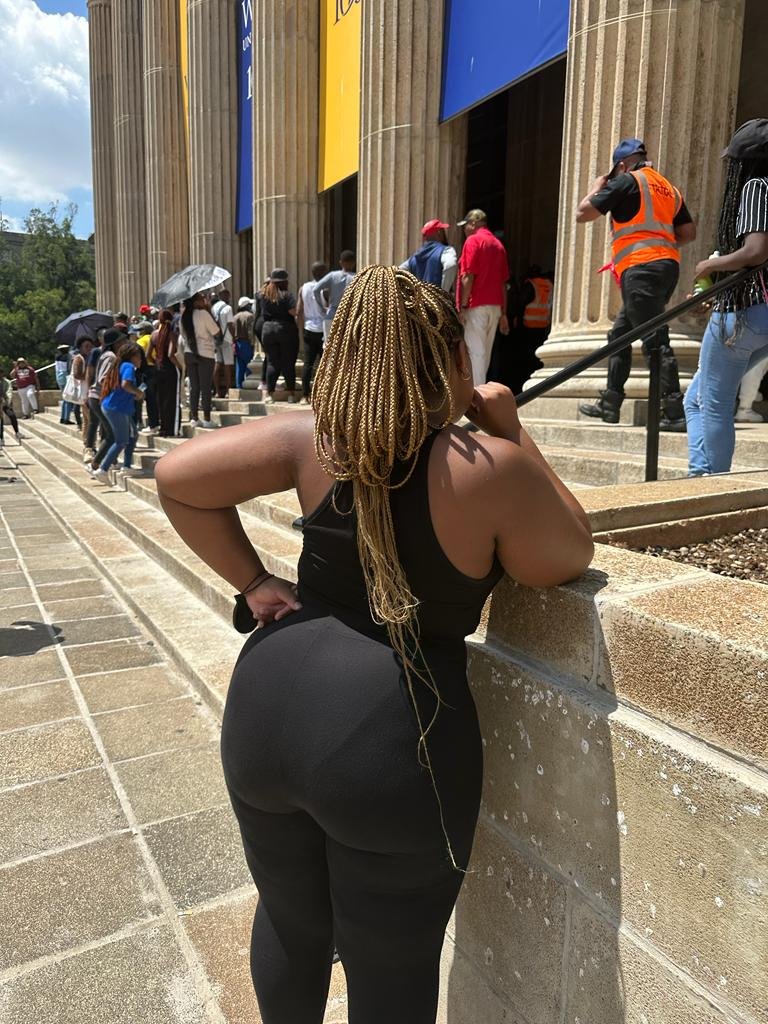
Protesting Wits University Students marched through Braamfontein on Friday afternoon.
At around 13:20 some students, accompanied by a group of about 150 people from Braamfontein, broke through the Yale Road South and Station Street Gates, many wearing political party regalia.
“They came armed with water bottles, rocks and teargas, which they threw at private security officers. Three security officers were hurt and have been taken to the Campus Health and Wellness Centre. The exchange continued for about 20 minutes outside the Great Hall before the crowd dispersed,” the university said.
It said the situation has calmed down now and campus protection services is trying to get those trespassing off the campus as possible.
But entrances have been closed and staff and students will be allowed to leave. No one is currently being allowed onto our campuses.
“We have already illustrated our commitment to trying to support our students as far as possible, and to address many of the systemic national issues. We have shown restraint in the face of student protests but condemn the acts of intimidation and the destruction of property,” the University said in a statement.
The decision by the university on Friday to instruct campus security personnel to remove journalists and photographers covering the student protest was criticised as “censorship and an assault to media freedom.”
The university said lectures proceeded well in the afternoon.
Lets look at some of the demands by the students, and University responses;
1. Students demand: Wits must do more to assist students with funding
University response: Wits has committed R150 million for bursaries and scholarships this year. Last year, Wits administered R1,6 billion in financial aid, scholarships and bursaries which helped over 26,000 students.
2. Students demand: Wits must add R30 million more to the Wits Hardship Fund
University response: R28 million has been committed through the Wits Hardship Fund to assist qualifying students to register and to secure emergency accommodation. To date, 503 students have been assisted. Wits also matched the R6 million raised by the SRC rand for rand = R12 million. In total, there is R40 million available to assist students in need, of which about R36 million has already been allocated.
3. Student demand: Wits must register all students who owe R150 000 and below
University response: Wits cannot agree to this request as it amounts to hundreds of millions of rands, which would make the University unsustainable.
4. Students demand: Wits must register all 6 000 students on the SRC’s list
University response: There are about 200 students who qualify academically in 2023, and who owe funds to the university. Some of the protestors who want to register have failed multiple times, have lost their funding, and are now demanding to return. In one case, a student has been in the system for eight years, and is only in his second year of study.
Wits is committed to welcoming as many academically deserving students as possible. We cannot enrol students who have performed dismally simply because they feel they must be admitted. If they are not passing, they are taking the place of other academically deserving students.
5. Students demand: Wits must cover the shortfall created by the R45 000 NSFAS annual cap on accommodation
University response: Wits can’t change NSFAS policies but accredited private accommodation service providers have agreed to accommodate students within the R45,000 cap. Wits has challenged NSFAS on this cap and will continue to address this matter with NSFAS.
6. Students demand: Wits must secure 150 more emergency beds for students sleeping in libraries
University response: Wits secured 350 beds + 150 additional beds to assist students in need, particularly 40 vulnerable students who had no place to stay.
7. Student demand: Wits must lift the R10 000 upfront payment to access Wits residences
University response: The University already has an option for students to defer the first fee payment.
8. Students demand: Wits has not made any other concessions to help students
University response: A number of other concessions have been made including:
– Allowing students who owe R10 000 or less to register, – Allowing students whose total household income is below R600,000 to apply for registration assistance by paying 50% of the outstanding debt due and by arranging to pay the balance of the debt during the course of the academic year, and – Allowing students who owe R15 000 or less to graduate.
9. Claim: Wits is suspending students who protest University response: Wits will never prevent peaceful protests. However, when students break the University’s rules, damage property and infringe on the rights of those who want to learn and work, the University has no choice but to act against these students. Several students have been suspended to date.
FOLLOWING continued disruptions to lectures on Thursday, Wits University, has announced that it has suspended students who took part in violent protests in and around the campus.
Students at the university students embarked on a violent protest on Thursday and made their way into Braamfontein streets where they were joined by other groups.
“Shops were looted, streets were blocked and property was damaged. This afternoon, we also issued multiple suspension orders to disruptors who transgressed the University’s rules,” the university said in a statement last night on Thursday.
The university said its Legal Office will continue to work through the evidence submitted by the community to ensure that “perpetrators who can be identified, are charged”.
On Thursday afternoon, however, university activities, including academic programmes, continued as scheduled, with little to zero disruptions.
The university said during the investigations, it established that some students who participated in the violent disruptions on Thursday morning were students who were already “academically excluded”.
“Some had failed multiple times, had lost their funding, and were now demanding to be registered,” it said.
While the university management says it’s engaging the Student Representative Council (SRC), academic activities will continue on Friday.
“We are also asking lecturers and academics to make up for any time lost and to upload relevant material to Ulwazi.”
Protesting students are demanding that the university allow students with a debt of R150 000 or less to register, and NSFAS R45 000 cap on accommodation to be amended.
The university said it has progressively increased the amount of funding allocated to students. In 2022, Wits University disbursed over R1,6 billion to 26,161 students.
To date, over 36 200 (96%) of Wits’ students have registered for the 2023 academic year, with Postgraduate intakes set to continue throughout the year.
In 2023 alone, the university has committed R28 million (up from R10 million) to the Wits Hardship Find, to assist academically deserving students to register and to secure emergency accommodation, in line with the rules of the Fund and resources permitting.
To date over 500 students have been funded at a cost of R18.1 million.
This is over and above the R150 million that the university provides in scholarships to deserving students annually.
“The University has secured 350 beds from accredited private accommodation service providers to assist students in need, including those that have been sleeping in libraries and other spaces. These students are being assisted on a daily basis as beds become available,” it said.
The university and private service providers are also navigating NSFAS’ decision to cap accommodation costs at R45,000 per annum, which it said “is regrettable”.
Wits University said it has appealed the decision and lobbied for a differentiated approach that takes the real cost of accommodation into account.
On Friday, students continued with the strike action blocking roads in Braamfontein.
VAAL Triangle University of Technology (VUT), Executive Director: Advancement, Tandi Mapukata, has confirmed that its Vice-Chancellor Professor Ntate Dan Kgwadi, was placed on special leave.
But Mapukata said commenting further would be a breach of VUT policy as questions pertain to a confidential matter of the employment relationship between Professor Kgwadi and the Vaal University of Technology (VUT). However, just like any citizen of the country, Professor Kgwadi has a right to handle his matters in any way he deems fit.
Mapukata said the council remains committed to good governance and institutional stability.
Several initiatives have been launched and are being implemented in response to the Administrator’s Handover Report submitted by Prof Ihron Rensburg at the end of 2021.
This past week, Council sat in a two-day workshop with management and key stakeholders to devise a turnaround strategy and review progress. All stakeholders are united behind Council’s decision to prioritise the institution (VUT) over individuals.
Professor Kgwadi’s suspension came a year after his appointment in February 2022.
However, Professor Kgwadi, who has experienced problems with a knee/leg for over a year and consulted medics to no avail, claimed on Facebook that he had been fired.
“I have just been dismissed from work due to a 14-day sick leave (5 days hospitalisation). That contributes to my lack of performance and probation issues. Going for a labour court race,” he wrote.
In a previous post, the former North-West University vice-chancellor said: “I almost believed that I am bewitched and about to consult traditionally. Your prayers worked.”
Professor Kgwadi was appointed vice-chancellor on 4 February 2022, ending two years of instability during which VUT was under administration. He told Inside Education that he had been dismissed.
Registrar, Dr Dan Mokoena, will serve as acting vice-chancellor and principal.
THE resignation of Professor Mamokgethi Phakeng as Vice-Chancellor of the University of Cape was a step backwards in the representation of women Vice-Chancellors in South African higher education, according to Brightness Mangolothi, Director of Higher Education Resource Service (HERS-SA).
In its 20 years of operation, Mangolothi said HERS-SA has collaborated with Phakeng for almost all of those years.
She has freely accepted the call to share her journey with women leaders and offer help where necessary.
“Last year at the HERS-SA ACADEMY, she spoke about leading wounded, which, regrettably, mirrors the difficulties women leaders face, especially when their identities intersect. ”
Most women could relate to the talk and even felt inspired to share their leadership scars,” she said.
Mangolothi said this indicated that institutions should consider hiring coaches and mentos for leaders at all levels as a retention strategy rather than a remedial measure.
TWENTY high-achieving grade eleven maths and science learners got a little taste of the working world when they recently visited the Atlantis Special Economic Zone.
Sponsored by Energy & Water Sector Education Training Authority (EWSETA) and in partnership with FutureMe, learners explored careers in the Energy and Water sector, with a critical focus on the Renewable Energy and Water sectors.
Key speakers EWSETA chief executive officer Mpho Mookapele, AtlantisSEZ Community Integration Officer Michael Webster, and BE AfriBusiness Founder, and CEO Bradley Chetty introduced available current and future careers in these sectors.
They also looked at how these careers can play a key role in the growth of the South African economy.
Mookapele inspired learners to aim high and do better.
“You will solve the problems of the future. Many people are leaving South Africa amid all the challenges, but this provides a fertile opportunity to get involved – be bold in whatever you do and don’t be scared to take risks,” she said.
The learners got a first-hand work-life experience during their visit to Everflo, a world-class industrial refrigeration company that ensures its operations minimise an environmental impact.
A visit to the Witzands Aquifer in Atlantis saw learners learn about the importance of protecting the country’s water resources and the Aquifer’s role in providing communities with clean water.
With boundless energy, they hiked up the dunes in Witzands.
Afterwards, EWSETA shared the excellent news with learners – to inspire more young people to pursue critical careers in the sector, the SETA offered bursaries to learners who plan to study degrees linked to water and energy.
The Learning Journey is the last in a series of events delivered as part of the 2022 World of Work partnership between EWSETA and FutureMe.
IN a boost for literacy, global technology giant Huawei has joined the UNESCO Global Alliance for Literacy (GAL) today as part of the company’s lead-up to the Mobile World Congress 2023.
The announcement was made at a Digital Talent Summit co-hosted by Huawei and the Institute for Lifelong Learning (UIL), which serves as the Secretariat of the GAL.
At the Summit, Huawei and UIL agreed to promote the use of technology to raise literacy jointly.
The two parties also signed a cooperation agreement under which Huawei will fund an expansion of UIL’s current initiatives to enhance educators’ use of technology in developing countries. Currently, the UIL initiative operates in Bangladesh, Côte d’Ivoire, Egypt, Nigeria, and Pakistan.
Huawei is the first private company to become an associate member of the GAL.
The company is excited that its goals align with GAL’s vision of eradicating digital illiteracy in young people.
“Our rapidly changing world calls for concerted efforts and strong partnerships to achieve quality education and lifelong learning for all,” UIL Director David Atchoarena explained at the event.
Atchoarena said Huawei’s expertise in innovation in learning would be a great asset to the Global Alliance for Literacy.
“Collaborative projects like ours will ensure no one is left behind on this journey.”
“Getting the right education is often the key to success in life. As a major player in the technology sector, Huawei feels it has a responsibility to provide technology skills in all parts of the world, trying our best to include as many people as possible,” said Huawei Vice President of Corporate Communications Vicky Zhang.
Huawei believes digital talent is a critical driver in achieving digital transformation, solid economic growth, and better quality of life. Since 2008, Huawei has offered a broad and expanding range of talent programs.
Under its Seeds for the Future umbrella, Huawei provides thousands of people yearly with scholarships and digital training courses targeting all age groups.
The company also organises and sponsors tech competitions where students can expand their knowledge, win prizes, and make new friends.
So far, Huawei’s Seeds for the Future program has helped nurture more than 2.2 million digital talents in over 150 countries. The company’s ICT Academy can train about 200,000 students each year. In 2021, Huawei announced it had already invested US$150 million and planned to invest another US$150 million in digital talent development before 2026, expected to benefit an additional 3 million people.