Home Blog Page 23

DA and Gauteng Education Department clash over alleged 64% school budget cut

0


By Levy Masiteng

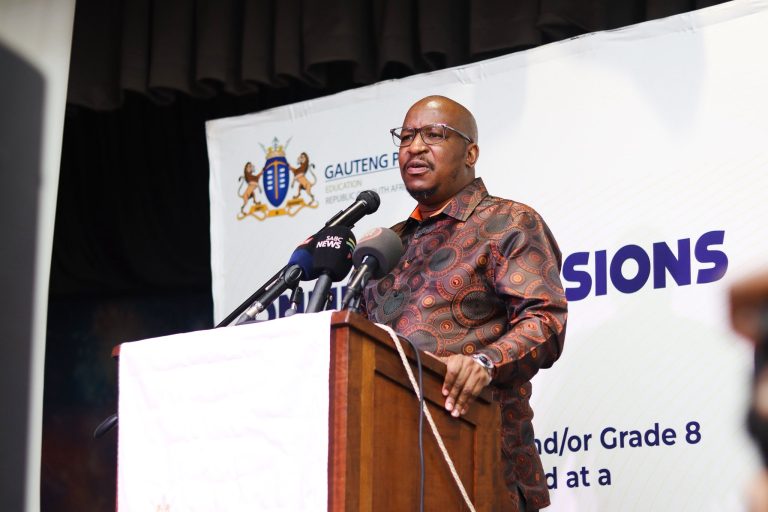
The Democratic Alliance (DA) and the Gauteng Department of Education (GDE) are at loggerheads over claims of a drastic 64% reduction in operational budgets for Quintile 5 schools, due to take effect from 1 April.

The DA has accused the department of slashing funding in a way that will “devastate schools, teachers and learners.”

ALSO READ: Next wave of infrastructure investment must include people, not only platforms

The GDE, however, has dismissed the allegations as “false, misleading, and reckless.”

Gauteng DA spokesperson for education, Michael Waters, said the department’s denial “is a lie” and contradicts its own official responses in the Gauteng Provincial Legislature (GPL).

“The GDE’s claim that it has not cut Quintile 5 school budgets by 64% is hollow and misleading,” Waters argued.

He added that “no government facing a budget shortfall should ever consider cutting funding to schools. It is unjust, unfair, and ultimately the coward’s way out. Instead of taking difficult decisions to rein in waste and non‑core spending, the ANC‑led Gauteng government has chosen the softest and most vulnerable target – children.”

The GDE insists that what is being implemented is not a cut but an interim funding realignment, prompted by severe budget reductions imposed by the National Treasury across all provinces.

ALSO READManamela urges shift from university-only mindset

According to the department, the adjusted funding levels for Quintile 5 schools are aligned with the national norms and standards for school funding set by the Department of Basic Education (DBE).

“This process does not constitute a budget cut, but rather a realignment to nationally prescribed adequacy rates, particularly correcting the historical funding of certain Quintile 5 fee‑paying schools,” the GDE said.

The department added that schools were notified as early as September last year through indicative budget allocation certificates, providing what it described as “ample notice and transparency.”

Gauteng Education MEC Matome Chiloane acknowledged the province is grappling with a R444 million shortfall in the current financial year and a projected R160 million shortfall over the 2026 Medium‑Term Expenditure Framework (MTEF).

“This is a temporary stabilisation intervention designed to keep the system functional and compliant while managing severe financial constraints,” Chiloane said.

“Despite these constraints, the GDE has prioritised the protection of classrooms, ensured teaching and learning continue uninterrupted, and honoured its Learning and Teaching Support Material payments in full and on time.”

Chiloane also argued that if petitions are to be delivered, they should be directed to the Department of Basic Education, which is responsible for national funding norms and allocations.

ALSO READ: WATCH: McKenzie unveils new sports facility at Heidedal Primary School

Waters rejected the department’s terminology.

“This is not a ‘realignment’. It is not a ‘stabilisation intervention’. It is a cut and a devastating one at the expense of schools, teachers, and learners.”

The DA has launched a public petition calling for the reversal of the alleged cuts. As of Saturday, the petition had gathered 5,241 signatures, with 24,759 more needed to reach its target of 30,000 supporters.

INSIDE EDUCATION
BOSA says TVET colleges need boost to support excluded youth

0

By Levy Masiteng 

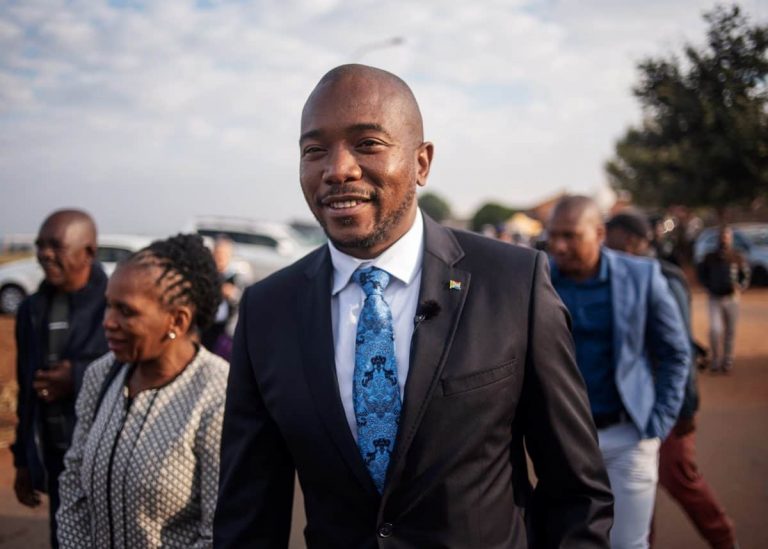
Build One South Africa (BOSA) has challenged the government to change the narrative around post-school education, saying that university isn’t the only path to success. 

The party said tens of thousands of young people will this week face the harsh reality that a matric Bachelor’s pass does not guarantee access to university, exposing a system that is increasingly unable to absorb the growing number of school leavers.

ALSO READ: Khumalo tells ad hoc committee ‘misinformation campaign’ targeted Crime Intelligence reforms

“University cannot, and should not, be treated as the only legitimate route to success,” said BOSA spokesperson Roger Solomons in a media statement.

“The enormous mismatch between matric passes and spaces at universities highlights a post-school system that is failing young South Africans.” 

According to Solomons, each year more learners exit the schooling system with Bachelor-level passes — a trend partly driven by declining matric standards, he said — while the number of available undergraduate spaces at public universities remains limited. 

The result, the party warns, is a swelling pool of qualified but excluded young people left without clear or credible alternatives.

ALSO READ: Thabo Bester joins Cat Matlala in Kokstad’s fortress prison eBongweni Super Maximum Correctional Centre

BOSA said that the crisis exposes a broader failure to properly develop Technical and Vocational Education and Training (TVET) colleges as a viable and respected alternative to university education.

“A modern economy requires artisans, technicians, technologists, digital skills and mid-level professionals,” Solomons said. 

Despite this reality, BOSA said, TVET colleges are underfunded, undervalued, and poorly aligned with labour market needs, leaving many qualified students without a clear post-school pathway.

Solomons said he had submitted a series of Parliamentary questions to the Minister of Higher Education and Training, Buti Manamela, about the issues.

In his statement, Solomons said the party is seeking clarity on whether government accepts that TVET colleges must be strengthened to absorb the growing number of students who cannot access university, and what concrete plans exist to make this happen.

“This includes funding, infrastructure, lecturer capacity, curriculum relevance and public confidence in TVET qualifications,” he said.

ALSO READ: Khumalo tells ad hoc committee ‘misinformation campaign’ targeted Crime Intelligence reforms

Solomons said BOSA also wanted Manamela to disclose the annual throughput and dropout rates at TVET colleges, nationally and per institution, the full transparency on the National Student Financial Aid Scheme (NSFAS), including its budget over the past five years, how many students have been funded, how funds were distributed, and the extent of outstanding student loan debt. 

Additionally, BOSA asked whether government plans to expand post-school capacity through new universities or colleges and if not, why such expansion is not being pursued despite rising demand. 

Last week, during a briefing on the state of readiness for the 2026 academic year, Manamela himself said that an entrenched “university-only” mindset was deepening frustration and distorting public debate about tertiary education access.

“The narrative that the only option after matric is university is creating a sense of crisis,” Manamela said.

INSIDE EDUCATION

Foreign learners make up 1.8% of South Africa’s public school enrolment, DBE says

0

By Charmaine Ndlela

Foreign learners make up only 1.8% of South Africa’s total learner population, the Department of Basic Education (DBE) said on Thursday, rejecting claims that children from other countries are “overrunning” local schools as misleading and unsupported by national enrolment data.

“Such assertions are patently false and are not supported by any credible evidence,” the department said in a statement.

ALSO READ: Next wave of infrastructure investment must include people, not only platforms

The DBE said its verified national enrolment data showed foreign learners accounted for a small minority of children in the system, while 98.2% of learners enrolled in public schools were South African citizens.

It said the 1.8% figure included children of ambassadors, diplomatic missions, United Nations agencies and other international organisations who are lawfully present in the country.

“The claim that foreign learners are placing undue pressure on the education system is therefore statistically incorrect, misleading, and irresponsible,” the statement said.

The department acknowledged frustration among parents in high-demand areas who are waiting for school placements, saying national and provincial education authorities were finalising placements and making progress.

ALSO READManamela urges shift from university-only mindset

It cited KwaZulu-Natal as an example, saying the province had placed 100% of applications, while other provinces continued to make progress.

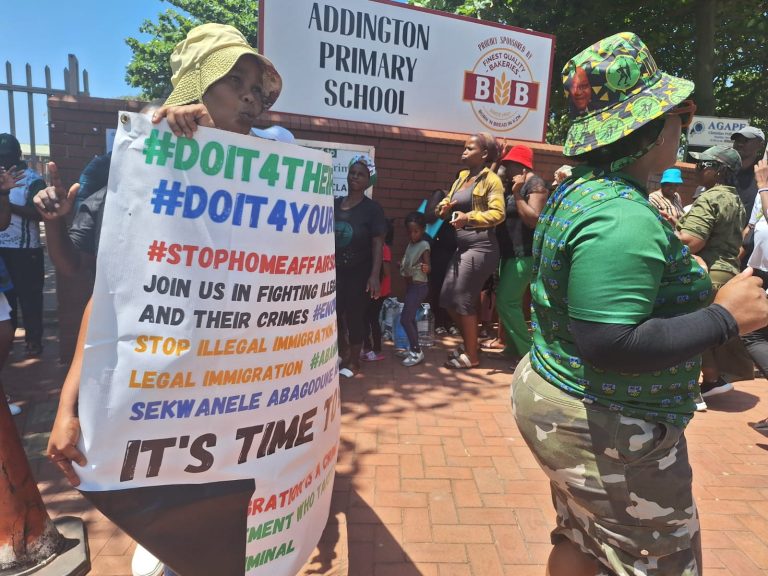
Recent protests outside Addington Primary School in Durban have highlighted how placement backlogs and misinformation about admissions can spill into schools, disrupting classes and drawing a heavy police presence. KwaZulu-Natal’s education department has said the demonstrations were driven by claims that foreign children were being prioritised over South Africans, a narrative the department and MEC Sipho Hlomuka have publicly rejected.

In its statement, the DBE warned against scapegoating and political opportunism around education.

“Any attempt to use the education sector as a platform for scapegoating, social division, or political opportunism must be unequivocally rejected, as a deliberate attempt to sow division and cause unwarranted harm to otherwise peaceful relations within communities and schools, and most importantly, to the wellbeing, dignity, and safety of all children,” it said.

“South Africa’s Constitution and education legislation are unequivocal: every child within our borders has the right to basic education, irrespective of nationality or documentation status,” it said.

ALSO READ: WATCH: McKenzie unveils new sports facility at Heidedal Primary School

The DBE also rejected calls for schools to act as de facto immigration officials. “Schools and educators are not responsible for immigration enforcement,” it said, adding that border control and immigration management were functions of national authorities, not school principals or education officials.

INSIDE EDUCATION

Schools must not be used for social conflict, says Hlomuka at Addington Primary School

0

Staff Reporter

KwaZulu-Natal education MEC Sipho Hlomuka said on Thursday that schools should not be misused to stir community tensions, as he addressed parents and officials at Addington Primary School in Durban, following days of protests outside the institution.

Hlomuka said he was “deeply concerned” by the ongoing protests at the perimeter of the school “that have adversely affected teaching and learning”.

ALSO READ: Next wave of infrastructure investment must include people, not only platforms

“I know that this issue has occupied the heart and minds of South Africa and it has attracted global attention,” Hlomuka said.

“We have a responsibility as the Department of Education to protect everyone who enters our schools, therefore we will not allow schools to be misused as sites of social conflict. Schools exist for one purpose: teaching and learning.”

ALSO READManamela urges shift from university-only mindset

The school – situated on Durban’s popular South Beach – has been the scene of tense, sometimes violent demonstrations this month amid allegation that pupils from immigrant families are being favoured over South Africans for placement.

Some of the admission demands are from indigent families displaced by the April 2022 floods who were moved into temporary accommodation near the school. Those parents have said that transporting their children to other schools will entail crippling financial costs.

Activists from the anti-immigrant movement March and March have been leading protests at the gates of the school, trying to regulate who enters, often with taunts and swearing.
Hlomuka said the protests had left staff and pupils “in trauma”.

“The Constitution of the Republic of South Africa is unambiguous: every child within our borders has the right to basic education.

“Violence has no place in our schools, and those who seek to divide communities by using learners as scapegoats are undermining the values of dignity, equality, and social cohesion,” he said.

He said allegations that the principal and most staff at the school were foreign nationals was false.

ALSO READ: WATCH: McKenzie unveils new sports facility at Heidedal Primary School

Addington Primary had provided enrolment figures showing 1,548 pupils in total, including 968 South African learners and 580 foreign-national learners, he said.

“As things stand there is a list of between 15 to 21 learners that needs to be resolved,” he said.
“We have therefore resolved to take extraordinary measures to assist these learners and their parents. We want to stress however that this is not going to be allowed to be the norm…”

He said 11 Grade R children could not be accommodated at Addington Primary and that the department had arranged for a nearby early-childhood development centre that feeds into Grade 1, to take those learners.

INSIDE EDUCATION

SIU claws back R1.7bn for NSFAS as state tightens grip on student funding abuse

0

By Thapelo Molefe

More than R1.7 billion meant for poor and working class students has been returned to the National Student Financial Aid Scheme (NSFAS) after an investigation exposed years of weak controls, unclaimed funds and payments to unqualified beneficiaries.

The Special Investigating Unit on Tuesday announced it had recovered the money from universities, TVET colleges, parents and former students.

ALSO READ: Former Eastern Cape teacher who murdered colleagues used to randomly shoot gun outside school  

The R1.7 billion forms part of just over R2 billion the SIU has recovered so far in relation to unallocated NSFAS funds between 2016 and 2021.

These were funds set aside for qualifying students who later deregistered or moved institutions but were never returned to NSFAS, despite rules requiring institutions to release the money after one year.

According to the SIU, the failure to recover the funds was largely due to “inadequate control systems and a lack of reconciliation processes” within NSFAS during that period.

“The SIU has returned R1.7 billion to NSFAS’s coffers, which will be allocated to students’ needs at institutions of higher education,” the unit said in a statement.

“These funds represent public resources that must benefit deserving students.”

ALSO READ: March and March vows to continue disruptions at Addington Primary School until local children are placed

A significant portion of the recovered amount came from higher education institutions.

The University of the Witwatersrand paid back R450 million, the University of Pretoria R400 million, and the University of the Free State over R500 million across two payments.

The University of Fort Hare returned R277.6 million, while TVET colleges including Majuba, Motheo and Tshwane North collectively repaid tens of millions of rand.

The SIU has also recovered more than R126 million from 1,055 parents and unqualified NSFAS beneficiaries who signed acknowledgements of debt and agreed to repay the money over time. The unit has urged other unqualified beneficiaries to come forward voluntarily.

The SIU welcomed NSFAS’s move to implement its recommendations, including a new data driven reporting framework and monthly occupancy and payment reports.

NSFAS is also considering bringing payment functions in-house to improve accountability and eliminate intermediaries.

Higher Education and Training Minister Buti Manamela described the recovery as a turning point for student funding governance.

ALSO READ: DBE kicks off national teacher training workshops in Mpumalanga

“The recovery of these funds is a significant step in restoring integrity, accountability and public confidence in the administration of student financial aid,” Manamela said.

“Every rand allocated to NSFAS is public money intended to support students from poor and working class families, and it must be protected and used strictly for that purpose.”

Manamela reaffirmed his support for the SIU’s mandate to investigate corruption, fraud and maladministration across post school education and training institutions.

INSIDE EDUCATION

Gauteng education lays school funding crisis at DA-led national department’s door

Thapelo Molefe

The ANC-led Gauteng Department of Education has shifted the blame for school funding pressures to the DA-led national Department of Basic Education, accusing it of failing to provide relief while allowing what it called misinformation about provincial budget cuts to spread.

The unusually direct attack came as the department rejected claims that it had cut funding to Quintile 5 schools by 64%, saying the allegations were false and deliberately misleading.

Gauteng Education MEC Matome Chiloane said the province was being unfairly scapegoated for implementing national funding norms under severe financial constraints imposed by National Treasury and overseen by the national department.

“It is dishonest to accuse provinces of cutting school funding while remaining silent about the national budget cuts imposed by National Treasury,” Chiloane said in a statement this week. 

“The Department of Basic Education, under the leadership of the Democratic Alliance, is fully aware of the financial challenges confronting Gauteng and other provinces, yet these challenges remain unresolved.”

The department said no 64% funding cut had been implemented and stressed that an interim funding realignment process, effective from 1 April, was being misrepresented as a reduction. 

The realignment aligns funding for certain Quintile 5 fee-paying schools with the National Norms and Standards for School Funding gazetted by the Department of Basic Education.

Schools were formally notified of the adjusted allocations in September 2025 through indicative budget certificates, the department said, arguing that the process was transparent and long communicated.

“This is not a budget cut but a correction of historical funding anomalies in some Quintile 5 schools,” the department said.

The GDE said it is grappling with a R444 million shortfall in the current financial year and a projected R160 million shortfall over the 2026 Medium-Term Expenditure Framework period, pressures it attributes directly to national budget decisions.

Despite this, the department said it has protected classrooms and ensured continuity in teaching and learning.

“We have honoured Learning and Teaching Support Material payments in full and on time, and teaching and learning have continued uninterrupted,” the department said.

Chiloane accused the DA of political opportunism, saying the party was manufacturing outrage while ignoring its role in national policy and funding decisions.

“The sudden outrage being manufactured by the DA is disingenuous,” he said. 

“Provinces cannot be blamed for implementing national policy under constrained budgets we do not control.”

He added that any petitions or protests over school funding should be directed at the national department.

“If there is a petition to be delivered, it should be delivered to the Department of Basic Education, which is responsible for national funding norms and allocations and which the DA itself leads,” Chiloane said.

The department warned that continued misinformation risks undermining confidence in the public schooling system and said the real issue remains the need for sustainable national funding solutions for education.

INSIDE EDUCATION

Stellenbosch, UWC ready for 2026 academic year despite NSFAS funding challenges

By Charmaine Ndlela

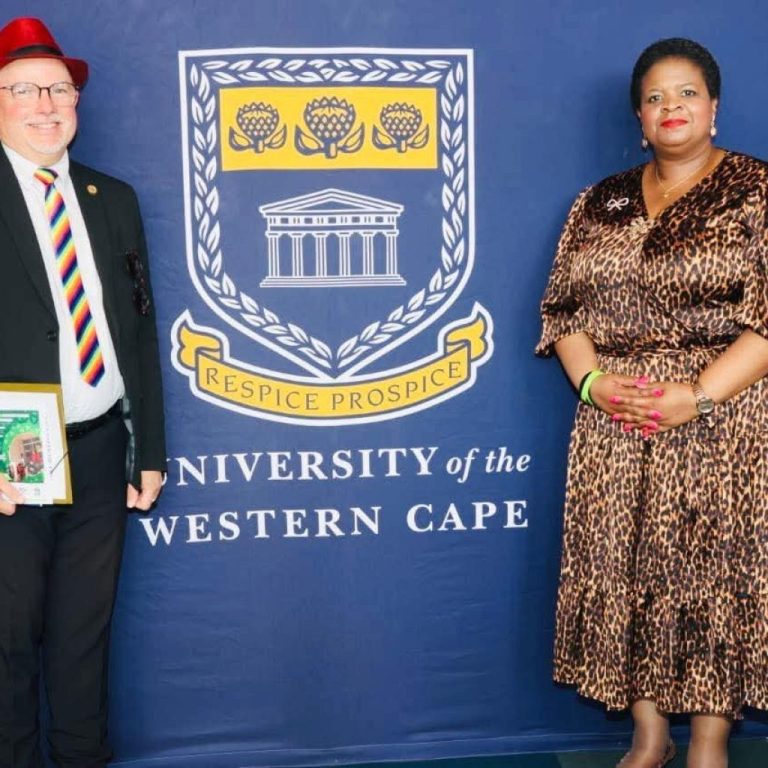
Despite broader systemic challenges such as student funding constraints and historic debt, Stellenbosch University and the University of the Western Cape (UWC) are operationally ready for the 2026 academic year.

This is according to Deputy Minister of Higher Education and Training, Dr Mimmy Gondwe, following a ministerial oversight visit conducted on Monday as part of the Department’s state of readiness monitoring programme.

“Overall, the institution is operationally ready for the commencement of the academic year. Registration processes are functioning well, accommodation arrangements are in place, and academic systems are stable,” Gondwe said of Stellenbosch University.

She noted that approximately 17 840 students had already registered at the time of the visit, with numbers expected to rise once accommodation leases commence in early February.

“The challenges identified relate primarily to student funding and historic debt, rather than institutional preparedness,” Gondwe added.

Similarly, the University of the Western Cape was found to be operationally prepared for the start of the academic year.

UWC has implemented effective registration management mechanisms, including clear communication with students, designated in-person registration sites, and sustained engagement with student leadership.

“The University of the Western Cape is operationally ready for the start of the academic year,” Gondwe said. “The institution has put in place mechanisms to manage registration effectively, including clear communication with students about offers, the registration process, and designated in-person registration sites.”

She said regular bi-weekly engagements between management and the Student Representative Council (SRC) were helping to identify and address challenges early, which is critical to maintaining stability at the start of the academic year.

The oversight visits focused on key areas including registration and admissions, student funding, accommodation, student safety, and the commencement of teaching and learning.

Particular attention was given to NSFAS-related processes, historic debt, the accuracy of funding information on the NSFAS portal, and the experience of first-time entering students.

“These are critical areas for ensuring a stable and orderly start to the academic year,” Gondwe emphasised.

Challenges raised during the engagements were described as systemic and common across the higher education sector, particularly historic debt and NSFAS constraints.

Issues such as delayed tranche payments, funding caps, and portal discrepancies were escalated for urgent resolution.

NSFAS officials remained behind after the engagements to address administrative glitches raised by the SRC.

“We continue to engage closely with NSFAS and institutions to resolve outstanding payments, improve data accuracy, and stabilise allowance disbursements,” Gondwe said. “Institutions are encouraged to apply flexible measures to prevent the undue exclusion of students.”

The Deputy Minister highlighted disparities across institutions, noting that Stellenbosch University has mobilised approximately R10 million to support missing-middle students, while UWC raised concerns around food insecurity, with some students experiencing hardship while awaiting funding and allowances.

“Institutions are encouraged to strengthen partnerships with the private sector as part of broader student support efforts,” she said, adding that the Department remains committed to targeted support for under-resourced institutions and financially vulnerable students.

Student wellness and inclusion also formed part of the engagements, with Higher Health participating in discussions.

Gondwe reiterated the Department’s commitment to inclusive access across the Post-School Education and Training (PSET) system.

“Institutions must ensure reasonable accommodation, accessible infrastructure, and appropriate support so that students with disabilities can participate fully in academic life,” she said.

Higher Health indicated that it has rolled out initiatives to sensitise able-bodied students on engaging respectfully with students with disabilities, with an emphasis on empathy, inclusion and appropriate language.

Gondwe also stressed the importance of community involvement in supporting institutional readiness.

“Communities play a critical role in creating safe, supportive and enabling environments for students,” she said.

“When government, institutions and communities work together, we strengthen access, improve retention and support student success.”

The visits align with national priorities of expanding access, ensuring system stability and enabling teaching and learning to commence without disruption at the start of the academic year.

INSIDE EDUCATION

Former Eastern Cape teacher who murdered colleagues used to randomly shoot gun outside school  

0

By Lebone Rodah Mosima

The former Ntabankulu Senior Primary School deputy principal who murdered three female teachers last week before killing himself, had previously intimidated staff and pupils by conducting “random shootouts” outside the school premises, according to Eastern Cape department of education spokesperson, Velani Mbiza-Gola.

The perpetrator was dismissed following a disciplinary process linked to allegations of sexual misconduct involving learners, but returned to the school, “intent” on killing the women, and “destroying their lives”, Mbiza-Gola told Inside Education.

ALSO READ: March and March vows to continue disruptions at Addington Primary School until local children are placed

“This guy goes beyond a court interdict that he had in his possession, or a protection order as well, that the school had gone back to the police to source out.  He would come next to the school premises, he would intimidate some of the teachers and the learners,” said Mbiza-Gola.

He said that the former deputy principal would conduct “random shootouts” outside the school premises to intimidate those who testified against him in the disciplinary process.

“He still disregarded the interdict, and went ahead and killed the people. This is where the MEC feels this is a total disregard of the law — it’s something that has seriously gone wrong with our society,” he said.

The province’s education MEC, Fundile Gade, and officials, visited the school on Monday to offer condolences to teaching staff and learners.

Mbiza-Gola said that during the visit, Gade stressed the need to rebuild society’s moral value system.

The MEC also met privately with teachers to assure them about safety at the school premises. 

ALSO READ: DBE kicks off national teacher training workshops in Mpumalanga

Mbiza-Gola said psychosocial support had been sent to the school.

Gade also visited the families of two of the deceased teachers on Monday, while arrangements were underway to reach a third family based in another town in the province. That visit is expected to take place on Thursday. 

Two of the deceased teachers had children of school going age, said Mbiza-Gola. 

While no new security measures were announced, Gade said that violence “driven by disregard for life” would not be prevented by physical barriers alone.

“Even if you were to build high walls, if people want to kill you, if they have a total disregard for your life, disregard of the law and justice, [they will find a way],” said Gade. 

The department is assisting the families of the victims with funeral arrangement, said Mbiza-Gola.

One burial is expected to take place next week, while post-mortem processes are still underway for the remaining victims.

INSIDE EDUCATION

March and March vows to continue disruptions at Addington Primary School until local children are placed

0

By Akani Nkuna

Protests at Addington Primary School near the Durban beachfront intensified this week, despite efforts by education officials to place some learners, while parents renewed objections to proposals that some children be accommodated at schools outside the central Durban area.

The SABC reported that 40 of the 66 children who required placement when the protests began were affected by the recent floods. Parents said that their children were placed at Addington for financial reasons and that they cannot afford scholar transport fees if they are moved to other schools.

ALSO READ: U-19 Young Proteas, humbled by Australia in World Cup

The leader of anti-illegal immigrant group March and March, Jacinta Ngobese-Zuma, told SABC that discussions with parents whose children were not placed at Addington, but were offered options outside the Durban precinct, including at Greyville, about 5 km away, highlighted the cost of transport as a major barrier to school placements.

She said protests would continue at the school until South African children were prioritised with placements.

Addington was the most viable option for parents, said Ngobese-Zuma, because it was in walking distance from homes in the inner city.

“We are saying to the department, you cannot solve one problem by creating another one. Because you are saying that solved the problem of placing them, but where did you place them? You obviously did not place them at a place which is convenient and affordable for them because some of the parents are even saying they cannot afford the fees at Greyville. They are willing to even try, but the transport is the issue,” she said.

The protestors were still gathered outside the school premises on Monday, singing derogatory songs and hurling insults at foreign nationals, whom they accused of “taking” school places from local children.  

Police were outside the premises forming a guard around the yard, monitoring the situation, while parents arrived to pick up their children.

Ngobese-Zuma said that the learners who remained excluded were from impoverished backgrounds.  

ALSO READ: IN PICS: Famalies demand justice as Ayanda Dludla appears

“We are here today because it is poor black people whose children cannot afford to go to school, which [authorities] do not regard as much of a big deal. But to someone who can actually walk to school instead of paying R900 on transport fees, it is a massive difference,” Ngobese-Zuma said.  

“Our government never responds if you try and go about the right way of doing things. We are saying if they want to insist that foreign kids in this school must continue learning and not be disturbed, then we will continue to disturb them until the South African kids are placed,” she said.

INSIDE EDUCATION 

U-19 Young Proteas humbled by Australia in World Cup

0

By Johnathan Paoli

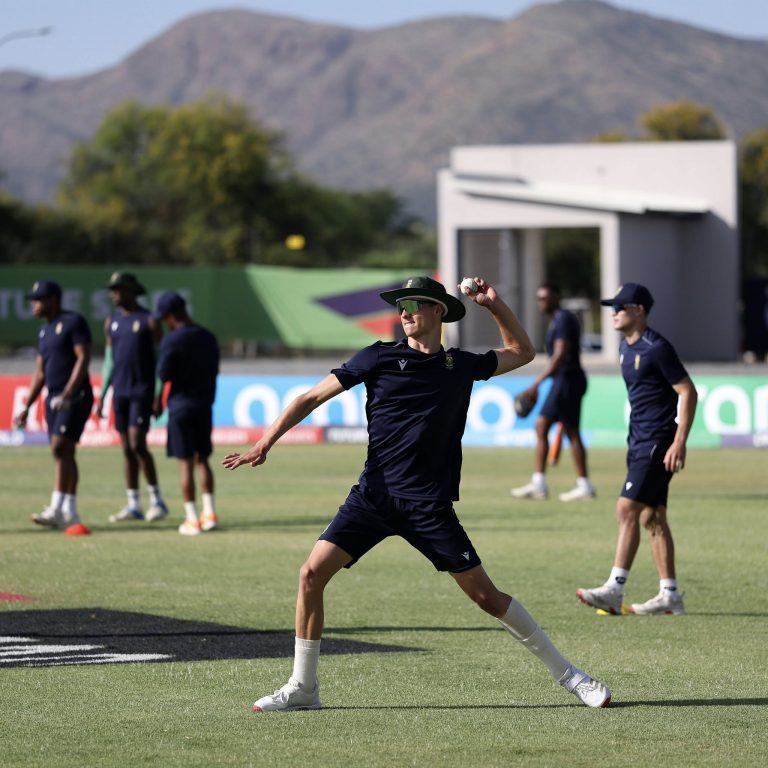
The South Africa Under-19 cricket team received a sobering reminder of the standards required at Super Six level as they opened their ICC Under-19 World Cup campaign with a six-wicket defeat to Australia Under-19s, leaving the young Proteas under immediate pressure in Group I.

WINDHOEK, NAMIBIA – JANUARY 25: JJ Basson of South Africa celebrates the wicket of Ollie Peake of Australia during the ICC U19 Men’s Cricket World Cup 2026 Super Six match between Australia and South Africa at Namibia Cricket Ground on January 25, 2026 in Windhoek, Namibia. (Photo by Matthew Lewis-ICC/ICC via Getty Images)

For the country, the match again exposed familiar issues that have dogged the team throughout the tournament, from fragile starts with the bat, an inability to build meaningful partnerships, and a lack of scoreboard pressure against top-tier opposition.

ALSO READ: Next wave of infrastructure investment must include people, not only platforms

Despite the loss, the team’s performance was celebrated by the national Proteas team on social media.

“The Proteas U19 fought valiantly with the ball, showing a disciplined and determined effort throughout,” the team said on its X account.

Batting first in Windhoek, Namibia on Sunday, South Africa Under-19s were rocked early by a disciplined Australian bowling attack that made full use of the conditions.

The Proteas lost four wickets inside the opening powerplay and slumped to 37/4, placing themselves firmly on the back foot before the innings had settled.

Australia’s seamers hit consistent lengths and forced errors, while the South African top order struggled to adapt.

With movement on offer and fields attacking, South Africa were unable to rotate strike or counter-punch, leading to a steady procession of wickets.

ALSO READManamela urges shift from university-only mindset

Brief resistance during the middle overs helped South Africa limp past the 100-run mark in the 28th over, but the recovery never truly gathered momentum.

Regular breakthroughs ensured there was no late surge, and the innings ended at a modest 118 all out in 32.1 overs.

Despite entering the Super Six stage, many have noticed that the SA side has yet to produce a complete batting performance against high-quality opposition.

While South Africa’s bowlers showed commendable discipline and managed to apply pressure through tight lines, the target never allowed them the freedom to attack relentlessly.

Australia batted with patience, absorbing pressure and rotating strike smartly through the middle overs.

Although wickets fell at intervals, there was no sense of panic as the Australians closed in on the target; eventually reaching 122/4 in 32.5 overs, sealing a comfortable six-wicket win and making a confident start to their Super Six campaign.

For South Africa, the defeat follows a worrying trend, as they entered the Super Six stage on the back of a heavy 55-run loss to West Indies Under-19s, a match in which their batting again failed to fire during a chase.

ALSO READ: WATCH: McKenzie unveils new sports facility at Heidedal Primary School

That loss came despite an encouraging bowling effort that restricted the West Indies to 234 after a dramatic late collapse.

Across the tournament, South Africa have managed just one win over Tanzania, while suffering defeats to Afghanistan, West Indies and now Australia.

Australia, by contrast, arrived in the Super Six brimming with confidence after winning all three of their Group A matches, including a dominant performance against second-placed Sri Lanka.

While there is still time to salvage the campaign, the loss to Australia has reinforced the scale of the challenge facing the young Proteas as they attempt to turn a faltering World Cup into a meaningful contest.

INSIDE EDUCATION