Home Blog Page 24

Scholar transport to fully resume in Gauteng from Monday after two-week shutdown – GDE

0

By Levy Masiteng 

Gauteng’s education department said scholar transport services across the province were expected to fully resume from Monday, 16 February, after a meeting with transport operators resolved issues, including outstanding payments and learner verification processes.

Gauteng MEC for Education Matome Chiloane gave the update on Tuesday after “a constructive engagement” aimed at stabilising the programme and restoring uninterrupted access to education for learners.

ALSO READ: Limpopo launches state-of-the-art DZJ Mtebule school upgrade

The meeting involved associations representing about 250 contracted scholar transport service providers, operating an estimated 3,600 buses and transporting roughly 238,000 learners daily across Gauteng, the department said.

The meeting followed the suspension of services by some operators related to delayed payments.

“The discussions were extensive and frank, with all parties acknowledging that the continued disruption of learner transport was untenable and not in the best interest of learners, parents or communities,” the department said.

It said the talks resulted in “a shared commitment to normalise services while outstanding matters are addressed through the appropriate administrative and financial processes”.

ALSO READ: Roedean denies antisemitism claim after King David tennis forfeit sparks SAJBD backlash

The department said all matters within its mandate were resolved, including “resolution of payment matters, including confirmation that outstanding invoices for November 2025 will be processed and paid by the end of the current week”.

It also reached agreement on “processes related to learner verification and confirmation of transported learners, including clarity on the learner verification forms currently signed at schools and the department’s transition towards a digitised system”.

Following the resolutions, operators committed to consult with their members on a phased resumption of services, taking into account logistical challenges linked to the earlier suspension, including “the temporary removal of vehicles for safety and asset protection reasons,” the department said.

“In principle, full scholar transport operations across the province are expected to resume from Monday, 16 February 2026, marking the return to normal service delivery,” it said.

ALSO READ: KZN prepares emergency response as SAWS issues storm, flooding alert

Chiloane said the department remained concerned about the impact of disruptions on learners, including academic setbacks and exposure to unsafe transport alternatives.

“We acknowledge the frustration and distress experienced by learners, parents and communities during this period. The disruption of scholar transport services is not a situation we take lightly, and we regret the inconvenience caused,” Chiloane said.

“We are encouraged by the progress made and remain confident that the resolutions reached will lead to the full normalisation of scholar transport services across Gauteng, ensuring that learner safety, dignity and access to education remain protected at all times,” he said.

INSIDE EDUCATION
Limpopo launches state-of-the-art DZJ Mtebule school upgrade

By Lebone Rodah Mosima 

The Limpopo Department of Education has handed over 27 newly constructed classrooms and eight renovated learning spaces at DZJ Mtebule Secondary School in the Mopani West Education District.

The state of the art facility has been given two fully equipped laboratories for Life Sciences and Physical Sciences, alongside the refurbished classrooms, bringing the total to 35 classrooms.

Speaking at the handover on Monday, Limpopo Education MEC Mavhungu Lerule-Ramakhanya said 2026 was “A year of transformation and development” and “a new beginning and a new chapter” to achieve new goals and serve as a unified purpose.

“We are here to open the doors to new opportunities for learning and to open the windows to a new era for our education system,” Lerule-Ramakhanya said.

“The handing over of the school is a happy moment for all of us. Our yard today is no longer a construction site but a sanctuary for learning.”

She said the upgraded facilities, serving approximately 1,408 enrolled learners, were intended to restore learning conditions and signal a renewed commitment to quality education.

She described school infrastructure as the starting point for the province’s 2026 programme, calling it a necessary base for other reforms.

“It is the essential foundation – it is the only foundation. The house we build upon must be grander, more daring and more dynamic than anything we have built before,” she said.

Lerule-Ramakhanya said the province was looking beyond traditional classrooms and moving toward technology-enabled learning, including visual and hybrid teaching models.

“Our year of transformation means we will work tirelessly to integrate technology and create visual and hybrid classrooms so that a learner in the remote villages can take a digital journey from the classroom to the future,” she said.

“Transformation means we improve how we serve you as a community and as government. We must shift from paper-based queues to smooth online registration.”

She said the handover marked two milestones: expanding access to new learning opportunities and signalling a shift toward a new approach for the provincial education system. The department’s online registration drive, she said, is aimed at reducing administrative burdens on parents and schools.

On development, Ramakhanya announced a year-long capacity-building programme spanning early childhood practitioners through to Further Education and Training (FET) teachers.

“We will develop pedagogies, digital skills and leadership. When we develop a teacher, we develop an entire generation. We ignite a chain reaction of excellence,” she said.

“We are developing these systems and these teachers to unleash their potential.”

She said the school had been designated a Mathematics, Science and Technology (MST) school, with computer, science and life science laboratories, and urged learners to use the upgraded facilities to improve outcomes.

“Your potential is Limpopo’s greatest natural resource,” she told learners.

She also called on school governing bodies, principals and communities to take responsibility for sustaining improvements and accountability, saying “it takes a village to raise a child.”

“Today we take up that mantle. We are not merely opening classrooms; we are opening the minds,” she said.

“We are not just launching a theme; we are igniting a movement.”

INSIDE EDUCATION

Roedean denies antisemitism claim after King David tennis forfeit sparks SAJBD backlash

0

By Thapelo Molefe

Roedean School has denied allegations of antisemitism after a dispute over a forfeited tennis fixture with King David Linksfield drew condemnation from the South African Jewish Board of Deputies (SAJBD), which accused the Johannesburg girls’ school of discriminatory conduct.

The dispute centres on an inter-school tennis fixture scheduled for 3 February 2026. Roedean said it formally notified King David Linksfield on 2 February that it would be unable to field a team because of prior academic commitments, including compulsory workshops, and requested either a postponement or cancellation.

ALSO READ: ActionSA’s Khumalo under fire after suspect shooting in Ekurhuleni Drug raid

Roedean said King David Linksfield acknowledged the communication and confirmed the fixture would be recorded as a forfeit in line with protocol, adding that, as a result, no formal fixture was scheduled to take place on the day in question.

The school’s response followed the circulation of a voice note, described by Roedean as “allegedly recorded by a senior teacher at King David Linksfield”, which accuses Roedean of antisemitic conduct linked to the forfeiture. Roedean said it conducted an internal review and found the claims to be incorrect.

“Roedean confirms that the contents of the voice note are factually incorrect and do not reflect the documented sequence of events,” the school said in a statement signed by chairman Dale Quaker.

“We reject unequivocally any allegation of anti-Semitism or discriminatory conduct.”

Roedean said it has a long-standing inter-school relationship with King David Linksfield and has participated in numerous events with the school over many years.

It also said it is engaging directly with King David Linksfield and the Independent Schools Association of Southern Africa (ISASA) to ensure the matter is properly understood and handled through the appropriate processes.

ALSO READ: KZN prepares emergency response as SAWS issues storm, flooding alert

However, the SAJBD issued a sharply worded statement condemning Roedean’s decision, describing the forfeiture as a discriminatory refusal to play a Jewish school.

“This disturbing refusal to play Jewish learners is deeply upsetting for the Jewish tennis players, but also conveys the message that hate and discrimination have become acceptable values at Roedean,” said the chairperson of SAJBD Gauteng Council, Danny Mofsowitz.

The SAJBD accused Roedean of violating constitutional principles and undermining the unifying role of sport.

“Roedean cannot claim to be guided by a strong set of values and principles when they clearly violate the basic tenets of South Africa’s Constitution,” Mofsowitz said.

“Sport has the potential to unite and harness diversity but regrettably, Roedean flouted that opportunity by boycotting the Jewish school.”

King David School has informed its parent body about the incident and said it is continuing to engage with ISASA and Roedean to address the matter. Roedean, for its part, urged caution about debating the dispute publicly while those engagements are under way.

“We recognise that situations of this nature can cause concern and discomfort within school communities,” Quaker said.

“In light of these engagements, it would be inappropriate to debate or litigate the facts publicly at this stage.”

The SAJBD said it would work closely with the South African Board of Jewish Education to address the “serious” incident, while both parties indicated that ISASA processes would be used to bring clarity and resolve the dispute.

INSIDE EDUCATION

Comply or get off the road: Gauteng to scholar transport operators

0

By Johnathan Paoli

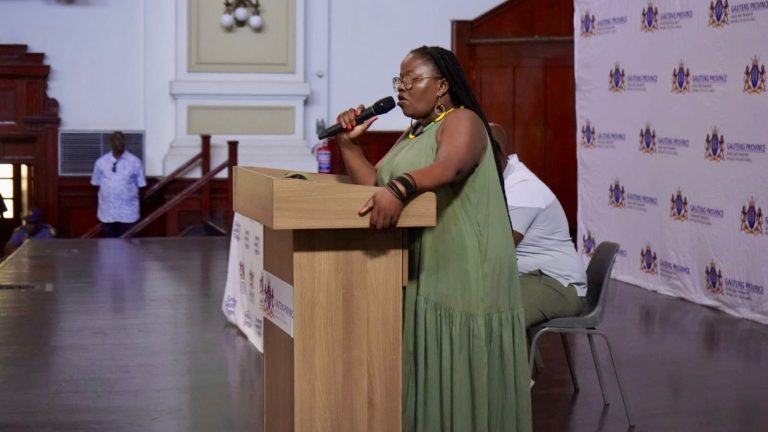
Gauteng Transport MEC Kedibone Diale-Tlabela has said that the provincial government stands ready to work with scholar transport operators “who genuinely want to regularise their operations”, but that compliance with safety and licensing laws is now non-negotiable.

Addressing hundreds of operators at a provincial stakeholder engagement meeting at Johannesburg City Hall on Sunday, she said the department’s priority remained the protection of children using the services.

ALSO READ: ActionSA’s Khumalo under fire after suspect shooting in Ekurhuleni Drug raid

“The operators want to be compliant. As the department, our responsibility is to assist them and ensure they operate within the law, but we must meet each other halfway,” she said.

The meeting comes amid intensified scrutiny of scholar transport safety following the Vanderbijlpark crash on 19 January that killed 14 pupils.

Authorities have since launched province-wide enforcement operations to remove non-compliant vehicles from the roads, a campaign that has triggered protests from some operators whose cars were impounded.

Diale-Tlabela said that the department had negotiated with private vehicle testing stations in Gauteng to reduce the cost of roadworthy certification.

“We have negotiated reduced prices at private vehicle testing station centres to support operators. There is no excuse for transporting children in unroadworthy vehicles,” she said.

According to the MEC, more than 1,500 scholar transport operators have applied for operating licences since last year, with over 500 licences issued and more than 1,000 applications now in the finalisation phase.

ALSO READ: KZN prepares emergency response as SAWS issues storm, flooding alert

Despite earlier claims that no backlog existed, the department confirmed that 1,009 applications remain pending.

Diale-Tlabela said operators themselves had shown willingness to comply.

However, she warned that operators who cannot meet basic standards should not be transporting children.

“If you cannot meet the minimum legal requirements to safely transport learners, you have no business operating in this space,” she said.

Diale-Tlabela emphasised three “non-negotiable” prerequisites that frequently stall applications: valid contractual agreements with parents, endorsement letters from schools, and the use of roadworthy vehicles.

“Operators must enter into formal agreements with parents, including signed indemnity forms granting responsibility to transport learners. Operators must obtain endorsement letters from School Governing Bodies or school principals confirming that they transport learners from those institutions,” she said

These requirements, she said, were essential because they ensure transparency, traceability, and accountability between operators, parents, and schools.

ALSO READ: Cape Town advises residents to store water as planned maintenance could disrupt supply

Beyond these core documents, scholar transport applicants must also submit copies of the pupils’ IDs, business registration paperwork, maps of their transport routes, tax compliance certificates, and several other statutory documents in line with the National Land Traffic Act.

The Act requires that any individual transporting passengers for a fee must hold a valid operating licence.

The MEC acknowledged frustrations among operators regarding recent enforcement operations, but stressed that authorities were acting to prevent further tragedies.

Over the past three weeks, Gauteng inspectors have been staging roadblocks and depot inspections to identify unlicensed operators, vehicles lacking roadworthy certification, and unsafe modifications.

Diale-Tlabela said the department would continue to assist operators whose applications were delayed or incomplete.

The meeting forms part of an ongoing provincial engagement initiative that began in late January, when Diale-Tlabela personally distributed more than 1,000 scholar transport application forms as part of a zero-tolerance compliance drive.

INSIDE EDUCATION

KZN health MEC warns students against ‘old men’ and transactional relationships

Staff Reporter

KwaZulu-Natal Health MEC Nomagugu Simelane warned students entering tertiary institutions not to be drawn into transactional relationships with significantly older men offering material goods, saying the arrangements can carry serious health and social consequences.

Speaking during the provincial department’s KZN Health Chat programme, Simelane cautioned young people against being enticed by the “illusion” of a better lifestyle.

“Our children must be aware that these old men like to lure them with expensive mobile phones, hair extensions, alcohol and the good life. They must be careful and not succumb to that, because the consequences might be disastrous,” she said.

She said older men should not pursue teenage students.

“A 27 or 30-year-old man has no business dating an 18 or 19-year-old. Those people must go to their contemporaries.”

Simelane said inter-generational transactional relationships can increase risks of HIV and other sexually transmitted infections, and that unprotected sex can lead to unplanned and unwanted pregnancies that will disrupt studies and future prospects.

South Africa continues to face high levels of adolescent pregnancy. A UNFPA South Africa fact sheet published in late 2025 said that in 2024/25 the adolescent pregnancy rate (including live births and terminations of pregnancy in the public health sector) for girls aged 15–19 was 48.9 per 1,000, and that 117,195 girls aged 10–19 had a live birth in the public health sector in 2024/25.

Simelane said young women aged 15 to 24 remain highly vulnerable to HIV infection.

She said the department would soon issue a list of healthcare facilities in KwaZulu-Natal that provide Lenacapavir, an HIV prevention drug administered once every six months, as part of efforts to broaden prevention options.

Simelane urged students to remain focused on long-term goals and to resist short-term temptations.

“What is important for children to understand is that they are still at the beginning of their journey. They will eventually find jobs, earn a salary, and get to where they want to be. They’ll eventually be able to buy their own cars and homes, and travel the world if that’s what they want to do. It’s very important that our children understand this. They just need to accept that they’re still at the beginning of the journey. Those who are already there, it’s their time.”

Simelane also cautioned students against taking on adult responsibilities too early.

“We want to urge our children who are starting life at tertiary institutions to take care of themselves. When you’re still a student, you are nowhere near ready to bring a life into the world. You’re just not ready to start a family,” she said.

She encouraged those who have chosen abstinence to maintain it.

“The good thing is that we know there are those who undergo virginity testing. To those who are still virgins, those who have abstained, we are pleading with them to continue on that path until they’re ready. There’s no hurry, no urgency, to start getting involved in sexual intercourse.”

For students who are sexually active, she urged use of free reproductive health services and contraception available through campus and public clinics.

“Most tertiary institutions do have clinics. But over and above those clinics, we also have primary healthcare clinics that are closer to them, which they can visit. We have condoms and various contraceptive methods available free of charge,” she said.

INSIDE EDUCATION

All higher education institutions declare readiness for 2026 academic year

By Charmaine Ndlela

Higher education institutions across South Africa have confirmed their readiness for the start of the 2026 academic year.

First-semester classes are expected to commence on Monday.

While registration processes were reported to have run smoothly at several universities, others experienced delays due to financial constraints affecting students and pending NSFAS funding confirmations.

Despite these challenges, institutions told Inside Education that academic activities will proceed as scheduled across all faculties.

The University of Fort Hare (UFH) reported a generally smooth registration process despite some challenges. The 2026 academic programme officially started on 2 February.

“Students are encouraged to complete registration as early as possible to secure their place and ensure timely access to academic and student support services,” said Deputy Registrar for Academic Administration, Zwelidumile Mditshwa.

Registration for undergraduate, honours, postgraduate certificates, diplomas and master’s programmes took place from 6–30 January 2026, with late registration for selected programmes running from 2–20 February.

UFH confirmed that registrations are conducted online on a first-come, first-served basis, subject to space availability.

However, some students in the Faculty of Science and Agriculture reported difficulties related to quota-full notifications and messages indicating that certain qualification combinations  particularly codes 70401 and 70402, were no longer available for registration through iEnabler.

Meanwhile, concerns were raised at Nelson Mandela University (NMU) regarding technical issues affecting the admissions system. In a statement, the South African Students Congress (SASCO) alleged that system failures prevented students from accepting or declining admission offers.

SASCO criticised what it described as administrative inefficiencies and called for accountability, claiming centralised decision-making contributed to the problem.

The organisation issued a 24-hour ultimatum for the university to resolve the matter, warning that failure to do so could result in protest action, including disruptions to admissions processes.

It urged management to prioritise restoring system access to ensure qualifying students are not disadvantaged and that institutional intake targets are not affected.

At North-West University (NWU), unregistered first-time entering students have been urged to complete their registration before online registration closed on Sunday, 8 February.

“Please note that failure to register by Friday, 6 February 2026 at 10:00, or to formally indicate your intention to still register, will result in your firm academic admission offer being cancelled,” said NWU Registrar Edgar de Koker.

He further advised students still securing funding to inform the university immediately.

Walter Sisulu University (WSU) Vice-Chancellor and Principal Dr Thandi Mgwebi said the institution entered the year on a firm footing following the successful conclusion of registration on 31 January.

Mgwebi confirmed that systems, learning spaces and student support services are fully operational, reflecting months of coordinated planning across faculties, registry services and executive management.

“We have ensured that students are registered, systems are functional and learning as well as living spaces are prepared. WSU is officially ready to commence the academic programme,” she said.

She said that WSU received hundreds of thousands of applications for the 2026 academic cycle but could accommodate only 7,401 first-year students.

“Every student admitted here is not merely enrolled; they are selected. They carry with them the hopes of families, communities and a nation in need of skills, knowledge and leadership,” Mgwebi said.

INSIDE EDUCATION

SA Rugby’s new Under-9 rule: why gradual contact training makes youth rugby safer

By Sharief Hendricks

My son, aged five, has just started school at Wynberg Boys Junior, a school based in Cape Town’s southern suburbs with a strong record of playing rugby.

Like most rugby-loving families in South Africa, we hope our child discovers the pleasures of the game. We would like him to enjoy the sport, but we want him to do it in the safest way possible.

As a contact sport, rugby has the potential to result in some serious injuries if players aren’t properly prepared and supervised. Full contact tackle rugby involves repeated dynamic physical-technical contests for the ball and territory, which expose players to injury.

In South Africa, the governing body, SA Rugby, has a new policy that children under the age of nine can only play non-contact rugby.

Non-contact rugby incorporates all the core elements of rugby like running, catching, passing and decision-making, but it is done without the repeated physical-technical contests of the tackle.

Age categories Under 8 and younger are not allowed to engage in the full-contact tackle rugby and should play tag rugby and SA T1 Rugby, a version of World Rugby’s globally endorsed non-contact game.

The non-contact game is designed for all ages, sizes and abilities, including children and first-time players. The new standards apply to all schools, clubs and associated members working in youth rugby. Before playing full-contact tackle rugby though, players will have to build the necessary skills and confidence to contest the tackle.

I am an injury prevention and player welfare researcher at the Health through Physical Activity, Lifestyle and Sport Research Centre at the University of Cape Town and a visiting professor at Leeds Beckett University.

I am also a research consultant for sport governing bodies, including SA Rugby and World Rugby. Recently, with my co-author Stephen West from the University of Calgary, I published a paper outlining the current policies in different countries for introducing contact in youth sports.

The article weighed up the potential risks and benefits of an earlier versus later introduction to contact and described what needs to be considered when designing policies for this. We concluded that the introduction to contact should be a gradual, clearly defined process. It should build physiological, psychological and technical competencies to perform contact safely and optimally.

We think the new SA Rugby policies are an evidence-based investment in our children’s long-term rugby participation. The rules are catching up with those of other rugby-playing nations. By giving young players the cognitive, physical and technical foundations they need, we are making the game more sustainable, more enjoyable and safer for the next generation.

What the research says

In the research, we highlight that exposure to a range of movement experiences early on may develop skill capacities that will facilitate the learning of more advanced skills. 

Research has shown that significant developmental improvements in cognitive processes, such as processing speed (reaction time) and executive function, occur between the ages of five and seven years, and children become more interested in structured, rule-bound play.

We argue that contact skills can be introduced between the ages of 7 and 11 years. We also highlight that before any sport-specific techniques are introduced, players need to condition themselves for contact through skills such as falling, grappling and wrestling.

These fundamental movements serve to prepare players for contact, for example, how to break a fall or physically engage (push, pull, drive, let go of) another player.

Players also need to learn how to carry the ball into contact and tackle.

Training environments should be designed to provide adequate skill development which prepares players for the demands of tackle contact rugby sport.

Coaches should understand the game demands for their age group to manipulate training to achieve specific learning objectives. For instance, in junior rugby, children tend to cluster around the ball – what we call the “beehive effect”. Our research shows this creates tackle patterns that are different from those in the adult game, with junior rugby involving more jersey pulls and arm tackles than direct front tackles.

Coaches can use this insight to adjust field size to control contact speed, and introduce rules that encourage evasion over direct confrontation.

Guidance and preparation

With input from leading researchers, practitioners and coaches in rugby, our research group developed a tackle training framework to help coaches and trainers.

For example, it provides a guide for how coaches can progress players from environments that are low-speed, controlled and structured to environments that are more representative of the game situations.

Families can also help prepare children for the joys of tackle rugby:

  • give them the opportunity to participate in a range of sports
  • expose them to forms of physical contact such as wrestling and grappling in the form of play, and activities that develop their landing, falling and rolling skills
  • encourage collision play with padded or cushioned equipment
  • explore sports that specifically promote body control and awareness in controlled contact situations, such as karate.

Of course, children develop at different rates, and many factors influence when a child is ready for contact. This is why a standardised, progressive approach benefits everyone.

Sharief Hendricks is Senior Lecturer in the Department of Human Biology, Faculty of Health Sciences , University of Cape Town.

This article was first published by The Conversation.

University of Pretoria launches SARChI chair to steer Just Energy Transition research

By Charmaine Ndlela

The University of Pretoria (UP) has launched a South African Research Chairs Initiative (SARChI) Chair in Just Energy Transition, as the country accelerates efforts to shift from coal-heavy power towards cleaner energy while trying to protect jobs, affordability and social stability.

Led by Professor Roula Inglesi-Lotz and developed in partnership with Germany’s RWTH Aachen University, the Chair will focus on producing policy-relevant research on how economies can decarbonise without deepening inequality.

UP said the collaboration is designed to strengthen evidence for decision-makers navigating the trade-offs of transition in a carbon-intensive, unequal economy.

“A just energy transition” is widely used as a fairness-based approach to climate and energy reform, aimed at ensuring the shift to low-carbon systems is inclusive and does not leave workers and communities behind.

Inglesi-Lotz told the launch this week that the transition could not be reduced to a single policy lever or technology choice.

“The just energy transition is not a single policy choice or technological fix,” she said.

“It is a process of structural transformation that affects households, workers, firms and institutions simultaneously. The purpose of this Chair is to generate evidence that helps decision-makers navigate that complexity in a way that is both economically sound and socially just.”

UP said the partnership links two institutions approaching decarbonisation from different starting points, and is intended to support comparative work rather than “one-size-fits-all” prescriptions.

“Working across Pretoria and Aachen enables comparative analysis that is both analytically rigorous and practically grounded,” UP said.

“Germany’s experience with industrial decarbonisation, grid expansion and long-term planning offers valuable insight, while South Africa’s context foregrounds questions of justice, affordability and development. Together, the partnership rejects one-size-fits-all solutions in favour of context-sensitive transition pathways.”

UP Vice-Chancellor and Principal Professor Francis Petersen said skills and institutional capacity would be central to whether the transition succeeds.

“The theme of this launch, ‘Human capital for the just energy transition’, reflects a fundamental truth,” he said. “Without the right skills, institutional capability and social inclusion, the transition will not be sustainable. Universities have a responsibility to ensure that knowledge creation translates into social and economic value.”

UP said the Chair will support master’s and doctoral students, postdoctoral researchers and early-career academics, including co-supervision and exchange opportunities between Pretoria and Aachen.

The Chair sits within SARChI, a South African government research programme established in 2006 and managed by the National Research Foundation (NRF) through a contractual agreement with the Department of Science and Innovation (DSI).

UP placed 448th worldwide and third in South Africa in the 2026 Webometrics global rankings.

INSIDE EDUCATION

School nutrition programme currently feeds more than 9.6 million learners – Gwarube

0

By Charmaine Ndlela

Basic Education Minister Siviwe Gwarube has reaffirmed government’s commitment to strengthening the National School Nutrition Programme, which provides daily meals to more than 9.6 million learners nationwide.

Gwarube made the announcement during an oversight visit to Fezeka Primary School in Peddie, within the Ngqushwa Local Municipality in the Eastern Cape, on Friday.

“This programme has significantly improved school attendance and academic performance. It underscores the critical role that nutrition plays in supporting learner well-being and academic success,” Gwarube said.

During the visit, the Minister toured the school and engaged with learners across various grades and classrooms. She also visited the computer laboratory, where she observed teaching and learning in progress and interacted with learners using digital tools. Gwarube further read to learners, promoting a culture of reading and highlighting the importance of early literacy.

“The rollout of compulsory Grade R is proceeding apace across the country, allowing more learners to enter the schooling system earlier to improve literacy outcomes,” she said.

“We are also closing the digital divide, as learners in rural schools are increasingly accessing education through digital devices.”

The Department of Basic Education said the engagements reflect government’s commitment to strengthening foundational learning while expanding digital skills development in schools.

Later, the Minister visited Mzuxolile Secondary School, where she addressed the Class of 2026 matric learners, urging them to remain focused, disciplined and committed to their studies in pursuit of a better future.

According to the Department, the visit formed part of broader efforts to engage school communities and district leadership, assess progress, address challenges and reinforce collaboration in support of quality teaching and learning.

INSIDE EDUCATION

NSFAS clears 660,039 first-time students for 2026 funding

0

 By Levy Masiteng 

The National Student Financial Aid Scheme (NSFAS) has approved funding for 660,039 first-time entering students (FTEN) for the 2026 academic year, acting Chief Executive Officer Waseem Carrim said on Thursday.

Carrim said the figure was up from 632,333 approvals recorded the previous week.

ALSO READ: Gwarube launches read-aloud day with sign language version of children’s book  

 “This upward trend reflects NSFAS’s unwavering commitment to expanding access to post-school education and training,” Carrim said. “We are determined to ensure that financial constraints do not stand in the way of deserving students.”

NSFAS said 85,662 applications were being processed pending verification of outstanding documents, while 21,483 applications remained on hold due to missing supporting information.

It said 116,266 applications did not qualify for bursary funding, although 13,052 of those applicants were offered NSFAS loans.

For returning university students, Carrim said 436,924 had met the academic progression criteria and remained eligible for funding, while 109,761 students were found ineligible.

“At TVET colleges, 127,503 continuing students qualified for ongoing support, with 79,461 failing to meet progression requirements,” he said.

Carrim said NSFAS had received 91,937 appeals for the 2026 cycle, of which 10,445 had been approved.

“We remain committed to handling appeals fairly and transparently, and we urge students to submit outstanding documents promptly,” he said.

ALSO READViola urges learners at first North West rural career expo to pursue STEAM

On student accommodation, NSFAS said it had received 194,069 accommodation applications across universities and TVET colleges.

It said 55,653 accommodation applications had been approved so far, with thousands more pending institutional and landlord review.

“NSFAS remains committed to processing all appeals fairly, transparently, and efficiently,” Carrim said.

NSFAS said it was upgrading its accommodation portal to provide students with a single platform to apply, track application status, and log maintenance issues.

INSIDE EDUCATION