Home Blog Page 245

Ramaphosa mourns death of 19 school children, two adults in Pongola crash

WENDY MOTHATA

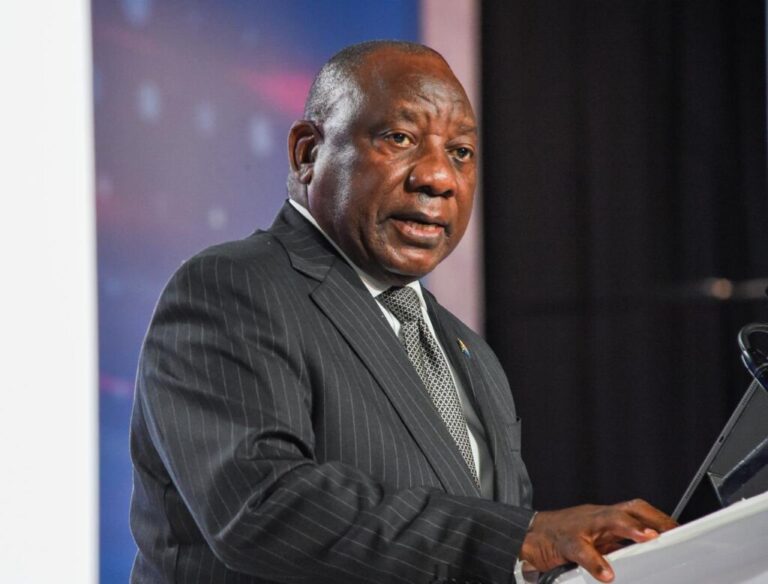
PRESIDENT Cyril Ramaphosa has expressed his deep sadness at the death of 19 learners and two adults in a collision between a bakkie and a truck near Pongola in northern KwaZulu-Natal on Friday.

The learners were allegedly transported on a bakkie when their vehicle collided with a truck.

“This is yet another sad moment for our country, following the substantial loss of young lives in an Eastern Cape tavern recently,” said Ramaphosa.

“We cannot afford to lose such precious lives under any conditions. I hope the investigation into the Pongola incident will shed light on the cause of this tragedy and help us take better care of our children into the future.”

KZN Premier Nomusa Dube-Ncube has meanwhile called on the courts to deliver justice to the victims of the horror crash.

Dube-Ncube described the incident as “painfully sad.”

“This is one of the most tragic accidents in our province in recent times. What is painfully sad is to learn that this accident has taken the lives of so many of our young people whose future and that of their families is now destroyed,” said Dube-Ncube.

“Sadly, it is becoming clearer by the day that increasingly, human factors are playing a major role in road fatalities in our province which is cause for major concern. We commend the SAPS and the community for working together to facilitate the arrest of the driver of the truck that was involved in this fatal accident who had also fled the scene. We therefore call on the Justice, Crime Prevention and Security Cluster to act swiftly and in concert to ensure that justice is delivered for the sake of the victims and
their families.”

Dube-Ncube said that the provincial government will provide all the necessary support to the surviving families to ensure that they are able to bear the impact of the tragedy.

“We also convey our sincere condolences to the families, relatives and friends who have lost their loved ones in this terrible accident. The provincial government will provide all the necessary support to the surviving families to ensure that they are able to bear the impact of this tragedy and when the time comes, to lay the souls of the departed to rest with the appropriate dignity. May their souls rest in peace,” said Dube-Ncube.

The Democratic Alliance (DA) said it was clear that the ANC-led government was failing KZN’s road users.

“The lawlessness and carnage that we are witnessing is proof of this. Yesterday also saw a separate incident involving learners. The only positive is that there were no deaths in this particular instance,” said Francois Rodgers, DA leader in the KZN Legislature.

“Given the growing crisis in our province, the DA expects National Transport Minister, Fikile Mbalula, to intervene and ensure that our roads are safe, properly maintained and that there is increased visible policing.”

Rodgers said the DA will be closely monitoring the outcome of the Pongola crash investigation.

“Both the Minister and his MEC and must be held accountable while the perpetrator must be behind bars sooner rather than later. Justice must be served on behalf of the families,” he said.

INSIDE EDUCATION

Early Childhood Development: Compulsory school change for South Africa

0

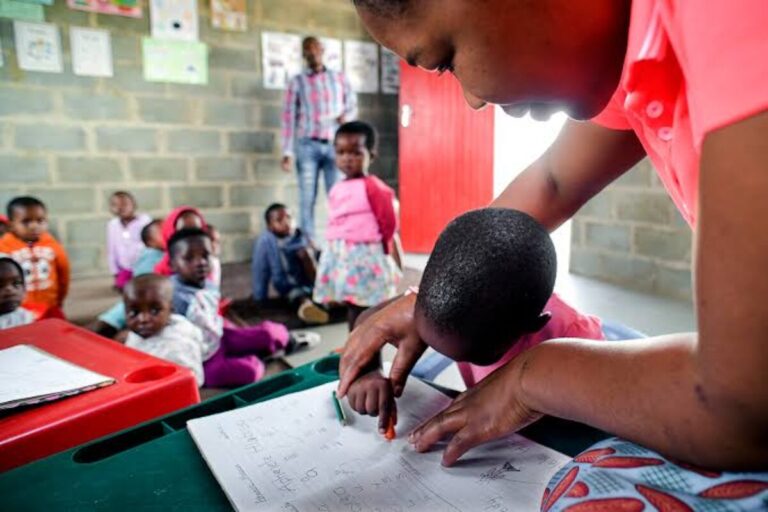
AT the start of April 2022, the Department of Social Development handed over the responsibility of early childhood development to the Department of Basic Education, paving the way for earlier schooling in South Africa.

Two years of early childhood development (ECD) is set to become compulsory for all children before they enter the formal school system in grade 1.

Since taking over ECD from the social development department, the Department of Basic Education said that it has identified “a multitude of challenges” in the early childhood development sector – systemic challenges, access challenges, and challenges in the quality of learning.

The main systemic challenges entail the historic underfunding of the sector, it said, including a lack of infrastructure support to ECD centres, an overly burdensome regulatory framework, the lack of a management information system, the lack of a quality assurance system and under-qualified practitioners.

“The challenge with access is that only 58% of 3-year-olds and 75% of 4-year-olds are currently accessing early learning opportunities. Ideally, we would like all 4-year-olds to be able to access early learning opportunities,” the department said.

The department said it is prioritising the systemic challenges by creating an enabling environment, adding that work is ongoing in addressing the regulatory challenges through the Second Children’s Amendment Bill and the review of the Norms and Standards for ECD registration.

Responding in a written parliamentary Q&A this week, basic education minister Angie Motshekga said that the department is also addressing access issues by provisioning grade R infrastructure for schools.

This is already being funded through the Education Infrastructure Grant and the Equitable share portion by provinces, she said.

She said the department is working to ensure that there are enough grade R classrooms to accommodate the shift, with these classrooms being procured through four main routes:

  • New standalone grade R classrooms;
  • New or replacement schools provided with grade R classrooms;
  • Ordinary classrooms converted into grade R; and
  • Mobile classrooms used as grade R classrooms.

Explaining the importance of the shift of compulsory grade R to parliament, the department noted that more South African children are expected to begin reading earlier, with higher standards of reading expected to be introduced in the earlier primary school grades.

The move is also expected to provide better monitoring systems, including systems to gauge the school readiness of children when they enter grade 1.

The department said that it also plans to provide further support to Foundation Phase (Grade R – Grade 3) teachers, including Individualised coaching and Early Grade Reading Assessment (EGRA) tools. It has also pledged to strengthen school-level Professional Learning Communities (PLCs) to advance teacher capacity.

The compulsory schooling change is included in the draft Basic Education Laws Amendment (BELA) bill. The bill is currently sitting in National Assembly. Public comment for the bill closed on 15 August 2022.

In addition to the compulsory grade R, the bill makes a raft of proposals, including:

  • Compulsory attendance: Stricter punishments will be introduced for parents who fail to ensure their children attend school, including jail time and/or a fine of up to 12 months.
  • Absenteeism: The bill states that teachers, principals and school governing bodies must take responsibility and accountability for learners that are within their school community by ascertaining the whereabouts of a learner who is absent from school for a period of more than three days without a valid reason.
  • Corporal punishment: Corporal punishment is abolished and no person may inflict or impose corporal punishment to a learner at a school, during a school activity, or in a hostel accommodating learners of a school.
  • Initiation practices: The bill prohibits initiation practices in a hostel accommodating learners, and during a school activity.
  • Governing body disclosures: Members of a school governing body, like other public officials, will be required tp disclose on an annual basis their financial interests and the financial interests of their spouse, partner and immediate family members.
  • Homeschooling: The bill introduces further clarity around home-schooling, including that South African learners may be educated at home only if they are registered for such education.
  • Business with the state: The bill will prohibit educators from conducting business with the state or from being a director of a public or private company conducting business with the state, and creates an offence should an educator contravene the abovementioned provision.

SOURCE: BUSINESS TECH

5​ problems with the Student Experience Survey’s attempt to understand what’s going on in higher education post-COVID

KELLY E. MATTHEWS, JASON M. LODGE and MELISSA JOHNSTONE

EACH year tens of thousands of higher education students complete the Student Experience Survey. It’s seen as a litmus test of student engagement, satisfaction and educational quality. But do the ways in which institutions and governments try to understand student experiences still add up?

The pandemic has transformed enrolment patterns and the ways in which students interact with their institutions and the courses they offer. We suggest the data from the 2021 survey released today no longer adequately capture students’ experience of study. The current version of the survey was designed for a time when modes of study were more clearly defined than they have become since COVID-19 emerged.

The student survey is part of the Australian Quality Indicators of Learning and Teaching (QILT) suite of measures for higher education. The 2021 report shows ratings are more positive compared to 2020 for younger and internal (classroom-based) students. According to the report, this “can likely be attributed to some return to on-campus learning and also a change in the expectations and experience of students”.

But how are “internal” students engaging in their studies? Does learning look the same today compared to 2019, and should it?

New forms of flexibility in student mode of study have to be matched with new forms of support to enable students to make smart choices. The mode of study categorised as internal for the survey now includes so much variation that it no longer serves a useful function for reporting and analysis purposes.

Why QILT results matter

Individual higher education providers might use results to:

  • set key performance indicators – for example, “by 2030, we will be in the top 3 universities for learner engagement”
  • market themselves – “we are the top Australian university for teaching quality”
  • undertake evidence-informed planning – “develop sense-of-belonging roadmap to increase scores”.

Student survey data are also used in research that informs policymakers. Drawing on many years of survey results, social scientists analyse datasets to answer big, high-level questions.

It’s more than a matter of comparing universities and providers. Questions of equity and access are investigated. For example, how are rural and regional students engaging in higher education?

These data are used in research with other national datasets. For example, reports from the National Centre for Student Equity in Higher Education at Curtin University demonstrate the importance of such data.

COVID has changed how we study

The pandemic shone a light on issues of student equity as mode of study shifted (as a recent review showed). Mode of attendance is defined as:

  • internal: classroom-based
  • external: online, correspondence, and electronic-based (the language used for data-collection purposes shows how outdated it is)
  • multimodal: mix of internal and external.

In 2019, about 75% of Australian higher education students were enrolled as internal students. Multimodal studies accounted for roughly 14%.

Even at that time, it could have been argued that the lines between internal (classroom-based) and external (online) were already becoming blurred. Lecture recordings, learning management systems, flipped classrooms, endless debates about the “lecture”, and growth in digital technologies not only broadened access to knowledge but also enabled a mix of online and in-class interaction.

The use of existing technologies was a key reason the higher education sector could pivot online in a week when the pandemic hit in early 2020. Imagine if the pandemic had happened in 2005 instead of 2020? Higher education institutions would have simply shut down without these technologies.

Now we have had two years’ experience of online learning and new modes of study. Examples include attendance via Zoom rooms, live online, hi-flex (making class meetings and materials available so students can access them online or in person), swapping from on-campus to online due to lockdowns, students moving between internal and external study on a week-by-week basis. Does the either-or categorisation of modes of attendance – internal or external – still make sense?

5 problems with categorising attendance this way

We have identified at least five problems with the current survey categorisation of modes of attendance:

1. categorising attendance as purely one or other mode, rather than a combination of modes, stifles research and analysis of important national datasets

2. the existing categorisations stifle innovation, limiting institutions from creating distinctive blends of modes of teaching and learning

3. it perpetuates an outdated, either/or mindset that permeates discussion in the sector

4. it masks important implications of differences between new and established modes of attendance, including:

  • hidden workloads for staff, leading to questions of burnout and mental health
  • unclear expectations for students, which hinders decision-making and effective study approaches
  • hidden costs and unclear planning processes for differing modes of study
  • lack of clarity about blurred modes of study being offered, which can restrict access to higher education and create obstacles to success for equity students.

5. the sector is missing opportunities to gather relevant mass-scale data on modes of attendance to guide policy and practice.

Sector needs to agree on a new model

The crude categorisation of modes of study is hindering evidence-based decision-making. Across the sector, institutions are scrambling to sort out how best to maintain the flexibility many students now demand while ensuring students meet expected learning outcomes. And institutions need to do so in ways that are sustainable and healthy for staff.

As the chaos of the pandemic hopefully subsides, the higher education sector would benefit from a sector-wide process of developing an agreed way of describing the full range of modes of attendance. A framework is needed that enables shared understanding of all these modes. This will enable institutions to better plan, resource, innovate and engage students and staff.

Such a framework could then inform ongoing national data collection, such as QILT, so social scientists and educational researchers can, in turn, better guide policy and practice.

THE CONVERSATION

OPINION| SA’s PhD review – Its relevance for other countries in Africa

0

EARLIER in 2022, South Africa’s Council on Higher Education (CHE), which is responsible for the quality assurance of higher education qualifications, published a comprehensive review of doctoral education in South Africa.

The review was the culmination of a meticulous and elaborate process that started in 2017 when South Africa’s National Research Foundation (NRF), which provides financial support to doctoral degree programmes, invited the CHE to undertake a review of doctoral education in South African higher education institutions to ensure that they meet national quality standards.

Increasing PhD graduates

To understand the NRF’s concern, one needs to go back to 2011, when South Africa launched its National Development Plan (NDP) aiming at eliminating poverty and reducing inequality by 2030.

For the NDP to achieve its objectives, it set out a series of goals for improving education and training and increasing research and innovation capacity over the next 20 years. Two of those goals relate directly to doctoral education.

First, the NDP proposed to increase university student enrolment from 950,000 in 2010 to 1.62 million in 2030, a 70% increase. This would invariably require additional academics, including those holding PhDs. In 2010, the proportion of PhD-qualified academic staff in universities was only 34%, which the NDP proposed to increase to 75% by 2030.

Secondly, noting that South Africa produced only 28 PhD graduates per million population per year, a figure considered very low by international standards, the NDP set the target of 100 by 2030. This would result in an increase in PhD graduate output per year from 1,421 in 2010 to 5,000 in 2030.

By 2017, the figures had already increased significantly. The number of PhD graduates per million of population had increased to 54; the number of doctoral graduates produced per year had more than doubled to 3,057; and the proportion of academics having a PhD had reached 46%. While the numbers were increasing, there was little information about the quality of the graduates.

Another factor that, no doubt, prompted the review was the diverse higher education landscape in South Africa, partly because of the colonial past, and partly resulting from the institutional mergers that took place at the beginning of the 21st century which aimed to redress post-apartheid legacies, but which invariably created greater diversity.

This resulted in 36 public higher education institutions being merged into initially 21, and currently 26 universities. Some of these universities are classified as traditional, others as comprehensive and yet others as universities of technology.

While the majority of them are recognised – several of them internationally – for delivering quality doctoral programmes, some were suspected of having limited capacity to do so as a result of their historical past.

The review process

The first step in the review process was establishing a quality standard specifically for doctoral degrees. The CHE is reputed for having excellent quality assurance mechanisms for accrediting both institutions and their programmes, but the latter are mainly at undergraduate level. Because of the nature of doctoral programmes, their assessment requires a completely different approach.

Accordingly, in 2017, the CHE appointed a group of academic experts with experience in supervision and assessment of doctoral studies to draft a specific standard for doctoral degrees.

The outcome was the Qualification Standard for Doctoral Degrees, published in November 2018.

It specifies standards for the whole process of doctoral studies, from entry to institutional processes to the acquisition of graduate attributes at exit. It is, perhaps, one of the first such specific standards to appear in Africa.

The next step was an assessment by the CHE of all doctoral qualifications in South Africa. In 2019, doctoral degrees were being offered by 23 of the 26 public universities and five of the private higher education institutions.

In accordance with the usual quality assurance process, these 28 institutions were first invited to submit their self-evaluation reports using the standards specified in the Qualification Standard for Doctoral Degrees for evaluation by the CHE during 2020.

Each of these reports was then reviewed by a review panel appointed by the CHE. The resulting 28 review panel reports, together with the 28 self-evaluation reports, were then examined in depth by a team of five senior academics appointed by the CHE with a view to producing a National Review of South African Doctoral Qualifications, which is the document that was finally published in March 2022.

National review report

The national review report on doctoral education is a remarkably rich document. Its objective was not to assess the quality of the various doctoral programmes – that would be done by the CHE on the basis of the respective review panel reports – but rather to take a holistic view of the entire landscape of doctoral education in South Africa.

Without referring to any specific programme or institution, the report clinically examines the whole process of doctoral studies in the 28 institutions, covering issues related to admission of students, their supervision, assessment, graduation rate, funding, and so on.

The last three sections (nine to 11) of the report are particularly illuminating. Section 9 highlights examples of good practice; Section 10 exposes areas of significant concern that need to be redressed; and Section 11 makes recommendations to both institutions and the higher education sector.

What clearly emerges from the report is that, although South Africa has a relatively small higher education sector, there are significant variations in the policies and procedures relevant to doctoral studies among the various institutions, be they in admission of students, their supervision or examination, or in the institutional administrative structures dealing with doctoral studies.

Without identifying them, the report does mention that there are institutions whose doctoral qualifications currently do not meet the Qualification Standard for Doctoral Degrees.

Relevance to other countries in Africa?

While going through the report, one cannot help comparing the South African situation with regard to doctoral education with what prevails in other African countries, especially the anglophone ones which have doctoral studies approaches that are very similar to that in South Africa.

Like South Africa, most of these countries have higher education institutions which are diverse, ranging from some having been set up soon after independence and being well-established, to others having been established barely a decade ago and still undergoing development, to polytechnics which have been upgraded to university status.

Other African countries also face the same two challenges as those in South Africa: having to increase their higher education student enrolment, and hence the proportion of their academic staff having a PhD, and increasing the output of PhDs in appropriate fields in order to boost research and innovation.

Over the past decade, there has been a very significant increase in doctoral enrolment in many African universities, in most cases through initiatives funded by development partners and funding agencies.

But the universities do not necessarily have the capacity to accommodate such increases and the threat to the quality of their doctoral degrees is real.

As pointed out in the South African report, the quality of doctoral education is of critical importance, not only to the national quality assurance agency, but also to the public, the awarding institutions and the students. One could further add to the employers of the doctorates, the whole higher education sector and the development of the country.

Almost all the quality issues addressed in the South African review report are pertinent to other African universities and countries which are currently dealing with the challenge of increasing their doctoral offering.

And yet, none of the quality assurance agencies in these countries has developed a specific quality assurance standard for doctoral degrees and most of them do not have the capacity for developing such a standard.

It should be possible for them to use the South African standard as a framework for developing their own. Similarly, the review report is a very useful document and universities in other African countries should be in a position to use it as a guide to assess the shortcomings and lacunae of their doctoral education and benefit from its numerous and invaluable suggestions and recommendations.

The South African CHE should be commended for having taken on and successfully completed the complex process of assuring quality of doctoral degrees.

With its experience and expertise, the CHE should now consider assisting other interested African countries and their universities in addressing the challenges of providing quality doctoral education, and this for the benefit of the whole African continent.

This commentary was written by Goolam Mohamedbhai, the former secretary general of the Association of African Universities, former president of the International Association of Universities and former vice-chancellor of the University of Mauritius. He is a former member of the governing council of the United Nations University and is a board member of University World News – Africa.

Why foreign students are flocking to Dubai for higher studies

0

MORE than 85 per cent of the 28,200 students at Dubai International Academic City and Dubai Knowledge Park are from abroad, a recent study has revealed. The foreign students come from 80 countries, including India, Pakistan, Saudi Arabia and the wider GCC region.

The two educational enclaves – Dubai International Academic City and Dubai Knowledge Park – are home to 27 academic institutions, including regional campuses by globally renowned universities such as University of Birmingham and the University of Manchester – both of which rank in the Top 100 universities in the QS World University rankings.

Dubai’s strategic location within the Middle East, North Africa and South Asia (MENASA) region, paired with its emerging reputation for internationally accredited universities, has helped raised its profile as an attractive destination for higher education and talent development. The emirate even ranked as the best student city in the Middle East in the QS Best Students’ Cities Ranking 2023.

Boosting academic programmes

Universities at Dubai International Academic City and Dubai Knowledge Park are continually evolving their curriculum and courses to meet the current and future job market. This year, Middlesex University is introducing programmes in sectors such as digital media, brand management and cybersecurity to meet industry demands.

Dr Cedwyn Fernandes, pro-vice chancellor of Middlesex University and director of Middlesex University Dubai, said: “We have continued to update our curriculums so that our students learn how to apply the latest industry insights from their fields to real-life scenarios and become 100 per cent employable once they graduate.”

The university has also seen consistent interest for courses in Law, Psychology, Business and Accounting and Finance, as well as creative industries, for which the university has launched dedicated facilities.

More post-graduate programmes

At the University of Birmingham, recruiting has been especially strong for newly added post-graduate programmes in the fields of technology, medicine, and business. Professor David Sadler, University of Birmingham Dubai Provost, said: “The University of Birmingham is extremely proud to have established ourselves here in Dubai. Having recently opened our new campus, we continue to invest in growing our student and staff population to fulfil our long-term vision. We are committed to being part of the continual development of the education landscape in Dubai and the pursuit of quality education and research to support Dubai’s overall strategic ambition for the future.”

Courses in Computer Science, Computer Engineering as well as Communication and Media have witnessed growing interest in 2022-2023. Michael Eberle, head of marketing at University of Wollongong in Dubai (UOWD), said: “The quality of education is a high priority for UOWD and we hope to achieve this through carefully-curated curricula and academic courses that are designed to build students’ careers in line with market requirements. As the first international university in the UAE, we shoulder the responsibility to offer students top-class education through innovative learning spaces and state-of-the-art labs and equipment at our campus.”

Affordability

To promote affordability and ensure a wider pool of talent can access world-class learning opportunities, universities at both education hubs are providing merit-based scholarships to students. The University of Birmingham, for instance, offers a 40 per cent scholarship, while Middlesex University provides a range of grants and scholarships, such as the academic excellence scholarship which is up to 50 per cent.

University of Birmingham Dubai’s incoming students can choose from a variety of financial support options to cover their whole programme, from foundational and undergraduate to graduate levels. The Dubai campus maintains strong ties with the original campus in the UK, allowing Dubai-based Year Two students to participate in an exchange program at the UK location whilst maintaining their scholarship.

GULFNEWS

How South Africa’s matric certificate compares to international qualifications

0

STAFF WRITER|

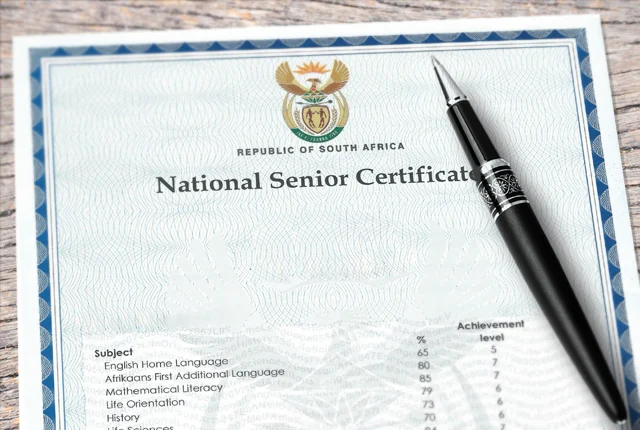
A RECENT study has revealed the differences and similarities between South Africa’s National Senior Certificate (NSC) compared to other countries.

Mafu Rakometsi, the chief executive officer of Umalusi – a council that sets and monitors standards for education in South Africa – said the new report aimed to research the standing of the NSC about similar qualifications from five other jurisdictions.

Addressing the portfolio committee on basic education on Tuesday (13 September), he said that the study compared the NSC to the following five other certificates:

  • The International Baccalaureate Diploma Programme (IB DP)
  • Kenyan Certificate of Secondary Education (KCSE)
  • New South Wales (NSW) Higher School Certificate (HSC)
  • Zimbabwean Forms 5-6 advanced level (ZIMSEC)
  • Cambridge Assessment International Education (CIE)

Its primary findings were that the NSC has a longer duration and more compulsory subjects when compared to others – the NSC is a three-year certificate (Grade 10 – 12). On top of that, according to Rakometsi, the NSC is the strictest in prescribing what is taught, in what sequence and within exactly what timeframe.

“The NSC’s approach of giving guidance on the content and time allocated for each thing appears to be more prescriptive than all other comparator qualifications.”

This approach appears to be motivated by the need to provide uniform student experiences rather than enabling teacher flexibility, said Rakometsi.

The report noted that the NSC had some indication of greater depth and complexity in terms of subject content; however, when it came to mathematics – the report found less emphasis on the topics of mechanics and the use of technology.

The NSC is helicoidal in approach; this makes it unique in that each year the same topic is revisited but in greater depth and complexity, said Rakometsi.

Life Sciences also had less emphasis on mathematical skills in its curricula when compared to other programmes.

The NSC aligns most closely with teaching practices at a standard level; higher-level concepts are less emphasised compared to other programmes. The NSC does, however, have a higher studies standard when compared to the Kenyan certificate, he said.

Rakometsi said that in terms of breadth – ie, the number of knowledge elements in each subject – and depth – the level of deep investigation into concepts – the NSC is appropriate for school-leaving qualifications.

Here’s a breakdown of each subject’s performance under the NSC:

  • English – is similar to other curricula and is comparable with international standards;
  • Geography – is effectively structured and designed;
  • Mathematics – shows less emphasis on mechanics topics and the use of technology and more emphasis on spatial skills such as interpreting graphs;
  • Life Sciences – South Africa’s is the only curriculum to cover the history of life on earth as one of its topics. The certificate focuses less on mathematical skills in life science compared to other jurisdictions;
  • Physical Science – is unique in that it combines physics and chemistry.

Recommendations

South Africa’s matric certificate could do more to align itself with international standards, Rakometsi said, in terms of the scope for standardisation, the articulation of aims, learning outcomes and the relationship between these, and the key skills that students should be developed.

In terms of mathematics, the international programmes demonstrated a greater emphasis on the development of ICT skills as a learning outcome of mathematics. The NSC could adjust to acknowledge the use of technology in the field.

Rakometsi added that it is worth rethinking the packaging of the subjects chemistry and physics under the umbrella of Physical sciences; he said that the implications of the country’s resource constraints must, however, be taken into account.

BUSINESS TECH

Government launches investigation into South Africa’s biggest university

THE Department of Higher Education, Science and Technology has launched an independent investigation into allegations of misconduct and maladministration at the University of South Africa (Unisa).

Unisa is the largest university in South Africa by enrollments, with around 400,000 students from across South Africa, Africa and other parts of the world.

The new probe follows an investigation by a ministerial task team in 2020, which focused on the strategic mandate and purpose of the university within the South African context.

Specifically, the task team examined all contextual and institutional factors that impact the current challenges facing the university and advised on the mandate of the institution and its scope of work as a distance education provider.

It made recommendations on measures required to ensure that Unisa is strategically positioned as an institution with a clear mandate and mission, supported by the necessary structures and capacity for a sustainable future, the department said.

However, the task team, following its analysis, also made a number of conclusions responding to issues relating to the strategic mandate of Unisa – including adverse conclusions which suggest shortcomings, challenges and allegations of circumstances that amount to maladministration, the department said.

The university came under fire earlier this year when representatives of the National Health, Education and Allied Workers Union (Nehawu) alleged that salary adjustments paid to selected academics, professionals and administrative staff took place without the approval of the university council, resulting in millions of rands in over-expenditure.

It also faces allegations of abuse of power in suspending workers, launching disciplinary cases and dismissing staff unlawfully, and misusing funds.

Unisa has called the allegations “unfounded and spurious“.

The department has now gazetted the scope of an independent investigation into affairs at Unisa, and has appointed Professor Themba Mosia as an independent assessor to conduct it.

The overall purpose of the new independent investigation is to advise the higher education minister Blade Nzimande on the source and nature of problems and the university and the measures required to restore good governance and management.

The investigation will look at:

  • The functioning and efficacy of the university’s governance and management structures.
  • The operations of the Office of the Registrar in relation to the management of academic affairs, registration and certification matters and any other matters that the Independent Assessor believes warrant investigation.
  • The state of policies and procedures of the university pertaining to financial management, supply chain management, and procurement; and allegations of financial irregularities.
  • The state of human resource policies and practices of the university, particularly in relation to enhancing organisational efficiency and employment relations at the university.
  • A detailed analysis and report on the circumstances and reasons for the significant number of staff suspensions, disciplinary cases, and dismissals at the university since 2018.
  • The allegations of misconduct and mismanagement against the Vice-Chancellor.
  • Any other matters that, in the opinion of the Assessor, may impact on the effective functioning of the University from the analysis of problems relating to governance and management.

More than half of South Africa’s skilled graduates want to leave the country: survey

0

ABOUT half of South Africa’s top earners and university graduates are considering emigration as citizens lose faith in the country’s future, the Social Research Foundation said, citing a survey it conducted.

Out of 3,204 registered voters the Johannesburg-based research group surveyed in July, 53% of university graduates and 43% of those who earned more than R20,000 ($1,138) a month may leave the country, according to the findings. Overall, 23% of those surveyed said they may look to live in another country.

Confidence in South Africa’s future has fallen after more than a decade when average economic growth failed to match the increase in population, meaning the country’s citizens have been getting poorer. The country has been wracked by corruption scandals in recent years and regular power outages since 2014. More than 350 people died in a spate of looting and arson in July 2021.

The number of those considering emigration “rises with social and economic status,” the SRF said in a statement accompanying the survey results on Thursday.

“People between the ages of 25 and 40 are the most likely age groups to be considering emigration,” according to the foundation. “The data is consistent with the foundation’s past findings on confidence in South Africa’s future.”

If an increasing number of South Africa’s richest people leave the country, the number of those paying tax, which supports welfare payments to almost a third of South Africans and other government services, will plunge, the SRF said.

“South Africa is vulnerable to surrendering near half of its top skills base and income earners, and by extension much of its remaining tax base,” the SRF said.

The survey had a margin of error of plus or minus 1.7 percentage points.

BUSINESS TECH

EnergyDrive experiential education unit to teach children about new energy technologies

0

THE EnergyDrive experiential education mobile unit, which will visit more than 3 000 school learners in Mpumalanga this week, features a solar roof structure, biogas digester, a photovoltaic (PV) panel display unit and a solar hot water display unit and helps to teach learners about these new energy technologies.

The walls of the mobile container are made up of a battery bank, PV components, a television and display cupboards, making it an inspirational and experiential teaching aid.


The initiative is in support of the country’s transition to clean energy and has garnered State-owned Eskom as a key partner alongside industry organisation the South African Wind Energy Association (SAWEA). The initiative is funded by two key wind industry players, namely Enertrag and Windlab, and will travel across eight communities to teach and demonstrate the benefits of renewable energy technologies.

“The mobility of this unit makes it ideal to reach remote schools and communities to serve as an inspirational and experiential teaching aid to share information about various renewable energy technologies. This allows learners to access information about these technologies and the associated opportunities,” says SAWEA CEO Niveshen Govender.

The “edu-tainer” mobile unit features interactive demonstration models, which assist with understanding a range of renewable technologies, raises awareness of renewable power resources and addresses the important issues associated with climate change, thereby bringing home the impact of environmental concerns that plague our country and the rest of the world, he adds.

“Given our common interest in supporting the just energy transition and its particular focus on the Mpumalanga province, Eskom has joined as an official campaign partner. The majority of the schools that are being visited were recommended by Eskom, in line with their socio-economic development strategic objectives,” notes Govender.

While Mpumalanga is yet to build its first wind farm, it plays a critical role in the country’s energy generation as the current hub for change. As the region prepares for its continued role in electricity generation, albeit now poised as a green energy producer, the just energy transition is critical to ensure all stakeholders are engaged in this process to ensure the many benefits are brought to the citizens of Mpumalanga, he highlights.

Sponsors of the Mpumalanga EnergyDrive include Enertrag, Windlab, The Danish Energy Agency, green economy nonprofit organisation GreenCape and the South African National Energy Development Institute, with Eskom as the key partner.

Govender headed the delegation in the town of Pullenshop, Mpumalanga, to kick off the wind industry’s inaugural experiential renewable energy conversation across local schools in this province. The delegation included the Mpumalanga Green Cluster Agency project administrator Celeste Dias, Danish Ambassador to South Africa Tobias Elling Rehfeld and Eskom Hendrina power station acting GM Anari van Greuning.

Engineering News

The values around school sports need work

0

Phiwokuhle Mothemela

WHEN the first lockdown came into effect two years ago we all were taken aback. We had to re-evaluate and adjust our lives accordingly.

Apart from people who are still reeling from the effect the pandemic has had on us I think children and school sports have suffered the most.

School sports gradually started coming back into the picture a year ago at a stop-start pace, and those who have worked hard behind the scenes to bring this about have reaped the benefits this year.

I think all school sport coaches will agree with me when I say they had their work cut out for them this past season. Apart from having the big task of reintroducing school sports to children, a far bigger task was dealing with players’ lack of commitment.

I often wondered how I could possibly balance empathy, ensuring progress within a team and where I must draw the line.

Many of our children call it quits after the slightest inconvenience.

On a weekly basis I’d receive last-minute excuses for why they cannot attend practise, and as a coach I would make a judgment call on whether to excuse them or not. But I often did, careful as I was not to project my own passion for sports onto children.

Yes, the pandemic played a very big part, but I do believe parents also need to teach their children the importance of commitment. These are, after all, mutually inclusive.

When looking at how schools across the board are performing, as a coach one cannot help but do some introspection. One often finds oneself wondering if one is actually doing the correct thing and if the children or team is benefiting from one’s work.

Lack of commitment affects the consistency of the team, which is something learners and players need to understand. Being in team sports and not doing one’s best does not only reflect on one as an individual but the whole team, because it breaks the rhythm and camaraderie.

That said, very well done to the coaches and teams who were able to work towards and achieve the goals they set for themselves this season, having the dedication of the whole team.

To us who battled, try again next season.

Something I take away from this season is that although most times people attribute the success of a team to the coach, how well able they are to impart their skills and knowledge to a team, a huge chunk of the work lies with the players, because as a coach one provides only guidelines, but the players execute it.

Accountability and commitment are truly where school sports’ success lies, and the sooner everyone understands this and actively works towards putting these into practice the better.

Worcester Standard