Home Blog Page 248

Corporatising universities threatens academic freedom, says University of Adelaide Professor Fran Baum

0

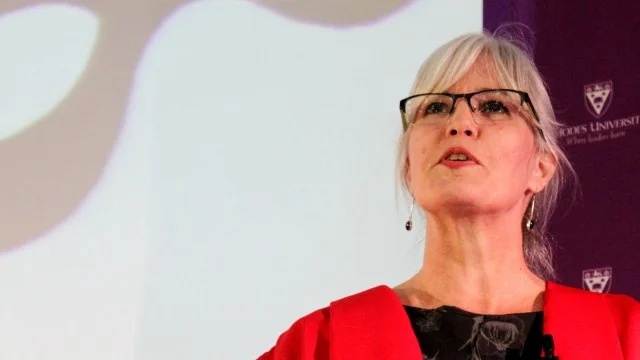
Corporatising universities and the increased need for funding from the private sector pose a direct threat to academic freedom – and universities ignore this threat to their peril, said Professor Fran Baum.

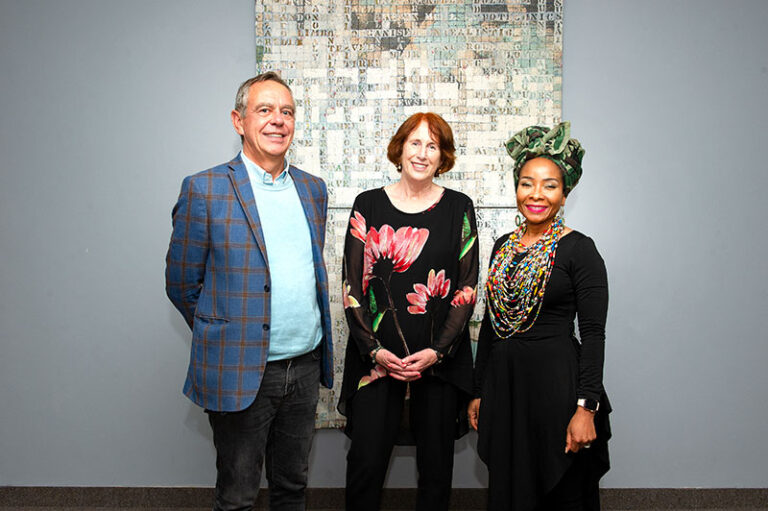
Professor Baum is the director of Stretton Health Equity – an institute that leads high-quality scholarship on the social and economic determinants of health and health equity at the University of Adelaide in Australia. She delivered the 56th TB Davie Memorial Lecture titled, “Activism and the corporate university: incompatible or possible?” on Wednesday, 24 August.

The annual lecture, hosted by the University of Cape Town’s (UCT) Academic Freedom Committee, honours the memory of former UCT vice-chancellor Thomas Benjamin Davie – a fierce defender of the principles of academic freedom. Davie passed away in 1955.

“I feel privileged to follow in the footsteps of all those who have [delivered] the TB Davie Memorial Lecture since 1959,” Baum said. “Over my time as an academic I’ve watched universities become more corporatised and less open to the defence of academic freedom, and to the ability of academics to become defenders of the public good.”

A lived experience

Baum told the audience how, during her time as a distinguished professor at Flinders University in Australia, she witnessed how the university’s commitment to equity and social justice waned. Since 2017, the institution executed three processes of restructuring “in which people were treated poorly”. Baum and several colleagues had explicitly verbalised their concerns about these decisions and the new direction the university had taken.

But in September 2021, soon after she became the first academic at that university to receive the National Health and Medical Research Council Leadership Fellowship, she received a life altering letter from the university’s executive. It stated that because of a “reorganisation” process in the College of Medicine and Public Health (her academic home), the role she occupied had been “disestablished”. She was one of four academics to receive this letter. The “disestablishment” also affected 15 research staff members.

“All four of us [academics] had resisted the changes in the culture of the university and [had] spoken out about the unfairness of previous reorganisations and the increasing expectations of excessive workloads as the norm,” Baum said.

“We will never know the behind-closed-doors conversations that concerned the fate of the four of us. But we are sure that this would not have happened before the university was corporatised. [This process meant] that I could say that I was no longer a distinguished professor, but an extinguished professor.”

A not-so-safe space

In the last few decades in Australia, Baum said universities have moved from institutions of “public good” to corporatised entities whose values largely align with large corporations and the private sector.

“Universities now operate more as businesses and less [as] public good institutions … I hope to convince you that the increasing corporatisation of universities is part of the reason the space for academic freedom and the ability to be an activist academic is closing down,” she said.

Baum highlighted the six signs of a corporatised university:

  • growing the executive class
  • reducing staff and student involvement in governance
  • frequently restructuring
  • increasing contract and casual staff numbers and reducing the number of tenured staff
  • engaging in the international education market
  • partnering with national and transnational corporations.

Baum said an increasing number of senior executives have taken employment positions at Australian universities. These executives, she added, are detached from the core functions of teaching and learning and research, and many have none or very little university teaching and research experience.

“This class of managers treat the university as a profit-making business. [They use] directive and non-participatory management styles borrowed from the corporate world that undermine academic tenure and collegiality, and adds to staff stress,” she said.

Celebrate academic activism

As Baum prepared to wrap up her lecture, she said universities that encourage academic freedom lay their foundations in the interest of the public good and are suspicious of their involvement with businesses or any other interests that might threaten their independence.

“Our task is to imagine a university that is decolonised, decorporatised and encourages academic freedom so that academics can be bold and brave in their critiques of society,” she said. 

She said Public Universities Australia – an alliance of organisations and individuals concerned about the current state of Australian universities – has proposed a University Model Act. The act requires that university vice-chancellors be elected from among its academics. Further, she said their vision is to adopt an approach where students and academics are meaningfully involved in decisions about the shape of the university’s teaching and research projects. Their aim is to ensure that the focus of the university is on serving the community, rather than acting as a business.

“The university [should] actively encourage staff and students to be engaged in advocacy about equity, human rights and fairness. Academic activists [should] be celebrated for the contributions they make to positive change, rather than viewed as a threat to the corporate university,” Baum said.

Guard academic freedom

Baum believes that society loses out when academics become too “fearful to be frank and fearless” in their advocacy of the public good. She urged academics to ask more probing questions that relate to the “invisible strings” that certain funds come with, and whether “these strings” will affect academic freedom.

She also encouraged both students and academics to become guardians of academic freedom, and to speak up when management practices and partnerships restrict and threaten these freedoms.

“I know how hard these freedoms have been fought for in South Africa and I would hate to see the apartheid system replaced by a creeping corporate control of the academic world,” she said. “I am confident that TB Davie would have been vigilant about protecting academic freedom from the incursion of corporations. And I am sure he would’ve spoken out to defend activist academics.”

SUPPLIED| UCT

Sasol is looking for students with these skills in South Africa – as it opens up 200 all-inclusive bursaries for 2023

0

GLOBAL chemicals and energy giant Sasol says that applications are currently open for its all-inclusive bursaries for the 2023 academic year.

Sasol said it is inviting high-performing mathematics and science learners/students to apply for an all-inclusive bursary to study science, technology, engineering and mathematics (STEM) degrees at approved South African public universities.

“For more than 30 years Sasol has been awarding comprehensive bursaries to top-performing maths and science learners. Sasol is currently one of the larger bursary providers in South Africa with an extended bursary pool and annually awarding a significant number of bursaries, with 387 bursars currently in the programme.”

The group said that its undergraduate bursary programmes cover not only bursars’ tuition fees, accommodation and meals, but also an annual predetermined amount for textbooks and pocket money. Bursars also receive allowances for study tools such as laptops and calculators.

The bursary will also provide psycho-social support to help students succeed during their studies. Students applying for STEM-related degrees will need to refer to the Sasol bursaries site for application criteria.

For the 2023 academic year, Sasol will award over 200 new bursaries in the following categories:

Sasol Bursaries

Bursaries will be awarded in the fields of cyber security (postgraduate), electronic engineering, mining engineering and chemical engineering (postgraduate) for students currently at university.

Sasol Foundation Bursaries: STEM and non-STEM

These bursaries are for learners who are planning to study full-time towards an undergraduate degree to pursue STEM (Science, Technology, Engineering and Mathematics) careers.

Priority will be given to degree studies that are in line with future needs including specialisations in study disciplines such as engineering & technology, mathematical and data science, agricultural science, environmental & medical sciences, construction & manufacturing;  and financial and accounting sciences among others.

Non-STEM bursaries will also be awarded to students from Sasol’s fence line communities, children of Sasol Khanyisa shareholders and Sasol employees.

Sasol Energy Bursaries

Bursaries in this category are for studies in STEM disciplines. They will be granted to learners from the Namakwa District Municipality in the Northern Cape.

“At Sasol, our CSI projects are inspired by our purpose, which is to innovate for a better world,” said Monica Luwes, manager of the Graduate Centre at Sasol.

“As technology continues to transform the way we live, we see strong demand in the workplace for people with science, technology, engineering and mathematics (STEM) skills and qualifications. STEM professionals are key to the country’s future growth, and we’re proud to harness and support the incredible talent and potential that will propel the technological industry even further,” said Luwes.

Students can apply for its bursary programme by:

  • Registering online at: Sasol Bursaries
  • Answer a few questions regarding your field and level of study.
  • Log in and fill in an online application.
  • Alternatively, you can find more information on how to apply here:  http://www.sasolbursaries.com/how-do-i-apply

BUSINESS TECH

Vhembe TVET officially opens 4IR lab on Makwarela campus

0

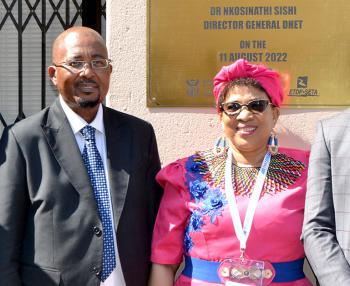
VHEMBE TVET College officially launched their very own Fourth Industrial Revolution (4IR) STREAM Laboratory at the Makwarela Campus on Thursday, 11 August. The students at the college will now be able to get real work experience to prepare them for the outside world with a theoretical laboratory and on-the-job training in 4IR skills, said TVET Principal Ms Basani Hlekane.

Hlekane was joined by Dr Nkosinathi Sishi, Director General for the Department of Higher Education and Training, the CEO of the Education, Training and Development Practices (ETDP) SETA, Ms Nombulelo Nxesi, Thovhele Gole Mphaphuli, some councillors from both the Vhembe and Thulamela District, and other role players in the education sector.

“In 2019, ETDP SETA funded our college to establish a fully inclusive artificial intelligence laboratory. Vhembe TVET College is ready to heed the call for the Fourth Industrial Revolution to create an environment where every student can enjoy the highest levels of human development. For the college to be able to create such an equitable and inclusive future, we must adjust our mindset and our institution,” said Hlekane.

The laboratory currently has four state-of-the-art machines, namely an industrial production line, a robotic arm, a 3D printing machine and a soldamatic welding simulator.

Dr Nkosinathi Sishi was very excited to finally launch the programme, which was commissioned by the Minister of Higher Education and Training, Dr Blade Nzimande, in 2019. Nzimande has appointed a ministerial task team to investigate the implementation of the 4IR to respond to the challenges and opportunities that students might be facing.

“Some of the opportunities that must be embraced with the establishment of the 4IR require our education and training systems to become much more agile and to engage people much more actively in lifelong learning as societies and transformed economies. New skills will be required to create, maintain and leverage these new technologies,” said Dr Sishi.

“It is vital that the education and training on 4IR is visible, and more importantly, available at the level of higher education to ensure that learners adapt and learn to become and remain relevant to this fast-changing world through the understanding of 4IR,” he said.

Zoutnet

OPINION | Backlash against Higher Education Department’s draft university policy misses the point

PROFESSOR SIOUX McKENNA

THE draft university policy is not about the public sector at all. Instead it sets out the future designations that will be available in the private higher education sector. It attends to the demand by private institutions that they too should be able to call themselves ‘universities’.

A number of academic commentators have responded to the Department of Higher Education and Training’s (DHET’s) draft policy on institutional differentiation gazetted last week. The draft policy calls for three forms of higher education institutions: universities, university colleges and higher education colleges. The commentators say that changing the designation of existing universities could be a volatile decision.

On the whole, I think they have missed the policy’s real purpose.

Their reading of the document is understandable because the document is poorly worded and ambiguous – perhaps intentionally so.

My reading is that this document is not about the public sector at all. Instead it sets out the future designations that will be available in the private higher education sector. It attends to the demand by private institutions that they too should be able to call themselves “universities”.

Current forms of differentiation

There is a great need for different post-school paths in any national education sector. Students leave school with varying results, they have different interests, and the economy needs a range of forms of skilled labour. Even in research, there is a need for differentiation along a number of lines, such as knowledge creation that is practically applicable and that which is “blue sky” and contributes to the planet’s stock of understanding.

Given the racist differentiation of the past, it is unsurprising that few are willing to consider how we can more clearly differentiate our current public higher education system. The current system, thanks to significant post-apartheid restructuring, comprises 11 traditional universities, nine comprehensive universities, and six universities of technology.

A number of forces work against clearer differentiation between these. Global rankings privilege a small set of university activities and thereby drive institutions in the direction of research and postgraduate education. Similarly, South Africa’s blunt funding formula rewards particular activities more than others, pushing all institutions in the same direction, regardless of their capacity or responsibilities.

It is unlikely that this policy will address the need for clearer differentiation as to what the nature of each university in the public sector should be. We did not have the political context in which we could have such conversations in 1994 – and we don’t have it now.

The idea of “downgrading” any of the 26 public universities, as has been reported in a number of news articles, is a non-starter.

Perhaps the characteristics of the proposed new university types – universities, university colleges and higher education colleges – will be used to make decisions about future public institutions, but the likelihood of them being applied to existing universities in the near future seems low.

Categories of private higher education

This legislation potentially attends to a pressing issue: the designations of private institutions.

The private higher education sector is growing at an incredible rate. The DHET currently lists 93 accredited private institutions. Many of these are specialised and have a small student body but collectively they admit more than 220,000 students.

These institutions comply with all the same accreditation and quality assurance processes as the public sector does. This makes it challenging for the legislation around nomenclature to continue: at present private colleges cannot call themselves “universities”. It is also increasingly obvious that the public sector cannot attend to the demand for higher education and alternative routes are needed.

This proposed legislation will allow private institutions to apply for the designation “university” and it sets the criteria by which they can do so.

But the likelihood of the same criteria being applied to existing public universities is very slim indeed.

Professor Sioux McKenna, Director of the Centre for Postgraduate Studies at Rhodes University

RHODES UNIVERSITY

The Draft Policy for the Recognition of South African Higher Education Institutional Types is not as disruptive as some perceive it to be – Mabizela

0

THE state believes that its new higher education draft policy, which will lead to all South African institutions of higher learning being classified into three types, is not the major disruption some perceive it to be.

The reaction to the Draft Policy for the Recognition of South African Higher Education Institutional Types, published in the Government Gazette of 8 August 2022, has ranged from shock to caution. Yet the Department of Higher Education and Training (DHET) says if the implications of the draft policy were being measured as an earthquake, it would be a minor tremor.

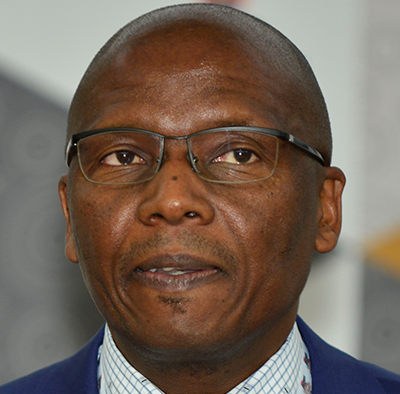
Mahlubi Chief Mabizela, Chief Director responsible for Higher Education Policy and Research Support in the DHET, said last week that the draft policy was minor in magnitude compared to the mergers of public higher education institutions of about 20 years ago, which reduced them from 36 to, initially 23, and now 26 universities. That would have ranked a major to severe impact of about 6 to 8 on the Richter Scale, which, although no longer operative, remains the famous phrase to refer to the magnitude of an earthquake. In comparison, this draft policy was about a 3 or 4, which, in earthquake terms, signified being felt by many, but recording no damage.

“What is major about this draft policy is the introduction of two new types of institutions: higher education colleges and university colleges,” he said. Higher education colleges can offer undergraduate degrees but have no mandate to do research, and university colleges are transitional, that is, universities in the making.

“The only ground of the universities being shaken is the definition they didn’t have before. But the criteria are things they already do: research, community engagement, quality teaching and learning,” he said. “And that’s what we want from them – to produce postgraduates. The few existing institutions that will be worried are those that don’t produce enough postgraduates,” he said.

The public has until September 8 to comment. To assist this process, Universities South Africa (USAf), together with the DHET, will host three online webinars for people to ask questions and get clarification on details of the draft policy. The first, on August 31, is targeted at private higher education institutions. The second, on September 1, is for public higher education institutions including vocational education and training, and other colleges. The third, on September 2, is for the general public.

The policy is a draft and Mabizela said they expected it would adapt before it became final.

Besides the participation in the forthcoming workshops and the comments that would be submitted in writing, the other significant input towards any possible changes would come from the Council on Higher Education (CHE). This would happen towards the end of the process via a panel of wide-ranging experts the CHE would appoint.

Ahead of the upcoming workshops, Mabizela clarified some key aspects of the policy.

The background

A media statement released on August 11 said the policy had developed after “an extensive research and consultative process carried out by the Department which began in late 2018”.

Mabizela said the consultation had started a little earlier when two new universities, Sol Plaatje in the Northern Cape and the University of Mpumalanga, had been established in 2013. “It was a question of lessons learned,” he said. One of these lessons was the realisation that a new institution should first be affiliated with an existing university, “a concept that is used internationally”, he said. That led to the department embarking on a process of reviewing the Higher Education Act and the need to factor in university colleges, a step in the journey of establishing a new university.

They then started to wonder if they needed to expand this to accommodate other types of institutions as well, which led to the three in the draft policy:

  • higher education colleges, which have a relatively limited range and scope, focusing on undergraduate and skills development programmes;
  • university colleges or universities in transition; and
  • universities.

These three types of institutions were named in the revised Higher Education Act 101 of 1997, as amended in 2016. The Act stated the Minister would establish their criteria, and discussions about that had started in 2018. So, this was not a policy that had sprung up out of the blue, he said.

Who was responsible for the consultative process?

The department usually develops a policy by establishing a committee of experts who do their research and consultations and then draft a document for discussion. This policy happened differently. They already had two expert committees to assist with establishing Sol Plaatje University and the University of Mpumalanga. Each committee’s report had included recommendations for such future processes.

An internal departmental committee – headed by Dr Diane Parker, the former Deputy Director-General of DHET’s University Branch, and comprising Mabizela, the other two chief directors (responsible for governance, and teaching and learning at universities) and relevant colleagues — had assessed these recommendations. They had also considered the CHE’s submission to the Minister about the experience, a report of which is not in the public domain.

Another key input into the policy came from “number crunching”, said Mabizela, of data on the enrollments, programmes and research including data from private higher education institutions.

This policy allows private institutions to qualify to be called universities

Until this policy, private higher institutions have been barred from registering and being known as universities. Now, if they fulfil the requirements, they can. Mabizela said these private institutions had been unhappy about the restriction, but the policy was not relaxing it as a response to pressure from them. It was rather an obligation to classify the higher education system appropriately and to fulfill the demands expected from our higher education system in South Africa.

That prohibition had existed for a reason, he said. Bogus institutions calling themselves universities had flooded the market in the late 1990s to early 2000s.

The policy is not about punishing universities that are less research intensive and community orientated

The draft policy defines universities as institutions that engage in undergraduate and postgraduate higher education, knowledge production (research) and community engagement. Could these criteria be a way of punishing some existing institutions for not focusing enough on all these areas?

“The policy is not intended to force any institution in whichever direction,” said Mabizela. The department understood the South African university system was not uniform but varied and was still living the legacy of apartheid. They could not change this overnight, so their approach and focus were always developmental.

Existing policies such as the University Capacity Development Programme (UCDP) and the Sibusiso Bengu Development Programme (SB-DP), the latter focusing on eight specific institutions, had been designed to bring greater satisfaction to historically disadvantaged institutions. “Our institutions need to have the reputation of being a university and a university that offers quality – quality education, quality research, and quality in its teaching and learning as well,” he said.

Complexities of university colleges being affiliated to existing universities

In terms of the draft policy, for a university college to be upgraded to a university, it needs to be affiliated with an existing university. But do university colleges want to be affiliated with universities? And do they have the resources to do this? Who is going to take responsibility for this nurturing and guidance, presumably at no additional pay?

Mabizela pointed out a university college was not a new concept in South Africa. The University of the Cape of Good Hope, created in 1872 by an Act of the Cape Colony’s Parliament, had been affiliated with the University of London. After the country’s unification in 1910, it was renamed the University of South Africa (Unisa), relocated to Pretoria, and became responsible for overseeing university colleges across the country. These colleges were the forerunners of many of today’s existing universities. 

But this had been in the early 20th century, and they had to bring the concept of university colleges into the 21st century.

Mabizela said they also had to look at the nitty-gritty practicalities of this affiliation. “Will university colleges require the department to be the mediator? Is it something that they can do on their own?” he said.

There was also the question of whether the affiliated university had to be one in South Africa. “The policy is quiet on this, but will we accept it if a local institution is affiliated with a foreign university?” said Mabizela.

A university requires a certain percentage of postgraduate programmes

The policy states that for a university college to become a university, at least 5% of its enrolments must be at postgraduate level. Mabizela said people could ask “Why 5%? Why not lower?”. If there were a problem, the department would help push them to 5% “unless there is a compelling reason supported by evidence”, he said.

“But let’s not stick to the excuses. Let’s work on those issues. So, if an institution says, ‘I don’t have capacity’, then how do we capacitate you?” he said.

What about specialised institutions?

According to the draft policy, a university college “shall focus on undergraduate teaching and learning providing a holistic approach to education and training in a relatively broad number of cognate fields or domains of study, compared to Higher Education Colleges, and must provide a holistic approach to education and training”.

How would this affect institutions that offer specialised fields of study, yet mostly undergraduate ones?  Where do such specialised institutions fit into these three types of institutions?

The key, explained Mabizela, lay in the word “holistic” in terms of the approach to education, and also in other functions of a university such as research.  “If you, as an institution, are specialising in a particular field, and that particular field doesn’t traditionally produce postgraduates, you have got to work towards producing post-graduates and research publications,” he said.

Where existing universities might not fulfil the requirements, it was not about bringing them down but working together.

“It’s not a question of ‘are you going to take us down’? No, absolutely not. It’s a question of ‘how do we go there together’?” said Mabizela.

USAF

Mpumalanga learner to represent South Africa’s National Volleyball team in Malawi

0

A learner from Sovetjheza Secondary School in Siyabuswa, Nkangala District in Mpumalanga province will be representing South Africa’s National Volleyball team in Malawi.

Sarah Karabo Mnguni is set to represent the country in December 2022. Mnguni started playing volleyball at a young age.

“She started playing at a tender age and participated in the Volleyball League Games at the age of 13,” the Department of Education in Mpumalanga said.

Mnguni was subsequently selected to play for the Mpumalanga under 15 Team.

“Through her hard work, she was selected to play in tournaments which were staged in Mozambique, Lesotho and this year’s selection became a cherry on top for her.”

The Department said that Mnguni is an inspiration to young girls.

“She is truly an inspiration to other young girls who are from humble beginnings seeking an opportunity to make a name for themselves in sports.”

The Department took to its Facebook page to congratulate her and to wish her well in the tournament in Malawi.

“You Go Girl, the sky is the limit,” said the Department.

INSIDE EDUCATION

Open letter: Basic Educatin Minister Angie Motshekga must make schools safe for queer youth

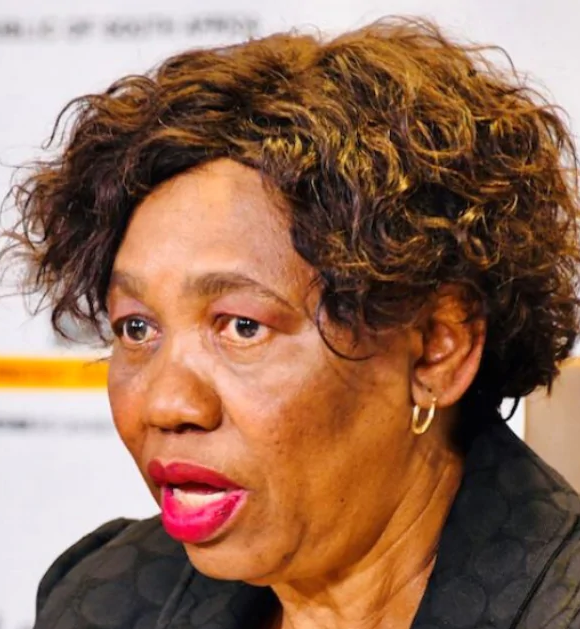
Sparked by the recent tragic death by suicide of 15-year-old Tiro Moalusi, 24 civil society groups have signed an open letter to the Minister of Basic Education, Angie Motshekga demanding safe schools for queer youth.

Led by Uthingo Network, they call for the minister and her department to take urgent steps to address ongoing queerphobic bullying and discrimination against queer learners in South African schools.

The groups further urge Motshekga to hold educators accountable and to create queer-affirming school environments.

Dear Minister Motshekga,

The ongoing queerphobic bullying and discrimination against queer learners by teachers and fellow learners are concerning. We believe it is high time they received urgent attention from the Department of Basic Education. This treatment towards queer learners is unacceptable, and the lack of action by your department exacerbates this behaviour and the subsequent disrespect of queer rights as provisioned by the South African Constitution.

In the background of this queerphobic reality, this week, 15-year-old Tiro Moalusi, a grade 9 pupil from the PJ Simelane Secondary School in Soweto, took his life after being humiliated in class, allegedly by a teacher. It is reported that a student teacher mocked him over his sexual orientation and sexual expression in front of his classmates, who then joined the teacher in laughing at Tiro.

If student teachers can conduct themselves in this manner, one can only wonder what the behaviour of some permanent teachers is. As human rights civil society organisations advocating for the inclusion, safety and affirmation of all learners regardless of their gender and sexual identity, we strongly condemn the attitude and prejudice displayed by the teacher, which stands in contrast to the constitutional rights of the learner.

Sadly, Tiro is not the first learner to commit suicide because of school-based queerphobic bullying. In June, Mpho Falithenjwa, a 14-year-old learner from Orange Farm, took his life after being bullied for identifying as gay at school and in his community. Mpho’s sister explained that he was bullied and that a specific incident happened at school where a classmate addressed him using an anti-gay slur. In another similar case, 14-year-old Lukhanyo Jongqo, a grade 7 learner from Kubusie Combined School in Cumakala, Stutterheim, also took his life after being bullied by his classmates for identifying as gay. Reports inform us that he was also bullied by his classmates, who called him gay and refused to play or sit with him.

Mpho and Tiro took their lives by poison, while Lindokuhle hanged himself. These extreme measures show us that the extent of the queerphobic abuse they experienced at the hands of their teachers and classmates, as well as their communities was unbearable to a point where they saw suicide as their only solution. This is enough evidence to make us conclude that most South African school environments continue to be unsafe spaces for queer learners.

It is unfortunate because these cases affirm a 2006 study by the Gay and Lesbian Memory in Action centre which found that 20% of LGBTQI+ learners had been raped or assaulted. The same percentage had attempted suicide, and a third had thought about committing suicide. The University of South Africa’s Centre for Applied Psychology conducted similar research in 2012 and found that “the victimisation of LGBTI learners is widespread”. Two-thirds of the bullying came from fellow learners, 22% from teachers and 9% from principals.

These findings were further affirmed by a 2016 research study conducted by OUT LGBT Well-being which reported that LGBTQI+ learners often face discrimination and bullying in South African schools, with 56% of LGBTQI+ South Africans surveyed reporting that they had experienced discrimination based on their sexuality or gender identity while attending school.

Minister, it is important to highlight that implicit violence also occurs through discriminatory education policies, regulations, curricula, teaching materials and practices. Transgender learners face additional obstacles with gendered uniforms, official documents/records that don’t reflect their gender identity, and single-sex facilities such as toilets and changing rooms in educational institutions.

We believe that a school’s affirming climate is a potential protective factor for queer learners. Regardless of their sexual orientation and gender identity/expression, all learners have the right to a safe, supportive learning environment. A school environment not inclusive of queer learners limits their right to access education. The failure to address this violation of the learners’ human rights is a gross disservice to the learners.

The Department of Basic Education has amended its Life Orientation curriculum to include Comprehensive Sexuality Education, which includes sexual and gender diversity. It is vital that the Department of Basic Education strongly condemns the actions of its teachers as it goes against the essence of creating safe and enabling teaching and learning environments for ALL its learners. However, more importantly, the attitudes and behaviour of these teachers violate the fundamental human rights of the marginalised learners within the constitutional rights of the citizens of South Africa.

Minister, accountability starts with you within the Department of Basic Education. Apart from the message by your deputy minister addressed to educators, learners, parents, stakeholders, and officials for the commemoration of youth month and international pride month 2022 dated 15 June 2022, the Department of Basic Education’s guide titled “Challenging Homophobic Bullying in Schools” which is available on the internet, and the amended Life Orientation curriculum, what other strategies are you going to put in place to hold school personnel accountable and also to ensure that South African schools are a safe and affirming space for all learners in their diversity?

We ask for decisive leadership that will put more stringent measures to ensure that all learners are safe and protected from any form of bullying and harassment in South African schools.

This open letter is signed by the following organisations:

Al-Ghurbaah Foundation
Alphabet Gang
Amnesty International South Africa
Dialogues for Change
Equal Education Law Centre
Gender Dynamix
Global Interfaith Network [GIN] Heinrich Böll Stiftung
Inclusive & Affirming Ministries [IAM] Iranti
Isibani Civil Society Forum
Lower South Coast LGBTI Community Projects Rural
MAMBA.LGBT
Msunduzi Association of Residents Ratepayers and Civics [MARRC] OUT LGBT Well-Being
Pachedu
Safeplace International
Same Love Toti
Shemah Koleinu
TransHope
Trans Wellness Project
Triangle Project
Uthingo Network
Vuka Uzithathe Africa

MambaOnline

The US lacks adequate education around puberty and menstruation for young people – an expert on menstrual health explains

MARNI SOMMER|

ONE thing few people have been talking about since Roe v. Wade was overturned is how abortion restrictions will affect young girls across the United States.

Around the time of their first period, many young people learn the basic mechanics of managing their periods, such as how to put on a pad or tampon and that it happens once a month. Traditionally they might also receive some admonishment to keep their period hidden. Young people may get information about menstruation from a family member, friends or a teacher, or by searching on the internet.

But often it is only later that they learn and truly understand the more complex details about the menstrual cycle. This includes guidance around regular and irregular patterns and when to seek medical care for any shifts in timing, duration or the overall experience, including the severity of menstrual pain or heavy bleeding. These conversations also have clear implications for ovulation and pregnancy prevention.

Now, with the overturning of Roe v. Wade, young people who begin to menstruate will also need to learn early on how to recognize a missed period as soon as possible. In the past, a young person’s delay in mentioning that a period was late or skipped a few months might not have presented any particular urgency. However, going forward, in contexts where a ban on abortions beyond a very short period of weeks exists, even one missed period could have serious implications for a young person’s life.

Conversely, it’s critical that young people know that irregular periods can be normal and that it’s not always cause for alarm.

I have been researching young people’s experiences with menarche – the onset of menstruation – around the world for almost 20 years. In 2018, my team began to explore the experiences of American girls with their periods, including their recommendations for what all young girls need to know as they enter puberty and begin to menstruate.

Based on those suggestions and insights, we published “A Girl’s Guide to Puberty and Periods,” a body-positive illustrated graphic novel-style book that includes first period stories, advice and questions written by girls.

Globally, I have learned that girls growing up in Africa, Asia and here in the U.S. often receive inadequate information and support about their periods.

Information about menstruation is inadequate

Menstrual health literacy, or a person’s understanding of the menstrual cycle and its intersection with one’s health and well-being, is essential from the time leading up to the first menstrual period through menopause.

Both the American College of Obstetricians and Gynecologists and the American Academy of Pediatrics have recommended that just as doctors and nurses check someone’s blood pressure or temperature at each visit, they should also ask about periods.

These professional societies suggest that health care providers prepare girls and their families for the onset of menstruation and ensure that they understand the variation in menstrual patterns.

My team’s U.S. study focused on adolescent girls in Los Angeles, New York and Chicago. Our findings, along with research on state-level menstruation education standards across the country, suggest that the U.S. is a long way from delivering menstrual health literacy to the population. Our research indicated that many girls received no guidance before their first period or had been given information that felt dated and hard to relate to. Think educational videos made in the 1990s.

A recent publication from the U.S. Centers for Disease Control and Prevention found that the median age of onset of menstruation decreased from 12.1 years old in 1995 to 11.9 by 2017. This means that nowadays, many girls are in elementary school when they get their first period.

For this reason, it’s clear that young people in fourth or fifth grade need to be receiving health education that addresses menstruation. Girls who do not receive education and support – particularly those who get their first period at a young age – are more likely to experience depression and low self-esteem. Low-income and minority girls are particularly vulnerable.

Yet many American girls still do not learn the basic facts about their menstrual cycles at home or school or from health care providers. As our study found, parents are often uncomfortable discussing periods, perhaps because it feels too linked to sexuality.

Our research also captured American girls’ first-period stories across 25 states and found that many young people are afraid, ashamed and do not know whom to ask for advice when their menstruation starts.

Missed opportunities

The internet and social media, which are important sources of news and guidance for many young people, may deliver misinformation or reinforce menstrual stigma. And a 2020 study of members of the American Academy of Pediatricians found that 24% of pediatricians surveyed do not regularly provide guidance before the first period. Furthermore, 33% do not discuss periods with their menstruating patients. Male pediatricians were also less likely to assess a patient’s menstrual cycles and provide information, perhaps because of discomfort with the topic.

Schools also may not be delivering the necessary guidance. In New York state, where I work, there is no requirement for the provision of menstrual health education, and sexual education is not required to be taught or to be medically accurate. Only 30 states and Washington, D.C., mandate sexual education in schools, but not all of them require medical accuracy.

It’s hard to know if many states are even including menstrual health in the curriculum, as data is limited and public information is not always available. I believe that, given the critical importance of some menstrual health literacy by late elementary school, schools could consider delivering puberty education – including menstrual health – separate from sexual education. This is particularly true in states that are hesitant to mandate sexual education.

Menstrual health literacy translates to health literacy

One survey of women of childbearing age suggested that fewer than 50% knew the average number of days of a regular menstrual cycle. Not knowing what is “normal or not normal” in relation to an average menstrual cycle – ranging from how often you get your period to the extent of bleeding or pain experienced – increases the health risk for an adolescent girl or woman.

Health – including menstrual health – is a basic human right. For those who menstruate, this means a right to menstrual health literacy, along with being able to seek care for the myriad menstrual and reproductive health disorders. These range from dysmenorrhea, or severe pain, to endometriosis, a condition in which endometrial tissue grows outside the uterus and can cause menstrual irregularities and significant discomfort. Both require diagnosis and treatment.

Menstruation is an issue of public health, and one long overdue for increased attention and resources, starting with – but not limited to – menstrual health literacy. The fall of Roe adds urgency to this public health priority.

(Marni Sommer, Associate Professor of Sociomedical Sciences, Columbia University)

THE CONVERSATION

South Africa, Zimbabwe sign education MoU

ZIMBABWEAN government has signed a memorandum of understanding (MoU) with South Africa (SA)’s Basic Education ministry to co-operate in basic primary and secondary education.

In a statement, the Zimbabwean Primary and Secondary Education ministry said the principles enshrined in the regional protocol on education and training necessitated the signing of the MoU.

“The MoU signed by the two ministers, honourable Angie Motshekga and honourable Dr Evelyn Ndlovu reveals how conscious the two countries are of the benefits to be derived from close co-operation and the maintenance of friendly relations between the two countries as they are desirous of developing and promoting close co-operation in the field of basic primary and secondary education,” the statement read.

“The principles enshrined in the Southern African Development Community protocol on education and training, have guided the signing of this historic memorandum of understanding.”

Under the MoU, the two countries would exchange information on financing education development, infrastructure development, curriculum development and assessment.

The ministry said it was committed to inclusive and increased access to education.

“Education remains at the heart of the 2030 Agenda for Sustainable Development for both countries as it is identified as a standalone goal (Sustainable Development Goal 4) and remains present as a target undergrowth, employment, sustainable consumption and production,” the statement added.

STAFF REPORTER|

College students return to campus without access to abortion

0

Students returning to college are confronting a new reality in states such as Texas, Ohio and Indiana: Abortion, an option for an unplanned pregnancy when they were last on campus, has since been banned, often with few exceptions.

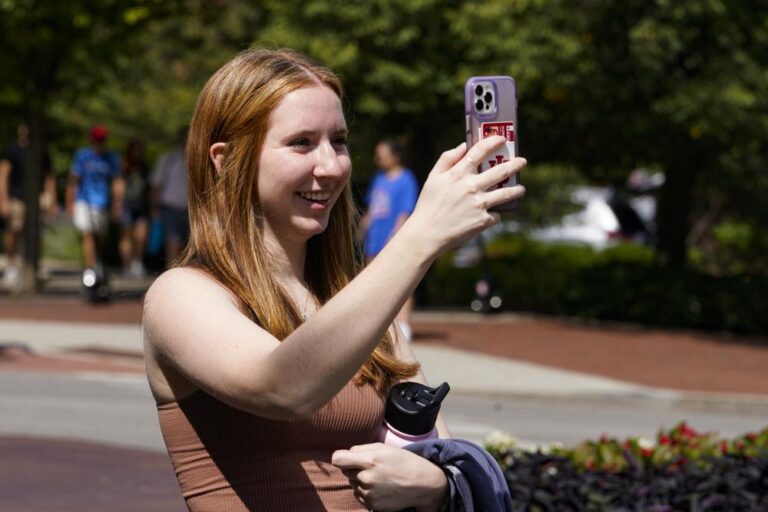
Students said they’ve made changes both public and intimate since the U.S. Supreme Court decision this summer that overturned the landmark Roe v. Wade ruling. Students said they’re using more birth control, and some have made a plan to leave the state for an abortion if they become pregnant. They’re also taking public stances, with increased activism by both opponents and supporters of abortion rights.

Conversations about the changing landscape of abortion access seem to have dwindled since early summer, said Brian Roseboro, a senior at Ohio State University who’s from Montclair, New Jersey. But the 21-year-old, who’s single, said the new law is making him more careful and conscious about using contraception this year.

“I’m definitely thinking about it way more,” Roseboro said.

Ohio State University said the ruling doesn’t change the services provided by its Student Health Services or its medical center, noting Ohio already prohibited state institutions from performing elective abortions. It also doesn’t affect how OSU’s Title IX office handles reports of sexual assault.

But some students say those situations have crossed their minds as they contemplate the fall of Roe and Ohio’s ban on abortions at the first detectable “fetal heartbeat.” That can be as early as six weeks’ gestation, before many people know they’re pregnant.

Nikki Mikov, an Ohio State junior from Dayton, said news of the legal changes initially made her nervous that her options would be limited if she became pregnant. But by the time she was back on campus last week, she said her thoughts were more focused on more immediate things — moving in, friends, classes.

Ohio University junior Jamie Miller said he participated in multiple protests this summer, including one where he gave a speech addressing how support for abortion rights overlaps with advocacy for bodily autonomy for transgender people like him.

More intimately, Miller, 20, said the new limits on abortion influenced the decision he made with his partner to avoid sexual activity that could risk pregnancy. After years of taking testosterone, going through with a pregnancy wouldn’t be healthy for him or for the child, he said, adding that it also would upend his education and put him into debt.

“It would be pretty catastrophic in every sense of my life,” Miller said.

After Emily Korenman, of Dallas, decided to study business at Indiana University, she was frustrated to learn her new state passed new abortion restrictions that take effect Sept. 15 and allow limited exceptions. The 18-year-old said it didn’t change her mind about attending a school she really likes, but she isn’t sure what she would do if she became pregnant during college.

“I personally don’t know if abortion would be the choice I would make,” Korenman said. “But I would respect anyone’s opinion, you know, whoever’s body it is, they have the right to make that choice.

Anti-abortion activists in states such as Indiana and Ohio say they’re planning to advocate for more campus support for pregnant students, now that abortion is no longer an option in most cases.

Campus members of Students for Life of America say they plan to interact with like-minded organizations that support sexual assault survivors and collect baby items for parents in need.

They also hope to further their cause of stopping abortion. They want to build relationships, even with people who have different viewpoints on abortion, and “find where we can agree, so that we can help them and then go further into changing other people’s minds” about abortion, said Lauren McKean, a sophomore at Purdue University Fort Wayne.

Supporters of abortion rights also plan campus outreach.

Cleveland State University sophomore Giana Formica said she got hundreds of condoms through a nonprofit organization for her campus advocacy group to distribute, and she bought some emergency contraception to have in case someone she knows needs it.

“As like a queer individual in this stage of my life, I am most likely not going to be in a place where I become pregnant,” she said. “I’m doing this for other people because it’s not something that I need right this second.”

Formica said she’s also expecting to face more aggressive disagreement from abortion opponents during outreach activities on campus with her chapter of URGE — Unite for Reproductive and Gender Equity. So she’s thinking about how to navigate those conversations with fellow students and where she draws the boundaries for cutting them off.

Zoya Gheisar is pondering how to talk about it, too. She leads a Planned Parenthood-affiliated student club at Ohio’s Denison University. On the cusp of the new school year, she was still trying to figure out what information peer sex educators will provide when they talk with first-year students, and how to help club members discuss abortion issues more empathetically.

“When we have conversations as a club, I really try to steer away from the rhetoric that can be so polarizing,” said Gheisar, a 22-year-old from Seattle.

Her hope, she said, is to move toward discussion that acknowledges “this is a truly intimate thing, with real people at its heart and core.”

AP/INSIDE EDUCATION