Home Blog Page 249

DA says Gauteng girl learners miss days of schooling due to the Social Development Department’s failure to provide dignity packs

0

GAUTENG girl learners continue to miss days of school every month because they do not have
access to dignity packs. This is according to the Refiloe Ntseke, DA Gauteng Shadow MEC for Social Development.

The DA says that the Gauteng Department of Social Development (DSD) has failed to meet its
targets for the dignity pack programme, despite the programme being in existence for over 11
years.

“This department’s inability to meet its set targets for this programme has resulted in over R31
million being returned to Treasury, while young girls and those living with albinism are left to
suffer,” Ntseke said.

The information was revealed by the Gauteng MEC for Social Development, Morakane
Mosupyoe, in a written reply to the DA’s questions tabled in the Gauteng Provincial Legislature
(GPL).

According to Mosupyoe, her department’s under expenditure on the dignity packs programme is
because of the late finalization of specifications.

“This is unacceptable and indicates a lack of project management and prioritisation of
programmes within the department. The dignity packs consist of essentials such as sanitary
towels, bath soap, aqueous cream, toothpaste, roll-on, toilet paper and hats for girls living with
Albinism,” Ntseke said.

The DA said the programme is not reaching all the young girls that are in dire need of dignity
packs.

“In the 2016/17 financial year 294 270 dignity packs were distributed and reached 44 572 girls,
for the 2015/16 financial year, 239 568 dignity packs were distributed and reached 19 965 girls,
in the 2021/22 financial year, 1 158 473 dignity packs were distributed and reached 96 536
girls.”

The DA said that the DSD should engage with the Provincial Treasury to assist the cooperatives
that are working with the department to be converted into small businesses.

“These businesses will be incubated and allowed to tender to provide dignity packs in the
province for two years. This will ensure that all our girls have access to dignity packs.
Furthermore, the department should have a database of all the learners that are in dire need of
these dignity packs to ensure that no girl child is deprived of quality learning time because they
do not have access to dignity packs.”

INSIDE EDUCATION

Government says it plans to yank registration for Damelin, Lyceum, City Varsity, and ICESA

0

THE department of higher education and training (DHET) intends to cancel the registration of four higher-education institutions, including two of South Africa’s oldest private brands.

In a notice in the Government Gazette, DHET director-general Nkosinathi Sishi published his “decision to issue a Notice of Intent to Cancel the registration” of City Varsity, Damelin, ICESA City Campus, and Lyceum College “as Private Higher Education Institutions”.

That notice provides the institutions an opportunity to take action before they are actually de-registered, which would also be by way of a gazetted notice.

The four institutions had failed to submit their 2020 audited annual financial statements, said Sishi, a requirement for continued registration.

All four education brands are owned by Educor, a company split out of the Naspers-owned Media24 in 2008.

It traces the history of Damelin back to 1943, and says Lyceum has been providing education since 1917.

Educor also owns INTEC and the Central Technical College.

The education department said last year it was considering the cancellation of some Damelin certificate programmes after student complaints about the quality of education and service they received. In 2019, Damelin had promised to do better, the DHET said, but it had not seen any reduction in the volume of complaints.

Educor and the affected institutions did not immediately respond to requests for comment.

In February 2020, Educor reportedly told staff that economic conditions had seen a decline in both enrolment at institutions and the payment of fees due, and that it was considering the retrenchment of what amounted to nearly half its permanent staff.

Damelin lists six campuses in Gauteng, two in KwaZulu-Natal, two in the Eastern Cape, and one in the Free State. It offers a large array of full-time and part-time courses of study.

Lyceum operates out of offices in Cape Town and Bloemfontein, and offers distance-study courses in business, education, and specialist fields such as metropolitan policing.

City Varsity has campuses in Johannesburg and Cape Town, and specialises in creative fields, including marketing, acting, animation, and sound and video production.

ICESA has campuses in Durban and Pietermaritzburg, where it offers both matric and tertiary qualifications in fields including management, tourism, and logistics. 

BUSINESS INSIDER

Opinion| We must expand and modernise our higher education system – Marwala

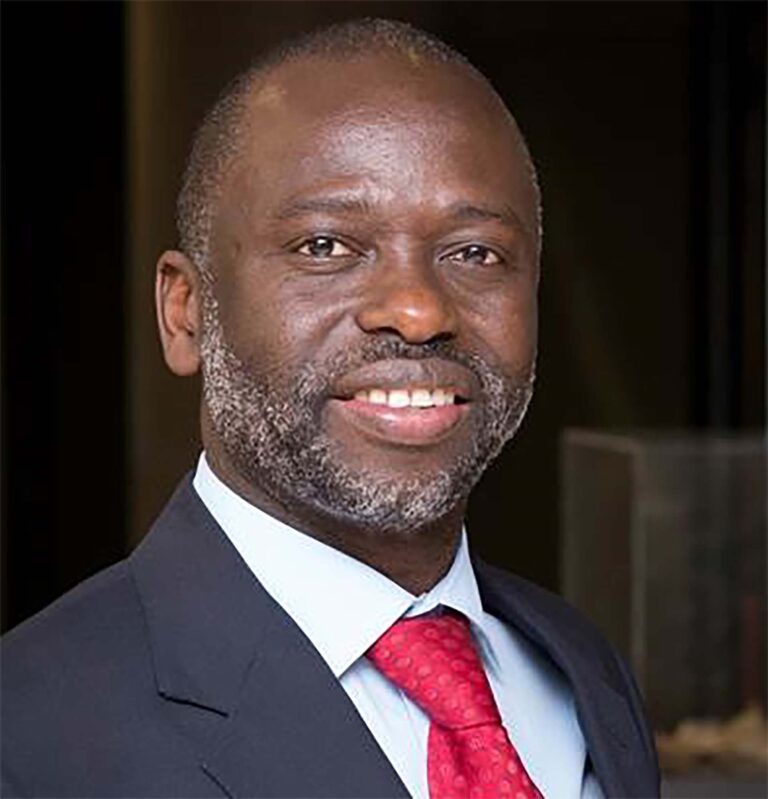
TSHILIDZI MARWALA|

IN an evolving world driven by modern technologies university education is one of the most important aspects of the economy. A study by Stats SA demonstrated that in 2021 while the unemployment rate was 32.6% it was 9.3% among university graduates. This means the chances of employment are on average more than three times better for university graduates.

The message is unmistakable we should create more opportunities for university studies. SA has 26 public universities with a total enrolment of about a million students while 700 000 are enrolled at Technical and Vocational Education and Training TVET colleges.

This ratio of university students to TVET students is not desirable. We need to recreate our education system so that we have more people at TVET colleges than at universities to set our country on a path to re industrialisation.

The 26 public universities in SA cater for a population of 60 million. Canada has 96 public universities for 38 million people while South Korea has 197 public universities for a population of 51million. SA does not have enough universities. How do we expand the higher education system? Part of the solution is to introduce online courses. Unisa should partner with big online learning companies such as edX Coursera Udacity and Udemy to expand its online offerings.

The University of Johannesburg (UJ) has partnered with various online learning companies and now offers many online courses including a Bachelor of Accountancy and a master s in public health. To build a world class university we need to reform the curriculum. The curricula of SA s universities are single discipline orientated. There is strong evidence that multidisciplinary education is essential in this fourth industrial revolution 4IR era. At 111 we have introduced initiatives to make the curriculum and the university experience rich in multidisciplinarity.

For example we now require all our undergraduate students to take one of two compulsory modules Africa insights or artificial intelligence AI in the 4IR. The Africa insights module teaches African literature politics and economics. Al in the 4IR teaches what AI is what it can do and what it means for society the economy and politics. Another aspect of building a world class university entails a curriculum that is up to date and up to the requisite standard. This is done through accreditation which ensures universities offer a good education.

The body responsible for accreditation is the Council of Higher Education CHE . The CHE sometimes delegates part of this responsibility to professional bodies. For example the accreditation of engineering programmes is delegated to the Engineering Council of SA and accounting programmes to the South African Institute of Chartered Accountants. The general problems that affect the quality of education at our universities are lack of infrastructure and inadequate staffing.

Staff to student ratios vary greatly and they tend to be good at previously white universities and bad at historically black universities. This needs to be fixed. Doctoral qualification levels vary across the system with the universities of Stellenbosch SU Cape Town UCT Witwatersrand Wits UJ and Pretoria UP occupying the top level. In contrast previously disadvantaged universities occupy the lower levels of staff qualifications. The government must start a staff qualification project so that by 2030 more than 90% of staff at SA s universities have doctoral qualifications.

The second aspect of building a world class university is improving infrastructure. This should not be limited to bricks and mortar but should extend to the 4IR infrastructure including digital infrastructure. The digital infrastructure should include devices for learning data and telecommunication connectivity. This can be a catalytic industrialisation project to kick start the electronic device manufacturing industry. The question that needs to be answered is whether we have trained enough engineers to achieve this industrialisation initiative.

To accomplish this industrialisation, path the department of higher education & training in cooperation with the department of trade & industry should update the infrastructure development grant strategy. One measure of how well our university system is doing is how the universities perform in global rankings.

The three major global rankings are the QS Times Higher Education; THE; and Shanghai. The latest QS ranking shows that six of the top 10 African universities are South African. It also shows that UCT ranks first in Africa followed by UJ the American University of Cairo and then Wits. The Impact Ranking ranks Ill as the top university in SA followed by UCT. In Africa the top university is Aswan in Egypt followed by UJ then UCT. The latest Shanghai rankings show UCT at the top followed by Wits while IA SU and UP are statistically tied in the 3 5 band. Another aspect of building a world class university is increasing research capacity.

At UJ we have pursued a strategy of doing this through postdoctoral research fellowships visiting academics research centres and institutes. UJ has about 500 postdoctoral fellows which will grow to 650 in the next 12 months. Building a world class university requires funding. Public universities are financed by government subsidies student fees and third stream income.

Wealthy South African universities generally depend more on third stream income while historically disadvantaged universities depend on government subsidies. While fees for the poor are financed through the National Student Financial Aid Scheme NSFAS there is a missing middle of students not poor enough to qualify for NSFAS but not rich enough to afford fees.

Universities such as UJ raise as much as R200m annually to support missing middle students. Given these financial problems what is to be done? Universities must reconfigure themselves as businesses with companies that take research and training into markets as products. Many universities such as UJInvent at UJ and Wits Enterprise are commercialising their research. Historically disadvantaged universities must be brought into commercial spaces. More universities must participate in formations such as Business Unity SA. We should bear in mind that learning is changing and becoming digital.

Therefore, we must galvanise human technological and political capital to ensure that we usher South African higher education into the 4IR. Universities should not only be world class but must also be accessible especially to ordinary citizens. In addition, access should be followed by success in the form of among other things on time graduation.

*The views expressed in this article are that of the author/s and do not necessarily reflect that of the University of Johannesburg.

School assistant programme is changing lives, says Ramaphosa

CYRIL RAMAPHOSA|

I was recently shown an inspiring and deeply touching post on a Facebook group for participants in government’s school assistant programme.

At the end of this month, the second cohort of 245,000 young people will finish their ten-month placement in schools. They will join the ranks of approximately 600,000 young South Africans that have participated in the initiative since its launch in 2020.

To encourage those leaving the programme, a young man from Modimolle in North West wrote in the Facebook post: “Don’t forget what you’ve done for the teachers and the learners. Don’t forget what you did for the school. Don’t forget the lives you have impacted. Don’t forget the tremendous difference you’ve made. But most importantly, don’t forget the skill and the experience you got from the school.”

This young man’s words capture the essence of this outstanding programme. The school assistant programme is part of the Presidential Employment Stimulus, the largest youth employment intervention in our country’s history, which has to date reached close to a million participants.

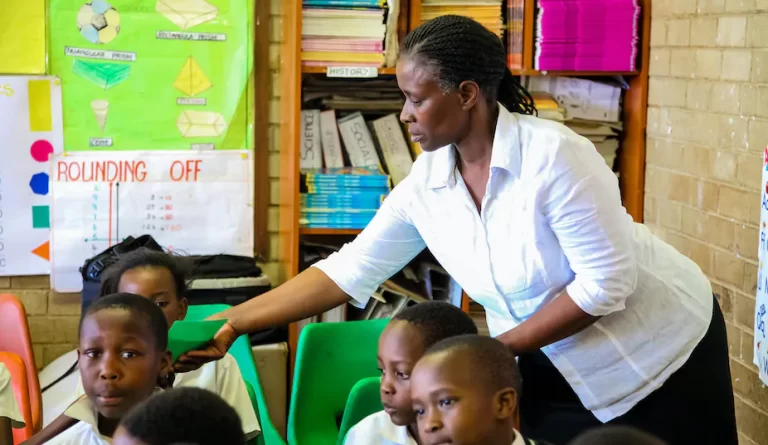
The school assistants have either supported teachers in the classroom or performed school maintenance, security, food garden production and other upkeep activities.

Updates sent by participants to the Department of Basic Education show the impact the initiative has had on more than 22,000 participating schools around the country. There are images of new libraries and reading corners. There are before-and-after pictures of barren school grounds now bursting with cabbages and of once dilapidated classrooms gleaming with new paint. There are videos of newly-trained sports enrichment coaches running exercise classes and participants at laptops doing school administration.

There are the stories of young South Africans who had been struggling to find work, and now have been able to make modest extensions to their homes, start small businesses or further their studies. One young participant with a mild mental disability said that he had been surviving off a disability grant and never thought he would be considered for the programme.

Of approximately 60,000 teachers and principals surveyed, more than 95% say the programme has greatly improved the learning environment in our schools and want it to continue. They say it has enabled them to focus more of their time on teaching.

Beyond the monthly stipend, the programme has provided young people with work experience and skills. They have received accredited training across several disciplines, ranging from digital literacy to basic bookkeeping, from child and youth care to bricklaying, plastering and plumbing.

As one participant said: “My CV is no longer empty. Before this programme it was blank, now it has five certificates.”

Having provided opportunities to these thousands of young people, we now need to open their path to formal employment, further education or entrepreneurship.

There are already many opportunities for people leaving the programme. The Youth Employment Service aims to place many of these young people in work experience positions in companies and the National Youth Development Agency will help those with business ideas.

Participants get information on scholarships and bursaries for further study and organisations in the wider education sector are looking to absorb participants into literacy and library programmes.

I am calling on all our partners, especially business, to harness the energies, talent, skills and experience of these young people to grow our economy. The quality work experience and training provided by this programme addresses the concerns of many businesses that young applicants lack skills and experience.

We call on businesses to participate in this process by taking advantage of the Employment Tax Incentive to hire more young people and create learnerships. They can use the SAYouth.mobi platform to publicise opportunities that exist in their companies. There are currently 2.9 million young people registered on SAYouth.mobi and many organisations, companies and departments use the platform to provide opportunities to young people.

The platform is part of the Presidential Youth Employment Intervention, which brings together several government departments, the National Youth Development Agency, the Harambee Youth Employment Accelerator, Jobs Fund, the Youth Employment Service, National Business Initiative and Confederation of Associations in the Private Employment Sector, among others, to create pathways for young people into earning opportunities.

I have been greatly encouraged by the many online groups formed by former participants of the programme where they share work, training and other opportunities among themselves. Some of these young people would have liked to be on the programme longer. One person writes that she was grateful to have been given the opportunity, but understands that others need to be given the same opportunity in the next intake.

As the young man from Modimolle wrote: “Some of you got better opportunities. Some of you chose to further your studies. Some of you decided to come together to start businesses. Your minds are open right now.”

As we build on the successes of this programme and bring opportunities to more young South Africans, I call on all of society – whether as businesses, community-based organisations or places of learning – to be part of building a new future for our young people.

Let us all do what we can to help these young people build their confidence, find decent work and bring dignity to their lives.

From the desk of the President

Teachers, principals want school assistant programme to continue – Ramaphosa

0

OVER 95% of about 60 000 surveyed teachers and principals say the school assistant programme has vastly improved learning and want it to continue.

This was according to President Cyril Ramaphosa in his weekly letter to the nation, where he said teachers and principals noted that the programme had allowed them more time to focus on teaching.

The programme is part of the Presidential Employment Stimulus, the largest youth employment intervention in the country’s history, which has reached close to a million participants. 

Ramaphosa said the second cohort of 245 000 young people will finish their ten-month placement as school assistants. They will join the ranks of about 600 000 young South Africans that have participated in the initiative since its launch in 2020.

The school assistants have either supported teachers in the classroom or performed school maintenance, security, food garden production and other upkeep activities, Ramaphosa said.

He explained that updates sent by participants to the Department of Basic Education showed the impact the initiative had had on more than 22 000 participating schools around the country.

“There are images of new libraries and reading corners. There are before-and-after pictures of barren school grounds now bursting with cabbages and of once dilapidated classrooms gleaming with new paint. There are videos of newly-trained sports enrichment coaches running exercise classes and participants at laptops doing school administration,” he said.

Aside from a monthly stipend, the programme has also provided young people with work experience and skills.

“They have received accredited training across several disciplines, ranging from digital literacy to basic bookkeeping, from child and youth care to bricklaying, plastering and plumbing,” he said.

Ramaphosa said government now needed to allow these young workers into formal employment, further education or entrepreneurship. 

The Youth Employment Service aims to place many of the young people in work experience positions in companies and the National Youth Development Agency will help those with business ideas.

“I am calling on all our partners, especially business, to harness the energies, talent, skills and experience of these young people to grow our economy. The quality work experience and training provided by this programme addresses the concerns of many businesses that young applicants lack skills and experience,” he said.

He also called on businesses to participate in this process by taking advantage of the Employment Tax Incentive to hire more young people and create learnerships.

He said the SAYouth.mobi platform can be used to publicise opportunities that exist in the companies, explaining that there were currently 2.9-million young people registered on SAYouth.mobi and many organisations, companies and departments used the platform to provide opportunities.

SUPPLIED| News Agencies

Five Potchefstroom learners die after a truck crash into their school premises

0

FIVE learners have died after a truck crashed into a school in Potchefstroom, North West.

The North West Department of Education has confirmed that the tragic deaths of five Vyfhoek
Primary School learners who were run over by a mini-truck inside their school premises.

The incident happened on Thursday.

The mini truck is reported to have been traveling from Potchefstroom towards the Johannesburg
direction on the N12 road and capsized after a front wheel tyre burst and the driver lost control of
the vehicle, then went straight through the school fence, plunging on four learners, and killing
them on the spot, while one died in the ambulance at the scene while the paramedics were still
attending to her injuries.

According to the Department’s spokesperson, Elias Malindi, four learners are in hospital, “more
report on their condition will be issued.”

According to the school report, the learners were waiting for their school transport after school
within the school premises.

MEC for Education in the North West province, Mmaphefo Matsemela, is devastated by the
incident and calls for cooperation during this difficult time.

“This is the most devastating news to share. Losing five learners in this manner is not easy to
accept- as a parent and as a caretaker to these learners,” she said.  

“We are truly lost for words and we plead with the public to treat the matter with sensitivity as
parents are still trying to get into terms with this sudden loss.”

“I wish to send a word of comfort to the bereaved families and for those whose learners are
hospitalised,” said Matsemela.

Matsemela further indicated that a task team has been established to deal with the memorial
service and the funeral arrangements.

“As a department, we have established a task team which will deal with the memorial service
and the funeral arrangements. This task team will work very closely with all the bereaved
families. We are also working with other departments to ensure that psychosocial support is
provided to all those who need it,” she said.

Matsemela added that the memorial service will be held at Madiba Banquet Hall in
Potchefstroom on Thursday, 25 August 2022 at 12:00.

INSIDE EDUCATION

Coding education a key focus of 2022 App of the Year roll-out

0

REGARDED as one of the best coding programmes in South Africa (SA), the MTN Business App Academy
attracted more than 12 000 applications in April 2022. All successful candidates, upon completing their
exams will receive their South African Qualifications Authority (SAQA) NQF Level 3, NQF Level 5 and
MICTSETA accredited qualifications.

The MTN Business App Academy is a free online course open to all and zero-rated for MTN subscribers.

It coincides each year with the MTN Business App of the Year Awards, which has uncovered apps like
Zulzi App and Khula App and works to celebrate African coding talent and out-of-the-box thinking that
drives disruption and change.

“With the App Academy our aim is to upskill African youth for a career in app development – making
them future-fit, putting them on a path to success and, through them, changing the trajectory of the
continent”, says Kholo Magagane, Head of Marketing at MTN Business.

MTN Business App Academy students are mentored and tutored by experts in the field. Training
components give intermediate coders the opportunity to advance skills already acquired, while
beginners are guided on building their skills from a very limited foundation.

“We are very proud of our 2022 intake, who range from beginner and mid-level app developers to first-
time tech innovators, garage developers and tech graduates from across the continent. They did
remarkably and are well on their way to a future in tech. But the work isn’t done yet – they will be taken
through another two to three skills development and practical training courses before the end of the
year.”

The 2022 App Academy will culminate in a virtual hackathon on 2 – 4 September 2022, where learners
will be required to develop their own app to solve social challenge problem statement submitted by
fellow Africans, Corporates and MTN partners. The participants will have 72-hours to develop their
solution. The winning app will be entered into the 2022 MTN Business App of Year Awards for a chance
to win R1 million in start-up funding.

“At MTN Business we’re committed to embracing technology and innovation as we do our part in
elevating Africa to a developer ecosystem that produces opportunities for our youth and solutions for
our people – who all deserve the benefits of a more connected life. This is the only way to ensure future
growth and progress for our continent”, said Magagane.

Now in its 11th year, the MTN Business App of the Year Awards is widely recognised as one of the biggest tech movements on the African continent and takes place this year on 13 October. For more information or to register, visit www.appoftheyear.co.za.

SUPPLIED| MTN

North West University education linguist, Professor Carisma Nel, looks at reading literacy crisis in SA

THE Covid-19 pandemic has once again highlighted the reading literacy crisis in South Africa. The inaugural 2030 Reading Panel calls for “fundamental reforms” to ensure that all children read for meaning by 2030 at the age 10. Currently, 78% of children cannot read for meaning. Due to rotational timetables and school closures in 2020 and 2021, children in South Africa have lost 1,3 years of learning.

This is according to Professor Carisma Nel from the North-West University’s (NWU’s) Faculty of Education.  

She adds that new assessments show that in 2021 children in Grade 4 knew less than children in Grade 3 in 2018.

“Taking into account South-Africa’s current trajectory, it will take approximately 80 years before all 10-year-olds can read for meaning. Although President Ramaphosa committed his administration to ensuring that all 10-year-olds will read for meaning by 2030, current projections indicate that only 36% will be able to read for meaning by 2030, and currently only 22% of 10-year-olds can read for meaning in any language,” says Prof Nel.

“Teachers are often seen as the frontline of defence in efforts to prevent reading problems. However, far too few teachers are presently proficient in scientifically evidence-based reading instruction, and far too many of the programmes that prepare the country’s teachers are failing to give them the grounding they need to become proficient.”  

Prof Nel is an educational linguist, and her research focuses on finding ways to ensure that South-Africa’s teachers get sufficient practice-based opportunities in scientific evidence-based reading instruction.

“One of the innovations I am currently focusing on is the use of a mixed-reality classroom environment where student teachers are given the opportunity to engage with avatars to practice a variety of core reading practices.

“Mixed reality simulations (MRS) are technology-enhanced scenarios that merge real and virtual worlds, and have been shown to improve pedagogical proficiencies through structured simulated practice,” she adds.

According to Prof Nel, the technology currently used for mixed reality student teacher simulations utilises a combination of immersive virtual environments and human-directed in-the-moment puppetry, a model known as human-in-the-loop (HITL).

The immersive quality of these environments leaves participants feeling as if they are interacting in a real-life scenario, instead of pretending. TeachLivE™ utilises HITL avatar-based simulated environments, meaning those participating in the MRS interact with computer-based, human-controlled avatars acting as learners or other education stakeholders (e.g., mentor teachers or parents).

“With TeachLivE™, student teachers deliver mock lessons, hone their content-specific teaching practices, develop their classroom management skills, and practice new pedagogical skills in a safe and controlled environment. This technology enables student teachers to develop their teaching practice before working with real students,” adds Prof Nel.

SUPPLIED/NWU

DUT student Gugulethu Mngomezulu makes her mark in karate

0

DUT student Gugulethu Mngomezulu (23) from Empangeni, KwaZulu-Natal, has made her mark in Karate.

Mngomezulu joined Karate when she was only seven years old. Her father was a boxer so she was highly motivated by him to take part in sporting events. Being trained by her own father was really a cherry on the top.

“My father was my role model and I have always wanted to continue his legacy and in that way I got introduced to Karate as I wanted to use both my hands and legs,” explained Mngomezulu.

When she joined the DUT Karate Club they sponsored her with everything that she needed including transportation, a sports kit and also accommodation was fully covered by the DUT Sport department which came as a surprise to her because ever since she started to take part in Karate she used to pay for everything but joining the DUT Karate Club was a game changer for her.

Through her hard work and determination of winning and representing the university in all local and provincial tournaments including national competitions. She is making sure that she is always ready for tournaments and receiving trophies and rewards which has made her to stand out from the rest as her diligence was noticed since her first year till present. Being so dedicated also contributed to her being appointed as the Karate coach.

The challenges that she always encountered as a woman in Karate is that it is known to be perceived as a male-dominated sport. Since she is a woman in a sport that is believed to be harsh sometimes as she does not receive enough recognition, is always working ten times harder than males in order for her hard work to be recognised. She indicated that being underestimated is such a big deal as a woman in sport but she is a hard worker, determined and knows how to deal with the pressure that is against her.

“For me nothing is hard to overcome as I was raised by very supportive parents that’s why I am so confident in what I am doing. I don’t care what the world thinks as long as I reach my goals. During my tournaments my parents would come and support me, so facing any type of stigma is not an issue as I just don’t entertain it at all, I just focus on myself and move forward in a humble manner,” she said.

Balance comes with self-control and discipline, so she makes sure that she always prioritises everything that happens in her life and always having a positive mentality even when bad things happen. She is always confident and believes in herself that everything will be done the way it has to be done. It was a very proud moment for her as she saw that her hard work and determination is being recognised, especially as a woman.

Mngomezulu expressed how she felt when she was appointed as a coach.

“I felt amazing and thrilled that I can finally share my skills and everything that I have obtained all these years with other people as well and guide people step by step and create champions as well. It’s been an amazing journey. Seeing my students winning also feels so wonderful and a blessing from God. In 2021 I was also awarded as the best female fighter trophy,” said Mngomezulu.

She encourages beginners who want or just joined Karate, to believe in their own capabilities and be confident in their craft.

“Never start something that you can’t finish and always know that everything takes time. Karate is a process, there is a wonderful and amazing journey that lies before you but you need to be patient, keep pushing and strive for the best,” she said.

Students are welcome to join karate inside the DUT Sport Centre starting from 17:00 till 19:30. The fees for Karate are R100 for DUT students and R300 for outside members.

Plans to build 2 new universities and more TVET colleges in South Africa

A FEASIBILITY study is underway to make way for the new University of Science and Innovation in Ekurhuleni as well as a new crime Detection University in Hammanskraal.

The Minister of Higher Education, Science and Innovation, Blade Nzimande said his department’s plans to build the two new universities are underway following approval from Cabinet.

He said the process of developing a new university is preceded by a feasibility study to ascertain the demand for new institutions in identified areas or areas of interest.

“A feasibility study, funded through the Infrastructure and Efficiency Grant (IEG) to the value of R6 million, is underway to advise on the size and shape of these two institutions,” he said.

The new University of Science and Innovation is expected to focus specifically on science and innovation subjects, including STEM subjects such as:

  • Data Science;
  • Machine-learning;
  • Artificial intelligence;
  • Blockchain;
  • Robotics;
  • Hydrogen-powered technologies such as smart transportation and logistics systems.

The new crime Detection University in Hammanskraal is aimed at crime detection and fighting. It is hoped to improve the quality of general and specialised SAPS investigations.

Earlier this year (April 2022), a steering committee to conduct a feasibility study was established. The department said that the committee consists of representatives from city officials, the South African Police Service (SAPS), The National Research Foundation and major universities.

More colleges and renovations

Nzimande said that with respect to the Technical and Vocational Education and Training (TVET) Colleges, the department is in the process of establishing new colleges or college campuses – similar to that set out for universities.

Nzimande went on to list 16 TVET developments and infrastructure renovations being implemented across the country.

  • Msinga Campus of UMgungundlovu TVET College at Cwaka
  • Greytown Campus of Umgungundlovu TVET College at Greytown
  • Umzimkhulu Campus of Esayidi TVET College at Umzimkhulu
  • Bhambanana Campus of Umfolozi TVET College at Bhambanana
  • Nkandla A Campus of Umfolozi TVET College at Nkandla Town
  • Nkandla B Campus of Umfolozi TVET College at Nkumgamathe
  • Vryheid Engineering Campus of Mthashana TVET College at Vryheid
  • Nongoma Campus of Mthashana TVET College at Nongoma
  • Kwagqikasi Campus of Mthashana TVET College at Nongoma
  • Giyani Campus of Letaba TVET College at Giyani
  • Balfour Campus of Gert Sibande TVET College at Balfour
  • Aliwal North Campus of Ikhala TVET College at Aliwal North
  • Sterkspruit Campus TVET College of Ikhala at Sterkspruit
  • Ngqungqushe Campus of Ingwe TVET College at Lusikisiki
  • Graaff Reneitt Campus of East Cape Midlands at Graaff Reneit

He added that there are also plans to renovate existing facilities in Limpopo which will be annexed to the Tshwane University of Technology should the feasibility studies support the usage of these facilities.

Lack of confidence

Major infrastructure developments for the education sector in South Africa come off the back of low confidence in the country’s tertiary education system.

A recent survey conducted by Professional Provident Society (PPS) found that the majority of students have no confidence in the standard of higher education offered by South African universities when compared internationally.

The survey also found that 25% of studying professionals felt that they were insufficiently prepared for higher education, while 43% of students said that they had been moderately prepared.

BUSINESS TECH