Home Blog Page 253

Opinion| Pressure mounts on universities to continue their digital journeys

By Liesel Grobbelaar, principal consultant at Analyze Consulting

THE pandemic forced universities to adopt various cloud-based technologies. With students being stationed all over the country and simply not allowed to go to lecture halls, universities had to modernise their teaching. Online interactions are normal in almost every industry today, including tertiary education.

For universities, it means that institutions can interact online and provide online resources for students, while some newer players in the industry offer a fully remote learning experience. While some organisations may not have been considered competition before, they certainly are now, as they have provided options of convenience, speed and efficiency for students that have the means to partake in online education.

Most tertiary institutions in South Africa run on a not-for-profit model, and so don’t traditionally assess competition and competitive advantage from a commercial perspective to be as important as their academic and research credentials.

On the other hand, a traditional business – and there are businesses offering education in the tertiary sector – is driven by the pursuit of profits and pressure from shareholders. While these businesses do not run in the same manner as traditional tertiary institutions, their efficiency and innovation is providing compelling options for prospective students, in the form of fees, convenience and – for lack of a better description – user experience. Let’s not forget that we live in the era of digital natives who demand certain levels of online experience and speed.

While traditional tertiary institutions draw most of their operating income from research income, grants and the charging of student fees, we are certainly seeing that there is far more focus from university councils on the importance of managing the business side of their institutions.

They are analyzing things such as how profitable different courses are within their faculties, looking at the value of introducing new courses based on demand, unique selling points and profitability. In order to be able to do this effectively, councils are looking towards the administration and support functions within universities, such as finance, human resources, student fee administration, and more, to pull together different numbers and insights to make business decisions.

The big problem for many institutions now, is that their current operational or administrative systems are almost entirely on-premise and not providing them with these answers quickly or easily. It takes an inordinate amount of effort and time to extract the relevant data from their systems, which also may not be entirely up to date. Then, when they do actually get to the information and report on it, too much time has passed to be able to make relevant and agile decisions.

And so, just like the pandemic forced the digitisation on the front end, it is fair to suggest that the pressure to remain relevant, attractive and profitable is forcing the digitisation of the back-end, to move from fully on-premise to a hybrid or fully cloud ecosystem. Migration to the cloud, and its immense ability to provide real-time, actionable insights, has therefore become non-negotiable.

Where universities do decide, despite mounting pressure and warning signs, to delay their cloud transformation journeys, they risk far bigger problems further down the line, because as there is more adoption of cloud technology, vendors will increasingly stop supporting the older versions of their technology.

As universities go through their transformation journeys, they have to go through a tender, selection and procurement process and most institutions have fairly stringent procurement frameworks.

A good starting point for any university is to understand that software vendors are trying to sell their products. They display the absolute top-shelf, prime examples of what their products can do. Now, if we are honest, tertiary institutions don’t go through these types of processes often – we are dealing with one now that last did this 13 years ago, while others last upgraded their systems even longer ago.

Without a partner present, who is an expert in transforming organisations such as theirs, they will not know where the caveats are: do they buy this module, add that, or buy the whole suite, what are the licensing implications, and does it actually solve the institution’s unique problems or does it simply put a new software face onto the same old processes?

It is crucial to understand that digital transformation, whichever guise it takes, is about more than just changing systems and processes. A successful transformation requires change from a people point of view.

Change leadership is fundamental to a project’s success. This starts with assuring current IT resources that their jobs are safe, albeit different, and it is followed up with comprehensive training and support to guide all of the university’s staff through the change, and to empower them to unleash the power of the new technology.

And so, as they embark on the second leg of their digital transformation journeys and bring their back office, administration, HR and finance systems into the cloud, universities can go a long way towards reducing the pain of delays and failures by always choosing a partner who has experience, and scars, in implementations within tertiary institutions. This gives them access to industry best practice every step of the way.

SUPPLIED|

Employers called to open work placement for TVET college students

Higher Education and Training Minister, Dr Blade Nzimande, has called on all employers to open their workplaces for the placement of Technical Vocational Education and Training (TVET) college students.

“The National Development Plan (NDP) emphasises the importance of workplace-based training in job creation and the need for TVET colleges to become preferred institutions for vocational education and training. It also stresses the role of Sector Education and Training Authorities (SETAs) in supporting the development of relationships between educational institutions and employers,” Nzimande said.

The Minister was speaking at a Ministerial Summit on Strategic Industry Partnerships with TVET Colleges, currently underway at the Cape Town International Convention Centre.

The two-day summit, which started on Wednesday, brings together the Post School Education and Training (PSET) sector, government departments, non-governmental organisations, labour and business to discuss how to strengthen TVET colleges partnerships, particularly work-based learning.

Nzimande noted that the expansion of workplace-based learning opportunities for students has proven to be a challenge in the TVET college sector.

He said that in response to President Cyril Ramaphosa’s State of the Nation Address, the department has made a commitment to ensure that 10 000 TVET college graduates are offered workplace experience so that they can complete their qualifications, thus improving their prospects for employability or starting their own small businesses.

“The primary aim of placements is to assist the transition of our young people from learning to working,” the Minister said.

He added that he had previously stated on numerous platforms that TVET college management, especially principals, must know that they are not running TVET colleges unless they prioritise building partnerships with industry.

The Minister has given a directive that all TVET college principals should sign new performance agreements that include industry partnerships as one of their key performance indicators.

“This decision was informed by the White Paper for Post-School Education and Training which requires Work-Integrated Learning (WIL) to be a central component of the college programmes and that the extent to which students are able to get placements in the workplace must be used as an important indicator for assessing the performance of the management of institutions.

“As TVET college principals, you owe it to the youth and the country to manage student admissions with the end in mind and this call for the establishment of strategic partnerships with industry. It will indeed be a travesty of justice and a serious indictment on us, as leaders, if we were to allow our inaction to cause TVET colleges to become a dead-end for students,” Nzimande said.

One of the leaders’ core responsibilities is to break down barriers to opportunities by creating pathways for young people to access skills training programmes and workplace-based training, articulate into higher education, and pursue self-employment without any hindrance.

Supporting TVET colleges innovation programmes

Meanwhile, Nzimande has asked the Department of Science and Innovation to assist by supporting innovation programmes and initiatives in TVET colleges, and the Higher Education and Training to help in introducing entrepreneurship programmes in the country’s colleges.

“Our vision remains that of providing an integrated, coordinated and highly articulated Post-School Education and Training System for improved economic participation and social development of our youth and adults.

“Our TVET colleges cater for many South Africans who need to improve their educational levels and/or acquire a skill. To this end, the ability of TVET college principals to lead the forging of partnerships with industry and/or workplaces is of critical importance,” the Minister said.

He added that by 2030, TVET colleges must be strong differentiated institutions, offering a range of high-quality programmes preparing students for the world of work and entrepreneurship.

“They must offer qualifications that are responsive to the needs of students, as well as regional and national skills demand”. 

SA NEWS

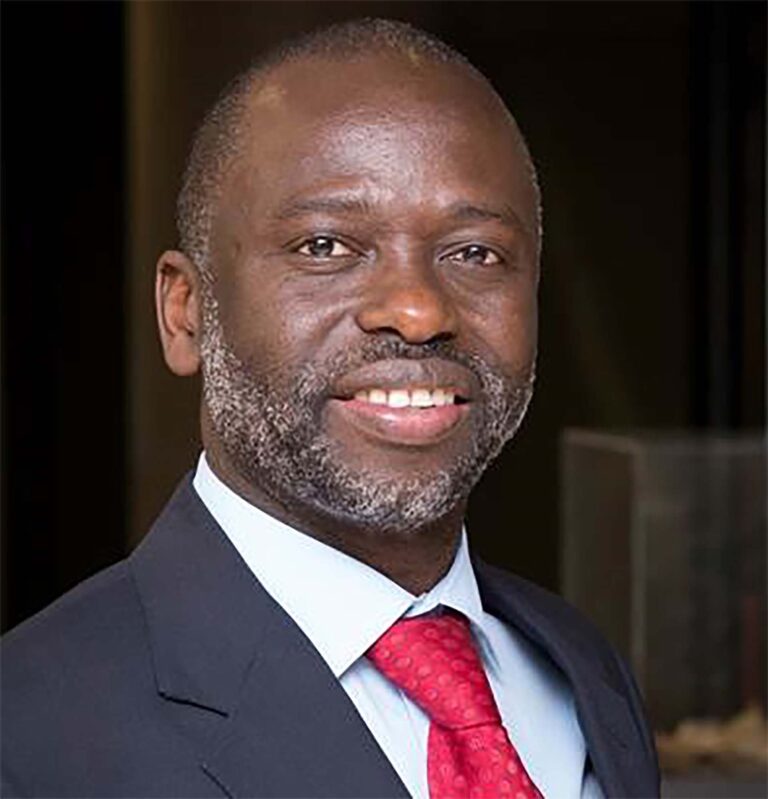
Pandor congratulates Professor Tshilidzi Marwala on his appointment as Rector of the United Nations University in Japan

MINISTER of International Relations and Cooperation, Dr Naledi Pandor, has congratulated Professor Tshilidzi Marwala on being appointed the Rector of the United Nations University in Tokyo, Japan.

Marwala is currently the Vice-Chancellor and Principal of the University of Johannesburg.

Previously, he was the Deputy Vice-Chancellor for Research and Internationalisation and the Executive Dean of the Faculty of Engineering and the Built Environment, both at the University of Johannesburg.

“I wish Professor Marwala well as the incoming Rector of the United Nations University and have utmost confidence that through his leadership, the University will further contribute, through collaborative research and education, to efforts to resolve the pressing global problems of human survival, development and welfare, that are the concern of the United Nations, its peoples and member states,” Pandor said in a statement.

President Cyril Ramaphosa also congratulated Marwala on his new appointment.
“The President describes this appointment as well deserved, referring to Prof Marwala as an accomplished intellectual, having obtained numerous academic qualifications from various universities nationally and internationally and having held various key roles in the global academic landscape for development,” the Presidency said in a statement.

The President further expressed appreciation to Prof Marwala for his noble contribution to the country’s knowledge base.

“The President wishes him great success in his new role, where he is confident that Prof Marwala will fly the South African flag higher and further,” the Presidency said.

The United Nations University is a global think tank of 13 institutes in 12 countries.

It supports efforts to resolve global human development challenges working closely with other United Nations system organizations and leading research institutions.

“Professor Marwala is an accomplished scholar and thought leader with multi-disciplinary research interests that include the theory and application of artificial intelligence to engineering, computer science, finance, social science and medicine,’’ the United Nations said in a statement.

“He has an extensive track record in human capacity development and is committed to leveraging technology and global connectedness towards the pursuit of the Sustainable Development Goals.’’

He has been a visiting scholar at Harvard University, University of California at Berkeley, Wolfson College of the University of Cambridge and Nanjing Tech University. He has also previously served as a member of the International Consultative Council at the Silesian University of Technology in Poland and is a trustee of the Nelson Mandela Foundation.

Professor Marwala holds a doctorate specializing in Artificial Intelligence and Engineering from the University of Cambridge, a Master of Mechanical Engineering from the University of Pretoria and a Bachelor of Science in Mechanical Engineering from Case Western Reserve University.

His work is internationally recognized and among other things he is a fellow of The World Academy of Sciences, the Academy of Science of South Africa, the African Academy of Sciences and the South African Academy of Engineering.

STAFF REPORTER

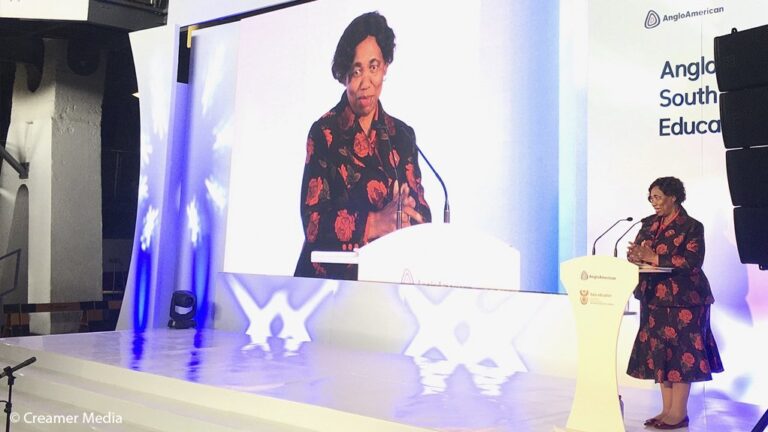
Anglo-American doubles education investment to over R1bn

ANGLO American has launched the second phase of its education programme in South Africa in partnership with the Department of Basic Education, doubling the programme’s scope and commitment to improving educational outcomes.

The education programme is integral to Anglo American’s Sustainable Mining Plan which commits the company to a holistic range of goals that are shaping how our stakeholders experience our business.

These include how to best create Thriving Communities, by focusing on better health, education and employment opportunities for communities around our operations. Ensuring that all children in Anglo American’s host communities have access to excellent education and training is an essential gateway to tertiary education and will ultimately help increase the employability of young people throughout their working lives.

Over the past four years, the education programme has made good progress in improving the quality of education for 222 000 learners and 3 391 teachers at 109 schools and 110 early childhood development centres – investing more than R100-million per year – within Anglo American’s host communities in South Africa through a partnership with the Department of Basic Education.

“By doubling our investment and targeting specific outcomes, we are going far beyond simply acknowledging the fundamental right of every child to quality education – we are making it happen,” says Nolitha Fakude, chairperson of Anglo American’s management board in South Africa.

“Supporting access to better education and school infrastructure, creating sustainable jobs, and contributing to brighter and healthier futures is one of the many ways we are delivering a lasting positive contribution, supporting communities to thrive beyond the life of our mines.

“Our partnerships with the Department of Basic Education and other key stakeholders are fundamental to the success of the programme and the transformational impact we can have as a responsible business.”

The next phase of the programme will see Anglo American investing a further R510-million to support an additional 84 schools and about 80 early childhood development centres in the Limpopo, Northern Cape and North West provinces over the next five years. R110-million of this will be invested in infrastructure to enhance access to quality school infrastructure for learners and teachers.

By 2027, Anglo American will have invested more than R1-billion in improving educational outcomes in South Africa, with the ultimate target for schools in host communities to perform within the top 20% of state schools nationally by 2030.

Angie Motshekga, South Africa’s Minister of Basic Education, says: “South Africa has made great strides in advancing universal access to education over the past 28 years, and our journey must continue through innovative partnerships. The basic education sector is vast and for that reason, we recognise that partnerships are key to resolving some of the challenges we face as a country.

“Therefore, our partnership with Anglo American is a tangible example of what can be achieved when business and government partner to make a lasting difference, especially in education, which is the country’s priority focus.

“The continuation of Anglo American’s impactful education programme makes the company one of the most significant private-sector contributors to South Africa’s education system. This is something we can all be proud of.”

Anglo American global education and community skills head Zaheera Soomar says the company is looking forward to building on its success by focusing on developing well-rounded learners who can navigate the exciting future ahead of them.

“This can only be done if we get the fundamentals right while also supporting them to develop the skills of the future wherever they may be.”

Going forward, the miner will invest in several initiatives, including infrastructure upgrades, information and communications technology, learner and parent support initiatives, career guidance, nutrition and food gardens, afterschool programmes and sporting activities in the selected schools.

The programme has also set new learner-focused targets, including that 90% of learners aged five meet the minimum requirements for school readiness, that 90% of grade 3 learners pass with at least 50% in numeracy and literacy, and that 75% of grade 6 learners pass with at least 50% in mathematics and English as a first additional language.

In addition, Anglo American has also set the target of achieving a 90% matriculation pass rate, with a 50% university entrance, and getting 65% of grade 12 learners to pass with at least 50% in mathematics.

ITONLINE with additional reporting by Inside Education

South Africa Moves to Mother Tongue Education

SOUTH African basic education minister Angie Motshekga announced last month that the country will now be moving toward teaching children in their mother tongue in all provinces, because, according to Motshekga, children are performing poorly in school because they are being taught in English—a language that is foreign to them.

Speaking during a parliamentary Q&A, Motshekga explained, “They [students] are no longer being tested on their cognitive development or understanding. You are now testing their language abilities, which is a problem. Government has begun the process of changing this and the next step is to assess them in the language they are taught—so that we are able to assess performance and not language proficiency. The bottom line is that we need to adopt mother-tongue instruction in South Africa.”

The minister added that mother-tongue pilot projects in the Eastern Cape had proved successful, leading the way for projects across the country.

BusinessTech reports that 2,015 schools in the Eastern Cape are using isiXhosa and Sesotho as the languages of learning and teaching (LoLT) beyond elementary level. Students in these schools are taught subjects such as mathematics, natural science, and technology in their home languages of isiXhosa and Sesotho.

However, Motshekga noted that it would be impossible to transition to a purely mother-tongue-based system, and that the government will use technology and other systems to effectively translate complicated scientific and mathematical concepts into languages that do not necessarily have the same terminology.

SUPPLIED

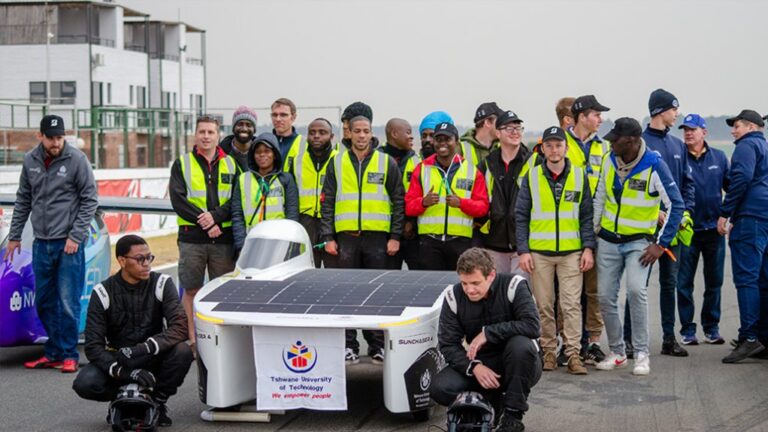
TUT team wins South Africa’s first closed-track solar vehicle challenge

THE Tshwane University of Technology (TUT) Solar Team were declared the winners of the first ever Ilanga Cup Solar Challenge, which took place at the 4.2-km-long Red Star Raceway, in Delmas, on July 21.

“We would like to congratulate the TUT Solar Team for winning the first event of the Ilanga Cup. The weather was not solar-car friendly but the team persevered,” Ilanga Cup director Robert Walker said.

He attributed the team’s success to the science, technology, engineering and mathematics skills in the team that enabled them to endure both the sporting and the weather-related challenges.

The Ilanga Cup is Southern Africa’s first closed-track endurance circuit event, which is focused on promoting innovations in renewable and alternative energy.

The event is aimed at providing an enabling environment for local solar car teams to put their solar vehicles to the test in a controlled environment. The event is designed and focused on measuring the vehicles’ performance, efficiency and durability.

The Ilanga Cup, which will take place yearly, serves as a platform for solar car teams – professionals and amateurs alike – to not only test their solar cars but also learn and improve both team and the vehicle’s dynamics.

Walker said the aim of the event as a closed-track event was to make solar car competitions more accessible to new entrants to the game because open road competitions were difficult to enter successfully.

“The goal really is to create a pipeline of young engineers who can find their way into the industry and can then design the cars of the future, which will be more efficient and more environment-friendly. The goal is to let them test out their ideas and develop technology that will find its way into the commercial car market,” Walker told Engineering News.

The event was sponsored by tyre manufacturer Bridgestone and acted as a stepping stone for contestants to enter the Bridgestone World Solar Challenge in Australia.

“The . . . event aligns with our goal as a global company to be a leader in sustainable mobility solutions. . . we are interested in the development of solar energy and solar mobility,” Bridgestone Southern Africa motorcycle and motorsport key account manager Shailesh Singh explained.

One of the main goals of the Ilanga Cup is for the teams to vie to be selected to participate in the Sasol Solar Challenge, from where the top-performing teams will be selected to compete on a global level.

The Ilanga Cup saw three teams going head-to-head in an endurance challenge whereby their self-designed, unique solar-powered vehicles competed in a friendly contest to raise awareness about and promote the viability of the technology used in the vehicle, while also providing an opportunity for the participants to grow in their understanding of how solar technology can be used to power vehicles.

The aim of the contest was to see which team’s vehicle could travel the furthest over an eight-hour period.

The TUT team’s Sunchaser IV managed to travel 390 km during the eight-hour-long endurance challenge, comprising 93 laps at an average speed of 48 km/h, with a top speed of 101 km/h. This included a mandatory pit stop of five minutes every time the team swapped drivers every two hours.

“The Ilanga Cup was a great event to test Sunchaser IV to its limits and it was an honour to connect with other solar car teams in preparation for the 2022 Sasol Solar Challenge. We are really looking forward to the next event and encourage young and old to become a part of the e-mobility community,” the TUT Solar Team managers said upon being named the winners.

The Sunchaser IV, which has an overall vehicle mass of about 165 kg, used a 20 kg, 5 kWh lithium-ion battery array, equivalent to four deep cycle batteries totalling 100 kg. The aerodynamic drag on the body was clocked at 0.1, compared with the Tesla Model S which has a drag of 0.24.

The solar panels used on the Sunchaser IV were 0.7 mm thick and 24% efficient, compared with average household solar panels which are about 38 mm thick and 16% efficient.

With full sunlight, the car is capable of travelling more than 500 km, reaching top speeds of well over 120 km/h on the open road. With no sunlight, the total distance achievable is about 250 km before the batteries require a recharge.

The Sunchaser IV made use of specialised Bridgestone solar tyres, which were designed to complement the low rolling resistance, durability and surface adhesion required to keep solar vehicles as efficient as possible.

The lower the rolling resistance of the tyre, the lower the energy consumption of the car and the carbon dioxide emissions produced. These technologies are currently being used in the tyres Bridgestone supplies to select manufacturers on their latest electric and hybrid vehicles.

The other teams that competed on the day were the North West University Solar Team with its Naledi 2.0 solar vehicle; and the newly formed high school team, the Genuine JV Solar Car Team, which competed with the Voltwagen solar vehicle, which is an adapted version of TUT team’s 2016 Sunchaser II model.

Walker explained that the Red Star track presented a different set of challenges for the vehicles than what might be experienced on the open road, most notably the strain on the motor controller from the constant braking and acceleration/deceleration required on the tracks’ many twists and turns.

Additionally, the overcast weather on the day of the event forced the teams to implement creative problem-solving to keep the cars moving.

“Next year, we hope to bring a specialised solar car tyre for these teams, so that they all run on Bridgestone tyres. We are supporting this because I have no doubt that we will see solar energy finding its way into vehicles in the future,” Singh said. 

Engineering News

Schools can be a great resource for mental health in South Africa

IN the face of deep inequality, unemployment, high rates of crime and violence, and the social and economic fallout from the COVID-19 pandemic, the mental health trajectory for young South Africans looks bleak.

Mental health is multi-faceted. It enables people to cope with the stresses of life, realise their abilities, learn well and work well, and contribute to their community. When people face social and economic adversity, their risk of developing mental illness increases if they don’t have support that could protect them.

Data on the exact burden of child and adolescent mental disorders in South Africa is limited. But it’s clear that many children are failing to thrive, due to widespread violence, discrimination and poverty.

Since 2005, the University of Cape Town’s Children’s Institute has published an annual report, the South African Child Gauge. The publication has a different theme every year and strives to bring into sharp focus the rights of South African children.

The latest issue of the South African Child Gauge focuses on child and adolescent mental health. It explores how early experiences of adversity ripple out across the life course and future generations, at great cost to individuals and society.

Schools as points of contact

South Africa is one of the most “unequal” societies in the world, with children and adolescents facing different threats to their futures. But one thing they have in common is that most are enrolled within the country’s education system.

Schools and educational institutions are therefore a precious resource for mental health.

In the chapter we contributed to the 2021/22 South African Child Gauge, we describe the current and potential role of these institutions in promoting and protecting mental health in the South African context. We consider existing policies, provisions and challenges. And, using case studies, we highlight opportunities for intervention in the education system to address gaps in psycho-social provision and support.

Children and adolescents’ well-being is deeply rooted in the environments they live and function in. We hope that with this chapter, policymakers and implementers will appreciate and act on schools’ powerful potential to promote and protect young people’s mental health.

School-based interventions

Schools have many advantages as centres of care. They have existing infrastructure. They are generally well-linked to the communities they serve, and to local and provincial governments that govern how they work. They tend to be a contact point between teachers, learners, parents and caregivers, and other community organisations and services. They are staffed by people trained in child and adolescent learning and development. They also offer formal opportunities for ongoing professional development.

Schools provide support to learners living in fragile families. Supportive child-teacher relationships can protect mental health. It’s also known that school-based interventions can be delivered effectively by mental health professionals, teachers, paraprofessionals, lay counsellors and peers. Schools are often more accessible – and less stigmatised – than specialised mental health services.

A learner who feels connected to their school – who feels accepted, respected, and included in the school – is more likely to experience a sense of belonging and positive self-esteem. They are likely to be able to regulate their emotions, and have motivation to achieve.

For all their potential, though, schools exist in complex systems involving multiple stakeholders. Structural issues such as poverty, violence, and social and gender inequality greatly influence how they operate. They also tend to be overburdened and have limited capacity to provide mental health support. These factors in turn affect child and adolescent mental health.

Schools can also be environments where children and adolescents are exposed to negative influences, including abuse and violence from peers and teachers.

Care at all levels of education

Mental health support in schools should respond to a learner’s context, age and developmental stage. The continuum of care should cover the promotion of positive mental health, prevention of mental health conditions and access to treatment and recovery services.

South Africa has a well-developed policy response to address learners’ needs. But there are unique challenges influencing implementation at each stage and some areas that require additional attention.

For example, national early childhood development policies make provision for health screening and support services, but are less focused on early identification and referral. Building teachers’ skills to identify behavioural problems is an effective strategy that has worked in other low resource contexts. Early childhood development centres are a good place to reach parents and caregivers and put them in contact with services.

At primary school level, policy provides for screening and psycho-social support, and provides linkages to primary healthcare facilities. Health education curricula include topics relating to mental health. Future investments could focus on training of health personnel and educators to implement school health policy. It’s also important to prevent bullying and promote school-connectedness.

Similarly, at secondary school, there are provisions for screening and psycho-social support, other health services, school safety and health education. Schools are required to provide counselling and support for pregnant and parenting girls. Practical difficulties in implementing these policies can sometimes be overcome by linking with community-based programmes.

There is no overarching policy response for mental health in higher education in South Africa, but various tertiary institutions have their own policies. They generally include a commitment to providing services to students experiencing challenges.

Priority areas

Across the different stages of education, our research identified some priority opportunities to improve mental health.

  • Focus on transitional periods – moving to a new learning environment can be stressful in various ways.
  • Address racism, sexism and discrimination – examples of programmes include Teaching for All, which has been widely rolled out in South Africa.
  • Support educator well-being – South African educators experience high levels of stress at work and often do not feel equipped to deal with issues.
  • Include learners with disabilities – they are at increased risk of developing mental health disorders.

While it’s clear that schools and other educational institutions face a number of challenges, future efforts could draw on existing resources and evidence to incrementally provide the type of mental health support that young people in South Africa need.

Dr Sarah Skeen and Kelly Gemmell are contributors to the South African Child Gauge 2021/2022. This annual report on the status of South Africa’s children is published by the Children’s Institute, University of Cape Town in partnership with the DSI-NRF Centre of Excellence in Human Development, University of the Witwatersrand; UNICEF South Africa; the Standard Bank Tutuwa Community Foundation and The LEGO Foundation.

Heat risk and young athletes — rising temperatures lead to lawsuits and environmental injustice

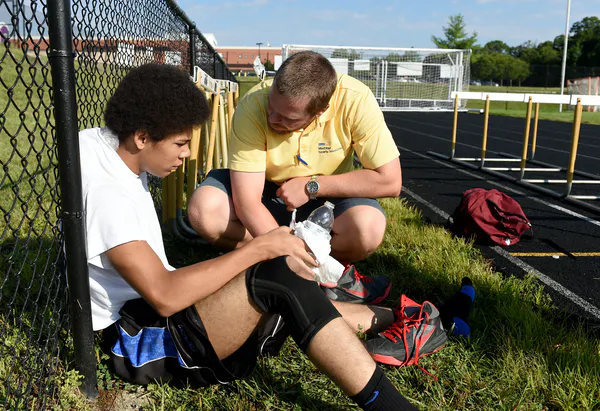
At least 50 high school football players in the U.S. have died from heat stroke in the past 25 years. And high school athletes in other sports are not immune from the risks – female cross-country athletes are twice as likely to suffer from heat-related illnesses as athletes in any other high school sport.

The numbers are especially shocking when you consider that heat-related illnesses and deaths are entirely preventable.

While sports equipment has improved over time to protect against concussions, young players and college athletes are facing increasing risks from rising heat.

We study sport ecology and legal aspects of sport. With summer temperatures rising, we believe many youth sports leagues and school districts will need to aggressively update their practice rules and heat policies to keep their players safe. We suggest particular attention be paid to low-income, minority neighborhoods and regions that can get excessively hot.

Heat risks in youth sports

Each year, summer marks the return of discussions of just how severe the sweltering heat is. Nine of the 10 hottest years on record globally have been since 2012, and this year’s late-spring and early-summer heat waves were previews for what forecasters warned would be a brutal summer of 2022.

Yet many interscholastic and preparatory sport summer camps have kids running hard through the summer months, sometimes on days that reach triple-digit temperatures.

In a period of rapid climate change, ensuring heat risks remain preventable is critical.

Heat risks in youth sports

Each year, summer marks the return of discussions of just how severe the sweltering heat is. Nine of the 10 hottest years on record globally have been since 2012, and this year’s late-spring and early-summer heat waves were previews for what forecasters warned would be a brutal summer of 2022.

Yet many interscholastic and preparatory sport summer camps have kids running hard through the summer months, sometimes on days that reach triple-digit temperatures.

In a period of rapid climate change, ensuring heat risks remain preventable is critical.

Heat is the most frequent climate-related killer in the United States, with more deaths associated with it than tornadoes, floods and cold temperatures. And days of extreme heat and humidity are now surpassing concerning levels for human health. Overall, the Centers for Disease Control and Prevention reported an average of more than 700 heat-related U.S. deaths each year between 2004 and 2018. Some of the hottest years ever recorded have happened since then, and preliminary data detailing heat deaths in the U.S. indicates the rate increased 56% from 2018 to 2021.

Extreme heat due to climate change is making sport participation progressively challenging.

For high school athletes, the prevalence of extreme heat is leading to escalating heat-related illness, injuries, hospitalizations and deaths. In fact, heat stroke is a leading cause of death in sports.

Unsurprisingly, the greatest concentration of heat illness in young athletes occurs in August: the back-to-school and back-to-sports season.

When heat risks trigger lawsuits

Recognizing the warning signs can be especially challenging for children and teens. Young people are still learning how to communicate their feelings and experiences, and that can be more difficult in sport environments that promote toughness and perseverance. Ultimately, young athletes must trust adults to protect them.

Evidence suggests the prevalence of exertional heat stroke among high school athletes is largely due to young athletes’ not acclimatizing, or physically adjusting to the heat, particularly in the first few weeks of practice. Although heat policies related to temperature and hydration exist at the high school level, they aren’t always enforced. And they may need to be improved to reflect the warming climate given the rate of heat illness.

As a result, parents and guardians are faced with how best to advocate for their children.

In some cases, families have sued after heat injuries, both to recover money for their child’s suffering and to drive change in the hope that no other child will have to endure what others have. However, the heat injuries continue to rise.

Adults’ responsibility to keep children safe in sport settings becomes blurry as the growth in legal challenges related to heat illness demonstrates a disconnect between adults’ duty of care and athletes’ well-being. Negligence is a common claim associated with these lawsuits. Allegations of child endangerment or wrongful death can lead to civil or criminal legal disputes. But can reactive legal action prevent these heat injuries in the long run?

The fact that heat injuries are preventable is often why legal cases alleging negligence and wrongful death are successful. Still, heat stress, heat exhaustion, heatstroke and sunstroke are not uncommon in sports. Medical researchers have described heat illness among athletes as one of the most prominent pieces of evidence of climate change’s hazards and effect on sport.

Climate injustice for young athletes

Extreme heat can also enhance existing injustices and inequities.

For example, non-Hispanic Black Americans suffer heat-related deaths at a rate higher than the U.S. average. That doubles for Indigenous and Native Americans, who report the highest death rate from heat.

For athletes, the consequences of extreme heat can further complicate environmental and climate injustice. For instance, racial minorities and those in lower socioeconomic brackets have greater chances of living in the warmest areas, including urban heat islands, where heat trapped by pavement and buildings can make temperatures several degrees hotter than the city average.

At the same time, efforts are underway to diversify the sport landscape and provide equitable access to sport and recreation for all people. A vicious cycle spins between social justice – efforts to diversify sports – and environmental and climate justice, in which the most vulnerable communities face the greatest climate harm and health risks but are underresourced and ill-equipped to adapt to the changing climate.

Moving forward

Sports leagues and athletes have taken a stand on many social issues, but they are often reactive when implementing and advocating for change.

For instance, leagues implemented regulatory policies regarding brain safety only after countless tragedies. People began to focus on traumatic brain injury and chronic traumatic encephalopathy after the deaths of numerous NFL players and a blockbuster film.

The heat-related deaths of collegiate and NFL football players, notably Minnesota Vikings player Korey Stringer, have drawn some attention to the risks. Tokyo 2020 Olympians and FIFA World Cup organizers have cited the need for regulatory changes because of the effects of extreme heat on athlete health. But it’s often only after a tragedy that improvements are made to protect young athletes from heat illness.

The sport sector can make immediate practical and policy-related adaptations to extreme heat to protect children. These include modifying practice schedules, increasing the number of water breaks, revising athletic heat policies to reflect climate change, and implementing procedures to ensure compliance by coaches and athletic administrators.

Texas A&M students Ariana Taylor and Ashwin Mathew in the DeBakey Executive Research Leadership Program contributed to this article.

(Jessica R. Murfree, Visiting Assistant Professor of Sport Management and ACES Faculty Fellow, Texas A&M University)
(Natasha Brison, Assistant Professor of Sport Management, Texas A&M University)

THE CONVERSATION

Teachers, learners at Kimberley school concerned about escalating gang violence

TEACHERS and parents at Greenpoint High School near Kimberley in the Northern Cape are fearing for their lives and their children’s lives, following the escalation of gang violence at the school. Gang-related attacks have been going on since the beginning of the year.

A learner at the school was stabbed on Wednesday in another gang violence incident which led to the school’s closure.

The School Governing Body Chairperson Leon Monyobo says thirty learners involved in gang violence have been suspended pending disciplinary action.

“As the SGB members, we are going to be here not on a daily basis but I’m always here to look for the safety (of the children)and so on.  We have given them their suspension letters – and they will realise that the thing that they have done is wrong. We have suspended them for seven days now and we are going to go to the disciplinary hearing. And when we are done with that they will realise that this problem that they cause at school, we cannot tolerate it.”

The Department of Education in the Northern Cape says its educational support team has been deployed to Greenpoint High School in Kimberley to give counselling to the learners and teachers.

A teacher who was held hostage on Wednesday when gang violence erupted again at the school, is currently receiving counselling and has been put on sick leave.

The Department of Education’s HOD Moira Marais elaborates.

“We have sent out our education support team to help with the counselling of the learners. And the teacher that was held hostage was allowed to go on sick leave and she is receiving counselling. And the learners also, we need to have intervention programmes at the school. But on Sunday, there will be a meeting with the community and we roped in the councillor.”

Additional reporting| SABCNEWS

A private high school in Johannesburg opens a R3-million eSports Arena, largest in Africa

CENTENNIAL Schools is the brainchild of Shaun Fuchs who used his 31-year experience in education to reimagine what a high school should be. It was created as a result of the pandemic, combined with the challenges that South African educational systems face.

Fuchs previously served as managing director of Reddam House Schools, general manager at Crawford College and the Centurus Colleges Group and headmaster at Crawford Lonehill.  

The school believes the last decade has highlighted how behind the times teaching methods are, but it was the Covid-19 pandemic and lockdown that amplified the need for change.

The result is a high school where students don’t have to wear a uniform nor write an entrance exam, but will be interviewed by the school principal, and learn through Microsoft software, take a time out if they are under stress. Each student needs an Asus laptop to attend classes, available in three pricing tiers, a cost excluded from its annual fees. 

The eSports aspect, which forms part of the curriculum, along with other additional masterclasses, is to prepare students for the modern world. 

Centennial Schools says skills learnt through eSports include strategic thinking and planning, managing success and failure, time management, working with others, social skills, and pro-social values.

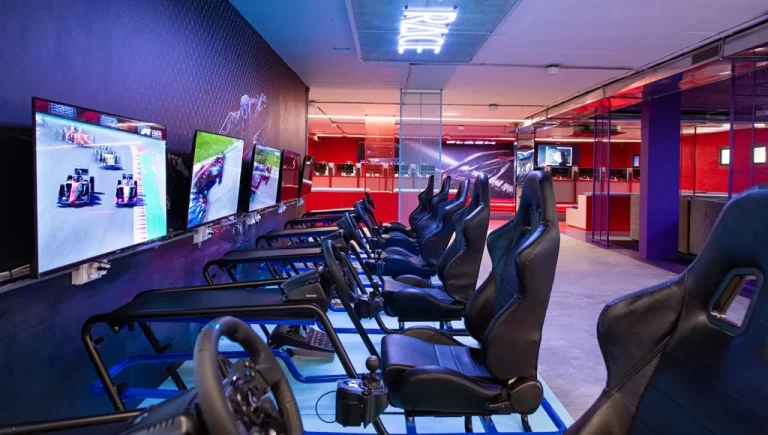
The 300m2 lab is equipped with more than 30 state-of-the-art Asus Republic of Gamers (ROG) gaming machines, screens, and gaming chairs. It runs on a 1Gbps fibre connection with back-up generators while there is load shedding.