Home Blog Page 254

Intel, Naptosa unite to get SA teachers digitally-ready

INTEL and teachers’ union the National Professional Teachers’ Organisation of South Africa (Naptosa) have signed a memorandum of understanding (MOU), to meet the rising demand for digital skills for the country’s educators.

Signed in Johannesburg yesterday, the MOU sees the entities take the first steps towards kick-starting the Intel Skills for Innovation Programme (SFI) in SA, which aims to support inclusion of tech in education systems.

According to Intel, the SFI programme aims to equip teachers with the skills they need to expose their learners to emerging technologies from early in their education.

Furthermore, the company says exposure to new technology-based learning will aid in preparing learners for more complicated technology skills and lay the groundwork for a new generation of innovators capable of competing in a digital economy.

Launched last year, the SFI programme has already been implemented in over 30 countries, with over 10 000 teachers engaged with the programme’s content, according to Maurits Tichelman, Intel VP of sales and marketing and GM for EMEA territories.

He explained the intention is to help Naptosa-affiliated teachers infuse technology into everyday learning and teaching, to ensure today’s learners are equipped with skills for a technology-driven workforce of the future.

“The future demands a new set of skills. For hundreds of years, educators have been using books, papers and pencils,” he stated.

“New technology resources need to be just as reliable and just as easy to use, and be able provide a richer experience. A richer experience will allow our children to be much more creative, learn easily and have the visualisation and interaction available to them.

“This initiative will help current teachers to upscale and have the capabilities to tap into innovation and new technologies.”

Tichelman indicated Intel intends to scale the SFI programme even further in the upcoming years.

The South African education old guard has, over the years, tried to ramp-up ICT and e-education adoption.

The Department of Basic Education and provincial education departments have attempted to do this by supplying electronic devices to learners and teachers, including access to e-learning programmes, to digitally upskill and prepare the future workforce.

This process, however, was snowballed by the advent of COVID-19 in 2020, as teachers and learners had to resort to remote learning to keep up with the academic year.

Industry commentators have also been vocal that decision-making stakeholders in the education system should, at the very least, consider blended models of teaching and learning, in the wake of the pandemic.

Basic education minister Angie Motshekga previously stated the Commission on ICT, digitisation, e-education management, distance learning and online schools found the COVID-19 pandemic has dictated a review on how the basic education sector conducts business.

At the MOU signing, a Naptosa official expressed that a lot of the teachers struggled with the move to online education, as a result of the pandemic.

Through the programme, the teachers’ union also wants to improve teacher-confidence in terms of engaging with technology, said the official.

“Naptosa opted for the Intel programme because it aims to equip teachers with basic-to-advanced digital skills. It’s a four-level programme, with level one providing the basic computer literacy skills, going up all the way to level four.

“The rollout plan has been for us to train master trainers in all of the nine provinces, which is the first step that we have done. The first stage has been completed.

“We’ve identified Eastern Cape, Northern Cape, Free State, Western Cape, KwaZulu-Natal and Gauteng provinces where the programme will be rolled out.

“Going forward, we want to take it to other provinces, and our master trainers are excited about implementing the training and showing teachers how to bring technology within the classroom and making it a part of everyday learning,” the official concluded. 

ITWEB

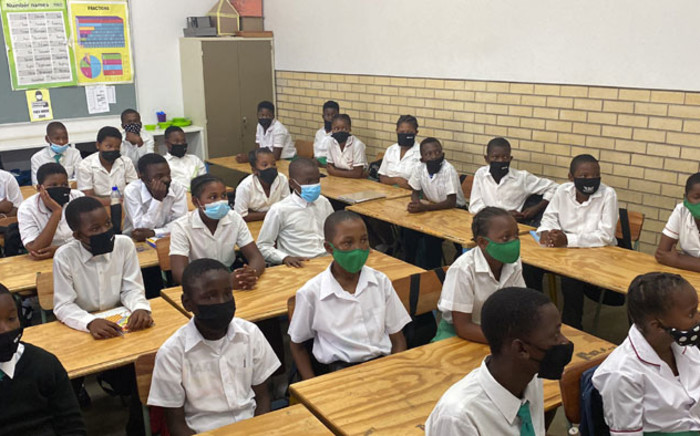
Cape Town is changing its school timetables – what you should know

THE Western Cape Education Department (WCED) has announced new interventions to address severe learning losses caused by the Covid-19 pandemic.

This will include time allocation for mathematics and reading each week in the foundation phase (grades 1 to 3), it said.

“These are the grades that were most severely affected by the Covid-19 pandemic, and we must do everything we possibly can to ensure that our youngest students are not disadvantaged in later grades.

“The intervention will see an extra two hours per week allocated to reading and one extra hour per week for mathematics, for all foundation phase students in the province – amounting to an increase of at least 60 learning hours per student in the subjects over the remainder of the year. The intervention will support other recovery plans that are already underway.”

These increases will be accommodated by adjusting the amount of time allocated to Life Skills, so the intervention will not increase the length of the school day, the department said.

“We recognise the importance of Life Skills teaching in the development of our students. It is therefore important that the remaining time for the subject be used effectively within the new timetables.”

Lost time 

Data provided by the department earlier in 2022 shows severe learning losses associated with the pandemic.

“While we had previously made great progress with a steady increase in performance in years preceding 2020, these gains have unfortunately been reversed.

“The greatest learning losses can be seen in the Foundation Phase. We have always maintained that the loss of contact (face-to-face) teaching time would affect our youngest students the most as they do not have the same self-discipline, maturity or structure that our older students would have to cope with rotating timetables and learning at home. ”

Comparing the 2021 and 2019 systemic test results, Grade 3 pass rates in mathematics dropped by 13.8 percentage points, and in language by 8.0 percentage points. These learning losses will have serious knock effects as these students progress through their school careers, the department said.

“A minute will be sent to schools outlining what is required and providing suggested timetables when implementing the intervention. All foundation phase teachers will participate in a webinar on Monday (25 July), to take them through the intervention before it is implemented.

“The intervention will be monitored over the remaining weeks of the school year, and a review report will be produced to inform the steps we will take in 2023. Schools that have already made their own adjustments to address learning losses in this phase will have the opportunity to request exemption from the change, if they can demonstrate that they are effectively addressing the losses.”

BUSINESS TECH

Gauteng education’s online admissions suffer systems glitch

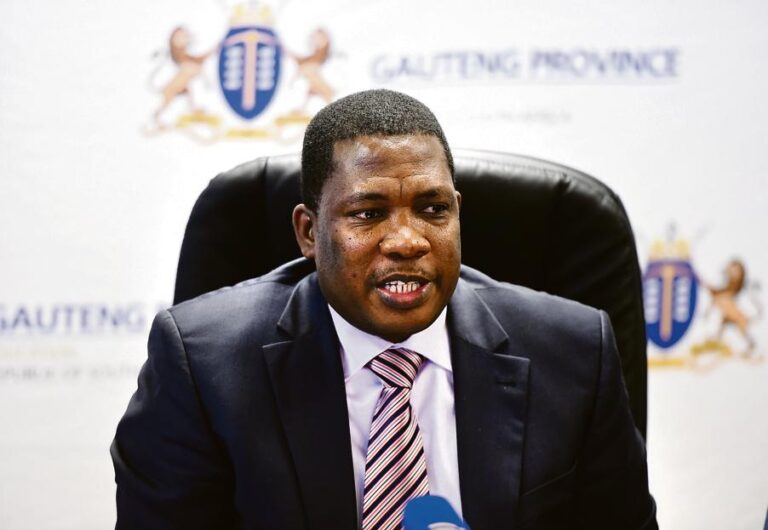
WITH the 2023 online admissions for grades one and eight starting today, Gauteng education MEC Panyaza Lesufi has revealed the system has undergone technical upgrades to prevent any hiccups.

However, there appears to be system failures already, with some parents expressing their frustrations on social media app Twitter this morning.

According to the parents, the Gauteng Department of Education’s (GDE’s) online admission system is not allowing new registrations or logging-in, schools are not appearing, the system doesn’t recognise the feeder zones, and there is an inability to select home language and preferred language, to list a few of the issues.

The GDE also tweeted: “Google Maps has temporarily removed us from their system for having reached a maximum of 6 000 requests per minute.”

The department further stated it’s working on “increasing the capacity to 20 000 requests per minute”, promising to resolve the issue within 30 minutes.

The GDE’s schools online registration system for grade one and eight learners was initiated to prevent long queues and encourage a tech-savvy school registration process.

The system has, however, been plagued by a number of recurring challenges, including an inability to handle multiple users at a time.

Speaking on talk station Radio 702 yesterday, Lesufi stated improvements to the system will mean the application process will be “easier and smarter” this time around.

According to the provincial education department, the Department of Home Affairs opened a secure dedicated portal to handle the requests from the system.

“We’ve linked up with major government portals – the Department of Home Affairs as well as the GPS system, so that parents don’t have to spend time typing in their names or their addresses,” said Lesufi.

“We’ve also strengthened the technical capability of it. We can take 40 000 people [applications] at the same time, so that there is no element of the system crashing, hanging or not functioning. We’ve also ensured we can extend this to 120 000 complete applications within an hour.”

The 2023 Gauteng schools online registrations opened today and close on 19 August.

ITWEB

Nelson Mandela Day reminds us that the future is in our hands – Ramaphosa

CYRIL RAMAPHOSA|

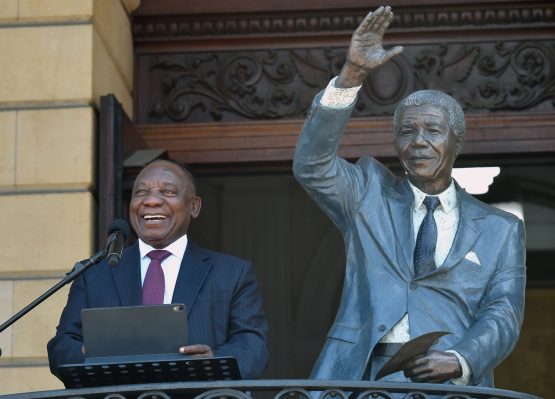
TODAY is Nelson Mandela Day, which is commemorated in South Africa and around the world.

In honour of the birthday of the founding father of our democracy, we are called on to dedicate 67 minutes to doing good works, serving others and making a difference in our communities.

At a time when so much of the world is beset by hardship and strife, we are inspired by Madiba’s words that “it is in our hands to make a difference and to make the world a better place”.

Across the length and breadth of our country today, South Africans are taking Madiba’s message to heart. They are making a positive contribution. They are volunteering in shelters and care facilities. They are helping to feed and clothe the needy. They are helping to clean their communities. They are performing acts of kindness and service, both big and small.

Nelson Mandela Day is about inculcating a culture of service that lasts beyond the 67 minutes every year on the 18th of July.

This is a difficult time for our country.

We are in the midst of an energy crisis that is causing great hardship. A spate of violent crimes is heightening fear and insecurity in communities. Even as our economy is recovering from the impact of the COVID-19 pandemic, poverty and unemployment is taking a heavy toll on millions who are struggling to make ends meet. Corruption has eaten away at our nation’s soul and has severely eroded the social compact between the state and citizens.

Nelson Mandela Day is an opportunity to remember that these problems, like so many we have faced before, are not insurmountable. They can be overcome.

This day is an opportunity to recommit ourselves to upholding the values Madiba stood for and to building the South Africa to which he dedicated his life.

He always reminded us that there is no easy walk to freedom and that we share a common responsibility for nation-building.

Time and again, we have been pulled back from the brink by the activism and resilience of our people. Community, faith-based and grassroots organisations have acted in defence of human rights, our Constitution and the interests of our citizens.

At times when the state has faltered, it has been civil society that has reminded us of our obligation to advance the ideals for which Madiba and generations of freedom fighters made such sacrifices.

The programme for democratic renewal launched by a group of civil society organisations earlier this month, which calls for people’s power to be re-ignited, is to be welcomed.

It is a call for communities to organise and mobilise around economic inclusion, social and climate justice and ethical behaviour.

Many civil society organisations are rooted in our communities and have the keenest appreciation of the struggles of our people. Engaging and working with government to overcome the challenges in our society is what participatory democracy is all about.

During the COVID-19 pandemic, this collaboration between government, civil society and other social partners was instrumental in responding to a dire health emergency and providing support to society’s most vulnerable. Such partnerships are vital as we strive to rebuild our economy.

Building a better South Africa requires each and every one of us to make a contribution in whatever way we can. Defending our democracy begins with individual acts, like joining a community policing forum, volunteering at a charity or a shelter, reporting crime or refusing to pay a bribe.

Let us evoke Madiba’s ‘new patriotism’, where South Africans are determined to work together and make our country a winning nation. We cannot leave it to others to realise the South Africa of our dreams. The future of our country is indeed in our hands.

Wherever you may be today, I wish you a happy and meaningful Nelson Mandela Day.

From the desk of the President

Marikana schools beat the odds, produce good results

DESPITE all the odds, the Marikana Schools situated in Marikana in the North West province, continue to produce good results.

The learners who are mostly from the informal settlements are committed to their studies.

The Marikana High School takes pride in its academic, socio-economic and cultural diversity.

The school ensures that all the learners are congratulated for their efforts and dedication to achieving personal success.

The Marikana High School enjoys multiple accolades, parents reviews and exceptional ratings from all corners of the community, and all that is made possible by a dedicated Principal Me Moeng and 23 dedicated teachers.

During a recent visit at the school, School Deputy Principal Vuyani Sihele, told SAnews that the school has a total of 250 learners.

He explained that the school initially used to produce 100 percent pass rate but as time goes by, the results started declining and now stand at 84 percent.

“After the Marikana incident, the results started declining but the teachers are doing their best to maintain the high pass rate,” he said.

He urged parents to be fully involved in their children’s education as he believes that this would improve the results to be much better.

Sihele urged parents to always encourage their children to do their school work and study.

“We as teachers working together with the parents, can produce far much better results,” he said.

Sihele said some of the learners are from child-headed families and despite that are doing well in their studies.

At nearby Marikana 2 Primary School, School Principal Andrew Phuza, told SAnews that the school has a total of 1039 learners and 27 educators.

The school was built by Lonmin mining company in 2018. This was to relieve pressure from the Marikana High School as the learners were accommodated at the school.

The learners’ performance is good and the teachers are doing their best to assist the learners,” Phuza said.

Since the school opened the doors, it has been a place where learners in the North West and beyond, ethnic and cultural diversity.

According to Phuza, crime in the area does not deter learners and teachers from focusing on education.

“We appeal to members of the community to assist by identifying those that are involved in criminal acts, vandalizing and stealing from the school,” he said.

Phuza said although they have about 200 undocumented learners, their performance is good.

Evelyn Seloale Botsheleng told SAnews that the learners at the school are performing very well.

“Although some of them do not understand Setswana, they are doing very well. We appeal to parents to teach the learners setswana,” Botsheleng said.

Member of the School Governing Body, Victor Molele, told SAnews that he is happy with the school.

“The school recently obtained a clean audit. I am happy that we are using the school monies in a good way. That shows staff dedication in their work,” Molele said.

The nationalities in Marikana includes Lesotho nationals, Mozambique and Xhosa speaking people. The majority of them are employed at the nearby Sibanye mine.

Most of the learner’s parents are working at the nearby Lonmin mine. Most learners lost their parents (fathers) in 2012 during a stand off with the police. More than 30 people were shot and killed by the police.

The Marikana massacre resulted in thirty-four miners losing their lives on 16 August 2012.

At the time of the incident, the miners were heading back to the koppie where they had been gathering daily to protest for a salary increase to R12 500 a month during the wildcat strike.

SA NEWS

Science Corner| 24 South Africa Women to Join 2023’s Women Techsters Fellowship Class

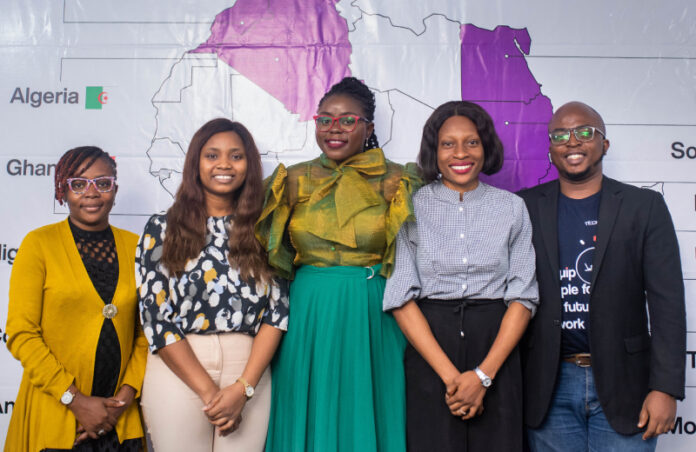
A total of 24 women from South Africa have been admitted to the class of 2023 of the Women Techsters Fellowship, Technology for Social Change and Development Initiative (Tech4Dev) has announced in Lagos, Nigeria.

The Women Techsters initiative is aimed at bridging the digital and technology knowledge divide between men and women as well as ensuring equal access to opportunities for all.

The fellowship received a total of 158 applications from South Africa, while only 24 sailed through the rigorous requirements needed to become a beneficiary.

In all, a total of 1,466 beneficiaries were admitted to the Class of 2023 of the fellowship from a pool of 14,509 who applied from 15 African countries which equals to about 10 percent of total applications.

The Women Techsters Fellowship is a free experiential technology learning and upskilling program for young girls and women between the ages of 16 to 40 across 15 African countries.

A total of 1,167 women from Nigeria were admitted into the program out of 10,912 who applied. Kenya had the second highest number of beneficiaries 68 while 48 Ghanaian women were accepted into the program.

Ethiopia has 32 beneficiaries in the program, Uganda has 29, and 24 South Africans have also been admitted for the 2022/23 calendar year. Egypt has 24, Mozambique 12, Madagascar 12, Tanzania 11, Algeria, and Sudan have six apiece.

Angola and Morocco have 4 students each in the program while DR Congo has a total of three students in the program.

However, 16 beneficiaries from other countries around the world not captured in the original list of 15 African countries were also granted admissions.

The women will be trained in Mobile Development, Software Development, Product Design, Product Management, Cybersecurity, Data Science/ Artificial Intelligence Engineering, Blockchain and Mixed Reality/3D.

Speaking at the announcement press conference, Women Techsters Initiative Lead, Blessing Ashi, revealed that the process of selection was rigorous as the program requires only the best and most dedicated fellows.

“We started the registration process in March 2022 and we had three stages of assessments for the beneficiaries and I can categorically say that we have selected the best based on the performance of beneficiaries across all the three stages,” said Ashi.

“I want to say congratulations to everyone who made it this far and I hope that the skills to be acquired during this learning phase will stand you out amongst your peers. Stay true to the program and I wish you the best.”

Co-founder and Executive Director at Tech4Dev, Oladiwura Oladepo, encouraged the beneficiaries to give their all to the program.

“Congratulations for making it into the fellowship but I must tell you that this is the time to put in work because without putting in the effort, success may not be guaranteed. It takes long hours, sometimes sleepless nights but I can assure you that success is just around the corner if you stay dedicated,” Oladepo said.

He continued that Tech4Dev’s goal is to train 5 million women across Africa by 2030 and that the company believes that when the call for application comes for the next fellowship calendar, it will have not just more applicants from South Africa but more beneficiaries.

The Women Techsters Fellowship, launched in 2021, is a year-long immersive training and experiential learning program for young girls and women across Africa to acquire deep tech skills through 6 months of intensive training, 6-month internship, and mentorship.

In its first year, the Women Techsters Fellowship received over 4,800 applications from 19 countries and accepted 338 beneficiaries into the program, which is a 7% acceptance rate from 5 countries: Nigeria, Ghana, Kenya, Egypt, and South Africa.

The Women Techsters initiative is aimed at bridging the digital and technology knowledge divide between men and women as well as ensuring equal access to opportunities for all.

ITNEWSAFRICA

SA’s barefoot children wear ill-fitting school shoes – study

ALEC BASSON|

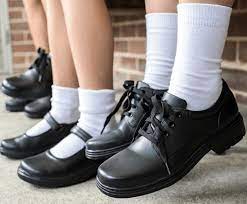
MANY children in South Africa run the risk of developing foot abnormalities such as hammer-, clawed- and retracted toes and heel spurs because they wear school shoes that don’t fit properly.

This is one of the key findings of a new study at Stellenbosch University (SU).

“Our research shows that habitually barefoot kids wear school shoes that are either too short, too long or too narrow for their feet. Wearing ill-fitting shoes regularly can have a negative impact on the development of their feet which can lead to various foot abnormalities, and musculoskeletal problems such as lower back pain later in life,” say Marise Breet and Ranel Venter from the Department of Sport Science at SU. They set out to determine if the length and width dimensions of prescribed school shoes match the foot dimensions of habitually barefoot children.

The findings of their study were published recently in BMC Pediatrics.

​Breet and Venter measured the feet of 698 kids (431 girls and 267 boys) between the ages of six and sixteen in urban and rural schools. They also measured the length and width of different brands of school shoes currently available in stores. The maximum heel-toe length (HTL) and foot width with an added 10 mm toe and width fit allowance to each participant were compared to the corresponding school shoe length and width.

“Our results show that, comparing the shoe length and maximum heel-toe-length of participants, as well as taking 10 mm toe allowance into account, 59% of children wore shoes that were not the correct length. With regards to the shoe width and the added 10 mm of width fit allowance, 98% of the shoes worn by the children were too narrow for their feet.

“Given the width dimensions of the shoes in our study, many children in South Africa will not have the option of a school shoe with a wider forefoot, as this is not available. Habitually barefoot children have a wider forefoot than those who wear shoes on a regular basis.”

According to the researchers, there are several possible reasons for the prevalence of ill-fitting shoes.

“Recent research has indicated toe and width allowances are not applied effectively. Often too much or too little space is left for the toes inside the shoe to ensure a correct shoe fit. The recommended toe allowance of 10 mm should be considered in addition to the HTL of the child to guarantee the correct fit for shoe length.

“Our shoe manufacturers use a shoe design based on the British system, using foot length as the basic measurement. In this system, each increase in foot length will correspond with a standardised increase in foot girth, based on European data.

“Also, the manufacturing of children’s shoes is often not predominantly influenced by orthopaedic and biomechanical research, but by fashion trends.”

The researchers add that the quality of information available on footwear fit and the rapid increase (up to 1,5 cm per year) in foot length in children between the ages of six and 14 years could also be reasons for ill-fitting shoes.

They recommend that shoe manufacturing companies consider the shoe width of school shoes for habitually barefoot children and adolescents to avoid the long-term negative effects of ill-fitting shoes.

“Shoe designs for these children should produce a shoe to fit the foot properly and mimic the natural shape and dimensions of the bare foot. This should help to enhance the healthy development of the foot.

“It should be pointed out, however, that shoe manufacturers don’t always have the right data to design a standard shape from available measurements. Consequently, they focus on shoe length as a basic measurement without considering the other dimensions.”

The researchers say their study advances and elaborates on existing views on this highly relevant issue, as it places the onus on shoe manufacturers to improve on the basic dimensions of available shoes for habitually barefoot children.

“Results from our study could help to create awareness of the current mismatch between these children’s feet and available school shoes and could also assist shoe manufacturers to make better-fitting shoes for our South African children and adolescents.”

​Source: Breet, MC & Venter, R 2022. Are habitually barefoot children compelled to wear ill‑fitting school shoes? A cross‑sectional study. BMC Pediatrics 22:187: doi.org/10.1186/s12887-022-03263-9

Grade 1 & 8 online admissions for 2023 academic year set to begin on Wednesday

WENDY MOTHATA|

THE Gauteng Department of Education (GDE) has announced that online admissions for Grade 1 and 8 would open from Wednesday this week until August.

Applications will open on 22 July at 08:00 and close on 19 August 2022 at 00.00.

The department said that parents will be able to apply to a minimum of three schools and a maximum of five schools for each learner.

The department said it has enhanced the online application so that it was more user-friendly.

In the past parents have raised concerns about the system and the challenges faced when trying to register their children.

“Parents cannot make more than one application for one learner to the same school. Parents must remember to read and accept the terms and conditions.”

The department said that assistance regarding online applications is available at any walk-in centre or school|
• Parents/guardians are required to provide one reliable cellphone number to receive a username and password, and other important information about the child’s application.
• All applicants need to remember to upload certified copies of required documents on the system or submit documents to the schools they applied to within 7 days of making the application.
• Parents/guardians are urged to log on to the system and accept offers of placement that will be sent via SMS from 3 October 2022 to 30 November 2022.

Application process

When applying for Grade 1 and Grade 8 during the 2023 GDE Online Admissions applications period, parents must complete the following 5 steps to submit a complete application|
• Step 1: Register parent details
Step 2: Register address details
• Step 3: Register learner details
• Step 4: Apply to a maximum of 5 Schools
Step 5: Upload or submit documents

Please note the following:
• Parents are encouraged to use home address within school feeder zone application option to see
schools with feeder zones that cover the parent’s home address
• To increase the chances of placement closer to the parent’s home address, parents should select schools with feeder zones that cover the parent’s home address

Documents needed

When applying, parents and guardians must have certified copies of the following documents and either upload them to the system or submit them physically only to the schools chosen when applying within 7 days of applying:
• Parent/Guardian ID OR Passport Child ID or South African Birth Certificate OR Passport
• Refugee Permit OR Asylum Seeker Permit or Permanent Residence Permit OR Study Permit
• Proof of Home Address
• Proof of Work Address (Optional, for those applying at a school closer to work)
• Latest School Report and Clinic Card/Immunisation Report (Grade 1 only)

Meanwhile, parents who wish to apply for Grade R, Grade 2-7 and Grade 9-12 at a public school in Gauteng for the 2023 academic year must apply directly at their identified schools and not on the GDE Online Admissions System.
The department has urged parents and guardians to interact directly with their identified schools to receive guidance on how and when to apply for these grades.

INSIDE EDUCATION

Mandela Day| Children from Asia, Africa cry for equal treatment for the poor, needy and less fortunate

VICKY ABRAHAM

THE cry of a majority of children in Africa and South Asia is equal treatment for everyone, especially the less privileged.

This is a message that came out strongly during interviews conducted by Inside Education with children from Botswana, South Africa, Nigeria, and India, as 166 cities globally are primed for the commemoration of the Nelson Mandela International Day on Monday, July 18.

Inside Education further motivated children to send a written essay or drawing of the late President of South Africa, Nelson Mandela.

Born on 18 July 1918, Nelson Mandela spent 27 years of his life incarcerated for his fight against racial discrimination meted out at black people by the apartheid government. Upon his release from prison, he led South Africa into democracy as the first black President in the country.

Based on the significant role that Mandela played toward the liberation of his country, in 2010 the United Nations General Assembly (UNGA) declared his birthday, 18 July, an internationally celebrated day – the Nelson Mandela International Day.

As part of the celebration, the public, schools, businesses, and governments often devote at least 67 minutes of their time to making the world a better place.

Schools often organise activities for children as part of the celebration of this prestigious event.

However, due to the third-term closure of schools, most children from Mandela’s own country will not celebrate the prestigious event. But this did not deter them from sharing their views about Mandela and the changes they yearn to see in honour of his legacy.

Since schools in Botswana, Nigeria and India are not yet closed, children from these countries will celebrate through presenting written speeches about Mandela before their peers during class lessons. Their teachers will also further educate them about him and his history.

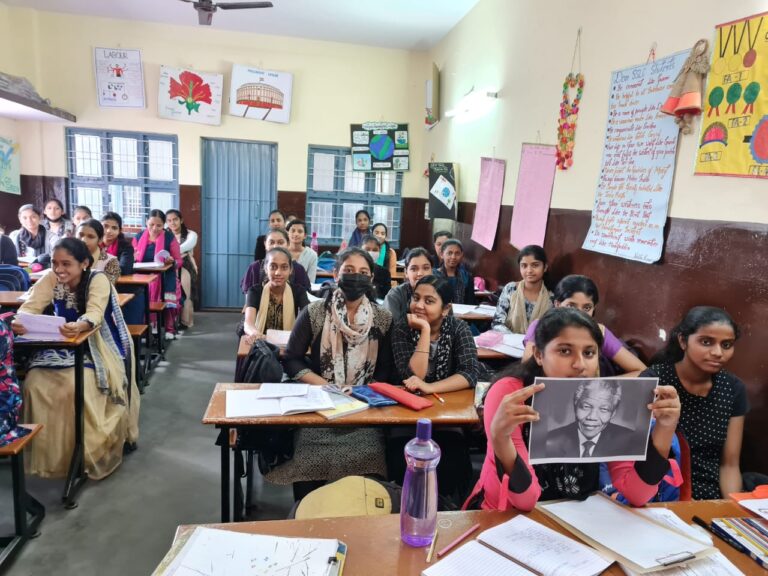
Responding to Inside Education, Chief Executive Officer, Ms Ashika Onita Nazareth and Dr Ambika Nazareth who is the founder and president of Little Infant Primary and High School in Mysuru, Karnataka, India said as part of the pre-celebration the school educated students about Mandela.

“It was an excellent inspiration to learn about him. Students began to enquire about the significance of their own names when Ms Ashika Onita Nazareth mentioned that Nelson Mandela lived up to his name,” said Dr Nazareth.

Apart from his fight against injustices meted out at the black generation, Mandela had a heart for children and the poor. He was also known for emphasizing the importance of quality education.

The Nelson Mandela Foundation’s (NMF) Communications Officer, Morongwa Phukubye confirmed his love for children during an interview with Inside Education, stating, “Madiba (Nelson Mandela) always listened closely to what children and young people shared with him. He encouraged a spirit of inquiry and critical engagement.”

The Foundation’s plea to all who support the 67 minutes campaign is to “Do what you can, with what you have, where you are.”

Although the Foundation’s theme for this year is centered around climate change, food security, poverty and inequity, there are numerous things that it encourages the society to do to keep Mandela’s legacy alive.

Inside Education interviewed children from South Africa, Botswana, Nigeria and India to share their views about Mandela and this significant day.

Their grave concern was slavery, discrimination against the poor and the high rate of crime in society.
The children interviewed were below the age of five whilst Mandela was alive as they were born between 2008 and 2010. Yet, the knowledge they gained about him has made them to yearn to walk in his footsteps.

People Should not be Treated Like Slaves – Equal Treatment for All

In honour of Mandela, a 12-year-old Nigerian who envisions himself as a doctor after completing school, Wisdom James told Inside Education in a telephone interview that “the less privileged are treated badly and I don’t like that.”

He urged nations to treat the poor equally with kindness and “not like slaves.” Wisdom is in JSS2 Class (equivalent to Grade Eight in South Africa) in Iloro Junior Grammar School in Iloro in Lagos, Nigeria. As future doctor, Wisdom said he desires to touch lives by “treating people who are sick.”

His peers, 12-year-old twin brothers Meshack and Shadrack Peter also from Nigeria, shared the same views, that everybody should be treated equally.

Shadrack, who wants to work as a lawyer, has the heart for fighting for people’s human rights.

Just like Mandela who qualified as a lawyer and founded the first attorney firm run by black partners in South Africa, Mandela and Tambo in Ferreirasdorp Johannesburg, South Africa, Shadrack envisions himself ensuring that nobody does anything contrary to the law.

“I love fighting for the rights of people. I want people to be treated the same. I want to make sure that nobody is against the law.” explained Shadrack, a member of Christ The King Catholic Church.

His twin, Meshack, who agreed with him said, “I do not want people to be treated badly. I want everybody to be treated equally and not to be treated like they are slaves because they are human despite age, race, and background.”

Meshack and Shadrack are JSS1 learners (equivalent to Grade Seven in South Africa) at Onilekere Junior High School, Ikeja in Lagos, Nigeria.

Education – The Most Powerful Tool

Mandela is known for the love he had for education. He once said, “no country can really develop unless its citizens are educated.”

Based on that, 14-year-old Grade Seven learner of High Vision School in Gaborone in Botswana, Kaelo Ndibi, yearns to expand the educational sector in Botswana. He believes that education can be possible for every child, by including recreational activities that cater for learners who are not advantaged in excelling in academics.

He explained that the education sector should not only focus on academics but work hand-in-hand with recreational activities.

He added, “I feel like we are all focused on one lane, and that is academics. But there is so much more to explore beyond the norm. I would throw in many resources into the educational sector if I was the president. I would allow diverse morally correct platforms where kids can go to for recreational activities. This would reduce a lot of ungodly and dangerous activities that we see kids my age engaging on these days.”

Knowledge Makes the World a Better Place

In Johannesburg, South Africa, the outcry of a Grade Five learner at Curro Academy Wilgeuwel, Johannesburg, Lulama Zondi (10) is to learn more about the slavery the Black South Africans faced. Although she learnt from school that the black citizens were segregated from the white race, she believes that there is still more she needs to learn.

She yearns for young black students to gain more knowledge about the apartheid regime and how their fellow black brothers and sisters were mistreated.

“I see this in most cases, us as students, we don’t learn a lot about apartheid and what happened back then. How we were treated because they do teach us about things like that but …if I were a President, I would teach the young black students more about where they come from, how they were treated, and how their ancestors were treated,” expressed Lulama who envisions herself as scientist.

She explained that she learnt from school that apartheid “was the time where segregation happened. Black people lived here, and white people live there. White people had better education and a better life. That’s all I know about it (apartheid). Although my teachers didn’t use the word segregation, they just said apartheid.”

She believes that even though Mandela deserved to be showered with gifts that are worth a lot of money for working tirelessly to end apartheid, she would have empowered him with more knowledge, had she been given the opportunity to bestow the young Mandela with a gift.

“I know that he made the world a better place because he helped us (South Africa) to end apartheid. But I would have given him more knowledge. I believe that could have helped him more to make it (the world) even a much better place. I know he deserved more (than giving him knowledge as gift), but I think knowledge is more powerful. To the older Mandela, I would have given him lots of money because he deserved it for helping us a lot. He worked very hard to show that all of us can be equal,” said Lulama.

Achieve the Economic Objective of Equitable Distribution of Income – Equal Treatment for All

Shifa Ayub and Madeeha Banu from India desire a change in the social system, economic and financial policies of India.

Shifa who is a Grade Nine learner of Little Infant School in Mysuru, Karnataka, India said that had she been a President, she would make distribution of income between the poor and rich more equitable.

Madeeha, a Grade Ten learner also from Little Infant School, wishes that the orphans, disabled, and elderly to be specially treated. She would therefore implement a feasible social security system for such citizens.

Shifa explained she would, “work on reformation of economical and financial policies of the nation to ensure much of national incomes is collected on equitable basis and is allocated for development sectors and rural areas.”

Madeeha said she would implement, “a social security system for our seniors, orphans, handicapped people so that they are treated as dependent. Religious equality treating all religion the same.”

The Nelson Mandela Foundation’s Message to the Children:
Phukubye said the NMF urges the children who were interviewed and their peers across the world to “keep working to make a world in which humanity truly belongs and everyone thrives.”

INSIDE EDUCATION

Inadequate ECD facilities affect learning, urgent intervention needed

THE recently released Early Childhood Development Census revealed that the sector needs significant financial and training support in addition to infrastructure.

The census highlighted several challenges, including the lack of learning material and training and further revealed that only 60% of the ECD programmes surveyed have flush toilets, while around a third of all schools do not have taps to supply water for hand washing.
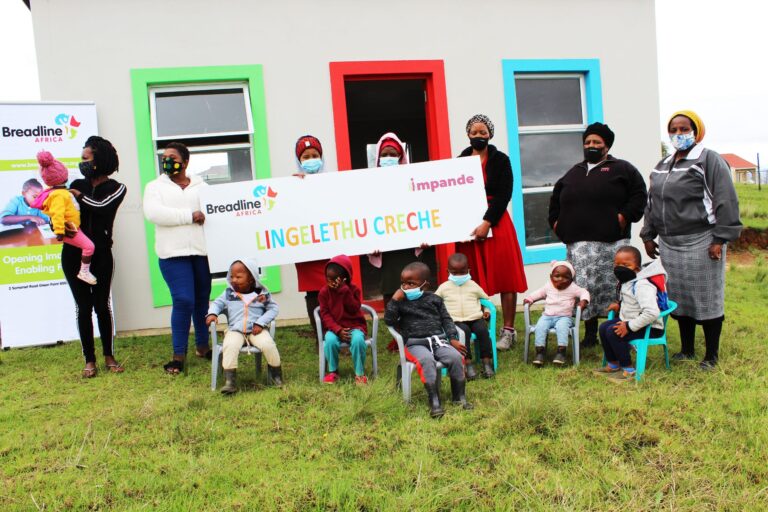
Ahead of Mandela Day, MySchool, together with Breadline Africa, have committed to continue allocating funds to upgrading classrooms, toilets, kitchens and office facilities at ECD centres across South Africa.

Breadline Africa is a non-profit organisation that uses funds donated from the MySchool programme.

Studies have shown that solid investment in ECD plays a significant role in whether or not children go on to achieve their full potential.

Children do not learn when they are hungry, and many ECD centres do not have adequate kitchen facilities available to prepare meals, the group said.

Children also do not learn optimally in dark, damp, unsafe, cold, unventilated, draughty, leaking spaces where learning materials and resources are in short supply.

The ECD sector has been one of the sectors most impacted by Covid-19, with many nursery schools and crèches having to close their doors due to the severe effects of the lockdowns. This situation was compounded by the Department of Social Development’s delay in paying out money from the R496 million allocated to the sector as part of an employment stimulus relief fund to help it recover.

The pandemic also temporarily halted Breadline Africa’s infrastructure project as its team couldn’t access community projects during lockdown.

Strategic Partnerships manager at Breadline Africa, Diane Laugksch, said that despite these challenges, Breadline Africa’s goal to erect 1 000 school infrastructure units by 2023 remained on track.

“Upgrading facilities is an important aspect to ensuring ECD centres meet requirements for registration with the Department of Basic Education. Once registered, centres are able to access government funding, which contributes to their sustainability,” Laugksch said.

Breadline Africa has so far placed more than 850 structures at community-run projects in resource-poor communities across South Africa, with the goal for this year to secure funding to place 193 structures at community projects. At some sites, the organisation also hopes to test a range of environmentally sustainable infrastructure solutions.

“On average, we have the capacity to place 150 structures per year. Since 1996, Breadline Africa has placed more than 850 structures at community-run projects in resource-poor communities across South Africa. These are predominantly container and prefabricated structures used as classroom, kitchen and toilet facilities at ECD centres and as libraries in quintile 1-3 (no fee-paying) public primary schools,” Laugksch explained.

She said that inadequate and poor ECD facilities impact learner performance and that this year, they hoped to secure funding to place 193 structures at community projects.

“Children do not learn when they are hungry, and many ECD centres do not have adequate kitchen facilities available to prepare meals. Children also do not learn optimally in dark, damp, unsafe, cold, unventilated, draughty, leaking spaces where learning materials and resources are in short supply,” Laugksch said.

At some sites, the organisation also hopes to test a range of environmentally sustainable infrastructure solutions.

Pieter Twine, General Manager at MySchool, said focusing on early childhood development now was crucial to the success of the country and youth.

“We have to ensure that we do our children justice in providing them with early learning opportunities in their formative years, which sets the stage for their success at school as well as later in life,” Twine said.

As MySchool celebrates its 25th anniversary this year, they share their commitment with Breadline Africa – one of its long-standing beneficiaries.

Over the years, Breadline Africa has allocated funds received from MySchool to upgrading classrooms, toilets, kitchens and office facilities at ECD centres across South Africa.

Shoppers can continue supporting Breadline Africa every time they swipe their MySchool, MyVillage or MyPlanet cards at participating retailers, and a percentage of their spend will be donated to the organisation.

For more information, visit www.myschool.co.za