Home Blog Page 260

Code like a girl| Vodacom gets 700 South African girls coding to narrow the gender digital divide at an early age

VODACOM has launched a follow-up to its stimulating #CodeLikeAGirl programme that will see 700 girls between the ages of 14 and 18 receive coding training from 27 June – 15 July 2022.

The Vodacom #CodeLikeAGirl programme is aimed at inspiring more girls to explore careers that require coding skills to help them get a start in the Science, Technology, Engineering, and Mathematics (STEM) fields and industries.

Often referred to as the jobs of the future, STEM drives innovation, social wellbeing, inclusive growth, and sustainable development the world over.

Female participation is lagging in STEM fields in most countries. A report by the United Nations Educational, Scientific and Cultural Organisation (Unesco), titled “Cracking the code: Girls’ and women’s education in STEM” indicated only 35% of STEM students in higher education globally are women. Young women also comprise only 25% of students in engineering or information and communication technology (ICT).

Njabulo Mashigo, HR director for Vodacom South Africa, says: “Gender norms, culture and stereotypes are still shaping girls’ choices about their studies and their eventual careers, which is why so few consider STEM and ICT careers. We need to create more opportunities for girls and young women to build confidence in STEM, by empowering them through education and coding skills, so they can become the engineers and innovators of the future. Our vision is to address the underrepresentation of women and girls in STEM education and careers. Through this initiative, we are looking to improve on these numbers, and empower even more women to explore STEM careers.”

Coding is the process of transforming ideas, solutions, and instructions into a language that the computer can understand, using programming languages like Javascript, Java, C/C++, or Python, to act as the translator between humans and machines.

The “Code like a Girl” programme aims to develop not only coding skills but also valuable life skills for girls aged between 14-18 years and encourages them to consider careers in ICT and STEM. It provides authoritative mentors for the girls to inspire them to be passionate about technology and its possibilities.

During the week-long training course, pupils will be exposed to knowledge of computer languages, robotics and development programmes including HTML, CSS, GitHub and Version control, Bootstrap and JavaScript, Basic Computer and Introduction to Coding. They will also be taken on a fun and empowering life skills journey while developing coding, presentation, and communication skills.

At the end of the week, each girl will know how to develop her own website and present her work to the rest of the coding class. The programme was first implemented in South Africa, Mozambique, Tanzania, DRC and Lesotho in 2017. In SA alone, since the programme was launched, Vodacom has trained 2 332 girls. It had its biggest intake in 2021, with over 1 000 pupils from eight provinces taking part. Vodacom aims to train1 500 girls from across all nine provinces in the current financial year. This investment by Vodacom in digital skills training programmes for young women will help to narrow the gender digital divide at an early age in South Africa.

Mashigo says: “Projects such as Vodacom’s #CodeLikeAGirl have the potential to significantly close the gender gap and inspire young girls to pursue STEM careers in the digital era towards which we are transitioning. I believe that we can ultimately change the outlook of the number of women in STEM careers, helping them to shape the future.” 

SUPPLIED

Study: Prompting, Self-Management Yield Better Classroom Results Than Other ADHD Accommodations

  • Prompting students and teaching them self-management strategies reduce disruptive behaviors and increase classroom engagement in adolescents with attention deficit hyperactivity disorder (ADHD or ADD) more effectively than do allowing frequent breaks or fidgets, according to a small study published in the Journal of Attention Disorders.

The study found that redirecting students with ADHD back to a task (prompting) and teaching them strategies to independently regulate their behavior (self-management) decreased disruptive behaviors and task initiation time and increased task engagement more than implementing popular classroom strategies such as breaks or use of sensory items or fidgets.

According to the study’s authors, prompting, taking breaks, and sensory proprioception are widespread accommodations used for students with ADHD. The first two often appear as part of Individualized Education Plans (IEPs). On the other hand, self-management strategies are a frequently recommended intervention that is not typically found in IEPs. The authors noted that research supporting specific practices over others is lacking, and such research could inform IEPs.

The researchers evaluated the efficacy of prompting, teaching self-management, encouraging sensory proprioception, and taking breaks in 15 sixth and seventh graders during 20 sessions, each one lasting 20 minutes.

Students were randomly assigned one of the following four strategies in each session.

  • Prompting condition: Researchers pointed to the task or told a student to continue working if they went off-task for five seconds.
  • Self-management condition: Students checked “yes” on a paper form if they stayed on task for five minutes (indicated by a timer alarm) or “no” if they were off task when they heard the timer ring.
  • Sensory proprioception: Students selected a sensory item (fidget toy, stress ball, etc.) to use throughout the task.
  • Breaks: Students took a five-minute break after working for ten minutes.

Data analysis showed that prompting and self-management strategies delivered the most desirable outcomes in student behavior and engagement, while sensory proprioception resulted in minor or no desired effects.

However, researchers noted that participants were not “fans” of prompting or self-management, viewing the former as “annoying” and the latter as “distracting” (even though it encouraged them to pay attention to their work).

According to the study authors, the effectiveness of self-management aligns with recent research indicating that teaching students with ADHD how to independently manage their behavior is more effective than implementing strategies such as allowing extra time on tasks or distributing a copy of the teacher’s notes.

The findings of this study also build on research supporting prioritizing classroom interventions for students with ADHD above accommodations.

Additudemag

Industry body initiatives boost research, skills building

SINCE the launch of the Cement & Concrete South Africa (CCSA) last year, the organisation has hosted a range of educational and concrete research and development initiatives to promote research, and improve skills and education, in the cement and concrete industry.

The first of these CCSA initiatives is the Young Concrete Researchers and Engineers Technologists Symposium (YCRETS) that promotes research in the local industry.

The YCRETS initiative was initially planned to begin in 2020, but was delayed to early 2021, owing to the Covid-19 pandemic.

YCRETS showcased 24 technical presentations from young concrete researchers, engineers and technologists on July 13 and 14 last year.

“This was a virtual event during which young students and researchers 35 years and under would have an opportunity to interact with academics and discuss their research work. “The presentations were of an excellent standard, and we’re hoping to do another event later this year,” says CCSA business development manager Hanlie Turner.

The initiative also involved academic staff from the University of the Witwatersrand, in Gauteng, forming a scientific committee that analysed and peer reviewed presentations that were submitted.

Turner states that CCSA is also creating a scientific committee in conjunction with the Stellenbosch University to have a YCRETS hybrid event in Stellenbosch, in the Western Cape.

“YCRETS has provided great exposure for young students and researchers. The presentations were published in the online proceedings as well as in our quarterly magazine.”

She adds that YCRETS helps to introduce young students to the industry and enables contractors and cement and concrete companies to identify potential candidates for employment.

YCRETS is also not limited to students at academic institutions, as young technologists from private companies can contribute their own research.

Another CCSA educational initiative is the 19 CONCRETEFiX webinars that have been hosted to date, covering a range of topics.

Turner states that the webinar series was initiated in 2020 – before CCSA was consolidated from multiple industry bodies – particularly amid the onset of Covid-19 and demand for online educational opportunities.

“This year, we’ve planned to do a webinar once a month. The tenth edition of Fulton’s Concrete Technology handbook was published last year, and we are getting the authors of some of the chapters in the handbook to present during these webinars. “This will enable the authors to elaborate and provide more background information on their chapters,” she explains.

Holding these webinars provides an opportunity for people who are not able to attend physical classes to become educated on cement- and concrete-related topics.

She also highlights the 2022 Fulton Awards, held earlier this month, which had 24 submissions this year.

The awards are held every two years for excellence in concrete design and construction, and the winners are chosen as entire teams responsible for producing a submitted constructed structure or development.

The categories include buildings of up to R50-million in value, buildings worth more than R50-million, infrastructure of up to R100-million and infrastructure of more than R100-million, as well as innovation and invention in concrete.

“This isn’t just a judgment based on a written submission – the judges, comprising a materialist specialist, structural engineer and professional architect, would visit and assess projects on site.”

She highlights another benefit to this year’s awards being that CCSA became an international partner of industry body the American Concrete Institute, which also has an awards scheme. The winners of CCSA’s five categories will be entered into the American Concrete Institute Awards.

Further, the CCSA KwaZulu-Natal branch introduced the Careers in Concrete initiative last year to promote diverse career opportunities in the cement and concrete industry.

Owing to the successes of this initiative, Turner says the branch is looking to expand this initiative to other education institutions in the province.

While the initiative was done in partnership with the University of KwaZulu-Natal, the KwaZulu-Natal branch is engaging with the Durban University of Technology on the possibility of partnering with the institution on this initiative.

The CCSA is also examining the possibility of running this initiative with academic institutions in the Western Cape, and Gauteng CCSA branches in the future.

“The challenges of the past year were formidable, but presented opportunities, and opportunities culminated in development. This is exactly what CCSA stands for: a unified body to lead the local industry towards relevance and growth. We are confident that CCSA will grow even further in its second year of establishment,” she concludes.

Engineering News

Police searching for suspects in North West University student’s death

POLICE in the North West are searching for suspects, after the body a 21-year-old student was found in his room at one of the students’ residences at the North West University’s Mahikeng Campus two weeks ago.

Police spokesperson Colonel Amanda Funani says information received, indicates that the victim’s body was found lying on his bed by a friend.

The victim was reportedly last seen last week Friday with his friends.

Funani has called on anyone with information to contact the Mmabatho Police Station.

She says, “The parents became suspicious after failing to reach their son on his cell phone on Saturday and Sunday morning. The university security managed to open the victim’s room and he was found lying dead on his bed. Initially, an inquest docket was registered, but it was changed to murder after a preliminary post-mortem report revealed that the victim died due to head and multiply body injuries.”

The North West University says it will provide support to the investigating team.

It has named the victim as Onkgopotse Kgeletsane.

It says counselling has been provided to fellow students.

Meanwhile, a 39-year- old man has stabbed to death his female partner of the same age at Maelula village outside Louis Trichardt in Limpopo.

Police spokesperson Brigadier Motlafela Mojapelo says the man later hung himself at his parent’s home at the neighbouring Murunwa village.

The body of the deceased woman, Phumudzo Mukhatho, was found with several stab wounds.

The deceased man has been identified as Edson Nematswerani.

Police suspect domestic related dispute as being behind incident.

STAFF REPORTER

South Africa’s epochal 1976 uprisings shouldn’t be reduced to a symbolic ritual

JULIAN BROWN|

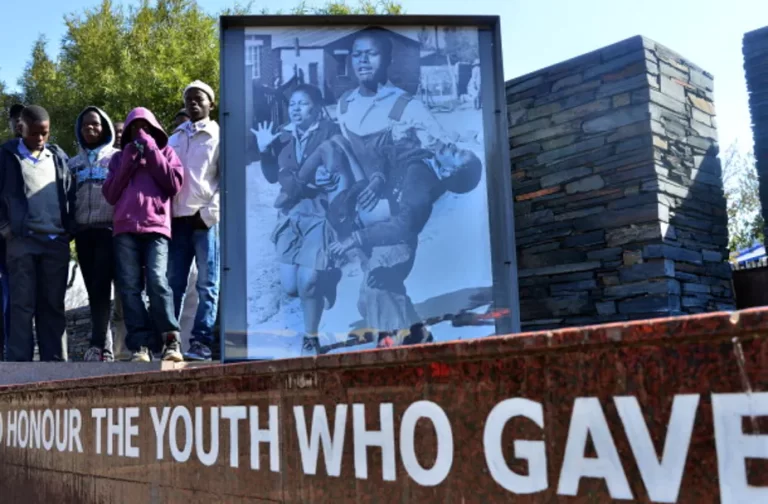
ON the morning of Wednesday, 16 June 1976, young students from schools across Soweto set out on a march through the sprawling black township outside Johannesburg. The march was to amplify their opposition to the apartheid government’s new school-language policy that would see Afrikaans replace English as their main medium of instruction in several key subjects.

Before the march began, they were confident. They knew the risks that they faced – “we decided that there should be no placard inciting the police as such, one activist put it afterwards, because “we wanted a peaceful demonstration – it had to be disciplined”. Even so, they were excited, believing that the march would be a carnivalesque event, “a Guy Fawkes thing,” as one put it – an event in which the world would be turned upside down.

Their excitement buoyed them in the early hours of the morning, as thousands of students joined in the march. But this atmosphere did not last.

A few hours into the march, heavily-armed members of the South African Police confronted a crowd of students near the Orlando West High School. They fired tear-gas at the students, and then, moments later, fired live ammunition. In the moments that followed, they shot and killed Hector Pieterson an eleven-year old child. As if energised by this death, the police continued to assault and kill students.

In the hours that followed, another 10 people died at the hands of the police. Over the next three days, at least 138 people died. And the deaths did not stop. Throughout the rest of the year, the police and military would patrol Soweto and many other sites of popular resistance, and use whatever force they deemed necessary to suppress dissent, quash protest, and establish order.

These protests reignited the public flame of resistance, and helped re-make the opposition to apartheid. They provided a model and an example for activists to follow into the 1980s.

June 16 in perspective

Today, 46 years later, South Africa commemorates June 16th as National Youth Day.

It is no doubt important to do this, and to remember the sacrifices and struggles of the past. But in commemorating this day, South Africa runs the risk of sacralising these events – of lifting them out of their historical context, stripping them of their political complexities, and remaking them into a mere symbol, something that only needs to be remembered once a year and then forgotten the rest of the time.

In my book, published on the eve of the 40th anniversary of June 16th, The Road to Soweto, I argued that the sacralisation of this singular day has distorted understandings of South Africa’s post-apartheid democracy.

It is now almost trite to suggest that the political order of post-apartheid South Africa was forged in conference rooms and around negotiating tables in the 1990s; that the conversations, debates, and arguments between the representatives of the negotiating parties are what shaped the terms of the country’s political institutions and laws; and that the country constitution is best understood as the product of an elite idealism. All of this is at least partially true.

What is wrong with this vision is that it leaves out the role of ordinary people taking to the streets –- the role of protest, of marches, of popular organisation, dissent, discordance, creativity, and struggle –- in making the post-apartheid democratic order.

It presumes that the state is the beginning and the end of the political order; that democracy is only achievable through representation; and it presumes that “the people” are a political resource to be deployed by elite actors (whether these be politicians or intellectuals, revolutionaries or revanchists) and not a source of political ideas in themselves.

But this is not true.

Making democracy

While democracy may be encouraged and entrenched through institutions and ideas, it is first made through action. The students who marched on 16 June 1976 did more than simply register a political opinion.

They enacted an alternate form of politics. By gathering and marching together, and by acting together they constituted themselves as political agents – as people who already possessed the kind of agency that the apartheid state denied they could ever claim. And by marching side-by-side – regardless of their age and gender, status and authority – they constituted themselves as a democratic force, as a community of equals.

As I’ve argued before, this form of politics is not merely a product of the past, not merely a product of the anti-apartheid struggle. Instead, it has marked – and still marks – popular dissent and democratic organising in South Africa since the end of apartheid.

Over the past two decades, such forms of popular democracy have marked the struggles of Abahlali baseMjondolo, a shack-dwellers movement that organises in informal settlements across South Africa. It has driven the activism of the Treatment Action Campaign, and its grassroots work to force the state to provide anti-retroviral medication. And it has led to labour activists, unions, and other communities achieving significant changes in the platinum mining industry.

The roots of democracy lie in these actions, in these claims to agency and equality. These acts are themselves rooted in a complex pattern of joy and anger – in the desire to turn the world upside-down, and emerge out of specific historical and social contexts. But they can transcend these moments. They can open up a channel, create a model, and instigate a revolution.

In other words: if the events of 16 June 1976 are seen as an ongoing part of the process of constituting democracy in South Africa, then we can see it as part of contemporary political struggles – and not just as an historical event, safely sealed away in the past.

The marches, protests, and pickets that mark contemporary South Africa are the source of a continually-renewing (and, perhaps, continually-mutating) democracy. The institutions of the state may shape the ways in which this democracy develops, but they do not create it. “The people” make politics.

At this moment, as South Africa’s political elites continue to be mired in scandal, as the state bureaucracy struggles to fulfil its functions, and as scholars and activists question the legitimacy of the constitutional settlement, the anniversary of the uprising of 16 June 1976 in an opportunity to think about what post-apartheid democracy can mean.

It does not only mean the forms and institutions that define the democratic state. It must also mean the ongoing acts of ordinary people, the acts that assert and imagine democracy on the streets over and again.

(Julian Brown Associate Professor of Political Studies, University of the Witwatersrand)

THE CONVERSATION

Big language change coming for schools in South Africa

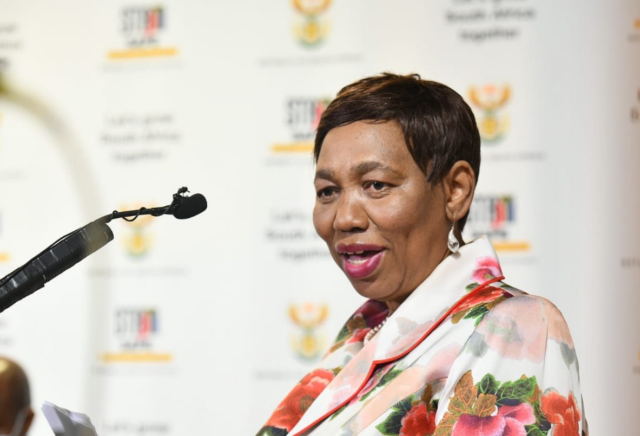
BASIC Education minister Angie Motshekga says her department is developing a new plan to promote the nine previously marginalised languages at schools in South Africa – other than English and Afrikaans.

Responding in a recent written parliamentary Q&A, Motshekga said the plan will see these languages used as ‘languages of learning and teaching’ from Grade 3 and beyond. Languages which will be featured in the programme include:

  • IsiZulu;
  • IsiXhosa;
  • IsiNdebele;
  • Siswati;
  • Sesotho;
  • Setswana;
  • Sepedi;
  • Tshivenda;
  • Xitsonga.

Research worldwide shows that learners learn best through their home languages, Motshekga said.

“The Department of Basic Education, through the Eastern Cape Education’s own initiative, piloted the Mother Tongue Based Bilingual Education wherein IsiXhosa and Sesotho were utilised as languages of learning and teaching for mathematics and science and technology beyond Grade 3,” she said.

“The learnings from the Eastern Cape Mother Tongue Based Bilingual Education pilot taught us to be very prudent in dealing with a programme of this nature.”

Motshekga added that her department was working with the Department of Higher Education, Science and Innovation (DHESI) on teacher production to ensure that there are enough teachers to instruct students across these nine languages in key subjects.

The minister has previously acknowledged that there are issues with moving to a purely mother-tongue-based system, noting that it was likely impossible to have a pure class in Sotho or Xhosa in Gauteng the way similar classes have been held in the Eastern Cape.

She added that in classes teachers use multiple different languages to help children learn and get their point across. However, when it comes to assessments – which are typically done in English – they are once again forced to grapple with a language they did not understand while learning.

“They are no longer being tested on their cognitive development or understanding (of the work). You are now testing their language abilities, which is a problem.

“Government has begun the process of changing this and the next step is to assess them in the language they are taught – so that we are able to assess performance and not language proficiency.”

She added that government would have to use technology and other systems to effectively translate complicated scientific and mathematical concepts into languages that do not necessarily have the same terminology.

BUSINESS TECH

Liberia: President George Weah Promises to Pay the Graduation Fee for 456 graduates of the AME Zion University

0

SMILES could not cease from the faces of the graduates of the African Methodist Episcopal (A.M.E) Zion University as the Liberian President George Weah announced at the 31st Graduation ceremony that he will pay the graduation fee for all 356 graduates.

Each of the 356 graduates was to pay US$450 and with that, the President will have to pay US$160,200 in fulfillment of his promise.

Weah, after giving the keynote address at AME Zion University 31st Convocation program, a faculty of the institution announced that a significant portion of the graduates was still owing graduation fees.

However, being generous, the President sent a message to the faculty who was giving the announcement that he will pay all 356 graduates’ graduation fees.

Weah, according to record, has been the first President to pay all graduation for under-graduate level. The move by the President comes after he paid for all students from the University of Liberia graduate school.

In March 2022, Weah paid the amount of $55,800 to the University of Liberia authorities through the president of the class to cover all the expenses for 124 students who graduated from various disciplines.

Also, speaking earlier, the Liberian President told graduates to work hard, adding that success will not come to the graduates if they rest on what they have achieved.

According to the President, after adequate preparation, success will only come to those who are dedicated and disciplined enough to do the work.

“I want to encourage you to dream and to dream big dreams. But then, I advise you not to make dreams your master but to wake up from the sleep of dreams and go to work to make it happen. Most dreams will not come true without hard work, struggle, and sacrifice,” the Liberian Leader said.

Weah added: “I want you graduates to know that failure is a crucial part of success. Failure teaches you a lesson that you must be willing to learn, and only when you learn that lesson, will you benefit from your failure.”

According to President Weah, in his own career, there were many failures along the way but he was able to triumph over every problem that came his way.

“In the beginning of my soccer career, for example, I was benched many times before I became a regular member of the starting teams. But I used my time on the bench to study the game and the other players, and learn from their mistakes, so that each time I got the opportunity to play, I tried to make sure that I made a positive.”

Weah added: “And you are all aware that in my political career, I ran for President and was defeated twice, but I did not give up. Each time, I took stock of my journey, and I went back to where I had left my dream, and recalibrated, and continued my journey. Eventually, I applied those lessons to develop a winning formula. And here we are today.”

Also, at the event, Weah was honored for what the university terms as his outstanding contributions, and achievements to humanity and society.

“The Board of Trustees of the AME Zion University by recommendation of the Faculty Senate, and president of the AME Zion University, has herewith approved the conferral on you, George Mannah Weah, the Degree of Doctor of Letters (L.H.D.) honoris causa in international Relations,” the University citation quoted.

It is not the first time President has been honored by the university.

The President received his first-ever honorary doctorate degree, 23 years ago from AME Zion University. The degree of Doctor of Humane Letters (Honoris Causa) was conferred upon him in recognition of his efforts, achievements, and humanitarian gestures as a philanthropist and a world-class athlete.

The AME Zion University commenced in 1993 with the founding of the AME Zion School of Business, attached to the AME Zion Academy.

In 1987, the AME Zion Community College was established, offering Associate Degrees in Criminal justice administration and law enforcement, liberal art, and business, as well as Diploma in Trauma Counseling, and its first convocation in May 1989.

In 1996, by an act of the national legislature, the AME Zion University College was established with the Reverend Frederick Umoja, serving as its first president.

FRONTPAGEAFRICA

Section27 takes South African Council of Educators to court over corporal punishment

STAFF REPORTER|

THE court case between SECTION27 and the South African Council for Educators (SACE) is back in the Johannesburg high court on Tuesday after two incidents of corporal punishment involving Grade 2 and Grade 5 learners whose assaulters received a light fine and continue to teach.

In December 2020, SECTION27, on behalf of the Centre for Child Law and the parents of two young learners (ages 7 and 10), initiated a case against the SACE for imposing lenient sanctions on two educators who pleaded guilty for assaulting learners in their classroom.

In South Africa, corporal punishment has been banned since 1996.

“We are taking SACE to court and requesting that it reconsiders the decisions it made in respect of the two educators, as well as revise its Mandatory Sanctions on Contraventions of the Code of Professional Ethics, a document used by SACE when sanctioning educators for misbehaviour, in an effort to protect learners from further harm and ensure that the ban on corporal punishment is taken seriously,” said the public interest law centre on Monday.

SACE, the professional body responsible for maintaining and protecting educators’ ethical and professional standards, is opposing the case.

Their code of professional ethics expressly states that educators must refrain from any form of abuse, physical or psychological, and they are mandated to investigate and sanction any educator found guilty of this behaviour.

“Therefore the body is one of the important institutions that can help address and stop the use of corporal punishment in schools,” said SECTION27 in a statement.

“Sadly, they are failing in this role by imposing very lenient sanctions on educators found guilty of corporal punishment, including suspended sentences or mere fines, without addressing teachers’ violent behaviour or equipping them with the tools to implement non-violent discipline strategies.”

SECTION27 said although corporal punishment has been banned from South African schools since 1996, teachers are still tragically using corporal punishment to discipline learners, thereby perpetuating the culture of violence and abuse that already characterises many South African Communities.

Countless reports of learners being hit, thrown with objects, or verbally abused in class indicate that the ban on corporal punishment is not being properly enforced in schools, said SECTION27.

Children’s Institute, represented by Equal Education Law Centre, has been admitted to the case as amicus curiae (friend of the court), and will be making submissions to support our relief.

INSIDE EDUCATION

North West Department of Education opens the 2023 learner registration season for public schools

WENDY MOTHATA|

THE learner registration and admission process to all North West public schools for the 2023 academic year has opened and will close on September 30 2022.

In a media statement on Sunday, the North West Department of Education said that application forms for admissions are available in all public schools.

Admissions will be on first come-first serve basis, it said.

“As of 01 June 2022, the North West Department of Education has opened learner registration season for its public schools and encourages parents and legal guardians to register children for the 2023 academic year,” said North West education spokesperson, Elias Malindi.

In accordance with Section 5(4)(a) of the South African Schools Act (SASA), the requirements for admissions are as follows:
• Grade R: 4 years turning 5 by 30 June 2023
• Grade 1: 5 years turning 6 by 30 June 2023,
• Other grades: A learner who is still under the age of 15 must be placed on suitable grades and those above 16 years of years be advised to register at an AET centre provided they are already enrolled at ordinary public school in January 2000 (except if it is deemed to be in the best interest of a learner), and
• Learners with special needs should be admitted where it is reasonably practical in ordinary public schools, special schools and full service schools.

North West Education MEC, Mmaphefo Matsemela, has encouraged parents and legal guardians to adhere to the directives for smooth registration.

“We ask all parents and legal guardians to take this four months’ period to register learners for 2023 academic year. Over the years this has helped us with proper planning in terms of school furniture and ordering of textbooks and I thank parents for their cooperation,” Matsemela said.

Matsemela outlined documents that needs to accompany the application.

“We also ask parents to accompany application forms with a certified copy of birth certificate, immunization card, most recent report card, and transfer letter or card from previous school.”

Matsemela added that parents outside South Africa must present asylum seeker permits or certificate granting refugees status.

“To parents from outside South Africa, they must have learner’s study Visa or parents work permit, residence permit (or proof of application for non-citizens), asylum seeker permits or certificate granting refugees status for all non-citizens should be presented,” she said.

While schools are compelled to compile waiting lists, principals and SBGs are advised to encourage parents to submit application forms before the deadline to avoid longer waiting lists and issue written responses of acceptance or non-acceptance to parents by 31 October 2022.

INSIDE EDUCATION

Nxesi invites departments to enrol youth in breaking barriers to entry into the Public Service Programme

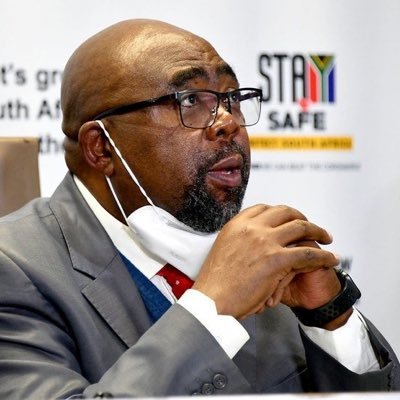
PUBLIC Service and Administration Acting Minister, Thulas Nxesi, has called on government departments and public entities to enrol young people in internships as part of the breaking barriers to Entry into the Public Service Programme (BB2E) and the Cadet Programme.

These programmes are aimed at preparing young people for careers in the public sector and for the work environment in general, as the country begins National Youth Month.

The five-day BB2E course and the 18-month Cadet Programme are offered by the National School of Government (NSG) and target unemployed graduates with post-school qualifications, and interns in the public sector and statutory bodies.

The BB2E course introduces young people to government and teaches them how government works and the strategies for delivering quality public services.

It also teaches them how public funds are administered and managed, how to carry out basic administrative and communication functions, the policies and prescripts that guide the appointment of persons into the public service, and how to write CVs and prepare themselves for interviews.

In a statement on Monday, Nxesi said the unemployment rate among youth with post-school qualifications is very high in the country.

“The public service, as the largest employer, has responded to this challenge by enabling unemployed graduates to gain experience through the Public Service Graduate Internship and Learnership Programme.”

“In addition to this, the NSG has introduced the BB2E course and the Cadet Programme. The aim is to prepare the unemployed graduates for employment opportunities in the public sector.”

“This is a very important investment in our youth and promotes their development. As we mark National Youth Month, we invite government departments and public entities to enrol youth in these critical development programmes,” Nxesi said.

The 18-month Cadet Programme is a sister initiative to the successful Breaking Barriers to Entry into the Public Service initiative and seeks to deepen the understanding of the public sector, whilst also covering issues in the broader social entrepreneurial space.

It is made up of four courses/modules, which are: The Constitution and the Administration of the Public Sector, Ethics in the Public Service, Writing for Government and Personal Mastery.

The Minister emphasised that the Personal Mastery component is particularly important because it covers other generic employability skills that are necessary in the workspace in both the public and private sectors.

These include self-management, emotional intelligence, job search skills, problem solving skills, as well as entrepreneurship/creating your own job.

Nxesi said the ultimate goal is to shape the young graduates into “public service cadres of a special kind”.

The attributes of such public service cadres are:

  • * Breaking new ground: A public servant who will be able to make personal interventions to translate policy into action.
    * Inspiring success: A public servant who is self-motivated and ready to motivate others to serve the public.
    * Raising the standard: A public servant who is responsive and capable of giving her/his best regardless of whether he/she is in the front office or at management level.
    * Nothing is impossible: A public servant who does not use policy or resource constraints as an excuse for not doing work but comes up with turn-around strategies to salvage a failing situation.
    * Making a difference to people: A public servant who is always committed, results-oriented and measures the impact of her/his actions against the public’s expectations.
    * Collective responsibility and teamwork: A public servant who believes in partnership, considers the opinion of other colleagues, peers and the public, and is able to network with organs of civil society, community development workers and all other stakeholders.
    * On board: A public servant who is on board is one who owns the processes of service delivery and understands that blame for the failure of the system should be laid squarely on his/her shoulders.

On 20-24 June 2022, 45 officials from different national and provincial departments will attend a training of trainers (TOT) session to be empowered and developed to train the youth on Personal Mastery.

This follows a successful TOT session that was conducted in November 2021, which was attended by 40 officials.
In March 2022, at total of 288 Young Patriots from the National Youth Development Agency and the Department of Arts, Sports and Culture attended Personal Mastery course.

“The feedback received from learners and officials from both the NYDA and the Department of Arts and Culture was extremely positive. We thus encourage departments and entities across all spheres of government to enrol young graduates (interns) on the Cadet Programme,” Nxesi said.

For enquiries and enrolment, relevant officials in departments should contact The National School of Government call centre on 0861008326, via email on contactcentre@thensg.gov.za or visit the website on www.thensg.gov.za.

SA NEWS