Home Blog Page 259

Children’s mental health and the digital world: how to get the balance right

RACHANA DESAI

TECHNOLOGY has increasingly blurred the boundaries between the physical and digital worlds. This has led to dramatic shifts in daily life and changed the way children and adolescents live, socialise, move around and learn.

Never before has this been so evident than at the onset of the COVID pandemic and the subsequent exponential rise in technology and internet use. Global estimates suggest that one in three internet users is a child.

Digital technology exposes children to information, social connection, education, online support groups and professional help. Yet, children engaging in the digital world are also exposed to a range of threats.

These include inappropriate content (violent or sexual), undesirable contact with strangers and online bullying and victimisation.

The South African Child Gauge is an annual publication that aims to report on and monitor the situation of children in South Africa, in particular the realisation of their rights. This year, the theme of the report focuses on child and adolescent mental health.

Lately, there’s been increasing public debate and concern that digital technologies may contribute to mental health problems such as depression, self-harm and suicide among adolescents and children.

To contribute to the collective understanding of the experiences and consequences of growing up in a digital world, our chapter in the Child Gauge report aims to interrogate the impact of digital worlds on children’s mental health. We also want to provide recommendations for policy and practice.

How South African children use digital technology

South Africa has approximately 38 million internet users (1.5 million households).
Children most often go online on smartphones, using mobile data at home, and the level of online engagement increases as children become older.

Mobile phone plans in South Africa also provide free or cheaper access to social media platforms, resulting in social media use being much more prevalent than any other online activity, driving the content that children engage with online.
The relationship between digital technology and mental health is complex.

Understanding the impact of the digital environment on children’s mental health requires a balanced consideration of not only the potential risks, but also the benefits of the online world.

Not all exposure to online threats leads to harm. For example, participation in a public Facebook group could put a child at risk of sexual grooming, because adults sometimes pose as children.

But, this won’t necessarily lead to harm if a child is able to prevent, foresee and manage the attempted harassment.

Adolescents struggling with offline mental health problems may be more likely than others to seek out negative content online.

This may amplify their existing mental health issues and may result in self harm. But social media may also be a source of mental health information, support and professional help.

It’s therefore useful to consider how to foster the (digital) resilience of children so that they understand what risks they are likely to encounter at different ages and know when they are at risk. It’s also important that they know what to do and how to recover from adverse experiences.

Keeping children safe online

Realising the benefits of technology for children’s mental health and well-being, while restricting exposure to online threats, requires a holistic approach.

This includes recognising the role that parents and caregivers, educators, government regulators, tech companies, and children themselves have to play in promoting children’s mental health and well-being in all aspects of children’s online engagement.

Parents often think that banning social media and the internet will keep their children safe, but that’s not the case. Banning internet use may result in children being socially excluded or prevent them from accessing mental health services or information.

While parental controls and surveillance tech have their place, it’s the internal safeguards like empathy, resilience and values that are more powerful and serve children throughout their lives, whether online or offline.

Parents need to start an open dialogue with their children. This will build rapport and allow children to open up about their social media use.

Parents should model good citizenship (social literacy, community engagement, accountability, respecting others’ rights and perspectives) and healthy digital habits for their children as well.

The technology industry has a huge part to play in designing products with the best interests of the child in mind.
The privacy of young users’ personal data needs to be protected and their right to freedom of expression needs to be preserved. Systems need to be put in place to address violations of children’s rights when they occur.

School policies, regulations and guidelines should aim to balance the protection of children with their rights to privacy and to use technology in a way that’s appropriate to their age. Such policies should promote positive use of digital technologies, while taking steps to restrict access to harmful content.

Training for educators is also needed so that they can identify children who exhibit symptoms of trauma or distress as a result of online harm and can refer them to psycho-social support services. Finally, and most importantly, children need access to information, education and training to support the development of their own digital literacy skills.

They must feel confident to seek help when needed and know that it will be provided.

Dr Rachana Desai is a contributor of the South African Child Gauge 2021/2022. This annual report on the status of South Africa’s children is published by the Children’s Institute, University of Cape Town in partnership with the DSI-NRF Centre of Excellence in Human Development, University of the Witwatersrand; UNICEF South Africa; the Standard Bank Tutuwa Community Foundation and The LEGO Foundation.

THE CONVERSATION
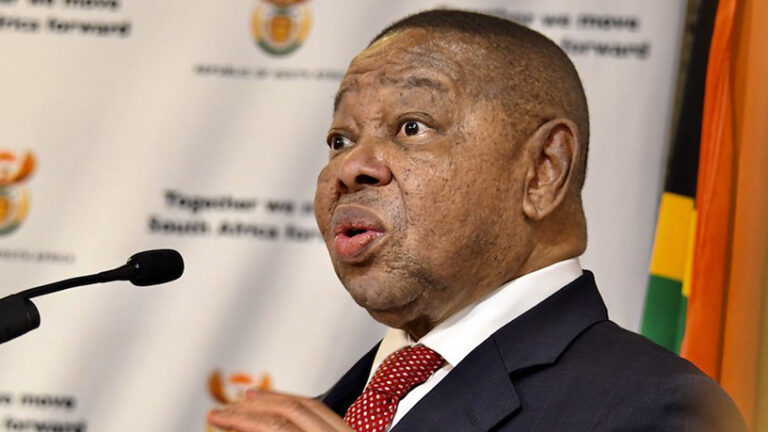
NSFAS 2022 funding reaches 691 432 students

THE National Student Financial Aid Scheme (NSFAS) will in the 2022 financial year spend R47.3 billion in funding the tertiary education of 691 432 students.

This was on Friday revealed by Higher Education, Science and Innovation Minister, Blade Nzimande, during a press briefing.

Of the approved applicants, 462 983 were female and 227 072 being male.  

Addressing reporters, the Minister said: “There has been a new intake of 240 790 SASSA students… and we will continue to support 1 770 students with disabilities who receive quite a comprehensive set of allowances from the NSFAS Fund”.

Of this allocation, he said, 362 482 was for ccontinuing students and 136 460 for new students.

He said that students registering in multiple institutions continue to be a challenge.

“We have found that 2 481 students have registered in more than one institution and NSFAS has received registration claims from more than a single institution,” he said.

To rectify this problem, students are required to deregister in institutions that they are not studying at and submit evidence to NSFAS so that funds can be released to the correct institution. 

Another big challenge identified, he said, was with regards to funding conditions not met, students following incorrect academic pathways, registering on non-aligned qualifications. He said this was the case with even new students who were registered on qualifications that were being phased-out.

“The above requires all institutions and all students to strictly adhere to the approved NSFAS Eligibility Criteria and Conditions for Financial Aid funding without deviations. NSFAS will continue to work with institutions to ensure resolution to the anomalies in the system,” she said.  

TVET CollegeStudent Funding

For 2022 TVET college bursaries, he said NSFAS projected a 10% growth in student numbers across all TVET academic cycles to an estimated 395 000 students. In this regard, NSFAS made provisional funding for 380 000 TVET College students. 

To date, he said NSFAS received registration data for close to 200 000 students. This is at about 52% of expected and provisionally funded students in colleges, he said.

“In seeking to close the gap and understand the issues at College level, NSFAS deployed its staff in May to assist TVET colleges to submit registration data according to NSFAS requirements.

“This intervention assisted in the improvement of data quality submitted by the TVET Colleges. However, this intervention is not sustainable as NSFAS does not have enough capacity to adequately support TVET colleges at various campuses in this particular way in the long-term,” he said.

The Minister said there was a need to capacitate TVET college staff on NSFAS processes.  In the regard, he said NSFAS had committed to support colleges with a contribution of R500 000 per college in the short-term period to appoint financial aid officers.

The main issue affecting the processing of students in TVET colleges, like universities, is the problem of multiple registration status and students following incorrect academic pathways.

“There were 4 287 unprocessed students not processed for payment by NSFAS because of these exceptions.  NSFAS has started a reconciliation and data sharing exercise with institutions for the resolution of these identified exceptions,” he said.

The Minister said this issue would be sustainably resolved through “systems integration between NSFAS and institutions”.

“I am informed that already there is on-going work to resolve this issue,” he said.

Nzimande said the NSFAS Board recently proposed new policy reforms to improve the efficiency of the scheme. He said had considered and agreed to these, saying the changes had proven to be positive in improving service delivery.

NSFAS administrative, student accommodation and other related challenges

After being inundated by student complaints on accommodation and being evicted by landlords, he said from next year, NFSAS would take a proactive role in NSFAS funded student accommodation in order to ensure value for money. This included standardizing the cost and quality by grading student accommodation, thus paying a standard rate based on the grading of each type of accommodation.

He said: “Through numerous engagements with students, student leadership bodies, educational institutions, and accommodation providers, it is clear that student accommodation remains a major challenge to resolve. This is the case in both private accommodation and institution owned-accommodation”.

He said there were insufficient beds to accommodate students, while some institutions did not have sufficient quantities and quality of own accommodation.

“The building of more infrastructure for student accommodation remains a priority for government, and I intend to accelerate such construction, including through partnerships with the private sector,” he said.

Further announcements will be made in this regard later this year.

This included pilots to test various strategies and plans to significantly increase the number of student beds for both university and TVET college students.

SA NEWS

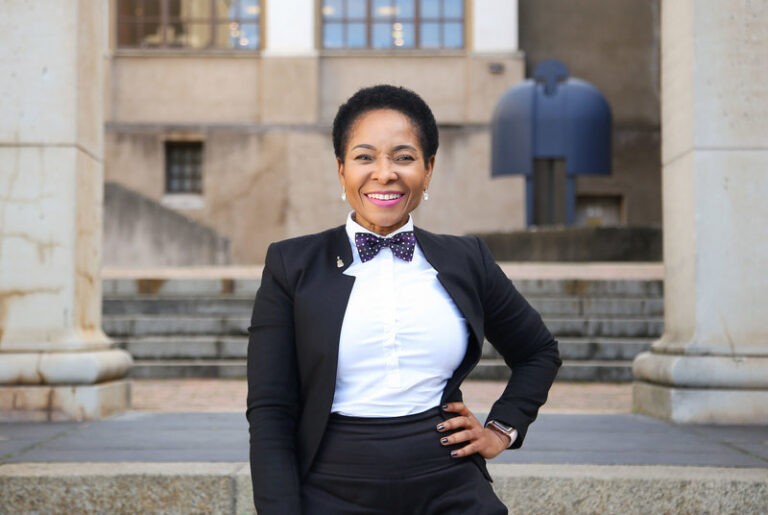
UCT vice-chancellor, Mamokgethi Phakeng, appointed IARU chair

UNIVERSITY of Cape Town (UCT) Vice-Chancellor Professor Mamokgethi Phakeng has been elected as International Alliance of Research Universities (IARU) chairperson, marking the first time in the organisation’s history that it has been led by an African.

IARU, which was established in 2006, is a network of 11 international research-intensive universities from Australia, Switzerland, Singapore, China, the US, the UK, Denmark, Japan and South Africa.

The network is comprised of Australian National University, Eidgenössische Technische Hochschule Zurich, National University of Singapore, Peking University, University of California – Berkeley, University of Cambridge, UCT, University of Copenhagen, University of Oxford, University of Tokyo and Yale University.

The purpose of IARU is to promote institutional joint working on various levels of the member universities, such as inter-university networking, institutional learning and staff development.

Its projects cover a range of topics, including equal opportunities, technology transfer, technology-enhanced learning, research administration, libraries and open access.

Phakeng was elected at the recent IARU Presidents’ meeting, which took place at Cambridge University in the UK. She will succeed University of Cambridge Vice-Chancellor Professor Stephen J Toope as IARU chair at the end of this year.

“Our world is facing extraordinary challenges, and universities have a key role to play in sustaining and strengthening the global connections necessary to meet the moment. Since joining in 2016, UCT has made a significant contribution to all aspects of the alliance,” Toope said on June 20.

Phakeng will serve a two-year term from 2023 to 2025, during which the IARU secretariat will be located at UCT.
“Higher education has a critical role to play in this time of global inequality, rising nationalism and the planetary threat of climate change. UCT values deeply the close relationships within the alliance that generate the trust and insights to play a part in tackling these challenges together,” she said.

IARU has a global reach across a relatively small membership, which allows unprecedented peer-to-peer networking and sharing.
Its activities range widely from working groups focused on vital aspects of running a leading research university – including equal opportunities, cybersecurity, libraries and open access – to tackling global challenges such as sustainable solutions to climate change.

The alliance also offers opportunities for students to attend joint courses and internships.

The 11 IARU members share similar values, a global vision and a commitment to educating future world leaders. Central to these values is the importance of academic diversity and international collaboration.

ENGINEERING NEWS

Servest assists community school in Mpumalanga with masks and sanitisers

STAFF REPORTER|

THE Servest management company has provided critical support and COVID-19 provisions to learners and teachers at the Grace Christian Private School in Siyabuswa, Mpumalanga.

“Many neighbourhoods have felt the impact of the COVID-19 pandemic and the financial burden that it has imposed on communities. Our school has not been spared,” said Hendrik Mahlangu, the principal and one of the founders of the school.

The Grace Christian Private School opened its doors in 2003 with 32 learners, and has grown to 650 learners, providing education from Grade R to Grade 12.

The running operations for the school are funded by parents paying school fees, donors from the local Christian community, as well as assistance from donations from the United Kingdom (UK).

Mahlangu explains: “The cost of personal protective equipment (PPE) became too big a burden for the school, and the support provided by Servest could not have come at a more opportune time.”

“We were paying a lot on PPEs due to the COVID-19 pandemic, as it is the responsibility of the school to provide PPE to the teachers and learners. This has been an unexpected cost, and we could not include it in the school fees or impose the financial burden on parents who are already financially overburdened.”

He says that then, as if by a miracle, a UK friend of the school put Servest in touch with the school and the company came to the rescue, offering to donate the necessary PPEs.

The provisions included hand sanitisers, masks, and cleaning products to disinfect classrooms.

The donation from Servest is estimated to the value of about R354 691.

“We have been using the supplies from Servest over the past two years, and this has saved the school a lot of money,” says Mahlangu.
Grace Christian Private School says because of the generous donation from Servest and UK donors, it has in turn been able to help two other nearby schools with some surplus masks and sanitisers.

“This has reduced the strain on the educators who were trying to find funds to help protect the children,” said Mahlangu. “Educators from our schools as well as the other two schools in the area can now focus on their primary role of teaching, and not worry about operational things like PPEs. More support of this nature will go a long way for our schools.”

He explains that the school has been able to continue operating during the COVID-19 pandemic thanks to the PPE provided by Servest, as the school was able to make the necessary adjustments to minimise risk of COVID-19. Online teaching and limited live classroom teaching with alternating classes became the order of the day.

Grace Christian Private School is one of only three schools in the Middelburg region that attained a 100% matric pass rate last year. Mahlangu attributes this success to the grace of God, the dedication of teachers and learners, and the support of kind donors like Servest.

INSIDE EDUCATION

Free State and Eastern Cape confirm DStv Schools Netball Nationals finalists

THE Eastern Cape will send six teams to the nationals of the DStv Schools Netball Challenge (DSNC) Nationals that are set for 8-9 August in Johannesburg.

Youth Day saw 16 Botho and Ubuntu schools come together to vie for the top three positions available to progressing to the final stages of the competition.

The group stages saw the schools play against each other before they branched off to play in their different stream.
Despatch High School, Pearson High School and Hoërskool Grens have qualified in the Botho division while kwaZakhele High School, Humansdorp Senior Secondary School and Ngangelizwe Senior Secondary School will play in the Ubuntu stream.

Eastern Cape Schools Netball secretary Satara Ferreira says they are satisfied with how the competition went.

“It was a wonderful day with teams coming all over the Eastern Cape. It was a day marked with players celebrating their talents, celebrating their achievements and just growing as netball players and as people. Thank you to our officials for helping make the day a wonderful success as well as our coaches for preparing their teams. The day was a wonderful success and it was enjoyed by everybody,” says Ferreira.

Free State netball is also sending six schools to the nationals. C&N Sekondêre Meisieskool Oranje in Bloemfontein was the venue where 12 schools competed for a chance to represent the province at the nationals.

Also held over two days, 16 and 17 June, the schools were divided into three pools, two Botho and one Ubuntu with eight and four schools respectively.

Sekondêre Meisieskool Oranje, Hoërskool Sentraal and Bethlehem Hoërskool Voortrekker have qualified in the Botho division while Teto Secondary School, Ikaheng Zakheni Secondary School and Thakameso Comprehensive Secondary School will represent the province in the Ubuntu section.

The schools had to first battle in their respective groups and the top two schools in the Botho pools proceeded to play in the cross semifinals the schools that finished in the top three in the final round moved to the nationals.
While the Ubuntu teams played against each other in a round robin format in their group the teams that finished from first to third progressed to the final round.

SUPERSPORT

Three big changes coming to schools in South Africa, including promotion of mother-tongue teaching and learning

BASIC Education minister Angie Motshekga has announced several changes to national assessments and subjects at the schools in South Africa.

Presenting her department’s budget vote in the National Council of Provinces (NCOP) on Wednesday (15 June), Motshekga announced that Khoi, Nama, San and sign languages will officially be introduced as additional subjects in South Africa’s school curriculum.

The minister also provided further details about the proposed policy shift to promote mother-tongue teaching and learning in schools.

“We increased the number of languages in the sector. We have added additional languages in our list of subjects; they are Khoi, Nama, San as well as African sign languages.

“Had it not been for the disruptions of Covid-19, the introduction of Swahili in our schools would have started. We are still pursuing it and Tanzania and Kenya are willing to assist us to finalise plans to introduce the language in South African schools,” she said.

Language shift

Motshekga also told the house that it was time for South Africa to begin a serious debate on mother-tongue teaching and learning, as currently children only learn in their mother tongue until grade three and then switch to English or Afrikaans as a medium for learning.

“More than 80% of children continue to learn in a language that is not their mother tongue. I think we are the only continent teaching children in a language that is not their home language, and this continues to contribute to under-achievement and poor performance. We must have a policy shift in this area,” she said.

Motshekga gave an example of the Eastern Cape province, which has piloted mother-tongue teaching from grades 4 to 12. “It is showing that learners who have been taught in their mother tongue perform better. Other provinces are on their way and we will report soon about progress in mother-tongue instruction in our schools,” she said.

The minister added that if children have to read with meaning by the age of 10, they should do this in their mother tongue, like every other child in the world, rather than expect them to read with meaning in a language they do not understand.

New certificate 

The minister also announced that the department will be introducing a general education certificate for grade 9. It is being piloted in 268 schools nationally and in 2023 it will be expanded to all districts.

The GEC is intended to formally recognise learners’ achievements at the end of the compulsory phase of schooling. Its primary purpose is to facilitate subject choices beyond Grade 9 and articulation between schools and TVET colleges.

Under the current system, hundreds of students leave the school system each year without a qualification, hindering them from finding jobs, the department said.

While the department has reiterated that this is not an exit point for learners from the school system, the certificate will provide better decision-making for learners, especially those who may shift focus to more technical subjects and trades instead of a singular focus on a college or university education.

BUSINESS TECH

United Kingdom| Thousands of good A-level students won’t get top university offer

0

MORE than 10,000 school leavers who are predicted three Bs in their A-levels this summer have not got a firm offer at any university, as competition for places at top institutions places increases.

Experts say that in recent years school leavers were entering a “buyer’s market” in university places, with applicants standing a good chance of talking their way into a good university even if they missed a grade. But this year, with elite universities fearful of over-recruiting after being forced to take more students than they wanted during the pandemic, and a demographic surge in the number of 18-year-olds, competition has been fierce.

Andrew Hargreaves, founder of Data HE, a consultancy that advises universities on admissions, and a former director at admissions service Ucas, said: “Ucas hasn’t released any official data yet, but I have been told that over 10,000 applicants with predicted grades of BBB are not holding a firm offer at any university. That is really shocking.”

Pupils predicted BBB at A-level are generally regarded as strong university candidates. But with elite Russell Group institutions giving out fewer offers or raising their entry requirements in popular subjects including law, medicine and psychology, Hargreaves said these grades will not have been good enough to net an offer on many top university courses this year. Pupils can apply to five universities, but Hargreaves thinks many BBB students have pitched their choices too high.

“This is a big failure of information and advice,” he said. “We’ve been saying for the past decade that it is a buyer’s market, but the environment has now changed, and Ucas and advisers in schools really need to be stressing that.” Hargreaves said it was fine for students to aim high by applying to “stretching” universities, but they should also have an insurance choice at a university that required lower grades.

He suspects that some 3B students may be “holding out” for clearing in August, hoping they will be able to pick up a last-minute place at a top university. But, he warned: “I think they will be disappointed. I have 12 Russell Group clients and all are telling me they won’t be in clearing.”

Last summer, some selective universities were left scrambling to find bedrooms, seminar space and staff, after thousands of extra students got the high A-level grades they needed to secure their place.

The Ucas chief executive, Clare Marchant, wrote in a blog on Wednesday that the proportion of applications to so-called “higher-tariff” universities resulting in an offer had fallen from 60.5% in 2021 to 55.1% this year.
Prof Colin Riordan, vice-chancellor of Cardiff University, a member of the Russell Group, said: “It’s absolutely clear that this has been a competitive year for applicants. We’ve increased our entry requirements in areas at risk of being oversubscribed.”

He said Cardiff had expanded capacity in some subjects during the pandemic and “we can’t just keep on growing”.
He added: “It is also going to be much more difficult for us this year to help people who miss their offer by a grade, especially in popular subjects.”

Mike Nicholson, deputy head of education services at Cambridge University, said: “Most selective universities have been more cautious as they don’t want to get caught out for a third year in a row.”

Nicholson said that teachers had become used to many universities “saying one thing about what grades they will accept, and then in reality being prepared to drop the grade if they want someone”. He thinks that many don’t realise this has changed at leading universities.

He said: “I don’t blame teachers. They often try to be realistic with students, but ultimately the choice of where to apply rests with applicants who can be influenced by peer or parental views.”

Experts say, though, that disappointed applicants should think hard before deciding to put it all off until next year. Nick Hillman, director of the Higher Education Policy Institute thinktank, said: “If this year’s applicants think they’ve got it tough, next year’s pressure could well be worse, as there will be more 18-year-olds again.”

He added: “Students and parents need to know that there are really good courses throughout the sector, and not just at the most prestigious universities.”

THE GUARDIAN

The Research and Innovation Strategy Group endorses an action plan drawn from the Higher Education Conference of 2021

MATEBOHO GREEN|

UNIVERSITIES South Africa’s Research and Innovation Strategy Group has endorsed a list of actions and initiatives to focus on in 2022 and beyond, stemming from the recommendations of the 2nd Higher Education Conference of October 2021. At their second meeting for the year on 9 June, members of the Group elected a four-member task team to dissect this list of actions and draw a workable implementation programme.

In the action plan, the most dominant theme is collaboration amongst universities. Recognising the benefit, for institutions and society, of working together to advance research and strengthen innovation, the RISG will advocate greater collaboration between universities nationally, in the region and globally and encourage student and staff mobility across systems for the cross-pollination of ideas and collective resolution of global challenges.

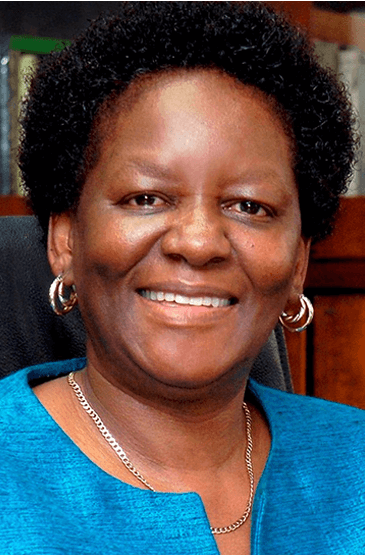
In the context of CoVID-19, the RISG, chaired by Professor Thoko Mayekiso (left), who is also the Vice-Chancellor and Principal of the University of Mpumalanga, will investigate in detail, the pandemic’s impact on research practices within institutions.

This will include identifying best practices and innovations inspired by the pandemic and exploring viable mechanisms to replicate those practices across the system. The issue of research funding also received much attention during the Higher Education Conference. In collaboration with USAf’s Funding Strategy Group, the RISG will explore alternative funding mechanisms available to universities, acknowledging South Africa’s low research funding base, including the funding crisis faced by the National Research Foundation (NRF).

At the Higher Education Conference, delegates acknowledged that research is of little use if its findings and value are not shared publicly for societal understanding. The RISG will examine multiple ways to make research findings more accessible to the public. The Group will also dedicate efforts to entrench the principle of the Engaged University by championing engaged science and scholarship, which requires more meaningful collaboration with society in research during all research processes, such as design, resourcing, implementation and, ultimately, in information sharing on findings and facilitation of mutual appreciation for research benefits.

Alongside championing engaged research, the RISG will invest more effort in promoting research quality across the system. To that end, the Group will review current research incentives to shift their emphasis from research quantity to quality, and ensure a shared appreciation of the changing focus across the system.

Finally, in its Plan of action to embed societal impact in universities’ research endeavours, the RISG will work closely with the NRF to disseminate information and facilitate understanding across the system, of the research impact criteria developed by the NRF. In 2021, the NRF decided to assess new research proposals for their potential societaland knowledge impact as part of the criteria informing research funding decisions.

According to the NRF, impact in those two respects is described as “beneficial change in society or knowledge advancement, brought about as a direct or indirect result of the NRF’s research support interventions, whether planned or unintended, immediate or long-term.”

Stakeholder updates from the sector

The 9 June meeting of the RISG also saw members receiving updates from other stakeholders, on matters of common interest in the higher education sector. From the Department of Science and Innovation (DSI), Mr Bheki Hadebe, Director: High-End Skills, informed the Group that the Department would be winding up stakeholder consultations on the Science, Technology and Innovation (STI) Decadal Plan during the coming months of July, and August. Following the consultations, the Plan would be tabled to the management committee of the Forum of South Africa’s Directors-General (FOSAD) before being presented to Cabinet for final approval. The second convening of the Inter-Ministerial Council (IMC) is planned for November.

Mr Bheki Hadebe also mentioned that the Minister of Higher Education, Science and Innovation had approved the public release of the National PhD Tracer study report. The study traced the mobility, career paths and other attributes of about 16 000 PhD graduates who graduated from South African universities between 2002 and 2018. The study was commissioned by the DSI, project-managed by the Water Research Commission and conducted by the DSI-NRF Centre of Excellence in Scientometrics and Science, Technology and Innovation Policy (ScISTIP) at Stellenbosch University. Mr Hadebe said the DSI was finalising the branding of the report for public release and however committed to making the un-branded report available to RISG members with a caution that they make the necessary acknowledgements in its usage (DSI study, project managed by the WRC and conducted by SciSTIP/CREST).

From the University of the Witwatersrand (WITS), Professor Nithaya Chetty, Dean of Science at the institution, shared information on Wits’ new initiative seeking to nurture entrepreneurial thinking to create more innovative graduates, especially at the doctoral level — while maintaining the highest levels of academic scholarship and critical thinking (more on this in a separate report.)

In addition to the updates above, the RISG members also heard from the Chief Executive Officer of the South African National Library and Information Consortium (SANLiC), Mr Glenn Truran, on the progress made to date in steering South Africa towards Open Access to global academic journals.

From the Southern African Research and Innovation Management Association (SARIMA), the President, Professor Andrew Bailey, explained measures being undertaken by his organisation to professionalise portfolios in research administration for better career pathing in distinct research management areas.

USAf also presented its own updates as Ms Janet van Rhyn, USAf’s Project Manager for Operations and Sector Support, briefed the RISG members on the 5th South Africa-Japanese Universities (SAJU) Forum conference coming up from 28-29 July, that will be hosted as an online event with Japanese counterparts. Dr Linda Meyer, USAf’s Director: Operations and Sector Support, in turn, appraised the members of the R1billion fundraising milestone that is on track to be reached in September 2022 towards student bursaries and historical debt.

Professor Thoko Mayekiso, Chairperson of RISG, expressed her appreciation at all the presentations and congratulated Dr Meyer for her on-going fundraising efforts. The meeting on 9 June was the second of three annual meetings of the RISG. The last meeting for the year will be held in October and will be a joint meeting with the Deputy Vice-Chancellors: Research.

USAF

OPINION| Curriculum transformation of higher education

ADEOYE O. AKINOLA

Post-colonial African states and their universities have refused to be seriously committed to the deconstruction of higher education curricula. South Africa is not an exception.

While successive post-apartheid administrations have tried to implement policies to stem the tide of knowledge dependency and prioritise the transformation agenda, the curriculum of universities continues to reflect western hegemony. From the 1995 National Commission on Higher Education to the 1996 Green Paper on Higher Education Transformation as well as the 1997 White Paper on the transformation of higher education, none have resulted in an effective curriculum reconstruction.

The outcomes-based education upon which the transformation agenda is constructed, focuses on increasing the quality of education, and not necessarily on expanding access to education. It was a goal-driven educational template.

Reinforcing the importance of higher education, the Green Paper notes that higher education equips people with the required knowledge, understanding, skills, and value system to become decisive actors “in a wide range of social roles and to become effective citizens”.

The country has attempted to devise an internally constructed template without success. It is thus important to draw lessons from other African countries. The launch of From Ivory Towers to Ebony Towers: Transforming Humanities Curricula in South Africa, Africa and African-American Studies was organised by the University of Johannesburg’s Institute for PanAfrican Thought and Conversation on June 8 in Pretoria. The book contributes to the discourse on transforming and interrogating western hegemonic structures that persist in higher education in Africa and attempts to shape the perceptions of policymakers.

Twenty-one stakeholders, including experts on curriculum transformation and senior officials of the Department of Higher Education and Training discussed South Africa’s effort to deconstruct universities’ curricula. Knowledge dependency, censorship, and dismissal of African history have been an integral part of the conversation around knowledge production in Africa, where the university curriculum has replicated the Eurocentric templates.

In the 1950s and ’60s, there were struggles against the dismantling of the African curriculum due to the exposure of African students to European universities. African scholars like Kenneth Dike from the Ibadan School of History, and others from the Dar es Salaam School of Political Economy and the Dakar School of Culture, began to advocate for African-driven epistemology.

These schools also adopted historiography, political philosophy, and other African knowledge systems drawn from conventional knowledge. Apart from Africa, India’s integrated, and cross-discipline approach to learning also offered an alternative framework as opposed to the westernisation of knowledge.

Universities in Africa were also caught in the post-colonial African “sympathy” for the universalism of westernisation, as giant transformative efforts of these schools of thought disappeared, while schools of higher learning such as the University of Dar es Salaam, University of Ibadan, and the University of Dakar, continue to reinforce Eurocentric thoughts. This stems from the infamous “black inferiority” conversation, promoted by some scholars to undermine African-generated scholarships.

Apart from Africa’s importation of economic and political systems of the West, the educational template reinforces acute dependency and western hegemony. Books such as Claude Ake’s Social Science as Imperialism try to emphasise the abandonment of the African knowledge system and confront knowledge dependency.

The accelerated infusion of western knowledge and digital technologies into production processes, consciously or unconsciously, enhances the predominant of Eurocentric knowledge production, to the detriment of Africa. Indeed, Africa has become the dumping ground for western knowledge, technology, and values.

Led by the editors of the book, Oluwaseun Tella and Shireen Motala, the meeting questions the use of “indigenous” for the African knowledge system. Unfortunately, many African academics and writers have continued to use such captions for knowledge generated in Africa.

The universities established during colonialism and apartheid were designed as the production hub for regime consolidations and the projection of the western value system. Therefore, based on the existing university curriculum in South Africa and post-colonial African societies, the universities are not African universities but “Universities in Africa”.

It is important for South African universities to enter the global knowledge system on their own terms by setting the agenda and producing knowledge that relates to their context and not the global precedent that has already been established.

The government needs the required political strong will to achieve the transformation agenda.

* Akinola is the Head of Research and Teaching at the University of Johannesburg’s Institute for Pan-African Thought and Conversation.

WhatsApp bot bolsters early childhood development

THE next phase in the development of early learning social franchise SmartStart’s WhatsApp chatbot is to ensure it also provides parental support.

This is according to Ebrahim Vally, chief product officer at Helm, speaking to ITWeb about what’s in the pipeline for the early childhood development (ECD) chatbot.

Formerly Praekelt Consulting, Helm helped SmartStart develop its multilingual WhatsApp chatbot named ‘Funda’, which means to ‘learn’. The chatbot automates a lot of the admin that ECD learning practitioners encounter in their daily activities, giving them time to focus on the more important parts of their work.

This includes the ability to register children using simple-to-follow points via the bot, complete attendance registers at the end of each week, look at lessons, plan activities, as well as access educational resources.

Vally indicates the chatbot was first only for ECD caregivers. However, Helm is looking at different options of offering similar information to parents as well.

“In that time when they’re in a taxi, for example, parents can look at the content, prepare and have ideas about what they’ll need to spend time teaching their child in the evening at home.

“That’s one of the things that hopefully we should be able to launch soon,” Vally notes.

Established in 2015, SmartStart aims to provide quality early learning for children aged three to five. Its franchised programme is delivered through playgroups, day mothers and ECD centres, to improve children’s readiness for learning and school performance.

In addition, it allows franchisees, known as SmartStarters, to run their own SmartStart programmes within their communities.

According to Vally, SmartStart identified there was a gap within the three to five age group, with about one million children with no access to early learning initiatives.

SmartStart approached Helm to find a way to make it easier for franchisees and caregivers to gain access to the content, information and registration.

“They approached us and we came up with the chatbot. The reason we went with WhatsApp was we felt it would be the easiest way to get adoption for the franchisees located in really rural areas and in places where connectivity is an issue.

“Also, when we did our research and user testing, it [WhatsApp] was something that we found was easily acceptable and would be adopted by the franchisees.”

The chatbot aims to save a person time and money spent on transport to upload an attendance register in order to get their stipend, he points out. “Not only that, but we can now offer the collateral and content for the training, the daily activities, etc.”
The content on the chatbot is available in all 11 official South African languages.

“It’s not just translating English into Setswana; there are some changes that needed to be done, in order to really fully get the context of what a specific sentence might say. It’s important to carry the full context of the translation over. We decided to do that in all official languages as a start, especially for the content about the training.”

SmartStart’s WhatsApp chatbot has over 4 000 unique users/practitioners, with a retention rate of 71%, according to the company. It also has 1.54 million automated interactions to assist practitioners.

Currently reaching 103 000 children, SmartStart has a target of reaching one million, which Helm is fully behind, adds Vally.

“We’re trying to work together with SmartStart but the issue we currently face is that there’s a limitation on connectivity and devices. At the moment, the cost of data and connectivity is really high. The introduction of a lower cost device will allow more engagement.

“If we can overcome these barriers, it will make adoption a lot faster and allow us to reach that goal and also increase the amount of franchisees – it will almost double the amount of users on this specific platform,” he concludes.

ITWEB|