Home Blog Page 262

Billions Needed To Eliminate Overcrowded Classrooms

OVERCROWDED classrooms continue to hinder the ability of children to learn in schools around South Africa. The issue of overcrowded classrooms has resulted in a Gauteng school being closed for days as concerned parents demanded answers.

Concerned parents of learners attending Finetown Secondary School in Gauteng shut down the school. The school, which was built in 2010, initially only accommodated learners in Grade 8 and 9. However, as years passed more classrooms were added.

The school has no brick and mortar classrooms and only makes use of mobile/container classrooms to accommodate learners.

Questions have since been raised in parliament as to what the Department of Basic Education (DBE) is doing to address the issues of overcrowding in classrooms. The DBE explained that challenges of overcrowding are common in schools serving informal settlements due to non-stop immigration to such areas which cannot be planned for. 

It is estimated that R5 billion will be required to add around 16 000 classrooms to address overcrowding in South African schools. This includes Finetown Secondary School.

The DBE says funding is currently unavailable to the sector due to budget constraints as the country focuses on rebuilding flood-ravaged areas of KwaZulu-Natal, Eastern Cape and North West.

The Gauteng Education Department (GDE) has allocated R1.7 billion or 2.9% of its annual budget to infrastructure development in the province.

Gauteng currently has 38 schools that are still on rotational learning, mainly due to overcrowding and the decision to return all learners taking effect in the middle of the current academic year. Gauteng Education MEC Payanza Lesufi said a decision was taken by the department to eliminate rotational learning and increase learning time for Grade 12 learners in the province.

Lesufi said the department’s position remains clear and allows our children to attend school while infrastructure is being developed.

“We are, indeed, aware of the campaign and protest and many people complaining about overcrowding in our schools. In Gauteng, we have taken a conscious decision that every learner that is supposed to be at school must be in our classrooms regardless of the size of our classrooms. We will never turn a learner back on the basis that our classrooms are full. We will tackle the issues of overcrowding while learners are within the classroom learning rather than staying at home doing nothing”, explained Lesufi.

SKILLSPORTAL

Teachers’ stress isn’t just an individual thing – it’s about their schools too

REBECCA J. COLLIE and CAROLINE F. MANSFIELD

STRESS is common among teachers, and recent reports suggest it’s getting worse. We need to understand the sources of this stress to improve support for teachers. Growing teacher shortages in Australia underscore the need for this support.

It is also important to identify whether there are patterns of stress experienced by individuals and groups of teachers within a school. This knowledge will tell us whether support for teachers should be targeted individually or to a teaching staff more broadly.

Our study involving 3,117 teachers at 225 Australian schools shows sources of stress do vary among individual teachers. At the same time, the school environment – workloads, student behaviour and expectations of teachers – appears important. At some schools the stress experiences of individuals mirror those of the teaching staff more broadly.

So managing stress is not just the responsibility of individual teachers. Schools have an important role to play in developing a workplace that helps to minimise their teachers’ stress.

What are the sources of teachers’ stress?

In our study, published in Teaching and Teacher Education, we examined three common sources of stress at work to see how these affect well-being among individual teachers and across a whole school teaching staff.

These three sources of stress are:

  • workload stress – teachers’ sense they have too much lesson preparation, instruction or marking work in the time available to them
  • student behaviour stress – teachers’ sense that student behaviour is overly disruptive or aggressive
  • expectation stress – teachers’ sense that professional/registration bodies and parents are placing very high or unrealistic expectations on them.

We first examined how the three sources of stress co-occur among teachers to identify teacher stress profiles. That is, we wanted to see if there are distinct types of teachers who experience similar patterns across the three sources. For example, are there teachers with low or high levels of all three sources of stress, and are there teachers who have mixed levels of the sources of stress?

Next, we wanted to ascertain whether different types of schools are identifiable as being more or less stressful based on the make-up of their teacher stress profiles. That is, we set out to identify different school profiles.

Once we had identified teacher and school profiles, we examined whether the different profiles were linked with work strain and work commitment. Work strain refers to the adverse outcomes of stressful work – such as feeling highly stressed and reduced mental or physical health. Work commitment refers to teachers’ attachment to their profession.

Ideally, teachers experience low strain at work, but high commitment.

What teacher profiles did we find?

Our analysis used data from the OECD Teaching and Learning International Survey (TALIS) 2018. We identified five teacher profiles:

  • low-burden profile (7% of teachers in our sample) displaying very low levels of all three stressors
  • mixed-burden-workload profile (15%) displaying below-average workload stress, very low student behaviour stress and low expectation stress
  • mixed-burden-behaviour profile (19%) displaying low workload stress, below-average student behaviour stress and low expectation stress
  • average-burden profile (41%) displaying slightly above-average levels of all three stressors
  • high-burden profile (18%) displaying high workload stress and very high student behaviour and expectation stress.
  • Looking at links between profiles and outcomes, the low-burden profile and the two mixed-burden profiles generally displayed the lowest work strain and highest work commitment.

What school profiles did we find?

We then examined how these teacher profiles are distributed in schools. We identified three school profiles:

  • workload-oriented-climate profile (17% of schools in our sample) composed mostly of teacher profiles with high workload stress, but also a sizeable proportion displaying lower stress
  • behaviour-oriented-climate profile (23%) composed mostly of teacher profiles with high student behaviour stress, but also a sizeable proportion displaying lower stress
  • higher-pressure-climate profile (60%) composed mostly of teacher profiles with above-average to high levels of all three sources of stress.

Teachers who collectively displayed the highest levels of work strain tended to work in higher-pressure-climate schools. Levels of work commitment were also lowest among teachers in those schools.

What does this mean for teachers and schools?

One notable finding was the differentiation between workload stress and student behaviour stress in two teacher profiles and two school profiles. Some teachers and schools were higher in student behaviour stress. Others were higher in workload stress. And other profiles had similar levels of all types of stress.

These results suggest sources of stress at work are not necessarily specific to the individual, but reflect a broader school climate as well. So, teachers’ stress isn’t just an individual issue – some schools are more stressful places to work.

In practice, it is important that teachers have their own strategies to manage stress. At the same time, our findings suggest schools and educational systems should be aware of teachers’ collective experiences of stress and provide school-wide supports.

To reduce workload stress, research suggests supportive mentors are helpful. It’s also helpful to develop professional learning communities to share the loads of lesson preparation and marking moderation.

Reducing workload across the school is also critical. Decreasing teachers’ face-to-face teaching time and administrative tasks have been suggested as ways to do this.

Providing professional learning opportunities to develop teachers’ classroom management skills might help reduce student behaviour stress.

A positive learning climate at school is also important. When students feel supported and are more engaged in their learning, they are less likely to be disruptive. In particular, research suggests it is important that all students feel cared for, have opportunities to succeed in their learning, and are given a say in content and tasks in the classroom.

Finally, research suggests school leaders can help reduce expectation stress by seeking out teachers’ perspectives and conveying their trust in them as professionals. Likewise, positive school-home partnerships can help ensure teachers, school leaders, students and parents are aligned in their goals.

(Caroline F. Mansfield, Executive Dean, Faculty of Education, Philosophy and Theology, University of Notre Dame Australia)
(Rebecca J. Collie Scientia Associate Professor of Educational Psychology, UNSW Sydney)

THE CONVERSATION

University fee changes planned for South Africa – Nzimande

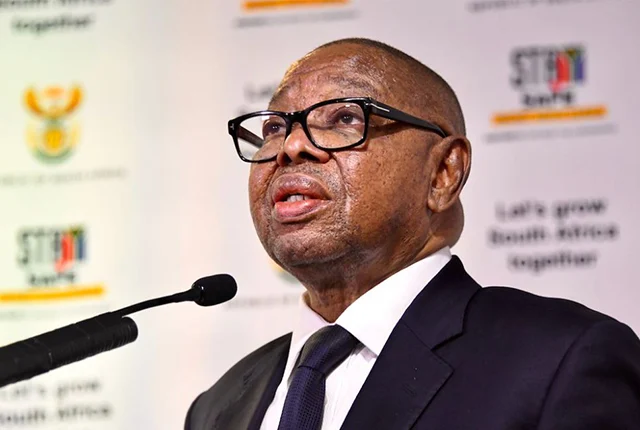
Higher Education, Science and Innovation minister Blade Nzimande says his department is working on a new funding model for university and college students.

Presenting his departmental budget speech on Thursday (2 June), Nzimande said the updated model is to be presented to president Cyril Ramaphosa’s cabinet by July.

“Government has committed and is working upon a comprehensive student funding model for our universities and colleges.

“As part of the development of our comprehensive student funding model, through the ministerial task team on student funding, we are engaging both the public and private components of the financial sector to come up with a funding model to support students in the ‘missing middle’ income bracket and post-graduate students who cannot secure funding from the National Research Foundation.”

This model will incorporate the existing funding available from the state and explore alternative funding sources, he said.

In February, Nzimande announced a CPI-linked increase in tuition fees for 2022, noting that the sector is heavily reliant on tuition and residence fee income for universities to remain operational.

Data shared by Nzimande shows that student debt has grown in the country’s university sector significantly in recent years.

Unaudited data showed that an estimated R6.1 billion was owed by students at the start of the 2021 academic year.

Audited accumulated gross student debt as of the end of December 2020 was R16.5 billion. This amount included students who have exited university, carrying debt.

A survey conducted by the department in 2021 showed that an estimated 56.2% of students with debt owed less than R10,000; 32.9% owed between R10,000 and R50,000, while 10.9% owed more than R50,000. The survey also showed that NSFAS students owed R5.3 billion.

BUSINESS TECH

DA welcomes civil society organisations’ opposition to the controversial Basic Education Laws Amendment Bill, encourages public to do the same

THE Democratic Alliance (DA) has welcomed civil society’s opposition of the government’s Basic Education Laws Amendment (BELA) Bill.

Various civil society groups and the DA , in particular, have criticised the proposed provisions in the bill, calling them a ‘coup’ against school governing bodies.

Thus far, 19 civil society organizations have already sent the Minister of Basic Education, Angie Motshekga, a letter highlighting all the problematic clauses of the BELA Bill.

The DA said the bill seeks to enforce the ANC government’s ‘skewed war on Afrikaans’ without considering the far-reaching implications on quality teaching in other indigenous languages.

The bill, which was first announced in 2017, seeks to provide updated amendments to sections of the South African Schools Act.

This includes stricter rules around student attendance, admissions and language policies.

“The DA has extensively communicated on the problematic aspects of the BELA Bill and the ‘Lesufi clauses’ that will remove school governing bodies’ (SGBs) power to decide language and admissions policies that serves the best interests of their communities,” the party said on Monday.

“As such, the DA will fight the BELA Bill with everything in our power and continue to oppose it in Parliament.”

The party also slammed MEC of Education in Gauteng, Panyaza Lesufi, for backing certain clauses in the bill which it deems ‘racist’.

This after Lesufi said in recent weeks that no schools would be reserved for certain races or for races that speak a certain language.

“The Gauteng MEC of Education, Panyaza Lesufi, and his ANC comrades’ irrational hatred of Afrikaans and all speakers of the language will not only disadvantage them, but also mother tongue education of all indigenous languages and quality education as a whole,” the party said.

“The BELA Bill is another example of the ANC government putting ideology above the well-being of the people they’re meant to serve. And as national government, they’re meant to serve all the citizens of South Africa, irrespective of the language they speak.”

The DA urged the public to submit their concerns in writing to Llewellyn Brown, the secretary of the parliamentary portfolio committee on basic education via email to belabill02@parliament.gov.za or online at https://forms.gle/MoC6AdbdQyYPk3Y49 or via WhatsApp: +27 60 550 9848 by no later than 15 June 2022 at 16:00.

INSIDE EDUCATION

6 big changes proposed for schools in South Africa – including a new timetable

THE Department of Basic Education needs to urgently consider changes to South Africa’s school system to make up for teaching time lost during the Covid-19 pandemic.

This is according to new research by Stellenbosch University, which shows most learners in South African schools missed at least three-quarters of a school year over the course of 2020 and 2021, due to the Covid-19 pandemic, lockdowns, school closures and rotational timetables that were introduced to maintain social distancing in classrooms.

Conservatively estimated, learners have fallen 40% to 70% of a school year behind earlier cohorts in language and much more – 95% to 106% of a school year – in mathematics, the researchers said.

To address these issues, the researchers recommend several interventions:

Extra time

Mathematics deficits due to lost time amount to at least a year of learning in all grades. Extra time is required for Mathematics at all levels to catch up on the year lost.

The researchers added that mathematics and language are gateway subjects, forming the basis for learning in all other subjects.

As such, additional time for catching up on these subjects should be sought. Where feasible, time allocations for other subjects should be reduced or non-core subjects suspended or integrated into other subjects in order to free up time for language and mathematics.

Timetables

Any catch-up programme requires additional time. One way that this can be achieved is to strengthen the use of existing instructional time.

As schools return from the disruptions of the past two years they need to be supported in maintaining regular school days and normal timetables.

Shorter days (for the foundation phase or on Fridays) should not be permitted. Careful regulation of school days during examination times must be undertaken to ensure that terms run their full course and a maximum number of school days are utilized for instruction.

The district and circuit managers have a crucial role to play here, the researchers said.

Less homework and other cutbacks 

Attention to addressing backlogs in reading and number sense in the Foundation Phase is a priority. Teachers must be supported in utilising existing resources and making sure that learners have the opportunity to take reading material home.

In subsequent phases, the overfull curriculum and homework tasks in other subjects should be reduced to allow learners to give more attention to catching up in Mathematics and Language.

In other words, the instructional load of all subjects apart from Mathematics and Language needs to be reduced. This will require discussion and coordination amongst staff in schools across subjects and grades.

Benchmark tests 

Diagnostic assessments of learners’ knowledge to identify gaps should be done by individual teachers.

The government could assist teachers by providing quality benchmark assessments and assistance to teachers in interpreting the results of these tests.

Teaching assistants 

The sole task of the educator assistants should be to work through the previous year’s DBE Rainbow workbook with individual learners.

This will provide, especially struggling, learners with one-on-one instructional and effective support.

Trimming 

The Department of Basic Education needs to attend to the trimming of the curriculum as a matter of urgency.

Certain learning areas/topics should be omitted or consolidated, and others delayed. The focus should be on mastering those skills and concepts that are necessary for progression in learning in subsequent grades.

As an example, in mathematics, definitions of three-dimensional shapes can be left for later grades while core foundational content is mastered.

BUSINESS TECH

Relationship building with home education providers is a priority for the Gauteng Department of Education

THE Gauteng Department of Education (GDE) conducted a meeting with homeschooling and online school providers on the 2nd of June 2022.

This is the first meeting where the GDE reached out to service providers in the home education sector as part of stakeholder engagement and relationship building.

Chriselda Mosibudi-Makhubela, the Director for Independent Schools at the Gauteng Department of Education, expressed the objective of amplifying the voices of learners that are home educated, as well as those of the key stakeholders to work towards turning around the prior views on home education.

South Africa has seen a surge of online schools opening in response to the COVID-19 pandemic.

Some online schools were already established pre-pandemic due to a natural growth in the home education market inherent in the country, whilst others developed in response to the perceived demand in the market for online schooling.

In the US, online schools have been well attended for a few decades already and have seen mature and well-developed online schools emerge as viable and important alternatives for numerous students across the states.

Pre-pandemic there were over 375 000 students between the ages of 6 and 18 attending state-wide full-time online school programmes, a number that has almost doubled for the 2021-2022 school year in the US.

In South Africa, the numbers are not that clear and pre-pandemic estimates of 100 000 homeschoolers have increased dramatically to more than 300 000 according to the Department of Education.

Chriselda Mosibudi-Makhubela has previously indicated that up to 4% of learners can be home educated in South Africa.

The director also expressed that the GDE is very interested in doing research to learn more about home-based education and to improve on assessment and curriculum provision in Gauteng, especially for home education.

With the growth in the interest in home-based education, accelerated by the pandemic, many online schools have emerged.

At the meeting on the 2nd of June it became evident that clearer guidelines and frameworks are required to establish a minimum standard to ensure that all learners get the best possible education from homeschooling providers and online schools.

The different curriculum providers and homeschooling providers present at the meeting had varying levels of maturity of internal processes, curriculum delivery, and assessment structures.

Wingu Academy was encouraged to see that our processes and standards are high and aligned to policy and guidelines available and we are excited to share what we have found to be effective in our approach to online distance learning.

Wingu Academy is formally inviting collaboration with national and local departments of education and wishes to support the core values that Director Chriselda Mosibudi-Makhubela shared at the meeting of “excellence, compliance and relationship building”.

Wingu Academy is optimistic and welcomes the pending regulatory framework to be approved by the end of October 2022, and the opportunity to forge a strong relationship with the GDE.

“At the meeting Wingu Academy extended an offer to support the Gauteng Department of Education with our in-house expertise in curriculum mapping to assist with smoother transitioning of students between International and the CAPS curriculum to make it more accessible for students to transfer between home education and public or independent schools where needed.” explains Ian Strydom, Managing Director of Wingu Academy.

“Wingu Academy has been applying the policy on home education and has simultaneously aligned all internal processes and quality assurance measures with the local and international requirements of traditional independent schools, and are ready to adopt any further recommendations by the Department of Education.”

“The Academy is registered with the South African Comprehensive Assessments Institute (SACAI) as a distance education provider for the CAPS programme it is currently offering, and is a registered Pearson Online Centre for the International British Curriculum.”

“The Academy is also finalising the registration of an independent school in its network awaiting final feedback from the local department of education and as such has comprehensive alignment with the available guidelines from the Department of Basic Education.” Strydom concludes.

BUSINESS TECH

Science & Technology| Former NASA engineer addresses UFS Physics class on future of space exploration

LEONIE BOLLEURS| 

WHO do you know who has designed rockets when they were children, and when grown up, is launching real-life rockets into space? “This just never gets old; does not matter how many rockets I have seen launched into space, it still is an amazing event to see that much power confined in such a tiny device,” says Jim Adams, NASA Deputy Chief Technologist (retired).

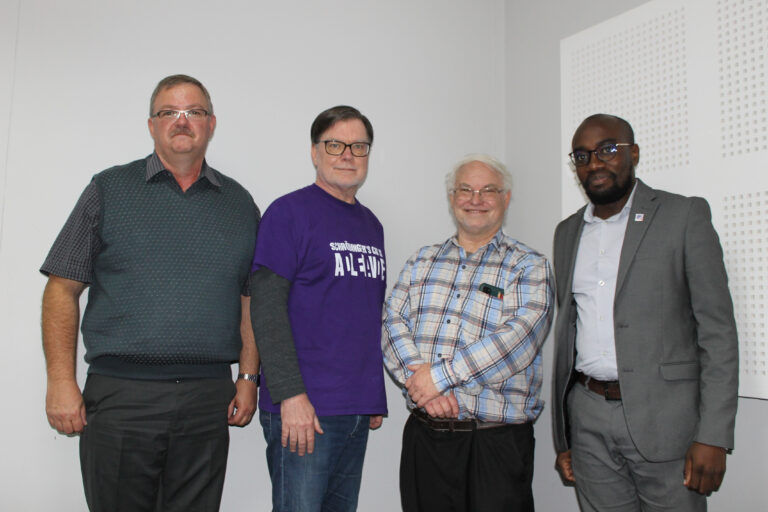
Adams has more than 35 years of aerospace experience and has been involved in more than 30 spaceflight missions to explore the earth, the sun, and most of our solar system. A group of Physics students and lecturers at the University of the Free State (UFS) recently had the opportunity to attend a lecture by Adams, speaking about the future of space exploration. 

Finding answers in space

Included in Adams’ list of top space exploration missions are the Dragonfly mission, the Mars sample-return mission, and the Davinci+ and Veritas missions. 

With the Dragonfly science mission scheduled to be launched in 2027, NASA scientists are working on flying a robotic quadcopter to the surface of Titan, the largest moon of Saturn, to collect data that they will use to obtain information on the formation of moons in the solar system. This will be the fourth mission in NASA’s New Frontiers portfolio, a series of investigator-led planetary science explorations.

By sending and collecting samples from Mars via the Mars sample-return mission, scientists are collecting rock samples and leaving them to be returned to earth later. A rocket will carry tubes filled with Martian soil and rock samples to the orbit around Mars, where it will be picked up by another spacecraft. The Perseverance rover successfully landed on Mars in 2021 and began its mission. Although Adams have foreseen risks in terms of landing – as two thirds of missions sent to Mars have failed in their descent into the planet’s thin atmosphere – the rover safely reached the surface. This mission puts NASA in the best position to getting samples back from Mars, in order to establish whether the planet holds any evidence of life. According to the Natural History Museum, Earth and Mars share a history within the solar system. If Mars were habitable, then it could at one point have had similar conditions as Earth in terms of harbouring life. 

Adams also provided some insight into the Davinci+ and Veritas missions. NASA has selected these two new missions to understand how Venus, the nearest planet to Earth, became an inferno-like world, when it may have been the first habitable world in the solar system. The missions, which will shed some light on questions about climate change and global warming, are expected to launch between 2028 and 2030.

Reaching the stars, literally 

Besides the opportunities to conduct research, space exploration missions now also offer humans the chance to ‘reach the stars’. According to Adams, space exploration is entering a new era, opening space to more people than only the global superpowers and trained astronauts. More private space companies delivering cargo in space, space flights for private citizens to visit the moon, and even space tourism services are not only possibilities but are becoming a reality. Adams adds that it is becoming more affordable to make use of these services. 

Soon, operating from Kenia and other places in the world such as the Grand Canyon, the Great Barrier Reef, and the Great Pyramids of Egypt, World View will lift capsules in a six- to eight-hour ride to the edge of space, allowing humans to observe Earth from 37 km above the surface.

He says that human missions to Mars will also be possible before the end of the next decade, bringing with it job creation, research, and collaboration opportunities. 

The benefit to everyday human living

Investing in space missions also greatly benefited humans. One example is the image sensor technology designed and developed for space, which is now being used in cellphone cameras worldwide. Another example is baby formulas that contain a seaweed-based nutritional enrichment ingredient, which was developed through NASA research to find a suitable nutritious agent for long-duration space travel. Space research is also used in nature research, with a star-mapping algorithm for the Hubble Space Telescope helping researchers to track the rare speckle-skinned whale shark. 

“Investing in science and technology can work towards a better life on earth,” concludes Adams.

He also addressed members of the community at the Naval Hill Planetarium during an open evening event, on the topic: What happened to Mars? NASA’s Artemis Project to the Moon. 

School Sports| South Africans splash into mermaiding as a sport

A DOZEN South Africans dressed as mermaids and mermen frolic in a Johannesburg pool, mimicking the movement of the mystical sea creatures.

Mermaiding is a fast-growing sport worldwide, and now South Africa has its own school to teach it — the “Merschool”.

Before diving in, students each slip on a brightly coloured fabric tail ending in a monofin.

The swimmers are black and white, from 13 years old to in their forties. They include a schoolteacher, a yoga instructor and even an accountant.

“It’s lots of fun,” says mermaiding instructor Izelle Nair.

“It’s for fitness, it’s for fun, it’s for fantasy, it’s therapy — but most of all, mermaiding is a sport.”

In the water, students undulate up and down the pool perfecting their dolphin kicks, or practise sculling — hand movements to propel the body also used in synchronised swimming.

“We swim with a dolphin technique and we use sculling, and then we put it all together and we work out a little sequence,” Nair says.
To be a mermaid — or merman — all that is required is a little technique, some breath-holding skills and a love of costumes.

Underwater, students attempt to perform a graceful aquatic backflip.

Nadia Walker, another mermaid coach from the world of synchronised swimming, says both sports have much in common.

“The back rolls, some of the warm-ups and activities that we do, come from swimming,” she says.

The school hopes to send at least one contender to next year’s World Mermaid Championships in China — and that one day the discipline will become an Olympic sport.
— AFP

How to enhance Africa’s university-business ecosystems

0

As African universities pursue enhanced graduate employability, job creation and knowledge transfer for sustainable development, they must be entrepreneurial in teaching, increase entrepreneurial orientation within study programmes and support start-up companies – along with innovative initiatives to promote cooperation with business.

This emerged from interviews with speakers at a workshop on 19 May titled, ‘From employability to job creation. How to create effective university-business ecosystems in Africa’. It formed part of the UNESCO World Higher Education Conference (WHEC2022) themed ‘Reinventing Higher Education for a Sustainable Future’.

Status and significance

Professor Patrick Shamba Bakengela, the director of the Congolese German Centre for Microfinance at the Protestant University in the Democratic Republic of Congo, told University Word News that there is limited cooperation between universities in Africa and the business sector.

“Sometimes, business is invited to participate in conferences, but it is not sufficient,” Bakengela added.

Improved cooperation, he said, “will help to improve the situation in Africa through enhancing graduate employability and job creation”.

Mark Vlek de Coningh, the team leader of partnerships and programmes at the Netherlands Universities Foundation for International Cooperation, or NUFFIC, the Dutch organisation for internationalisation in education, and Christoph Hansert, the head of the Development Co-operation and Transnational Programmes at the German Academic Exchange Service (DAAD), in a message to University World News said university-business cooperation fosters opportunities and creates livelihoods for young Africans.

“African universities must not be isolated from the needs of African society … [they] have an important role to play in supporting the development of countries and communities,” De Coningh and Hansert said.

Expanding further, consultant Alvira Fisher, the former director of Stellenbosch University LaunchLab in South Africa, which functions as a business accelerator and boosts entrepreneurship on campus, told University World News: “Collaboration between African universities and the business sector offers a great opportunity to make a difference.

“It seems relative to other entrepreneurial thriving economies that Africa still has material strides to take to reach an effective ecosystem between higher education institutions and the private sector.

“University-business cooperation can be a game changer as graduates hold a unique combination of theory and next-generation reality when leaving university and the business sector, [in turn], has the know-how and skills to harness these new and young skills to find innovative ways to bring enhanced change into the industry,” Fisher said.

Challenges

Bakengela said the main challenge facing university-business cooperation in Africa is a misunderstanding on the areas of cooperation in a win-win situation because, sometimes, universities are seen as producing theoretical knowledge, whereas businesses are seen as focusing on the practical aspect and ignoring theoretical aspects.

“In Africa, we must improve our understanding between theory and practice … a good theory is the understanding of [the] causality of things – it is practical, not theoretical,” Bakengela explained.

“The curriculum is sometimes not adapted to challenges seen on the ground [within the business sector] in Africa,” he added.

Fisher added that “finding time to communicate and create a flowing dialogue is another challenge facing university-business cooperation in Africa”.

“Little insight is gained when information is implied,” Fisher pointed out.

To be business-ready, Fisher said, African university graduates needed a lot of support when completing the academic process as there are often workplace, marketplace and consumer skills deficits that will form the bases of the next steps a graduate has to undergo.

“Supporting entrepreneurship and job creation provides the private sector with the workforce needed along with helping in kick-starting the career of the future professional significantly, allowing them to flourish with confidence rather than taking time to learn from failures,” Fisher added.

An integrated approach

De Coningh and Hansert also emphasised the need to consider learning pathways more holistically.

“An integrated approach, which also brings in business, venture capital and mentorship by businesswomen and men, both nationally and internationally, is needed.

“A good example could be to incorporate fully accredited quality internships as part of university study programmes to link business fundamentals with education fundamentals.

“Setting up business incubators and units for promoting industry-university relations at all levels will also support knowledge exchange between the different parties,” they said.

An interesting example could be the Higher Education Institutions and Business Partners in Germany and in Developing Countries programme that was organised by DAAD, and funded by the German Ministry for Economic Cooperation and Development, according to De Coningh and Hansert.

The programme is intended to promote the transfer of knowledge between higher education institutions and industry in order to contribute to the interlinking of institutions of higher education and industry and to expand the dialogue.

It includes several African countries, namely, Egypt, Ethiopia, Ivory Coast, Ghana, Morocco, Rwanda, Senegal and Tunisia.

Towards effective university-business ecosystems

To tackle challenges facing university-business cooperation in Africa, Bakengela said new solutions were needed to help poor people to access the economy through cooperation between African universities and national, regional and international businesses.

“We should encourage formal cooperation between university and business, mainly, to create a disruptive innovation that we enable people that are excluded to have access to new products and markets,” Bakengela indicated.

He also suggested that universities in Africa have to be entrepreneurial in teaching and must give students the opportunities to experiment ideas in the market and if possible to sell their ideas to businesses.

Fisher added that “sponsored engagement connecting stakeholders must be established, shared agendas and strategies across sectors must be formulated and establishing new initiatives to create training grounds for new innovations from within the academic sector to find a way to test theory in the reality of business” [was necessary].

“Other approaches include establishing online tools designed for collaboration and making connections across geographies possible along with organising programmes that not only bring stakeholders together, but create a strategic connection point to tackle sector problems collaboratively,” Fisher suggested.

To set up effective university-business ecosystems, Fisher stated that “African universities must also increase entrepreneurial orientation within study programmes and support start-up companies through the early introduction into practical entrepreneurial steps to undertake as entrepreneurship is more than just a brilliant idea and what we see online on social media”.

“Work towards value creation takes a lot of work behind the scenes if this can be added to academic learning. We might get a head start with our programme graduates on the continent,” Fisher emphasised.

“University-business ecosystems exist in Africa but, as entrepreneurial practitioners, we should challenge ourselves on whether they are accessible enough and if entrepreneurial ideation is given enough social capital to survive the journey,” she concluded.

UNIVERSITY WORLD NEWS

UWC academic warns about dismal situation of the SA labour market, two years after lockdowns

IT is a dismal situation for the South African labour market, warns University of the Western Cape (UWC) economist, Professor Derek Yu, as the Statistics South Africa’s 2022 Quarter Labour Force Survey first quarter data has been released on 31 May.

Yu noted that South Africa will have a very tough time ahead, just to revert to the pre-COVID labour market level, not to mention to promote youth employment and entrepreneurship more rapidly in the years ahead.

He said the current overall trends show, upon examining people aged 15-65 years at the time of the survey, that the number of employed decreased by close to 1.5 million between 2020 in the first quarter – just before lockdown started in the last week of March 2020 – and 2022 in the first quarter.

In addition, the first quarter of 2022 was a time when half of the SA adult population was either partially or fully vaccinated, while unemployment increased by 0.79 million. Furthermore, the labour force participation rate (LFPR) dropped by 3.5 percentage points, most likely because some people felt discouraged from seeking work anymore due to the disruptive lockdown restrictions.

This happened while the unemployment rate went up by more than 4 percentage points to 34.5%, from 30.1% in the first quarter of 2020.

“We can be almost 100% certain that the National Development Plan (NDP) labour market goal of dropping the country’s unemployment rate to 6% by the end of 2030 will not be achieved unless a miracle happens and the unemployment rate speedily drops by 3.5 percentage points per annum in the next 8 years,” said Yu.

“Already experiencing a stagnant real GDP annual growth rate of about 1% per annum in 2014-2019, South Africa suffered an abrupt 6.4% decline in real GDP growth in 2020, before enjoying a growth of “only” 4.9% in 2021. At the time of writing, the International Monetary Fund predicted that South Africa’s real GDP would only increase by a moderate 1.9% in 2022 and 1.4% in 2023. Hence, to expect the country’s unemployment rate to go down to 6% by 2030 is an almost impossible ask.”

Suffering the greatest decline in employment between 2020Q1 and 2022Q1 were:

Africans (accounting for 75% of decline of employment during the 2-year period.
The three youngest age cohorts (accounting for nearly 80% of job losses) – further worsening youth unemployment in the country.

Those without Matric (representing 80% of employment decrease during the two years). This finding is not surprising, given the structural change in the economy, as the less educated and skilled ones are relatively more likely to lose their jobs during the economic lockdown.

Service workers as well as craft and related trades occupation categories – these two categories involve close face-to-face contact with customers, and hence were most likely worst affected by the lockdown restrictions. They represented 22% and 21% of employment decline, respectively.

Yu explains, “When only considering the employees, employment loss was the greatest (accounting for a huge 47% share of total job loss) amongst employees who reported working for a large enterprise with at least 50 employees. This result is not surprising, as it is understandable that the owners of these large enterprises need to cut labour input cost by retrenching some of the employees,“ he noted.
“It is also concerning that 28.4% of job losses happened to employees who reported working in small enterprises with only one to four staff. This result implies some micro-enterprises failed to survive under the difficult circumstances during the lockdowns of the past two years.”

SUPPLIED| Professor Derek Yu is a Full Professor and Chair: Economics in the Department of Economics at UWC. For more information about studying economics at UWC.