Home Blog Page 263

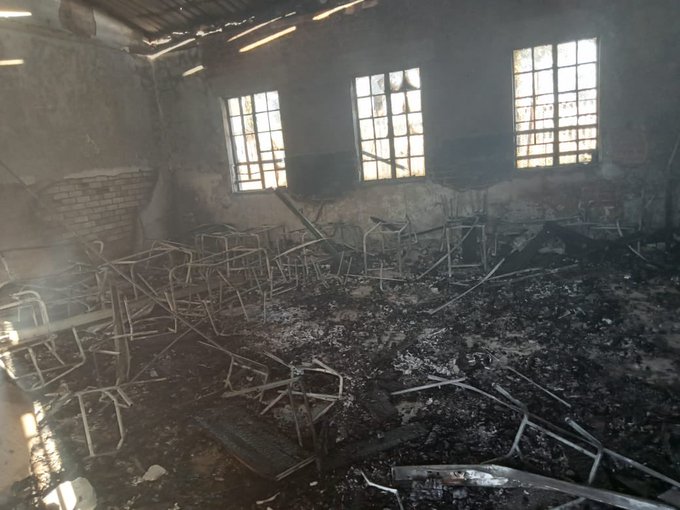
Fire damages eight classrooms at Drommedaris Primary School in Boksburg, Gauteng

THE fire that broke out on Sunday at Drommendaris Primary School in Boksburg, Gauteng, has damaged eight classrooms.

The Gauteng Department of Education confirmed the incident on Monday.

“The Gauteng Department of Education (GDE) wishes to confirm an incident that occurred on Sunday, 5 June 2022; where a fire broke out at Drommedaris Primary School in Reiger Park, Boksburg, damaging eight (8) classrooms,” the Department said in a statement.

According to information received by the Department, the School Governing Body (SGB) was alerted of the fire at approximately 13h00.

One of the school’s general assistants reported the incident and the local fire brigade managed to douse the fire.

“Unfortunately, eight (8) Foundation Phase (Grade R – 3) classrooms and the school’s storeroom were damaged as a result of the fire,” said the department’s spokesperson Steve Mabona.

The police are currently investigating the circumstances that caused the fire.

Mabona said that the GDE is working to ensure that learning and safety of the learners is not compromised.

“The GDE is working tirelessly to ensure that learning at the school, as well as the health and safety of learners, is not compromised due to this incident, Mabona said.

INSIDE EDUCATION

North West renames provincial bursary scheme to Victor Thebe Sifora

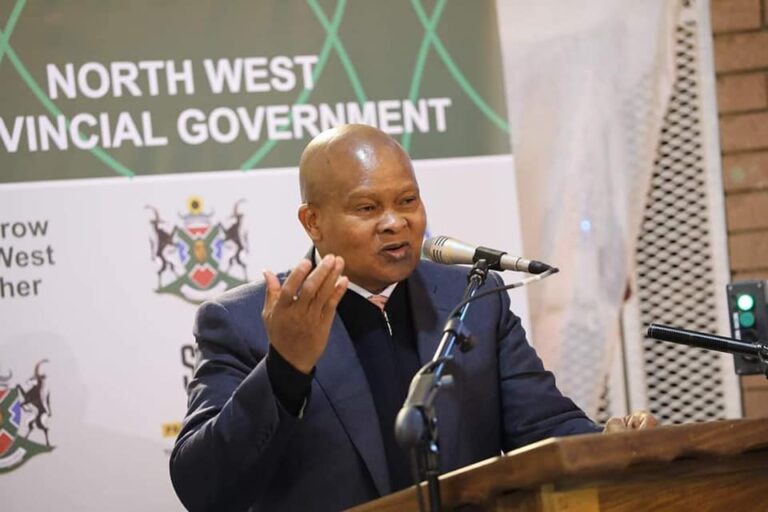
NORTH West Province has renamed the provincial bursary scheme, which is aimed at benefitting thousands of students from poor backgrounds, to the late ANC Youth League (ANCYL) stalwart, Victor Thebe Sifora.

The bursary scheme is aimed at preserving the legacy of Sifora as an activist, scholar and struggle veteran.

It will also provide financial support to students with poor backgrounds, granting them opportunity to further their studies in different institutions of higher learning.

North West Premier, Bushy Maape, said over R4 million has already been set aside for the bursary scheme in the current financial year. Since 2016 the bursary has benefited over 800 students.

In his address during the launch at the Mahikeng campus at the North West University., Maape appealed to business and other social partners to help the Bursary Scheme raise funds to enable government to increase its intake of beneficiaries.

The launch was attended by Local Mayors, Councilorsy, MEC for the Department of Education, Wendy Matsemela and the Sifora family members.

Also present at the launch was a delegation from North West University led by Potchefstroom Campus Deputy Vice Chancellor, Daryl Baila.

“Our plan is to see more learners particularly from rural areas and disadvantaged backgrounds benefiting from this scheme. It is through education that we can change the lives of our people for the better. But education helps us to develop a new set of skills that can assist in addressing a number of challenges confronting our province,” Maape said.

Maape maintained the North West is beaming with men and women of high ethical standards and astuteness whose names must be celebrated in preserving their legacy and the heritage of the province.

“Sifora was a remarkable person and part of preserving his legacy is to make sure that we create socio-economic opportunities for the youth. This will ultimately alleviate challenges of poverty, unemployment, substance abuse and other social ills bedeviling our communities,” said Maape.

“It is my firm believe that the renaming of this scheme will re-ignite interest among the youth to study further but critically emulate Sifora’s principles which were confined within the realm of servitude and selflessness.”

Sifora – who was born in Mopyane Village in the then-Madikwe district in North West in 1914 – was one of the founding members of the ANCYL along with Oliver Thambo, Nelson Mandela, Anton Lembede and Walter Sisulu.

He was also a member of Seoposengwe, an official opposition party in then Bophuthatswana. He had an illustrious career as an academic, principal and teacher.

INSIDE EDUCATION

Labour Court dismisses court case against Unisa brought by its five former employees

THE Labour Court has dismissed an application brought against the University of South Africa (Unisa) by five former employees who were NEHAWU shop stewards at the time of the termination of their employment contracts.

The Labour Court found that the applicants failed to establish the court’s jurisdiction.

Unisa terminated the employment contracts of five employees, including shop stewards of Nehawu on Friday 6 May 2022, for serious misconduct in terms of the university employee disciplinary code and university ethical code.

The university attempted to contact the trade union several times prior to terminating the employees’ employment contracts in an attempt to find a solution to the employees’ illegal behaviour.

They were accused of disrupting graduations and illegally discharging pepper spray, among other things.

As a result, on Tuesday 19 April 2022, the university imposed a precautionary suspension on the staff until the completion of disciplinary proceedings.

“Whilst noting and respecting this outcome, Unisa Management wishes to reaffirm its stance that it is not against NEHAWU or any labour union operating within the university. The Management is on record as having protected the rights of labour to organise, protest and agitate for the rights and issues affecting workers,” the university said in a statement.

“NEHAWU in particular, has been peacefully picketing since 3 November 2021 and the university has not even once interfered with the pickets. However, when the industrial action took a violent turn and violated laws and applicable policies, the university Management took steps to protect life and property in line with legal obligations.”

Unisa said its management also wished to reiterate that it has met the salary adjustment demand by NEHAWU on 19 April 2022 as officially approved by the governance structures of the university.

“As far as the Management is concerned, there is no salary increase dispute yet. To this end, the university is returning to the CCMA to clarify and set the record straight. The new round of negotiations has not yet reached a deadlock stage. The non-existent dispute must not be used to perpetuate violence and instability in the university,” said Unisa.

“Unisa is an important public institution in the imagination and lives of the people of Africa. The Management hopes that NEHAWU will reconsider its violent and disruptive stance. Meanwhile, the university has put measures in place to ensure business continuity and the protection of the academic programme. All workers are encouraged to continue with their important work of serving the public.”

INSIDE EDUCATION

ECD migration from DSD to DBE going according to plan in Gauteng, laying the firm foundations of learning, says Lesufi

WENDY MOTHATA|

GAUENG MEC for Education Panyaza Lesufi says that the migration of Early Childhood Development (ECD) from Department of Social Development (DSD) to the Department of Basic Education (DBE) was one of the major achievements of the past financial year.

He was tabling the Gauteng Department of Education’s (GDE) 2022/23 budget during a house sitting at the Gauteng Provincial Legislature in Marshalltown, Johannesburg.

“This is a major achievement that will allow our children to grow in an education environment and cease with the old approach of considering ECD centres as existing to only provide child care,” said Lesufi.

Lesufi believes early ECD plays a vital role in laying a strong foundation for children.

He said learners will be exposed to Mathematics, Physical Science and Life Sciences subjects from an early age, adding that this move will assist in the elimination of learners dropping out of school at an early age.

The department will now be responsible to support, subsidise and regulate the programmes across Gauteng in line with Chapter 5 and 6 of the Children’s Act.

The existing governance structures between GDE and GDSD will continue to operate to manage the transitional period and to ensure that all levels of service are maintained.

“Science and research confirm that the first 6 years of learning are more crucial to children, that if we provide the necessary support to our children, they will grow to become better citizens. From now on, children will no longer come to ECD centres to pray, sing, eat and sleep. They will now be given an opportunity to learn so that they can grow and become better citizens,” Lesufi said.

“The NDP clearly lays out a vision that can only be reached if we are working together; a vision in which we live together in peace and security in a land that we nurture. A vision in which we realise opportunities for all. This is the grand vision that we want to lay a firm foundation for our children as they start their ECD journey to be better citizens.”

Universalisation of Grade R

To date, the Department has offered ECD to over 164 000 learners in schools and community-based sites.

“We will be expanding Grade R to all public primary schools regardless of their socio-economic status. Private Grade R sites will be registered through the introduction of provincial regulations, to ensure that there is an adequate mix of public, private and community-based Grade R sites. We will use the ECD programmes registered with the Department to determine the number of Grade R learners in private ECD centres. This data has not been previously available. We will improve on our EMIS systems to collect data from private ECD centres,” said Lesufi.

Lesifi said that the department will put in place a research process to determine the criteria for the funding of targeted Community Based Sites (CBS) offering Grade R.

“The department will also work with the GDSD and municipalities to identify targeted private Grade R centres registered with GDSD and local government and provide them with curriculum support and training,” Lesufi said.

“To further improve the quality of Grade R teaching, all Grade R practitioners are required to acquire a minimum qualification and skills to teach Grade R. The Department envisages to register practitioners annually for full time programmes. In 2022/23, the Department aims to register 400 Grade R practitioners for a Bachelor of Education Degree and 500 Pre-grade R practitioners for upskill in qualification on ECD NQF Level 4.”

“This is to ensure that we don’t have ECD outside the public education space, but we have ECD that is within the education space and provides the relevant transition from Grade R to Grade 1 immediately within our education environment. We also want to urge all those that still run their ECD centres within the private education sector to continue provide this kind of support. They must continue enrolling our children and the GDE will co-operate with them at an appropriate stage to provide all the relevant support immediately in terms of learning, learning material and the quality of educators that will provide support to these children. This is crucial to ensure that our children get the best education on their first day in our schools.”

INSIDE EDUCATION

Gauteng education outlines R59bn budget to bolster ICT, paperless classroom programme at schools

GAUTENG MEC for Education Panyaza Lesufi has revealed that his department will continue to champion ICT and implement its paperless classroom programme.

Over the years, the GDE has championed skills development and ICT adoption in schools across the province via the paperless classroom programme.

The initiative aims to address educational needs in the 21st century by supplying electronic devices to learners and teachers, as well as enabling access to e-learning programmes, to digitally upskill and prepare the future workforce.

At the same time, classrooms are equipped with smart boards, computers, printers and other ICT equipment that is used in teaching and learning.

The GDE’s efforts, however, have been hindered by a series of robberies of computing equipment. Shortly after the programme was introduced in 2015, schools became prime targets, and criminals started setting up syndicates in communities to steal smart boards and other ICT devices.

He said thus far the programme continues to be relevant to addressing the educational needs in the 21st Century, including challenges brought by the Covid-19 Pandemic since the academic year 2020.

Lesufi was outlining his department’s budget vote speech for the 2022/23 financial year at the Gauteng Provincial Legislature in Johannesburg.

The ICT and paperless programme rollout is in line with the GDE Education Roadmap 2019-2024 and acknowledges the potential that the ICTs has in enhancing daily teaching in the classroom.

According to Lesufi, the ICT implementation will target two categories of schools: full ICT schools and no-fee-paying township secondary schools.

Provincial guidance will be provided in several key areas to assist districts, circuits, schools, managers and teachers in the strengthened delivery of the curriculum during 2022.

Lesufi explained: “Besides subject-specific support, priority attention is to be paid to learning recovery processes, assessment practices and subjects with a practical component, including technical subjects.

“The utilisation of ICT and remote learning opportunities will be further improved by monitoring utilisation and participation, identifying user challenges and providing support to ensure optimal utilisation. In particular, teacher capacity to integrate ICT with teaching and learning practice will be prioritised.”

During 2022/23, the GDE also plans to intensify monitoring and evaluation of curriculum delivery, he stated.

“The framework focuses on accounting for, and the proactive auctioning of curriculum delivery support in key areas central to achieving improved learner outcomes – whole school improvement, curriculum coverage, completion of school-based assessment tasks and utilisation of resources. The findings of the monitoring and evaluation process will be directed to the relevant support function of the department for priority attention.”

“School and teachers’ accountability will be prioritised and strengthened across all levels of delivery to ensure what we are reporting on is actually implemented. This is to be actioned via cyclical accountability sessions which rely on evidence-based reporting across the system.”

INSIDE EDUCATION

DHET to host the much-anticipated Worldskills SA Biennial National Competition, and the National Artisan Career Festival in KZN next month

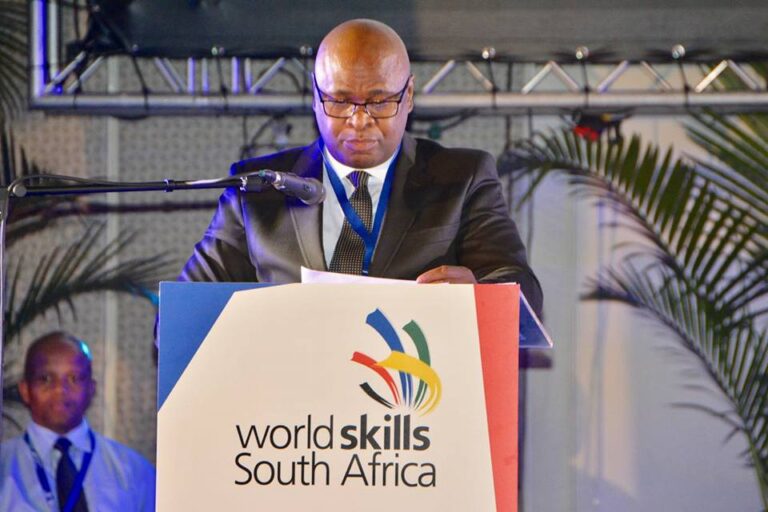
THE Department of Higher Education and Training (DHET) will host the much-anticipated 4th WorldSkills South Africa (WSZA) Biennial National Competition at the Inkosi Albert Luthuli International Convention Centre in KwaZulu-Natal.

The WSZA National Competition, which kicks off on 7 – 10 June 2022, takes place three years after the 45th WorldSkills International Competition in Russia, Kazan, in September 2019.

The department of higher education hosts the biennial WSZA National Competitions as an important mechanism to promote artisan skills as a viable career choice as well as to open up potential partnerships with industry.

The national competition supported by regional competitions provide a critical platform from which the country is able to assess the levels of apprenticeship and artisan training in addition to advocating for the uptake of artisan careers as careers of first choice.

The WSZA programme also plays a critical role in building bridges between all stakeholders within the apprenticeship and artisan development arena.

Hosted under the theme “It’s Cool to be a 21st Century Artisan, the 2022 WSZA National Competition will incorporate a two day WSZA Conference at the Inkosi Albert Luthuli International Convention Centre parallel to the National Competition.

“The DHET is in the final stages of promulgating the National Apprenticeship and Artisan Development Strategy 2030.
The conference will be used as a launching pad for the promulgated strategy,” said DHET in a statement.

“The department said the aim of the career festival is to reduce, among others, the stigma related to artisan careers, provide information on artisan careers and possible career projections.”

The winners at the National Competition will get an opportunity to represent the country at the WorldSkills International Competition in Shanghai, China, to compete in different skills areas covering different disciplines. i.e Construction and Building Technology; Manufacturing and Engineering Technology; Information and Communications; Social and Personal Services; Creative Arts and Fashion; and Transportation and Logistics, among others.

The 46th WorldSkills International Competition hosted in Shanghai, China later this year will feature over 1600 competitors from more than 60 countries and regions, competing in over 63 skills.

WorldSkills competitions create a global platform to develop and help young people who want to change the lives and the fortunes of their communities and societies, said DHET in a statement.

INSIDE EDUCATION

Youth Month| Engen hosts career guidance workshops to boost tomorrow’s business leaders

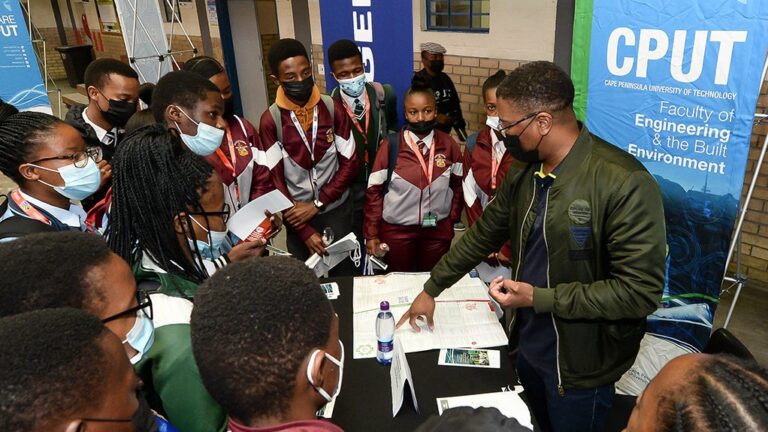
ENGEN, in association with the Cape Pensinsula University, recently hosted career guidance workshops to help learners explore exciting career options open to matriculants who excel in STEM subjects.

The workshop sessions were held at Manzomthombo Secondary School on 21 May and Belgravia Secondary School on 28 May and were open to all Grade 10-12 leaners enrolled on the Engen Maths and Science School (EMSS) programme.

Engen Maths and Science Schools have run for over 30 years and offer grade 10-12 learners from underprivileged backgrounds free supplementary Maths, Science, Technology and English tuition on Saturdays at ten locations across South Africa.

The EMSS programme focuses specifically on providing extra tuition in ‘gateway’ subjects such as mathematics and science; subjects which are considered critical in addressing the country’s technical and engineering skills shortage as well as spurring economic growth and development.

In 2021, Engen invested R11.9 million in Learnerships and Bursaries.

Dr James Nyawera,Engen’s Manager: Transformation and Stakeholder Engagement said: “EMSS seeks to harness the potential of talented young people in difficult circumstances and to also contribute to the pool of scarce skills in the country.”

“Kicking off 34 years ago, EMSS remains central to Engen’s efforts to contribute to the growth and transformation of South Africa, with the programme working tirelessly to help transform young underprivileged people’s lives, with a focus of creating a diverse and vibrant workforce.”

Supplementary tuition is provided to approximately 1 800 under-privileged Grade 10-12 learners across South Africa through the EMSS programme every year.

To continue attracting and growing talented young minds, Engen also offers a bursary programme, which aims to develop our countries future experts and leaders.

Ivershini Reddy, Engen’s General Manager: Human Resources, explains: “It is Engen’s ultimate reward to help set talented people up to pursue stimulating careers that won’t only benefit them personally, but also their families and the broader economy of South Africa.

“Engen remains committed to building tomorrow’s leaders and if we want to ensure that the youth of tomorrow are prepared for a rapidly changing world, we need to ensure that they have the right mix of skills for them to reach their full potential,” adds Reddy.

Engen Maths and Science Schools are based in Cape Town (with classes held at Belgravia and Manzombotho High), and in Port Elizabeth, East London, Cala and Johannesburg. In KwaZulu-Natal classes sit at four locations, namely: Fairvale High School, Ganges High School, Howard College, and Mangosuthu University of Technology.

INSIDE EDUCATION

Disaster and risk management students continue to offer a helping hand to communities that were affected by the KZN floods

SECOND and third-year Disaster and Risk Management students under the Faculty of Management Sciences at the Durban University of Technology (DUT) are serving as Flood Disaster Volunteers within the eThekwini Municipality.

In response to the nature and magnitude of the disaster, DUT’s Dr Mal Reddy, a member of the KwaZulu-Natal (KZN) Provincial and eThekwini Municipal Disaster Management Advisory Forum, as well as the Academic Coordinator saw the need for the DUT students to contribute and uphold the societal responsibilities. Students working in close collaboration with practitioners in the field, gain a first-hand practical experience, demonstrating the clear blend of theory and practice.

These students are working under the leadership of Mr Vincent Ngubane, the Head of the Disaster Management Centre, and his team. The critical responsibilities of volunteers in the project includes profiling of displaced persons at the various mass care centres, verification of the disaster beneficiaries, general disaster assessment and other related disaster response activities as deemed necessary to support the multi-agency eThekwini Municipality Disaster Team.

The students are gaining an in-depth exposure of the practice in Disaster and Risk Management as they are involved in diverse activities relating to disaster response, recovery, and disaster risk reduction. These opportunities assist in building adaptive graduates with the confidence of taking on real world challenges.

Ayanda Khoza, Disaster and Risk Management student volunteer and a Project Coordinator, gave a brief insight on what inspired her to join the project.

“The most valid reason that inspired me to join the project is that I am very keen in helping others in times of need, therefore as a disaster student I had to avail myself in these tough times that we faced as the KwaZulu-Natal (KZN) community and put on a helping hand. Besides helping around, this gave me and other students a great exposure towards the roles that are played by disaster practitioners on the field,” she added.

The project has now collaborated with the Public Employment Programme (PEP) aimed at speeding the recovery stage and building resilience amongst all affected wards by raising awareness and educating community members. The project has already produced over 1300 job opportunities, and these jobs are led by unemployed graduates. The disaster and risk management students of DUT formed part of the two-day induction delegation for the general workers at the Durban Exhibition Centre. They formed part of the training delegates for the supervisor training, the training focused on disasters, disaster risks, vulnerabilities, building resilience and coping measures, the supervisors were also trained to lead and train the general workers.

As of 13 May 2022, approximately 30 DUT Disaster volunteers have been retained to continue with disaster response and recovery activities as planned and coordinated be the eThekwini Municipality.

“Based on the importance and the positive impact in the efficiency of disaster risk management. Mitigating disaster risks and impacts through education, building resilience, awareness’s and building back better is expected upon completion of the project, I see the project expanding from just KZN to other disaster-prone provinces and countries. This project is also likely to be adopted by other educational institutions, countries and maybe form part of the curriculums in intermediate phase learning programmes,” said Samkelisiwe Fortunate Zulu, a Risk and Disaster student volunteer and a project coordinator.

4 new language options coming to schools in South Africa, says Motshekga

South Africa must begin a serious debate on mother-tongue teaching and learning, says basic education minister Angie Motshekga.

Presenting her departmental budget speech this past week, Motshekga said that given the demographics of the country, more than 80% of learners, continue to learn in a language other than their mother tongue.

“We must begin a serious debate on mother-tongue teaching and learning. Currently, learners learn in their mother tongue until Grade 3, then switch to English or Afrikaans as the language of learning and teaching.  Not doing so, will continue to contribute greatly to under-achievement.  We must have a policy shift in this area.”

“We must acknowledge the interesting work currently underway in the Eastern Cape on teaching some gateway subjects across the curriculum in isiXhosa and SeSotho with positive results. The North West has realised the importance of delivering the CAPS in Setswana across all Phases and Grades.”

This follows comments made by Motshekga in March 2022, in which she noted that one of the biggest reasons why South African children have such poor reading comprehension skills is that they are essentially learning in a ‘foreign language’ by being taught in English.

However, the minister acknowledged that there were issues with moving to a purely mother-tongue-based system, noting that it was likely impossible to have a pure class in Sotho or Xhosa in Gauteng the way similar classes have been held in the Eastern Cape.

She added that in classes teachers use multiple different languages to help children learn and get their point across. However, when it comes to assessments – which are typically done in English – they are once again forced to grapple with a language they did not understand while learning.

“They are no longer being tested on their cognitive development or understanding (0f the work). You are now testing their language abilities, which is a problem.

“Government has begun the process of changing this and the next step is to assess them in the language they are taught – so that we are able to assess performance and not language proficiency.”

New languages

Motshekga also confirmed that her department is working to introduce several second additional languages in the country’s school curriculum.

“We strategically decided to expand the list of South African languages offered as second additional languages in the curriculum, she said.

The additional languages include:

  • Khoi
  • Nama
  • San
  • South African Sign Language (SASL)

“We have also signed an agreement with Kenya, and we are in the process of signing another with Tanzania on the development of curriculum and the South African teachers in Kiswahili. Had it not been for the Covid-19 pandemic, we would have been far in piloting Kiswahili in Grades 4-6 in 2021-2023,” she said.

BUSINESS TECH

President Biden urges Delaware graduates to fight against the ‘oldest and darkest forces in America’

0

IN the wake of two national mass shooting tragedies, President Joe Biden urged University of Delaware graduates on Saturday to fight against the “oldest and darkest forces in America” and work toward progress to protect democracy.

“The next 10 years of your life are going to determine what the next 50 years of this nation will look like,” Biden said in an optimistic commencement address to a sea of graduates donned in blue robes at Delaware Stadium in Newark. “We’re at one of those inflection points in history where things are changing so fundamentally, that we have to act.”

Biden acknowledged that the 6,411 University of Delaware students are graduating during a tumultuous era in U.S. history: In May alone, COVID-19 deaths reached 1 million, 10 Black Americans were murdered in a Buffalo grocery store, and 19 children were killed after a gunman opened fire inside a classroom at Robb Elementary School in Uvalde, Texas.

“Too much violence. Too much fear. Too much grief,” said Biden, whose stop in Delaware came between his visits with mourning families in both cities.

He talked about the fight for civil rights in the ‘60s and the forces that pushed against those progressive steps.

Those forces have always existed, Biden added, and the country “should not be surprised” that they are alive in 2022, ripe with new energy, “preying on hopelessness, demonizing people who don’t look like them.”

But Biden said that this generation of young people is what makes him the most optimistic about the future of the country.

“I’ve never been so optimistic in my life… because of you, this generation… Your generation is the most generous, the most tolerant, the least prejudiced, the best educated generation this nation has ever known. And that’s a simple fact,” he said.

Biden graduated from the University of Delaware in 1965 with a double major in history and political science. With the 2022 graduates, he shared advice he received from his political philosophy professor, David Ingersoll, who referenced a Plato quote.

“[Ingersoll] said, ‘The penalty good people pay for not being involved in politics is being governed by people worse than themselves,’” Biden said. “This is no time to be on the sidelines. I mean it from the bottom of my heart. We need all of you to get engaged in public life and the life of this nation.”

On Saturday, Biden was awarded the medal of distinction from the University of Delaware, having already received an honorary degree from the university in 2004.

Biden was expected to announce a $10,000 student loan forgiveness plan during Saturday’s commencement speech, according to the Washington Post, but that announcement was postponed after the Texas school shooting.

Biden closed his remarks by telling graduates that the fight against the “oldest and darkest forces in America” won’t be easy, but that he believes in the younger generation and urged them to act.

“The oldest and darkest forces of the past may believe they’ll determine America’s future. They are wrong… wrong, wrong, wrong. We will. You will.”

WHYY.org