Home Blog Page 267

Corporate SA to take responsibility for advancement of women engineers

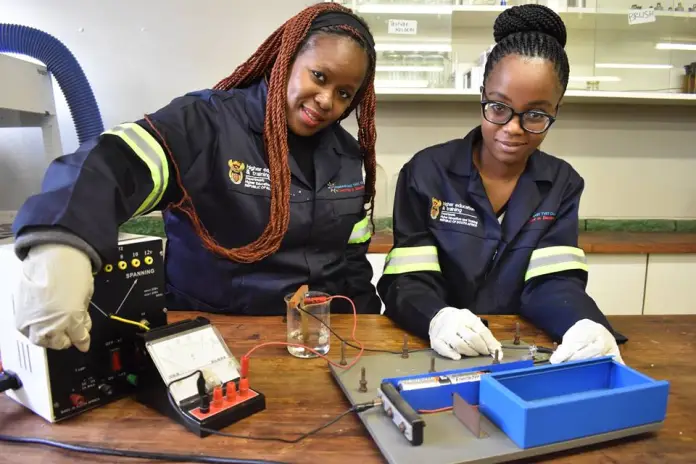
DESPITE decades of efforts to drive diversity and increased the number of females within the local Science, technology, engineering, and mathematics (STEM) industry, there is still a wide gender gap that exists across related sectors. This gap could be attributed to the various challenges that women still face when looking to enter the sector and progress in their roles as STEM professionals. 

This is according to the Regional Director of Sub-Sahara at Arçelik and CEO of Defy Appliances, Mustafa Soylu, who points to UNICEF South Africa research, which highlights that women continue to experience a gender gap in STEM-related careers after college, with less than 28.5% graduating to careers in STEM. 

He says that while South Africa has made strides over the past few years when it comes to the number of women in STEM careers, the country and African continent still have a long way to go to bridge the gender gap that exists in the sector. “Corporates in South Africa need to play a pivotal role in addressing and transforming the gender gap across STEM, especially those who do business in the sector.”

Soylu goes on to explain that this deep-seated conviction has underpinned the decision taken by Defy South Africa to take on a mission in line with the social commitments of Arçelik, Defy’s parent company, to support the gender equality movement in technology and innovation in cooperation with UN Women’s Generation Equality Forum. This movement has formed the backbone of the newly launched WE-inTech programme which aims to offer training, internships and job opportunities to women pursuing careers in the STEM field.

“Creating a workforce with STEM skills is critical to achieving global economic growth. And although the number of women in STEM fields has increased over the last 50 years, it appears that the trend has slowed, particularly since the 1990s. Our aim with the WE-inTech project is to raise awareness by emphasising the importance of Research and Development (R&D), encourage young women to pursue careers in related fields, and implement a long-term and effective programme to increase women’s participation in new generation R&D. We are proud to launch a project that reflects our commitment to giving back to South Africa while also demonstrating that we are true allies to women students on their educational and professional journeys. We look forward to welcoming applicants to this exciting initiative.”

ENGINEERING NEWS

Should New Jersey home-schooled kids be part of school sports and plays?

MICHAEL SYMONS

Home-schooled students in New Jersey would be able to sign up for extracurricular activities in what would have been their school district, under a bill advancing through the Assembly.

Right now, access is decided by each school district. But A1041, endorsed last week by the Assembly Education Committee, would require all districts to allow it, taking away local decision-making.

Assemblyman Jay Webber, R-Morris, said home-schooling “has been put on a real turbo-boost” during the pandemic but that unless they have access to extracurriculars, kids are cut off from things like sports and school plays.

“An orchestra, for example, is not something you can replicate in your living room, something that a homeschool student should have access to.”

John Burns, senior legislative counsel for the New Jersey School Boards Association says it should remain an option for schools, not a mandate forced on them.

“Each district and each community should be able to determine this issue for themselves,” Burns said.

Jennie Lamon, assistant director of government relations for the New Jersey Principals and Supervisors Association, said it should remain optional because the bill doesn’t provide enough oversight to make sure it’s not exploited.

“And it would just be inequitable and unfair to public school students if another group of students is gaining eligibility under a different set of rules,” Lamon said.

“Public school students should have first shot at participation,” she said. “Indeed, they have chosen this setting and all that it has to offer.”

Webber said the opposition is mostly about “administrative and bureaucratic concerns” – and that what’s fair is to open up access to students and their families, “who pay a lot in property taxes to their local school districts and don’t use any of the services presently.”

“Allowing those students to participate in football or drama or orchestra I think is just fair to again the kids and the families,” Webber said.

Assemblyman Erik Simonsen, the athletic director at Lower Cape May Regional High School, said his district lets home-schooled students participate – and that eligibility rules around attendance and grades don’t exactly apply to them.

“I’ve had parents drop off handwritten transcripts and such so that their kid could play, while other kids were not able to participate due to their grades,” Simonsen said. “That’s where the real divide is. That’s where the unfairness comes in.”

Assemblyman Ralph Caputo, D-Essex, said it’s complicated to assess whether home-schooled students are meeting standards.

“I think it opens up a whole world of questions regarding the effectiveness of homeschool,” Caputo said. “Some people could take advantage of home school and not really home school.”

Michael Symons is the Statehouse bureau chief for New Jersey 101.5. Y

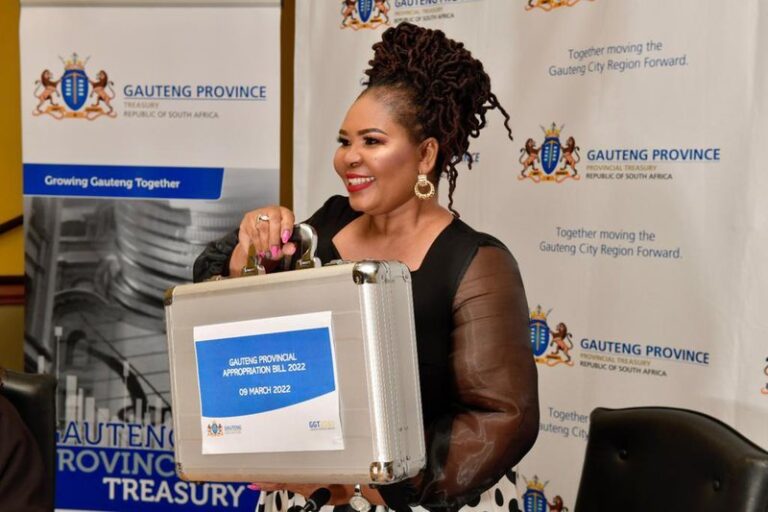
Gauteng Provincial Treasury budget focuses on economy, own revenue improvement

Gauteng Finance and e-Government MEC Nomantu Nkomo-Ralehoko is focusing on jobs and the economy in the last two-and-a-half years of this political term of government amid significant challenges faced over the past few years.

Presenting the Gauteng Provincial Treasury’s Budget Vote in “complex and difficult times”, she said that the provincial economy, which contributes more than 35% to South Africa’s gross domestic product, is still about 1% smaller than what it was in 2019.

“Our unemployment rate, particularly amongst the youth, is unacceptably high; poverty and inequality have deepened in our society,” she said of the socioeconomic challenges that have worsened since 2020 and the outbreak of Covid-19, which has devastated economies across the world and led to a loss of lives and livelihoods.

Working within the Growing Gauteng Together plan, the Gauteng provincial government will implement the priorities of economy, jobs and infrastructure; education, skills revolution and health; integrated human settlements and land release; and safety, social cohesion and food security; as well as building a capable, ethical and developmental State to include measures aimed at improving governance across the Gauteng City Region.

“To achieve our objective of ensuring effective and efficient financial management and drive economic transformation, Provincial Treasury has been allocated a budget of more than R792-million for the 2022/23 financial year,” Nkomo-Ralehoko said.

According to the MEC, these resources will be used to improve the province’s own revenue collection to maintain and enhance provincial spending on education, health care and social services; sustain improvements in public finance management to further cut waste, eliminate corruption and strengthen public accountability; use public procurement to transform the economic landscape and build a more inclusive and sustainable growth path; and grow its infrastructure spend through on- and off-budget initiatives.

“That is why we launched the Gauteng Provincial Government Revenue Enhancement Strategy last month. Our overall aim is to increase revenue generated from the province over the next three years by R3.7-billion over and above the 2022 Medium Term Expenditure Framework revenue baseline estimates.”

The enforcement of the effective and efficient administration of fiscal resources, including oversight of revenue and expenditure of infrastructure budgets to ensure service delivery, will continue.

“The sustainable fiscal resources management business unit is allocated a budget of R170-million for this financial year to implement its strategic objectives,” she said.

Meanwhile, the financial governance business unit continued to implement interventions to support departments, municipalities and entities to improve management of their finances in accordance with rules and regulations.

“These efforts resulted in the provincial government in the 2020/21 financial year recording a total of 17 clean audits. Local government has also steadily improved financial management with the City of Ekurhuleni and Midvaal maintaining clean audits.

“However, we realise that much work still needs to be done across the Gauteng City Region to sustain improvements in public finance management to further cut waste, eliminate corruption and strengthen public accountability.”

In line with this, Nkomo-Ralehoko chaired the first meeting of the War Room on clean audits, 10- to 30-day payment and transformative procurement.

The War Room brings together Provincial Treasury, Gauteng Department of Cooperative Governance, Office of the Auditor-General, audit committees, national departments, academia and private sector representatives with expertise in specialised areas such as legal, finance, ethics, supply chain and policy.

“As part of the work of this War Room, Provincial Treasury is already working with departments who did not achieve good results in paying suppliers within 30 days in the previous financial year and these are Social Development, Health and Infrastructure Development.

“We are intervening in these departments to resolve outstanding payments and ensure that going forward all our departments pay suppliers on time. This is important to support small business, particularly township enterprises.”

In addition, Gauteng Audit Services (GAS) will conduct internal audits in accordance with approved risk-based plans, which will ensure that problematic areas are identified and addressed timeously to improve final audit outcomes.

“As part of our new organisational structure, we are in the process of enhancing the capacity of GAS to ensure that it achieves its objectives.”

A budget of R137-million has been allocated to financial governance and R134-million to the Gauteng audit services to implement their strategic priorities this financial year.

EGINEERING NEWS

Shock findings around South Africa’s education system

Despite efforts to implement recovery plans at schools in South Africa, researchers have found that there has been a loss of one year of learning as far as reading is concerned, basic education minister Angie Motshekga said on Wednesday.

Motshega was addressing a mini-plenary of the National Assembly to give an update on the department’s progress as well as outline budget vote priorities for the year ahead.

Motshekga said she had requested the department’s researchers to analyse the impact of the Covid-19 pandemic on the basic education system.

“The researchers agree that at the heart of our sector is learning, and at the heart of improving learning, is improving reading in the early grades. They report that prior to Covid-19, we had seen progress in the reading abilities of children.

“According to the Progress in International Reading Literacy Study (PIRLS), reading in Grade 4, improved substantially between 2006 and 2016.

However, according to professor Martin Gustafssohn, research suggests that by the end of 2021, the average Grade 4 learner could read as well as the average Grade 3 learner before the pandemic.

“Therefore, there has been a loss of one year of learning. Put differently, we slid backwards in terms of our PIRLS progress by a few years. These losses are similar to what has been witnessed around the world,” she said.

Motshekga said that given these losses, and despite the department’s best efforts in terms of its school recovery plan, it is not expected that the PIRLS 2021 results will display any improvements when released at the end of this year.

“If we do see improvements, we would welcome such, but we have to be realistic. Therefore, international assessment studies, such as PIRLS, but also the Trends in International Mathematics and Science Study (TIMSS), have played a critical role in monitoring progress in the past, and will in the years to come, help us to understand how effectively we are recovering from the negative effects of the pandemic.”

No massive learner drop-out post-lockdown

Motshekga said, meanwhile, that a key question for the sector was whether the pandemic has had any impact on learners dropping out of school.

She said the department monitored the situation and engaged researchers. After initial conflicting reports, there is now an agreement that initial evidence that showed that some half-a-million children did not return to school when they should have was not correct.

“This received media coverage in the middle of last year. The evidence we now have, and researchers are in agreement on this, is that there was no massive worsening of the dropout patterns, compared to what we saw before the pandemic.

“There have been some problems – such as Grades R to 1 enrolment being around 25,000 lower than expected in 2021 due to parents delaying first enrolment of their children. But, compared to the initial half-a-million estimate, this is a relatively small and a manageable problem.”

BUSINESS TECH

EFFSC calls on UFS to ‘come to the table’

DISGRUNTLED students from University of Free State (UFS) in Qwaqwa have called on the university management to find amicable solutions for student issues and withdraw the current deployment of police and security on campus.

This, after the violent protests by students that erupted in Qwaqwa campus earlier this week.

The UFS Economic Freedom Fighters Student Command spokesperson in Qwaqwa, Xola Mehlomakhulu, said that students are disappointed by so-called “trigger happy” police who target unarmed students – while criminals continue to murder women and children of this country.

Mehlomakhulu also lambasted the UFS for allegedly victimising, suspending and getting students arrested.

He further alleges that the University has a court interdict which prohibits students from voicing their concerns.

Parliament committee welcomes suspension of Stellenbosch student

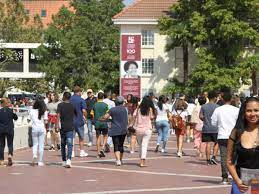
THE Portfolio Committee on Higher Education, Science and Innovation has commended the suspension of a Stellenbosch University student, who was filmed urinating on the belongings of a fellow student.

The incident was captured in a cell phone video. It took place at the Huis Marais residence on the university campus in the early hours of Sunday morning. The video depicts a white student, who broke into a black student’s room, urinating on the latter’s belongings.

The committee has condemned the act of racism and discrimination, and directed the university leadership, led by Vice Chancellor Professor Wim de Villiers, to ensure that all due disciplinary processes are followed in addressing this dehumanising and totally unacceptable behaviour.

“The committee visited the University of Stellenbosch on 16 February 2022 to receive a briefing on the institution’s transformation journey thus far. This incident qualifies the committee’s concern regarding the institution’s state of transformation,” said committee chairperson, Nompendulo Mkhatshwa.

The committee also noted the call made by the university’s Student Representative Council (SRC) for overt acts of racism and discrimination to be addressed institutionally.

It also called upon the university to conclude its investigation of the incident with speed and make its findings public to reassure the country that it strives for an inclusive student community.

“Justice must prevail for the affected student and the committee charges the university to ensure that they receive the mental health care they need, considering the loathsome ordeal they experienced. 

“The committee calls upon the management of the University of Stellenbosch, the SRC and the student community to forge alliances to build a non-racial and inclusive institution,” Mkhatshwa said.

She added that the committee would engage with the university leadership and the Department of Higher Education and Training on this matter.

De Villiers said the residence management strongly condemned the incident and has taken steps to manage the repercussions in the residence.

“We are appalled by this type of behaviour [and] such conduct will not be tolerated at the university. We acted swiftly and decisively to uphold our commitment to a culture of inclusivity.

“What happened at Huis Marais is not acceptable. No student has the right to diminish another student’s human dignity or rights in this way,” De Villiers said. 

SA NEWS

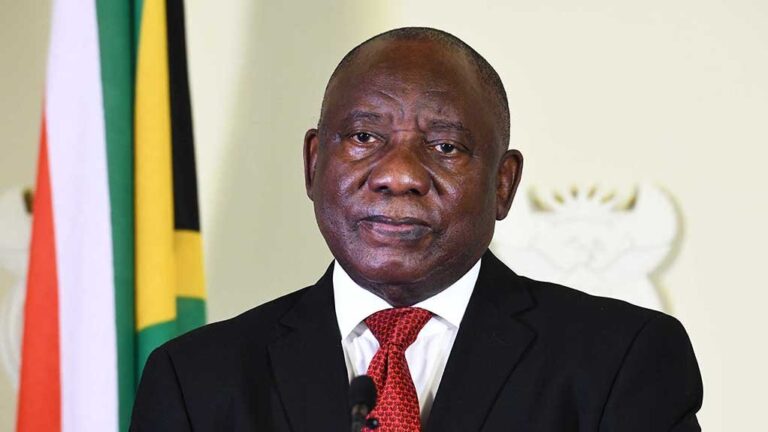
Child grants, fee-free education and school feeding schemes are helping to keep SA children in school, says Ramaphosa 

WENDY MOTHATA|

PRESIDENT Cyril Ramaphosa says child support grants, fee-free basic education and school feeding schemes have been a lifeline for many indigent families in South Africa.

The president said these government initiatives have helped keep millions of South African children in school and thus less vulnerable to exploitation.

Ramaphosa delivered the keynote address at the 5th International Labour Organisation Global Conference on the Elimination of Child Labour in Durban, KwaZulu-Natal.

In his opening line, Ramaphosa said: “The rights of children are enshrined in our Bill of Rights. The Constitution places obligations on all, including the state, to advance the rights of children to a name and a nationality. It places an obligation on us to advance their rights to care, basic nutrition, shelter, health care and social services. The Constitution enshrines the right of children to be protected from ill-treatment, neglect, abuse or degradation.”

He said for many, the words ‘child labour’ conjure up images of young people working in sweatshops and informal factories.

“We have all seen the terrible and heartrending images of children, some as young as six, labouring in mines across the African continent. But there is also a hidden face that many do not get to see. It is the children in domestic servitude to families and relatives, prevented from attending school because they have to do household work,” said Ramaphosa.

“It is the children of labour tenants on farms fulfilling exploitative agreements with farm owners, where the entire family must work on the land in exchange for the right to live on it. It is the many, many children, male and female, who are bought and sold in the international sex trade, the worst of all forms of exploitation.”

The president said the country must attain universal access to social protection, with a specific focus on children and the most vulnerable.

“By providing a basic floor of support for families with children, we can reduce the need for children to be put to work, whether in the home or elsewhere,” said Ramaphosa.

Ramaphosa added that child labour co-exist with migration flows and socio-economic instability in developing economies.

“We know that child labour co-exists with migration flows and socio-economic instability in developing economies. In a climate where millions are prepared to brave the harshness of deserts and rough seas in search of a better life, the risk of children being exposed to exploitative labour practices is high,” he said.

“The reality is that our prospects for eliminating child labour and achieving decent work are limited unless we change the structure of the global economy and the institutions that support it.”

INSIDE EDUCATION

Ghana| TVET records 44,000 student enrollment, highest since its introduction

0

TECHNICAL and Vocational Education and Training (TVET) in Ghana has received its highest student enrollment since its establishment. 

TVET schools across the country collectively recorded 44,000 student enrollment, an almost 100 percent increase in previous admissions. 

Director-General of TVET, Mawusi Nudekor Awity, says the impressive statistics indicate that the Ghanaian populace is grasping the concept of the programme. 

“This means that parents and wards are now understanding the importance of TVET. The government is passionate about the programme knowing that TVET is the main contributor to national development. 

“If you want to reduce unemployment rate among the youth, it’s about giving them employable skills,” she said.  

Addressing the media after a stakeholder consultative meeting with the Ministry of Education, Mrs. Awity revealed that measures are being put in place to ensure all students who are yet to be enrolled onto the programme are duly admitted. 

“This would help us achieve 98% or 100% increment other than the usual 80%,” she said. 

According to Mrs. Awity, the government is keen on improving the programme as it is presently challenged with infrastructural and resource deficits. 

She acknowledged that the few TVET schools in the country lack adequate resources to ensure the smooth running of the programme. 

“The schools lack tutors, workshops, and many infrastructural deficits. However, the government is bent on expanding, retooling and modernizing these schools,” she said. 

Mrs. Nudekor Awity is hopeful her outfit would record significant figures when the deficits are fixed. 

Meanwhile, a Memorandum of Understanding has been signed for the construction of three TVET incubating centers and ten specialized schools. 

Mrs. Nudekor Awity says the incubators would facilitate in refining graduates from the TVET schools.  

“We have been able to get funding and we are going to put up 3 TVET incubating centres in the lower, middle and upper belts and ten specialized schools. 

“The sites for this project are being looked at and constructions will soon begin,” she said. 

SUPPLIED|

Big subject changes for schools and colleges in South Africa – Nzimande

THE Higher Education, Science and Innovation Ministry has established entrepreneurship hubs at Technical Vocational Education and Training (TVET) colleges to support students to move into self-employment after the completion of programmes.

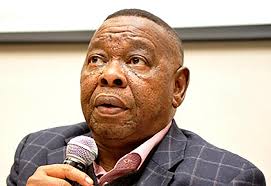
Higher Education, Science and Innovation minister, Blade Nzimande, revealed this in Parliament on Thursday while delivering the department’s 2022 Budget Vote.

This forms a part of the government’s overall strategy to train young South Africans and develop skills in areas that are needed by the economy. The strategy stretches from basic education all the way to tertiary learning.

In basic education, a host of new subjects has been added to the school curriculum over the last five years to meet this strategy, with tech-led subjects like robotics and coding expected to be added in the coming year.

Some new subjects include:

  • Art and design
  • Agricultural studies
  • Ancilliary healthcare
  • Aquaponics
  • Aviation studies
  • Civil technology
  • Consumer studies8. Digital technology
  • Early childhood development
  • Electrical technology
  • Hospitality studies
  • Maritime sciences
  • Maintenance and upholstery
  • Mechanical technology
  • Personal care
  • Technical mathematics
  • Technical sciences
  • Wholesale and retail

In addition to this, the department is looking to introduce a new General Education Certificate (GEC), which is being piloted by select schools in 2022, with plans to roll out the certificate to all schools in the country by the 2024 school year.

The GEC is intended to give learners recognition of their accomplishments at the end of grade 9, to allow for them to move into vocational training. The Department of Basic Education has stressed that it is not a school-leaving certificate, but rather a certificate for further training.

Higher education minister Nzimande on Thursday (12 May) unpacked how the government’s vocational strategy will continue in the tertiary education sector.

Vocational training

In the current financial year, the minister said the department projected that the skills levy would increase to R20.6 billion from last year’s R18.9 billion.

Nzimande said the department had also taken the decision to prioritise the sector by re-allocating additional funds from the National Skills Fund.

“We have begun a process of crafting one country, one skills plan – a Master Skills Plan. This process will promote a more efficient and effective mechanism for our country-wide skills planning.

“As part of my service level agreement with the Sector Education and Training Authorities (SETAs), they will incorporate government priorities – especially those that address the triple challenges of poverty, unemployment and inequality as captured in the National Development Plan – in their Sector Skills Plans.”

These would therefore develop their Annual Performance Plans (APPs) to address skills challenges in various sectors of the economy and country in general.

Both university and TVET college curricula are being reviewed and strengthened to be relevant to the skills required by local employers, communities and the economy.

The minister said SETAs would process qualifying trade test applications within 40 days of receipt for trade testing and develop credible Sector Skills Plans. SETAs would in this regard produce reports on the implementation of the Skills Strategy.

“To further ensure the rapid skilling and training of our youth, particularly those in rural and townships, we are going to focus our attention to their training in areas such as agriculture and information and communication technologies,” he said.

“Our SETAs will be supporting my Department of Science and Innovation (DSI) in the development of critical high-end skills in selected technology areas such as the bioeconomy, space science, technology energy, intellectual property management.”

During the 2022/23 financial year, the ministry will increase its work-based learning programmes from 78,317 to 107,000.

“We will also Increase our learners registered in skills development programmes from 43,885 in 2020/21 to 148,000 in 2022/23 and increase our learners entering artisanal programmes from 10,302 in 2020/21 to 22,000 in 2022/23.”

The ministry anticipates that 20,500 learners will pass the artisan trade test in 2022/23, a 5,000 increase from the last financial year.

Learners who complete learnerships will also increase from 24,136 in 2020/21 to 31,300 in this financial year, while learners who complete internships would stabilise at 5,200.

The SETAs combined placed 44,619 unemployed people into learnerships, of which over 34,710 were youths below 35. Over 25,550 of these were female.

In the previous financial year, SETAs placed 9,901 interns, of which 9,096 were young people below the age of 35 years old and 6,455 were females. The SETAs spent just over R883 million in this regard.

For TVET placement, SETAs placed about 8,539 learners, with 5,656 being females at a total cost of R393 million.

For university placement, SETAs placed 5,183 learners in workplaces at the value of R300 million.

Motshekga releases 2021 Early Childhood Development Census aimed at boosting the ECD sector in SA

THE Department of Basic Education has released the 2021 Early Childhood Development (ECD) Census results which comprise data on all ECD Programmes in order to get a better understanding of the early learning and development landscape in South Africa.

The ECD Census 2021, commissioned by the Department of Basic Education and funded by the LEGO Foundation is aimed at gathering reliable data and information in order to move towards a centralised information system to improve resource allocation and oversight management of ECD centres across the country.

Delivering the keynote address at the launch of the ECD Census results in Fourways, Basic Education Minister, Angie Motshekga, said that the occasion to release the 2021 Census results is important to the Basic Education sector.

Motshekga emphasised that without reliable data on children accessing ECD services in their target age cohort, and the number of practitioners providing those services, the department’s planning and funding systems will likely fail to reach the poorest children most in need of public assistance.

“These results will further assist us to monitor trends in the ECD sector over time and contribute towards the development of the children at an early age so they can thrive as they grow older in the education system,” she said.

According to data collected starting in August 2021, 42 420 Early Learning Programmes (ELPs) were counted that collectively had 1 660 316 children enrolled.

The Minister said that some of the most outstanding findings included that on average, there are 6.2 ECD programmes per 1000 children between 0-5 years nationwide.

The province with the highest total number of ELPs is Gauteng at 25%, followed by KwaZulu-Natal at 19%, the Eastern Cape and Limpopo both at 13%.

“Six out ten ELPs are located in urban areas, which is an almost perfect match compared to the proportion of urban enumeration areas at 59% according to national census demarcations used by StatsSA,” she said.

In KwaZulu-Natal, the Eastern Cape, and Northern Cape, the majority of centres operate for less than eight hours per day, while centres in the Western Cape and Gauteng stay open for longer, averaging more than 10 hours.

Motshekga said that this is consistent with expectations and could be linked to employment patterns.

The data also revealed that at 55% of ELPs, two languages are commonly spoken among children.

While at 80%, English is one of the spoken languages. Meanwhile at the ELPs where English is not spoken, isiZulu at 29%, isiXhosa at 19% and Afrikaans at 19% are the most spoken languages.

Data further showed that 34% of children aged 3 – 5 are enrolled in a ELP, 62% in urban areas and 38% in rural areas.

“Virtually all (99%) ELPs incorporate at least one meal time into the daily programme, usually lunch (94%), breakfast (88%) or snacks between meals (81%). The great majority (81%) of ELPs have three or less classrooms for the children, and the average number of children per classroom is 17,” the data revealed.

Learning through Play

The findings with regards to Learning through Play have indicated that by and large, South African ECD practitioners believe that the initiative for learning through play lies primarily with the practitioners, not the children themselves.

“Relatively little time is allocated for free play, and materials and equipment that lend themselves to free play, such as fantasy toys and sand pits, are less common than other types of toys.”

The Census further shows that higher quintile ECD programmes dedicate more time to free play as part of the daily programme than lower quintile ECD programmes.

The Minister emphasised that government has to deliberately put in place policies and programmes intended to prioritize ECD as a critical component of overcoming the negative impact of poverty on young children especially in poor communities.

“We wish for our children to have space and more time to learn through play, to teach our children to make sense of the world around them at an early age, to develop their social and cognitive skills, to assist them to mature emotionally and gain the self-confidence required to engage in new experiences and environments through play,” she said.

Funding

In terms of funding, the census has found that 33% of ELPs receive a subsidy from the Department of Social Development.

More than two thirds (68%) of ELPs are registered as a non-profit organisation (NPO), and just under a third (31%) are part of a larger network or organisation comprising multiple ELPs, such as a regional ECD Forum.

“An extremely critical element of growth and development in young children is learning through play. This research has proved that our children do spend more time on free play outdoors, with 44% of respondents saying that children spend up to an hour on free play outside compared to 33% for free play as part of the daily programme,” Motshekga said.

According to the findings, the Minister said that only 61% have at least 10 children’s books to play with and only 56% have age-appropriate books for different age groups.

The Minister extended her gratitude to the LEGO Foundation as a key partner through the support they have given the department in funding this Census.

She said this is one example of how the private sector can play a role in the provision of better education for children.

“As Government, we are committed to working with and strengthening the Inter-Sectoral Forum, which coordinates the ECD sector. The Department of Basic Education is committed to working closely with other arms of the state, NGOs, civil society, private sector to ensure that all children, including those with disabilities, are provided with access to quality ECD,” she said.

SA NEWS