Home Blog Page 266

Gunman kills 19 children, 2 teachers at Texas elementary school

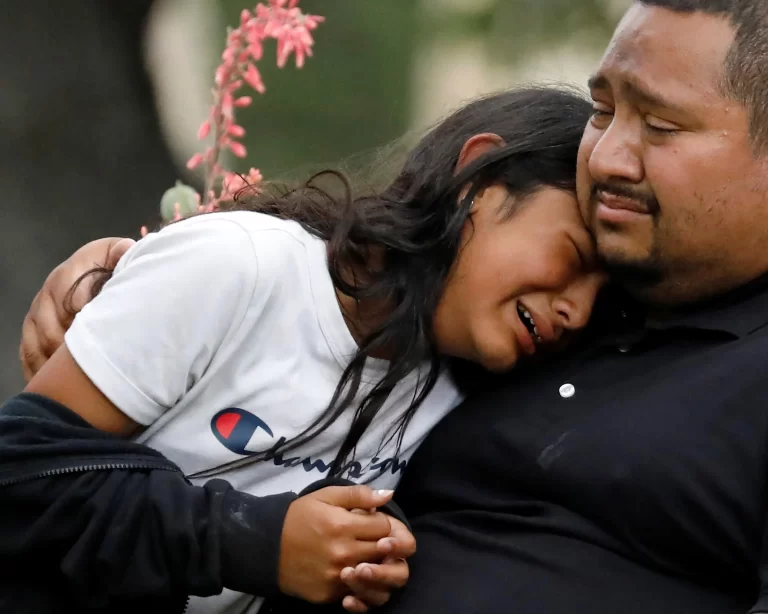
A TEENAGE gunman murdered at least 19 children and two teachers after storming into a Texas elementary school on Tuesday, the latest bout of gun-fueled mass killing in the United States and the nation’s worst school shooting in nearly a decade.

The carnage began with the 18-year-old suspect, identified as Salvador Ramos, shooting his own grandmother, who survived, authorities said.

He fled that scene and crashed his car near the Robb Elementary School in Uvalde, Texas, a town about 80 miles (130 km) west of San Antonio. There he launched a bloody rampage that ended when he was killed, apparently shot by police.

The motive was not immediately clear.

Law enforcement officers saw the gunman, clad in body armor, emerge from the crashed vehicle carrying a rifle and “engaged” the suspect, who nevertheless managed to charge into the building and open fire, Texas Department of Public Safety (DPS) Sergeant Erick Estrada said on CNN.

Speaking from the White House hours later, a visibly shaken President Joe Biden urged Americans to stand up to the politically powerful gun lobby, which he blamed for blocking enactment of tougher firearms safety laws.

Biden ordered flags flown at half-staff daily until sunset on Saturday in observance of the tragedy.

Mass shootings in America have frequently led to public protests and calls for stricter background checks on gun sales and other firearm controls common in other countries, but such measures have repeatedly failed in the face of strong Republican-led opposition.

Authorities said the suspect in Tuesday’s killings acted alone. Governor Greg Abbott said that the shooter was apparently killed by police who confronted him at the school, and that two officers were struck by gunfire, though the governor said their injuries were not serious.

After conflicting early accounts of the death toll, Texas public safety officials said on Tuesday night that 19 school children and two teachers had died.

The community, deep in the state’s Hill Country region, has about 16,000 residents, nearly 80% of them Hispanic or Latino, according to U.S. Census data.

‘My heart is broken’

The school’s student body consists of children in the second, third and fourth grades, according to Pete Arredondo, chief of the Uvalde Consolidated Independent School District Police Department.

“My heart is broken,” school district superintendent Hal Harrell told reporters late in the day, his voice quaking with emotion. “We’re a small community and we need your prayers to get us through this.”

A group of about 40 family members was led out of the Willie de Leon Civic Center at around 11:30 p.m. Some broke down in the parking lot, wailing and clinging to one another as police escorted people to their cars.

P.J. Talavera, who runs a martial arts school in town, was outside the civic center and said his wife’s niece was among the children killed.

Talavera said the town was in a state of “controlled chaos” in the moments just after the shooting, as false rumors spread of other shooters attacking different schools.

“It’s surreal. It’s unbelievable. There is a hollow emptiness inside,” Talavera said.

Ceaseless violence

A mass shooting 10 days earlier claimed 10 lives in Buffalo, New York, in a predominantly Black neighborhood. Authorities have charged an 18-year-old who they said had traveled hundreds of miles to Buffalo and opened fire with an assault-style rifle at a grocery store.

Tuesday’s bloodshed began when the suspect shot his grandmother before going to the school, Texas Department of Public Safety officer Chris Olivarez said on Fox News, a development Abbott mentioned earlier in the day.

“I have no further information about the connection between those two shootings,” the governor said.

University Hospital in San Antonio said on Twitter that it had received two patients from the shooting in Uvalde, a 66-year-old woman and a 10-year-old girl, both listed in critical condition.

Uvalde Memorial Hospital said 15 students from Robb Elementary were treated in its emergency room, with two transferred to San Antonio for further care, while a third patient transfer was pending. It was not immediately clear whether all of those students survived.

A 45-year-old victim grazed by a bullet was also hospitalized at Uvalde Memorial, the hospital said.

Hours after the shooting, police had cordoned off the school with yellow tape. Police cruisers and emergency vehicles were scattered around the perimeter of the school grounds. Uniformed personnel stood in small clusters, some in camouflage carrying semi-automatic weapons.

Epidemic of gun violence

The rampage was the latest in a series of mass school shootings that have periodically reignited a fierce debate between advocates of tighter gun controls and those who oppose any legislation that could compromise the U.S. Constitutional right of Americans to bear arms.

Tuesday’s shooting was the deadliest at a U.S. school since a gunman killed 26 people, including 20 children, at Sandy Hook Elementary School in Connecticut in December 2012. In 2018, a former student at Marjory Stoneman Douglas High School in Parkland, Florida, killed 17 students and staff.

The day’s horrors were reflected on the Facebook page of Robb Elementary School, where posts this week showed usual student activities – a field trip to a zoo and a save-the-date reminder for a gifted-and-talented showcase.

But on Tuesday, a note was posted at 11:43 a.m.: “Please know at this time Robb Elementary is under a Lockdown Status due to gunshots in the area. The students and staff are safe in the building.”

A second post was more explicit: “There is an active shooter at Robb Elementary. Law enforcement is on site.” Finally, a note was posted advising parents that they could meet their children at the small city’s civic center.

REUTERS|
Paired Enchantment as Twins Graduate Side-by-Side with the Same Degree at University of Zululand

BATHOKOZILE MBHELE|

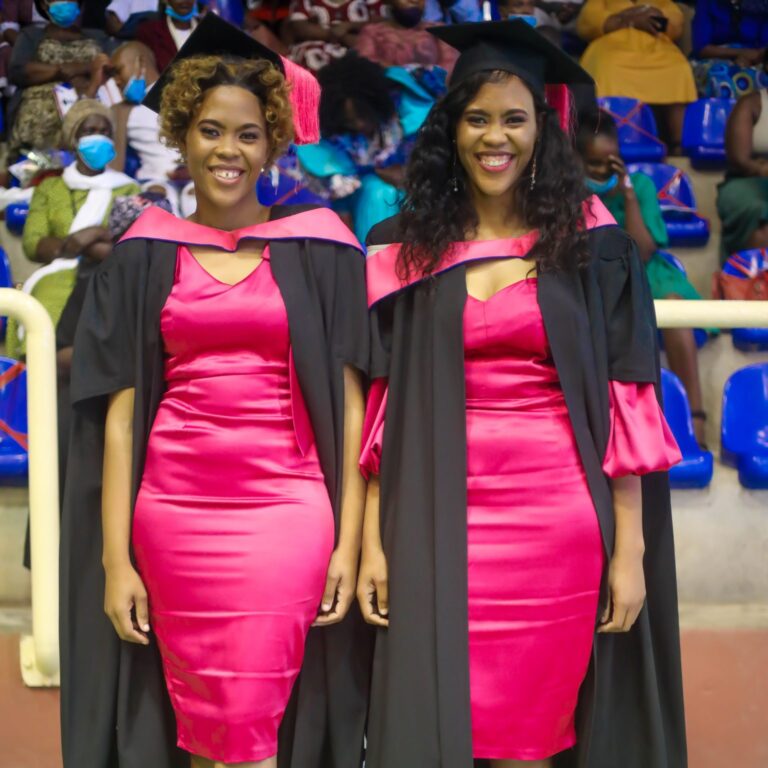
TOGETHER it has always been and is the best way to be for Mhlophe and Mhlophekazi Makhoba. They aren’t just identical twins, they’re inseparable best friends who tackle life as a team!

The twins grew up doing everything together and knew they would go to university together too. This May, they graduated together with the same majors.

The two hail from Inanda, Durban. In matric, they applied to one of the universities in Durban but only one was accepted. Since they cannot stand being apart, one of them going to another institution was not even an option.

Naming children is quite significant in some families. Mhlophe and Mhlophekazi, which when loosely translated means light or fair in complexion, were named by their dad since they were light skinned. He was also prophesying over their lives that wherever they go, there will be light.

From their preschool days, the twins have had a cheerful countenance from achieving success together.

Mhlophekazi recalled that when they were in grade R, they entered a modelling competition. When it was her turn to go on stage she started crying because she was too shy and ended up not participating.

Mhlophe did so well; she worked twice as hard and won. When it was time to take pictures, Mhlophe gave her twin sister the crown so that she could take pictures as well. This has remained a family joke.

“Our mum still uses it to tease us,” chuckled Mhlophekazi. 

“Choosing the same career path has always been our dream. We have always shared the same friends and interests. We have always been best friends. Always. Our love for teaching was partly informed by how we would argue over who got the right answer and helping each other to understand certain topics,” explained Mhlophekazi.

The duo is so intertwined that it often attained similar marks, differing by two or three points. Other times, they simply got the same result. In the end, Mhlophekazi managed to get 15 distinctions and 23 merits while Mhlophe obtained 16 distinctions with 24 merits.

Mhlophe is currently occupying a temporary teacher’s assistant position. She shares her stipend with her twin who has not secured employment yet. “We get the most accomplished when we work together. We are the ultimate study buddies. It meant a lot to graduate alongside each other and I wouldn’t [have] wanted it any other way,” Mhlophe said.  

The twin’s mother, Lindiwe Tshabalala, could not contain her excitement at her daughters’ recent achievement. “I could not be more proud of my girls. They have done exceptionally well!” said Tshabalala.

SUPPLIED| UNIZULU

Department of Education in KwaZulu-Natal issues warning to schools following heavy rainfall over the weekend

WENDY MOTHATA|

THE Department of Education in KwaZulu-Natal has urged all school principals, parents, guardians and school governing to use their discretion on whether or not to send children to school.

“Due to inclement weather conditions, the Department of Education in KwaZulu-Natal advises teachers, parents and caregivers to use their discretion whether or not to send their children and teachers going to school tomorrow, being the 23 of May 2022,” the department said.

The department said it will monitor weather patterns and give further advise in this regard.

This move comes after the province of KZN is hit hard by the renewed floods.

The department also said on Monday that it had already dispatched a delegation of senior authorities led by the Head of Department, Nkosinathi Ngcobo to schools to assess the extent of damage caused by the devastating floods that took place over the weekend.

The department further said it was also working around the clock to ensure that all schools return to normality after the floods devastated the parts of the Province of KwaZulu-Natal and deprived some schools access to basic education.

“The Province of KwaZulu-Natal has again been hit by persistent rainfall over the weekend starting Saturday, 21 May 2022 to the late hours of Sunday, 22nd May 2022. Early reports are pointing to some damage to road infrastructure even though they have not yet
reported on schools. However, it is anticipated that roads across the province may be flooded and unusable by the morning of Monday, 23rd May 2022.”

The department said that some affected learners and educators may be unable to make their way to schools.

“It is for this reason that Circuit Managers and School Principals of affected schools are advised to urgently communicate with parents of learners to ensure that they take extra-caution before sending their children to school in the morning.”

The department said that it cannot afford to lose further lives due to flooding of classrooms.

“Should the situation remain the same on the morning of Monday, 23 May 2022, school principals are advised to ensure that learners who would be in schools already are released immediately to the hands of their parents/guardians,” the department said.

The department further urged that any damage to the school infrastructure or roads to school which affect learners and educators must be reported immediately to the Department of Education.

Office-based employees are also advised to be cautious before leaving their homes and those who may already be in departmental buildings should only leave when it is safe to do so.

More than 630 schools were affected by the floods in KwaZulu-Natal with 101 of them being inaccessible and 124 suffering extensive damage.

Addressing the media in Pretoria on behalf of the Social Protection, Community and Human Development Cluster, Health minister Dr Joe Phaahla said the basic education sector has been severely affected.

“We can confirm that 64 learners have been reported to be deceased. One educator and one food handler have also passed away,” Phaahla said.

INSIDE EDUCATION

South Africa’s COVID school closures hit girls hard – but they showed resilience too

ZOE DUBY|

South Africa’s school dropout rate was high even before the COVID pandemic. Research shows that around 60% of young people effectively drop out of school, with no school-leaving qualifications to their names.

Most school dropout in South Africa occurs in grades 10 and 11, resulting in 50% of learners in any one school year dropping out before reaching grade 12. To understand how high this drop-out rate is, compare it with the 17% drop-out rates of both India and Malawi.

Before COVID, those most likely to drop out were female, from poor households, and attending poorly resourced schools with low academic performance. Dropping out of school has significant long term consequences for adolescent girls and young women. Young people who drop out are more likely to have limited earning potential, chronic unemployment and lower socio-economic status.

They’re also more likely to engage in high risk behaviours, such as having older sexual partners and having condomless sex.

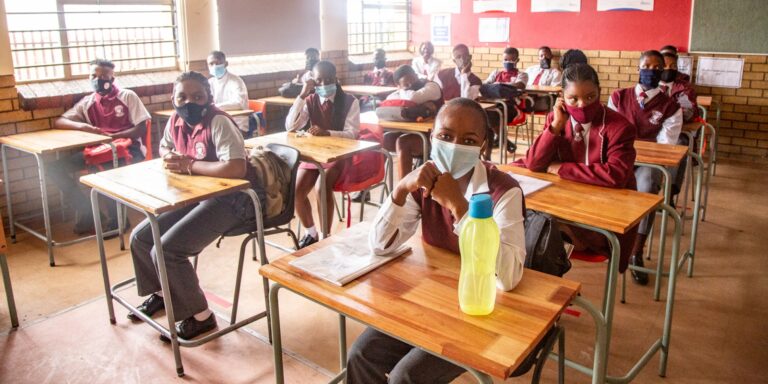
In March 2020 South Africa’s government ordered a hard lockdown to limit the transmission of COVID. Schools and universities were closed. As elsewhere in the world, schools had to shift rapidly to replace in-person teaching with various forms of technology based, remote and distance education. That shift exacerbated existing inequalities: poorer communities often struggle to access fast, reliable and affordable internet.

Given that girls were already more at risk of dropping out than their male peers, we wanted to know how COVID and lockdowns affected young women. So we conducted a study that involved 565 adolescent girls and young women aged between 15 and 24, from six South African districts characterised by high rates of HIV, teenage pregnancy and socio-economic hardship.

The digital divide

More than half of the young women who had been enrolled in education were not able to continue with their studies. Reasons for this included lacking cellphones or reliable internet access, and households struggling with food insecurity. The girls who were most likely to experience educational disruption were those in the poorest families, who were orphaned, who had no access to a cellphone or who had experienced hunger.

We found that due to poverty, lack of access to resources, limited access to internet and suitable devices, and the high costs of data, studying online wasn’t viable for many adolescent girls and young women. This led to their education being substantially disrupted by school closures.

One of the participants said: Lockdown had a negative effect because we were forced to do online learning. It was not easy especially for those people who are struggling. Because we needed data… you have to find a way to get data.

Many of the young women spoke of challenges with online learning and studying at home. They also lacked support from schools and teachers. The young women spoke about the dreams for their future and education being shattered:

We want to apply for universities, but we do not have enough airtime or data in our phones for the application. 

Narratives of resilience

It wasn’t all doom and gloom. There were some rays of light in young women’s stories. Some participants showed educational resilience, and a determination to achieve their educational goals. Some girls spoke of how they had found ways to cope, and with resourcefulness and creativity, had remained motivated and focused. This helped them to reduce disruptions to their education.

Keeping a positive attitude helped girls to remain focused on their studies. This resilience was enabled by support from other people such as family and friends. Girls who were able to access the internet could use online study resources, or connect with teachers and other learners to work together.

It was bad… I thought of quitting… But I continued anyway… I was able to manage… you could get notes from the internet or from the school… those websites and stuff…

Some respondents described receiving assistance with studying from other people at home, such as parents or partners.

I live with my boyfriend… he has helped me a lot, when it came to assignments and my schoolwork… I ended up doing very well at school this year.

Going forward

These findings are important because they help us to understand factors that bolster young people’s resilience, which can inform the design of programmes aimed at supporting young people to remain in school, and achieve their educational goals.

How can these findings inform efforts to help young people remain in school? We make the following recommendations:

  • South African educational institutions, public and private sector stakeholders and civil society organisations need to work together to develop inter-sectoral strategies to ensure a smooth transition to online learning.
  • Digital learning strategies need to include efforts to improve technological skills and digital literacy among learners and teachers.
  • Online learning needs to be mobile-friendly. It needs to consider accessibility so that learners who don’t have access to a computer can use smartphones.
  • Free learning resources and materials need to be made available on a variety of devices, operating systems and software applications. These need to be optimised for restricted bandwidth and unreliable internet access.
  • Infrastructure at government schools should ensure that both teachers and learners have access to basic digital technology and internet connectivity.
  • Given that mobile data in South Africa is prohibitively expensive, it’s important that the government and private sector jointly consider strategies to address these costs. Mobile operators should enable zero-rated educational sites and digital learner platforms should be developed with minimal data usage.
  • Providing support to learners, to motivate and encourage them to return to school and continue with their education, is critical. This needs to be combined with teacher support, provision of learning materials and increased involvement of parents.
  • (Zoe Duby Socio-behavioural public health researcher, South African Medical Research Council) 

THE CONVERSATION

NECT, DBE to offer free learning material to Grade 12s in a bid to ensure higher pass rate

THE National Education Collaboration Trust (NECT) together with the Department of Basic Education (DBE) announced on Monday the implementation of a catch-up and recovery plan to assist matric learners across the country, through the 2-year-old Remote and Digital Learning (RDL) support programme.

The RDL programme is comprised of Woza Matrics which focuses on Grade 12, and Tswelopele campaign which focuses on
grade 1 – 11. The main purpose of the RDL campaigns is to offer supplementary support that can help learners, their teachers and parents to work together to catch up on the curriculum, and to revise and prepare for the exam.

The CEO of NECT, Godwin Khosa encourages teachers and parents to assist learners to make use of these resources, which are available for download on the Woza Matrics website (www.wozamatrics.co.za).

“We continue to spearhead support mechanisms for parents and learners during the education system recovery programme. We have developed simplified content so that parents can get a sense of what is being taught in the classroom and plan their participation at
home. By doing this, parents can help pace up their children’s studies,” said Khosa in a statement.

“Overall, our research shows that learners find these interventions helpful. Woza Matrics has been described by teachers and parents as practical and necessary to support the recovery programme.”

The NECT said over the past two years, the Woza Matrics campaign was able to meaningfully cover six of the ten priority subjects, namely Maths, Life Sciences, Geography, Physical Science, Accounting and Economics. A key component of the campaign is the delivery of TV programmes on the DBETV Channel 122 and this will support the Matric Class of 2022 in their exam preparation.

In addition, the programme provides quality content on the following subjects: Math Literacy, English First Additional Language, History and Business Studies.

The NECT also said that the campaign has demonstrated the benefit of broad-based collaboration involving the public and
private sectors in addressing critical education needs during this recovery period.

The DBE and NECT have produced 54 new Matric study guides for high enrolment subjects and home language creative writing.

The material is being used by the Class of 2022 and the Second Chance Matric Support Programme.

INSIDE EDUCATION

Big changes for schools in South Africa including new subjects and a specialised curriculum

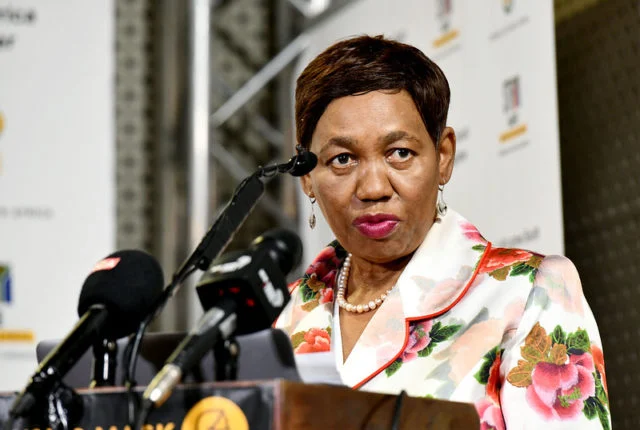
Basic education minister Angie Motshekga says a specialist-subject curriculum, which will see learners enrolling for subjects such as agriculture and maritime, has been gazetted for public comment.

The minister said this when she tabled the department’s budget vote during a mini-plenary of the National Assembly on Thursday.

“We are continuing to expand the establishment of Focus Schools to cater for learners with special talents and aptitudes across a wide range of scholastic endeavours.

“These schools constitute a legislatively distinct category of public schools that offer a specialised curriculum, oriented toward 11 learning fields, which include Agriculture, Maritime and Nautical Science, Mathematics, Science and Technology, and Technical Occupational disciplines such as Electrical, Civil and Mechanical Technologies.

“In addition to our detailed progress report we gave last year, we can further report that 35 Occupational and Vocationally-oriented subjects have been gazetted for public comment,” she said.

Motshekga said the gazetting was followed in 2021 by the submission of these subjects to Umalusi for appraisal and quality assurance.

“Public comments have been received, and their infusion in the CAPS [Curriculum Assessment Policy Statements], together with the development of Learner Books and Teacher Guides, has taken effect, and this work was completed between January in March this year.

“In March this year, training manuals were developed in preparation for the training of Subject Advisors and teachers in Occupational and Vocationally-oriented subjects,” she said.

First cohort of marine science learners to sit for matric

Motshekga reported to Parliament last year that the department introduced a new FET [Further Education and Training]-level subject, Marine Sciences.

“We can now report that the first cohort of learners taking this subject will sit for the first NSC [National Senior Certificate] examination, which includes Marine Sciences.”

Motshekga said the Coding and Robotics Curriculum for Grades R – 3 and 7, and the CAPS for Occupational Subjects for Grades 8 and 9 have been developed and submitted to Umalusi for appraisal and quality assurance.

“I can report that this appraisal and quality assurance process is ongoing, including the appraisal of public comments received,” she said.

BUSINESS TECH

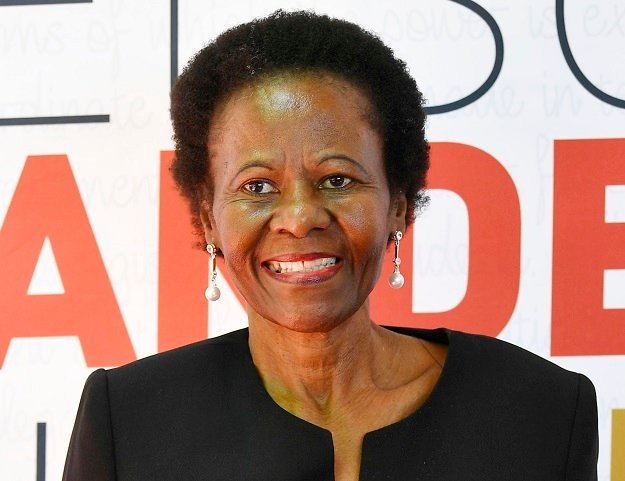
Retired Constitutional Court Justice Sisi Khampepe appointed new chancellor of the University of Pretoria

SISI Khampepe, who recently resigned Constitutional Court Justice, has been named the new chancellor of the University Of Pretoria (UP). Khampepe will begin her five-year term on June 28 2022.

Professor Wiseman Nkuhlu, who was appointed chancellor in March 2007, will step down.

Tawana Kupe, UP vice-chancellor and principal professor, said: “Professor Nkuhlu’s excellent work and devotion to the university over the past 15 years is greatly appreciated. His term as chancellor ends on June 27, 2022.”

The chairperson of the UP council, Kuseni Dlamini, said: “With four decades of service in the legal field, 12 of them in the Constitutional Court, Justice Khampepe, affectionately known as ‘SK’, is celebrated for her role in strengthening the rule of law in South Africa, her judicial bravery and her firm commitment to justice for everyone. 

“She is a jurist of vast intellect, uncompromising integrity, inimitable style, humour, warmth, kindness, humility, grace and quiet strength. In every respect, she is a true ambassador for South Africa. She epitomises the values and character that UP requires in its chancellor, and the qualities we seek to develop in our students.”

Khampepe was elected by the Electoral College.

According to a university release.Members of the council and senate, as well as the president of the convocation, make up the Electoral College.

“With four decades of service in the legal field, 12 of them in the Constitutional Court, Justice Khampepe, affectionately known as ‘SK,’ is celebrated for her role in strengthening the rule of law in South Africa, her judicial bravery, and her firm commitment to justice for all,” said Kuseni Dlamini, chairperson of the UP council. She is a jurist with a wide intellect, unwavering integrity, unmistakable style, wit, warmth, generosity, humility, grace, and quiet strength. “She epitomizes the ideals and character that UP expects in its chancellor, as well as the attributes we aspire to nurture in our students,” said the university president.

INSIDE EDUCATION

COVID-19| Impact of pandemic on schools very concerning: Report

Author: RESEP|

DUE to the pandemic, South African school children have missed at least three-quarters of a school year in the past two calendar years. That has had a considerable impact on how much they could learn and affected children in different circumstances differently. Research on Socioeconomic Policy (RESEP), based at the Department of Economics at Stellenbosch University, has undertaken a major study on such learning losses, in collaboration with the Western Cape education department and with financial support of the Millennium Trust.

In this research the 2021 Western Cape systemic tests in mathematics and language in grades 3, 6 and 9 were analysed and the results compared to the tests written in 2019. (Only those questions which were common in these two exams were considered.) This study offers the first comprehensive picture of the long-term effects of the pandemic on learning outcomes across a whole province, in both poor and rich schools.

The results are extremely concerning.

The true costs of the pandemic and the associated lockdowns are slowly emerging. One of the most concerning is the blow dealt to education, with school pupils and tertiary institution students across the world having lost out on social and educational fundamentals. This is especially concerning in SA where even before Covid-19 struck learners were performing poorly by international standards in core subjects such as maths, science and language.

Slow improvement in these subjects was wiped out when South African public school pupils missed about three quarters of a school year over the course of 2020 and 2021.

During this time, schools were totally closed for a number of months and later operated on a platoon system designed to ensure social distancing.

While pupils at affluent schools were for the most part able to continue classes via remote learning, those at poorer and rural schools fell far behind and there is a real danger that this will adversely affect their educational progress and future prospects.

Following on from research done by the Western Cape education department, a team of researchers led by University of Stellenbosch economist Servaas van der Berg conducted a wide-ranging survey at schools in the province and found there had been acute deterioration in pupils’ prowess in mathematics as well as language.

This was especially the case for pupils at schools where the medium of instruction changed from home language after grade 3.

Given the extent of the research, it is likely that a similar situation exists at schools in this province and in the rest of the country.
This spells disaster. Educationists warn that if schoolchildren do not master these “gateway” subjects in early grades, their entire schooling will be compromised, with resultant dire effect on their futures.

What is needed is urgent, decisive intervention by the education authorities who need to take a hard look at the syllabus and empower teachers to do away with the frills and add-ons to focus on helping learners catch up the basics.

SA cannot afford to lose a generation to the pandemic.

SUN/SUPPLIED

Stellenbosch University| We all need to rally together to confront racism, says Ramaphosa

CYRIL RAMAPHOSA|

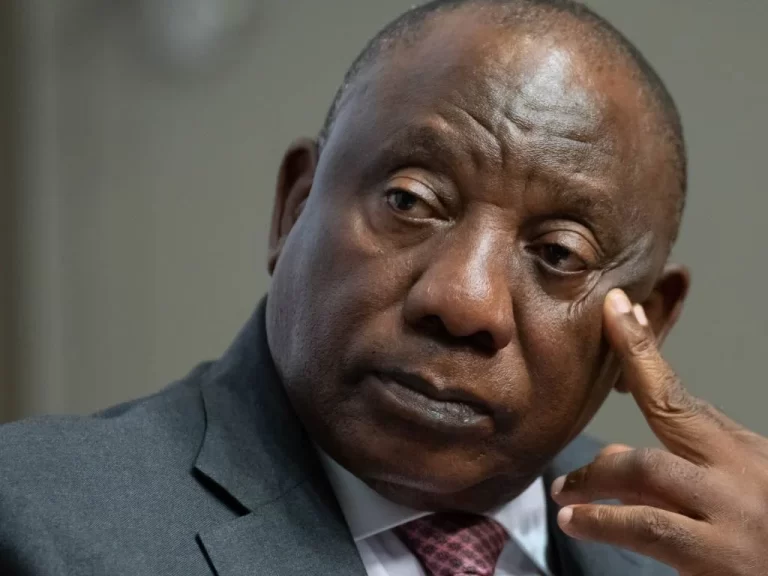
THE country has, in recent days, been outraged at the sight of a white student at the University of Stellenbosch degrading and humiliating a fellow black student in a despicable act.

There has been widespread anger that such acts still take place in a country with a bitter past like ours; a past which we have fought so hard to overcome.

It is more troubling that such incidents are happening at schools and places of higher learning. A number of the people involved were born after the end of apartheid.

While the incident at the University of Stellenbosch may seem like an aberration – an appalling act that has been roundly condemned – the truth is that racism is still a feature of every-day life in South Africa. The sooner we recognise that reality, the sooner we can change it.

We know that racism, here and around the world, is driven by feelings of superiority on the part of those who perpetuate it. And although racism can be directed against anyone, it is black people who bear the brunt, both in the past and in the present. As the ‘Black Lives Matter’ movement has so strongly asserted, we need to systematically dismantle and eradicate attitudes of white superiority.

It is encouraging and exhilarating to see young South Africans taking the lead in this effort. The thousands of students who have joined protests at Stellenbosch and elsewhere were not responding to just one incident.

They were responding to a deep and pervasive problem in our society, which they themselves have to confront daily.

As Kwenzokuhle Khumalo, a 4th year Management Sciences student and leader, told students on the Stellenbosch campus this week: “You’ve met the wrong generation this time.”

Like the youth of 1976, a new generation of young South Africans is stepping forward to proclaim their birth right and reclaim their future. They are challenging society to grapple with racism, its causes and its effects. As Ms Khumalo rightly said, it is not black people who are the problem and need attention, but those people who still hold on to ideas of white superiority.

It cannot be that the onus must rest with the formerly oppressed as the main victims of racism to advance reconciliation. It cannot be that black South Africans have to continue to prove themselves worthy of dignity and respect.

In a 2016 judgment on a case involving an employee of the South African Revenue Service who was fired for using the k-word at work, Chief Justice Mogoeng Mogoeng wrote: “There are many bridges yet to be crossed in our journey from crude and legalised racism to a new order where social cohesion, equality and the effortless observance of the right to dignity is a practical reality.”

If we are going to cross these bridges, we need to understand what is causing racist attitudes to flourish in our schools and places of higher learning. We need to understand what kind of institutional cultures contribute to racism in the workplace, in social organisations and in communities.

We need frank and honest dialogue between people of different races on the experiences of black people in South Africa 28 years into democracy.

These discussions should be part of the life orientation curriculum in our schools. The arts and culture community should produce content and programming that fully reflects the diversity of the country and the lived experiences of people of all races.

Greater emphasis should be placed on inculcating tolerance and respect for diversity in the classroom from a young age. Parents should be part of this effort because the reality is that racist, chauvinistic and sexist attitudes among the younger generation are often a reflection of what they observe and learn from their parents and older relatives at home.

As many student leaders who took part in protests over the past week said, when it comes to transformation the time for half-measures is over.

This doesn’t only apply to overt racism in schools, workplaces and places of higher learning, but to all of society. Just as racists must be held accountable for their actions, all sectors of society, including business, must advance transformation.

The rights to equality and human dignity are the cornerstones of our Constitution and building a non-racial and non-sexist society is our shared fundamental responsibility.

In complying with employment equity legislation, in advancing broad-based black economic empowerment, in taking practical steps towards redress and undoing the legacy of our discriminatory past, we are not just obeying the law.

We are redressing a grave injustice and building a new country in which race, class and gender no longer determine the circumstances of one’s birth or one’s prospects in life.

Ending racism is not just about changing attitudes; it is also about changing the material conditions that still today separate black and white South Africans.

We have come too far and the sacrifices made have been too great for such appalling acts of racism to turn us against each other. Rather, we must use this incident to confront the issue of race and racial inequality in our society.

It is our wish and expectation that the student population and the broader Stellenbosch university community, both black and white, find each other and rally together to confront racism honestly with courage and truthfulness. They must roundly reject what has happened and express their determination to achieve a learning environment free of bigotry, racism and chauvinism and embrace a non-racial future for Stellenbosch University. By so doing they will set the standard for us all.

From the desk of the President

Stellenbosch University postpones exams by a week following racism, rape scandals

Stellenbosch University says exams have been postponed by a week following an alleged racist incident and rape on campus.  

The university added that all assessments which had deadlines for this coming week will also be extended by one week.

This decision comes after disruptions took place in the wake of the racism incident which took place at the Huis Marias residence on Sunday and the sexual assault of a female student on Tuesday.

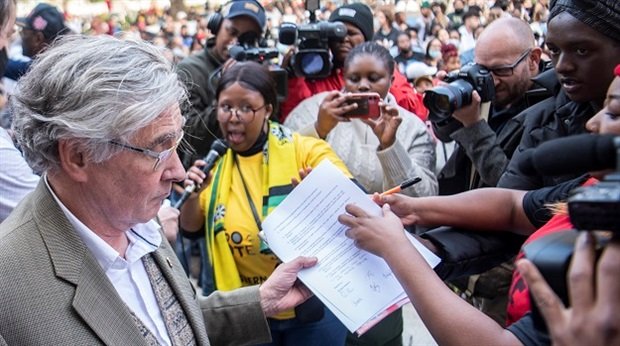
Earlier last week, a white student, Theunis du Toit, was suspended after a video of him urinating on a black student’s belongings circulated on social media.

Another student was arrested and later released on R1,000 bail.

On Friday, Deputy Vice-Chancellor for Learning and Teaching Deresh Ramjugernath said students would no longer sit for their first semester exams on Monday.

“The university announced on Friday that the examinations would be postponed from their scheduled start on Monday, May 23 and would now start on Monday, 30 May”.

Ramjugernath said the decision to postpone examinations and assessments was taken after consultation and careful deliberation.

Ramjugernath said, “We understand that there’s been significant trauma and discomfort and our students are in a challenging mental state, and in an emotional state where it’s very difficult for them to write the exams come Monday.”

He added that the decision to postpone examinations and assessments received overwhelming support from all the representatives from the faculties within the Learning and Teaching Workstream.

INSIDE EDUCATION