Home Blog Page 269

Opinion| University of Cape Town’s extreme reversal of historic racial preferences – John Kane-Berman

JOHN KANE-BERMAN|

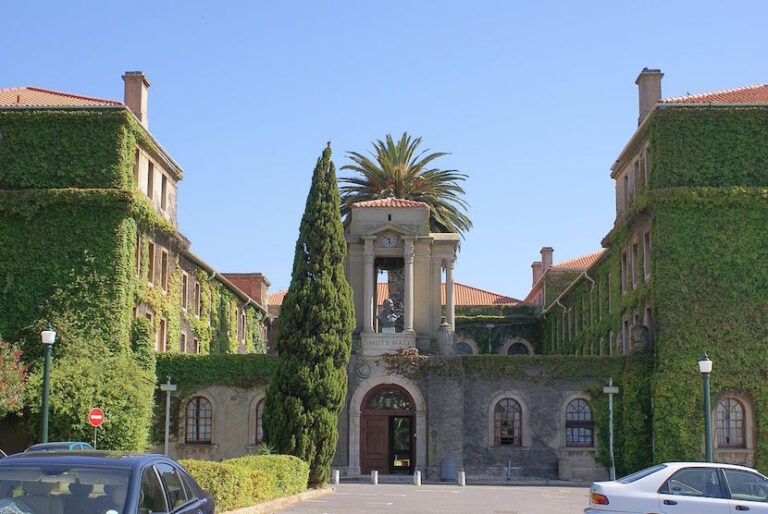
IN today’s climate, it takes courage for an academic to speak out publicly against his university’s racial preferencing policies. That, however, is what David Benatar has done in The Fall of the University of Cape Town – Africa’s leading university in decline.

Last week this column highlighted what Professor Benatar described in his book, published last year, as the manufacture of the “narrative” of UCT as an anti-black “racist university”. In reality, he argued, there was much more evidence of anti-white than of anti-black hostility.

The claims by those seeking “transformation” and “decolonisation” that UCT is “anti-black” are deeply ironic, for this institution practises affirmative action on an “extreme” scale. Professor Benatar describes and critiques this.

Racial preferences in favour of blacks apply to admissions, appointments, mentoring, and funding. UCT already has more black than white students, while most of the senior administrative staff, including executives and deans, are black. Whereas 7.75% of the academic staff at UCT were black in the broad sense in 1994, that proportion in 2019 was 31%.

Further, he says, if black students continue to be “shortchanged” in schools, failing either to matriculate or to obtain a university pass, “we cannot expect things to change dramatically for many decades to come”.

The pool of suitably qualified applicants for academic staff is even more limited than the pool of qualified students. It bears “very little resemblance to the national demographics”. It is further limited by the fact that suitably qualified blacks are more likely to be recruited by other public organisations and the private market, where strong racial preferences are also operative. Moreover, given that people considered for academic positions are people with degrees, they are among the least disadvantaged of blacks.

One way in which racial preferencing has been practised “in many instances” in academic appointments is by shortlisting candidates on separate lists. White candidates, “no matter how superb”, are not included on the A list. If no suitable candidate is found on this list, candidates on the B list are not considered. Instead, the position is re-advertised.

“Under this modus operandi,” says the book, “no white candidate can be appointed, no matter good he or she may be, and irrespective of whether there is any appointable black South African candidate.”   

Also, says Professor Benatar, on “many other occasions a white applicant is passed over in favour of a much weaker applicant from a ‘designated’ [that is, black] group”. Although many “excellent” black candidates are appointed, the racial preferencing system means that many of those appointed from favoured demographics are going to be “much weaker than those who could have been appointed”.

The book describes in detail one case where the appointment of a faculty dean was delayed for a couple of years because a suitable and available black candidate could not easily be found. At the time of writing, half of UCT’s eight faculty deans were not yet full professors. This was not because of a dearth of full professors, but because most were from the “wrong demographic”.

Professor Benatar adds that the response to the extreme racial preferences practised at UCT is a “conspiracy of silence”. Most academics will not speak out against “rigged hiring practices”, even when significantly inferior candidates are appointed, “as is often the case”. Anyone who does not participate in the pretence that they are not inferior “is quickly condemned as hostile to transformation”.

One of the issues the book tackles is that of “diversity”. As the term is now widely used in South Africa, this does not mean diversity of opinion, which is “arguably” one of the most important kinds of diversity for a university to have. Both in South Africa and elsewhere, however, those demanding diversity are in practice seeking that proportions of staff and students reflect working-age national demographics.

Professor Benatar concedes that racial diversity can undermine racial stereotypes, but he argues that “strong” racial preferences are more likely to reinforce them. “The stronger the preference required to appoint a particular candidate, the more the preference is likely to reinforce rather than undermine stereotypes. This is because those appointed as a result of such preferences are likely to be weaker on average than those appointed without racial preference.” There is good reason, he writes, to think that strong preferences are used “quite often” at UCT.

He also questions the argument that diversity produces “role models”. If strong racial preferences are used in hiring, the role models so appointed might not be the best ones to emulate.

Professor Benatar further argues that racial patronage is bad for the countries that tolerate it. This was true of South Africa in the apartheid era, and it is also true today. Much of the reason why South Africa is on a “steep descent” is its system of racial (and political) patronage. Systems can tolerate a certain degree of patronage when other parts of the system are able to compensate. But when patronage is as widespread as it is in South Africa, “systems begin to break”.

“The cumulative effects of appointing weaker academics in the humanities, for example, might be less obvious than the cumulative effects of hiring practices at Eskom, but they are no less real.”

Some weeks back, this column reported the minister of public service and administration as having told Parliament that 26% of senior managers in the public services did not have the requisite qualifications for the posts they occupied. This leaves 74% who supposedly do have the requisite qualifications.

Professor Benatar book prompts a question: “What proportion of that 74% are also in practice unqualified for their posts because of racial preferencing in their tertiary education?”

The Zondo commission has helped to highlight the problem of cadre deployment, whose purpose has always been unashamedly nothing less than state capture. But we shall probably never know how much of the destruction of the public sector is due to cadre deployment, how much the result of corruption, and how much the result of racial preferencing both in public sector appointments and in academic institutions producing the personnel for such appointments.  

But advocates of transformation want the demographics of students and staff to resemble those of the country. Professor Benatar says it is “delusional” to think this can happen without serious cost to universities.    

The university provides remedial support to students who have been “moderately disadvantaged” by poor schooling. But it cannot compensate for twelve years of “appalling primary and secondary education”, the result of which is that only a small proportion of school leavers are qualified to enter university. Pursuing demographic proportionality by admitting more students on the basis of race would mean admitting “vast numbers who are not at all qualified for university”.

Some weeks back, this column reported the minister of public service and administration as having told Parliament that 26% of senior managers in the public services did not have the requisite qualifications for the posts they occupied. This leaves 74% who supposedly do have the requisite qualifications.

Professor Benatar book prompts a question: “What proportion of that 74% are also in practice unqualified for their posts because of racial preferencing in their tertiary education?”

The Zondo commission has helped to highlight the problem of cadre deployment, whose purpose has always been unashamedly nothing less than state capture. But we shall probably never know how much of the destruction of the public sector is due to cadre deployment, how much the result of corruption, and how much the result of racial preferencing both in public sector appointments and in academic institutions producing the personnel for such appointments.  

* John Kane-Berman is a policy fellow at the IRR, a think-tank that promotes political and economic freedom

More than 290 000 ready to sit for Grade 12 re-write examinations, says Basic Education Department

WENDY MOTHATA|

THE Department of Basic Education says it is ready to administer the 2022 May/June Grade 12 examinations which started on Monday this week.

The Department also wished all candidates who will sit for the May/June 2022 examinations the best in their endeavours.

“More than 290 680 people will rewrite their NSC and Senior Certificate exams from today [Monday],” the Department of Basic Education said in a statement.

“The number of candidates for the two respective qualifications are as follows: National Senior Certificate: 165 993 and Senior Certificate: 124 689. These candidates will be sitting for the examinations at 5 236 examination centres, across the country.”

The National Senior Certificate candidates have written their exams in previous years but did not attain the full requirements of the qualification. In addition, this year’s rewrite exams were for the first time opened to candidates registered for the October/November examination, as from 2008.

The Department said those who did not succeed would be granted a second chance to attain their goal of having a matric certificate.

The Department advised the candidates to locate their examinations centres days before they’re due to write.

“Avoid frustration, don’t leave this off until the day of the exam,” the department said.

Meanwhile, the KwaZulu-Natal Department of Education head of communications Muzi Mahlambi said that a total of 36 850 learners will be rewriting the 2022 May/June Matric examination in the province.

Mahlambi said that the department was ready to conduct the exam.

He said that all learners who lost their IDs during the KZN floods including would be allowed to write the examinations. 

“As the KwaZulu-Natal Department of Education we are ready to conduct the examination despite the recent floods we have had. We have even said that learners who have lost everything in their homes including their ID’s are allowed to sit for the examinations. For we have a schedule for all registered learners and we will also be using admission letters known as timetables,” said Mahlambi.   

The KZN MEC for Education Kwazi Mshengu wished all the learners well in their exams.

“All the best, this is the license to your future qualifications after acquiring matric,” Mshengu said.

More than 630 schools were affected by the floods in KwaZulu-Natal with 101 of them being inaccessible and 124 suffering extensive damage.

In the Eastern Cape, more than 13 000 of the candidates are set to rewrite the examinations.

Outgoing Western Cape Education Minister, Debbie Schäfer, said there were 174 exam centres across the province.

Schäfer wished all the candidates well.

“I wish all candidates the very best as they tackle their exams and invest in their futures. Work hard, do your best, and know that we are here to support you to the fullest,” Schäfer said.

INSIDE EDUCATION

Mpumalanga school learners to benefit from Coding and Robotics curriculum

WENDY MOTHATA|

MORE than 400 learners from Tsiki Naledi Primary School in Hendrina, Mpumalanga will benefit from a new state of the art computer laboratory at the school. Among other things, the laboratory gives learners an opportunity to learn about coding and robotics, a curriculum that the Department of Basic Education wants to introduce in 2023.

In April, the Department of Basic Education announced implementation of Coding and Robotics for Grade R, 3 and 7.

“440 learners from Tsiki Naledi Primary School in Hendrina, Steve Tshwete Local Municipality have enormously benefited from the generosity of Software AG and E&T Minerals,” Mpumalanga Department of Education said.

The two business entities partnered to build a new state of the art computer laboratory at the school.

“This state of the art 4IR lab envisions a future of hi-tech immersive and interactive learning experience in the rural environment to propel learners into a field of technology and the future of work in the modern world,” the Department said.

The Department said that the laboratory is intended to reduce the digital divide by ensuring that the physical, curricular, and web environments are barrier-free to teaching and lifelong learning.

“The Ithemba Lethu, as the 4IR laboratory is called, will give Grades 4 to 7 learners access to the internet and electronic devices during the learning process.”

The Lab is equipped with robotics equipment, 3-D printers, drones, coding system learning kits and state-of-the-art computers to enable learners from Grade 4 to 7 to be able to use from the beginning of the 2023 academic year.

The principal of the school Menzelwa Petros Skhosana said the learners would be able to compete with the best and brightest in science, mathematics and technology across the world.

“We are grateful for the efforts by Software AG and E&T Minerals in establishing a computer lab that sets our school on a level that will allow our learners to compete with the best and brightest in the science, mathematics and technology world,” said Skhosana. 

 MEC Bonakele Majuba expressed his gratitude to the sponsors, “The CEO of E&T Minerals, Mr. Emmanuel Ngulube and Transformation Director of Software AG, Ms. Ndazi Nokoane for the patriotic gesture of transforming education through technology.”

Department of Basic Education on Technology at schools

Last month, the Department of Basic Education announced that it plans to introduce new school subjects to the curriculum.

According to the department, a full-scale implementation of coding and robotics for Grade R, 3 and 7 would be made available in the 2023 academic year.

“The coding and robotics pilot for Grades 4-6 and for Grades 8 is planned for 2022 and will be followed by a Grade 9 pilot in 2023. The full-scale implementation for Grades 4-6 and Grade 8 is planned for 2024, and Grade 9 in 2025,” says the department.

The subjects would form part of the curriculum at different school levels from Grade R to Grade 9.

The department added that the introduction of the new subjects form part of a broader push to better prepare South African students for the working world.

Coding and robotics subjects are aimed at guiding and preparing learners to solve problems, think critically, work collaboratively and creatively, and function in a digital and information-driven world.

INSIDE EDUCATION

APPRECIATION| Phindile Xaba, who died after a lengthy battle with cancer on Saturday, was a stalwart of South African journalism 

VICKY ABRAHAM pays tribute to her mentor and editor of INSIDE EDUCATION’s quarterly print publication, Phindile Xaba, who died on Saturday after a long battle with cancer.

Xaba’s long and illustrious career included being the editor of Real Magazine, under Media24 stable, which created the platform for healing of women. She was also the founding editor of the Sowetan women’s club. She also worked for the Mail and Guardian, as the editor of The Teacher. She also worked for The New Age, True Love, City Press, St. Pietersburg Times (USA), The Journalist and many others. Xaba also worked as a communications consultant in the Office of the Deputy Minister in the Department of Public Service and Administration, Dr Chana Pilane-Majake.

TRIBUTE|

On February 15, at 9:20am, my day was brightened by a WhatsApp text message from my former editor and mentor at the Sowetan newspaper, Ausi Phindile Xaba.

The message read as follows: “Good morning Vicky. It’s Phindile Xaba here. Long time, hey! I wonder if Matuma [Letsoalo- Inside Education Managing Director] spoke to you about a print version of Inside Education. I am reaching out to invite you to join the A-Team.  I would like that very much. Let’s talk later. Regards. PX”.

In response to her message, I said: “Dear Phindile, how are you, my mentor? I’m so excited to hear from you. Please let me know what time would be appropriate for us to talk. Regards, Vicky”. She responded by saying: “Now is a good time Vicky if you are available. Regards”.

The purpose of our reconnection through WhatsApp was to discuss diary for the launch edition of Inside Education Quarterly Print Publication, which would be distributed to all schools across the country, the universities and TVET colleges.

Ausi Phindi’s message came through after 20 years of having lost communication with her.

But, I must profess that it did not dawn on me that our work journey would be ephemeral. It did not occur to me that the three stories she assigned me to do for the launch edition of Inside Education Print Publication: “How Diepsloot underprivileged School Made It to the Top”, “World’s Most Dedicated Teacher”, “SA Student Makes It To Oxford”, would be the last that we would work on together. Honestly, it did not occur to me that she will be counted among the departed souls. 

I first met Ausi Phindile during my internship program at the Sowetan in 2000, which shortly turned to a contractual employment. At the time, she was heading the Sowetan’s Women’s section. Journalists who contributed for that section were often seasoned journalists. Even though I was fresh from varsity and did not have newsroom experience, she accepted my pitch about writing a feature on premenstrual syndrome. She later then granted me an opportunity to write for the Women’s section.  During the process she took me by hand and guided me on how to put together my ideas. 

Although there are numerous features that I contributed for her Women’s section, she also preferred utilising my modelling skills for the section at no cost. She would call me in for modelling photoshoots which she later used. But often, it was her guiding me on how to write compelling feature articles. 

I reminded her about these special and funny moments during our virtual diary meeting on that day, February 15.  I reminded her about the life changing role she played in my life during my tenure at the Sowetan and the love I have for her as my mentor. She however warned me, in a shy manner, that she is no longer as sweet as she was at the Sowetan. She was upfront that unlike in the past, at some stages she will not be so kind toward me. My response to her was sweet and short. 

I told her that I only know the positive about her and in the case that she loses her temper on me during our ongoing work discussions, I will constantly keep in mind her positive side that I know. Instead of losing her temper on me, on March 16, she took me to task for calling her “Phindile” instead of “Ausi Phindile”. I recall picking up her call and the first thing she said: “Vicky, kana when did I become Phindile to you and not Ausi Phindile”. Without going into too
much details, she was basically reminding me that although we have a working relationship, I should still remember that it is unacceptable in our African culture to call her Phindile instead of Ausi Phindile.

 From then, I made sure that I continuously referred to her as Ausi Phindile in our written and verbal communication. Few days later, during our work discussions, she wore her sisterly cap and counselled me on how to handle business related matters. She warned me not to sell myself short in the media industry.

She shared with me how she handles business-related matters and advised me to walk in her footsteps. 

But, I must say on March 19, she was not so kind toward me. She related her concerns that I had written features that were beyond 1200 words. She was also not happy that my sidebars were, according to her, “very long”. On the other hand, I was not happy with her about certain things that I had previously related to her.  After our discussion on March 19, I spent a day without communicating with her, simply because I was not happy. 

However, the anger was for a brief moment. A day without speaking to her felt like the 20 years that we spent without communicating. I missed her dearly, hence on Mach 21 at around 15:56, I sent her the following message, “Dear Sis Phindile, I am just checking on you today.

Hope all is well. Have a blessed day. I still love you akere. Regards”. She responded with emojis of hugs and smiles. 
My relationship with Ausi Phindile was not just a mere work relationship. She played a role of a leader, mentor and a sister to me. She knew when to wear the leader, mentor or sister’s cap when she addressed me. In all the caps she wore or roles she played during our interactions, she made sure that she made a positive impact in my life. 
I am deeply saddened that the three education features that I wrote for the launch edition of
Inside Education Quarterly Print Publication, were the last ones she would edit. 

Without knowing that she was fighting for her life, my family and I had taken it upon ourselves to include her in our daily prayers. I honestly did not know that the prayer that we prayed for her on May 7, just before her departure was the last one.  I already miss Ausi Phindile’s presence, her beautiful laughter and guidance.

Although, we had already made plans for the next Inside Education Print edition which will publish in June,
I am saddened she will not be behind the desk editing my work. But, I am very grateful to God
for the times I spent with her and the lessons that I learned from her. I pray for her family to
be strengthened. May heaven welcome her with open arms.

INSIDE EDUCATION

Phindile Xaba| Tributes pour in as seasoned journalist dead at 53

SEASONED journalist Phindile Xaba, who lost her battle with cancer at her family home in Diepkloof, Soweto, on Saturday, was editor-in-chief of INSIDE EDUCATION quarterly print publication launched in March. 

She was 53. 

Xaba, who was hand-picked by the founder of Inside Education and owner of K&K Media, Matuma Letsoalo to become editor-in-chief, came from a history of editing multiple education publications in South Africa, including one of the Mail and Guardian subsidiaries, the Teacher. 

During the launch of the quarterly print publication last month, Xaba said she was quite delighted to work in the education space at this crucial time. 

“I look forward to contributing towards being part of the solution and thanks to the publisher for the opportunity. Together with the assembled team of highly professional media people we only aim to make this a support resource for teachers, learners, ECD facilitators, tertiary institutions and all artisan training facilities,” said Xaba.

Letsoalo said Xaba’s passing will leave a huge void within the K&K Media Group.

“Her untimely death is not only a loss to her family and Inside Education, but the media industry, both in South Africa and across the continent. Her passion and dedication in covering and editing education stories was unquestionable. We will pick up her fallen spear and continue to do what she did best in contributing towards the development of education on the continent,’ said Letsoalo.

“We will miss her deeply, especially her energy, distinct laughter and charisma she exuded whenever she was in the newsroom.”  

On Monday, the South African National Editors’ Forum (SANEF) extended its deepest condolences to her family, friends, and colleagues within the industry.

Mathatha Tsedu, a former colleague of Xaba at the Sowetan, veteran media personality and political activist, described her as “the journalist’s journalist” that was always concerned about the state of journalism.

“She walked the communications route extensively, living up to her belief that information is power and that communication, particularly journalism, was critical in the developing state of democracy here at home,” said Tsedu.

“She was no-pushover and I remember defending her in a disciplinary hearing where race-based but baseless accusations of inefficiency were levelled against her. Needless to say, she stood her ground and the case crumbled. Journalism and communication fraternity are the poorer with her passing.”

Nomvula Khalo, former colleague of Xaba at the Sowetan, said losing someone of her calibre and experience at the time when the nation was questioning the status of journalism as a profession, was terribly sad and unfortunate for South Africa because the profession and young journalists needed her mentorship.

“May we continue her legacy by promoting the culture of reading and taking our profession and ourselves seriously,” Khalo added.

“May her soul rest eternally, I wish her son, daughter and the entire Xaba family strength during this sad time.”

Ryland Fisher, who worked with Xaba as judges on the Vodacom Journalist of the Year awards and the Standard Bank Sikuvile Journalism Awards now hosted by SANEF, said he will miss her wisdom in judging sessions.

“She had a wonderful sense of humour. She made great contributions and interventions during our meetings. We judged the Sikuvile Awards a few weeks ago and none of us had a clue of the pain she must have been suffering. She continued to perform her judging duties with diligence. May her soul rest in peace,” said Fisher.

INSIDE EDUCATION

Mamokgethi Phakeng Q&A: ‘No one told me maths was hard’

EDWIN NAIDU|

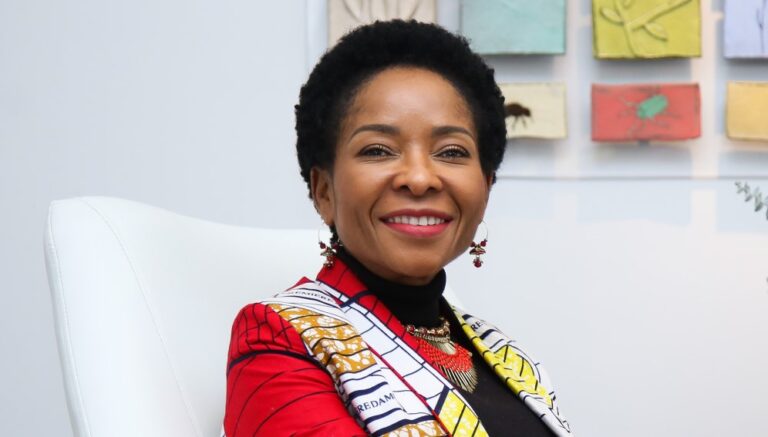
COLOURFUL, sometimes controversial, but never dull. Mamokgethi Phakeng is one of South Africa’s best-known university heads and a brilliant mathematician to boot.

Phakeng, who became the first black female to obtain a doctorate in mathematics education in 2002, started her term of office as vice-chancellor of the University of Cape Town in July 2018.

In October 2021, she was appointed as the first Illustrious Visiting Professor (BIVP) of the University of Bristol in England because of her “exceptional and inspirational” work in maths education. In 2019, Phakeng  was awarded a doctorate of science from the university.

In the role, she will engage with the university’s academic community, participate in a public lecture series, and strengthen educational and research collaborations between the two universities.

Phakeng has a host of awards to her name, including the Order of the Baobab (Silver) from the South African Presidency in 2016 for her contribution to science on the international stage.

Childhood love of maths

Phakeng tells SciDev.Net that she developed a love for mathematics while growing up.

“I think I was in Grade 10 when my mother heard about a winter school in the area, and she sent me there. They were only doing mathematics,”  she says.

“My school had a winter school for physics, a township school in Ga-Rankua. And it is here that they introduced us to geometry which sort of changed my mind about mathematics because suddenly it made sense.

“After the holidays, I returned to Odi High School and was hooked on mathematics. It was something where I could predict how I was going to perform… So, I think that was the love that developed in this time. The teacher introduced the concepts that I grasped, the big idea and [I] gained confidence from there. I was 13.”

But Phakeng says the second thing that helped her get into mathematics was the influence of her parents. Her dad was the country’s first black broadcaster, while her mum was a school teacher.

“My parents never talked about mathematics [being] hard. There was never a hierarchy of subjects at home. There was only the demand that you [had to] do well. My dad had a demand to be excellent,” she recalls.

Phakeng says this protected her from the fear of maths. “Many children fear science because they’re told maths is tough. Many girls are scared of science because they’re told ‘girls don’t do maths. Whereas I didn’t know, so that naivety about mathematics helped.”

After matriculation, Phakeng enrolled for a Bachelor of Science degree at the University of Bophuthatswana (now the University of North-West). “I was performing well and feeling proud of myself,” she tells SciDev.Net.

Motivating young people

Phakeng believes young people should be made aware of the benefits of maths such as logical thinking and making sense of things around us, as well as the careers available to mathematicians.

“Many young people think that mathematics doesn’t mix with certain things. I mean, I put on makeup and do mathematics. So, I say to them that it is possible. And this is how you can make it possible. Every day, at least an hour, you do mathematics to practice what you’ve done before,” she says.

Her love for mathematics took her into a career in the non-governmental sector, working as a teacher in rural farm schools “with the most impoverished people” before she joined academia.

Now, a member of the board of the Oprah Winfrey Leadership Academy for Girls (OWLAG) in South Africa, girls and many others look up to her for inspiration. She is also a member of the board of the Geneva Science and Diplomacy Anticipator, a body that brings together different communities to jointly anticipate scientific and technological advancements and, based on them, develop inclusive and global solutions for a sustainable future.

The secret of her success as a maths teacher? “I have this philosophy that if you want children to do well in mathematics, you must make them love mathematics, and to make them love mathematics comes in how you teach it so that they can do it even when you’re not there.”

Her journey through academic institutions saw her work in a variety of roles before landing the vice-chancellor role at UCT, considered among the best on the African continent. Phakeng says her rating as a B1 scientist was necessary because “when you’re a black African woman, the assumption is that you are an affirmative action appointee”.

According to the National Research Foundation of South Africa, a researcher with B1 rating is one who “enjoys considerable international recognition for the high quality and impact of his or her recent research outputs, with some of them indicating that he or she is a leading international scholar in the field”.

“It’s been very important for me to tick every step, even to get the rating,” says Phakeng, because “there will always be doubting Thomases [who] question how capable you are… So, it’s essential that people can see what you have done. They can check your international reputation as a scholar, as a leader…the data and evidence of leadership and scholarship is there to be seen. I felt that it’s essential to do that as a black African.”

This piece was produced by SciDev.Net’s Sub-Saharan Africa English desk.

Breaking the glass ceiling| Young SAPS station commander, Captain Simangele Gxenyane, awarded LLB degree

THANDIWE JUMO|

CAPTAIN Simangele Gxeyane (34) has added a Bachelor of Laws to her long list of achievements. The young station commander who is stationed at Mehlomnyama joined the South African Police Service (SAPS) at the age of 19 and steadily climbed the ranks, which motivated her to pursue a Law degree.

‘I completed my Bachelor of Arts in 2011 and graduated with my Honours in 2013. I decided it was time to study something different. My exposure to law enforcement led me to choose an LLB because I wanted to enhance my knowledge of the law,’ said Gxeyane.

Having come a long way from being a domestic worker and fast-food waitress, Gxeyane has a reputation as an all-rounder at the SAPS, having worked in the Crime Prevention and K9 Unit as well as Crime Intelligence Covert Operations.

During her studies, she served as the Treasurer for the Black Lawyers Association UKZN Student Chapter. In her second-year, she was appointed warrant officer in Durban’s Serious Organised Crime Unit. 

She broke the glass ceiling during her final-year of studies when she was appointed station commander.

‘Colleagues at my previous office used to call me “Advocate” because I’m very thorough. Studying for an LLB was the best experience of my life but very challenging. Law is a noble profession and a Law qualification is valuable in all organisations and in the community considering that we live in a democratic society.’

Apart from being a mother to her eight-year-old son, Maziya is a sports fanatic.

She completed her first Comrades Marathon in 2018 and has taken part in the Two Oceans, Mandela and Soweto Marathons.

‘Juggling work, studying and being a mother is challenging. I only managed because of the support I received from my lecturers, my fellow Law students, and my family, especially my mother Mrs Gxeyane and my employer. I’m currently pursuing my Masters in Management since I am new in management and plan to register for a Masters of Business Law at UKZN. I won’t stop studying and always encourage young kids to make education fashionable,’ she said.

SUPPLIED: UKZN

Can 4IR and Decolonisation ideologies co-exist and be of mutual benefit in higher education?

NQOBILE TEMBE|

THE emergence of the fourth industrial revolution (4IR) could potentially submerge the bellowing of decolonisation in higher education by previously marginalised groups, especially considering the ever-increasing inequality in South Africa. Professor Felix Maringe, of the University of the Witwatersrand, and editor of the recently-published book, Higher Education in the melting pot: Emerging discourses of the 4IR and Decolonisation, told members of Universities South Africa’s Education Deans’ Forum recently.

He also asked: “But what if the convergence of the two were possible and a door to new ways of thinking emerged? Undoubtedly, 4IR and the calls for decolonisation continue to impact the country’s higher education sector. The question is, to what extent?”

Professor Maringe said these and many other concerns over 4IR and decolonisation influences in the sector birthed the idea of the book referred to above. At a colloquium at which Deans of Education explored 4IR and its implications, particularly for teacher education in September 2019, such rich thought leadership was shared that the Deans decided to publish a book out of the deliberations of that day. 

Introducing: Higher Education in the melting pot: Emerging discourses of the 4IR and Decolonisation

Explaining the central arguments being made in this book, Professor Maringe said that although 4IR continues to usher in technological and digital developments that impact lives, it is still imperative to look at the core of decolonisation. The latter “seeks to disrupt the edifices of the Western canon and to restore the dignity, values, knowledge and humanness in the world of post-coloniality which is afflicted by the careless, exploitative, marginalising influences of capitalism and neoliberalism,” he asserted.  

In particular, he was referring to the ways that the sector currently thinks about its purposes, the contents of what is taught at universities, pedagogies used in the deployment of new purposes and content, to conducting learning assessments and how the various capabilities of the internet may be employed for learning activities in higher education. 

The burning question, as detailed by Professor Maringe, was how would these ideologies co-exist in a post-colonial higher education system, and how might emerging thinking and working models embrace both its priorities? 

He said Deans of Education published this book with the following aims in mind:

  • To explore the conceptual field of the 4IR and decolonisation to understand the epistemological, the ontological, the axiological and the mythological assumptions which underpin these ideologies in the context of higher education. 
  • To provide empirical evidence of ways in which the 4IR and decolonisation are influencing and imparting transformation in higher education.
  • To highlight the affordances and constraints of integrating and working with both ideological assumptions in higher education.

The Higher Education in the melting pot: Emerging discourses of the 4IR and Decolonisation, is a collaborative work of no fewer than 21 eminent scholars in the country. It is divided into two parts, the first being an analysis of the applications and implications of 4IR. 

“The opening chapter in the book addresses the central matter of the clash of ideologies in higher education and provides a broad conceptualisation of the two ideas,” he said, adding that the second part looks at similar issues on decolonisation, providing empirical evidence on both ideologies. 

Even more significant is the synthesis chapter in the book, which, accordingtoProfessor Maringe, investigates developing themes of the affordances and constraints associated with 4IR and decolonisation. It then provides a set of principles and constructs that the authors called the Possibility of an Afro-Global Episteme, “which could shape a new higher education terrain of post-colonial higher education systems,” he said.

The book tackles subjects of the automation of academic workspaces, the impact of digital divides, the opportunities and constraints of the technologisation of curricula, pedagogies, teaching and learning and the intractable challenges of remote modalities of university instruction. 

The EDF is one of nine active communities of practice within Universities South Africa (USAf). This group aims to foster research in the broad field of education towards continuous improvement of teacher education; to promote South Africa’s education interests by providing a platform for deans to discuss matters of common concern in the delivery of teacher education, and, finally, to bring to the attention of policymakers, emerging issues on the Education discipline. 

South Africa captain Siya Kolisi’s new clinic upskills young rugby players

SOUTH African rugby union captain Siya Kolisi has established the first Red Bull Roots rugby clinic for young female and male rugby players in order to upskill and empower them.

The legendary South Africa skipper on Tuesday said investing in the youth of South Africa through rugby is one of the reasons he established the Kolisi Foundation, which is committed to tackling the challenge of inequality in the global game.

The Red Bull Roots – a multi-year partnership with the Kolisi Foundation is a way to give back to the sport he loves, the Springboks captain added.

The first clinic held at the Kings Park stadium in Durban saw some young rising female and male talents from around Kwa-Zulu Natal go through a day of motivation and inspiration, which included wisdom from the likes of Kolisi, Babalwa Latsha, Sikhumbuzo Notshe and James Venter.

The 30-year-old, who also plays for the Sharks, explained: “Red Bull Roots and the one-day clinic is all about going back to where it all started for me – grassroots rugby. It’s important to me to be giving back and making sure that we’re creating opportunities for young people. I strongly believe that representation is everything and that in shared leadership we can accomplish anything. The more people have access to rugby, the bigger the pool of talent that you can work from. The sport isn’t just about ‘making it’, it also teaches values like discipline and accountability.”

Female representation within rugby is equally important with young women like Latsha able to strive and reach the inspirational heights that Kolisi achieved with the 2019 World Cup-winning team.

The 28-year-old revealed: “This project is all about us passing on core memories and skills; the belief that in the fact that we can have another Babalwa Latsha or Siya Kolisi in the near future. This type of project is very close to my heart because, I, like them, was a youngster who was from the township and found the sport of rugby. The sport has opened so many doors for me and gave me the opportunity of being the first-ever woman in Africa to play professional rugby overseas.”

The Kolisi foundation has shared its vision to construct a state-of-the-art sports complex soon in Kolisi’s hometown of Zwide in the Eastern Cape.

“I hope this sports centre will bridge the gap in terms of unearthing and developing talent. I think the challenge is the resources and communities investing in grassroots sports.” Kolisi said of the plan.

Rugby is a big sport in South Africa who are currently the world champions having defeated England in the 2019 tournament final.

What are classroom management tips for substitute teachers?

ASHLEY GREENWALD and SHANON TAYLOR

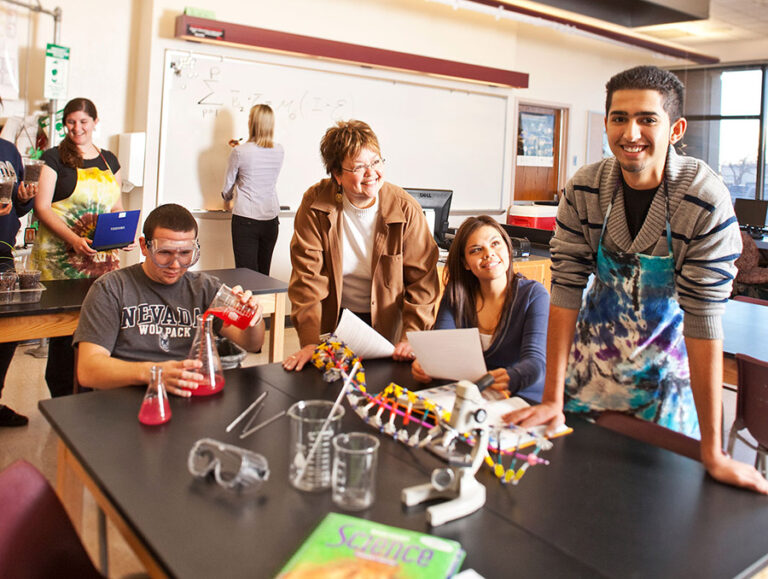
WHILE so many grade school teachers are out on sick leave due to COVID-19, the demand for guest teachers is at an all-time high. Let’s get real here for a moment: being a guest teacher is not an easy job, especially if you don’t have significant classroom teaching experience.

Couple this amateur workforce with the ongoing pandemic fueled impact on classroom functions and students’ emotional wellbeing and we’ve now got the perfect recipe for…challenging behaviors.

So what is the best way to engage with and manage a classroom full of youth whom you likely know absolutely nothing about?

Classroom Tip #1: Build Rapport

First and foremost, we are all human. The current state of affairs has created an environment where we are devoid of social interaction and have been forced to adapt to rapidly changing schedules, systems, and circumstances so flexibility and relationship building is key. Get to know the students by name, learn a bit about what they like to do, let them have a chance to learn about you, too. All of this can be done using icebreakers or community building circles in which the day or the top of each hour begins with a chance to take a “brain break,” check in with each other, and spend a few minutes connecting as human beings. Another great strategy is to greet students at the door by name as they enter your classroom as a way to both establish your presence and focus on relationships at the start of the day. Don’t be afraid to have some fun here – this rapport building will go a long way when academic demands and requests commence.   

Classroom Tip #2: Familiarize Yourself with the School’s Systems & with Your Students

If you are not already familiar with the specific school where you will be working, make sure to take some time to ask administration about their practices for recognizing appropriate behavior and those for discouraging inappropriate behavior. Most schools have systems in place for both; you won’t have to re-invent the wheel and you should feel supported knowing that there are protocols in place should a student in your class require some additional support. Additionally, some students even in general education classrooms have specialized programs called Individualized Education Plans (IEPs) or 504 plans. These identify specific accommodations or modifications that should be made for these students, such as additional time on work or tests, or preferential seating. Some students with particularly challenging behaviors may have behavior plans and you’ll want to know if there are any specific guidelines or plans in place for any of the students in your classroom.

Classroom Tip #3: Use Active Supervision

Gone are the days of the substitute teacher sitting at the teacher’s desk reading a book while kids throw spitballs and goof off in the back of the classroom. Today’s guest teachers, especially long-term subs, are expected to instruct the class, develop and/or adhere to lesson plans, manage classroom routines and behaviors, and more.  Active supervision is a process by which a teacher is relating to students frequently using a “scan, move, interact” methodology. Scan the room continuously by visually sweeping the classroom, making sure to observe and be aware of any successes or challenges the students are having. Move about the room continuously (get your step count in!) and maintain close proximity to students, avoiding the potential ‘back of the classroom’ spitball dilemma. And finally, interact with the students regularly in a respectful manner. Active supervision will both prevent opportunities for challenging behaviors to occur but also make it quick, easy, and comfortable for problems to be addressed.      

Classroom Tip #4: Create Opportunities to Respond

Keeping the class engaged and learning is not only academically rewarding, but it has also been demonstrated to reduce rates of challenging behaviors. We all know that there will be a few students who love to respond to questions in class and there are some that sit with their hoodie over their heads and pretend to be elsewhere. Finding opportunities for all students to respond will be helpful. There are several ways to encourage this:

  1. Individual or small group responding – create a response pattern (i.e., go around in a circle) in which all students have the opportunity to respond
  2. Choral responding – the entire class responds in unison to a question
  3. Nonverbal responses – raising hands to respond, using colored respond cards (yes/no)    

If the students know they will be expected to participate and are active participants, at that, they will be more focused, more engaged, and less likely to be off task.

Classroom Tip #5: Leverage the Power of Praise

This one is simple… catch the students doing well! In other words, recognize the positive behavior and don’t merely attend to negative behaviors. Research indicates that the best and most respectful relationships are formed when praise ratios are 5:1, or 5 positive statements to every 1 corrective statement. As you are milling about the classroom engaged in active supervision and provide some praise specific statements (i.e., “Javier, I like that you are so focused on your worksheet,” and “Shantell, thank you for raising your hand to use the restroom.”) Additionally, if the school has a reinforcement system in place, leverage it. Hand out those ‘behavior bucks’ liberally when you see appropriate behavior that you want to recognize and encourage.

Classroom Tip #6: Pre-correct

Using pre-correction is a strategy to address or prevent problem behavior before it occurs. A pre-correction is a prompt or reminder of how to specifically behave during a certain interaction or activity. For example, right before you ask students to do seat work you might say, “Please remember that if anyone needs help during this assignment, please raise your hand and wait patiently for me to come to your desk.” If you wait until the undesirable behavior occurs and then provide a reminder of the appropriate way in which to behave, this is now an error correction (remember your 5:1 ratio is important here) and no longer preventative.

Classroom Tip #7: Employ Brief and Specific Error Correction

Students will make errors, and behaviors will need to be corrected; that is par for the course when teaching youth. When an undesired behavior occurs, the best thing to do is immediately provide an informative statement on what the expected behavior is, making sure to use this as a teachable moment and to inform the student exactly what to do in the future. The correction should be provided privately and delivered in a calm, neutral, and respectful manner. As soon as the feedback is delivered, quickly disengage from discussion surrounding the undesirable behavior and redirect the student back to the activity at hand. As soon as the student engages in appropriate behavior, use praise statements and reinforce the desired behavior. 

Classroom Tip # 8: Avoid Power Struggles

Sometimes when you attempt to engage in error correction with a student, they will use that as an opening to engage in a power struggle with you. There can be many reasons why students engage in power struggles with adults; all you need to know at this point is how to recognize when it is happening and how to disengage. It is more likely to happen with pre-adolescent or older students (so middle school and older), but some younger students will also engage in this behavior. It is when a direction given to a student results in a response back from the student, to which the adult responds, and the verbal back-and-forth continues like a tennis match. The key point to this is there is no winning in this scenario. As the adult, you simply need to disengage and say, “We’ll discuss this later,” and end the back and forth. By continuing, you reinforce the disruptive behavior of the student and lose the respect of the other students in the classroom.

Classroom Tip #9: Pivot

If you’ve ever played basketball, brush off your pivot skills and use them here. This is basically a chance to physically turn your body toward desired behavior and briefly withhold attention from a student who is exhibiting minor disruptive behavior that is reinforced by teacher attention.

For example, during a whole group lesson Jason is blurting out silly phrases to gain the attention of the new guest teacher, Mr. Smith. Mr. Smith recognizes this as attention seeking behavior and quickly pivots his body towards Mohammed who is raising his hand for attention and says, “Thank you, Mohammed, for raising your hand to get my attention, did you have something to say?” By recognizing the appropriate behavior of other students, Mr. Smith has provided a model of what behavior is expected in the moment and how to appropriately gain his attention for all of the students, including Jason. As soon as Jason stops blurting, Mr. Smith turns his body towards Jason and says, “Jason, if you have something you’d like to contribute, you can go ahead and raise your hand and I will call on you next.” A pro-tip here would be to recognize those students that need a little bit of extra attention and make sure to provide that heavily throughout the day as to prevent any undesired behaviors in the first place.    

Classroom Tip # 10: Routines Matter

Children thrive on routines. That’s one reason the pandemic and the last nearly two years have been so difficult for them. The simple fact that they need a replacement classroom teacher is disruptive; the more you can follow their typical classroom routines, the more comfortable they will feel and you will be less likely to experience disruptive behavior. Try to find out as much as you can about the classroom practices and procedures that have previously been in place and follow them, if possible.

If you are unable to determine what routines were previously in place, develop ones of your own that you can use faithfully so that students can know what to expect. Knowing what is expected and what is going to happens lessens anxiety in students, so while flexibility has been a key word during this pandemic, giving students dependable routines goes a long way.

When you walk into your new class on your first day as a guest teacher, hold your head up high and exude some confidence. You are now equipped with a skill set to keep your classroom of upwards of 30 students engaged with you and respectful of the important role you are filling. One final thought in all of this is to have some humility and some fun. Everything is seemingly heavy right now – trust in yourself and your students that we are all doing our very best and sometimes we just need a smile, a good laugh, or a gentle reminder to stay on track. You’ve got this!   

UNR.EDU