Home Blog Page 270

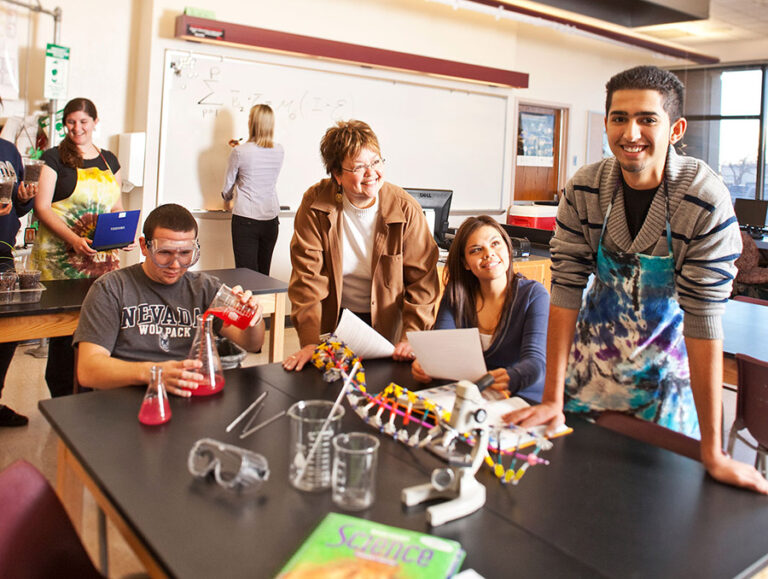
What are classroom management tips for substitute teachers?

ASHLEY GREENWALD and SHANON TAYLOR

WHILE so many grade school teachers are out on sick leave due to COVID-19, the demand for guest teachers is at an all-time high. Let’s get real here for a moment: being a guest teacher is not an easy job, especially if you don’t have significant classroom teaching experience.

Couple this amateur workforce with the ongoing pandemic fueled impact on classroom functions and students’ emotional wellbeing and we’ve now got the perfect recipe for…challenging behaviors.

So what is the best way to engage with and manage a classroom full of youth whom you likely know absolutely nothing about?

Classroom Tip #1: Build Rapport

First and foremost, we are all human. The current state of affairs has created an environment where we are devoid of social interaction and have been forced to adapt to rapidly changing schedules, systems, and circumstances so flexibility and relationship building is key. Get to know the students by name, learn a bit about what they like to do, let them have a chance to learn about you, too. All of this can be done using icebreakers or community building circles in which the day or the top of each hour begins with a chance to take a “brain break,” check in with each other, and spend a few minutes connecting as human beings. Another great strategy is to greet students at the door by name as they enter your classroom as a way to both establish your presence and focus on relationships at the start of the day. Don’t be afraid to have some fun here – this rapport building will go a long way when academic demands and requests commence.   

Classroom Tip #2: Familiarize Yourself with the School’s Systems & with Your Students

If you are not already familiar with the specific school where you will be working, make sure to take some time to ask administration about their practices for recognizing appropriate behavior and those for discouraging inappropriate behavior. Most schools have systems in place for both; you won’t have to re-invent the wheel and you should feel supported knowing that there are protocols in place should a student in your class require some additional support. Additionally, some students even in general education classrooms have specialized programs called Individualized Education Plans (IEPs) or 504 plans. These identify specific accommodations or modifications that should be made for these students, such as additional time on work or tests, or preferential seating. Some students with particularly challenging behaviors may have behavior plans and you’ll want to know if there are any specific guidelines or plans in place for any of the students in your classroom.

Classroom Tip #3: Use Active Supervision

Gone are the days of the substitute teacher sitting at the teacher’s desk reading a book while kids throw spitballs and goof off in the back of the classroom. Today’s guest teachers, especially long-term subs, are expected to instruct the class, develop and/or adhere to lesson plans, manage classroom routines and behaviors, and more.  Active supervision is a process by which a teacher is relating to students frequently using a “scan, move, interact” methodology. Scan the room continuously by visually sweeping the classroom, making sure to observe and be aware of any successes or challenges the students are having. Move about the room continuously (get your step count in!) and maintain close proximity to students, avoiding the potential ‘back of the classroom’ spitball dilemma. And finally, interact with the students regularly in a respectful manner. Active supervision will both prevent opportunities for challenging behaviors to occur but also make it quick, easy, and comfortable for problems to be addressed.      

Classroom Tip #4: Create Opportunities to Respond

Keeping the class engaged and learning is not only academically rewarding, but it has also been demonstrated to reduce rates of challenging behaviors. We all know that there will be a few students who love to respond to questions in class and there are some that sit with their hoodie over their heads and pretend to be elsewhere. Finding opportunities for all students to respond will be helpful. There are several ways to encourage this:

  1. Individual or small group responding – create a response pattern (i.e., go around in a circle) in which all students have the opportunity to respond
  2. Choral responding – the entire class responds in unison to a question
  3. Nonverbal responses – raising hands to respond, using colored respond cards (yes/no)    

If the students know they will be expected to participate and are active participants, at that, they will be more focused, more engaged, and less likely to be off task.

Classroom Tip #5: Leverage the Power of Praise

This one is simple… catch the students doing well! In other words, recognize the positive behavior and don’t merely attend to negative behaviors. Research indicates that the best and most respectful relationships are formed when praise ratios are 5:1, or 5 positive statements to every 1 corrective statement. As you are milling about the classroom engaged in active supervision and provide some praise specific statements (i.e., “Javier, I like that you are so focused on your worksheet,” and “Shantell, thank you for raising your hand to use the restroom.”) Additionally, if the school has a reinforcement system in place, leverage it. Hand out those ‘behavior bucks’ liberally when you see appropriate behavior that you want to recognize and encourage.

Classroom Tip #6: Pre-correct

Using pre-correction is a strategy to address or prevent problem behavior before it occurs. A pre-correction is a prompt or reminder of how to specifically behave during a certain interaction or activity. For example, right before you ask students to do seat work you might say, “Please remember that if anyone needs help during this assignment, please raise your hand and wait patiently for me to come to your desk.” If you wait until the undesirable behavior occurs and then provide a reminder of the appropriate way in which to behave, this is now an error correction (remember your 5:1 ratio is important here) and no longer preventative.

Classroom Tip #7: Employ Brief and Specific Error Correction

Students will make errors, and behaviors will need to be corrected; that is par for the course when teaching youth. When an undesired behavior occurs, the best thing to do is immediately provide an informative statement on what the expected behavior is, making sure to use this as a teachable moment and to inform the student exactly what to do in the future. The correction should be provided privately and delivered in a calm, neutral, and respectful manner. As soon as the feedback is delivered, quickly disengage from discussion surrounding the undesirable behavior and redirect the student back to the activity at hand. As soon as the student engages in appropriate behavior, use praise statements and reinforce the desired behavior. 

Classroom Tip # 8: Avoid Power Struggles

Sometimes when you attempt to engage in error correction with a student, they will use that as an opening to engage in a power struggle with you. There can be many reasons why students engage in power struggles with adults; all you need to know at this point is how to recognize when it is happening and how to disengage. It is more likely to happen with pre-adolescent or older students (so middle school and older), but some younger students will also engage in this behavior. It is when a direction given to a student results in a response back from the student, to which the adult responds, and the verbal back-and-forth continues like a tennis match. The key point to this is there is no winning in this scenario. As the adult, you simply need to disengage and say, “We’ll discuss this later,” and end the back and forth. By continuing, you reinforce the disruptive behavior of the student and lose the respect of the other students in the classroom.

Classroom Tip #9: Pivot

If you’ve ever played basketball, brush off your pivot skills and use them here. This is basically a chance to physically turn your body toward desired behavior and briefly withhold attention from a student who is exhibiting minor disruptive behavior that is reinforced by teacher attention.

For example, during a whole group lesson Jason is blurting out silly phrases to gain the attention of the new guest teacher, Mr. Smith. Mr. Smith recognizes this as attention seeking behavior and quickly pivots his body towards Mohammed who is raising his hand for attention and says, “Thank you, Mohammed, for raising your hand to get my attention, did you have something to say?” By recognizing the appropriate behavior of other students, Mr. Smith has provided a model of what behavior is expected in the moment and how to appropriately gain his attention for all of the students, including Jason. As soon as Jason stops blurting, Mr. Smith turns his body towards Jason and says, “Jason, if you have something you’d like to contribute, you can go ahead and raise your hand and I will call on you next.” A pro-tip here would be to recognize those students that need a little bit of extra attention and make sure to provide that heavily throughout the day as to prevent any undesired behaviors in the first place.    

Classroom Tip # 10: Routines Matter

Children thrive on routines. That’s one reason the pandemic and the last nearly two years have been so difficult for them. The simple fact that they need a replacement classroom teacher is disruptive; the more you can follow their typical classroom routines, the more comfortable they will feel and you will be less likely to experience disruptive behavior. Try to find out as much as you can about the classroom practices and procedures that have previously been in place and follow them, if possible.

If you are unable to determine what routines were previously in place, develop ones of your own that you can use faithfully so that students can know what to expect. Knowing what is expected and what is going to happens lessens anxiety in students, so while flexibility has been a key word during this pandemic, giving students dependable routines goes a long way.

When you walk into your new class on your first day as a guest teacher, hold your head up high and exude some confidence. You are now equipped with a skill set to keep your classroom of upwards of 30 students engaged with you and respectful of the important role you are filling. One final thought in all of this is to have some humility and some fun. Everything is seemingly heavy right now – trust in yourself and your students that we are all doing our very best and sometimes we just need a smile, a good laugh, or a gentle reminder to stay on track. You’ve got this!   

UNR.EDU
Dozens feared dead after Russian bomb levels Ukraine school

0

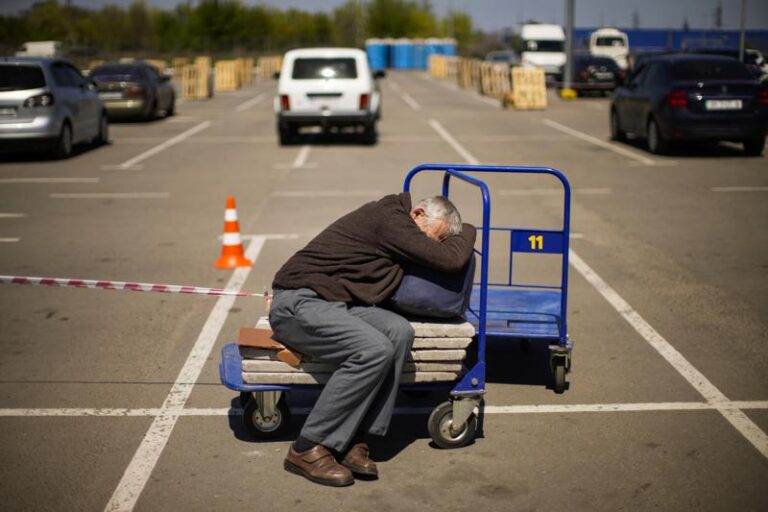
DOZENS of Ukrainians were feared dead Sunday after a Russian bomb flattened a school sheltering about 90 people in its basement, while Ukrainian troops refused to surrender at a besieged steel plant that Moscow’s invading forces sped to seize before Russia’s Victory Day holiday.

The governor of Luhansk province, one of two areas that make up the eastern industrial heartland known as the Donbas, said the school in the village of Bilohorivka caught fire after Saturday’s bombing. Emergency crews found two bodies and rescued 30 people, he said.

“Most likely, all 60 people who remain under the rubble are now dead,” Gov. Serhiy Haidai wrote on the Telegram messaging app. Russian shelling also killed two boys, ages 11 and 14, in the nearby town of Pryvillia, he said.

The largest European conflict since World War II has developed into a punishing war of attrition due to the Ukrainian military’s unexpectedly effective defense. Since failing to capture Ukraine’s capital, Kyiv, Moscow’s forces have attacked cities, towns and villages in eastern and southern Ukraine but not gained much ground, according to Western military analysts.

To demonstrate success in time for Victory Day on Monday, the Russian military worked to complete its takeover of Mariupol, which has been under relentless assault since the start of the war. The sprawling seaside steel mill where an estimated 2,000 Ukrainian fighters were making a last stand is the only part of the city not under Russian control.

All the remaining women, children and older civilians who were sheltering with the fighters in the Azovstal plant were evacuated Saturday. The Ukrainian troops rejected deadlines given by Russian deadlines who said the defenders could leave with their lives if they laid down their arms.

Capt. Sviatoslav Palamar, the deputy commander of the Azov Regiment, a Ukrainian National Guard battalion holding the steel mill, told an online news conference Sunday that the site was targeted overnight by three fighter jet sorties, artillery and tanks.

“We are under constant shelling,” he said, adding that Russian infantry tried to storm the plant — a claim Russian officials denied in recent days – and to lay landmines.

Palamar said there was a “multitude of casualties” at the plant.

Lt. Illya Samoilenko, another member of the Azov Regiment, said there were a “couple of hundred” wounded soldiers at the plant, but he declined at the same news conference to reveal how many abled-body fighters also remained in the plant.

He described the situation as dire because they didn’t have life-saving equipment in their tunnels. He also said fighters had to dig out people by hand when some bunkers collapsed under the Russian shelling.

“The truth is, we are unique because no one expected we would last so long,” Samoilenko said. “Surrender for us is unacceptable because we cannot grant such a gift to the enemy.”

After rescuers evacuated the last civilians, Ukrainian President Volodymyr Zelenskyy said in his nightly video address that work would continue Sunday on securing humanitarian corridors for residents of Mariupol and surrounding towns to leave.

The Ukrainian government has reached out to international organizations to try to secure safe passage for the fighters remaining in the plant’s underground tunnels and bunkers.

The Ukrainian leader was expected to hold online talks Sunday with British Prime Minister Boris Johnson, U.S. President Joe Biden and leaders from other Group of Seven countries. The meeting is partly meant to display unity among Western allies on Victory in Europe Day, which marks Nazi Germany’s 1945 surrender.

U.S. first lady Jill Biden made an unannounced visit to western Ukraine. She held a surprise Mother’s Day meeting with Ukraine’s first lady, Olena Zelenska, at a village school as Russia pressed its punishing war in the eastern regions.

Biden traveled under the cloak of secrecy, becoming the latest high-profile American to enter Ukraine during its 10-week-old conflict with Russia.

Elsewhere, on Ukraine’s coast, explosions echoed again Sunday across the major Black Sea port of Odesa, which Russia struck with six cruise missiles on Saturday, while rocket fire damaged some 250 apartments, according to the city council.

Ukrainian leaders warned that attacks would only worsen in the lead-up to Victory Day, the May 9 holiday when Russia celebrates Nazi Germany’s defeat in 1945 with military parades. Russian President Vladimir Putin is believed to want to proclaim some kind of triumph in Ukraine when he addresses the troops on Red Square on Monday.

Zelenskyy released a video address Sunday marking the day of the Allied victory in Europe 77 years ago, drawing parallels between Russia’s invasion of Ukraine and the evils of Nazism.

The black-and-white video, published on social media, showed Zelenskyy standing in front of a ruined apartment block in Borodyanka, one of the Kyiv suburbs pummeled before Russian troops withdrew from the capital region weeks ago.

“Every year, on May 8, along with the whole civilized world, we pay our respects to everyone who defended the planet against Nazism during World War II,” Zelenskyy said, adding that prior generations of Ukrainians understood the significance of words “Never again,” a phrase often used as a vow to never allow a repeat of the horrors of the Holoucaust.

“We knew the price our ancestors have paid for this wisdom. We knew how important it was to protect it and pass it on to our descendants. … But we hadn’t any notion that our generation will witness the abuse of these words,” he said.

In neighboring Moldova, Russian and separatists troops were on “full alert,” the Ukrainian military warned. The region has increasingly become a focus of worries that the conflict could expand beyond Ukraine’s borders.

Pro-Russian forces broke off the Transnistria section of Moldova in 1992, and Russian troops have been stationed there since, ostensibly as peacekeepers. Those forces are on “full combat readiness,” Ukraine said, without giving details on how it came to the assessment.

Moscow has sought to sweep across southern Ukraine both to cut off the country from the Black Sea and to create a corridor to Transnistria. But it has struggled to achieve those objectives.

In a sign of the dogged resistance that has sustained the fighting into its 11th week, Ukraine’s military struck Russian positions on a Black Sea island that was captured in the war’s first days and has become a symbol of Ukrainian resistance.

Satellite photos analyzed by The Associated Press showed Ukraine targeting Russian-held Snake Island in a bid to impede Russia’s efforts to control the sea.

A satellite image taken Sunday morning by Planet Labs PBC showed smoke rising from two sites on the island. On the island’s southern edge, a fire smoked next to debris. That corresponded to a video released by the Ukrainian military showing a strike on a Russian helicopter that had flown to the island.

The most intense combat in recent days has taken place in eastern Ukraine. A Ukrainian counteroffensive near Kharkiv, a city in the northeast that is the country’s second-largest, “is making significant progress and will likely advance to the Russian border in the coming days or weeks,” according to the Institute for the Study of War.

The Washington-based think tank added that “the Ukrainian counteroffensive demonstrates promising Ukrainian capabilities.”

However, the Ukrainian army withdrew from Luhansk province’s embattled city of Popasna, Haidai, the regional governor, said Sunday. In a video interview posted on his Telegram channel, Haidai said that Kyiv’s troops had “moved to stronger positions, which they had prepared ahead of time.”

Rodion Miroshnik, a representative of the pro-Kremlin, separatist Luhansk People’s Republic, said its forces and Russian troops had captured most of Popasna after two months of fierce fighting.

The Russia-backed rebels have established a breakaway region in Luhansk and neighboring Donetsk, which together make up the Ukraine’s industrial heartland known as the Donbas. Russia has targeted areas still under Ukrainian control.

The leader of Transnistria, a breakaway territory bordering Ukraine which split off from Moldova in 1992 and hosts around 1,500 Russian troops, denied claims of a mobilization in the region. The Ukrainian military had earlier warned that Russian and separatist troops there were on “full alert.”

Vadim Krasnoselsky, the president of the unrecognized territory, said it “does not pose a threat to neighboring states, observes neutrality and remains committed to the principle of resolving all issues at the negotiating table.”

AP

Zimbabwean Wits University PhD student commits suicide over expired permit

A Zimbabwean PhD Candidate at University of the Witwatersrand in South Africa Philip Chuma has reportedly committed suicide after failing to register for the 2022 academic year due to an expired permit.

In a memo to the students the university said Chuma died over the weekend.

Said the university: “His study permit expired in November, and he had been unable to renew it. Home Affairs required the processing of a Letter of Good Cause, which we supplied to him towards the end of last year. Unfortunately, all attempts to request a speedy processing of his documentation were in vain, and this distressed him enormously as he had not been able to register for the 2022 academic year until his documents were in order.”

The university said they had hoped that Chuma’s PhD would be ready for examination later this year.

“He was in regular communication with the Wits International Office, his supervisor and the School Business Manager about the progress of sorting out his documentation. This week, he had put in an application to teach in the US through the Educational Partners International (EPI) programme.”

“Philip has been doing his PhD on the transition of newly qualified teachers into their first teaching position in Zimbabwean schools. He had recently completed his data analysis chapters and was busy working on his Discussion and interpretation of his findings. He presented parts of his work at SAERA and at the LCT International Conferences. It was our hope that his PhD would be ready for examination later this year.”

Commenting on the matter, former Minister of Higher and Tertiary Education Professor Jonathan Moyo said: “Philip Chuma, a PhD candidate at Wits University in Johannesburg, died by suicide over the weekend; in a tragic case that has the evil trappings of the anti-Zimbabwean Afrophobia being pursued by Minister Motsoaledi at Home Affairs. Chuma played by the rules, to no avail. MHSRIP!”

The Zimbabwe Embassy and the Zimbabwe Consulate in South Africa are yet to comment on the matter.

BULAWAYO24|

Covid 19: Health Department clarifies the wearing of face masks by children at school, says wearing of face masks remains mandatory in SA

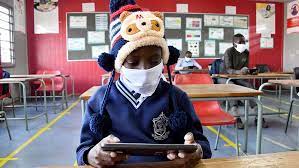
THE South African Health Department unpacked new Covid ruIes. Initially exempting children from wearing facemask in the classrooms and general indoor gatherings, the health department issued a corrective to confirm they could only take off their mask when outdoors in playgrounds or sports fields.

The new regulations came on Thursday  at a time when South Africa has reported a new wave of covid 19 in the country, the Centre for Epidemic Response and Innovation (CERI) warned in late April.

The plan for children to wear masks in school is part of the government’s plans to limit the spread of covid 19.

“The Department would also like to bring to the public attention of the confusion created by unfortunate and regrettable human error in the media statement issued yesterday about the removal of face mask wearing by children at school. This is not part of the gazetted health regulations, and is therefore retracted to avoid any misunderstanding of the regulations,” the department said.

“Therefore, children like other people are expected to continue complying with the provisions of Regulation 16A on face masks in the classrooms and general indoor gatherings, unlike outdoors in playgrounds and sports fields.”

The Department added that face masks remain an effective non-pharmaceutical intervention against the spread of the COVID-19 virus, and it was more relevant now as the number of COVID-19 positive cases is rising once again.

“The Department of Health has been receiving a lot of feedback from the public since announcing the extension of public consultation process together with the introduction of limited health regulations meant to manage the spread of COVID-19 pandemic and future notifiable medical conditions. We would like to urge all South Africans to continue to share their feedback because we believe it will assist the process as we move forward to finalise the regulations.”

South Africa, is officially the continent’s most affected country by Covid-19. Here, less than 45% of the adult population is fully vaccinated out of a population of nearly 60 million. The country has officially recorded more than 3.8 million cases and some 100,350 deaths.

In early March, the country had gone 48 hours without a single Covid-19-related death, the first time this had happened since 2020. President Cyril Ramaphosa had announced in early April that all legal restrictions related to the pandemic would be lifted.

According to the World Health Organisation (WHO), two new Omicron sub-variants, whose virulences are yet to be determined, are causing the new wave of Covid-19 pandemic in the country.

“South African scientists who identified Omicron late last year have now reported two more Omicron sub-variants, BA.4 and BA.5, as the cause of a spike in cases in South Africa,” WHO Director-General Tedros Adhanom Ghebreyesus said on Wednesday. On that same day, more than 6 000 new cases were reported in South Africa. Two new Omicron sub-variants are believed to be driving an increase in cases.

AFP. Additional reporting by INSIDE EDUCATION

Angie Motshekga| Comprehensive sexuality education key to prevent vulnerabilities in young people

THE realisation of sexuality education and sexual reproductive health rights for young people is key for the prevention of HIV, early and unintended pregnancies (EUP) and gender-based violence (GBV).

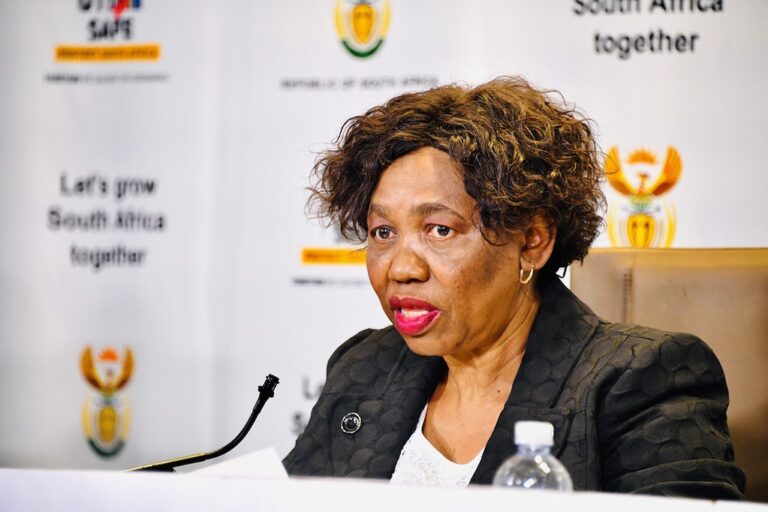
Basic Education Minister Angie Motshekga said that the prevention of these vulnerabilities among the youth will help countries in making progress in their youth development agendas.

The Minister was delivering the opening address at the United Nations Educational, Scientific and Cultural Organization’s (UNESCO) Our Rights, Our Lives and Our Future (O3) and O3 plus 2021 Annual Review and Partners’ Meeting in Fourways, Johannesburg.

The meeting is aimed at reviewing progress from the 33 programme countries in the Eastern and Southern Africa and West Central Africa.

The Our Rights, Our Lives, Our Future programme supports delivery of good quality comprehensive sexuality education (CSE) that empowers adolescents and young people (AYP) and builds agency, while developing the skills, knowledge, attitudes, and competencies required for preventing HIV, reducing EUPs, and eliminating GBV.

The objectives of the programme among others are to secure and sustain strong political commitment and support for adolescents’ and young people’s access to comprehensive sexuality education and sexual and reproductive health services across sub-Saharan Africa.

The O3 programme is run in partnership with ministries of education across the 33 countries in which the programme is implemented. It benefits from the generous support of the governments of Sweden, Ireland, Norway, and France, as well as the Packard Foundation.

Minister Motshekga added that the prevention will also contribute towards attainment of:

  • – Sustainable Development Goals 3, 4, and 5;
  • – Regional commitments such as the Eastern and Southern Africa and West Central Africa Commitment;
  • – The African Union Action Plan and the Southern Africa Development Community Strategy for Sexual Reproductive Health and others.

“It is significant that we are here to review, reflect on how the Our Rights, Our Lives, Our Future Programme has contributed to the promotion of the rights of young people to education, health and wellbeing in our respective countries in the last five years.

“We are all cognisant of how the programme has supported and enhanced our efforts in ensuring that all adolescents and young people have access to sexuality education and sexual reproductive health rights,” she said on Wednesday.

Motshekga emphasised that education is a protective factor and evidence has showed this especially in the face of the COVID-19 pandemic and its ramifications.

She said that children being and staying in school to complete their education is truly vital and protect them from the afore-mentioned vulnerabilities.

“To ensure that our adolescents and young people become champions of their lives and be responsible citizens that are empowered to contribute to the development of their world, achieving positive educational outcomes is extremely critical, and this is where the O3 Programme has been very beneficial,” she said.

For South Africa in particular, the Minister said that the country is thankful to have been one of the countries that has been receiving support from UNESCO through this programme.

She said that the country can attest that it has been able to up its game in strengthening the implementation of sexuality education and access to sexual reproductive health services and rights in schools. 

Challenges

“We are making great strides even though we continue to experience challenges when it comes to the sexual reproductive health and wellbeing of our adolescents and youth,” Motshekga said.

The Minister said that the challenges include:

New HIV infections reported to be at about 1300 per week among adolescent girls and young women (AGYW) specifically;

Concerning numbers of births among adolescent girls, with 132 000 deliveries reported by the Health Department by young girls between ages of 10 and 19 in 2021 alone;

Gender Based violence against children having risen during COVID 19 lockdown, with the President calling it a second pandemic.

“We are however happy to say despite the above complex challenges, we have hope that we will achieve better education for all our children, and eliminate these social ills in order to report good progress, as a country towards Sustainable Development Goal 4 – that of attaining inclusive and quality education for all by 2030,” she said.

Progress

Motshekga went on to share the strides that have been made in the past five years, with the support of UNESCO and other Partners such as Global Fund, United States Agency for International Development (USAID) and others.

The DBE Policy on the Prevention of HIV, STIs and TB (2017) has been strengthened to improve implementation of comprehensive sexuality education (CSE) with linkages to sexual reproductive health services (SRHS) in schools.

She said that this has led to the development of the Scripted Lesson Plans (SLPs) for CSE which is now being rolled out in schools in Life Orientation and Life Skills Subjects.

In 2021, the DBE finalised and gazetted the Policy for the Prevention and Management of Learner Pregnancy in Schools which seek to increase efforts to prevent early and unintended pregnancies.

Though much has been achieved, the Minister said that challenges continue to exist, thus as they review progress, the country also looks forward to learn from other countries.

“Our young people who are our most precious asset for the future of our countries and regions still need us to do more and to fast-track the agenda towards realising the SDG goals and our efforts to achieve an HIV free generation by 2030,” she said. 

SA NEWS

Missing Unisa student Hillary Gardee found dead outside Nelspruit – EFF

THE Economic Freedom Fighters (EFF) has confirmed the death of former Secretary-General Godrich Gardee’s daughter, Hillary Gardee.

The 28-year-old Unisa student was last seen last Friday at the local Spar Supermarket in Nelspruit wearing a black top and black trousers.

“The EFF regrets with deep sadness to inform the public on the passing of the daughter of EFF former Secretary General, Hillary Gardee,” said the EFF in a statement.

“The body of Hillary Gardee was found abandoned outside Nelspruit in Mpumalanga, after she had gone missing on the April 29, 2022 … This heart-breaking news has left the Gardee family distraught, and the collective leadership of the EFF at a loss for words.”

Hillary Indira Gardee, aged 28, was born in Lagos, Nigeria in 1994.

“She was the first-born daughter of Commissar Godrich Gardee and her loss has left immeasurable devastation, as he grapples with the pain of losing a child in such a callous, cruel and inhumane manner. Hillary was an enthusiastic, kind and loving individual, who had a passion for information technology,” the EFF said.

“She was a student at the University of South Africa, studying IT part-time while running her own IT business. Her kindness and generosity was most evident in her commitment to adopt and care for a 3-year old child, who by the grace of God was spared on the day of Hillary’s abduction. She looked after the child as if she were her own, an inspiring act for a woman of such a young age.”

“We mourn with the Gardee family, and will provide a helping hand to ensure that her memory is preserved and she goes to her final resting place with dignity. The family at this time is still reeling from the terrible news of the loss of their child, and as such is not in a position to speak to the media or the public.”

Hillary disappeared on Friday after she was last seen at a Spar Supermarket in Nelspruit.

INSIDE EDUCATION

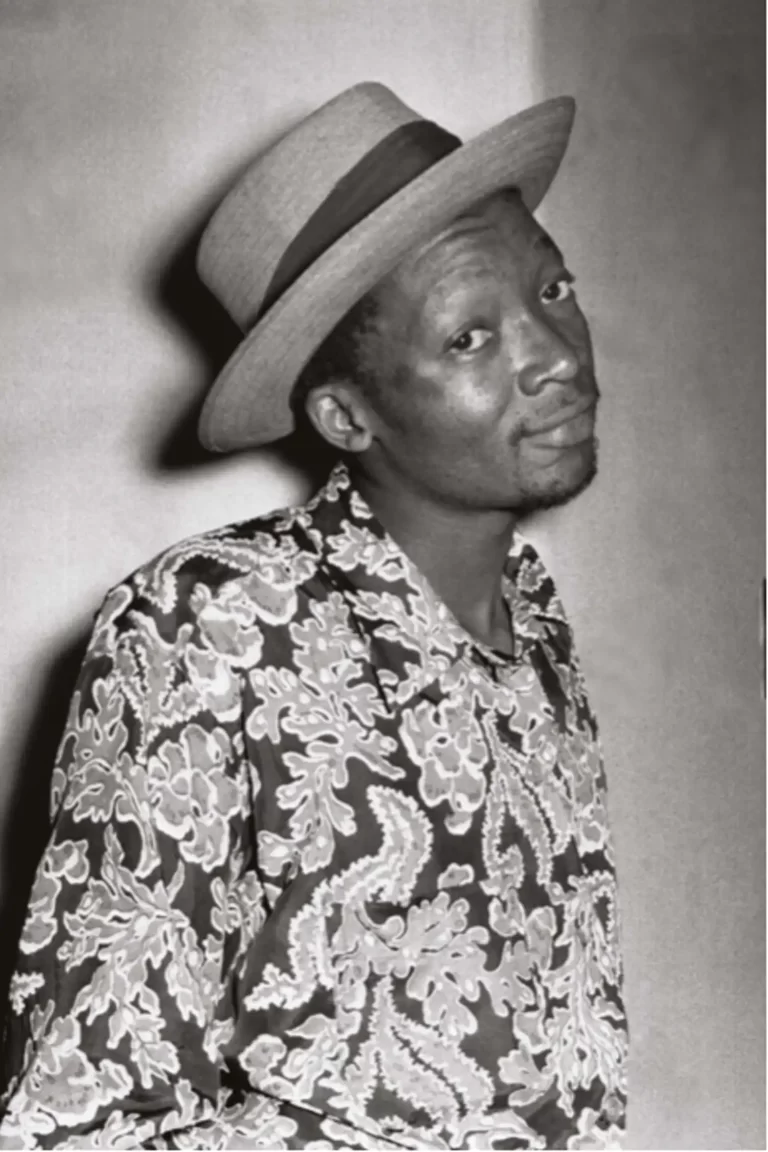
Can Themba: South Africa’s rebel journalist was a teacher at heart

Siphiwo Mahala is well known as a South African short story writer, novelist, playwright and literary organiser. He is also an academic. In fact, his most recent book is a product of his PhD thesis, titled Can Themba: The Making and Breaking of the Intellectual Tsotsi. Can Themba was a journalist and short story writer who challenged the apartheid state by foregrounding the pain and the joy of black life. We asked Mahala to tell us more.

Who was Can Themba and why does he matter?

Can Themba was part of a generation of black writers that revolutionised journalism and the South African literary landscape in the 1950s and early 1960s. This was a culturally dynamic and politically volatile period in South Africa. In 1948 apartheid was introduced by the white minority government, followed by the enactment of draconian laws in the early 1950s, which sought to separate people according to race. This prompted the black oppressed majority to intensify its resistance struggle. Artists, intellectuals and the growing cohort of black journalists were at the forefront of finding platforms to speak against these socio-political ills and challenge the regime.

Drum was the most widely distributed magazine that foregrounded the voices of urban black people at this time. Themba was associate editor and also wrote for Drum’s sister newspaper, the Golden City Post. He was central in chronicling the black condition. Themba had a penchant for ordinary stories – of the neglected, the marginalised and even the resented – and he wrote them in such a sensational way that they would attract global attention. He was a daring journalist, unafraid to put his body on the line in pursuit of a story.

The kind of stories he covered included the impact on ordinary people of the 1957 bus boycott and of pass laws. One of his most documented stories was Brothers in Christ, where he investigated if white churches would welcome black worshippers in accordance with the Christian doctrine of brotherhood. He was assaulted and charged for trespassing in churches, creating a controversy that solicited international attention.

His romantic relationship was the subject of police interrogation because he dared to love across the colour line. He was manhandled and arrested for doing journalism. He was banned under the Suppression of Communism Amendment Act and his writing could neither be published nor referenced in South Africa until 15 years after his death. Clearly the apartheid regime wished to erase him from the face of history.

He went to exile in the early 1960s, was banned shortly after and died in exile. This has made it difficult to trace his life’s journey. Although his works – especially his short story The Suit – have been celebrated for years, his personal story has been sketchy, limited to his period as a Drum journalist.

How does your study approach him?

My interest was in his construction. Tracing the factors that contributed to the making of the writer who became known as the winner of Drum’s short story competition in 1953, and the elements that contributed to his deterioration a few years later. I feel privileged to have been the first to document his life story – more than 50 years after his passing in 1967. In this book, through the voices of people who knew him personally, we get to know Can Themba as a husband, father, a drinking buddy, a teacher, a colleague. As a person and not just the public figure.

More than half the people I interviewed as part of the research have since passed away. The unique insights shared by the late Anne Themba, Nadine Gordimer, Keorapetse Kgositsile, Parks Mangena, Mbulelo Mzamane, Ahmed Kathrada and Lindiwe Mabuza cannot be replicated and could have been easily lost.

I trace him from an early age, his family background in the racially mixed community Marabastad, relocating to Atteridgeville, a township outside Pretoria. I trace his schooling as well as his years as a student at the University Fort Hare, where he studied towards a BA degree and majored in English which he passed with a distinction. Sharing the university syllabus helps us to understand the foundations of his literary apprenticeship, as it included literary criticism, the history of literature and the study of poetry. The earliest available record of Themba’s publication dates back to 1945, when he was a student at Fort Hare, and the influence of Shakespeare is palpable.

This period also gives a glimpse of what he and some of his fellow students would become. Whereas Themba and his fellow literary enthusiast Dennis Brutus contributed mainly poetry and short stories in student journals, political leader Robert Mangaliso Sobukwe was contributing articles in political pamphlets.

I hope readers will take away a more holistic view of Can Themba and understand that he was an abundantly talented individual who was as flawed as the rest of us. He died before his fullest potential could be realised.

What did you conclude about Themba?

Much has been written about the perceived lack of political commitment in his works, his romanticisation of the township and his excessive drinking. In this book, I reveal some of his sharpest political commentary. I reveal that Themba did not drink until he joined Drum. Former Drum photographer Jurgen Schadeberg states that drinking in the newsroom was encouraged. Schadeberg says Themba initially felt out of place in the newsroom, and kept wearing a tie just like the teacher he was.

Themba died in 1967, supposedly of alcohol related causes, only 14 years after he started drinking. I interrogate a number of personal, social and political factors that contributed to his early demise. As an epigraph to the book, I use a quote from his former protege, veteran journalist Harry Mashabela: Can Themba was what he was and not what he could have been because his country is what it is.

For a writer who believed in freedom of expression, living in a tyrannical society was a constant assault to his soul.

More than anything else, I realised that Can Themba was a teacher at heart. It’s common knowledge that before joining Drum in 1953, he had been working as a teacher, and that he taught at St Joseph’s Catholic School in Swaziland, where he passed away in 1967. It’s not very well known that he lived for teaching even when he was not teaching for a living.

He was a teacher in his House of Truth, which he established in his room in Sophiatown as a forum for debate. He taught in the newsroom and in the drinking dens, becoming known as the “shebeen intellectual”. And in every space where he found himself. He did guest lectures at universities. He even offered English lessons to groups and individuals. For me, his greatest legacy is his determination to nurture young minds.

Can Themba: The Making and Breaking of the Intellectual Tsotsi is available from Wits University Press.

THE CONVERSATION

UWC ranks in top 800 on Times Higher Education for 6th year in a row

THE University of the Western Cape (UWC) has done it again. It has been ranked in the top 800 universities globally by Times Higher Education (THE) for the sixth year running. Udubs placed seventh in South Africa and 13th on the African continent.

The THE Global Impact Rankings help universities worldwide through analysis and benchmarking. THE prides itself on having the “most rigorous and trusted rankings of universities”.

These rankings are to universities what FIFA rankings are to football-mad nations. It’s due reward for hard work. According to THE, 1 662 universities from 99 countries were evaluated.

In addition to placing in the top 800, University of the Western Cape was ranked joint 107th in the Emerging Economies University rankings this year. That is UWC’s highest position since joining the rankings in 2017.

Speaking from London, Ellie Bothwell, the rankings editor at THE, explained: “In the latest 2022 edition, the university (UWC) achieved particularly high scores for citation impact and international outlook. It has lower scores in the areas of teaching environment and research environment, but its performance in those two areas is at its highest level ever.”

UWC, a vibrant intellectual space, has excelled in several of the United Nations’ Sustainable Development Goals (SDG) areas, including No Poverty and Reduced Inequalities. UWC now ranks in the top 200 globally for these goals.

“It (UWC) is ranked in all 18 of our Impact Rankings tables – in the tables for each of the 17 SDGs, as well as the overall ranking – indicating its strong commitment to helping tackle the world’s greatest challenges and achieve the Sustainable Development Goals,” said Bothwell.

UWC’s Rector and Vice-Chancellor, Professor Tyrone Pretorius, could not be prouder.

“It’s quite significant. The latest rankings speak directly to UWC’s commitment to quality education and making a meaningful difference in the world. We are already one of the finest institutions in South Africa, and to know that we are world-class is just a feather in the cap. We are well on track to meet our Sustainable Development Goals,” he said. “And it’s not just about approaching those goals on a theoretical level. We look at the challenges facing society from all angles and then put in the hard work to make a meaningful difference. It’s part of UWC’s genetic make-up. It’s what we live and breathe.”

THE use stringent metrics by which they measure universities’ performance. They use indicators to gauge a university’s strengths against its core value missions, analysing policies and initiatives. Institutions must provide evidence in support. THE then looks at examples that demonstrate best practices.

Bothwell also mentioned: “The Impact Rankings are inherently dynamic: they are growing rapidly each year as many more universities seek to demonstrate their commitment to delivering the SDGs by joining our database; and they allow institutions to demonstrate rapid improvement year-on-year by introducing clear new policies, for example, or by providing clearer and more open evidence of their progress. Therefore, we expect and welcome regular change in the ranked order of institutions (and we discourage year-on-year comparisons) as universities continue to drive this urgent agenda.”

Prof Pretorius added: “The top 800 in the world is a good place to be. It’s a genuine reflection of the work we put into achieving greatness. But we’re not resting on our laurels. There are so many more exciting programmes in the pipeline. And those will obviously match our efforts to always strive for better. We are so proud of the incredible strides we are making. The education we provide is all-encompassing. Teaching, learning, research, innovation, real solutions to real life challenges and issues. And with every graduate from our fine institution, we are staying true to our promise to change the world.”

SUPPLIED| UWC

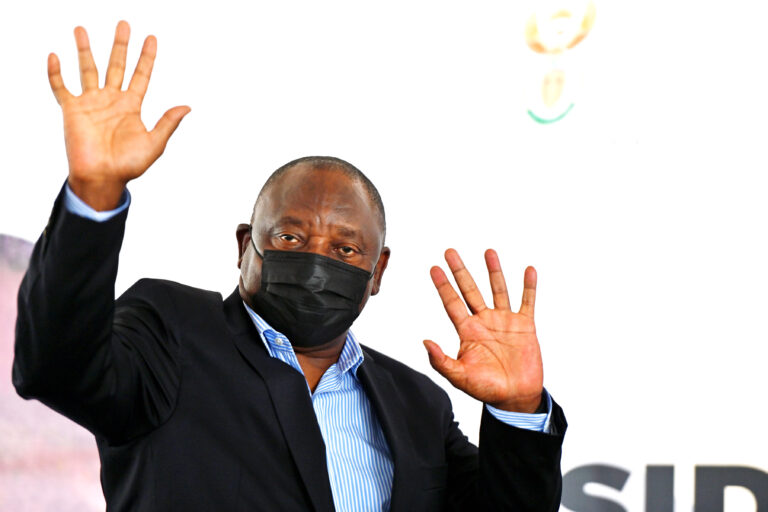
Ramaphosa says 96% of South African children of school-going age are in school

WENDY MOTHATA|

PRESIDENT Cyril Ramaphosa says that 96% of children of school-going age are in school while wo-thirds of those pupils attend schools where their parents do not have to pay school fees.

Ramaphosa was reflecting on the gains made and challenges the country has grappled with since April 27, 1994.

The president led Freedom Day celebrations at the Kees Taljaard Stadium in Middelburg, Mpumalanga.

“Ninety-six per cent of children of school-going age are in school. Two-thirds of these learners attend no-fee schools,” said Ramaphosa.

Ramaphosa, however, conceded that “”much more still needs to be done”.

He said that that free tertiary education was also being provided to young people in South Africa.

“Free tertiary education is being provided to young South Africans to study, a dream that was denied their forebears,” he said.

He further added that more than 600 000 learners in Mpumalanga received their daily meals at various schools across the province.

“Here in Mpumalanga, more than 600 000 children from poor households receive a meal at school through the National School Nutrition Programme,” Ramaphosa said.

The president added that the National School Nutrition programme currently feeds more than nine million learners every school day across the country.

“In democratic SA, 81% of people live in formal housing. Nine out of 10 South Africans have access to clean water and more than 85% have access to electricity. In democratic SA, basic education and health care is no longer the privilege of a few, but available to all,” he said.

Ramaphosa said: “In democratic South Africa, basic education and health care is no longer the privilege
of a few, but available to all.”

While the country has mixed feelings regarding the scourge of Gender Based-Violence, crime and corruption, Ramaphosa said there were laws to protect the vulnerable in the country.

“Gender-based violence, substance abuse and other societal ills have become rampant in our communities. Crime and violence is eating away at our society. We can only defeat crime if we work together, as families, as communities and community leaders, as faith communities and leaders, and as individuals,” he said.

INSIDE EDUCATION

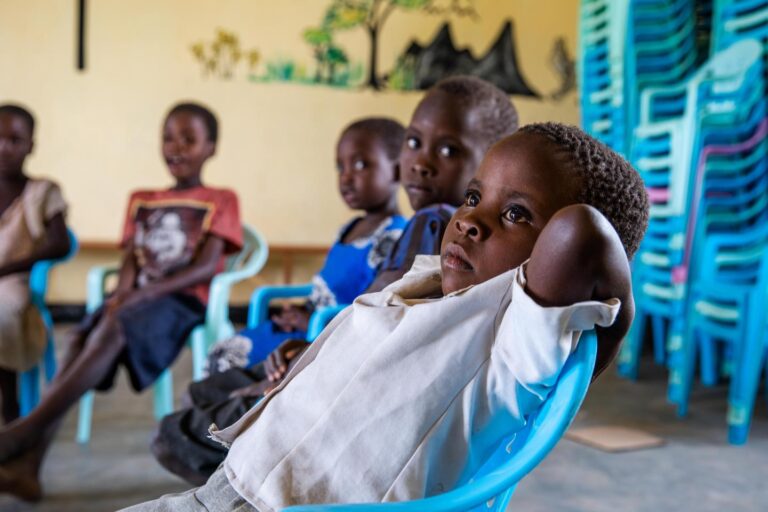
Liberian Educator Wants Early Childhood Education Prioritized

0

EARLY childhood education is the foundation or cornerstone of any higher education and so a Liberian education is craving the indulgence of the national government and stakeholders to place key emphasis on that area.

Mr. G. Sebastine Gaye, Director of the Trumpet of Praise (TOP) International School, asserted that in order to strengthen the educational sector of the country so that Liberia comes on par with other comity of nations, the Liberian government specifically must place serious emphasis on training for teachers in early childhood education.

Mr. Gaye, who is also one of the founders of the TOP International School, made these comments at the weekend at the occasion marking the observance of the school’s 17th anniversary.

“We want to call on the national government to place emphasis on the training of teachers for this group of people, who are the foundation for every education process – because taking care of kids is something extremely difficult,” said Mr. Gaye.

“And so we want to encourage national government to place serious emphasis on manpower development so as get our kids prepared early,” he asserted.

And as the TOP International School envisages to be a second to none institution of learning, Mr. Gaye disclosed plan for the elevation of an additional annex to bring in more facilities.

Founded in 2005, following barely nine years of the establishment of the church -Trumpet of Praise Tabernacle, the TOP International School currently operates two key branches in Fiamah in Sinkor, Monrovia and in Pipeline in Paynesville, outside Monrovia. The school operates from nursery up to 8th grade.

“At the end of the current academic year (2021/2022), we will start the elevation of another annex for additional classes, a library, a playground and a reading room for our kids,” Gaye revealed.

We will be calling on the public; national government, parents and guardians and well-wishers to come and grace the occasion marking the groundbreaking for the construction of this annex. We want to extend the school to ninth grade and in the future extend it to senior high,” the TOP International School Director, among other things, added.

FRONTPAGE