Home Blog Page 275

Science Corner| First private astronauts arrive at International Space Station

THE first all-private astronaut team to fly to the International Space Station (ISS)reached the floating research site on Saturday, the US space agency NASA confirmed.

The four-person crew docked at the ISS at shortly before 1300 UTC, almost 24 hours after they’d lifted off from NASA’s Kennedy Space Center in Cape Canaveral, Florida on Friday. 

The Houston-based startup Axiom Space Inc. is sponsoring the mission, called Axiom-1, which carries three private citizens and one seasoned astronaut.

A SpaceX Crew Dragon capsule, propelled by a Falcon 9 rocket, carried the group to the ISS.

SpaceX also directed mission control for the flight from its headquarters near Los Angeles.

Axiom, SpaceX and NASA are working together to make the mission happen.

The three have said the mission is a major step in the latest expansion of commercial space ventures.

Retired NASA Spanish-American astronaut Michael Lopez-Alegria is leading the flight, along with his second in command Larry Connor, an entrepreneur and aerobatics aviator from Ohio, designated as the mission pilot.

Also on board as mission specialists are Israeli investor-philanthropist and former fighter pilot Eytan Stibbe and Canadian businessman and philanthropist Mark Pathy.

Now that they have reached the ISS, NASA is responsible for the astronauts.

The operations director said this mission would be very different to the much-publicized “space tourism” flights, lasting just a few minutes, of billionaires like Amazon’s Jeff Bezos and Virgin Group’s Richard Branson.

“The distinction is that our guys aren’t going up there and floating around for eight days taking pictures and looking out of the cupola,” Derek Hassmann, operations director of Axiom Space, told reporters at a prelaunch briefing. 

“I mean we have a very intensive and research-oriented timeline plan for them,” Hassmann said.

Axiom executives said the Axiom-1 crew members underwent rigorous astronaut training with both NASA and SpaceX to prepare them for eight days of science and biomedical research.

It includes research on brain health, cardiac stem cells, cancer and aging, as well as a technology demonstration to produce optics using the surface tension of fluids in microgravity, company executives said.

During their stay, they will share the ISS with seven regular crew members, three US astronauts, a German astronaut and three Russian cosmonauts.

AGENCIES

Zimbabwe: O-Level Results This Week

0

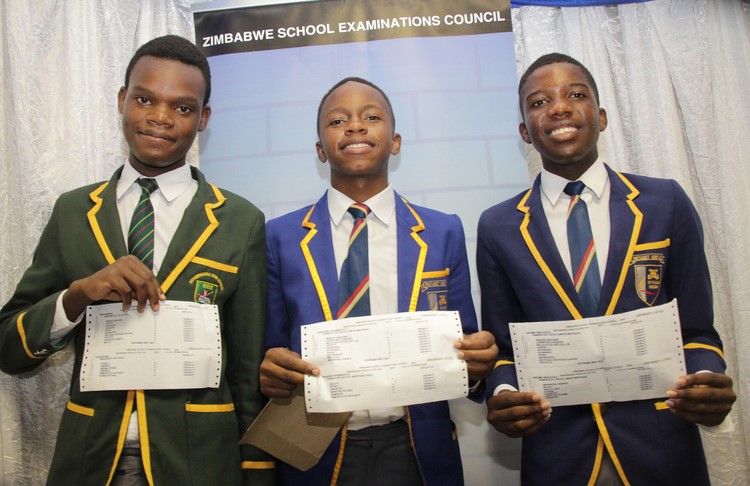
ZIMSEC O-Level results for November 2021 are expected to be out this week.

In a statement, Zimsec said it had met the time period of two months after the last examination for 2021 was written on January 31, 2022.

Last week Zimsec released November A-Level results and statistics showed a 84,67 percent pass rate compared to 80,98 of November 2020.

Zimsec attributed delays of results to Covid-19 mitigatory measures which caused schools to shut down for a long period.

“The December 2021/2022 Advanced Level examination results were released on 5 April 2022 and the Ordinary Level examination results will be released this week.

“The 2021 school calendar was disrupted as the Ministry of Primary and Secondary education had to put in place mitigatory measures to curb the upsurge and spread of the Covid-19.”

The ministry also moved the examinations to later in the year to give time to complete teaching and learning and full coverage of the syllabus.

Hence examinations supposed to run from October to the end of November were moved to start on December 1, 2021 to enable candidates and teachers to complete the learning process that had been disrupted, read the Zimsec statement.

THE HERALD

UCT sits on the throne as the top dog for Sport Science in Africa

0

SPORT Sciences in Africa have the University of Cape Town sitting on the discipline’s throne after it was announced that the university has been placed top, not just in South Africa but on the African continent, for the Global Ranking of Sport Science Schools and Departments.

The rankings were determined by Shanhai Rankings 2021 Global Ranking, and highlight the performances of over 300 universities.

Among these, 287 universities and 13 sports universities with sporting departments or units were compared and considered.

Professor Vicki Lambert, the director of UCT’s Research Centre for Health through Physical Activity, Lifestyle and Sport (HPALS) said: “We are a small group of dedicated researchers, including 12 NRF-rated scientists, enthusiastic postgraduates and a wide network of international collaborations.”

“We are committed to translation of our work, that it is inclusive and ‘difference-making’ to policy and practice and that we innovate, developing bespoke solutions relevant to the Global South,” she added.

In speaking to eNCA, Lambert noted that a key strength for the University comes from international collaborations and that the ranking, which is in the top 14% globally, is also accredited to research published in the top journals for a discipline among other indicators.

The rankings are considered by looking at different categories, from papers indexed in Web of Science, to total citations, citations per paper and papers published in the top 25% of journals, as well as those papers marking international co-authors collaborations.

The achievement follows other triumphs from UCT for 2021, including the university leading Africa in five key world university rankings. These include the U.S. News & World Report Best Global Universities Rankings, Times Higher Education (THE) World University Rankings, Quacquarelli Symonds (QS) World University Rankings, the Center for World University Rankings (CWUR) and the ShanghaiRanking’s Academic Ranking of World Universities (ARWU).

UCT NEWS

Impero Classroom to Help Teachers Keep Students on Task

0

THE aftermath of the COVID-19 pandemic has led to behavioral concerns in students, with many teachers and psychologists noting an escalation of anxiety, depression and other mental health issues in students. 

Impero Software, which creates digital tools for workplaces and schools, is the latest ed-tech company to announce a new piece of classroom management software expected to help address issues with focus and behavior in schools.

The company’s Impero Classroom tool, which launched today, offers classroom device monitoring, browser controls and the ability to share and broadcast presentations, among other things.

The company’s news release said it’s designed to give K-12 teachers a real-time window into what their students are doing and keep them focused on the task at hand, whether in the classroom or remotely as part of hybrid learning, on a multitude of web-based operating systems or applications.

“We’ve seen many schools still struggling with children in school and out of school,” Impero Software CEO Justin Reilly told Government Technology. “We wanted to challenge some of those difficulties that teachers are currently facing, and to support them with the core principles of classroom management.”


As part of the tool, teachers can prevent students from visiting certain websites, or direct students to websites to help nudge them in the right direction.

Teachers also can share the screen of a student to showcase a presentation to the class, or send each student’s browser to a particular website to speed along a lesson, the release said. The tool itself can work in a single classroom or district-wide, and can function with multiple staff members at the same time.

“Teachers can monitor all the students’ screens like a CCTV and see what’s going on, to see who’s on task,” Impero Software Vice President of Product Sam Heiney told Government Technology. “It’s really designed to allow the teacher to manage, monitor and engage their students in this new environment of using lots of different devices and operating systems.”

Kaitlin Trujillo, Impero’s key account manager, said that if Impero Classroom is implemented correctly by teachers, it has the potential to improve student focus.


“The software allows the teachers to be able to monitor and respond to student behavior,” she said. “It’s about being able to respond to off-topic behavior, and then be able to proactively manage that behavior moving forward using the software.”

Heiney said Impero Classroom can potentially add minutes of instructional time to a teacher’s day because of its efficiency, and it runs on the open source Backdrop CMS, so it can integrate with several student information systems and access a plethora of student data. He said that the tool can generate a full profile for each student, with details such as whether a student has a sibling in the school, or if there has been a recent death in the family.

“The real power of Impero Classroom is that integration, that suite of products that we bring to bear, because what Backdrop provides is a view of student profiles with information that can help a teacher guide student interactions on the devices in the most appropriate way,” he said.

“It allows teachers to create individualized learning plans, classroom environments that are truly engaging, and that modify and monitor and manage behavior, not just computer use.”

Reilly said the company wanted to focus on supporting teachers’ need to reach students in the classroom or from afar.

“The first principal piece here is learners being better learners. If you can educate children to be better learners, that really is fantastic, but to do that, you’ve got to create a really productive and safe environment,” he said.

GOVTECH

England state school pupils as happy with life as private school peers – survey

0

YOUNG adults and teenagers who went to state schools in England are as happy with their lives as their peers at private schools, according to a new study by researchers at University College London.

The research found few differences in mental health or life satisfaction between the two groups, which surprised the study’s authors because of the substantial advantages in spending on wellbeing and support enjoyed by those at private schools.

Dr Morag Henderson, of UCL’s social research institute, the paper’s lead author, said: “Although school resource is greater in private schools, the academic stress students face might be too and so we see each force cancelling the other out.”

The study – published in the Cambridge Journal of Education on Thursday – is based on responses from a national sample of more than 15,000 people born in 1989 to 1990 who attended school in England, and were surveyed as teenagers and later in their 20s.

“While these methods do not prove causality, the absence of significant positive effects implies that there is no evidence that parents who decided to pay for private schooling were gaining mental health and life satisfaction advantages for their children,” the authors stated.

The research measured participants’ mental health by asking questions such as: “Have you been able to concentrate on what you are doing?” and “Have you lost sleep over worry?” It found little difference in responses between the two groups before and after adjusting for factors such as social background and educational achievement.

Those who attended fee-paying independent schools did report higher levels of life satisfaction in their 20s. But after responses were adjusted to exclude the effects of advantages such as higher income, house ownership and better exam results, the researchers again found no substantial differences in satisfaction levels.

Girls at private schools did report better states of mental health at the age of 16 than their peers at state schools but the same gap did not appear at the age of 14 or 15.

The study concluded that “there is no additional advantage of private schooling with respect to mental health and life satisfaction” for the cohort it studied. But it cautioned that private schools have further increased their spending on wellbeing and pastoral support in the years since the sample group attended school.

Dr Henderson said it was possible that the increased pastoral support “was just starting to make a difference” for private school pupils, who she thought might have received more support during the Covid lockdowns.

“This is speculation but it might be that we see state school students fare worse in terms of mental health compared to private school students, post-lockdown. This question is ripe for future analyses,” Dr Henderson said.

Earlier research among those born in 1970 found that attending a UK private school was associated with “heightened psychological distress” among women. But since the 1980s private schools have greatly increased their spending on supporting pupils.

THE GUARDIAN

‘Millionaire’ NSFAS student Sibongile Mani used as a scapegoat to cover tracks of actual criminals – Support Group

WENDY MOTHATA|

A SUPPORT group called the Justice for Sibongile Mani said that the Walter Sisulu student accused of theft of NSFAS millions was used as a scapegoat.

Briefing the media this week, the group slammed Mani’s conviction and sentencing to four years in jail.

“We believe she is not a criminal as proclaimed by some in the media. She is an innocent who is used as a scapegoat to cover tracks of actual criminals that are still out there roaming around without taking any responsibility,” the group said.

Mani is currently out on bail after she was granted leave to appeal by the East London regional court.

In a bid to keep Mani out of jail, the group announced that the president of the WSU convocation, advocate Thembeka Ngcukaithobi will help Mani’s legal team in appealing the sentence.

Mani’s matter will be heard on the 11th of April.

Businessman and “The People’s Blesser” Malcolm X has since pledged to pay R500 000 in a desperate attempt to get convicted Mani out of jail.

Mani was found guilty of theft after she allegedly splashed R800 000 of the R14-million on parties and designer clothes.

The money in question was erroneously paid to her by Intellimali, a service provider contracted by the National Student Financial Aid Scheme (NSFAS), in 2017.

Last week, the East London Regional Court’s magistrate Twanet Olivier said that a suspended sentence was not appropriate for Mani and sentenced her to five years in jail.

Olivier further said that Mani spent money not on essential items to stay alive, adding that she spent the cash on luxury items “inspired by greed and not need.”

“The court has a duty to impose a fearlessly appropriate and fair sentence even if such a

sentence would not satisfy public opinion,” Olivier said.

“The only form of sentence deemed fit by this court is that of direct imprisonment and you

are sentenced to a term of 5 years imprisonment,” said Olivier.

According to the state, between 1 June, when the money landed in her account, until 13

August, when NSFAS uncovered the error, she had spent an average of R11 000 per day.

The then accounting major student was due to receive her monthly R1 400 food allowance, but because of what was described in court as a “ridiculous and absurd technical glitch”, R14 million was credited to her bank account. 

INSIDE EDUCATION

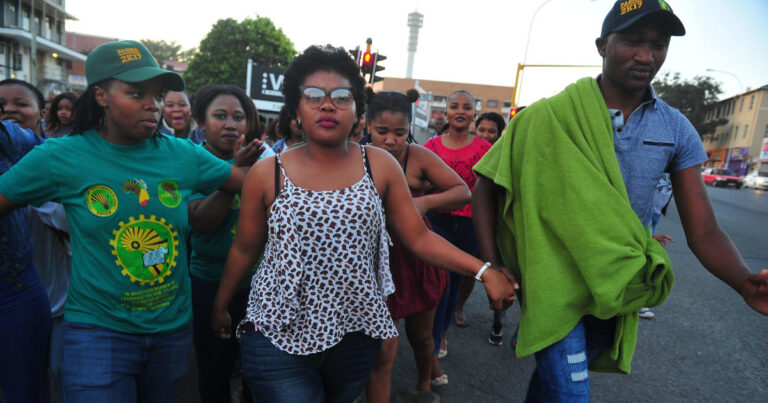
Student arrested for fire at University of the Free State’s Qwaqwa campus

Free State (UFS) has confirmed the arrest of a student, saying they are hot on the heels of more suspects responsible for the near total destruction of two buildings amounting to millions of rand in damages.

In a statement on their website UFS spokesperson, Lacea Loader, says that the preliminary findings of an urgent investigation indicate that the buildings on campus grounds were intentionally set alight. The fire broke out at the UFS Qwaqwa campus on Monday evening.

She says that they are in the process of identifying more suspects. The institution will initiate disciplinary action against suspects who are registered as students.

Criminal charges will also be laid against perpetrators.

Loader says the two buildings, which housed a clinic and a computer laboratory, were almost completely destroyed. Damages are estimated at R35m.

The academic programme at the Qwaqwa campus continues, mostly online, for the remainder of this week.

“The campus remains open; the university’s protection services is on high alert and is monitoring the situation on campus closely,” Loader says.

It is alleged that students have recently been unhappy about payments of allowances that they are yet to receive from the National Student Financial Aid Scheme (NSFAS).

“To alleviate this, the UFS has so far this year offered students allowances for food and books amounting to more than R71 million, while they are waiting for their NSFAS subsidies to be released,” Loader says.

OFM News previously reported that two students were allegedly shot with stun grenades during a protest march at the UFS main campus in Bloemfontein on Monday.

  • Reporting by local agencies

As Yet Another Wave of COVID-19 Looms, New Yorkers Ask: Should I Worry?

0

DRIVEN by an Omicron subvariant, Covid-19 cases have been ticking up steadily across Manhattan, Staten Island and parts of Brooklyn, threatening New York City with a fifth wave of coronavirus cases just weeks after the city lifted many mask and vaccine requirements.

The city is registering about 1,500 new cases a day and a positivity rate of nearly 3 percent, both figures more than double what they were a month ago. In Manhattan, where the last wave also first emerged, the positivity rate is above 6 percent in some neighborhoods.

In another potentially worrisome indicator, the prevalence of fevers across the city — which can offer a forewarning of Covid trends — has reached levels last seen at some of the worst points of the pandemic, according to data from internet-connected thermometers.

And anecdotal signs of spreading infection are evident across the region. On Broadway, the actors Matthew Broderick and Daniel Craig have recently tested positive, as have New Jersey’s governor and at least three members of the New York City Council.“We may be done with the virus, but the virus isn’t done with us,” Brad Lander, the city’s comptroller, said after he tested positive last week. The Omicron subvariant BA.2, which the Centers for Disease Control and Prevention now estimates makes up 84 percent of cases in the New York region, is even more contagious than its predecessor.

But so far it has not shown the same explosive speed as the earlier form of Omicron, which in late December and early January propelled cases in New York City past 40,000 per day. Instead, BA.2 is causing a slowly but steadily rising tide of illness. It has yet to produce a rise in hospitalizations, and deaths remain low.

As the subvariant spreads, city health officials expect the entire city to enter the medium risk category in the next two weeks, a threshold that Manhattan has already reached, they said Wednesday at a coronavirus briefing for Mayor Eric Adams. Officials are not expressing alarm, but they are preparing to increase the number of city-run testing sites from the 130 now operating, if necessary, and to distribute some six million free at-home tests.Data shows that new infections have predominantly been among adults under 35, who are less likely to be hospitalized. If the subvariant spreads more widely among older people and in nursing homes, it could have more serious impact. Citywide, 83 percent of people 65 and older are fully vaccinated, and 56 percent have had one booster shot.

Dr. Wafaa El-Sadr, an epidemiology professor at Columbia University, predicted there would be an “uptick” in hospitalizations but not of the magnitude seen earlier this year when Omicron packed emergency rooms, stretched hospital staffs nearly to the breaking point and killed more than 4,000 people.

“I don’t think this is going to be like the prior Omicron surge,” she said.

Health experts point to several factors that make them think that there will be fewer hospitalizations this time.

For one, some 800,000 New Yorkers have received a booster shot since the Omicron wave’s peak, and more doses of antiviral pills are flowing into the city than before, though the most effective one — Paxlovid — would quickly be in short supply if cases rise precipitously.

Epidemiologists also note that in addition to high vaccination rates, millions of New Yorkers — by some estimates, over 40 percent of the city — were infected by Omicron and now are likely to have strong protection against BA.2.

The potential for a new wave, coming just as many companies are calling employees back to offices and Mayor Adams is pushing for the city to return to a prepandemic normal, has left many New Yorkers unsure if this is a moment to show extra caution or to carry on. Many, but not all, vaccinated people experience relatively mild symptoms from Omicron, including BA.2.New York City mobilized against the coronavirus as few other American cities did: from the 7 p.m. cheer of spring 2020, to widespread acceptance of indoor masking, to the most stringent vaccine requirements in the nation. But that collective effort has waned.

In interviews, New Yorkers voiced sharply varied views over how to navigate current conditions. Some questioned whether this was the right moment for the city to lower its guard. But others expressed confidence that after two years, four waves and nearly as many shots, they were sufficiently protected and ready to return to a prepandemic normal.

“It’s confusing,” Catherine Jordan, 80, said, as she waited for a bus near the Queensbridge Houses, the public housing project in Queens where she has lived for about 60 years. “You don’t know what to do.”

Until someone in her circle gets sick, she said, she planned not to worry — and to keep going to family gatherings, church and her senior center. “If I worry, I wouldn’t come out,” she said.

Tirsa Delate, a 28-year-old artist and server who lives in Bushwick, Brooklyn, described feeling “a sense of vagueness and uncertainty in terms of where we’re at collectively with Covid.” She expressed relief at not having to wear a mask at work, but added that the city should reinstate mask or vaccine requirements if cases rise to worrisome levels.

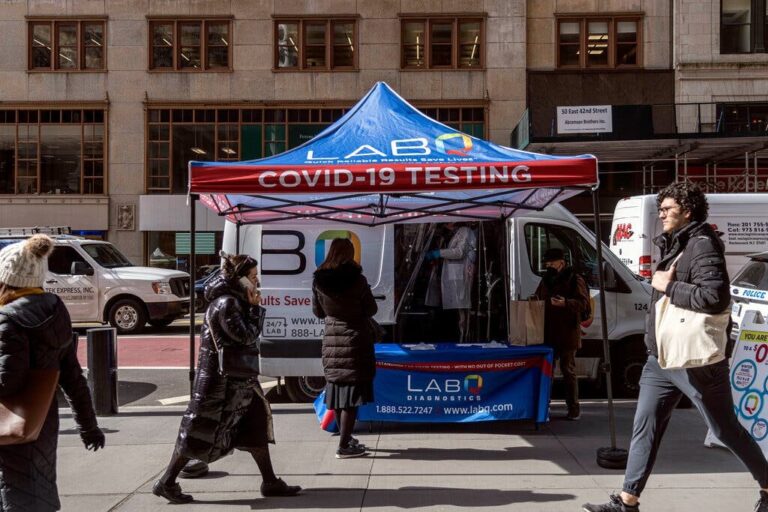
Still others said they conduct a quick risk assessment each time they step indoors — checking crowds, debating a mask, trying to recall the latest case numbers, wondering when it will ever end.“We’re not eating indoors or going to bars or a lot of stuff we’d like to do,” Jim Cashman, 47, said Friday afternoon, as he waited with his family at a Covid testing van near Washington Square Park. An actor, Mr. Cashman said he was worried that if he tested positive, it would mean canceled work, not just for himself, but for co-workers, too.

As he spoke, his 8-year-old daughter, who had been circling on her shiny blue scooter, slowed down long enough to offer a gloomy prediction. “You don’t see people wearing their masks anymore,” she said. “So many people are going to have it.”

Several people who tested positive in recent days said this was their first case of Covid-19 — a trend supported by state data. Of the 8,692 New York City residents who officially tested positive from March 21 to March 27, only 692 were known to have been previously infected, according to the state Health Department.

Until she tested positive in late March, Nina Kulkarni, a New York City public-school teacher, had managed to avoid the virus despite teaching in-person classes since the fall of 2020. She doesn’t know where she was infected, but she had begun wearing her mask a little less often after the city lifted its mask mandate for school staff and students 5 and older on March 7.

She called on the city to reinstitute the mask mandates in schools, saying she has started to see absences going up. City data shows a slow but steady rise in public school Covid cases recently, to an average of 363 cases per day from about 150 per day three weeks ago.

“I did relax the mask, and I regret having done that,” she said. “We all want them to come off. I want them to come off. I hate them. But they do keep us safe.”

Even if this subvariant causes fewer hospitalizations, some experts agree more should be done to limit transmission, particularly given the risk of long Covid.

Dr. Denis Nash, an epidemiologist at the CUNY Graduate School of Public Health and Health Policy, said that the city’s decision to lift mask and vaccine mandates while the subvariant was spreading was “cavalier.”

“Our decision makers have embraced this paradigm that the only Covid crisis at this point is when the health care system becomes overwhelmed,” he said. “And anything between where we are now and that extremely bad scenario is something we are going to accept.”

Getting an accurate measure of the outbreak is increasingly difficult, as more people now use at-home tests — which are generally not included in the city’s official case counts. That means the actual number of people testing positive is probably significantly higher than the official daily count.

Noting that cases were increasing, Mayor Adams on Monday indicated an openness to reinstating mandates if necessary. “We are going to pivot and shift as Covid is pivoting and shifting,” he said.

He decided last Friday the city would maintain a mask mandate for preschoolers that it had planned to roll back. But he has not yet said he would bring back other school mask mandates or recently abandoned vaccine requirements, such as the need to show proof of vaccination at restaurants to dine indoors.

A broad workplace mandate that requires private employers in New York City to verify that their on-site workers have been vaccinated remains in effect, as do vaccine requirements for public sector employees. However, Mayor Adams opened a loophole last month when he lifted the requirement for professional athletes and performers based here, allowing the unvaccinated Brooklyn Nets star Kyrie Irving to play home games.While the growth in cases has been most apparent in Manhattan below 96th Street, about 40 of the city’s 180 ZIP codes now have positivity rates above 5 percent, including Long Island City, Queens; Greenpoint, Brooklyn; and Pelham Bay in the Bronx.

In Manhattan’s West Village, which had among the highest test positivity rates in the city last week, Lisa Landphair, 62, a psychotherapist, was sitting on her stoop Friday afternoon, reading a newspaper. She still wears a mask in stores, she said, adding that her main worry at this point is that she might pass the virus on to her husband.

“My partner is significantly older than I am, so I’m a little more concerned for him,” she explained.

But Steven Lightkep, a 29-year-old nurse who lives in Hell’s Kitchen, said he was ready to be done with the pandemic. “You’re going to get it if you’re going to get it, and if you’re not, you’re not,” he said as he walked to a neighborhood gym late last week. “I’m not going to stop living my life over it.”

NEW YORK TIMES

NSFAS to release funds to institutions from Friday

THE National Student Financial Aid Scheme (NSFAS) will start processing payments to institutions and paying student allowances from Friday, 08 April 2022.

In a statement issued on Tuesday, NSFAS confirmed that it has received the first tranche of its budgetary allocation for the first quarter of the financial year.

“An official communication has been sent to all institutions on the allowance payment process. The institutions that have complied with the 2022 approved NSFAS Eligibility Criteria and Conditions for Financial Aid will receive payment from NSFAS.

“The communique from NSFAS further requests institutions to abide by the funding rules set out in the NSFAS Eligibility Criteria and Conditions for Financial Aid, when disbursing funding to students,” NSFAS said.

You qualify to apply for a bursary if:

  • You are a South African citizen;
  • Your combined annual household income does not exceed R350 000 per annum;
  • You are a SASSA grant recipient;
  • You are registering for the first time for an undergraduate qualification at a public university or you are registered at a TVET college for one of the National Certificate Vocational or report 191 programme;
  • You are applying to study at a public university or TVET college for a qualification;
  • You are an already registered university student with an annual household income of less than R122 000 per year;
  • You have passed Grade 9 and 10 to receive NSFAS funding to study at a TVET college;
  • You have passed Grade 12 to receive NSFAS funding to study at a university.

SA NEWS

Nigeria: 50% of Schools in Nigeria Lack Furniture, says Universal Basic Education Commission

0

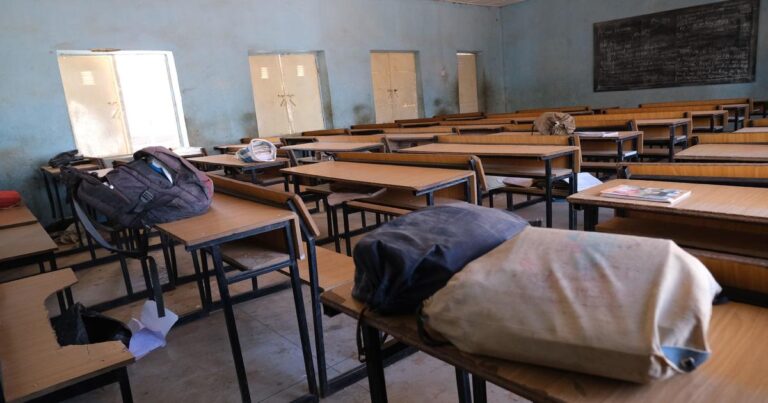
THE Universal Basic Education Commission, UBEC, has said about 50 per cent of schools in Nigeria lack basic furniture. Executive Secretary of the commission, Hamid Bobboyi, who said this in Abuja, regretted that basic education “pupils sit on the floor to take lessons.”

According to him, emerging constraints in basic education delivery in the country might necessitate an increase in the consolidated revenue funds from the current two per cent to four per cent.

He buttressed his position for an increase in funding to the security challenges bedevilling the country, insisting that the rising students population also poses the urgent need for teaching facilities.

Bobboyi said this at a one-day Civil Society Organisations CSO-Legislative Round Table Meeting where some National and State Houses of Assembly members were present.

He argued that while the children of the rich who are merely 20 per cent of the population can afford to garner resources for private schools, the less privileged constituting 80 per cent are stuck with the public institutions.

The UBEC boss equally tasked relevant civil society organisations, the media and other critical stakeholders not to shy away from rendering assistance to the government in bridging observed gaps in learning and teaching processes, especially at the basic school level.

Also speaking, the Chairman of, the Senate Committee on Basic Education, represented by Senator Frank Ibiziem, decried the failure of States’ Universal Basic Education, SUBEBs, to sustain some UBEC- initiated projects such as the building of classrooms and libraries earlier introduced by the commission in all constituencies in the country.

While commending UBEC for the construction of classrooms in schools across the country, he lamented the poor maintenance culture, noting that almost every school has a dilapidated block.

He called for a rapid response initiative to commence the repair of dilapidated schools and pledged the Senate’s support for any move by the commission towards ensuring the provision of a good learning environment for students.

A representative of the MacArthur Foundation, Mr Dayo Olaoye, called on stakeholders to review the impact of the country’s annual budget for education, stressing that it was not enough that the country is increasing its budget for the sector. “As we think about reforms, let us think beyond buildings that have been delivered, let us start thinking about how many children have been brought to school,” he said.

He emphasized the need for accountability in the educational sector, noting that in addition to vertical accountability, there was a need to entrench horizontal accountability whereby the office of the accountant general strengthens other accounting offices to ensure transparency in the sector.

VANGUARD