Home Blog Page 276

Diepsloot Secondary School| A beacon of hope amid squalor, gangsterism

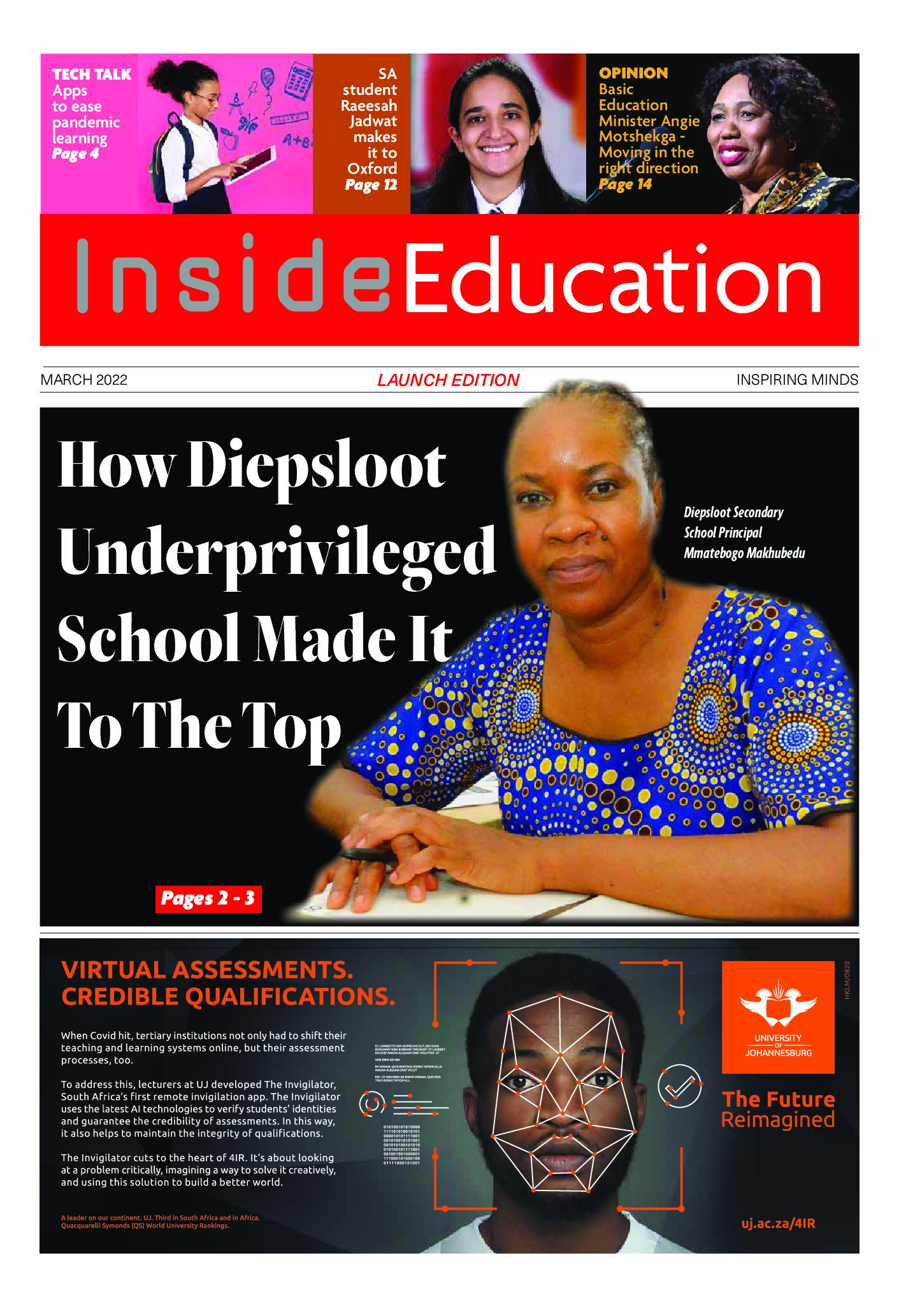
Diepsloot Secondary School Number 2 and 3, headed by Principal Mmatebogo Makhubedu is a beacon of hope in this community, which is generally known for its high crime rate and gangsterism.

Makhubedu has proven that excellence has no special address as she has continued to produce an impressive matric pass rate since 2016.

The school saw a 100 percent pass rate from 2016 to 2020, and a 98 percent pass rate in 2021, and the school was recognised by Gauteng MEC for Education, Panyaza Lesufi at the recent matric awards ceremony.

How she does it

To ensure that learners excel in their work and are not exposed to drugs, gangsterism and street bashes, Makhubedu has introduced night and weekend study sessions for Grade 11 and 12 learners.

The learners are kept at school from 7 am to 4:30 pm.

The Grade 12 learners return for evening study sessions at 5 pm and are transported home at 10 pm.

Her strategy has yielded good results.

This has seen the school climb from a 54 percent matric pass rate in 2014.

 In 2021, out of 158 students who wrote their matric exams, 122 passed with entry to a Bachelor’s degree, 34 diploma passes and six certificates.

“Diepsloot is in the middle of poverty and no parent is paying school fees there. Education is free,” said Lesufi.

Despite the living conditions in this area, the school produced excellent results, Lesufi said.

Ills of society not a deterrent

“Gangsterism is a problem. Our children (learners) survive because they are here. We try to keep them here at

school because there’s gangsterism and drugs in the township. When it’s the weekend, these children forget

about school. They only remember school on Monday, so we try to keep them at school most of the time. I

don’t want them to spend most of their time in the township,” she said.

“Gangsters from different extensions fight against each other. They wait for each other at the gates after school. I have lost many learners, and three in Grade 12 (died). It hasn’t been easy, it has been tough. But currently, it is better because we can manage. The problem is in the township, but it affects the school.”

Not only have the learners suffered at the hands of criminals, but the school has also been affected.

The school was recently vandalised, “they even broke into the toilets and the purpose was to destroy”.

Makhubedu said: “It takes us backwards because instead of progressing, we utilise the funding that we receive to repair the damages at the school.”

But these setbacks have not deterred this leader, her team of educators and learners strive for excellence.

Turning the tide

Makhubedu, who has been heading the school since 2015, said:“Other schools close at 3 pm. So, when our children (learners) leave school at 4:30 pm everybody is gone.

They are tired, and they just want to go home.

Therefore, they do not have time to mingle with the gangs.”

Grade 12 learners said they were grateful to the school, their principal and teachers for introducing evening

and weekend study sessions to protect them from crime.

“Thank you to Mme Makhubedu we are not in gangs. When we come back from school, we are already tired

and we want to go home not to join gangs,” said the Grade 12 learners.

Makhubedu explained that while she was deputy in 2014, the school had underperformed.

“I think we got a 54 percent matric pass rate,” recalled Makhubedu. Based on her observation of the situation, she realised that although teachers were doing their work, it had emerged that the “learners were not studying”.

Out of concern and to work towards improving the matric results, she held meetings with the School

Governing Body (SGB).

“I said to the SGB, we need to change the status quo.” She requested the relevant stakeholders to permit her

“to introduce night study so that we can monitor the learners”.

Based on the outcome of the meetings, she raised her concerns with the teachers and presented ideas to

them, whilst the SGB communicated with parents.

This was propelled by the fact that although learners had alleged that they were studying, their matric results

proved otherwise.

“If they are saying they are studying but it does not translate to something tangible, then we want to see how

they are studying.”

Requesting the teachers to commit to extra work involved money to compensate them.

“I said, I do not want them to teach at that hour (evening) because they taught the learners during the day.

Therefore, the only thing that they will do is to monitor them at that time.”

Enforcing the night study strategy yielded positive results.

“From that year (2014) we moved from a 54 percent to a 94 percent pass rate in 2015. Then I thought to myself, ‘this strategy is working’. We saw ourselves increase (number of matric learners enrolled at the school) and we saw a quality improvement.”

“In 2019, we produced 60 percent Bachelor’s passes, 65 percent in 2020 and 77 percent in 2021. From 2016 to

2020 we produced a 100 percent matric pass rate and 98 percent in 2021.”

The 2 percent drop, came as a shock, but she explained that the situation was beyond their control.

“Sometimes when you do things you don’t necessarily know the outcome. You are just trying your best and

want learners to pass,” said Makhubedu.

Apart from the effort with learners’ studies, she emphasised that another contributing factor to the quality of

results stemmed from “self-discipline”.

“I believe in self-discipline and we have instilled that in our children.”

The school’s Commerce HOD, Jack Supe, said teachers would identify topics that learners were experiencing

challenges with and perfect them. A learner would then be given special attention on the topic that they do

not understand.

“Our teachers do not mind helping the learners during the week and on weekends. They would start the topic

afresh to make sure that the learners understand what they were struggling with. They do not get frustrated

from teaching and repeating the topic to accommodate the learners,” said Supe.

Supe said the secret to the school’s success was teamwork among the teachers.

“There’s unity in the school and that is one thing that she (Makhubedu) believes in.”

  • Inside Education

SA student makes it to Oxford University

VICKY ABRAHAM|

Raeesah Jadwat’s (19) dream to study Physics and Philosophy at the world’s second-oldest university has come to fruition. This young South African first set foot on Oxford University soil seven years ago while visiting her 70-year-old grandmother Zuby Jadwat in England.

At the time, the 12-year-old Jadwat envisioned herself studying at the prestigious university where there is evidence of teaching from about 1096.

“It was a dream that I voiced as we walked through the streets. I even asked if we could stay there a bit longer,
as I wanted to be immersed in the environment,” said Jadwat who hails from Sandton, Johannesburg.

Scooping up distinctions Jadwat, a top A-Level student at St John’s College in Houghton is among approximately 2,880 students from South Africa who wrote Cambridge International AS and A Level exams in November 2021. She scooped up distinctions in Mathematics, Further Mathematics, Physics, and Chemistry. She has chosen to study Physics
and Philosophy at the University of Oxford as both these fields deeply intrigue her, and their intersectionality is
the ideal overlap of her interests.


She specifically selected the University of Oxford for several reasons: “The university pioneered the field of
philosophy of science and remains the global leader in the course. I believe the tutorial system of teaching
suits my style of learning and will enable me to engage with the content of study more meaningfully,” said
Jadwat.

She added: “I recently turned 19, so my first bucket list where I wrote ‘go to Oxford’ is now seven years old,
buried somewhere in the boxes of childhood work my parents insist on keeping.”
When she learnt of her acceptance

She heard about her acceptance at the University of Oxford on January 11, 2022.

“My grandmother expressed her joy and pride in me, acknowledging that all the effort that went into reaching
this point was worth it. She added that my (late) grandfather (AK Jadwat) would have mirrored her sentiments
and revealed that his love of Oxford University is what motivated her to take me there on that first trip
without him.”

Jadwat’s parents could not be more proud.

“We were elated by the news as all the hard work and effort that
Raeesah had put in over the years had culminated in her realising her dream. It is every parent’s wish to
witness the realisation of their child’s full potential,” said Jadwat’s parents, Haseena and Ebrahim Jadwat.

Her parents will be paying for her overall fees and she will jet off to England later this year to begin her term of
study in September.
“My parents, who have contributed so heavily to making this dream a reality, will be funding my studies. I am
applying for a scholarship because applications are not yet closed. I will only receive responses later during the
year,” said Jadwat.


Reflecting on her upbringing, Jadwat said that she was raised in a loving and supportive environment, which
encompasses her parents and extended family.

“At a fairly young age, I had mapped out a significant part of the roadmap I had hoped to follow. My parents
were always there to guide and refine my efforts but never to redirect them. I owe a lot to them and my
grandparents for creating an environment that valued my educational development while prioritising my
outlook and my aspirations. I am grateful to have a family that bolstered my efforts.”

Her motivation to work hard stemmed from her enjoyment of learning, especially mathematics and science.

“In that respect, I feel very lucky that I was genuinely interested in the content I studied because the
motivation to work through it did not feel manufactured or forced. The elements of problem-solving in my
subjects attracted me to them, with a sense of satisfaction that followed in grappling with difficult questions
that finally clicked.”

Apart from “self-motivated study, I also credit my environment for being a space that supported academic
commitment”.


Asked what went through her mind when she discovered that her grades were excellent, she said: “There was
an initial shock followed by elation and an overwhelming sense of relief. While I was never resentful of the
amount of work I put in, it felt incredible to see that effort materialise in my results.”
Jadwat said she was not expecting to pass with flying colours.

“No, I was hopeful that everything would work out but not expectant of anything meaningful. Exams are an
anxiety-inducing time and my timetable meant that I wrote most papers in quick succession of one another,
with little time to process my feelings toward one paper before having to move on to the next. Almost two
months of waiting (for results) built up quite a sense of nervousness.”


She said: “There were times when the workload and a self-imposed demand for perfection took its toll. I often
find that one’s harshest critic is oneself, and sometimes that criticism feels insurmountable. What always
helped in overcoming that hopelessness was the unwavering support of those around me.”

Will she return to South Africa?

It will take her four years to complete her degree, Jadwat said. “My only set intention academically is to study
further, to obtain a doctorate in theoretical physics. To that end, I hope to complete my studies at one of the
best institutions possible.”

“A goal I hope to see come to fruition is creating access for women, especially women of colour, in Science,
Technology, Engineering, and Math (STEM). I intend to work toward developing that access specifically for
women from South Africa, and Africa more generally, who are severely locked out of academic structures in
science. I would prioritise working as an academic at an institution that would help facilitate such an aim.”

“At a fairly young age, I had mapped out a significant part of the roadmap I had hoped to follow. My parents
were always there to guide and refine my efforts but never to redirect them. I owe a lot to them and my
grandparents for creating an environment that valued my educational development while prioritising my
outlook and my aspirations. I am grateful to have a family that bolstered my efforts.”

Her motivation to work hard stemmed from her enjoyment of learning, especially mathematics and science.

“In that respect, I feel very lucky that I was genuinely interested in the content I studied because the
motivation to work through it did not feel manufactured or forced. The elements of problem-solving in my
subjects attracted me to them, with a sense of satisfaction that followed in grappling with difficult questions
that finally clicked.”
Apart from “self-motivated study, I also credit my environment for being a space that supported academic
commitment”.

When it all paid off

Asked what went through her mind when she discovered that her grades were excellent, she said: “There was
an initial shock followed by elation and an overwhelming sense of relief. While I was never resentful of the
amount of work I put in, it felt incredible to see that effort materialise in my results.”

Jadwat said she was not expecting to pass with flying colours.

“No, I was hopeful that everything would work out but not expectant of anything meaningful. Exams are an
anxiety-inducing time and my timetable meant that I wrote most papers in quick succession of one another,
with little time to process my feelings toward one paper before having to move on to the next. Almost two
months of waiting (for results) built up quite a sense of nervousness.”

She said: “There were times when the workload and a self-imposed demand for perfection took its toll. I often
find that one’s harshest critic is oneself, and sometimes that criticism feels insurmountable. What always
helped in overcoming that hopelessness was the unwavering support of those around me.”

Will she return to South Africa?

It will take her four years to complete her degree, Jadwat said. “My only set intention academically is to study
further, to obtain a doctorate in theoretical physics. To that end, I hope to complete my studies at one of the
best institutions possible.”

“A goal I hope to see come to fruition is creating access for women, especially women of colour, in Science,
Technology, Engineering, and Math (STEM). I intend to work toward developing that access specifically for
women from South Africa, and Africa more generally, who are severely locked out of academic structures in
science. I would prioritise working as an academic at an institution that would help facilitate such an aim.”

  • – Inside Education

Professionalising ECD sector

THE professionalisation of the early childhood development (ECD) sector remains a key priority for the Matthew Goniwe School of Leadership, according to the centre’s director of ECD and leadership management, Victor Ngobeni.

Ngobeni said this on the eve of the migration of ECD from the Department of Social Development (DSD) to the

Department of Basic Education (DBE). The Gauteng DBE took over all functions relating to ECD in Gauteng as of 1 April

2022.

Early childhood development important Ngobeni said that early childhood development was crucial because delays in early cognitive and overall development could have long-lasting and costly consequences for children, families and society at large.

He said the government wanted to ensure that by 2030, all children had access to quality ECD, care and pre-primary

education, ensuring they were ready for primary school education.

“We are expected to play a key role in the professionalisation of ECD and to ensure there is quality education from the

foundation phase onwards,” said Ngobeni.

“In many communities today, parents take children to ECD or daycare centres because they want to go to work. But

we want to make sure that what is learnt at these centres are standard and inclusive learning opportunities. We also

want to ensure that by the time kids arrive at school, challenges such as learning deficiencies are identified and

corrected, there and then.”

According to the 2019 South African Early Childhood Review, many caregivers have never engaged in key activities

that are likely to improve early learning outcomes, such as reading, telling stories or playing with children.

Several crèches and nursery schools across the country are established in townships and rural areas simply because

there is a great need for working caregivers, but the founders and teachers of these schools have little or no education

or training in ECD.

Ngobeni said that in future, the minimum requirements for all ECD practitioners would be raised to NQF Level 4, and

NQF Level 6, explaining that there would be no Grade R practitioner with qualifications below an NQF Level 4.

Formal training to be offered

The Matthew Goniwe School of Leadership is currently offering training to ECD practitioners in collaboration with

MacMillan and EDT Sector Education and Training Authority (SETA).

“We are also working towards developing a curriculum for managers at all ECD centres. We are looking at

professionalising the ECD sector. We are also working in partnership with UNISA and handing over ECD practitioners

with NQF Level 4 to incorporate into the Bachelor of Education programme at UNISA.”

Training in ECD will include the development of an early learning curriculum, continuity and synergy between early

learning and Grade R, integration of key health messages in the school curriculum, and training, implementation and

monitoring relating to curriculum implementation for birth to the age of four.

Latest reports by StatSA indicate that access to Early Learning Programmes (ELP) increased over the past 10 years with 69 percent of four-year-olds attending an ELP in 2018.

However, it is not known how many unregistered centres there are. This makes planning the expansion of ELPs

problematic, according to industry experts.

  • Inside Education

Inside Education launches quarterly print publication for educators and learners

IT’s finally here. Inside Education has launched its quarterly print publication. The publication will be distributed to all schools, universities and TVET colleges across the country.

The quarterly print publication, edited by veteran journalist Phindile Xaba, will feature regular columns such as science & technology, classroom management, financial literacy, school sports and revisions, to assist learners to prepare for their exams.

Matuma Letsoalo, Executive Chairman of K and K Media Group, which owns Inside Education, said he was excited about the launch of the new print publication.

He described the publication as a resource tool for both educators and the learners- aimed at improving the quality of education in South Africa.

“The new print publication will not only serve as a resource tool for educators and learners, but will go a long way in improving the quality of education in South Africa,” said Letsoalo.

“Our content is aimed at empowering teachers, learners and students. It is also a tool for encouraging good leadership, ethics and good governance within the education sector.”

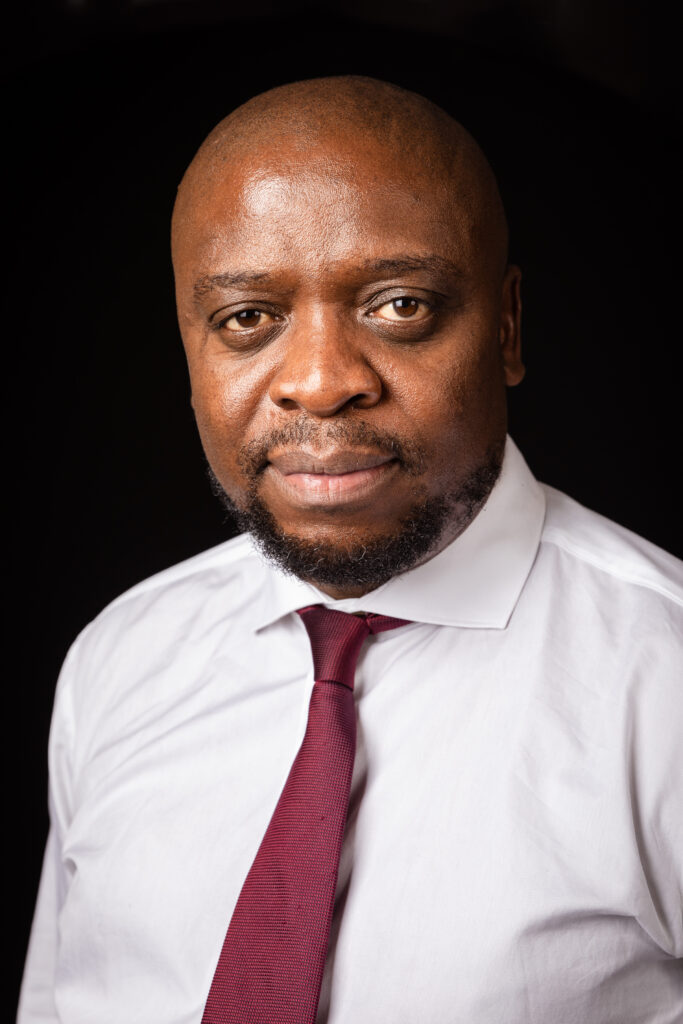
Flying high| Matuma Letsoalo, Executive Chairman of K and K Media Group, which owns Inside Education

Letsoalo said Inside Education will distribute 120 000 copies for free to all schools, universities and TVET colleges across the country.

He said the new print publication was a long time coming because when he first initiated the Online platform devoted to education and all related matters throughout the continent few years ago, he didn’t realise there was such an appetite.

“It’s unique position to close the vacuum covering the entire education process from Early Childhood Development (ECD) to Lifelong Learning saw it become one of the continent’s leading resource for educators, learners and students, a necessary tool to encourage good leadership, ethics and astute governance within the education sector,” said Letsoalo who is former Mail & Guardian Politics Editor.

“Today, our digital platforms reaches over 3,1 million audiences. It is for this reason that we are expanding to print so we can reach schools in rural, peri-urban and other peripheral areas across the nine provinces in the country.”

Xaba, who was hand picked by Letsoalo to become editor-in-chief, comes from a history of editing multiple education publications, including The Teacher, formerly owned by the Mail & Guardian newspaper.

She said she was quite delighted to work in the space at this crucial time.

“I look forward to contributing towards being part of the solution and thanks to the publisher for the opportunity. Together with the assembled team of highly professional media people, we only aim to make this a support resource for teachers, learners, ECD facilitators, tertiary institutions and all artisan training facilities.”

  • – Inside Education

Social Development Minister Lindiwe Zulu hands over Early Childhood Development function to Basic Education

THE Department of Social Development has handed over the responsibility of early childhood development to the Department of Basic Education, paving the way for earlier schooling in South Africa.

This migration will enable children to receive quality education and best support during the early stages of their lives.

Two years of early childhood development (ECD) is set to become compulsory for all children before they enter the formal school system in grade one, said social development minister Lindiwe Zulu at a handover event on Friday.

Zulu said the move is expected to improve education and jobs outcomes in the country as students spend longer in school and have more exposure to basic skills such as reading and arithmetic.

“The latest employment data is painting a picture that says unemployment has climbed to 35.3% in the fourth quarter of 2021. The migration of the ECD function from Social Development to Basic Education should serve as a means by which we definitively challenge this jobs’ market narrative,” she said.

“Resulting from this handover should be an increase of our collective investments in the foundation of the prospects of South Africa’s children. This is the opportunity to start dismantling inter-generational poverty among all our people.”

The compulsory schooling change is included in the draft Basic Education Laws Amendment (BELA) bill alongside a raft of other changes.

The draft bill states that school attendance in South Africa will be compulsory from grade R and no longer only from grade 1. Despite the age at which school attendance is compulsory, a parent may, if they so wish and subject to a few conditions, enrol a child at a school to start attending grade R at a younger age.

Some of the key proposals in the bill include:

  • Compulsory attendance: Stricter punishments will be introduced for parents who fail to ensure their children attend school, including jail time and/or a fine of up to 12 months.
  • Absenteeism: The bill states that teachers, principals and school governing bodies must take responsibility and accountability for learners that are within their school community by ascertaining the whereabouts of a learner who is absent from school for a period of more than three days without a valid reason.
  • Corporal punishment: Corporal punishment is abolished and no person may inflict or impose corporal punishment to a learner at a school, during a school activity, or in a hostel accommodating learners of a school.
  • Initiation practices: The bill prohibits initiation practices in a hostel accommodating learners, and during a school activity.
  • Governing body disclosures: Members of a school governing body, like other public officials, will be required tp disclose on an annual basis their financial interests and the financial interests of their spouse, partner and immediate family members.
  • Homeschooling: The bill introduces further clarity around home-schooling, including that South African learners may be educated at home only if they are registered for such education.
  • Business with the state: The bill will prohibit educators from conducting business with the state or from being a director of a public or private company conducting business with the state, and creates an offence should an educator contravene the abovementioned provision.

 Inside Education

Classroom Management: Using technology in school education

SHOURIE CHATTERJI

TECHNOLOGY-based learning is not new. Schoolnet itself has been in this field for the last two decades. But the last two years have made it immensely popular and more accessible.

Whether through online classes, personalised learning apps, gamification, or using multimedia tools to study, technology has permeated the education sector, bringing with it a host of benefits.

Artificial Intelligence (AI) and automation are ushering in a wave of disruptive innovations related to school level learning with a twin purpose to scale up quality education and augment the learning of each learner through a personalised approach. At a high stress time like examinations around the corner, technology can prove to make the teaching-learning process smarter and more efficient. 

The use of technology for education must not be an isolated activity confined to after-school learning. By augmenting the infrastructure of schools, teachers can make use of a wealth of global resources to take their teaching to the next level.

Using videos, animations, virtual experiments, and interactive features of smartboards, student engagement will increase, and therefore boost retention in the process.

Understanding and retaining concepts from the moment they are taught is vital for performing well in exams. 

The World Bank, in its recommendations for combating learning poverty, emphasises that studies at home should complement what students get in school.

Reading the same text as in school or watching videos to build conceptual clarity, practicing the same experiments done in schools at home virtually, and using e-readers are great ways of synchronizing a child’s learning journey.

Technology can provide that learning continuity at home through curriculum-aligned digitized textbooks, practice engines, and adaptive assessments. 

For instance, to master a subject like Maths, practice is key. Once a student has understood a concept and the logic behind a theorem (which can be taught through various media), practising its application is vital to score well in exams. Today’s textbooks have multiple practice questions, but they are not necessarily aligned to each student’s proficiency levels. Here is where AI/ML comes in. It learns the habits and the common mistakes of a student, analyses his or her knowledge of prerequisites, and then recommends a unique learning path based on this analysis done. It can also generate, within seconds, more and more questions for the student to keep practising.

The more one practises, the sharper are the recommendations by the software.

This iteration and reiteration of questions covering a variety of concepts is much more efficient than relying on a standardised set of limited questions that all children use no matter their learning levels. It also gives instant and personalised feedback, which is not always possible in a classroom with a single teacher. For instance, Geneo, our personalised learning app, ensures a student masters a concept before they move ahead through continuous assessments, or suggests pre-requisite topics that require brushing up.

It allows a student to seamlessly backpropagate to the required juncture in the overall learning curve, and ensure the foundations are mastered to achieve competency at each level.

Content recommendations, based on understanding user behaviour, match the ideal learning style of the learner through implicit feedback. Not only Math, but even subjects like Social Studies and English can be learned better with the help of technology – annotation tools, e-readers, grammar quizzes, and comprehension tests etc. can all be utilised to garner better results.

Tech-enabled learning has myriad benefits. But it cannot be implemented in a haphazard manner whereby schools and teachers are left behind. We believe that India requires a holistic ecosystem approach in education, one that brings together the students, teachers, schools, and after-school education providers.

The country also needs to improve the access of quality education and EdTech for all – and thus tech-enabled education should be available in vernaculars, be affordable yet high quality, and work with the government and affordable private schools. Technology is a powerful enabler that cannot be ignored in today’s day and age. With everything around us becoming ‘smart’ and highly personalised – from ad recommendations to wearable technology, education must not get left behind.

This is not to disregard the traditional ways of teaching-learning at all, but to augment it to reach more students and optimise learning outcomes based on each learner’s unique learning styles. 

  • – Times of India

DA: No textbooks for Eastern Cape learners, despite court order

WENDY MOTHATA|

THE Democratic Alliance (DA) said on Friday that hundreds of thousands of learners across the Eastern Cape are still without textbooks, despite a court interdict compelling the provincial Department of Basic Education to make sure that the books are delivered by the end of March.

Last month, Makhanda High Court in the Eastern Cape ordered the Eastern Cape Basic Education Department (ECDOE) to deliver textbooks and stationery to all public schools in the province by March 31.

In a statement, Shadow MEC for Education in the Eastern Cape Yusuf Cassim said: “Not even a court of law seems able to get the Education Department to fulfil its primary mandate of providing learners with their fundamental human right to access education.”

Cassim said that more than 4 000 schools are still waiting for the delivery of textbooks.

“As of 16 March, 4 932 schools were still awaiting delivery, and it was clear from the Department’s response that the books would not be delivered within the timeframe. On Wednesday, 30th of March, I joined an NCOP delegation visiting Mncwathi Senior Secondary School and Lundini Primary School in the Alfred Nzo East District. Both of these schools have still not received any deliveries of textbooks,” said Cassim.

Cassim added that textbooks have a five-year lifespan, which means the province is overdue in replacing all the books.

“What is even more concerning is that the failed deliveries are only for the top-up books ordered by schools. The last full complement of textbooks was ordered in 2016. These textbooks have a five-year lifespan, which means we are already overdue in replacing all the books,” Cassim said.

To fully replace all textbooks, it would cost the Department of Basic Education an estimated R2,5 billion.

“This has not been budgeted for in the current or upcoming financial years. This effectively means that the court order will not be complied with for the foreseeable future. With the drastic budget cuts enforced on schools, the top-up orders that have not been fulfilled would still not place a textbook for every subject into the hands of every learner.”

In response to a parliamentary question, Education MEC, Fundile Gade said that the number of textbooks in schools, per grade, as a percentage of the number required for every learner to have one per subject, the situation in the foundation, senior and FET phases remains dire.

  • * Inside Education

Science Corner| Basic education introduces robotics and coding in SA schools

THE Department of Basic Education has announced that it plans to introduce new school subjects to the curriculum.

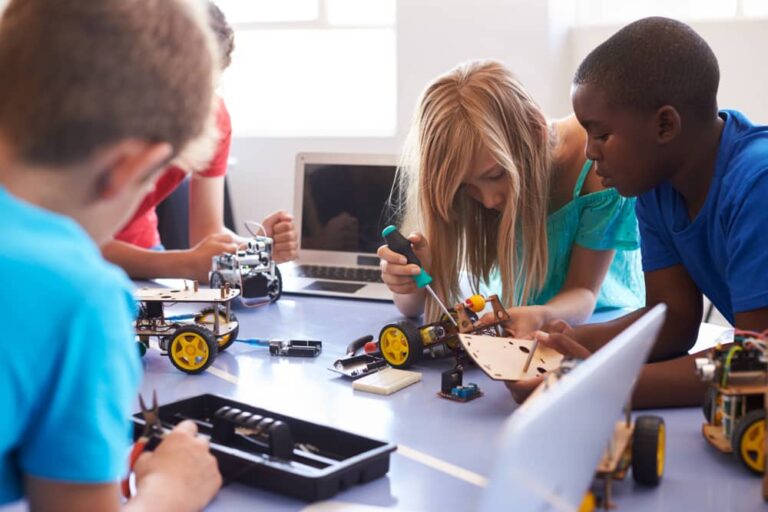
According to the department a full-scale implementation of coding and robotics for Grade R, 3 and 7 would be made available in the 2023 academic year.

“The coding and robotics pilot for Grades 4-6 and for Grades 8 is planned for 2022 and will be followed by a Grade 9 pilot in 2023. The full-scale implementation for Grades 4-6 and Grade 8 is planned for 2024, and Grade 9 in 2025,” says the department.

The subjects would form part of the curriculum at different school levels from Grade R to Grade 9.

The department adds that the introduction of these new subjects form part of a broader push to better prepare South African students for the working world.

Coding and robotics subjects are aimed at guiding and preparing learners to solve problems, think critically, work collaboratively and creatively, and function in a digital and information-driven world.

The department believes that the introduction of these subjects will equip and expose learners to digital literacy, virtual reality, machine learning and artificial intelligence amongst other things.

Microsoft Incorporated partner and Ph.D. academic, Dr Rodger Layton has described this as the biggest shift in the education sector in the last 150 years.

“Now coding and robotics. I’m calling it the fourth R, which is robotics now is being introduced as one of the fundamental subjects that every school child will learn all the way from grade R,” explains Layton.

He adds that the big focus of the introduction of these subjects it the notion of computational thinking.

“This [will] enable kids to think about how things happen and what can be done to programme those actions.”

  • * Additional reporting by SABC NEWS

Child care centres in South Africa need more support: principals tell of pandemic impact

CATHERINE DRAPER|

SOUTH Africa’s early childhood development sector plays a critical role in providing early care and education, catering generally for children aged three to five in their pre-primary school years. Though it’s an essential service, this sector remains mostly informal. Government has not supported it well with the funding needed to provide quality early care and early learning services.

The majority of early childhood development centres therefore rely on fees paid by children’s caregivers. Services are out of reach for caregivers who cannot afford these fees. The sector employs mostly black African women and they bear the brunt of the funding limitations by working for low salaries or stipends.

These challenges within the sector were well documented even before COVID-19. The sector was ill-equipped to withstand further shocks and impacts on education, employment, hunger and mental health.

To understand early childhood development centre principals’ perspectives on how they had been affected by the pandemic, we interviewed 17 principals who worked in low- and middle-income communities, many of which were hard hit by the pandemic.

The most significant negative impact of the pandemic on early childhood development centres was the loss of revenue from fees, since many parents were unable to pay fees due to economic challenges. Most centres rely on these fees because government funding – only for registered centres – doesn’t adequately cover running expenses.

Many principals also reported lower numbers of children returning when centres reopened. This meant less revenue coming in – despite the need to keep paying staff and providing for the children in their care.

The implications of these financial challenges are far reaching. They have knock-on effects on the financial situation of centre staff, increased pressure on parents to help cover costs, and ultimately the children at these centres in terms of the resources available. While there are numerous non-governmental organisations which step in to meet these needs, additional financial assistance from government could go a long way to reduce the impact on staff, children and their families.

Complying with COVID-19 safety requirements

Early childhood development centres had to comply with safety requirements stipulated in a lengthy and daunting document from the Department of Basic Education when they reopened. The requirements included sanitising hands, surfaces, toys and learning materials, as well as physical distancing and no touching.

Principals went to great lengths to comply with these requirements, but they admitted that this was costly and overwhelming. Repeated closures when children or staff tested positive or were exposed to COVID-19 were chaotic, but principals emphasised the need to be safe.

Many principals felt responsible for accommodating children whose parents weren’t able to pay the fees. They acknowledged that many children relied on the nutrition provided at centres.

“I don’t mind having two or three children staying as long as the rest are paying school fees. I try to find out as much of the families that I’m dealing with (and say) bring the child to school … pay the school fees next month.”

The principals didn’t want children to be left at home or unsupervised in their community. If there was no one at home to look after a child who was sick, this meant that they were sometimes still sent to the centre, with the potential to infect other children and staff. Not having somebody at home to look after a sick child was also a problem pre-COVID, but was reported much more frequently during the pandemic.

Impact on children and principals

Principals believed that the pandemic had been harmful to the children in their care. Some felt that children were stressed, anxious and acting out (fighting, crying). They recognised that children were dealing with difficult home situations and disrupted routines. They also picked up on children’s emotional and social challenges, along with delays to their development as a result of time away from the centre.

The younger ones they don’t know how to explain themselves. But you can see, by the way they act, and how they fight with each other, you talk with them, they start crying, because they are traumatised, they don’t know what to expect next. I see that they’re routine orientated, now everything is different…”

Principals described dealing with the impact of the pandemic on the centres as extremely stressful. They had to deal with financial challenges, complying with safety requirements, decision fatigue, and the impact of all of this on the children in their care. In spite of all of this, principals displayed resilience and a positive attitude.

They spoke about learning to cope with the safety requirements, being resourceful, and drawing on social support and their faith to cope:

“So, it has been good, the challenges, it also makes you realise it has swivelled round and because your love is children and the people you are working with, we are going to work like a bullet, and I speak to the staff very much on open communication, so I tell them look here this is the situation this is what we need to do.”

Going forward

Early childhood development centres in South Africa, particularly in resource-challenged environments, not only provide early education for young children. They also provide safety, supervision, and nutrition – without which many of these children and their families would not cope.

Our findings underscore the importance of support needed for the early childhood development sector to enable centres to provide these essential services. Should centres not be able to provide these services, children lose more than just early learning opportunities.

The resilience and resourcefulness of principals is highly commendable. But it shouldn’t replace the systemic support that this sector needs from government, particularly in terms of funding. This support must include centre principals and practitioners. They carry much of the responsibility – and indeed the burden – of providing care and early learning to young children at a critical period of development.

(Catherine Draper is the Associate Professor, University of the Witwatersrand)

  • * The Conversation

KZN schools to take part in Easter rugby festival

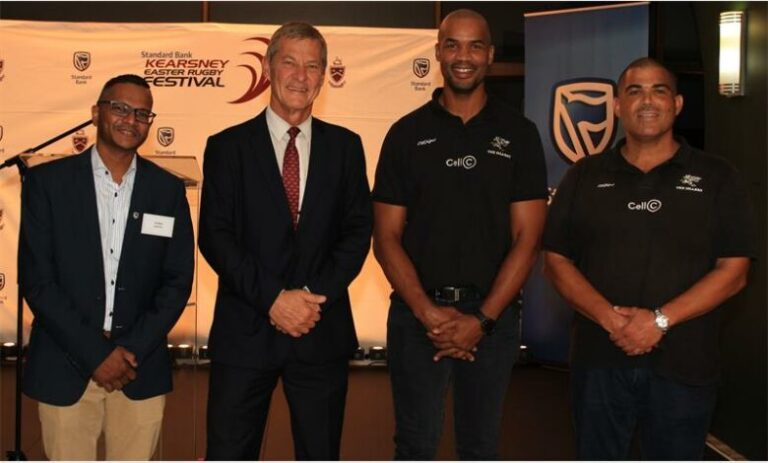
GLENWOOD High School, Westville Boys’ High School, Durban High School and Kearsney College will represent KwaZulu-Natal at the 2022 Standard Bank Kearsney Easter Rugby Festival this April.

Kearsney College confirmed the much-awaited rugby action last week at a launch in the President’s Suite at Kings Park Stadium. This is after a two-year Covid-19 induced absence.

The festival will showcase four powerhouse teams from Gauteng; Hoërskool Monument (Monnas) from Krugersdorp, Pretoria Boys High, Hoërskool Waterkloof (Pretoria) and Hoërskool Dr EG Jansen (Boksburg).

Hoërskool Noord-Kaap from Kimberley will be returning to the festival, as well as three strong Eastern Cape teams, Selborne College (East London), Hoërskool Framesby (Gqeberha) and newcomers Hoër Landbouskool Marlow (Cradock).

Since the inaugural festival in 2008, the festival has played an invaluable role in the development of South Africa’s schoolboy rugby culture and growth.

The Sharks high performance manager, Michael Horak, said the festival made a welcome resumption for players and supporters after the enforced break.

“The Kearsney Easter Rugby Festival is one that every young rugby player strives to be a part of. The Sharks Academy has been a proud partner of this iconic festival since its inception. We continue to back the effectiveness and importance that it holds in attracting the best schoolboy teams from the country,” said Horak.

Speaking at the launch of the 13th festival, Kearsney headmaster, Elwyn van den Aardweg acknowledged the festival sponsors’ support which had assisted the event to grow each year.

Talent scouts and selectors from The Sharks and Sharks Academy will watch all three play days over the Easter weekend; Thursday 14, Saturday 16 and Monday 18 April. The Sharks Academy will once again offer bursaries to selected players after the festival.

Four primary school teams will be offered the opportunity to participate, providing young players with the excitement and challenges of playing on a full-size field in front of large crowds.

This year; Hillcrest Primary, Highbury and Umhlali Preparatory will each face the KZN Rugby Union’s Ibutho-Mark Godefroy U13 team to open each day’s play.

There will be an exciting KidZone for the little ones, ample parking, as well as numerous food outlets and a refreshment tent to ensure spectators can fully enjoy the special family atmosphere.

Fixtures and festival information are available on www.kearsney.com and, for those unable to attend, it will be live-streamed on the SuperSport Schools app.

  • * Berea Mail