Home Blog Page 290

How place of birth shapes chances of going to university: evidence from 7 African countries

REBECCA SIMSON|

MANY newly independent African countries in the 1960s inherited regional and ethnic inequalities in formal educational attainment. These new states bound together sub-national regions of diverse ethnic and religious communities.

The regions differed in their exposure to missionary activity – the main vector in the spread of formal western education in the colonial era.

Inequalities in educational access increased the higher up the educational ladder one climbed. Access to university education was both extremely limited and highly skewed.

As access to higher education determined which people would come to hold some of the most important positions in society, politicians cared a great deal about how higher education spread. Given this context, how did regional inequalities in university access evolve after independence?

While several recent papers have highlighted considerable social inequalities in access to higher education in African countries today, there’s little work that looks at how and why such inequalities have changed over time.

In a recent paper I therefore traced the regional origins of university graduates since the 1960s in seven African countries: Botswana, Ghana, Kenya, Malawi, Tanzania, Uganda and Zambia. I constructed a measure of regional inequality for each country and examined some of the factors that influenced this inequality trend.

The results show that regional inequality fell in the first two decades of independence. However, from the 1980s regional inequality remained stagnant or grew across this group of countries. Inequality grew primarily because the main urban metropolises have been pulling ahead, leading to a growing urban bias in university access.

I used recent census data which contains information about where people were born and what level of education they attained. I grouped these people by their district or province of birth, depending on the administrative structure of the country. In Ghana for instance, people were grouped into the country’s ten regions, while in Kenya they were grouped into the country’s 47 current counties.

By grouping people by age bracket, and assuming that most people who attend university do so around age 20, I could then trace how the regional distribution of university education changed over time.

Slow start

University education was slow to develop across these former British colonies. The share of the population attending university in the late colonial era was extremely low.

Around the time of independence, Kenya had roughly 400 university students (1961), while Tanzania and Zambia had 300 students each (1963). The distribution of these scarce educational opportunities was regionally skewed. University attendance tended to be highest among those growing up in the main cities and in the regions with the most economic production (particularly cash crops and mining).

This historical legacy has been long lasting. On average, the regions with higher than average university attainment in the 1960s continue to have higher university attainment rates today.

Trends in access

But the picture is not all bleak. In the first decades of independence there was some catching-up by some of the lower performing regions within each country. The regional inequality trend for each of the seven countries shows that inequality fell in most countries in the 1960s and 1970s. In this period the number of university students was growing quite rapidly. Bursaries for students were generous and governments made some efforts to ensure regional balance.

In the 1980s many African countries ran into financial difficulties. Governments struggled to finance their largely public university systems. During this period, the rate of university expansion reduced. University access became increasingly competitive. This ended the period of regional convergence in university enrolment. Regional inequalities in university access began to grow again.

My analysis found that those best placed to access the highly competitive university system were increasingly those students born in the main cities where incomes were higher and parents more educated. Measures of regional inequality with the exclusion of the capital cities show there was no or very little growth in regional inequality since the 1980s. This shows that most of the inequality rise was driven by the capital city region.

In the 1990s many African countries reformed their university systems again by introducing or raising fees. They also allowed more private universities to establish themselves.

This increased the number of students that could be educated and led to the rapid rise in university enrolment. But from the available data it seems that regional inequalities in university access have remained high or risen further.

Concentrated in cities

There are many reasons for this continued growth in inequality in access. The most important factor is one that’s difficult for policymakers to address. The census data shows that the focus countries have a considerable rate of rural-urban migration.

These migrants are a small share of the university educated. As a result, university graduates are increasingly concentrated in the cities. University students tend to be the children of the highly educated – they’re in turn more likely to gain higher education. This perpetuates the concentration of the highly skilled.

The slightly better news is that because cities tend to be ethnically mixed, the growing urban bias does not seem to have resulted in a sharp increase in ethnic inequality in university education.

In three countries (Ghana, Malawi and Uganda) the censuses also asked respondents to state their ethnicity. Using these self-reported ethnicities, I measured ethnic inequality by cohort.

I found much less inequality growth on an ethnic compared to a regional basis.

Since migration is a major driver of this regional differentiation, this trend will probably continue unless there’s more economic development and more job creation outside the main urban centres.

This implies that the face of Africa’s educational high-achievers is changing.

From a slim educational elite of the 1970s, where most university-educated people had rural or small-town roots, the highest educated ranks are increasingly dominated by people born and raised in the main, multi-ethnic urban centres.

Rebecca Simson is the Research Fellow in Economic History, University of Oxford.

  • * The Conversation

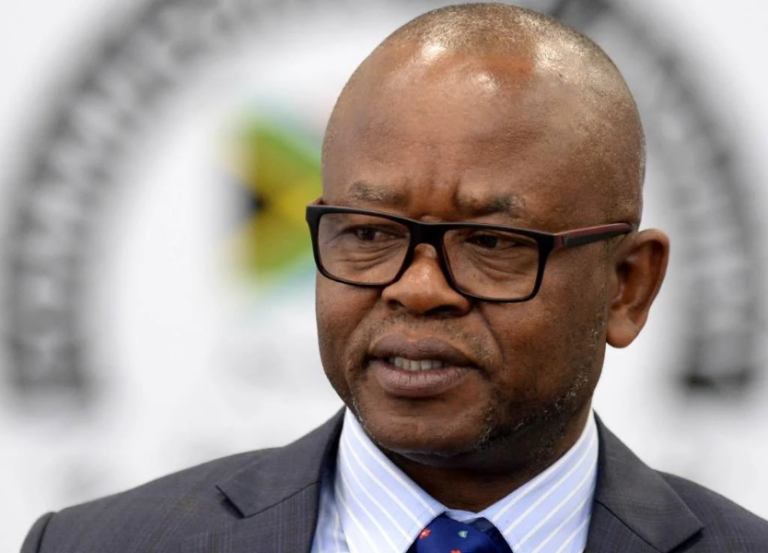
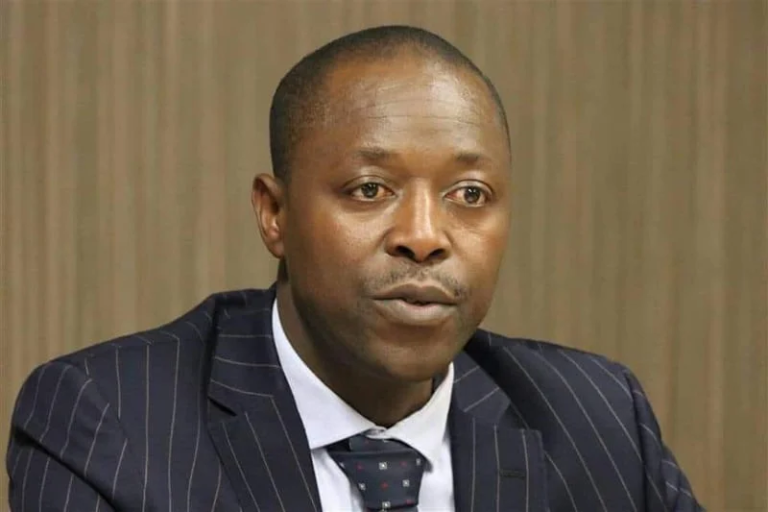
State capture whistleblower Themba Maseko appointed director at Wits

THE University of Witwatersrand (Wits) has appointed Themba Maseko, former head of GCIS, as director of the School of Management.

Maseko is the department’s new executive director for education. “We are pleased to announce that Mr. Themba Maseko has joined our school as the new Executive Education (Short Courses) Director. We look forward to this new chapter. pic.twitter.com/MtVirMksg0– Wits School of Gov (@Wits_WSG) January 13, 2022.”

A former government spokesman, former President Jacob Zuma was one of the top officials to be applauded for refusing to bid for the fugitive Gupta family, who had great influence in the government.

Most highly qualified officials were either dismissed or dismissed and replaced by more agile officials to strengthen the seizure of the state.

Zuma removed Maseko from GCIS in 2011 and replaced him Jimmy Manyi, a former owner of the now defunct Gupta media outlets.

Maseko testified before the commission of inquiry into the arrest of GCIS during his tenure.

The first part of the report, released two weeks ago, states that Guptas’ first step in seizing control of the state took place at GCIS after Maseko’s ouster.

Guptas, led by Mani, provided funding from the department New Century Newspaper in 2010.

Mr Manyi was right that GCIS was an “enabler department” under his control, but he did not mean that. GCIS facilitated the seizure of the state during Mr. Manyi’s tenure. Were it not for the transfer of Mr Manyi to Mr Maseko, GCIS would most likely have resisted Guptas’ continued pressure on government departments to divert media spending to their businesses, ” the Zondo report read.

Maseko has written a book, For My Country: Why I Whistled About Zuma and Gupta.

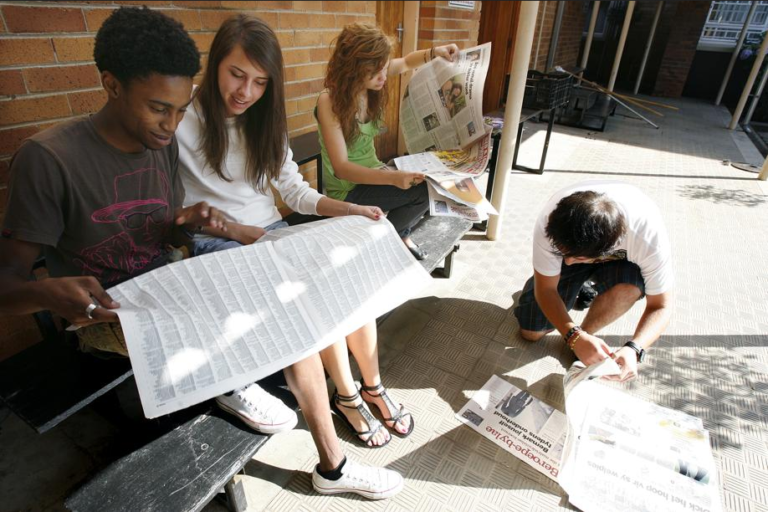
OPINION| The publication of matric results – What is the legal position under POPIA?

NADINE MATHER|

THE Department of Basic Education has announced that the usual practice of publishing matric results on media platforms will not take place for the 2021 results, because the dissemination of learners’ personal information would be in contravention of the Protection of Personal Information Act (POPIA).  

But what is the legal position under POPIA? And will POPIA apply to the publication of the matric results?

Before 2014, matric results were published displaying each learner’s name. In an effort to protect the identities of learners, from 2014 onwards, matric results were published displaying only the learner’s identity number or examination number without displaying the learner’s name. It has been argued that a learner’s examination number would not constitute personal information because by removing the learner’s name, the public would not know to which individual learner the marks in question relate. 

For purposes of POPIA, personal information is information relating to an identifiable, living natural person, and where applicable, an existing juristic person. It expressly includes an individual’s educational history, an individual’s name if it appears with other personal information, an individual’s identity number and any other identifying symbol, such as an examination number.

POPIA regulates the processing (i.e. dissemination, sharing, transferring etc.) of personal information. POPIA will not, however, apply to the processing of personal information in circumstances where, amongst other things, the personal information has been sufficiently de-identified. This means that the information that identifies an individual, or can be used, manipulated or linked by reasonably foreseeable methods to identify the individual, has been deleted. For example, where a school advises that 90% of its teachers are vaccinated, and the information identifying the individual teachers, such as their names or identity numbers have been deleted, it may not be reasonably possible to use the percentage provided to identify which teachers have, or have not, been vaccinated. The question is then whether one can use the learner’s examination number to identify the learner? For certain individuals, the answer will be ‘yes’.

The Department, the respective schools and potentially, some family members of the learner concerned would be able to link the examination number to the particular learner.

Members of the public, who are unrelated to the Department, the school concerned or the learner, would however in all likelihood not be able to link the examination number to the learner concerned. 

The processing of personal information under POPIA

In terms of POPIA, personal information may only be processed on limited justifiable grounds.

These grounds include where (i) the processing is necessary to comply with an obligation imposed by law, (iii) the processing protects a legitimate interest of the individual concerned; or (iii) the individual consents to the processing.

Whilst the National Schools Act together with the National Protocol on Assessment prohibits the withholding of results for any reason whatsoever, there does not appear to be a legal obligation on the Department to make the matric results publicly available. 

Further, whilst there may be an argument that the publication of the matric results may be in the legitimate interest of the learners who are unable to attend their schools to obtain their results, this may only apply to a small portion of the learners concerned. In the circumstances, the Department is likely to require the consent of each learner to make their matric results publicly available.

It is for this reason that the Department has advised that all learners will be required to obtain a statement of their results from the schools they attended.

The processing of personal information of children

Insofar as learners are below the age of 18, they will be regarded as ‘children’ for purposes of POPIA. POPIA affords additional protection to the processing of personal information of children.

In this regard, there is a general prohibition on the processing of children’s personal information, unless, for example, the processing is carried out with the prior consent of the child’s legal guardian.

The personal information of children may also be processed if it is for historical, statistical or research purposes, to the extent that the purpose serves a public interest, and it would not be reasonably possible to obtain consent.

It may be in the public interest to, for example, publish the total pass rate of learners or the average of the results relating to specific subjects or provinces. It may be difficult to argue, however, that the purpose of publication of each learners’ matric results would serve a public interest. 

Acknowledging top achievers

It is common practice for the Department, schools and media to acknowledge the top achievers. This ordinarily takes the form of publishing the names, results and photographs of the learners concerned.

When doing so, one will need to comply with the provisions of POPIA and obtain the consent of the learner, or guardian, as the case may be.

This is particularly as a learner’s photograph may constitute special personal information under POPIA which is subject to additional protections. 

Where a learner, however, deliberately makes his or her results and personal information publicly available, for example, by publishing it on an open social media platform, the Department, schools and media will be able to process such information on this basis.

Written by Nadine Mather, Senior Associate at Bowmans

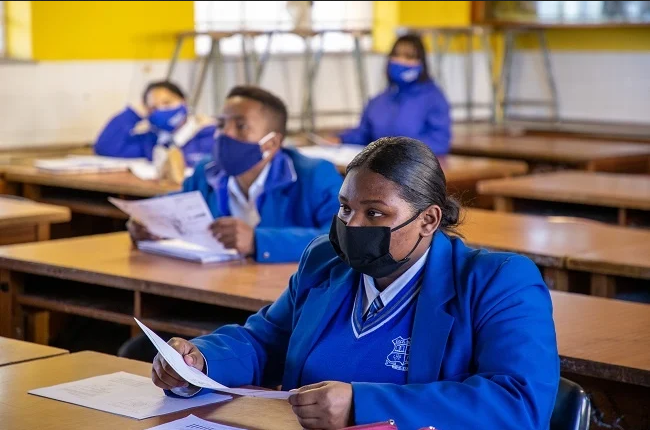
Motshekga Says Rotational Learning Timetable To Continue In South African Schools During 2022 Academic Year

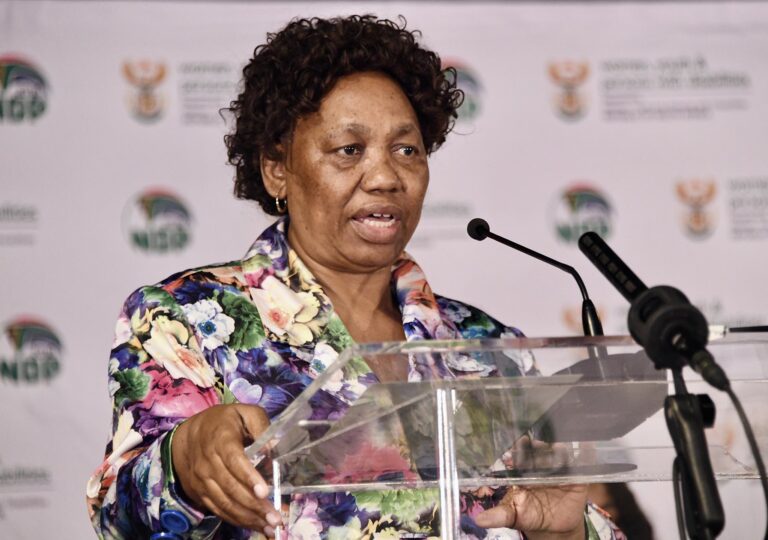
BASIC Education Minister Angie Motshekga said on Tuesday that rotational timetabling will continue when schools reopen on Wednesday. 

She was briefing the media on her department’s state of readiness for the 2022 academic year on Tuesday morning.

While many schools returned to full-time teaching in 2021, smaller schools and those with a high number of pupils have had to retain a shift system due to ongoing concerns around the Covid-19 pandemic and potential transmission.

Motshekga said she is confident the learners will be placed in schools.

“And we have to say up front that we have been able to place the majority of our learners. But provinces like Gauteng, partly Western Cape and some areas in Kwa Zulu Natal, in the urban areas like Durban, we are still dealing with some problems but provinces have assured us that they are doing everything in their power,” said Motshekga.

“We are committing by law that we are compelled to find places for every child so it is not their burden alone but we are committing that we will find places for all the learners.”  

Motshekga said the department was exploring possibilities to return schooling to normal as the call has been made by some teacher unions.

“We are exploring possibilities to return schooling to normal as the call has been made by some teacher unions, parents and some schools. Unfortunately, we have to apply ourselves as education, with the protocols of Covid-19.”

The minister further said, “Traditionally, admissions take a year to process; but invariably, we find that due to a variety of reasons, admissions spill over into the ensuing year. A delay in admissions and the impact on teaching and learning occurs where this should be avoided.”

Motshekga said the rotational roster would continue while the State of Disaster was still in effect and that the number of spectators at a school event would be the only amendment so far: “The amendment is with regard to the number of spectators permitted at school sport venues.

“That is the only change that we intend gazetting once stakeholders have made their inputs.

“With regards to schooling, the situation will remain the same, especially rotational time-tabling, where it was applicable when we concluded schooling in 2021.

“The fact of the matter is that Covid-19 is very much still with us, and we need to continue to work together to fight it.

“We are exploring possibilities to return schooling to normal, but we need to do so responsibly; and to this end, we rely entirely on the advice of public health experts, through the Ministerial Advisory Committee, the National Coronavirus Command Council, and indeed Cabinet. At the right time, we will come back to report on progress being made.”

  • * Inside Education

Matric results will no longer be published publicly in South Africa

THE Department of Basic Education has announced that matric exam results will no longer be published on media platforms, in line with the recently introduced Protection of Personal Information Act (POPIA).

In a statement, the department said that publishing personal information online would be a contravention of the Act. It confirmed that matric results are still scheduled to release on 21 January 2022 and that results would still be available from schools.

Historically, the matric results have been made widely available with students identified through their ID numbers.

“In order to comply with the provisions of the POPIA, the usual practice of publishing the National Senior Certificate (NSC) results on public platforms (media platforms) will not occur for 2021,” it said.

“As was also the practice in previous years, all learners will be required to obtain their statement of results from the schools they attended. In this way, every learner’s personal information with regards to the outcome of their National Senior Certificate exam will be protected.”

Education experts have already warned that the difficult circumstances faced by matriculants are likely to result in a drop in marks. In 2020, the overall matric pass rate was 76.2%, substantially lower than the previous year’s 81.3%. It was also worse than 78.2% in 2018.

Speaking to Afrikaans newspaper Rapport, Basil Manuel, managing director of education union Naptosa, said that it was highly unlikely that 2021’s matric pass rate would be better than 2020, and that the best to hope for was a similar set of results.

He highlighted many of the same factors as Mweli which led to the 2021 cohort being put at a distinct disadvantage compared to previous years.

A total of 733,746 full-time students registered to write the 2021 NSC examination, the largest full-time cohort over the last few years. A total of 123,487 more full-time candidates and 46,942 part-time candidates registered to write the examination.

Of the candidates who registered for the examination, 700,604 wrote the examination, which reflects the lowest percentage of “no shows” (4.5%), over the last few years.

The national matric results for learners in public schools are expected to be announced on 20 January 2021 by Basic education minister Angie Motshekga, with individual results to be made available online at schools and electronically on 21 January 2021.

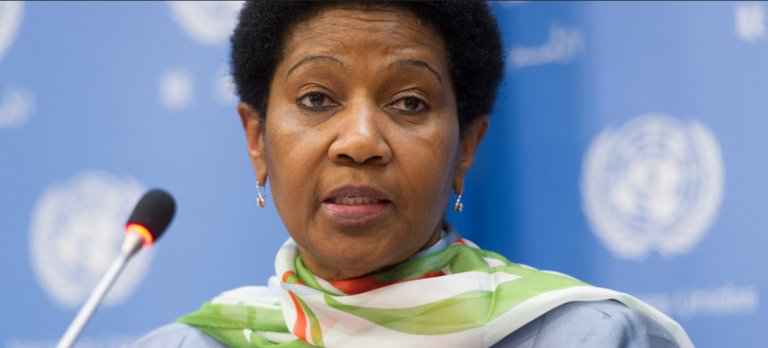
University of Johannesburg appoints former deputy president Phumzile Mlambo-Ngcuka as new chancellor

THE University of Johannesburg has appointed former deputy president Phumzile Mlambo-Ngcuka as its new chancellor.

Her five-year term will run from 1 October 2022 until 30 September 2027.

Mlambo-Ngcuka is the former United Nations Under-Secretary-General and Executive Director of UN Women and former deputy president.

She will succeed Professor Njabulo Ndebele, whose second five-year term as chancellor ends on 30 September.

Mlambo-Ngcuka was a member of the first South African democratically elected Parliament in 1994, first as deputy minister in the Department of Trade and Industry (1994 – 1996) and as minister of Minerals and Energy (1999 – 2005).

She is currently engaged and affiliated with organisations committed to education, women empowerment, and gender equality. Such affiliations include the Umlambo Foundation, the Global Partnership and Fund to End Violence Against Children, African Leadership Academy and the Mandela Rhodes Foundation.

UJ Registrar, Professor Kinta Burger, said Mlambo-Ngcuka’s will be inaugurated later in the year.

“UJ’s approach to impact reflects the UN Sustainable Development Goals – something that Dr. Mlambo-Ngcuka, in her capacity as Executive Director of UN Women, has cherished and led. Indeed, she embodies all the UJ values and aspirations, values, where equality, diversity and inclusivity have been part of the University’s success story.”


Back to School| DBE Says It’s Ready To Receive More Than 12 Million Learners For The 2022 Academic Year

WENDY MOTHATA|

THE Department of Basic Education said on Monday that they are ready to receive over 12 million learners for the 2022 academic year, as learners across the country report for the start of the new school year between 12 and 17 January.

Pupils in inland provinces are expected to return to school on Wednesday while schools in coastal areas will only resume a week later.

The Government Communication and Information System (GCIS) said on Monday that government is committed to every learner receiving the best possible education.

“We call on families to assist learners by providing support systems. It is essential that we encourage learners and instil in them the importance of education,” GCIS said in a statement.

Last week, the Department of Basic Education announced that this year, schools will follow a staggered calendar.

Learners in the inland provinces of Gauteng, the Free State, Mpumalanga, Limpopo and North West will be the first to return back to school this Wednesday.

On the other hand, learners in the coastal provinces of KwaZulu-Natal, Western Cape, Eastern Cape and Northern Cape will only go back to school a week later, on the 19th of January.

Basic Education Spokesperson Elijah Mhlanga said: “This time we believe that we’ll be able to start in time and be able to cover the entire work that’s in the curriculum schedule for this year.”

In an interview with Radio 702, Mhlanga urged parents to work together and prepare children for the third year of COVID-19.

“We need to work together. We need our parents to prepare their children for the third year of COVID-19 protocol implementation in schools,” he said.

He further challenged people to vaccinate so that once teaching and learning start it is not interrupted by COVID-19 issues.

“In 2022 we want more people to be vaccinated so that we can create stability in the sector. It’s not just about opening schools, but it’s also about once we start, teaching and learning must continue uninterrupted.”

Government has also called on everyone to play their part to ensure the safety of learners and educators in schools.

“COVID-19 is still with us. Vaccination remains our best defence and we urge all learners aged 12 and older to vaccinate as soon as possible. Wearing of masks remains mandatory and all learners, teachers and other school staff must continue to do so. Together, we can make our schools safer for all,” the GCIS said on Monday.

Basic Education Minister Angie Motshekga is expected to hold a media briefing on the opening of schools for the 2022 academic year and give an update about government’s vaccination drive among learners.

Schools are set to reopen from Wednesday, 12 January.

The briefing is scheduled to take place from 10:00 at the Ronnie Mamoepa Press Room, Tshedimosetso House, in Pretoria.

Members of the media may view the briefing via live stream on the South African Government and Department of Basic Education social media channels.

Meanwhile, the Gauteng Department of Education (GDE) said it’s ready to start teaching and learning from the first day of reopening.

MEC for Finance and e-Government, Nomantu Nkomo-Ralehoko will also be embarking on schools’ visits in KwaThema to inspect schools’ readiness and offer support to pupils before the academic calendar commences on Wednesday.

Motshekga will also embark on a roadshow to engage Delmas communities on the Second Chance Matric Support Programme and the migration of the Early Childhood Development function to the DBE.

The Department of Basic Education said Second Chance Matric Support Program provides support to learners who could not meet the pass requirements of the National senior certificate examinations.

“It affords young South Africans a second chance of acquiring a National Senior Certificate (NSC), which will be much needed for participating in the mainstream economy or furthering their studies in Higher Education Institutions (HEIs).”

  • Inside Education

19 new subjects implemented in South Africa’s school

THE Department of Basic Education has published a list of new subjects implemented in schools in South Africa over the last five years.

Many of these subjects are aimed at directly helping those school-leaving pupils who will not necessarily complete Grade 12, or enter university.

The subjects cover a wide range of fields, including agriculture, art, and various technology-related subjects:

1. Art and design

The primary purpose of the subject is to develop learners as creative, imaginative individuals who appreciate the arts and who have the basic knowledge and skills to participate in arts activities and to prepare them for possible further study in the art forms of their choice in Further Education and Training (FET), the department said.

2. Agricultural studies

Agricultural sciences is the study of the relationship between soils, plants and animals in the production and processing of food, fibre, fuel and other agricultural commodities with an economic, aesthetic and cultural value.

3. Ancilliary healthcare

Ancillary health care aims to teach students the meaning of health care and wellness and how these skills can be applied in everyday life. This includes helping students care for themselves, their families and communities, and the workplace.

4. Aquaponics

Aquaponics aims to reach students about aquaculture with hydroponics, and the ultimate goal of growing plants. The subject also focuses on how aquaponics technology can be used as a possible food source in communities.

5. Aviation studies

Aviation studies cover general aviation theory to prepare students for work in the aviation sector.

6. Civil technology

Civil technology aims to develop the skills levels of learners from grades 8 – 9 to such an extent that they will be able to enter a career pathway at a further education and training college or a university immediately after obtaining the National Senior Certificate.

Learners will then be ready to enter into apprenticeships to prepare them for a trade test.

7. Consumer studies

Some of the issues that learners will learn in grades 8 and 9 consumer studies include:

  • Consumer rights and responsibilities;
  • Consumer Protection Policies;
  • Channels for complaints;
  • How to evaluate food outlets, clothing outlets, furniture and appliances;
  • How to evaluate design features of interiors, furniture and appliances;
  • Responsible buying behaviour;
  • Responsible use of resources such as water and electricity;
  • Ways to curb global warming.

8. Digital technology

Digital technology is the use of computers, applications and internet technologies to enable users to communicate, create, store, distribute and manage information and solve real-life problems using appropriate tools and techniques.

9. Early childhood development

Under early childhood development (ECD), the learner will be able to do the following:

  • Understand how ECD centres are managed;
  • Maintain a healthy and safe environment;
  • Develop teaching and learning resources;
  • Understand how babies, toddlers and young children develop;
  • Demonstrate how to care for babies, toddlers and young children.

10. Electrical technology

Electrical technology aims to equip the learner with a firm foundation in electrical electronics and digital principles.

It provides a foundation of quality, standardised general education which will suit the needs of the learners and help prepare them for life after school and enable them to access particular employment or occupational workplace-based learning.

11. Hospitality studies

In grades 8 and 9 hospitality studies, the learner will study:

  • The sectors in the hospitality industry;
  • Career possibilities in the different sectors;
  • Entrepreneurial opportunities in the hospitality industry;
  • Responsible environmental operation;
  • Principles for safety, security and hygiene;
  • Menu planning and costing;
  • Kitchen and restaurant operations.

12. Maritime sciences

Maritime sciences comprise four pillars: marine biology, oceanography, ocean ecosystems and humans and the ocean. The subject comprises 85 topics, including marine phyla, the chemistry of water, gas laws used for diving science, sustainable seafood, aquaculture and marine protected areas (MPAs).

13. Maintenance and upholstery

Maintenance covers the skills and knowledge required to perform elementary repair and maintenance work at a basic level focusing on the household and small construction environments.

Maintenance skills are used by handymen who prevent equipment from breaking down and materials from deteriorating to solve minor problems before they become more serious ones.

14. Mechanical technology

Under this subject, a learner will be able to:

  • Adhere to and identify safe working practices and demonstrate safe working conditions daily, also adopting proper safety and first aid procedures;
  • Demonstrate knowledge of the mechanical industry and its productivity requirements by applying appropriate work procedures;
  • Understand and interpret work instructions and drawings for the completion of projects;
  • Apply mechanical technology, techniques, processes and skills, as applied in the fabrication and mechanical industry, using appropriate tools and measuring equipment.

15. Mining sciences

Cover the metals and minerals found and mined here in South Africa and the general science around mining in South Africa.

16. Personal care

This qualification recognises learners’ basic skills, knowledge, and values to operate within the personal care industry. It aims to develop learners who, after completion, will be skilled efficiently to prepare for entry into the industry.

17. Technical mathematics

Technical mathematics aims to apply mathematics to technical fields where the emphasis is on application rather than abstract ideas. Mathematical modelling is also an important focal point of the curriculum, and real-life technical problems are incorporated into all sections whenever appropriate.

18. Technical sciences

The main aim of technical sciences is to support learners in the three focus areas of technology, namely mechanical technology, electrical technology and civil technology. Learners will have an NQF level 4 competence in technical science.

Learners at technical high schools will be able to integrate scientific knowledge in a more informed way in their subject offerings in technology. Scientific concepts and skills are also more accessible to learners with a technical orientation in schooling.

19. Wholesale and retail

Under this subject, a learner will be able to:

  • Explain the role of all role players and stakeholders in the industry;
  • Analyse an income statement;
  • Identify the requirements of outlets in terms of their service levels and product offering according to their target market;
  • Receive stock and explain requirements for the dispatch of stock;
  • Explain the concept and methods of merchandising products on shelves along with the importance of displaying prices and methods of ticketing displays;
  • Explain why businesses promote, how to reach targeted markets and how to display promotional items;
  • Explain how to record sales, accept and record payment and cash up and deposit takings.

New subjects incoming 

South Africa’s inland schools will reopen on Wednesday (12 January), while the country’s coastal schools cluster will return a week later on 19 January.

Several new subjects are expected to be trialled and introduced in the coming year, including entrepreneurship and coding, and robotics.

The department said that 540 schools would be monitored nationally for implementing compulsory entrepreneurship education. The initiative is being driven by president Cyril Ramaphosa and is expected to officially form part of the curriculum by 2024. Ramaphosa has previously emphasised the importance of South Africans embracing a culture of entrepreneurship as the country aims to attract R1.2 trillion in investment over five years.

54 schools are also being monitored for piloting and implementing the coding and robotics curriculum. The subjects will form part of the curriculum at different school levels from grade R to grade 9.

Basic education minister Angie Motshekga has also announced the  Incremental Introduction of African Languages (IIAL), which will target schools that did not offer a previously marginalised official African language.

The minister said that her department is also pushing forward on its plans for ‘mother tongue teaching’, with students allowed to both study and write exams in their home languages.

  • * BusinessTech

EXPLAINER| South Africa’s controversial 30% matric pass mark – how it works

THE Department of Basic Education has published an explainer after repeated complaints about South Africa’s 30% matric pass requirement.

When the National Senior Certificate pass rate is announced each year, concerns arise around whether this can be relied on as an indicator of progress in the sector, the department said.

“Outrage is often expressed over the fact that the lowest possible pass mark per subject is 30%, however, what is not fully understood is that no candidate can obtain a National Senior Certificate if he/she passes all seven subjects at 30%. The learners must pass at least three subjects at 40%,” it said.

The department said that it is aware of arguments that raising this threshold to 50% would improve the education system; however, it said that this change would not be made as the system aims to encourage ‘different levels of achievement’.

“The 2014 ministerial committee, which recommended several changes to the National Senior Certificate, many of which have been followed through, did not recommend changing the lowest threshold. It is acceptable assessment practice to ensure that provision is made for different levels of achievement. All education systems have different levels of passes, not just one pass mark.”

University admission

For a learner to gain admission to a bachelor programme at one of the country’s universities, they must attain a minimum of 50% in four subjects, the department said.

Similarly, a learner will need to attain a minimum of 40% in four subjects to enter a Diploma programme, it said.

“Hence it needs to be understood that candidates scoring 30% in most of their subjects will not qualify for admission to a Higher Education Institution. However, not all learners are expected to qualify for Higher Education admission,” the department said.

In 2020, approximately 62.4% of learners (361,240) obtained admission to bachelor and diploma studies and only 79,178 learners obtained a lower level of achievement, the department said.

Registrations now open for SA’s best-known mathematics competitions

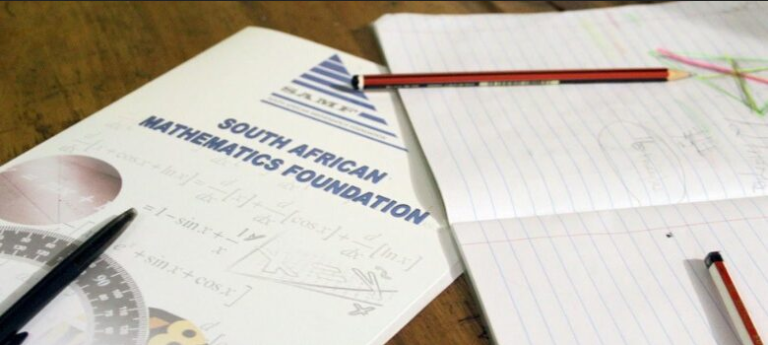
THE South African Mathematics Foundation (SAMF) announced last week that teachers nationwide can now register their learners for the country’s two best-known mathematics competitions. For the first time in the Foundation’s history, both competitions have full digital capabilities for the registration and payment processes and the first-round papers.

The NESTLÉ NESPRAY South African Mathematics Challenge (SAMC) is open for all grades 4 to 7s, and the Old Mutual South African Mathematics Olympiad, co-sponsored by the South African Institute for Chartered Accountants (SAICA), welcomes all Grades 8 to 12s.

Both contests are open to all schools in South Africa and neighbouring countries. Schools that rely wholly on the government for funding – known as Quintile 1 and 2 schools – can register their learners free of charge.

Quintile 3, 4 and 5 schools and private schools pay a nominal registration fee. For the first time, schools will have an option to write the first rounds of both competitions online.

“Education is an integral part of our Responsible Business strategy at Old Mutual. Our holistic support spans the entire education value chain, from early childhood development to comprehensive Financial Education programmes targeted at a wide range of audiences.

“Our support for STEM education is part of this approach, and one of the ways we are working to improve maths literacy is by collaborating with the South African Mathematics Foundation. We are exceptionally proud of the initiatives in place to strengthen maths education amongst our youth, and we remain confident that we can jointly drive high impact in the space,” says Celiwe Ross, Human Capital Director at Old Mutual.

“One of the biggest challenges South Africa faces is that our education system does not produce enough learners with acceptable levels of mathematical proficiency to support the country’s dire skills shortage in scarce skill careers such as medicine, actuarial science, chartered accountancy to name a few.

“As a critical stakeholder in South Africa, the South African Institute of Chartered Accountants (SAICA) plays an active role in improving mathematics education across the country through initiatives such as the South African Maths Olympiad in order to aid the country’s economic growth through the development of young professional who are able to enter these careers,” says Robert Zwane, SAICA Executive: Learning, Development and National Imperatives.

Parents who want to register their children must reach out to the school’s mathematics teacher. The entry forms will be available on www.samf.ac.za. Registrations for the Olympiad closes on 21 February 2022 and for the Challenge on 24 February 2022. For more information, send an email to info@samf.ac.za.