Home Blog Page 303

Well-Trained, Motivated Teachers Key to Effective School System – Motshekga

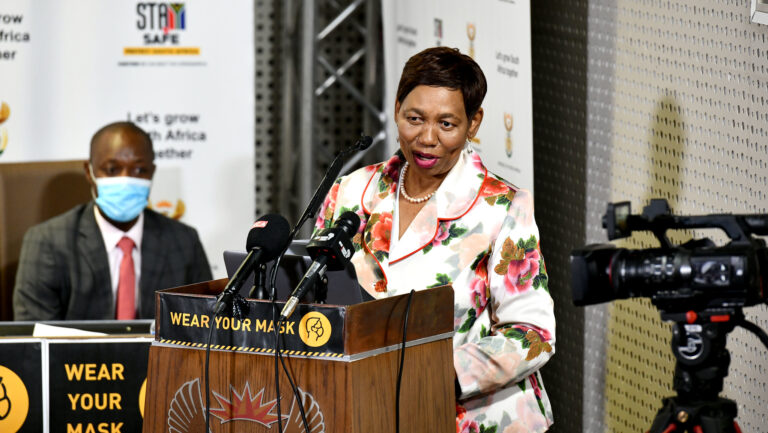
BASIC Education Minister Angie Motshekga has encouraged teachers to make winning a habit not just for one’s individual satisfaction, but for the pursuance of excellence in teaching.

Motshekga was addressing the 21st National Teaching Awards (NTA) at Emperor’s Palace in Kempton Park on Wednesday.

The annual awards are hosted by the Department of Basic Education to recognise and celebrate outstanding educators who, often under challenging circumstances, remain committed to their noble craft and produce extraordinary outcomes.

Motshekga has applauded all teachers in the public sector and beyond for making the task of raising conscientious children possible.

“Your relentless commitment to the national cause of educating the young ones gives all of us strength and, of course, pride. I hope this glitzy NTA affair of today will spur more excellence in the sector, especially in the foundation phase teaching of literacy and numeracy,” the Minister said.

Motshekga said teaching has to be done right to avoid a generational catastrophe of adults without a future.

She said a review by the World Bank (2012) showed that teacher effectiveness is one of the most critical school-based predictors of student learning.

“Interestingly, research confirms that experience is irreplaceable. Several years of teaching by outstanding teachers can offset the learning deficits of disadvantaged students.

“A range of studies exploring what makes school systems effective has looked for common characteristics in the top-performing education systems. All found that the key is well trained and motivated teachers,” Motshekga said.

The Minister said the key strategies that researchers have identified for improving student outcomes centre on developing a quality teacher workforce.

“As a sector, through various initiatives, including the much-vaunted Funza Lushaka Bursary Scheme and our world-class research intensive universities, we do offer the best in initial teacher training. There are also many opportunities to further university studies while in employment, and I am happy to say our teachers are truly lifelong learners,” she said.

Mosthekga said during the height of the COVID-19 pandemic, teachers have shown sustained resilience.

The Minister saluted and praised teachers for always going beyond the call of duty to succeed amidst social ills and socio-economic challenges.

“Most teachers tell me that they play the role of caregiver, mother, father, counsellor, friend and godparent on any typical day to many of our learners from troubled homes and communities. Your toils in the service of our nation cannot go unnoticed,” Motshekga said.

National Teaching Awards| Ramaphosa Calls On Teachers To Produce The Skills And Capabilities That SA Needs In The 21st Century

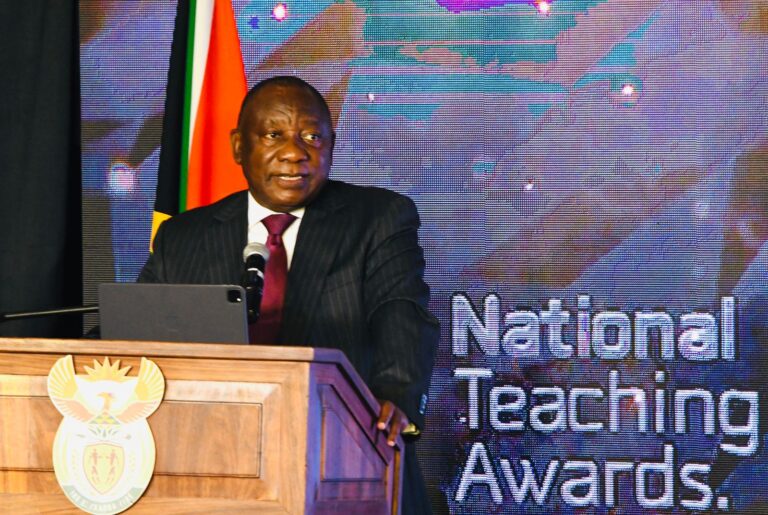
PRESIDENT Cyril Ramaphosa says teachers carry a great responsibility in a fast changing world, and the country looks to them to pursue Education for Sustainable Development so that learners are empowered with the knowledge, skills, values and attitudes to take informed decisions in advancing environmental integrity, economic viability and a just society.

Ramaphosa was speaking at the 21st Reimagined National Teachers Award Ceremony at Emperors Palace Conference Centre in Ekurhuleni on Wednesday, where he highlighted some of the problems facing the country’s education landscape.

“As a nation, our most pressing challenge right now is youth unemployment. Some of the young work-seekers are not well educated and do not possess sufficient skills and previous work experience demanded by employers in the labour market,” said Ramaphosa.

“That places a great responsibility on teachers and education officials, and indeed on all of us, to ensure that our schools, colleges, universities and other training institutions are producing the skills and capabilities that our country needs.”

The president said that this required that every young child had access to early childhood development, that every child can read for meaning at the appropriate age, that the country prioritises achievement in science, technology, engineering and mathematics and that South Africa substantially reduces the drop-out rate in schools.

“We must ensure that every school-leaver has the confidence, the capabilities and the opportunities to study further, find employment or gain work experience. This work should align with initiatives like the SA Youth Pathway Management Network, the Presidential Employment Stimulus and the YES initiative, which support young people in their efforts to find pathways into the economy.

“Together, we have a responsibility to develop a new generation of patriotic citizens, young people who are conscious of their responsibility to build a better society. This is a new generation that refuses to engage in crime, corruption or gender-based violence, that is dedicated to the values of democracy, non-racialism, non-sexism, freedom, equality and human dignity,” Ramaphosa said.

He also hailed the efforts made by teachers, saying that despite at times working under difficult circumstances, the country’s teachers were examples of resilience, excellence and professionalism.

Ramaphosa said that even at the height of the devastating Covid-19 pandemic, teachers had remained true to their calling, to secure the country’s collective future, adding that the country was indebted to the teachers who made it possible for the education of the country’s children to continue through blended learning and other strategies.

“It is with deep sadness that we remember and pay tribute to all the teachers and other education officials who have succumbed to Covid-19. In their honour, we must safeguard the safety of teachers and learners, and ensure that the teaching and learning environment remains conducive at all times.

“We need to continue to take the necessary precautions and observe all the health protocols to prevent the spread of Covid-19 in school settings. I wish to encourage more teachers and education officials to heed the best scientific advice available and vaccinate against this deadly pandemic,” Ramaphosa said.

He added that vaccination was not only about protecting one’s own health and life, but that it is also about protecting others and ensuring the country can soon resume many of the activities that have been restricted for the past 18 months.

  • * Inside Education

Former Eastern Cape Senior Educational Specialist Arrested For R1.2m Fraud

A former Eastern Cape senior educational specialist is expected to appear in the Gqeberha Magistrates’ Court for numerous allegations of fraud and money laundering.

This comes after she was summoned by the Gqeberha-based Hawks’ Serious Commercial Crime Investigation team on Tuesday.

In a statement, the Hawks said: “Between January 2009 and November 2010, the suspect, who was employed by the Eastern Cape Department of Education as a senior educational specialist and the coordinator of the Early Childhood Development Learning Programme, allegedly processed various fraudulent applications accompanied and supported by false documents, which resulted in the irregular appointment of persons and payment of salaries of Grade R practitioners by the department.”

It is alleged that she induced the officials of the department to approve the appointments of the said persons as Grade R practitioners and to further approve the payment of monthly stipends in various amounts. The practitioners are reported to have been given an instruction by the suspect to withdraw the monies and hand them over to her.

The Hawks said the department, acting on the false information given by the suspect, paid a collective amount of more than R1.2 million. 

“The summons were served after an intensive investigation since the complaint was lodged with the Hawks in December 2010. She is expected to make her first court appearance on 25 October 2021,” said the Hawks.

World Teachers’ Day| How education reforms can support teachers around the world instead of undermining them

0

GERALD K. LeTENDRE

WORLD Teachers’ Day, held on October 5 each year since 1994, is an annual event to reflect on the progress teachers have made.

But in many countries, including the United States, the professional status of teachers has declined in the last decade.

For example, studies in Britain, Japan and Hong Kong show an erosion of teacher autonomy and public confidence in teachers, which leads to teachers feeling disempowered and demoralized. Job satisfaction has also deteriorated among teachers in the U.S., where teacher education itself has become a target of policymakers who think it requires higher standards and greater state control.

As a researcher who studies teacher reform initiatives around the world, I have seen very few reforms do what they were designed to do, which is to improve the quality of teachers’ work and their professional standing.

With colleagues in the U.S., Sweden and South Korea, I researched teacher-focused policies in four Nordic countries (Finland, Norway, Sweden and Denmark) and four East Asian countries (Taiwan, Singapore, Japan and South Korea) from 1995 to 2020.

All eight countries are stable, wealthy democracies whose school systems are generally regarded as having solid – even exemplary – educational systems. In other words, one might not expect them to be that worried about their teachers. Yet over the 25-year period that we studied, these countries collectively passed 56 national policies that were specifically aimed at reforming some part of teacher career development, education or training.

Sweden was the most active with 12 reforms, while Finland passed only two.

Sometimes these reforms didn’t really help teachers. In fact, some reforms actually undermined the quality of the national teaching force.

Here is what we found is mostly likely to work when it comes to new teacher policies.

Make policies comprehensive

Comprehensive teacher policies address at least three key areas: recruitment and training, hiring and placement, and professional development. This is crucial in addressing significant problems like teacher shortages, where focusing on recruiting and training alone has not worked, at least in the U.S.

However, most of the eight countries in our study passed polices that target only one of these stages. Some nations addressed more than one, but the reforms were often uncoordinated. And, these nations were also influenced by international organizations like the Organization for Economic Co-operation and Development, resulting in contradictory reforms that undermined the effectiveness of national systems.

Denmark was the only nation that specifically targeted recruitment by trying to recruit teachers from the best college graduates. Sweden was the only country to pass a policy vaguely related to teacher placement. They started “fast track” programs that prepare immigrants with teacher qualifications to teach in Swedish schools. These programs were spread around the country in six universities that would encourage placing the graduates outside the Stockholm area.

Instead, countries concentrated on policies that set standards for teacher certification, improved work conditions and extended opportunities for professional development. While these are important areas, they don’t address crucial bottlenecks in recruitment and distribution. Simply setting standards does not guarantee that qualified teachers will be available where they are needed. For example, due to shortages in certain subjects, teachers are often assigned to teach courses that they are not qualified to teach – something called “out-of-field” teaching.

Despite all the teacher-focused reforms that have occurred, access to qualified teachers remains a major source of educational inequality in the world today.

Focus on teachers’ actual needs

There is international consensus that effective teacher education and development involves offering teachers multiple opportunities to practice and reflect on actual teaching practices. This means professional development should be integrated into local schools where local practitioners can identify the problems they face while working with experts to identify solutions. Yet few of the policies we analyzed indicated this as a goal.

One example that did engage teachers was the OSAAVA program in Finland, which supported projects where teachers and schools could identify what expertise they already had available, areas that needed more professional development and how to sustain this professional development over time.

In addition to being focused on actual problems, good professional development supports collaboration between teachers, universities and the communities where they work. In most industries, professional development is created by expert practitioners in the field. Teacher professional development, however, is mostly created by academics in universities. To achieve effective professional development often requires reforming the relationship between universities and schools.

Include teachers in the process

In both Nordic and East Asian countries, governments often passed reforms related to teacher professional development by setting standards, but few governments involved teachers in the process. This undermines teachers’ professional status and autonomy. It also means that the professional development is less likely to meet teachers’ needs.

In Japan, in the early 2000s, the government took what was once a teacher-led form of professional development, Lesson Study, and integrated it into required professional development. This weakened the collaboration which research had shown to be essential for effective teacher learning. In 2017, I conducted interviews with teacher educators who complained about the long-term decline in Lesson Study quality. Indeed, the Lesson Study sessions I observed in 2017 were less well attended and lacked the collaborative support that I had witnessed while researching Japanese schools in the 1980s and 1990s.

In contrast, the “Teach Less, Learn More” reform passed in Singapore in 2005 allowed schools to hire more staff so that teachers had more time to study how to better present lessons or to review and redesign the curriculum.

Why it matters

Decades of scientific research confirm that quality teachers improve student achievement. At the same time we see the rise of authoritarian regimes and anti-democratic movements across the globe. Education has a democratizing effect, particularly in poor countries. I believe that, now more than ever, every nation must support teachers as they provide the education and critical thinking skills that children will need to confront antidemocratic sentiment and resolve the significant problems of the future.

(Gerald K. LeTendre is Professor of Educational Administration, Penn State.)

  • The Conversation

World Teachers Day| SADTU Calls For More Investment In The Well-being Of Teachers, And Honors Educators Who Died OF COVID-19

THE South African Democratic Teachers Union (Sadtu) has paid tribute to over 1 650 teachers who lost their lives due to COVID-19 pandemic, the teachers’ union said in a statement to celebrate the international World Teachers’ Day.

World Teacher’s Day was launched in 1996 with the motive of promoting help towards teachers and creating awareness about the importance of teachers to meet the needs of future generations. The day is celebrated today in about 100 nations around the globe.

“We are celebrating World Teachers’ Day, for the second time in a row, under a dark cloud of the devastating COVID 19 pandemic that caused untold disruptions to schooling, economy and life in general. In the first year of the pandemic alone, 1 650 teachers lost their lives and dozens more continue to die,” said Sadtu General Secretary Mugwena Maluleke.

“The theme for this year’s celebration, “Teachers at the heart of education recovery” places a heavy load on the shoulders of teachers who are still grappling with the effects of the COVID 19 pandemic.”

Maluleke said the teachers’ union was celebrating the teachers for the role they have played in ensuring that education continues under these trying times.

“They have had to adapt to new ways of teaching using online platforms to reach their learners; they have had to be counsellors to their learners who have lost their parents and teachers; they have had to be safety officers to ensure their schools comply with the health and safety guidelines in order to save their lives as well as those of learners; they have had to sacrifice their precious time with families teaching during weekends and holidays to make up for the lost time,” said Maluleke.

“They are indeed at the heart of education recovery.”

The teachers’ union said for this year’s theme (Teachers at the heart of education recovery) to become a reality, SADTU is calling for increased investment in the well-being, training, professional development and working conditions of teachers to recover the learning losses and to adapt to new ways of teaching and learning that have to contend with the pandemic.

“We need education for our economy to recover. For South Africa to be more productive, we need more educated workers, government has to invest in human resource development and teachers are crucial in producing that educated and skilled workforce,” said Maluleke.

“We celebrate this day under a heavy cloud of austerity measures that have threatened the stability of the education system until the union challenged the government in particular in the KwaZulu Natal (KZN). The union made sure that no educator or education personnel would lose their jobs in KZN.”

He added: “As we celebrate this teachers’ day, SADTU is fully aware of the task at hand to ensure that the gains we have made to safeguard the Status of Teachers as per the 1966 Recommendation are adhered to. We are therefore going to heed the call by our union federation, COSATU to take part in marches across the country on 7 October to make our voice heard against the austerity measures, rising unemployment, safety in workplaces, gender-based violence and many other ills affecting workers.”

“The country needs more teachers, more resources, more training and better working conditions for teachers. Quality education for all is the only sustainable way of recovery where the teachers are at the centre. We therefore demand that education be classified as an emergency in order to release the required financial relief required for an inclusive and sustainable recovery.”

Basic Education Minister Angie Motshekga has also applauded and thanked teachers for their resilience, courage and dedication to their work, even under difficult circumstances brought about mainly by the COVID-19 pandemic.

“The past year has been an extremely difficult time for our teachers, hence I take this opportunity to thank all of you, our teachers, for your resilience, courage and dedication to your work under very difficult circumstances brought about mainly by COVID-19,” Motshekga said.

Motshekga said she is proud to be part of the movement to appreciate the role of every teacher across all corners of the country.

“Dear teachers, we acknowledge you on this special day that is World Teachers’ Day. Despite all the daily challenges you are faced with, you have kept going, you have become our hope to produce and harness future leaders, you are mothers of all professions, from whose hands every country is built,” she said. 

The LEGO Foundation said the COVID-19 pandemic interrupted the education of 90% of children around the world, and teachers have been on the frontlines to face the major challenges throughout it all.

 To mark the day, the LEGO Foundation was expected to officially launch a new whitepaper that will unpick the innovative methods used by teachers to provide education to children who struggle to access learning.

Specifically focusing on refugee and host communities in East Africa, the whitepaper highlights the central role of teachers and examines the opportunities for integrating play-based learning into teacher professional development approaches.

Commenting on World Teacher’s Day, Sarah Bouchie, Chief Impact Officer at the LEGO Foundation, said:

“The pandemic has brought teachers to the forefront more than ever before, and we should celebrate their heroic efforts to ensure quality education for every child. At the LEGO Foundation, it is our belief that learning through play allows children to reach their full potential. Thanks to teachers, children, including those from vulnerable communities, have been able to continue their learning. If the last 18+ months has shown us anything, it is that we must learn to live with uncertainty and practice the art of the quick pivot. Teachers know this perhaps better than anyone. Together, we can meet SDG4 through a movement of people who are committed to be all in for all kids.”

  • Inside Education

More Than 2.7 Million People Apply For Basic Education Job Opportunities – DBE

MORE than 2.7 million applications from unemployed youth have been received by the Department of Basic Education (DBE) for the second phase of its Basic Education Employment initiative.

The department said that, as of 7.30am on Saturday, it had received more than 2.7 million applications from 475 918 young people in Phase II of its Basic Education Employment Initiative.

It said “extremely high” volumes of traffic had led to its site slowing down and at times crashing.

The applications for Phase II opened on September 27 and the deadline has been extended to midnight on October 10.

The Presidential Youth Employment Initiative (PYEI)-Basic Education Employment Initiative (BEEI) was started this year to provide unemployed young people employment and training opportunities in the education sector.

“Phase I of the Presidential Employment Stimulus (PES) was successfully implemented from 1 December 2020 until 31 April 2021, in the basic education sector as the Basic Education Employment Initiative (BEEI). Approximately 300 000 young people participated in Phase I of the BEEI,” said the department.

“Phase II will focus on addressing the reduction of youth unemployment, as the data collected throughout the initiative has shown that most of the young people are unemployed graduates, who lack the relevant experience to propel them to employment.
The BEEI initiative will go a long way in assisting the department to mitigate the unfortunate fallout from the COVID-19 academic disruptions we have experienced since the first 2020 national lockdown aimed at containment of the pandemic. The
Initiative also aims to provide a protective net for learners at risk of dropping out of school, due to psychosocial challenges.”

The department is seeking to provide 287 000 unemployed young people with 192 000 education assistant and 95 000 general school assistant positions.

Statistics South Africa’s Quarterly Employment Statistics survey, released last week, showed that total employment fell by 86 000, or 0.9 percent, from 9 652 000 in March, to 9 566 000 in June.

“The department would like to take this time to thank young people for the enthusiasm shown towards making a difference in the Basic Education sector, and wish them great success with their application,” the department said.

The department said in a statement that the application process did not work on a first-come, first-served basis. However, all applications must be submitted by October 10.

“Since the opening of the application process on September 27, the site experienced extremely high traffic volumes, causing it to slow down and occasionally time out. The SA Youth toll-free number was also affected due to receiving up to more than 50 000 calls per hour,” the department said.

As a differentiated application process, the department has introduced an alternative avenue for applicants to submit their application.

SA Youth has added another web-based or electronic application form that is not linked to, nor dependent on, the SA Youth mobi-site in terms of connectivity or stability.

“We would like to notify the public that the web-based or electronic application form is an alternative application method, however, it is not zero rate and will require a small amount of data (3MB) to complete.

“The mobisite (sayouth.mobi) is still available for submission of applications,” the department added.

The department further emphasised that all application forms must be submitted online, as no walk-ins to schools would be allowed due to the Covid19 restrictions and preparations for final exams at both primary and high schools.

“Youth between the ages 18 and 35, who are currently neither in education and training nor receiving any form of government grant, as well as young people with disability, and women, are eligible and encouraged to apply,” the department said.

The department also cautioned young people against falling victim to fake news regarding the initiative.

To qualify as an Education Assistant, you must have passed matric English, while an NQF Level 4, 6 and 7 qualification certificate, will be an added advantage. However, for placement as a General School Assistant, a matric certificate is not required for Infrastructure support and Sports and Enrichment Agents, although Trade certificates
will be an added advantage.

To apply for placement, young people are urged to visit sayouth.mobi to create a profile and submit their application. No walk-ins will be allowed in schools due to Covid19 restrictions.

Applicants must submit their application online.

Should you receive notice that you have been selected for shortlisting, you will be
required to prepare the following documents:
· Curriculum Vitae (CV)
· Testimonials (former school, local chief, church leader, etc)
· Police clearance certificates
· Affidavit/Declaration by applicant stating he/she has no criminal record while
awaiting the Police clearance
· Certified qualifications such as Matric, (where applicable: NQF Level 4
qualification certificate, for Education Assistant applicants with NQF level 6
and 7 an added advantage)
· Certified copy of identity document/ passport.

Cabinet Announces Appointment Of New Director-general At The Department of Higher Education After Dismissal Of Former Head

CABINET has appointed the new director-general of the Department of Higher Education weeks after former DG Gwebinkudla Qonde was suspended from the department.

The cabinet confirmed that Dr Nkosinathi Sishi is the new DG of Higher Education.

Qonde and Higher Education Minister Blade Nzimande were later embroiled in a legal battle after the former challenged his suspension from the department.

But he lost the case in the Labour Court in Joburg.

Nzimande, when he suspended Qonde two months ago, said this was based on the disclaimer of the Auditor-General Tsakani Maluleke.

Nzimande said he also welcomed the finding of the court that ruled in his favour.

Qonde had argued that his suspension by the minister was unlawful.

Qonde had been in the department for more than a decade and was part of it when it was formally separated from basic education to form two different departments of education.

This had followed a resolution of the ANC in Polokwane in 2007 that education must be split into two.

When the new administration took over in 2009 higher education and basic education became standalone departments with two ministers.

Nzimande had insisted that he had done nothing when Qonde was suspended a few weeks ago.

But the former DG said the suspension was unlawful and he lost his bid in court.

The former DG was suspended in July and he took the matter to the Labour Court in August, but the ruling went against him in September.

Qonde was suspended following a forensic investigation into the National Skills Fund.

This after the department received a disclaimer audit opinion by the Auditor-General of South Africa.

The National Skills Fund received the disclaimer audit during the 2019/20 financial year.

The AG found the National Skills Fund’s budget was materially underspent by R1.8 billion.

It also found that the entity did not have adequate systems to maintain records of commitments and earmarked funds.

In addition, it found adjustments in the financial statement could not be determined whether it was necessary to the skills development funding expenses stated at R2.5 billion.

In March the Nationals Skills Fund said it had lodged a dispute over the disclaimer audit.

  • * Inside Education

Registration For The 2022 Senior Certificate Examinations Is Now Open And Closes On 31 January 2022 – DBE

ADULTS who qualify to write the 2022 Senior Certificate examinations can now register for the examination to be written in May/June 2022.

All Senior Certificate subjects that were passed prior to June 2015, at Higher Grade and Standard Grade levels, excluding Lower Grade conversions, will be recognized.

The Senior Certificate also allows candidates to obtain University endorsement. As in the case of the NSC exam, they can also qualify for admission to Bachelor, Diploma or Higher Certificate programmes at Higher Education institutions.

See the Notice issued by the Minister of Higher Education and Training below:

Admission to the Senior Certificate Examination 

The following learners will qualify for admission to the Senior Certificate:

  • Adult learners who are 21 years and older who have:
    • a General Education and Training Certificate (GETC); or
    • a Grade 9 school report (or the old standard seven). stating that they have passed Grade 9 or Standard 7; or
    • a recognised equivalent qualification obtained at NQF Level which requires two official languages.
  • Adult learners who are 21 years and older with an incomplete Senior Certificate qualification.
  • Adult learners who are 21 years and older with an incomplete National Senior Certificate
  • Only in exceptional cases, out of school youth, who are 18-21 years old and who could not complete their school education due to circumstances beyond their control, as verified by the Head of Department in the Provincial Education Department.
  • Adult candidates who are 21 years and older with an incomplete NSC may choose to complete the NSC, or convert to the Senior Certificate.  Should the candidate choose to convert to the Senior Certificate, they may not revert to the NSC and attempt to complete the NSC qualification.
  • Adult candidates who have already obtained a qualification but wish to improve their results/status.

Subjects to be offered

Table A: Official languages at Home and First Additional level

SUBJECTNUMBER
Afrikaans Home language13300019
Afrikaans First Additional Language13310029
English Home Language13300039
English First Additional Language13310049
IsiNdebele Home Language13300059
IsiNdebele First Additional Language13310069
IsiXhosa Home Language13300079
IsiXhosa First Additional Language13310090
IsiZulu Home Language13300099
IsiZulu First Additional Language13310109
Sepedi Home Language13300119
Sepedi First Additional Language13310129
Sesotho Home Language13300139
Sesotho First Additional Language13310149
Setswana Home Language13300159
Setswana First Additional Language13310169
SiSwati Home Language13300179
SiSwati First Additional Language13310189
Tshivenda Home Language13300199
Tshivenda First Additional Language13310209
Xitsonga Home Language13300219
Xitsonga First Additional Language13310229

Table B2: Business, Commerce and Management Studies

SUBJECTNUMBER
Accounting12320249
Business Studies12320259
Economics12320269
SUBJECTNUMBER
Geography16320279
History16320289
Religion Studies16320299

Table B4: Physical, Mathematical, Computer and Life Sciences

SUBJECTNUMBER
Computer Applications Technology19320309
Information Technology19320319
Life Sciences19320329
Mathematical Literacy19320339
Mathematics19320349
Physical Sciences19320359

The Curriculum and Assessment Policy Statements for the above-listed Senior Certificate subjects are available here.

Subjects to be recognized

Senior Certificate subjects credits that were passed prior to June 2015, at Higher Grade and Standard Grade levels, excluding Lower Grade conversions, will be recognized.

With the exception of Business English N3, Second Language, and/or Sakeafrikaans N3, Second Language, no N3 subjects will be recognised.

In the case of learners, who have attempted the National Senior Certificate examination, but were unable to complete all the subject requirements, such candidates will have all their previous credits recognised.

Examinations

Candidates that qualify to write the Senior Certificate examination will write the examination in May/June 2021. Candidates writing the Senior Certificate will be exempt from School Based Assessment, and this implies that the examination in the subject will constitute 100% of the final mark.

Examinations will be administered at designated examination centres determined by the Provincial Education Department. The examination may also be offered by the independent assessment bodies accredited by Umalusi.

Promotion requirements 

A Senior Certificate will be achieved by an adult candidate who satisfies the following requirements in these examinations:

  1. Pass three subjects at 40%, one of which must be an official language at Home Language level.
  2. Pass two subjects at 30%, one of which must be an official language at First Additional or Home Language level.
  3. Obtain a subminimum of 20% in the sixth subject.

Registration for the 2021 Senior Certificate Examination

Registration for the 2021 exams may be done online or at any education district office. Both online registration and manual registration will close on 26 March 2021.

Preparation for the Senior Certificate Examination

Learners that intend to write the Senior Certificate examination must commence with preparations for the examinations immediately, given that the curriculum is a year programme. Learners may obtain the Curriculum and Assessment Policy Statement (CAPS) for the relevant subject from the DBE website or the nearest provincial education office. The Department of Basic Education (DBE) has made available an Examination Guideline, which provides a framework on the structure and format of the examination.

Exemplar question papers based on CAPS are also available on the DBE website.

Registration for the 2022 Senior Certificate examinations is now open and closes on 31 January 2022!

  • * Inside Education

Classroom Corner: How Learning Techniques Have Evolved With Better Learner Outcomes

AS THE nature of work is changing in a digital economy, so too are approaches to learning to meet both the needs and demands of those requiring flexible, collaborative, and digital solutions. While teaching and learning techniques evolve constantly, the Covid-19 pandemic has accelerated innovation and adoption of learner-centred online approaches.

Organisations have discovered that through creative online approaches they can deliver highly effective and scalable training solutions to CXOs and entry level executives alike. These trends in education are far-reaching and here to stay.

The flipped classroom

One such solution gaining momentum is the ‘flipped classroom’. This flips a more traditional model, where the learner is a passive recipient of a teacher’s lecture and then applies that knowledge independently in their homework and assignments to consolidate their learning.

Engaging with a subject at a deeper level (evaluating, analysing and so on) is more difficult for the learner, yet this is the part that the traditional model expects learners to do alone, at home, without the teacher’s guidance.

In a flipped classroom approach, the learner activates their knowledge in their own time, typically using online materials such as activities, videos, and texts; and in the class works with the teacher and classmates to apply that newly acquired knowledge with practice using real-life examples, critical analysis and peer review, group work, and feedback.

Teacher training project using flipped classroom

In 2018, a teacher training project was run using a flipped classroom approach for government school teachers across India.

Over 570 primary and secondary teachers took a six-week online English course to develop their English language skills. In their pre-class activities, participants studied communication skills through online video, audio, and text with interactive practice exercises.

In the classroom, participants engaged in meaningful, practical real-life communication scenarios with the help of their trainer’s facilitation.

Participants rated the acquisition of new knowledge and skills at over 90 percent. In pre- and post-course self-ratings of English skills, there was a jump of over 20 per cent in just six weeks.

External reviewers of this project stated, “That such outcomes have been achieved in a BYOD technology model for a Global South user group with little or no familiarity with online learning is a genuine breakthrough. TOPDI potentially marks a major turning point in the models for raising teacher skills in emerging economies.”

Studies in the US, India, and beyond have shown that the flipped classroom can promote student engagement and a greater personal accountability for learning. Further studies have demonstrated improvement in performance and grades for students.

The parallels with the core skills sought after by employers to futureproof their businesses are clear an increase in self-direction, responsibility for one’s own development and the nurturing of critical thinking skills.

Peer-assisted learning

Another training approach that builds on these skills and adds more vital core employability skills, collaboration and cultural fluency, is peer to peer learning, or peer assisted learning. This approach encourages students to work through concepts and material together.

This provides them opportunities to learn from one another, expand their knowledge and communication styles and build meaningful connections, under the teacher’s facilitation.

The affordances of online learning such as breakout rooms foster safe spaces for students to negotiate and experiment with new concepts.

In a 2021 IELTS training programme for nurses, a facilitated peer-assisted learning programme (PALs) where participants were given tasks to work on together in peer-only weekly meetings was integrated into an online, flipped classroom intervention.

This course component was found to enhance learner engagement in live online classes and build greater engagement and motivation in the purely independent study tasks assigned.

advertisement

Interviews with participants highlighted the perceived value of building collaboration and self-management skills and the usefulness of scaffolding to motivate independent learning and achieve better test outcomes.

That these outcomes were achieved with learners who were medical professionals during the Covid-19 pandemic underscores the success of these online learning models.

For learning and development professionals, CXOs, and educators taking decisions about human resource development, these models are a genuine boon as they offer better learning outcomes with greater scalability and cost efficiency.

Research shows that certain online blended learning courses offer more than four times learning to trainer effort while delivering a 95 percent self-reported improvement in communication and soft skills.

Even prior to the Covid-19 pandemic, the nature of work was evolving. The value of a new set of core skills for employability, from collaboration to self-direction to digital and cultural fluency, has been further highlighted by the new ways of working adopted by many in response to the pandemic.

It is time for educational approaches that develop such skills to take front and centre to build up the workforce of tomorrow, and clearly, the flipped classroom and peer learning approach have an important place in that structure.

Article by Beth Caldwell, Head of Blended Learning and Shivangi Gupta, Assistant Director English, British Council India.

OPINION| What Would Have Happened If European Intellectual Giants Had Not Been Instructed In Their Mother Tongue?

IF intellectual giants in history – legendary names such as Sigmund Freud, Albert Einstein, Niels Bohr, Karl Marx and many others – had been instructed in isiZulu to the exclusion of their mother tongue, would they have attained the intellectual milestones for which they are now renowned around the globe?

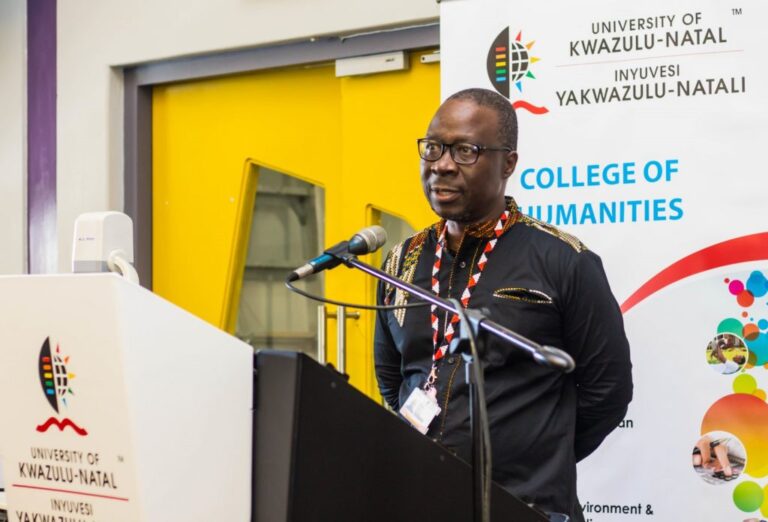
This question was posed by the Deputy Vice-Chancellor and Head of the College of Humanities at the University of KwaZulu-Natal (UKZN), Professor Nhlanhla Mkhize, as he reflected on milestones in the effective implementation of a language policy at the university.Professor Mkhize was one of the speakers participating in the online Colloquium on the New Language Policy Framework for Public Higher Education Institutions this week. The Colloquium was hosted by Stellenbosch University (SU) under the auspices of Universities South Africa (USAf).

The audience comprised vice-chancellors their deputies and language experts of most of South Africa’s 26 public universities. Also in attendance were higher education policymakers and other government stakeholders.

He continued: “Paradoxically on the African continent we are told that instruction in African languages retards mental thoughts where, in fact, it has been shown that instruction in the mother tongue is preferable.”

Mkhize emphasised that from its inception in 2004, the University of KwaZulu-Natal took seriously the understanding that an African university or institution cannot shy away from the question of the role of language in knowledge construction.

“We are also mindful that language is not a mere medium by means of which we can communicate our thoughts to others. Rather, it is the process through which higher mental functions such as thinking, cognition, memory and problem solving are formed. The exclusion of African languages for teaching and learning has a detrimental effect and excludes the experiential reality of the learner in the classroom.”

He gave an example of a rural boy, growing up looking after cattle and goats, who can easily classify more than 100 species of plants and trees: “His profound botanical knowledge is being lost because indigenous African languages are being ignored.

“At the University of KwaZulu-Natal, we were also aware of the disconnect between the African learner and their communities; that we were producing learners who were disconnected from their communities, and this exercise is contrary to the primary function of education which is social and community advancement.

“I was painfully aware of this 15 or 20 years ago, when many of my students in psychology, were coming back to me and saying, ‘what you are training us to do in the field, we cannot articulate in our own language and we cannot make it work’!

“The learners are, as a result, not well equipped to play the historical role that has been played by other intellectuals in societies. They are not fully equipped to address themselves to the challenges of the African continent such as poverty, illiteracy and disease. In every society, you will need intellectuals to develop their language in any domain; it may be in mathematics, it may be physics or history. People seem to forget that English hasn’t always been the major language of intellectual discourse. People were once instructed in Latin. Why do we argue then, that when it comes to African languages, it cannot be done? It is an intellectual activity that we all need to apply our minds to.”

He explained that a language experiment at UKZN began in 2004 and led to the approval of the UKZN policy of bilingualism in 2006. He demonstrated that more than 55 percent of the South African population do not speak English as their first language.

“So what are we doing to these people if we’re sending them to the classroom, using a tool that they have not mastered? They get to university and they haven’t fully mastered the English language as a vehicle of intellectual thought.”

Professor Mkhize went on to highlight some of the key milestones in the development of the language policy of the University of KwaZulu-Natal which was approved by council in 2006. Rather than being prescriptive, he believes this is an invitation for dialogue and debate.

“There were many fears that we were lowering the standards and there were a lot of emotions at the time as we embraced multilingualism at the university. Amongst the aims of the policy is to achieve for isiZulu the institutional and academic status of English and to provide facilities to enable the use of isiZulu as a language of learning, instruction, research and administration. The policy was approved in 2006, was revised in 2014 and is currently undergoing a further round of revision.”

Phase two has now been implemented although, he admitted, some areas in phase one have still to be addressed.

He explained the UKZN charter which states that:

  • It recognises the importance and value of African languages as academic languages.
  • African languages will be promoted as academic languages of discourse among other things.

Professor Mkhize also shared the experiences and achievements of the SANTED (South Africa Norway Tertiary Education Development Programme) which, in his view, was a major catalyst for the development and implementation of the UKZN language policy.

Involving disciplines such as IsiZulu studies, psychology, nursing and education and dental assisting; several bilingual discipline specific terminologies and instruction manuals and handbooks were developed in 2006, an activity that still continues today. Several publications are the result of these efforts and contribute towards the intellectualisation of African languages.

He said that the most controversial aspect of the implementation of the language policy at the university was the BR9 Rule when UKZN in 2014 introduced a compulsory isiZulu module (equivalent to a semester of study) to new entrant undergraduates. To date more than 3100 students have successfully completed this compulsory isiZulu language module.

In November 2016 the Senate at UKZN approved the Doctoral Rule change (DR9b) to require an abstract in both English and isiZulu in all doctoral dissertations.

Every aspect of the language plan implementation at the University of KwaZulu-Natal is linked to the strategic plan of the institution including the development of the Zulu lexicon which includes, among others, a mobile application and spell checker.

In conclusion:

  • Several advancements have been made towards the implementation of the language policy of UKZN.
  • There was a particular focus on the intellectualisation of isiZulu.
  • The greatest challenge was monitoring the implementation process.

Said Professor Mkhize: “I want to highlight that at the University of KwaZulu-Natal, what has been key is the actual intellectualisation of the isiZulu language because we see it as a scholarly enterprise. We are determined to leave a legacy that the next generation can build on.”

According to Professor Ahmed Bawa, Chief Executive Officer of Universities South Africa, the Colloquium succeeded in enabling understanding in the executive leadership of universities, of the philosophical, constitutional, and legislative base of the Language Policy Framework, and the broader systemic issues informing the foregrounding of multilingualism, transformation, and decolonisation in the higher education agenda.

The Colloquium was the first in a series of events to be hosted by universities on the revised Language Policy for Higher Education. It paved the way for individual institutions to engage further on the matter, and for universities to craft or strengthen their own implementation strategies while contemplating the resources required to successfully implement multilingualism – within the context of broader transformation and decolonisation of South Africa’s higher education.

  • Janine Greenleaf Walker is a contract writer for Universities South Africa.
  • * USAF