Home Blog Page 32

Excellence is becoming a pattern, says Gwarube, as Class of 2025 hits record 88% pass rate

By Johnathan Paoli

Basic Education Minister Siviwe Gwarube said on Monday night that South Africa’s 2025 National Senior Certificate (NSC) result was evidence that “excellence is becoming a pattern”, but warned that deep, early learning reforms remain essential to sustain progress and close persistent inequalities.

Announcing the historic national pass rate of 88%, the highest on record and up from 87.3% in 2024, Gwarube said the results reflect a system that is stabilising, expanding participation and holding firm on integrity, while beginning a decisive shift toward quality learning from the earliest grades.

“The 2025 results show us that excellence is spreading into communities that have carried the heaviest burdens, but they also remind us that the number of learners enrolling should never run ahead of our ability to ensure that they perform well,” Gwarube said.

More than 656,000 learners passed the NSC in 2025, with KwaZulu-Natal emerging as the best-performing province at 90.6%, followed by the Free State (89.33%), Gauteng (89.06%), North West (88.49%) and the Western Cape (88.20%).

The Northern Cape recorded the biggest year-on-year improvement to 87.79%, while Mpumalanga (86.55%), Limpopo (86.15%) and the Eastern Cape (84.17%) completed the provincial spread.

For the first time, all 75 education districts achieved pass rates of 80% and above, a milestone Gwarube described as a key indicator that improvement was spreading system-wide.

Crucially, the minister emphasised that the headline numbers are underpinned by credibility.

The 2025 examinations, written by over 900 000 candidates at about 6,000 centres, were quality assured by Umalusi, with irregularities investigated and controls strengthened. “These results are earned, not gifted,” said Gwarube.

Beyond the aggregate pass rate, Gwarube pointed to gains in quality outcomes.

The percentage of Bachelor passes declined slightly, meaning Bachelor passes made up a slightly smaller share of all passes.

But the total number of candidates writing and passing increased significantly, because the 2025 matric class was the largest in South Africa’s history.

A further 28% achieved Diploma passes and 13.5% Higher Certificate passes.

Notably, over 66% of Bachelor passes were achieved by learners from no-fee schools, reinforcing the minister’s message that poverty need not determine destiny.

At the same time, she cautioned against complacency, particularly in gateway subjects.

Mathematics participation increased but performance declined, with the pass rate falling from 69% to 64%; accounting dropped from 81% to 78%, while physical science edged up to 77% from 76%.

Fewer distinctions were recorded in these subjects than in 2024.

“Growing participation without the foundations to support mastery risks widening access while weakening quality,” Gwarube warned.

The minister situated these outcomes within a broader reform agenda launched over the past year. Since assuming office, the department has stabilised governance, rebuilt trust with provinces and unions, protected exam integrity and shifted from crisis management to long-term reform, she said.

Central to that shift is a focus on early learning illustrated by expanded early childhood development (ECD) registration, which exceeded a 10,000-centre target to reach more than 33,000 registered sites, enabling over a million children to access subsidies for nutrition and quality learning.

Other achievements include the release of the Funda Uphumelele national reading survey, expansion of mother tongue-based bilingual education, the first bilingual Grade 4 assessments in mathematics and natural science, an updated catalogue of learning materials for Grades 1–3, and a review of the teaching post allocation formula for the first time in over two decades.

Teacher development has been strengthened through targeted Funza Lushaka bursaries, while learner well-being has been prioritised through the school nutrition programme, strengthened safety protocols with SAPS, and a planned anti-bullying campaign in early 2026.

Looking ahead, Gwarube outlined priorities for 2026: accelerating early learning quality and access, including a new target of 250,000 ECD spaces; deepening mastery in gateway subjects with earlier intervention; finalising the review of White Paper 6 on inclusive education, streamlining reporting to protect teaching time; and addressing financial sustainability across provinces following a first-ever analysis that flagged seven provinces as at risk.

She was candid about the remaining challenges.

Learner retention drops sharply between Grades 10 and 12; boys are increasingly underrepresented in matric cohorts; mathematics uptake remains low at 34%; and social protection gaps affect performance, with learners whose grants lapse at 18 performing worse.

Fiscal constraints, she warned, could undermine early learning, nutrition and support if austerity measures are applied without care.

INSIDE EDUCATION

Maimane says 30% pass threshold reflects ‘governance problem’, again urges 50%

0

By Akani Nkuna and Thebe Mabanga

Build One South Africa (BOSA) leader Mmusi Maimane has said that South Africa’s matric pass benchmark is low because of slack governance, and renewed calls for the National Senior Certificate (NSC) pass threshold to be raised to 50%.

“The reality is that South African does not have a money problem. It has a governance problem. If we are are going to fix the 30% pass mark issue, we need to make sure that everyone passes at 50%,” he said.

Maimane was speaking to Inside Education on the sidelines of the NSC results announcement in Johannesburg on Monday evening.

BOSA has been campaigning against the widely cited “30% pass mark” for the NSC, saying it entrenches low standards, fuels unemployment and leaves many learners underprepared for higher education and the job market.

Maimane said education reform should also focus on infrastructure and digital access at schools.

“The second thing we have to ensure is infrastructure build. There are schools that still do not have libraries or digital technology.”  

He also called for the upskilling and development of teachers to keep pace with modern teaching methods shaped by technology and digitisation.

“We need to develop our teachers so that they catch up to the future world, otherwise we are really teaching young people for unemployment,” Maimane said.

Basic Education Minister Siviwe Gwarube and Director-General Matanzi Mweli rejected the claim that 30% is the pass mark, with Gwarube saying that leaders “should not use sloganeering and populism”.

Gwarube said the marks system is designed to accommodate learners with different aspirations, noting that not all learners aim to enter university and pursue degrees.

Mweli also rejected the notion, saying the pass mark for key subjects and a learner’s home language is 40%, while 30% applies to other, non-core subjects. He said he welcomed parliament’s decision to reject a motion to debate the issue, saying it should be left to education experts.

INSIDE EDUCATION

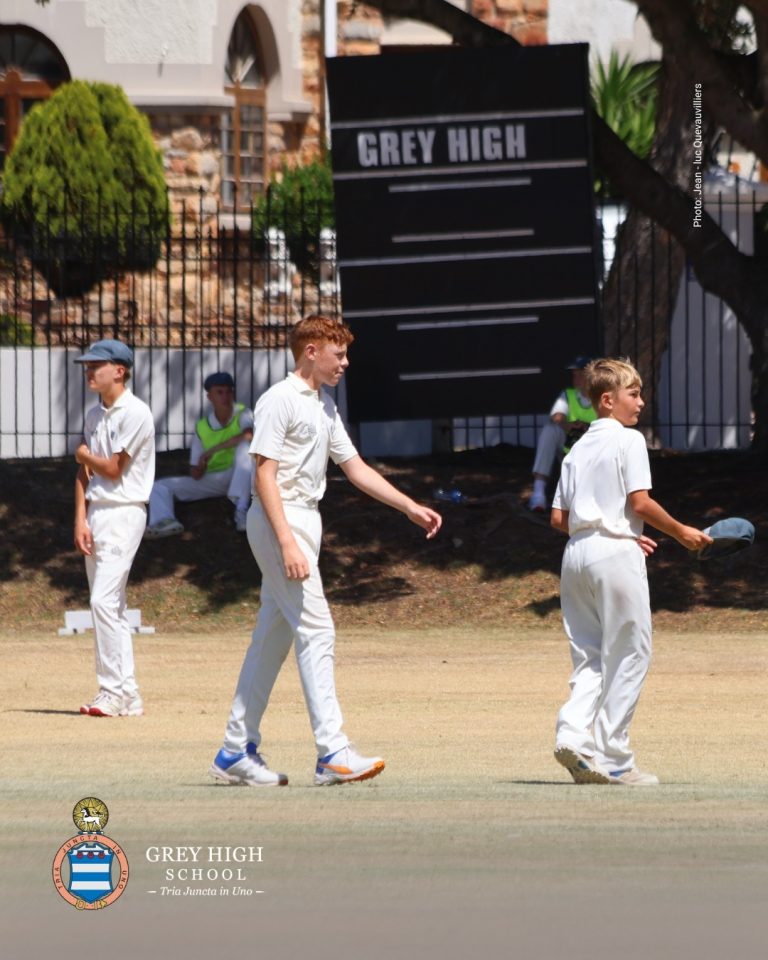
Grey High end Grey Festival with perfect win record

0

By Johnathan Paoli

Grey High signed off the 2026 Grey Festival in emphatic fashion, completing an unbeaten campaign with a tense three-wicket victory over St Andrew’s School in a clash that pitted the tournament’s two undefeated sides against each other on the Pollock Oval.

With both teams having won their opening two fixtures, the final match carried the feel of a decider.

The Grey Festival is an annual multi-sport schools tournament hosted by Grey College in Bloemfontein, bringing together leading South African and invited international schools to compete across codes such as cricket, rugby and hockey.

It is regarded as one of the premier fixtures on the school sports calendar, showcasing elite youth talent and fostering traditional rivalries in a high-performance environment.

Grey High won the toss and elected to bat first, a decision that initially appeared sound on a surface that had offered value for runs across the festival.

However, St Andrew’s seamer Matthew Marshbank had other ideas and produced a devastating opening spell that swung momentum sharply in the visitors’ favour.

Marshbank ripped through the top order, dismissing three of the first four Grey High batsmen for ducks.

His 3/11 from four overs left the hosts reeling early and placed immediate pressure on their middle order to rebuild.

That responsibility fell to Schalk van Rensburg and Grove du Preez, who briefly threatened to turn the innings around with a promising partnership.

Both batsmen looked positive and intent on counterattacking, but luck deserted St Andrew’s at a crucial stage.

Two sharp run-outs ended their resistance, with Van Rensburg departing for 12 and Du Preez for a top score of 22.

Once that stand was broken, the innings unravelled quickly.

Grey High’s bowlers maintained relentless pressure in the field, and St Andrew’s were bowled out for 92 in 19.3 overs.

Erhard Barends once again underlined his consistency with the ball, claiming 3/9 in his four overs, while Nikhil Sukraj chipped in with an economical 2/19.

Chasing a modest target, Grey High were made to work far harder than expected.

Regular wickets kept the contest alive deep into the innings, but Connor Parry anchored the chase with a vital 29, the highest individual score of the match.

With tension mounting, the hosts held their nerve to reach 93/7 with four balls to spare, sealing the win and confirming a flawless festival record.

Meanwhile, Grey College edged out the Namibia Invitational XI in a thrilling T20 encounter at Victoria Park High.

Namibia bucked the festival trend by opting to field after winning the toss, and Grey College responded with a disciplined batting effort to post 153/7.

Aiden Dodd was the cornerstone of the innings, striking six fours in a composed 53 off 46 deliveries from number four.

Daniel Hattingh and Bergh Vorster added valuable support, while Dan Brassell was the standout bowler for Namibia with figures of 2/17.

The Namibian reply was led by captain and opener Adriaan Coetzee, whose aggressive 54 off 40 balls, including three fours and four sixes, kept the chase firmly on track.

Luca Micillo also contributed with a brisk 30, but Grey College’s bowlers shared the wickets at crucial moments.

Vorster’s tidy 2/24 proved particularly influential as Namibia were bowled out for 144 with seven balls remaining, handing Grey College a narrow nine-run victory.

At Pearson High, Hoër Volkskool Potchefstroom produced one of the most dramatic finishes of the festival.

After winning the toss and sending Pearson in to bat, Volkies tore through the top order to reduce the hosts to 47/8.

A spirited unbeaten ninth-wicket stand of 52 between Connor Thomas and Jayden Warden rescued Pearson to 99/8, with Warden striking a heroic 30 not out.

The chase was equally nerve-racking. Schalk Pienaar’s rapid 28 provided early impetus, but Sulaymaan Gangat’s outstanding spell of 3/5 dragged the contest down to the wire.

Volkies eventually scraped home on 100/9 with two balls remaining to win by one wicket.

Northwood School rounded off the day with a convincing 48-run win over Selborne College on the Old Grey Oval.

Batting first, Northwood posted 145/5, with Luc Boyall falling just two runs short of a half-century and Ross McGlashan contributing a fluent 41.

Selborne started their reply brightly through openers Josh Wilkie and Thomas Lyon, but a collective bowling effort led by Trevor van Vollenstee’s superb 3/5 saw them dismissed for 97 in 18.2 overs, capping an action-packed conclusion to a memorable Grey Festival.

INSIDE EDUCATION

63 scholar transport vehicles in KZN fail safety checks

0

Staff Reporter

Sixty-three scholar transport vehicles have failed safety inspections in KwaZulu-Natal so far, provincial transport MEC Siboniso Duma said on Monday, as officials intensified checks ahead of the reopening of schools on Wednesday.

The failed vehicles included 43 buses and 20 minibuses.

Duma said provincial inspectors from the Road Traffic Inspectorate and Public Transport Service’s Operation Shanela began inspecting the scholar transport fleet on Friday and continued through the weekend.

“Our main focus is to ensure the safety of about 77,000 pupils in close to 400 schools,” he said.

The inspection programme is covering more than 26 satellite stations across the province and is checking driver permits, tyres, brakes, seatbelts, suspension and the overall condition of vehicles.

Scholar transport is a subsidised programme intended to help eligible learners – particularly those who live far from school — get to and from public schools safely, in line with the country’s National Learner Transport Policy.

By Monday, a total of 198 vehicles had been inspected, including 143 buses and 48 minibuses.

“The owners have been instructed to attend to all mechanical failures as stipulated in the contract with the Department of Transport,” Duma said.

He said the inspections would continue after schools reopen.

“We wish to confirm that the inspection will proceed until the re-opening of schools and beyond.”

Duma said the Road Traffic Inspectorate and Operation Shanela would work with other law enforcement agencies and municipal traffic departments to ensure safe transport, and this would include spot checks.

“In addition, we will announce more safety measures for private scholar transport once all consultations have been finalised with key stakeholders.”

He said the province also planned regulatory reforms for the private scholar transport industry.

“As we announced toward the end of last year, we will be introducing reforms such as strengthening legislation governing the private scholar transport industry, with clear provisions on driver vetting, vehicle standards, and operational oversight.”

INSIDE EDUCATION

WATCH: Here’s what tomorrow’s education landscape looks like, according to Panyaza Lesufi

0

By Marcus Moloko

Gauteng Premier Panyaza Lesufi has called for a bold reimagining of South Africa’s education system, urging government, industry, and communities to embrace technology and innovation as the foundation for future learning.

Speaking at the MTN Innovation Centre in Gauteng on Monday, where the Department of Basic Education, in partnership with MTN, hosted a celebratory breakfast honouring the country’s top-performing matriculants, Lesufi said education remained the cornerstone of society as it touched every household across the country.

“Education is key. There’s no single parent that does not have a child in the education system, or who has not had a child go through it. It’s paramount, it’s very, very important,” he said.

Lesufi said that Gauteng, as the economic hub of South Africa, must lead the way in transforming education.

He warned that without creativity and innovation, the country risked stagnation.

“The Stone Age didn’t end because that generation ran out of stones. It ended because new ideas developed. And it is these new ideas that we must plant within the education system,” he said.

Highlighting the rapid rise of artificial intelligence (AI), Lesufi said that learners must be equipped to use the technology for meaningful purposes.

“We can’t allow these kids to use artificial intelligence for TikTok. We must allow it to be used for the economy and educational development,” he said.

He called for flexibility within government and the education system to integrate AI into classrooms, cautioning against delaying its adoption.

“It’s here, it’s real, it’s surrounding us. We can’t avoid it. But we can’t wait for the next 17 years and then scratch our heads to ask ‘how do we allow artificial intelligence?’”

He painted a scenario of classrooms where technology and data drive learning, rather than outdated struggles over basic infrastructure.

“These children must not fight for water and electricity. These children must not fight for better sewerage in our schooling system. That’s old. These children must fight for data and free Wi-Fi in our schools. That’s the future we need,” he said.

He urged industries such as MTN and other technology providers to partner with government in ensuring connectivity and digital access for learners.

“The industries that are in that sector must come on board and assist us to do this,” Lesufi added.

INSIDE EDUCATION

Gwarube salutes Class of 2025

0

By Johnathan Paoli

Basic Education Minister Siviwe Gwarube has hailed the National Senior Certificate (NSC) Class of 2025 as “the pride of the nation”, using a keynote address at the Top Achievers’ Breakfast to emphasise perseverance, character, and the value of excellence beyond examination results.

Gwarube was speaking on Monday morning at the MTN Innovation Centre in Gauteng, where the Department of Basic Education, in partnership with MTN, hosted a celebratory breakfast honouring the country’s top-performing matriculants.

The event formed part of the official programme for the release of the 2025 NSC results and recognised learners from across all nine provinces, including those who achieved outstanding results despite significant adversity.

The event was attended by Gauteng Premier Panyaza Lesufi, Deputy Minister of Basic Education Reginah Mhaule, MTN Chairperson Yolanda Cuba, senior education officials, sponsors, parents, teachers, and the top achievers of the Class of 2025.

In her address, Gwarube framed her message around an ancient Greek myth of a man condemned by the gods to push a boulder up a steep hill, only for it to roll back down each time he reached the summit.

While the story is traditionally interpreted as a symbol of endless suffering and futility, the minister offered a more hopeful reading.

“[T]he eternal optimist in me believes there is another way to read that story. I don’t believe that man was unhappy. I believe he found meaning, even joy, in the pursuit itself. In striving. Because in the pursuit of excellence, in the act of giving your best, there is dignity, purpose, and yes, happiness,” Gwarube said.

She said the story mirrored the experiences of the learners being honoured, many of whom had faced pressure, setbacks, self-doubt, long study hours and personal challenges on their path to success.

“That is why this story matters today. Because every learner we celebrate this morning knows something about pushing a boulder uphill. About late nights, early mornings, setbacks, pressure, self-doubt, and the quiet decision, again and again, to keep going. And today, we gather not just to celebrate the summit you reached, but the pursuit of excellence that brought you here,” she said.

The minister paid tribute to parents and guardians, acknowledging the sacrifices many families had made to support their children’s education.

She said the success of top achievers was inseparable from the discipline, encouragement and belief cultivated at home.

“Behind every high-achieving learner is a home that made sacrifices. A home that chose discipline over comfort, encouragement over despair. You carried emotional, financial, and psychological weight so that your children could focus on learning,” she said.

Turning to teachers, Gwarube described them as “the quiet architects of excellence” who continue to uphold standards despite pressure on the education system.

She praised their commitment to nurturing potential and refusing to give up on learners who may have already lost confidence in themselves.

“In a system often under strain, you continue to show up with commitment, creativity and courage. The achievements we celebrate today are a testament to your professionalism. Without excellent teachers, we cannot get excellent learners,” she said.

Addressing the top achievers directly, the minister said their academic success had expanded what was possible not only for themselves, but also for their families and communities.

However, she cautioned that the moment marked a beginning rather than an end.

“This is not the end of your journey. It is the beginning of a new climb. There will be other hills, other moments when progress feels slow or setbacks feel heavy. Do not be discouraged when the climb becomes steep again,” Gwarube said.

She urged learners to carry forward the habits that produced their success, saying South Africa needed not only their intelligence, but also their character and integrity.

Gwarube also expressed gratitude to MTN for hosting the event and for its continued partnership with the DBE, saying the collaboration symbolised investment in the country’s future.

“Your commitment sends a powerful message to our learners that the private sector believes in them, believes in public education, and believes in South Africa’s future,” she said.

Special recognition was given to learners who achieved excellence despite facing hardship.

Gwarube said their stories demonstrated that success was not defined by the absence of difficulty, but by the refusal to be shaped by it.

“You did not abandon the climb when the boulder rolled back. You found strength and purpose in the pursuit of excellence itself,” she said.

INSIDE EDUCATION

IEB Class of 2025 achieves 98.31% pass rate

Staff Reporter

The Independent Examinations Board (IEB) said that its Class of 2025 achieved an overall pass rate of 98.31% in the National Senior Certificate (NSC) examinations, slightly lower than the 98.47% recorded in 2024.

The mainly private-school cohort’s bachelor’s pass rate — indicating eligibility for degree study — was 89.12%, compared with 89.37% a year earlier.

IEB chief executive Confidence Dikgole said small shifts in aggregate outcomes were expected as the system expands.

“What is important is that performance levels remain consistently high, standards are maintained, and access to degree study remains strong.”

The IEB administered the NSC exams to 17,414 candidates (16,063 full-time and 1,351 part-time).

Out of the nine provinces in the country, the highest number of pupils were concentrated in three provinces.

Gauteng had 10 421 pupils sit for the exams, compared to 9567 in 2024, by far the largest number. In KwaZulu-Natal, 2 448 pupils sat the exam, and in the Western Cape, 2 108 pupils sat the exam.

The IEB said it recognised 161 pupils in its outstanding achievement category and 125 in its commendable achievement category.

INSIDE EDUCATION

All eyes on Class of 2025 as Gwarube set to announce matric results on Monday night

Johnathan Paoli

Basic Education Minister Siviwe Gwarube will on Monday night officially unveil the results of the 2025 National Senior Certificate (NSC) exams, marking a decisive moment for nearly 900,000 matriculants across the country who have been anxiously awaiting their results.

The results will be announced at 6pm, with candidates able to access their results from Tuesday morning.

There will be a ministerial breakfast at the MTN Innovation Centre in Johannesburg from 8.30 am to 11am, where, among other items, the country’s top achievers will be honoured.

In a message ahead of the release, Gwarube commended matriculants for completing what she described as a demanding and often testing journey.

“To the matric class of 2025, as we anticipate the release of the 2025 matric examination results on Monday, I want to say to you congratulations for coming this far, for your discipline, for your effort, for your resilience. You ought to be so proud of yourself, and I want to remind you that South Africa is proud of you,” she said.

Her remarks come amid heightened anticipation nationwide, as families, schools and education officials prepare for one of the most closely watched moments on the annual education calendar.

The matric results are widely regarded as a key indicator of the health of the basic education system and a gateway to further study, training and employment opportunities for young South Africans.

Gwarube also struck a reassuring tone for learners who may not achieve the results they were aiming for.

“To those who may not have achieved the results that they are hoping for, I want to remind you this is not the end of the road or the journey for you. You can try again and there are multiple opportunities for you to be able to do that,” she said.

The minister said she looked forward to sharing “the good news of resilience, of strength of the class of 2025” when the results are released.

Learners are encouraged to collect their official statements of results from their schools or examination centres, which remains the most reliable method of access.

Results will also be available online via the department’s website, as well as through SMS and USSD services.

The department has cautioned that some results may not be immediately available on digital platforms due to technical issues, a situation it says is not uncommon during the initial release period.

Candidates are advised not to panic if their results do not appear straight away and to follow up with their schools or district offices if necessary.

As in previous years, the NSC results will also be published in accredited newspapers on Tuesday in a pseudonymised format, showing examination numbers and subject results without revealing candidates’ names or identity numbers.

The department says this approach balances public access to information with the legal requirement to protect learners’ personal data, in line with an existing court order.

For candidates who are dissatisfied with their results, the department has confirmed that applications for re-marks and re-checks will open shortly after the release of results.

Re-mark outcomes are expected to be available from 13 March.

Learners are also reminded to verify that their personal details on their statements of results are correct and to submit any corrections or result queries within the stipulated timeframes.

INSIDE EDUCATION

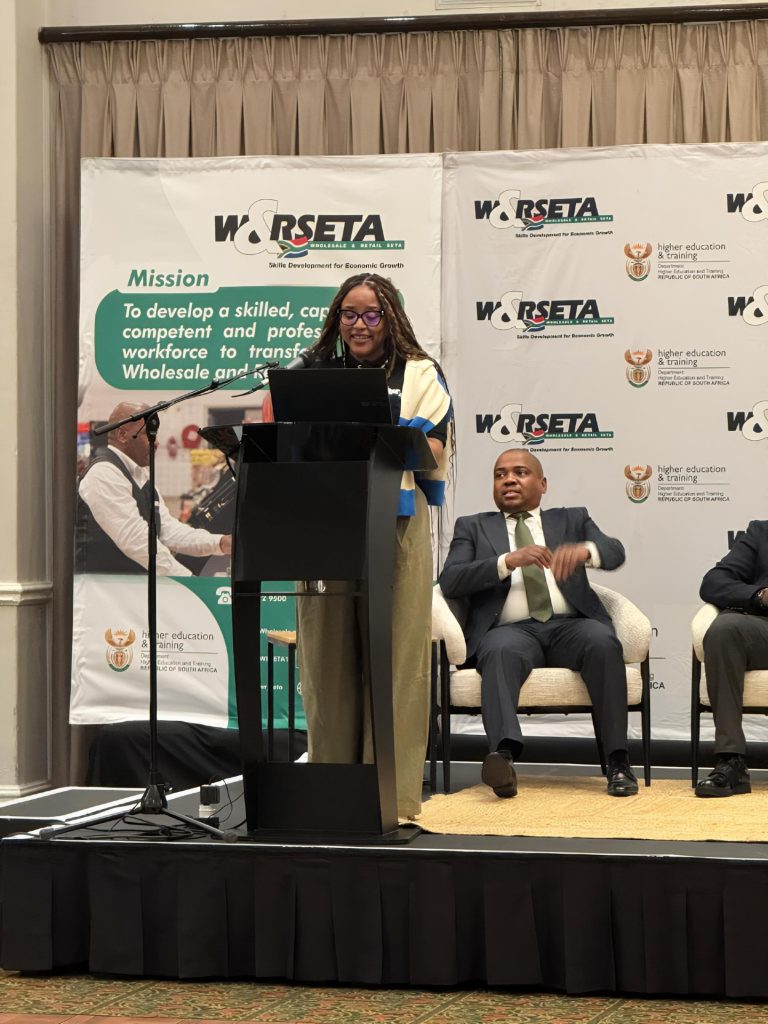
50 South African TVET graduates to depart for E-Commerce training in China

By Johnathan Paoli

Fifty South African graduates from 21 Technical and Vocational Education and Training (TVET) colleges are set to depart for China next week to undertake a fully funded, one-year e-commerce training programme aimed at strengthening digital commerce skills and promoting entrepreneurship among young people.

The group will depart from OR Tambo International Airport on Monday, as part of an international skills development initiative led by the Wholesale and Retail Sector Education and Training Authority (W&RSETA), in partnership with the Chinese Culture and International Education Exchange Centre (CCIEEC).

According to W&RSETA, the programme is designed to equip young South Africans with practical skills in digital commerce, international retail standards and global trade trends, while exposing them to one of the world’s most advanced and competitive e-commerce environments.

“The programme is mainly aimed at equipping South African youth in digital commerce towards a drive to maximise a culture of entrepreneurship largely within the retail sector,” W&RSETA said in a statement.

The selected graduates were drawn from 21 TVET colleges across the country following a competitive process.

Their participation forms part of W&RSETA’s broader international programme, which identifies students annually and facilitates their training at foreign higher education institutions, while also ensuring exposure to global retail companies.

The China-based training goes beyond theoretical learning and is expected to include hands-on exposure to e-commerce platforms, online retail operations, digital marketing, logistics and supply-chain management, as well as international consumer trends.

Participants will also gain insight into cross-border trade practices and business management in a rapidly digitising global economy.

W&RSETA has positioned the initiative as a response to the growing importance of e-commerce within South Africa’s wholesale and retail sector.

As online shopping continues to expand locally, the authority has emphasised the need for specialised skills to support innovation, competitiveness and job creation in the industry.

The programme builds on a previous cohort of 82 TVET graduates who participated in the pilot phase launched in 2023.

That group completed the one-year training in China and returned to South Africa in May 2025. W&RSETA has described the pilot as a key milestone that helped refine the structure of the programme and strengthen collaboration with Chinese partners.

The initiative forms part of the authority’s long-term strategy to develop globally competitive skills within the wholesale and retail sector.

Youth unemployment remains one of South Africa’s most pressing socio-economic challenges, with young people continuing to face limited access to work opportunities, particularly in high-growth sectors linked to technology and digital services.

Skills development programmes that combine vocational training, international exposure and entrepreneurship support are increasingly viewed as critical interventions to address this challenge.

The focus on TVET graduates is also aligned with national priorities to strengthen vocational education and ensure that training is closely linked to industry needs.

By providing international exposure, W&RSETA aims to enhance the employability of graduates while encouraging them to apply their skills in local businesses or establish their own enterprises upon returning home.

The departure will take place at the International Departures terminal on Monday morning.

Upon completion of the programme, the graduates are expected to return to South Africa with enhanced technical skills, global perspectives and entrepreneurial insight.

W&RSETA has indicated that it will continue to support and engage with programme alumni to promote knowledge transfer and contribute to the growth of South Africa’s digital and retail economy.

INSIDE EDUCATION

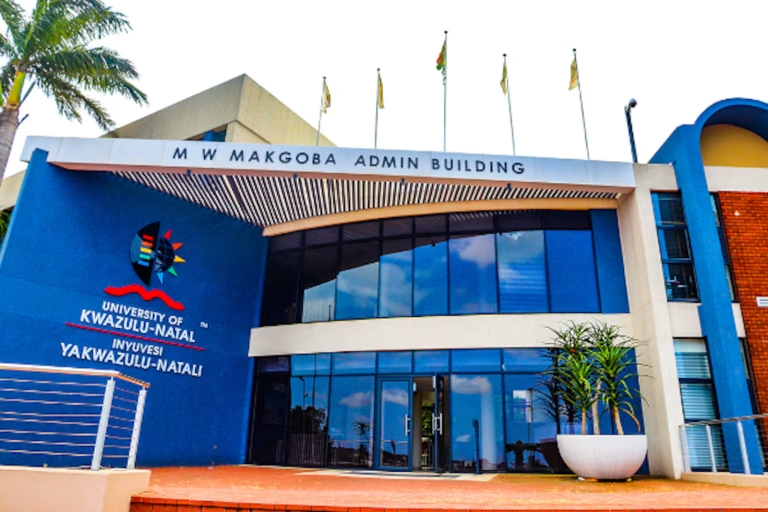
UKZN gears up to admit over 9 000 new students

By Levy Masiteng

The University of KwaZulu-Natal (UKZN) is preparing to admit more than 9 000 first-time entering students (FTENs) for the 2026 academic year, with firm offers set to be issued to successful applicants from next week.

This follows the official release of the National Senior Certificate (NSC) results scheduled for next Tuesday.

UKZN said it received an exceptionally high volume of applications, underscoring intense competition for limited study places.

“A significant number of provisional offers were issued last year, with the University receiving more than 326 546 applications. This figure reflects multiple programme choices per applicant for the 9 124 first-year places available in 2026,” the university said.

In the previous admissions cycle, UKZN received more than 290 000 individual applications for approximately 8 600 first-year places, illustrating demand that continues to far outstrip capacity.

The most sought-after programmes for 2026 are the Bachelor of Nursing, which received 27 763 applications; the Bachelor of Education, with 25 826 applications; and the Bachelor of Laws, which attracted 25 231 applicants.

UKZN’s Executive Director for Corporate Relations, Normah Zondo, said firm offers would be issued in batches once matric results are verified, provided applicants meet the conditions of their provisional offers.

Successful FTENs are urged to register within the official registration period, scheduled from 2 to 7 February.

Meanwhile, remote online registration for returning students opened on Tuesday and will close on 13 February.

Zondo said the university was well prepared for a smooth and orderly registration process.

“UKZN continues its annual practice of a strictly online registration process and urges prospective students to remain vigilant against registration scams,” she said.

She reiterated the university’s commitment to safeguarding the integrity of its admissions system.

“Legal action will be taken against any individuals who misappropriate the University’s name, logo or symbols to defraud prospective students. Places at UKZN are not for sale.”

Applicants and members of the public were advised to rely only on information published on the official UKZN website and verified social media platforms to avoid misinformation and fraudulent offers.

According to UKZN’s 2024 Annual Report, the institution registered approximately 9 230 FTENs that year, reaffirming its position as a leading destination for South Africa’s school leavers.

Zondo added that all registered students will be required to present official proof of registration to access campus facilities.

The academic year is scheduled to begin with first-semester lectures on 9 February 2026.

INSIDE EDUCATION