Home Blog Page 33

Results of 40 matric pupils frozen as exam leak probe tightens

By Thapelo Molefe

The Department of Basic Education has withheld the 2025 matric results of 40 learners implicated in a national exam leak investigation, as it moves to contain the fallout from one of the most serious breaches of the National Senior Certificate (NSC) system in recent years.

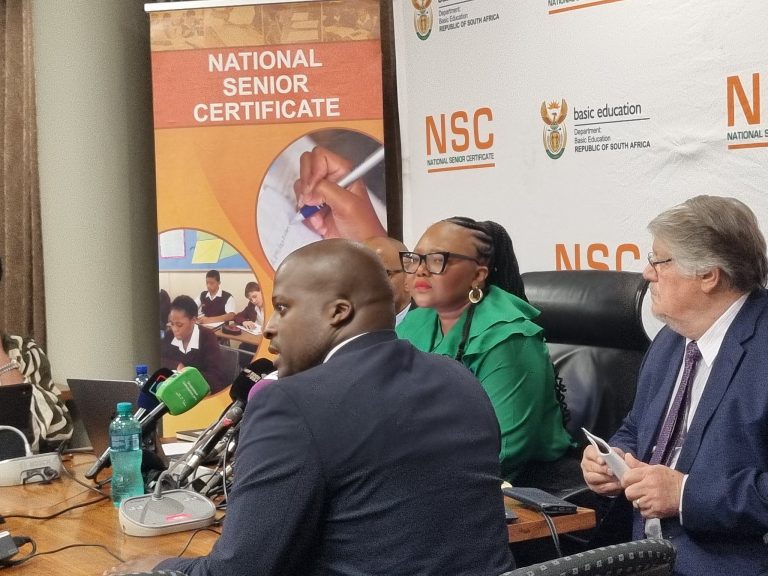
Basic Education Minister Siviwe Gwarube on Friday released the interim findings and recommendations of the National Investigation Task Team (NITT), established after reports emerged of leaked question papers and irregular conduct during the 2025 matric examinations.

Gwarube confirmed that the affected candidates will be subjected to independent disciplinary hearings after interim findings by the National Investigation Task Team (NITT) established that they had accessed leaked examination material.

“As part of these processes, each of the 40 candidates will be subjected to an independent hearing,” Gwarube said. 

“Where a candidate is found guilty by an independent presiding officer, this finding together with the recommendations will go through the provincial and national examination irregularity committees, and ultimately Umalusi will be the final arbiter.”

The hearings follow evidence that seven NSC papers were unlawfully accessed and circulated ahead of the 2025 examinations. These include English Home Language Papers 1 and 2, Mathematics Papers 1 and 2, and Physical Sciences Papers 1 and 2. 

The breach was detected after markers identified unusual similarities between learner scripts and official marking guidelines.

According to the NITT’s interim report, the leak originated from within the Department of Basic Education’s secure examination environment, where question papers are set and stored. One departmental official whose child wrote the 2025 NSC is alleged to have been involved, with evidence suggesting the learner further distributed the material.

“Candidate one received the USB with the question papers and the marking guidelines from their mother, an employee at the Department of Basic Education in Pretoria,” the report states.

Investigators interviewed 21 learners and analysed 17 written statements, ultimately identifying 40 candidates in the Tshwane area who had accessed the leaked papers. The materials were shared through USB drives, WhatsApp messages, screenshots and printed copies, with some candidates using artificial intelligence tools to structure and reformulate their answers.

Despite the breach, Gwarube stressed that the matter was localised and did not undermine the credibility of the overall examination process.

“Forty is a very small number compared to the almost 900,000 candidates who wrote the 2025 examinations,” she said. 

“Because the number of implicated candidates is so small, the NSC remains credible.”

Umalusi has since certified the integrity of the 2025 NSC examinations, allowing results to be released to non-implicated learners. However, the 40 identified candidates will not receive their results until the disciplinary process is finalised.

Department of Basic Education Director-General Mathanzima Mweli said criminal charges may also follow, particularly for learners who are legally adults.

“The new development from the NITT is that there are learners who are 18 years and above, and those learners can be pursued in terms of criminal charges,” Mweli said.

“We have done it before and we are going to do it with those learners who are 18 years and above.”

Possible sanctions include the nullification of results in affected subjects and a ban from rewriting those subjects for up to three examination sessions.

“We will not compromise the future of thousands of honest learners because of the actions of a few,” Gwarube said. 

“Those who compromise the NSC don’t only break rules, they attempt to steal opportunities from honest learners.”

The NITT’s investigation continues, with forensic examinations of electronic devices and financial records under way as the department moves to tighten exam security and prevent future breaches.

INSIDE EDUCATION

eThekwini opens applications for 2026 student relief fund, deadline 16 January

0

By Lebone Rodah Mosima 

eThekwini Municipality has opened applications for its 2026 Student Relief Fund for first-time undergraduate students who have been accepted at public universities or TVET colleges but lack financial assistance, it said on Friday.

Applications close on January 16, 2026.

The fund covers registration fees and may provide limited support towards tuition, but excludes accommodation, meals, books, transport and other related costs.

Applicants must be South African citizens permanently residing within eThekwini (proof of residence is required) and have a household income below R200,000 per year, of which proof is also required.

Applicants must meet the academic requirements for their chosen programme. Students enrolled at UNISA may be considered if they are not currently employed, the municipality said.

How to apply

Application forms can be collected from Sizakala Centres with Human Resources Centre of Excellence offices, or from the EMA offices on the 4th Floor, Standard Bank Building, 26 Matthews Meyiwa Street.

Completed forms must be submitted with proof of admission or study from a public university or TVET college, academic results, student and parent/guardian ID documents, proof of income or an affidavit, and proof of residence.

Incomplete applications will not be considered, the municipality said.

Applications must be submitted to the Human Resources Centre of Excellence, 21 Archie Gumede Street, Durban, 4001, or to Sizakala Centres with HR Centre of Excellence offices, it said.

The municipality said priority would be given to applicants who are underrepresented in terms of race, gender and disability, and encouraged students with disabilities to apply.

Applicants who are not contacted within 10 weeks of the closing date should consider their applications unsuccessful, it said.

For more information, the municipality said applicants can call 031 311 3924 or 031 322 0413.

INSIDE EDUCATION

Umalusi approves release of 2025 national examination results

0

By Johnathan Paoli

Education Quality Council Umalusi has approved the release of the 2025 end-of-year national examination results after a review of the conduct, administration, and standardisation of exams across the country, it said on Friday.

The approval covers four main qualifications: the National Senior Certificate (NSC), the National Certificate (Vocational) Level 4, the NATED Engineering Studies (N3), and the Adult Basic Education and Training certificate (ABET).

The exams were administered by the Department of Basic Education, the Department of Higher Education and Training, the Independent Examinations Board, and the South African Comprehensive Assessment Institute.

Umalusi Chairperson Yunus Ballim said at a press briefing that the Council’s Executive Committee reviewed reports from all assessment bodies and confirmed that the examinations met national standards and were conducted without any major irregularities that could affect the credibility of results.

Around 1.03 million candidates sat for exams at about 9 400 centres nationwide.

The NSC had the largest group, with more than 927 000 learners, with a total of 307 subjects examined across the four qualifications.

Standardisation of marks, a key part of Umalusi’s quality checks, ensures fairness by adjusting overall mark distributions rather than individual scores.

All assessment bodies received approval to release their results.

In certain subjects, some minor adjustments slightly upward or downward to reflect the standardisation process were made, and any candidates implicated in irregularities or dishonest acts will have their results withheld pending investigation, according to the organisation.  

The boards are required to submit improvement plans by 13 March.

While Umalusi acknowledged improvements in technical and vocational colleges, recurring issues with internal assessments remained a concern, including non-compliance with internal assessment requirements and some irregularities during examinations.

Ballim congratulated the Class of 2025 and expressed gratitude to teachers, parents, guardians, support staff, and communities who helped learners reach this milestone.

He encouraged students who did not succeed to persevere and emphasised the importance of maintaining the integrity of South Africa’s national examinations.

The NSC results will be released by Basic Education Minister Siviwe Gwarube on Monday, and published in accredited newspapers on Tuesday.

INSIDE EDUCATION

EFF takes aim at Gauteng Education over R594m mobile classroom irregularities

0

By Johnathan Paoli

The Economic Freedom Fighters (EFF) in Gauteng on Friday criticised the provincial education department over “reckless and unjustifiable” irregular expenditure of R594 million linked to the procurement of mobile classrooms in the 2024/25 financial year.

In a statement, the party said the spending was flagged by the Auditor-General, which found the Gauteng Department of Education (GDE) failed to comply with Construction Industry Development Board (CIDB) requirements when appointing contractors for the projects.

The EFF said the expenditure was an indication of wider governance failures, and came as public schools in the province faced severe overcrowding.

“The EFF asserts that Gauteng’s education crisis is not only the result of a lack of planning, but also of lack of political will and foresight from the ANC-led government. While hundreds of millions of rands are squandered on irregularly procured and grossly overpriced mobile classrooms, learners remain overcrowded, unplaced, and denied their constitutional right to basic education.”

According to the EFF, the department procured 905 mobile classrooms.

The party said a breakdown of the costs showed that each unit amounted to nearly R660,000 to procure and install.

It said that figure exceeded the cost of constructing a permanent brick-and-mortar classroom, and was more than three times the prevailing market rate, which it estimated to be around R100,000 per mobile unit.

“This level of overpricing raises serious concerns of maladministration, profiteering and unrepentant corruption,” the party said, adding that the funds could have been better spent on durable infrastructure that addresses long-term capacity challenges.

It said the department’s own 2024/25 annual report acknowledged a backlog of more than 2,500 classrooms across the province.

The party said that instead of addressing this structural deficit through sustainable investments, the department continued to channel “hundreds of millions of rands into temporary and inflated measures” that failed to resolve overcrowding.

The party also accused the provincial government of failing to honour political commitments.

It said that in Premier Panyaza Lesufi’s maiden State of the Province Address in 2023, he pledged that 18 new schools would be built in Gauteng.

In 2025, Lesufi conceded that only three of those schools had been completed and were fully functional, an admission the EFF said confirmed that the crisis was the result of stalled delivery rather than unforeseen circumstances.

Citing departmental figures, the EFF said that at the start of the 2025 application season, 41% of Gauteng schools were either full or oversubscribed.

Of the 857 oversubscribed schools, 579 were primary schools, meaning that the pressure on infrastructure was already entrenched at foundational learning levels.

The party said these multiple failures had fed directly into the 2026 admissions crisis, which had left 4,858 learners unplaced, mainly in densely populated urban areas.

Tshwane and Ekurhuleni were highlighted as particularly affected, with a high proportion of schools already oversubscribed during the 2025 application cycle.

The party also criticised the department’s learner placement policies, saying proposals to place learners from overcrowded no-fee schools into fee-paying public schools were ignored. Strict enforcement of feeder zone policies entrenched inequality and exacerbated overcrowding, it said.

It called for an immediate end to inflated temporary infrastructure contracts, alongside an accelerated programme to build permanent schools.

The department had not responded to the EFF’s allegations at the time of publication.

INSIDE EDUCATION

Naledi Pandor appointed Nelson Mandela University Chancellor

0

By Levy Masiteng 

Dr Naledi Pandor has been appointed as the next Chancellor of Nelson Mandela University, the institution’s council said, with the former cabinet minister due to take up the role on 1 April for a four-year term.

“She is a distinguished activist, academic, former Cabinet Minister and an internationalist, whose lifelong commitment to education, social justice and public service aligns deeply with the values and mission of the University,” said chairperson of the university council, Judge Nambitha Dambuza.

Pandor will succeed Dr Geraldine Fraser-Moleketi, whose term ends on 31 March.

Fraser-Moleketi served two terms as Chancellor.

Dambuza credited Fraser-Moleketi’s tenure with advancing the university’s values and growth, citing her “dedication, hard work and commitment to advancing Nelson Mandela University, its values and ethos that characterised her term of office”.  

Nelson Mandela University is a public university based in Gqeberha, Eastern Cape.

It was formed in 2005 through the merger of three institutions and operates across seven campuses, including one in George. It has a student population of about 27 000.

The university was renamed in 2017 to Nelson Mandela University after previously being known as Nelson Mandela Metropolitan University. The Nelson Mandela Foundation said at the time the institution was the only university in the world to carry the former president’s name and that it was among a limited number of institutions globally given formal approval to use it.

Pandor, who holds a PhD and has served in several senior cabinet portfolios, was appointed Minister of International Relations and Cooperation in2019, after prior positions that included minister in the education and higher education departments.  

INSIDE EDUCATION

KZN Health opens applications for pharmacy, psychology internships

0

By Lebone Rodah Mosima 

Applications for pharmacy and psychology internship posts opened online on Thursday after the province reprioritised funding to support training programmes that had come under pressure because of budget constraints.

KwaZulu-Natal Health MEC Nomagugu Simelane said prospective interns could apply through the department’s website.

“This recruitment is a crucial step in strengthening our health system and securing the skills our province needs,” Simelane said.

The provincial department had faced criticism after saying it would freeze some non-medical internship placements because of financial constraints, prompting concern from unions and parts of the pharmacy sector about the impact on newly qualified graduates and service delivery.

Simelane said the province had “successfully reprioritise(d) national funding” to address staffing pressure in training and internship programmes, with the aim of stabilising pipelines and improving pharmaceutical and psychological services in public facilities.

Addressing concerns from some facilities about whether pharmacy interns would be placed in the current financial year, she said placements would go ahead.

“So as we were having an engagement with the facility, one of the challenges that they reported to myself and the head of department was the fact that this year, according to them, they have not received any pharmacy interns,” she said.

“We have dealt with that matter. We are taking in pharmacy interns this year”.

She said management discussions had already taken place and interns would soon be deployed.

“[W]e are making sure that those interns are actually at the facilities and they are where they are supposed to be by Monday”.

Pharmacy graduates must complete a one-year internship under a registered tutor before moving on in the professional pathway, according to the South African Pharmacy Council.

The National Department of Health administers an online system for medical internship and community service placements, and lists pharmacists and clinical psychologists among the professions that must complete a year of remunerated community service to register for independent practice.

The KwaZulu-Natal Department of Health said it was committed to a recruitment process that was “transparent, fair and efficient”, and that it would work with relevant stakeholders to ensure such.

INSIDE EDUCATION

EFF Youth Command launches #SizofundaNgenkani campaign

0

By Charmaine Ndlela

The Economic Freedom Fighters Youth Command (EFFYC) has launched its Sizofunda Ngenkani (We will learn by any means necessary) campaign across universities and TVET colleges, calling on the education sector to ensure that schooling is delivered against all odds.

The campaign forms part of an annual push by the party’s youth structures at the beginning of the academic calendar, with previous iterations focused on preventing financially struggling students from being locked out of study because of debt, fees or administrative barriers.

EFFYC media liaison Phumelelani Mshumi told Inside Education that the main objective of the campaign is embedded in its name — to ensure that the doors of learning remain open to all deserving students, particularly blacks.

“To achieve this, we have dispersed ourselves across the higher education sector at all levels to ensure that students are able to access institutions of higher learning,” Mshumi said.

He said that the youth command operates through special branches that are established in communities, households, workplaces, and educational institutions, wherever young people are found.

In the context of higher education, the branches are located where a student base exists, and it is supported by branch leadership structures.

“We are also privileged to have won a popular vote in several Student Representative Councils (SRCs) across various institutions. We primarily operate through these branches and, by extension, through the SRCs we have won,” he added.

Mshumi said that on the ground, the EFFYC will assist students with academic and financial appeals, ensuring that deserving students are able to access education even if they did not initially apply.

“If you are a deserving student, we want to make sure that you enter the gates of learning,” he said. “However, because the higher education system in South Africa is highly overwhelmed, it is almost natural that protests will arise organically.”

He said that the EFFYC anticipates challenges such as NSFAS delays, unpaid allowances, and institutions claiming to be at full capacity despite the presence of deserving students.

Addressing the issue of online registration, Mshumi said there are two key aspects to supporting students. Firstly, universities must be responsive to the reality that many black students do not have access to computers or reliable internet.

“We urge institutions to run both systems — online registration and on-campus registration,” he said. “However, it would be anti-intellectual to oppose online registration entirely. Online registration reflects progress in the South African education system.”

He stressed that the EFFYC is not opposed to online registration, but insists that universities must be responsive to the country’s socio-economic context, particularly for first-time entering students. This includes providing physical registration options or telephonic assistance where necessary.

Mshumi also welcomed National Student Financial Aid Scheme (NSFAS) efforts to cut out “middlemen” and pay allowances directly to providers from 2026, saying the “middlemen schemers” often “embezzle” funds without adding value.

“We wholeheartedly accept the move of accommodation allowances for students in private residences being paid directly to accredited accommodation providers, and we will keep a keen eye on how the process is administered going forward,” he said.

INSIDE EDUCATION

Nestlé infant formula recalled over toxin concerns

0

By Levy Masiteng 

Nestlé has issued a voluntary recall of a specific batch of its NAN Special Pro HA infant formula after identifying a potential safety risk linked to cereulide, a toxin that can cause illness in babies.

The warning applies to products sold across South Africa and those exported to Namibia and Eswatini.

“This recall is issued as a precautionary measure to protect the safety and wellbeing of babies,” the company said.

“Parents and caregivers are urged to stop using the affected product immediately.”

The affected product is the 800-gram tin intended for babies from birth to 12 months, with batch number 51660742F3.

According to Prudence Moilwa, Head of Complaints and Investigations at the National Consumer Commission (NCC), the formula was manufactured on June 15, 2025, and has a best-before date of December 15, 2026.

Cereulide can cause symptoms such as vomiting, nausea, abdominal pain, and diarrhoea, and in severe cases may lead to dehydration and other complications, particularly dangerous for infants.

“The safety and wellbeing of babies is our absolute priority,” Nestlé said in a statement.

Parents are advised to check the batch code, which can be found on the base of the tin, and return affected products to the retailer where they were purchased for a full refund.

“Consumers who may have these batches should not feed this product to their baby,” Nestlé said.

“If you have been prescribed one of these batches, please destroy the product and speak to your healthcare professional for advice on an alternative.”

While no confirmed cases of illness linked to the recalled batch have been reported so far, parents are urged to remain vigilant.

“Anyone concerned about their baby’s health should contact a healthcare professional immediately,” Moilwa said.

Nestlé said that all other products and batches not listed in the recall remain safe to consume.

“We sincerely apologise for any worry or inconvenience caused to parents, caregivers and customers,” the company said.

INSIDEEDUCATION

DBE confirms publication of 2025 NSC results in accredited newspapers

0

By Johnathan Paoli

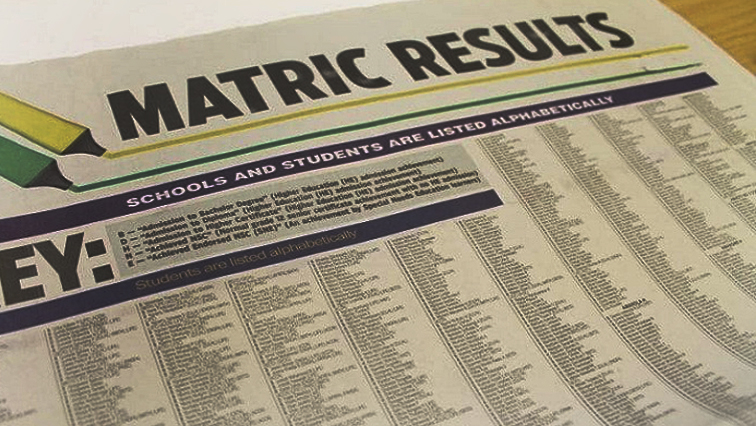
The Department of Basic Education has confirmed that the 2025 National Senior Certificate (NSC) examination results will be published in accredited newspapers on Tuesday, maintaining the format that has been used in recent years.

The results will be listed using candidates’ examination numbers and their subject outcomes only, without names, surnames, or identity numbers, a measure the department says is essential to protect learners’ personal information while ensuring broad public access.

The department’s acting Director of Communication and Research, Terence Khala, said the department is legally obliged to continue publishing the results in this format, citing a standing court order granted on 18 January 2022.

According to Khala, the order expressly permits and requires the publication of matric results in a pseudonymised manner, and it remains in force.

“In line with our commitment to the rule of law, the Department of Basic Education is of the view that it is legally obliged to publish the results in this pseudonymised format,” he said.

The confirmation comes amid an ongoing legal dispute with the Information Regulator, which has said that publication in newspapers may breach the Protection of Personal Information Act (POPIA) and that alternative access methods should be prioritised.

The dispute escalated in late 2024 when the regulator issued an enforcement notice and later imposed a R5 million administrative fine through an infringement notice on 23 December 2024.

In December 2025, a full bench of the Pretoria High Court set aside the regulator’s enforcement and infringement notices, clearing the way for results to continue being published using exam numbers.

The DBE says it will oppose the regulator’s application for leave to appeal.

The Minister of Basic Education, Siviwe Gwarube, is scheduled to announce the overall outcome of the examinations on Monday.

The department said the continued publication of NSC results in newspapers remains an important and accessible method of obtaining results timeously.

This is especially significant in communities with limited or unreliable internet access, where newspapers continue to play a critical role in information dissemination.

INSIDE EDUCATION

Almost 10 000 learners still awaiting placement in Mpumalanga schools

0

By Lebone Rodah Mosima 

Mpumalanga launched its 2026 Back to School campaign this week, where it said that nearly 10,000 learners were still awaiting placement ahead of the new term.

Education MEC Lindi Masina, speaking at Mathupa Primary School, urged school governing bodies, parents and communities to work together to ensure schools reopen “smoothly and safely” next week.

The provincial education department also said Mpumalanga had experienced persistent, above-average rainfall since schools closed in December, affecting grounds and infrastructure.

“It is therefore essential that all school governing bodies act with urgency to ensure that their schools are clean, orderly and ready to start with learning and teaching on the very first day,” Masina said.

“School governing bodies are equally encouraged to lead these efforts with commitment and determination, mobilising support and resources where needed and embodying the spirit of the Rhandza Xikolo Xa Wena (Love Your School) Campaign.”

Masina said learner admissions for the 2026 academic year were conducted between 2 May and 31 August 2025, and that enrolment was expected to reach about 1.03 million.

While districts had completed admissions, 9,826 learners were still awaiting placement, she said, mainly in fast-growing towns including Mbombela, Emalahleni, Mashishing, Steve Tshwete and Secunda. The highest number of unplaced learners was in Gert Sibande District, followed by Nkangala and Ehlanzeni.

“The department wishes to assure parents of the affected learners that everything humanly possible will be made to ensure the admission of their children in schools for the 2026 academic year,” Masina said.

She attributed pressure on schools to migration from rural to urban areas and more applications outside feeder zones.

The department had strengthened its provincial admission management system, established admission inquiry structures at district and circuit level, and set up help desks to handle placement queries, she said.

“Our message is clear, every child of school-going age must be admitted and no learner must be left outside the classroom.”

Masina said the department had improved learning support, and had reached 95% textbook coverage in 2024, with top-up books delivered for grades 4 to 11 in April 2025 and full textbook provision for Grade 12 learners in July 2024.

Digital learning support materials, including learner tablets, were planned for 2026, she said.

She said 32,103 educator posts had been approved for 2026 following consultations with unions through the Education Labour Relations Council, with temporary and substitute posts extended where needed.

The department delivered new learner furniture to 342 schools in 2025, benefiting 20 310 learners, Masina said, and the National School Nutrition Programme would continue providing daily meals to learners in Quintile 1 to 3 schools from the first day back.

“For many children, this daily meal restores dignity, energy, and concentration, and we remain fully committed to sustaining and strengthening this programme,” she said.

“It is based on this context that schools are encouraged to established vegetable gardens to supplement the school nutrition programme.”

On scholar transport, Masina said 67,221 learners would benefit this year, with safety standards and vehicle capacity limits closely monitored, especially in flood-affected areas.

“The department wishes to urge parents to register their children in schools within their residential areas to avoid instances where learners are driven past nearby schools, because this poses some risks in the long run,” she said.

Masina said 221 schools were identified for maintenance and renovations in 2025, with 77 projects completed, while new school construction had faced delays due to persistent rainfall.

She said the department had procured 130 mobile classrooms to address overcrowding and storm damage, and that 28 schools suffered storm damage in the past week, with officials assessing sites and coordinating repairs.

Masina also called for action to curb bullying, substance abuse, vandalism and violence at schools.

“We must create nurturing environments where every learner feels safe, respected and supported,” she said.

“Mental health awareness, kindness, tolerance and responsible behaviour must be encouraged at all times.”

“As a provincial government, we confirm our commitment to supporting schools, strengthening learning outcomes, addressing infrastructure challenges, improving accessibility, and ensuring accountability and service excellence.”

INSIDE EDUCATION