Home Blog Page 327

Gauteng Education to seek legal advice following reinstatement of Parktown Boys principal

NYAKALLO TEFU|

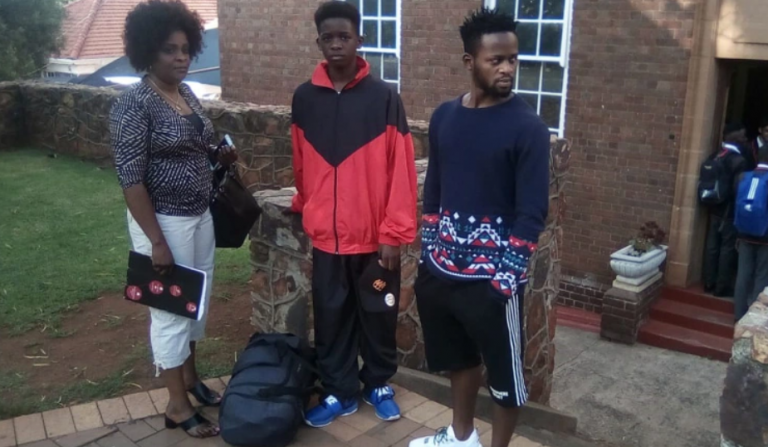
The Gauteng Department of Education (GDE)said it is seeking legal advice following the reinstatement of the Parktown Boys High School principal, Malcolm Williams.

Williams was dismissed in December 2020 for his role in the events that led to the death of Grade 8 learner, Enock Mpianzi, during a school outing that was not sanctioned by the department.

The incident led to Williams being charged with three counts of misconduct, two of which were upheld following disciplinary proceedings.

The first allegation was that he unjustifiably prejudiced the administration, discipline, or efficiency of the department by undertaking a school excursion without prior approval.

The second allegation was that he failed to ensure that a correct rollcall for all the pupils who went on the camp was maintained.

READ: Forensic Report into Enock Mpianzi’s Death Finds the Lodge, Parktown Boys’ High Teachers Liable and Negligent

On Wednesday, the Education Labour Relations Council (ELRC)ordered that the department allow Williams to commence with his duties.

“The ELRC decided that Mr Williams must be reinstated and reimbursed for the salary he did not receive for the six months that he has not been paid,” said GDE spokesperson Steve Mabona.

Williams is set to receive an amount of R285,594 — equivalent to six months of his salary by July 30.

Williams argued that his dismissal on two counts of alleged misconduct was substantively and procedurally unfair.

Mabona said Gauteng education is disappointed by this decision taken by the ELRC and that, as a department they will seek legal advice on what action to take.

“We are studying the decision and seeking legal counsel on the matter. We are not fully happy with the outcome but also realise that this matter has been dragging for too long, negatively affecting those involved,” said Gauteng Education MEC Panyaza Lesufi.

READ: MEC Panyaza Lesufi says Gauteng government won’t oppose Enoch Mpianzi R10m lawsuit

Limpopo schools to begin with Coding and Robotics

NYAKALLO TEFU| 

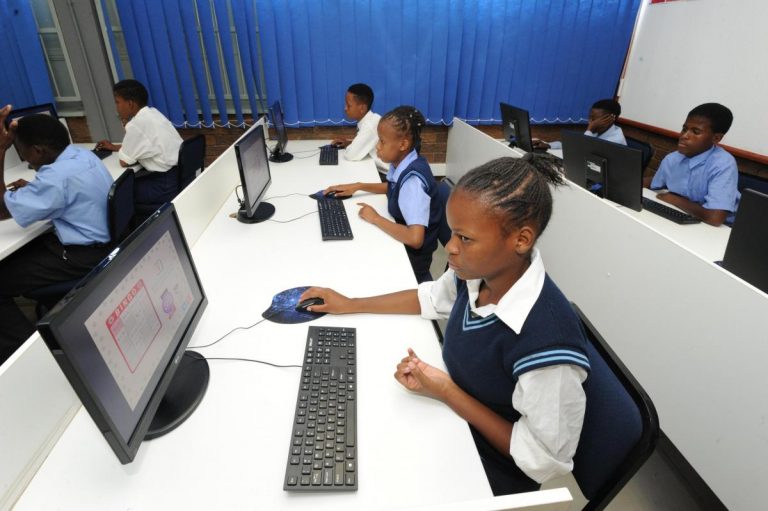
133 primary schools Limpopo have been piloted for the Coding and Robotics programme for the 2021/2022 financial year.

This is according to Limpopo Education MEC Polly Boshielo who, at the Department of Basic Education budget vote debate, said the inclusion of Coding and Robotics in the curriculum is important for young people across the country.

“Coding and Robotics are designed to provide learners with knowledge, values and skills needed for the 4th Industrial Revolution,” said Boshielo.

The Limpopo Education Department has embarked on a project to give grades one and eight pupils tablets as part of its e-learning project.

“As a department, we will be offering in-house training courses to 200 targeted educators through the department’s coding club,” said Boshielo.

She said this club is composed of educators who are knowledgeable in this field and will be used as an important resource in rolling out the project.

The Covid-19 pandemic has changed the dynamics of teaching and learning forcing learners, educators and policy makers to embrace the new normal.

“The pandemic has compelled us to accelerate our efforts towards embracing the 4th Industrial Revolution, access to technology is no longer meant for the privileged few but it is a basic necessity for all,” said Boshielo.

The MEC said R228 million has been set aside for the rollout of e-learning in the province.

“A two-prompt approach will be followed in rolling out the e-learning strategy, the first one is implemented at 106 Maths Science and Technology schools with smart classrooms,” said Boshielo.

Boshielo said the second one will be the provisioning of tablets to learners and laptops to educators in schools in the province.

General Education Certificate to be rolled out in two years, says Motshekga

NALEDI SHOTA|

Basic Education Minister, Angie Motshekga, says the General Education Certificate (GEC) is scheduled for a roll-out in 2023. 

Motshekga revealed this while delivering her department’s budget vote debate in the National Council of Provinces on Tuesday. 

She said the policy framework for the introduction of the GEC had already been provisionally approved by quality assurer, Umalusi, and that the process is underway to gazette and invite for public comments. 

“A blueprint document on assessment options, linked to career-pathing and future work skills, has been developed.  This blueprint will inform learners, teachers, parents and the system in general about the suitability of learners to undertake an academic, vocational or occupational track in Grades 10-12,” she said. 

The department first spoke of plans to introduce the GEC in 2019 and received a backlash for allowing learners to exit school in grade 9. However, the department did clarify that the GEC was not an exit certificate but would give learners an opportunity to access further training in college, for example, at a level below grade 12. 

Briefing parliament on the GEC in 2019 Deputy Minister Reginah Mhaule said the GEC would also assist with the dropout rate. 

“Currently, there is a high dropout rate before Grade 12, peaking in Grades 10 and 11 (15.2% in 2012). Approximately a third of young people aged 15-24 years (3.4 million), are not in employment, education or training (NEET) and 2 million of whom have not finished Grade 12.

“Collectively this points to the need for a standardized assessment and a qualification to usher learners into different pathways at the end of compulsory schooling in the form of the GEC,” said Mhaule at the time. 

In her budget vote speech, Motshekga also said the department was also working at having standardised assessments at grades 3, 6 and 9 and that the standardised assessment system will be piloted in 2022. 

READ: 2021-22 DBE Budget Vote: Minister announces additions to the curriculum

Former Mbilwi school teacher accused of rape released on bail

NYAKALLO TEFU| 

The former Mbilwi Secondary School teacher accused of rape has been granted of R3000 bail by the Thohoyandou Magistrates court.

Makhuvha Solomon is facing three counts of rape.

A former learner from Mbilwi Secondary opened a case of rape against Makhuvha, saying he raped her several times in 2018.

Makhuva resigned from the school following his arrest on 14 May.

READ: 50-year-old teacher from Mbilwi Secondary School accused of rape

NPA Spokesperson Mashudu Dzangi said Makhuvha has been given strict bail conditions.

“He must not communicate with the victim in any manner, he must not leave Limpopo province without informing the investigating officer and he is to report to Sibasa Correctional Services,” said Dzangi.

The former teacher is set to appear in court again on 16 August 2021.

READ: 50-year-old Limpopo teacher accused of rape has resigned

DBE Budget vote debate: Eastern Cape Education MEC says corruption by officials is rife in his province

NYAKALLO TEFU| 

Eastern Cape Education MEC Fundile Gade said progress at public schools in the province has been delayed by corrupt government officials.

Gade spoke at the Department of Basic Education’s budget vote debate where he highlighted challenges faced by his department when it comes to improving public schools.

“People who are in positions to ensure public schools are taken care of have not done so because of greed and selfishness,” said Gade.

Just last month, five suspects are including former chief education specialist Noxolo Gwarube, former superintendent general Mthunywa Ngonzo, former education deputy director-general Monwabisi Tywakadi, deputy director for IT Tyrone Fourie, and Hermanus Smith, 47, who is the director of Siegesmund Trust appeared in the East London Magistrates court in connection with IT fraud amounting to R59 million.

The five were arrested by members of the Hawks East London Serious Corruption Investigation Team. Their complete list of charges include corruption, fraud, attempted fraud, theft and contravention of the Public Finance Management Act (PFMA). 

READ: Senior Eastern Cape Department of Education officials in court for R59 million IT fraud

Gade said despite these challenges, the province is working towards changing situations in schools especially the ones in rural areas.

“We have 228 projects in various stages of construction. But our construction programme and the built environments economy has been severely affected by the Covid-19 pandemic,” said Gade.

Gade said the construction projects will be resuscitated in the current financial year and in 2022.

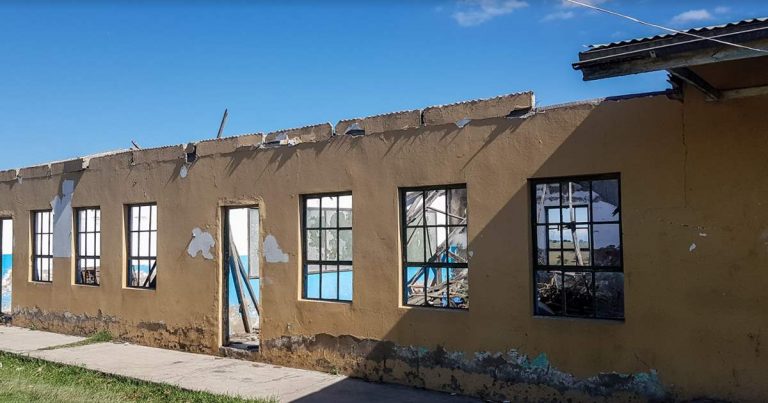
In April, DBE Minister Angie Motshekga revealed in the provincial infrastructure statistics that majority of schools in the Eastern Cape fail to meet the minimum standards prescribed under the South African Schools Act.

The statistics also revealed that a third of schools in the province had not received textbooks and more than 600 were not led by principals at the start of the first term.

“The public/private partnership can a leverage as an important mechanism for addressing our school infrastructure backlog,” said Gade.

Gade said they will continue to engage with treasury and other relevant government structures, including the private sector and civil society partners in exploring all options to resourcing the rollout of school infrastructure.

READ: DBE and provincial education departments to be held liable for infrastructure backlogs

TVET colleges to receive help from UJ to improve audit outcomes

NALEDI SHOTA|

The University of Johannesburg (UJ) has received a R11-million grant to help improve the audit outcomes in the public sector with a special focus in the Technical and Vocational Education and Training (TVET) colleges. 

The grant has been awarded to the university’s school of accounting by the Education, Training and Development sector SETA and the Financial Services SETA, and it will be used to enhance its short learning programme courses and training opportunities for people in the public sector. 

“This grant will allow us to develop the interventions that will assist the TVET colleges in improving their financial management skills, which is expected to improve the audit outcomes subsequently. 

“In this regard, UJ will be providing support to 400 TVET colleges finance personnel. Additionally, those TVET colleges with qualified opinion (qualified report), disclaimer of opinion (disclaimer report), adverse opinion (adverse audit report) will benefit from mentoring,” said UJ’s Professor Tankiso Moloi. 

Presenting the 2019/20 audit outcomes of the 50 TVET colleges in parliament in November the office of the Auditor-General said while there had been improvements in the TVET sector there was still “reliance on auditors to identify errors in financial statements”. 

Business executive in the Auditor-General, Kgabo Komape, told members of the portfolio committee on higher education, science and technology that the submission of financial statements without errors and the quality of financial submission after audit had decreased in that financial year.

READ: Bridging programmes for under-prepared college students

She, however, said there were still areas of concerns. 

“ [They]  include material misstatement in submitted AFS [audited entity financial statements], consequence management, procurement management and strategic planning management.

“There is a lack of discipline on how to execute internal control activities and the risk functions don’t identify the risks to ensure they are mitigated against,”  she said. 

Komape also added that the financial health of colleges such as Motheo and Northern Cape Rural college were dire and that she was not sure they would continue to operate in the future. 

Members of the portfolio committee, at the time, said the presentation was “bleak” and that the governance of TVET colleges was “poor”.

At the time, there were also outstanding audits from the Orbit, Taletso, Tshwane South and Northern Cape Urban colleges.

In the statement, UJ said that from the additional grant from the SETAs, the UJ school of accounting will offer mentorship in public sector accounting, risk management, internal audit and financial controls as well as the supply chain management to relevant TVET College finance professionals.

“This funding helps tremendously in our efforts to also strengthen the digital competencies of our students. Our team is excited to be part of the national efforts to improve financial management in the public sector, specifically in the TVET colleges.

“We hope that the cohort of students from these programmes will go all the way to improve their respective systems of financial management and governance, which we hope will result in the decline in unauthorised expenditure, irregular expenditure, and fruitless and wasteful expenditure,” said Moloi.

SIU freezes more bank accounts of companies linked to the GP department of education tender for sanitizing schools

NALEDI SHOTA|

The Special Investigating Unit (SIU) will freeze seven more bank accounts of companies that were irregularly appointed by the Gauteng Department of Education to decontaminate schools. 

Last month, the SIU announced that it had been granted an order to freeze 14 bank accounts and assets to the value of R40.7 million belonging to 14 companies that were also irregularly appointed to do work in schools. 

Today, the SIU said the value of the bank accounts that had been frozen for the seven accounts was R22.4 million. 

The department has been under fire after an investigation by Daily Maverick revealed that it had spent R431 million on decontaminating schools between June and August last year.

That investigation further established that there was no need to decontaminate the schools as they were not occupied for months because learners were at home during the hard lockdown. 

The SIU has said that the seven companies were irregularly appointed along with over 200 others. 

READ: SIU freezes accounts of decontamination companies contracted by GDE

“Special Tribunal order prohibits Chachulani Group Investment Holdings, Muta Investment Holdings, Netvision Energy Savers, Psychin Consulting, Home Ground Trading 1105, Mpale Investments Holdings, and Naledzi Investment Trust from dealing with the funds held in the bank accounts.

“The companies began dissipating the funds received from the Gauteng Department of Education, upon receipt. Traces of the funds show that the companies made large payments to unidentified recipients who have, in turn, disposed of them,”  reads a statement by the SIU. 

The SIU has further revealed that some of the companies were appointed through whatsapp by senior officials in the department. 

Nzimande warns public of fraudster using his identity on Facebook

NYAKALLO TEFU| 

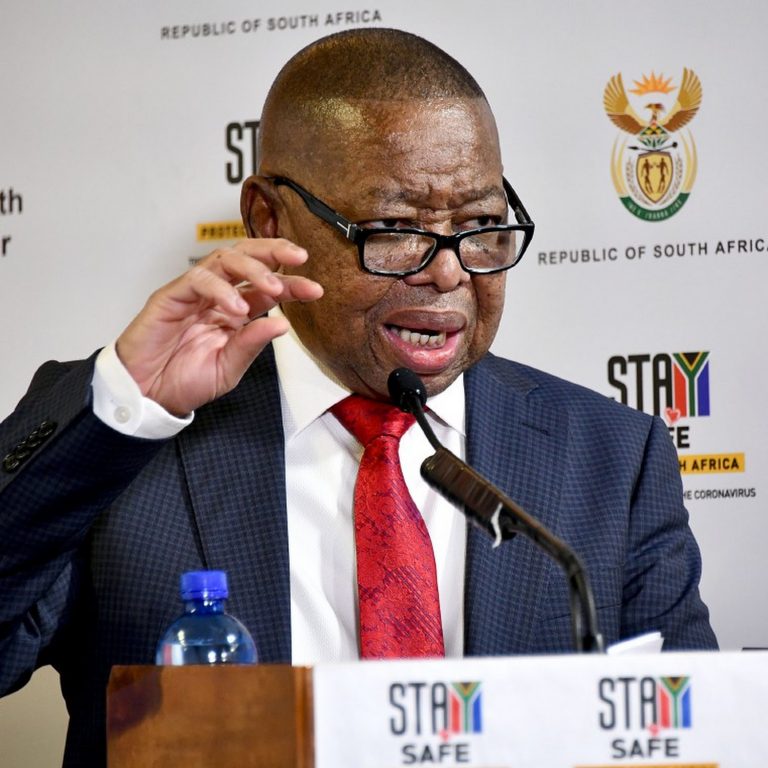
Minister of Higher Education and Training Blade Nzimande has distanced himself from a Facebook page operating using his identity and soliciting money from people.

The page where the name and surname of the 63-year-old minister is used, urges people to send money to support a “worthy course of student funding”.

“It is unfortunate that we have individuals who go to the extent of masquerading as a Minister to defraud members of the public, using the genuine plight of students,” said Nzimande.

Nzimande called on the social media platform, Facebook, to investigate the page that has been using his name.

Adding that all other social media pages bearing his name are fake.

“The only social media pages that might be regarded as authentic are those of the Department of Higher Education and Training and the Department of Science and Innovation,” said Nzimande.

The minister said members of the public must report to the police if they suspect or might have already been scammed by this fraudster.

“I am aware of the essential role played by social media for effective and responsive communication, and I am committed to continue to engage with the public through genuine and credible social media platforms,” said Nzimande.

According to ZeroFOX – a platform that identifies and remediates targeted phishing attacks – credential compromise and brand hijacking have increased the opportunity for hackers looking to target high-profile accounts. This has especially been the case since the Covid-19 global outbreak at end 2019.

ZeroFOX said threat activity has greatly increased in April 2020, and then again in June 2020, likely linked to new work habits and a shift to fully digital communications.

TUT suspends all contact classes

NYAKALLO TEFU| 

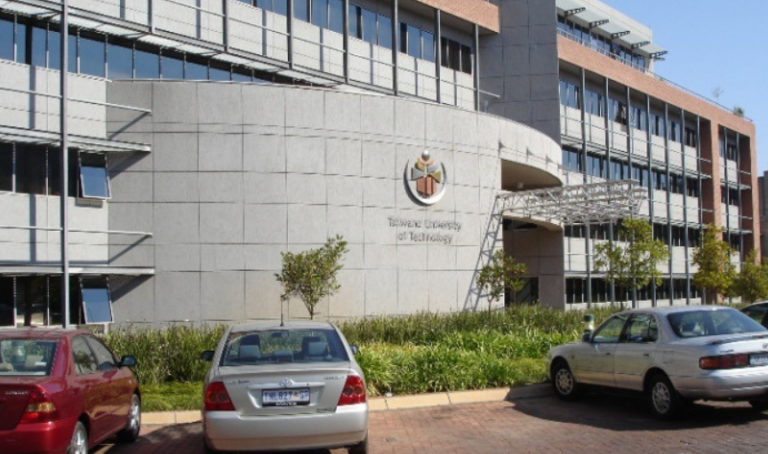
Students at the Tshwane University of Technology (TUT) will now go back to online classes after the institution suspended contact classes on Monday.

The suspension of contact classes comes after a student from the university succumbed to Covid-19 related illnesses last week.

TUT spokesperson Phaphama Tshisikhawe said the higher education institution does not have an exact date of when they will resume contact classes.

“This will be determined by the cases of the coronavirus in the country. It is not only because of the Covid-19 related death that we are experiencing in the university, it is mostly because the infections that are increasing,” said Tshisikhawe.

Adding that the institution believes a second student from the university has succumbed to the deadly virus.

The number of coronavirus cases continue to increase across the country. Statistics from the Department of Health show that the total number of positive cases now stands on the verge of 1.7 million infections with 57 063 people having lost their lives to the virus since the start of the pandemic.

The department said South Africa has recorded 3825 new Covid-19 infections along with 89 related deaths in the past 24 hours.

Tshisikhawe said TUT students will be provided with data bundles so that they are able to attend online classes.

READ: ‘Schools cannot open if all health protocols are not in place’ say teachers and parents

‘Schools cannot open if all health protocols are not in place’ say teachers and parents

NALEDI SHOTA|

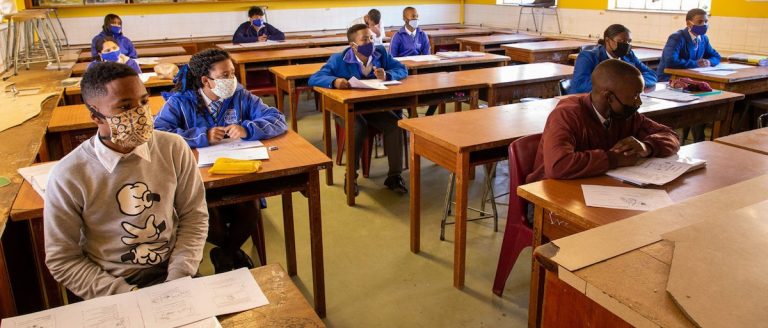
Teachers and parents want the Department of Basic Education (DBE)  to use the month of June to ensure that primary schools and special education needs schools have all the resources required to allow for the full-time return of learners back in class. 

On 26 July all primary school learners and all learners in special education needs schools are expected to return back to class full-time, as opposed to the rotation system that has been in place since last year. This was gazetted by DBE Minister Angie Motshekga last month. 

Speaking to Inside Education on Monday, General Secretary for the National Association of School Governing Bodies (NASGB) Matakanye Matakanye said the move for all primary school learners to return to school was, in part, initiated by parents because they saw their children are losing out on a lot of teaching time. 

“We saw that in future they will be referred to as the lost generation. When they go to school once a week and skip the next week, when they return, they have already forgotten what they did last week,” said Matakanye. Adding that because it is not clear when the pandemic will end, children cannot be kept at home forever. 

READ: The Northern Cape sees sharp increases in Covid-19 infections in schools

In the gazette, Motshekga said the head of department must provide all reasonable support to enable the safe return of learners to the traditional timetable. 

Matakanye said the NASGB called on the department of basic education to put all measures in place that will continue to save the children and teachers from Covid-19. 

“We thought that they would have put mobile classes by now to add on the classes that are already there … What we are also thinking is that  they could put shields around the desks , like those from the chemists, a shield that will protect this child against this child. 

“They must not lose any step from now. From now onwards all steps to ensure that our children are protected must be put in place,” he said. 

The gazette had suggested that learners can also be taught outside, where practicable, but even in this case all health and safety measures on Covid-19 must be followed. 

The DBE also said schools need to use all the available space to prevent overcrowding in a classroom. 

READ: “We are at risk. They do not care about us” – Free State Teacher

Before the opening of schools last year in June, following the hard lockdown, the five unions represented in the Education Labour Relations Council including the South African Democratic Teachers Union (Sadtu), the National Professional Teachers’ Organisation of South Africa, the National Teachers’ Union, the South African Teachers’ Union and the Professional Educators Union released a statement with non-negotiables before schools could be opened.

These included the need for proper infrastructure which includes toilets and classrooms, the provision of sanitizers, masks and soap, personnel available for screening and the reduction of class sizes. 

On Monday Sadtu General Secretary Mugwena Maluleke told Inside Education that the non-negotiables would remain until the pandemic is over. 

“Returning all primary school and special needs education learners to school obviously depended on those things,” he said. 

Already the DBE has flagged some of the issues raised by the teacher unions as what is “likely to compromise” the compliance of schools with health protocols. 

In parliament last week, the department said there were 14 issues that may make schools not ready and these include:  adequate water, sanitation, hygiene packages, screeners and the provision of Covid-19 essentials.

Maluleke said if the non-negotiables were not in place then schools could not open. 

“Teachers must not be overburdened when the state is not providing the necessary resources. Teachers are already at school but the issue is how do you support them to ensure that there is  still social distance, enough sanitizers for everyone and screeners and so forth. So June must be used to assess whether the schools are going to be ready,” he said. 

The DBE told the Portfolio Committee on Basic Education last week that Director-General Mathanzima Mweli will start weekly one-on-one engagements with provinces to see their readiness and also that on a weekly basis , provinces will be expected to report progress they are making to comply with health protocols to minimise the spread of the virus. 

Teachers who spoke to Inside Education said they were worried about having learners back full-time because as it is the health protocols are not being adhered to at school. 

A primary school teacher in KwaZulu-Natal, who asked to remain anonymous because is not permitted to speak to the media, said at her school they only have sanitizer and none of the other protocols are being followed. 

Another teacher from the Eastern Cape said the school only provides sanitizer for learners and teachers have to bring their own. The teacher said last year classes used to be cleaned throughout the day after two periods, for example, but that now was not the case. And also that there were no screeners at the school. 

However, the teachers said they were happy to have the children back at school because they also worried that the rotation system was not working in the learners’ favour. 

READ: Union calls for schools in South Africa to close as Covid-19 third wave hits

Maluleke said the rotation system has exacerbated the inequality in the education system. He said children who attend schools with resources have long gone back to school full-time. 

“We are having a generation catastrophe here in our country. Where the working-class children, in particular poor, have been taught four times a month whereas they are going to have to compete at matric level with somebody who in grade five was taught every day. 

“Inequality is a problem. It is now the time for the government to provide resources to ensure that there is additional personnel to ensure that they provide mobile classes as a way of mitigating this issue of perpetuating inequality that is going on.

“June must be used for that purpose so that by the time the 26 of July comes those particular things are in place and therefore we are able to see an African child receiving education,” said Maluleke.

READ: DBE Portfolio Committee supports return to class full-time for primary and special education learners