Home Blog Page 341

The Presidency denies Free State province school construction tender fraud

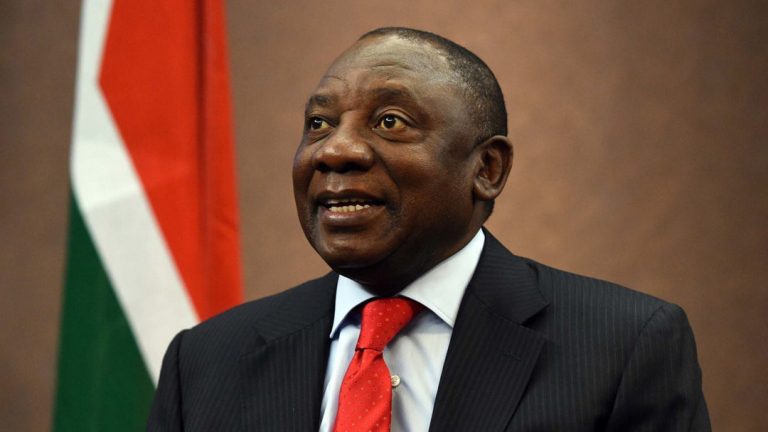
The Presidency has issued a statement denying allegations of corruption made against President Cyril Ramaphosa ’s involvement in a “dubious tender”.

Reports state that a school construction tender was awarded to Ramaphosa’s Shanduka Foundation by Free State ‘s department of education without following proper protocols.

According to The Star newspaper, the tender was never advertised and there were some discrepancies in the awarding of the tender.

“The Star has seen an affidavit from an official of the Free State Department of Education which says that there may have been discrepancies in the awarding of the tender,” said the newspaper.

Adding that the department of public works has confirmed to the newspaper that some important documents relating to the schools construction are missing and that Reserve Bank shareholder, Fanie Fondse, has laid criminal charges against Ramaphosa at the Sandton Police Station for corruption related to Shanduka’s tender bid to build schools in the Free State.

In response the president’s media team said the newspaper reports were not clear on the details of the complaint and that the original article contained glaring inaccuracies and a misrepresenting of facts.

“Shanduka Group never received a tender for the construction of any schools in the Free State,” said Ramaphosa ‘s media team in response.

“Neither President Ramaphosa nor any companies in which he held interests has ever received any benefit from school construction in the Free State or anywhere else in the country.

“On the contrary, both President Ramaphosa and Shanduka have made substantial financial contributions towards the construction and development of schools,” said Ramaphosa ‘s spokesperson Tyrone Seale in a statement.

The Star also reported that the Free State MEC for education, Tate Makgoe, was also a member of the Shanduka Trust board at the time, while Ramaphosa served as the chairperson.

To this, Seale responded that Ramaphosa was neither a director nor a shareholder in Shanduka Group in 2015, “at the time he was alleged to have ‘persuaded’ the provincial department to award the non-existent contract,” he said.

“He exited the business in November 2014,” added Seale.

Adding that neither President Ramaphosa, nor any companies in which he held interests, has ever received any benefit from school construction in the Free State or anywhere else in the country.

“On the contrary, both President Ramaphosa and Shanduka have made substantial financial contributions towards the construction and development of schools,” said Seale.

What the Netball World Cup can do for SA

KARIEN JONCKHEERE|

Stands are currently empty and stadiums silent. But the good news for South African sport fans is that the next major international event planned for these shores is only in 2023, meaning there’s hope that the raucous cheers will have returned by then.

Two years from now, South Africa hosts the 2023 International Netball Federation (INF) World Cup. While planning and preparations have been somewhat affected by the Covid-19 pandemic, it’s far from the impact it has had on events such as the Olympic Games, which had to be postponed by a year and even now hangs in the balance.

The woman tasked with the World Cup planning process is Johannesburg-born Reabetswe Mpete, who knows what it takes to stage a major sport event.

Having completed a degree in sport communication and then an honours degree in sport management at the University of Johannesburg, Mpete joined the South African Sports Confederation and Olympic Committee (Sascoc), working on the organisation’s Operation Excellence programme and delivering South African teams to the 2016 Olympics and 2018 Commonwealth Games, among other tournaments. 

“I started in this position in October 2020. My role is project manager and this entails putting together an event strategy for the World Cup and meeting the key timelines set out by the International Netball Federation,” said Mpete.

“The planning is going well and with the support of all three spheres of government, we are working really hard to deliver a successful World Cup. Covid-19 has impacted a few planning processes but we are adapting and learning from other major events on different protocols that have worked.

“Before this, I worked as a high performance coordinator at Sascoc, working with Olympic athletes who were supported on a programme called Operation Excellence. I also worked on the delivery of Team SA to major games. All the experience working with elite athletes and international organising committees helped prepare me for my current role,” said Mpete, who admits she’s always been passionate about sport, playing hockey and netball at school and now trying her hand at golf.

The INF is thrilled to have Mpete on board, doing the groundwork for the tournament. “Planning is going really well for the event. The steering board is established and we are delighted to have Reabetswe Mpete on board to drive the planning forward,” said INF head of events Lindsay Impett. 

“We are in the fortunate position that the Netball World Cup is taking place in 2023 and at this stage Covid has not significantly impacted the planning process. We are currently in discussion with the regional federations regarding the five regional qualifiers that are due to take place in 2022 to ensure all teams are in the best possible position to compete for places at the Netball World Cup 2023.”

1 June 2019: Fans in full voice supporting the Eastern Cape Aloes in a Telkom Netball League fixture at the University of Pretoria’s Rembrandt Hall. The recent netball World Cup, hosted by England in 2019, boosted interest levels in the sport massively.

Changing perceptions of women’s sport

While some might have preferred the 2023 Rugby World Cup to be hosted in South Africa, instead of the netball version, research has shown that attitudes towards women’s sport have changed dramatically as a result of tournaments just like this one.

The most recent Netball World Cup, hosted by England in 2019, boosted interest levels in the sport massively.

“Off the back of what was a thrilling summer of women’s sport, in a survey of over 4 000 spectators of the event conducted by UK Sport, the government’s major events agency, in partnership with Sheffield Hallam University, it was found that 97% of respondents said they felt the Vitality Netball World Cup raised the overall profile of women’s sport in the UK. 61% of those surveyed said they felt happier than normal when attending the event,” said a report published by UK Sport. 

“England Netball calculates that 20.1 million adults said they were proud that England had hosted the 2019 Vitality Netball World Cup, and 5.1 million people that followed the event agreed that the Vitality Roses [England’s national netball team] are an inspiration to all girls. Plus, 26.6 million Brits said they would recommend netball to their daughters (real or imagined), this is an increase of 2.5 million people compared with last year [2018].”

1 June 2019: On-court action between the Eastern Cape Aloes and the Mpumalanga Sunbirds during a Telkom Netball League fixture. Netball is the biggest women’s sport in South Africa.

The report added: “After the captivating event came to an end, England Netball noted a 1 000% increase in visits to its online netball session finder compared to two weeks prior, over 900 new school registrations for its Under-11 Bee Netball programme and 71% of clubs saying they had more people showing an interest in playing than before the tournament, according to England Netball’s Big Netball Conversation survey.”

Mpete is hoping for a similar scenario when South Africa’s turn comes around. “This role I am in is an opportunity to be part of history and change the way women’s sport is seen in the world.

“The perception of women’s sport is continuously changing and getting better through the coverage it is receiving. However, we do need more support from corporate.”

At the 2019 Netball World Cup in Liverpool, the Proteas pulled off an impressive win over Jamaica’s Sunshine Girls. It was a breakthrough victory over the then second-ranked team in the world that secured them a place in the semifinals, where they lost narrowly to 11-time champions Australia. That was their best result since the South African side claimed silver on their readmission to the tournament in 1995. 

“That has played an immense role in proving that the Spar Proteas are capable of finishing top of the podium,” said Mpete. “The growth of women’s sports in South Africa can be attributed to the successful performances by the Spar Proteas, the Momentum Proteas and Banyana Banyana,” she added, referring to the national women’s cricket and football teams. 

An African showcase 

As for the possibility of the Proteas making the most of their home-ground advantage and lifting the trophy in 2023, Mpete said: “It would definitely change the way women’s sport is seen and supported in South Africa.”

Cape Town has been selected as the city that will host the World Cup. It is a sporting event that brings together about 200 athletes and more than 50 officials from around the world, where 16 teams will battle it out for the world title currently held by New Zealand.

This will be the first time the tournament is held on the African continent and Mpete said South Africa will bring a new flavour to the proceedings.

NSFAS funded students to receive laptops on 18 April

NYAKALLO TEFU|

Students funded by the National Student Financial Aid Scheme (NSFAS) will receive their laptops on 18 April 2021. 

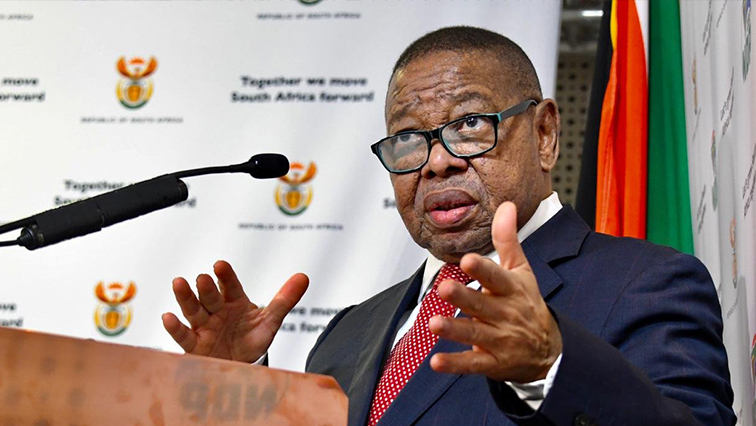
This follows a mandate from the Minister of Higher Education, Science and Innovation, Dr Blade Nzimande. 

The financial scheme says students are now able to order their digital learning devices online. 

“As previously communicated, NSFAS has developed a student Digital Learning Device Online Order portal for qualifying NSFAS students to order their devices on the NSFAS website,” said NSFAS Chief Corporate Services Officer, Sibongile Mncwabe. 

The issue of digital devices at higher learning institutions escalated in 2020 when the coronavirus pandemic broke out and schools as well as institutions of higher learning were forced to switch to online learning. 

At the beginning of the year, NSFAS announced that it had a shortfall of funds due to the disruptions caused by Covid-19 shock. 

At the time Nzimande said even with the Covid-19 crisis, the department had to continue paying NSFAS allowances – even though universities were closed.

“This means we had an extended academic year which we did not allocate additional money for. Secondly, we had budget cuts across government departments. Thirdly, because of the deteriorating economic situation, were many NSFAS applicants who were not previously meeting the funding requirements for NSFAS now do,” said Nzimande at the time.

Inside Education reported that the NSFAS shortfall has since been funded through the reprioritising of voted budget funds in the department.

Mncwabe said non-NSFAS funded students who require a device should consult their institutions as they will remain responsible for the payment of the device.

“Consultations with the university sector have neared completion allowing university NSFAS funded students to commence ordering their devices through our portal,” said Mncwabe. 

The financial aid scheme says it will communicate further with students in the next week. 

Grade 11 learner Stabbed in Gauteng School

NYAKALLO TEFU|

A Grade 11 boy from Anchor Comprehensive High School allegedly stabbed a Grade 12 boy learner from Emadwaleni Secondary School in Orlando West on Thursday.

This comes just a few days after a Limpopo teenager committed suicide after an alleged bully was recorded assaulting her.

“Reasons for the violent act are still unknown and a case has been opened with the South African Police Service [SAPS],” said Gauteng Education MEC Panyaza Lesufi.

Lesufi said his department will deal accordingly with bullies at schools. 

“The Gauteng education department will also send psycho-social support to the school to assist all those affected by the stabbing incident.

“The Grade 11 learner has been suspended with immediate effect, pending a disciplinary process in due course,” said Lesufi. 

Media reports and social media recordings have shown an increasing number of bullying incidents in schools across the country’s provinces.

“Our schools should be the centres of excellence, not sites of violence and other anti-social behavior.

“We call on parents to play their role and talk to their children about ill-discipline and violence as this is a societal challenge,” said Lesufi.

According to a study by Stellenbosch University researcher in the department of economics Linda Zuze, the occurrence bullying has become increasingly evident in South African schools. 

“This phenomenon has become visible through mainstream media reports and viral social media video clips, resulting in public concern about the lack of safety in South African schools,” said Zuze.

Another incident of bullying took place in school toilets at Dinwiddie High School in Germiston this week. Social media recordings show one pupil choking the other while she lies on the ground. The pupil continues to pull the other pupil’s hair as she tries to hit back.

Lesufi said: “Information at our disposal indicates that this incident took place on Monday 12 April 2021 and the school intervened immediately.”

He said following preliminary investigations on 14 April 2021, one learner was placed on precautionary suspension as per the school’s Code of Conduct and the parents of both learners were duly appraised.

According to Zuze, there are multiple factors that can contribute to bullying behaviour in teenagers, these include:

·     Feeling insecure. 

·     Picking on someone who seems emotionally or physically weaker can provide a feeling of importance, popularity, or control.

·     Lack of awareness. Some teenagers don’t know or realise that it’s unacceptable to pick on others who are different because of size, looks, race, or religion, particularly those that frequently see this behaviour from other people in their lives. 

The Gauteng Education Department says the learner at Dinwiddie High school will face a disciplinary hearing by the School Governing Body on 20 April 2021. 

Learners at the school will also receive psycho-social support.

Sustained Healthy Water Solutions for South African School

Community-based purification project at Reneilwe Primary School inaugurated on World Water Day

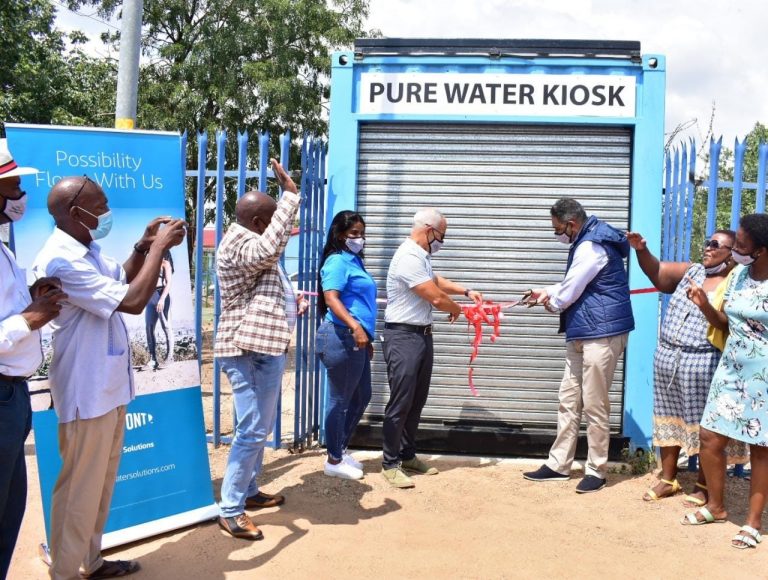
An American company, DuPont (NYSE:DD), donated a multi-technology water treatment plant that will provide safe, pure water to Reneilwe Primary School and the local community of Temba, Hammanskraal (north of Pretoria).

The area’s water sources are afflicted by high levels of nitrate and phosphate contaminants, making municipal water unsafe to drink. The new ultrafiltration membrane and ultraviolet light system removes impurities from groundwater pumped out of a new borehole and can supply up to 4,000 liters of healthy drinking water per hour, driven by solar power. A water kiosk has been built to dispense it to the local community and generate revenue for the school to operate the system sustainably. DuPont Water Solutions sponsored the project and partnered with Kusini Water, a South African NGO to get water flowing in just four months, as permission for the project was granted in October 2020

The U.S. Embassy in South Africa also collaborated on the project, helping to ensure five “water champions” from the community that have been receiving training from Kusini Water since November 2020 to autonomously operate and maintain the plant.

DuPont Water Solutions sponsored the project, donating a multi-technology water treatment plant that removes impurities from groundwater pumped out of a new borehole and that can supply up to 4,000 liters of healthy drinking water per hour, driven by solar power.

Kusini Water CEO Murendeni Mafumo said, “In South Africa, one out of three schools do not have access to safe water and clean sanitation, putting our school children at risk of serious sickness from waterborne diseases. We are delighted that the community of Temba is now one of over 50 sites in the country we have helped in our mission to provide five million people with five million liters of safe water in five years. Our thanks go to DuPont Water Solutions and the US Embassy for partnering on this vital community-led project.”

Today’s announcement coincides with recognizing World Water Day. “World Water Day is all about the vital importance of fresh water,” said Semano Sekatle, regional commercial manager, DuPont Sub-Saharan Africa.  “We are delighted to be involved with such a beneficial project as this, which contributes to Sustainable Development Goal 6 – Clean Water and Sanitation. With the right partnership approach, no one in this world need suffer from a lack of safe water, as effective and highly advanced technology is available that can be community-run.”

Pure Water Kiosk
Kusini Water said Temba is now one of over 50 sites in the country it has helped to gain access to safe water.

“I applaud Kusini Water and their partner DuPont Water Solutions, who are helping to ensure that access to clean water and sanitation are a priority and reality for communities that have had little to no access in the past,” said Frank Whitaker, Minister Counselor for Public Affairs at the U.S. Embassy in Pretoria.

About DuPont Water & Protection

DuPont Water and Protection is a global leader in creating water, shelter and safety solutions for a more sustainable world; enabling its customers to win through unique capabilities, global scale and iconic brands including Kevlar®, Nomex®, Tyvek®, Corian® Design, GreatStuff™, Styrofoam™, and FilmTec™.

About DuPont

DuPont (NYSE: DD) is a global innovation leader with technology-based materials and solutions that help transform industries and everyday life. Our employees apply diverse science and expertise to help customers advance their best ideas and deliver essential innovations in key markets including electronics, transportation, construction, water, healthcare and worker safety. More information about the company, its businesses and solutions can be found at www.dupont.com. Investors can access information included on the Investor Relations section of the website at investors.dupont.com.

About Kusini Water

Kusini Water is a social enterprise that builds water treatment systems from nanotechnology and macadamia nut shells. Our systems bring clean, safe drinking water to people in rural, peri-urban and informal settlements throughout the African continent.

About US Embassy Pretoria

The Public Affairs Section of the U.S. Embassy Pretoria works with the media, cultural and educational institutions, private organizations and other South African organizations to enhance mutual understanding between the people of the United States and South Africa. The Public  Affairs  Section  informs  and  engages  with  the  South  African  public  through  the dissemination  of  information  about  the  United  States,  professional  and  academic  exchange programs, cultural performances and exchanges, and youth programs.

15-year-old Mbilwi school girl arrested

NYAKALLO TEFU|

A 15-year-old girl from Mbilwi Secondary School in Thohoyandou has been arrested after for allegedly assaulting another learner who later died in an apparent suicide.

The apparent suicide allegedly happened after a video went viral on social media, where two students can be seen in an altercation and the one slapping another fellow learner across the face several times. 

The incident has caused a stir on social media, as many call for #JusticeForLufuno. 

“The victim reportedly went home in the afternoon and on arrival, she allegedly locked herself in the room and consumed an overdose of tablets,” said Brigadier Motlafela Mojapelo.

Inside Education reported yesterday that the Limpopo Department of Education is investigating the death of a grade 10 learner at Mbilwi Secondary School, in the Vhembe East education district, after a video of her being assaulted went viral.

According to Mojapelo the learner was found by her mother lying unconscious and was taken to Siloam hospital where she was certified dead on arrival.

The police said a case was opened on Wednesday morning after the incident took place on Tuesday. 

“An inquest docket has been opened and police investigations are continuing,” added Mojapelo. 

Mojapelo said the arrested child will be dealt with in accordance with the Child Justice Act.

Meanwhile, Limpopo Education MEC, Polly Boshielo together with Health MEC, Dr. Phophi Ramathuba will on Thursday 15 April 2021, visit Mbilwi Secondary School and the family of the deceased. 

More details to follow after the meeting takes place.

Unions welcome some new conditions for the employment of teachers but question others

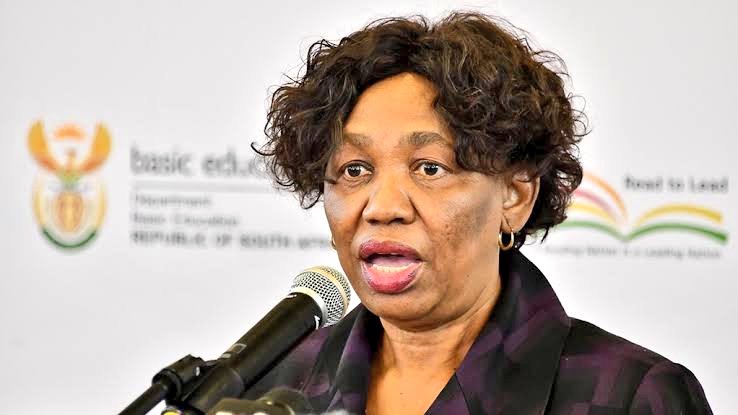
Teachers’ unions have welcomed the new conditions for the employment of teachers gazetted by Basic Education Minister (DBE) Angie Motshekga. However,  some unions have said that some offenses should be moved from the indefinite dismissal categories – a lifetime ban from teaching – towards a more restorative justice.

New regulations were published in the government gazette by Motshekga on Friday, last week under the Employment of Educators Act and were released this week on Tuesday.

The new rules and conditions for the employment of educators outline the range of sanctions for various categories of teacher misconduct. The sanctions range from one year for what is considered light misconduct to a lifetime ban.

The misdeeds range from murder, sexual misconduct, having a sexual relationship with learner and sexual harassment to theft, bribery, drug use and possession as well as corruption.

According to the gazette, teachers found guilty of theft, bribery and corruption will be banned for five years and can re-apply for their jobs afterwards, having proved that they are rehabilitated.

Those found guilty of serious crimes including sexual harassment and misconduct will be permanently dismissed and will not be taken back by the department.

“Any teacher who is found guilty of committing an act of sexual assault on a learner, student or other employees or having a sexual relationship with a learner of the school will be shown the door and not rehired,” said Motshekga.

Executive Director for the National Professional Teachers’ Organisation of South Africa (Naptosa) Basil Manuel said the union supported some of these new rules and conditions, but the union believes some people can rehabilitate.

Manuel said Naptosa advocates for limiting the period of punishment.

“Say a person smacked a youngster in the heat of the moment. And that person has been found guilty and eventually dismissed. Now, should that person be prevented from coming back forever?

“We say no. There must be a period which this person serves where they are completely out of the school. But after having gone to a place where they can prove they have been assisted with dealing with anger management, they should be allowed to return.

Manuel said the gazette allows teachers who were dismissed for physically abusing children to return to teaching after four years.

 “They will have to re-apply for teaching posts and will not necessarily return to the same school,” said Manuel.

However,  if a teacher commits a sexual offense against a child, or a person that is mentally incapacitated, that may be an adult but is classified as a child, it will be that the person can never come back into the classroom, said Manuel.

He explained that the gazetted rules allow teachers to reapply for teaching five years after they have committed fraud.

But there are other rules in which Naptosa is not in agreement.

Manuel said the gazette also advocated the lifetime ban on teachers found to be using illegal substances such as drugs.

“The use of illegal substances such as drugs has been categorised under unforgivable misdeeds. And we know with drugs – people go into rehab and they get sorted – we are asking whether this should be moved from the indefinite section [the lifetime ban] to a lesser sentence,” said Manuel.

We simply cannot condemn people forever. This is why we say we will go through the gazette very carefully, he said.

He added that Naptosa is about restorative justice. That the union wants people to be able to rehabilitate.

The regulations also outline the procedure to rehire some of the teachers.

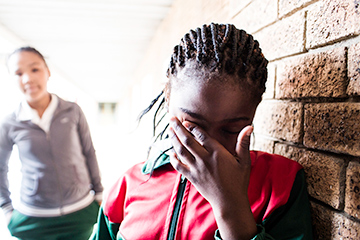
Grade 10 learner from Limpopo school dies after bullying video goes viral

NYAKALLO TEFU|

The Limpopo Department of Education is investigating the death of a grade 10 learner at Mbilwi Secondary School, in the Vhembe East education district, after a video of her being assaulted went viral. 

A video caused a stir on social media, where the girl is seen being slapped across her face multiple times     by a fellow learner. 

The incident took place on Monday. In the video, other learners can be heard in the background cheering the perpetrator, who is also a grade 10 female learner.

The department of education in Limpopo said it was alerted of the video on Tuesday morning. 

“It is quite disturbing to witness this level of violent behaviour among young people,” said Limpopo MEC for education Polly Boshielo.

The cause of death of the learner is not yet known and the department said it is investigating. 

“The victimized learner is reported to have since passed away, however the cause of the death is unknown,” said Boshielo. 

Boshielo said the department is waiting for a formal report on the cause of death from the relevant authorities. 

In order to aid learners who witnessed this and were affected, the department on Tuesday has sent support to the school. 

“The Limpopo department of education has appointed Learner Support Agents who are based in the 10 education districts across the province to offer emotional support to vulnerable learners,” said Boshielo. 

The MEC has strongly condemned such conduct at schools, adding that this behaviour will not be tolerated. 

“We strongly condemn such conduct that has turned our schools into horrendous havens of those who have no regards for their peers,” said Boshielo. 

Bullying is wrong and will never be tolerated in our schools, added Boshielo.

Historic debt: The crisis in student funding

Student historic debt to universities has escalated to approximately R14 billion.

Analysts say this has caused a sustainability crisis in our higher education institutions.

Universities South Africa (USAf) said this crisis has been ongoing for decades and that it is now time for a government-led policy process that produces a long-term, sustainable solution.

USAf’s Chief Executive Officer Professor Ahmed Bawa said universities, while being anxious to ensure that students do continue their studies and graduate, are also committed to being financially viable. He added that this is why higher education institutions seek to ensure that the debt levels are minimised.

“Student debt cannot possibly be resolved at the institutional level.

“USAf must signal now, as we did signal in December 2017, that the long-term sustainability of this bursary programme is of deep concern to us,” said Bawa.

He added that the perennial challenge of the further accumulation of student debt accrued by students who fall outside of the National Student Financial Aid Scheme (NSFAS) threshold in family income requires a government-led approach.

Research shows that universities have been experiencing declines in government subsidy on a per capita basis over the last few years. This, together with government’s proposal for the regulation of tuition fee increases, the cuts in funding for research and innovation and the challenges related to student funding conspire to drive growing concerns over the sustainability of the institutions and the sector.

In his presentation to the ANC national executive committee (NEC), the department of higher education, science and innovation minister, Blade Nzimande, recommended even further cuts to university subsidies.

Nzimande was tasked by government to cover the R5.7 billion NSFAS shortfall that had earlier led to the department’s decision to cap first-time university entrants.

The decision led to a nation-wide strike that ended in the death of a bystander shot by police during their clashes with students. The student demands included the write-off of student debt by government and that universities should allow students owing them money to register for the current financial year.

Nzimande said the NSFAS shortage will be paid by R3.09 billion in voted funds previously allocated towards university subsidies and the infrastructure money that was set aside for Technical and Vocational Education and Training (TVET) colleges.

Bawa said: “Year-by-year, these budgetary constraints nibble away at the effectiveness of the higher education system undermining its status as the continent’s strongest one and as one that is globally recognised as being highly productive.”

Nzimande also admitted that his department did not have a plan to fund students referred to as the “missing middle”.

The “missing middle” refers to students who do not meet the NSFAS financial eligibility criteria but still struggle to afford higher education. These students are referred to as the missing middle as many are not able to access higher education due to the inability to source bank loans and other sources of funding.

In his presentation to the ANC NEC, Nzimande said much of the debt at higher education institutions is carried by missing middle students, both current and past students.

“There are different estimates of the numbers of students in this category, as the institutions do not have accurate socio-economic data. The Ministerial Task Team appointed by the Minister in 2016 estimated the figure to be approximately 20% of undergraduate students,” said Nzimande.

In 2016, an approved pilot project was established to test possible funding models, which became the Ikusasa Student Financial Aid Programme (ISFAP), to develop funding and support model for poor and missing middle students.

The original intent of the pilot was to address the feasibility of granting loans/bursaries with progressive reducing subsidies as household income increases for the “missing middle” students

Nzimande said the original modelling assumed that government would cover full or part of the equity required to cover bad debt, but this assumption was not supported by National Treasury.

“A loan -based system would be very difficult without government support. Amongst other reasons, because in all modelling done, the bad debt, capital repayment, and capital interest was always bigger than the repayments and interest paid by the student,” he said.

Adding that the original modelling, ISFAP assumed that government would cover full or part of the equity required to cover bad debt, but this assumption was not supported in interactions with National Treasury,” he said.

Nzimande said The ISFAP model does not provide a universal solution to issues of missing middle funding required.

The work also needs to take into account the substantial changes in the student funding environment since 2018, the student debt issues in the system, and the many other demands on State funding for higher education and training such as postgraduate funding support, as well as the fiscal context. This work will form part of the policy review process to be undertaken by the Department, said Nzimande.

In March, Deputy Higher Education Minister Buti Manamela said: “We cannot have this unsustainable debt situation because universities will basically collapse and so that’s the one thing that will be involving all the stakeholders in coming up with a sustainable solution.”

Former University of Free State vice-Chancellor Professor Jonathan Jansen said it was important that everyone paid back their student debt once they started getting an income so that others could also go to school.

Jansen said historic debt is not something that can “just be erased” and that it required a major re-thinking of the national budget

“What some institutions are doing – letting some register with outstanding debt or extending the registration dates is putting a patch on the sore, that is not solving the problem. We need a systemic resolution of this problem,” he said.

Jansen made the recommendation that government take half of the debt and divide it proportionally to the 26 public universities over the next five years.

“This will immediately assure vice chancellors and their team that they will get that money,” he said.

DUT extends dates for online registrations

NYAKALLO TEFU|

Online and remote learning at the Durban University of Technology (DUT) will commence on Monday 12 April 2021 for new students. 

The university also announced that it has extended the date for online registration for new and returning students to 16 April 2021. 

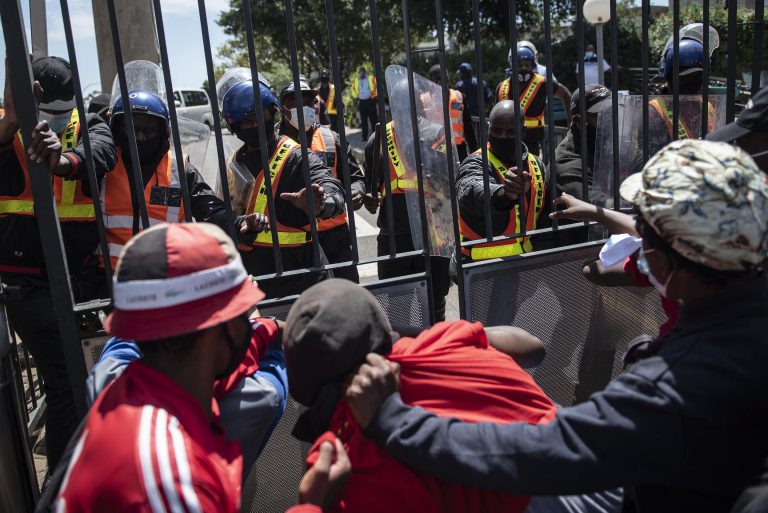
Remote and online learning at DUT continues after management shut down all its campuses following violent clashes between students and police. 

Students at DUT and surrounding campuses are fighting against financial exclusion and have said they will return to the streets again this week.

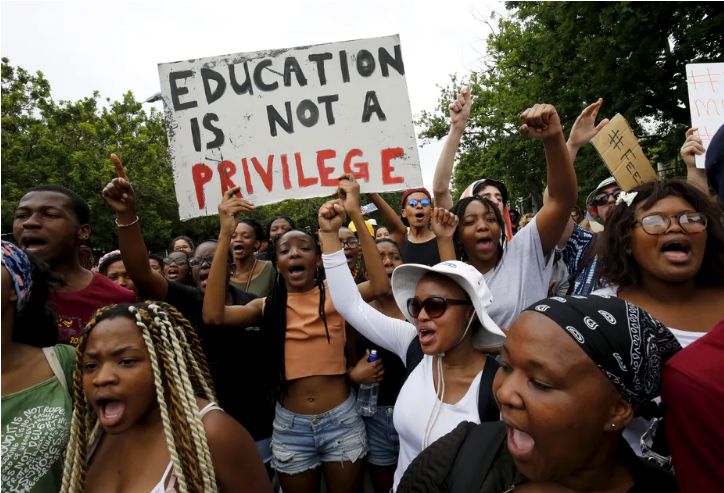
University students across the country have been protesting, calling for an end to financial exclusion. Another demand is that historical debt at higher learning institutions be scrapped. 

A bystander was killed during clashes between the police and Wits University students last month in Braamfontein

Students at DUT and surrounding campuses said they have been angered by the lack of response to their grievances from management since February 2021. 

Last week, prospective students flocked to the institution hoping to register for the current academic year. 

DUT said the walk-ins were a result of fake social media posts inviting walk-ins to register. 

However, student leaders said the walk-ins were not a problem but rather the university’s inability to implement Covid-19 regulations for in-person registrations.

DUT SRC president Zabelo Ntuli said management needs to allow students to register on campus and not only depend on online registrations because that has slowed down the process.

This, and the university’s refusal to allow students owing money to register for the current academic year, is was sparked the protests.

A statement released by DUT management read: “Five of our campuses will be closed until further notice to allow the university to assess conditions for re-opening and to allow students to return in a phased and restricted manner.”

DUT management added that all first-time applicants who may be experiencing challenges related to online registration should report to Student Admissions.

“The institution will not be allowing walk-in applications,” added management.  

Reports also show that workers at the Mangosuthu University of Technology are also on strike. They are protesting over salary increase demands. Workers said they will sustain their industrial action if their issues are not resolved together with calls by students.

In response to the protests in the province and especially the issue of historical debt, the MEC for education in Kwazulu-Natal, Kwazi Mshengu, called on provincial government employees owing student loans to pay up their debt in order for students to get learning opportunities.